(15 June)

(15 June)
(20 June)
(22 June)
( November 23, 2020 )
NGO Smile Foundation has distributed over 1.5 lakh hygiene kits to ensure that along with awareness, vulnerable families also have access to basic hygiene care
New Delhi: “To kill germs and fight Coronavirus, we should wash our hands with soap for 20-30 seconds. While washing hands, we should scrub all surfaces of the hands including the back of hands, between fingers and under nails thoroughly”, explains Samriddhi Pramanik, a student of class 4, from Sundarbans in West Bengal. Before the Coronavirus pandemic, Samriddhi would practice hand hygiene casually and would wash hands before eating, after using a toilet and at other crucial times. However, now, Samriddhi washes her hands more frequently and encourages her family to do the same. Explaining how the family is practising hygiene, one of the COVID precautionary measures, Pradipta Pramanik, Samriddhi’s father said,
“I have elderly parents at home and it is essential for us to protect both ourselves and our parents, who are at a higher risk of contracting the disease, from COVID-19. My younger son looks up to Samriddhi and learns from her. Everyone in the house washes hands more than they used to and wear a mask while going out and always avoid crowded places.
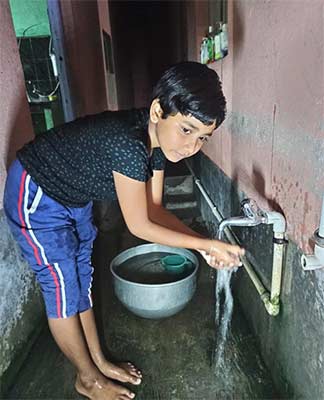
Meet Samriddhi who has adopted handwashing
Similarly, Manjula from Bengaluru, working as a housekeeping staff in a school supported by NGO Smile Foundation, ensures hand washing every hour. She believes by practising hygiene she will not only protect her children but people around her as well. That’s Manjula’s way of contributing to society. Talking about the lessons she learnt on COVID precautionary measures, Manjula said,
“In a community meeting in school, students and we parents were educated about the need for hygiene practices. We also saw advertisements on TV asking people to wash hands, wear a mask and maintain social distance to fight COVID-19.
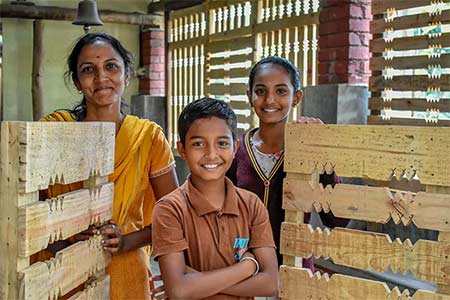
Meet Manjula and her family who follow COVID precautionary measures at all times
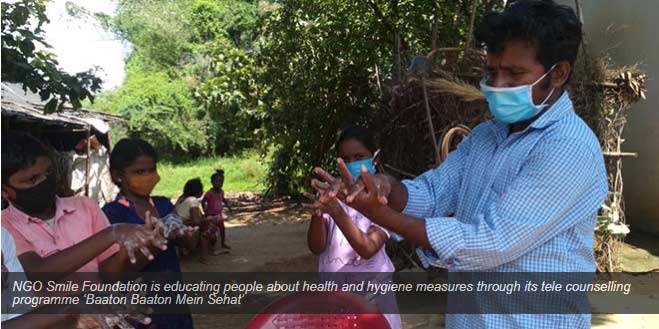
Since the start of the COVID-19 pandemic in India, NGO Smile Foundation is sensitising children studying in its Mission Education centres and their parents on precautionary hygiene measures. Under the ambit of ‘Health Cannot Wait’, Smile Foundation’s health team took up the task of education and information through its tele counselling programme ‘Baaton Baaton Mein Sehat’ and WhatsApp and some of the teachers went door-to-door to do the needful.
Talking to NDTV about the idea and motive behind initiating hygiene and sanitation initiative during the COVID-19 pandemic, Santanu Mishra, Co-founder and Executive Trustee, Smile Foundation, said,
“With the threat of the virus spreading fast it was crucial to orient and communicate to the community especially the children who fall under the vulnerable group, on good hygiene practices to be followed in order to stay protected and safe. The lockdown followed by a shutdown of schools made it difficult to reach out to the children and the families directly, therefore, it was essential to initiate information and education communication initiatives through tele counseling, messages through WhatsApp and centre staff connecting with the community regularly.
Teachers received training online on hygiene and good practices as precautionary measures for COVID-19 and further trained the students and community. Health and well-being sessions were conducted with parents with an objective to orient them about health and hygiene related practices to be followed; social distancing protocols to be adhered to during the pandemic; ensuring emotional and general well-being of their families to navigate the crisis.
Explaining how the team conveys the message, Tapas, working with Smile Foundation as the Regional Officer of East region, said,
“Without getting into the nitty gritties of the disease, we educate the focused group about basic precautions like handwashing. People say they wash hands but not many wash it with soap that too the right way so we demonstrate the 11 steps of handwashing as explained by the World Health Organisation and how soap kills germs. Secondly, we stress upon the use of face masks so as to protect one from droplets.
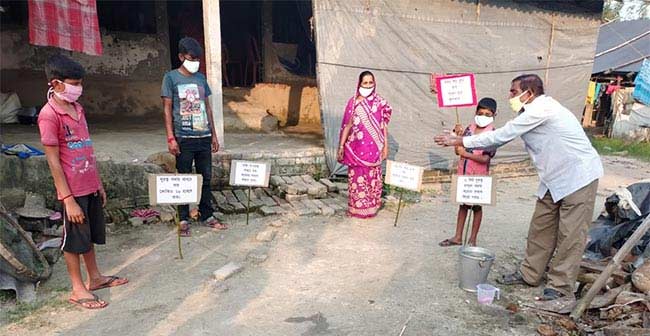
NGO Smile Foundation teaching the right technique of handwashing
Priyanka, one of the teachers at Mission Education Centre SHED in Kalina, Mumbai said that they mandated the use of face mask even before the nationwide lockdown and restricted the entries of those not abiding by the guidelines. The team also educated students about the symptoms of COVID-19 so that they can communicate with their elders or teachers if they think they have contracted the disease. Talking about the challenges on the ground, Priyanka said,
Young children don’t necessarily understand and adopt the concept of handwashing. We showed video tutorials; how the disease can affect us and at the same time how handwashing can safeguard us. Secondly, often people living in slums don’t adhere to wearing face masks probably because of the lack of knowledge. We went door-to-door to distribute masks and educate on how to wear a mask and how it protects from getting the virus.
Mr Mishra added that the messages were disseminated through skits, posters, and slogans as well.
Deenu Verma, mother of Surabhi Verma studying at one of the Mission Education Centres in Chhattisgarh, informed that during the nationwide lockdown, Smile Foundation team used to counsel over phone and even distributed pamphlets for education purpose. In addition to this, Anjum Khatoon, mother of Mohd Ejaz, a student of Ina Raja Memorial Education Trust in Delhi, said,
“We were provided hygiene kits consisting of soap, sanitizer and masks.
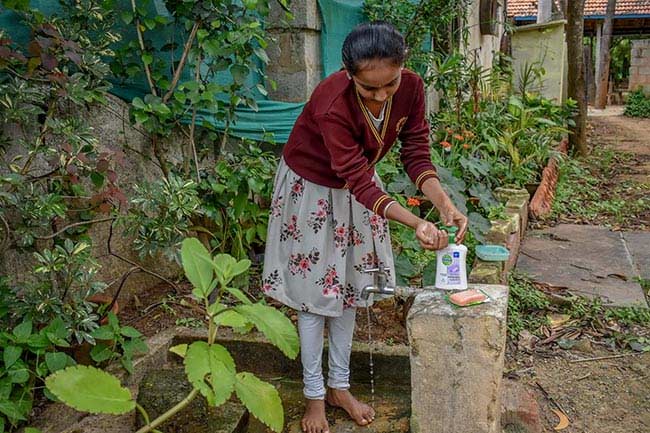
One of the students practising handwashing in the fight against COVID-19
According to Mr Mishra, the initiative ‘Baaton Baaton Mein Sehat’ has reached out to over 60,000 people across India since April 20. In addition to this, the foundation has distributed over 1.5 lakh hygiene kits to ensure that along with awareness, vulnerable families also have access to basic hygiene care. While signing off, Mr Mishra said,
“Through all of this, there is increased awareness among the community members who are now more cautious of their cleanliness, seek medical help timely, ensure their kids do not venture out frequently and have increased practice of good hygiene.
NDTV – Dettol Banega Swasth India campaign is an extension of the five-year-old Banega Swachh India initiative helmed by Campaign Ambassador Amitabh Bachchan. It aims to spread awareness about critical health issues facing the country. In wake of the current COVID-19 pandemic, the need for WASH (Water, Sanitation and Hygiene) is reaffirmed as handwashing is one of the ways to prevent Coronavirus infection and other diseases. The campaign highlights the importance of nutrition and healthcare for women and children to prevent maternal and child mortality, fight malnutrition, stunting, wasting, anaemia and disease prevention through vaccines. Importance of programmes like Public Distribution System (PDS), Mid-day Meal Scheme, POSHAN Abhiyan and the role of Aganwadis and ASHA workers are also covered. Only a Swachh or clean India where toilets are used and open defecation free (ODF) status achieved as part of the Swachh Bharat Abhiyan launched by Prime Minister Narendra Modi in 2014, can eradicate diseases like diahorrea and become a Swasth or healthy India. The campaign will continue to cover issues like air pollution, waste management, plastic ban, manual scavenging and sanitation workers and menstrual hygiene.
(23 June)

( November 20, 2020 )
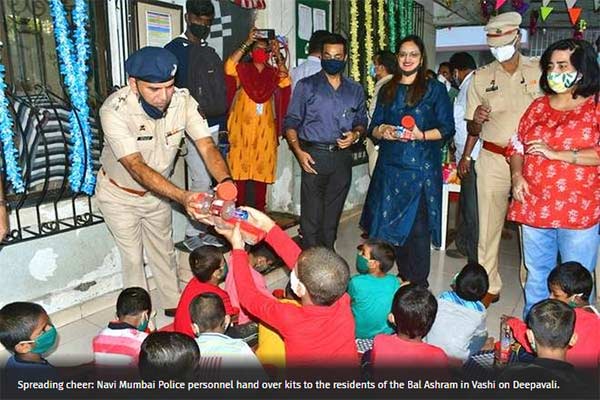
Home Minister appreciates act of providing essentials to unprivileged kids
Maharashtra Home Minister Anil Deshmukh has appreciated the Navi Mumbai Police for distributing food to the residents of the Bal Ashram in Vashi on the occasion of Deepavali.
Mr. Deshmukh tweeted, “The Vashi police personnel from @Navimumpolice showed a nice gesture by carrying an initiative along with Smile Foundation, a social organization to distribute food among the children of the Bal Ashram in Vashi on the occasion of the Diwali festival.”
Deputy Commissioner of Police Suresh Mengade, Assistant Commissioner of Police Vinayak Vast and senior police inspector Sanjeev Dhumal from Vashi had led the initiative.
Mr. Mengade said, “The police department has been involved in social causes amid the pandemic and even before it. While the whole country is celebrating the festival, such kids also need our support to celebrate and each one of us should come forward to help them. The Minister’s tweet is a motivation for us to keep up our good work.”
The Bal Ashram at Sector 28 is run by Desire Society for children living with HIV and has been registered in Hyderabad.
“Of the children in the ashram, 19 are living with HIV, while six others were found abandoned. The smiles on their faces brightened our day too,” Mr. Mengade said. There are children who study from LKG to Class XII. Whatever help that can be extended from our department will be done, Mr. Dhumal said.
Mr. Vast said, “I hope our gesture motivates others too to work for the unprivileged.”
This was the fourth time the Smile Foundation extended the help to the children during the pandemic. “With the prime motive of bringing smiles to children’s faces, we donated supplies like rice and dal, drinking chocolate powder, biscuits, chocolates and stationery items,” Dheeraj Ahuja, founder member of the foundation, said.
“We have extended our help every year, but this year due to the pandemic, we visited them often,” Uma Ahuja, founder president of the foundation, said.
(23 June)
( November 14, 2020 )
Many foundations and NGOs stepped up to bridge the education gap when Covid-19 hit humanity. On Children’s Day, check out a few working for childcare, child rights and education.
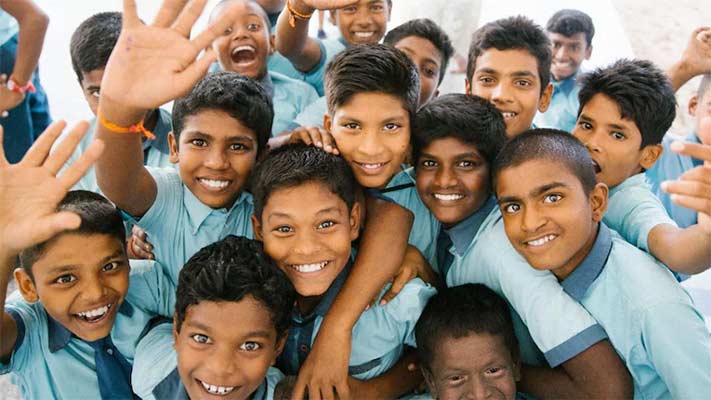
Many foundations and NGOs stepped up to bridge the education gap when Covid-19 hit humanity. On Children’s Day, check out a few working for childcare, child rights and education.
HIGHLIGHTS
Children are the symbols of the bright future of a country. New energy can be injected into their life only by guiding them on the path of right education, care and progress. There are 132 million orphaned children around the world, and about 20% of them live in India.
As per the National Commission for Protection of Child Rights (NCPCR), the number of children living in institutions in India is 2,38,504. And the total numbers of registered and unregistered CCIs are 5,984 and 1,422 respectively.
There are 8 million children living in institutions around the world (UNICEF). Many of these children languish in children’s homes without access to nutritious food, clean water, quality education, and medical care.
Surprisingly, 80% of these kids have a living family member back home (UNICEF 2015). Most families wouldn’t leave their children in children’s homes if they had the right support to care for them.
To address the issues and bridge the gap, many foundations have stood up for the cause, and are truly fulfilling the importance of Children’s Day. These Non-Profit organisations (NPOs) have come as a blessing for such children and provide the necessary care.
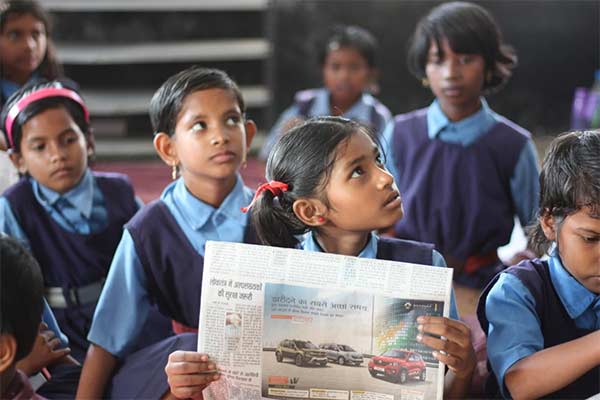
Impact of Covid-19 on children’s education
In India, school closures have impacted 247 million children enrolled in elementary and secondary education and 28 million children who were attending pre-school education in Anganwadi centres. This is in addition to the more than 6 million girls and boys who were already out of school prior to the Covid-19 crisis.
While the government has engaged multiple channels for continuity of education, including web portals, mobile apps, TV channels, radio and podcasts, through platforms such as Diksha, Swayam Prabha TV channels, e-Pathshala and the National Repository of Open Educational Resource, there are many vulnerable children whose education was hit by the pandemic.
Since the government is trying harder to control the pandemic; meanwhile, NGO’s are putting their best to tackle the current scenario and ensure continuity of education and care for children. Here are few of the NGOs playing their part towards the cause:
On Children’s Day, check out a few working for childcare, child rights and education:
1. Miracle Foundation India
Miracle Foundation India is a non-profit organization that works towards bringing life-changing care to orphaned and vulnerable children. With a multi-faceted, collaborative and community-based ‘Child First’ approach, Miracle Foundation India ensures that all these children are educated, healthy and safe.
As part of its commitment to education of vulnerable children, Miracle has ensured enrolment of 100% of their children in school, following which, students go to college.
To ensure continuity in education for children in childcare institutes (CCIs) as well as those who have been sent back home, Miracle Foundation India has increased application of technology online classes/live streaming of sessions/use of smartphones, i-Pads, etc.
2. E-Vidyaloka
The Bangalore-based NGO focuses on imparting education to students of rural government schools in India by crowdsourcing volunteer teachers and connecting them to the schools using the power of IT.
During the pandemic, the foundation is focusing on provide education through remote learning with access to internet and electronics. E-Vidyaloka believes educating kids online will be the way forward in the future.
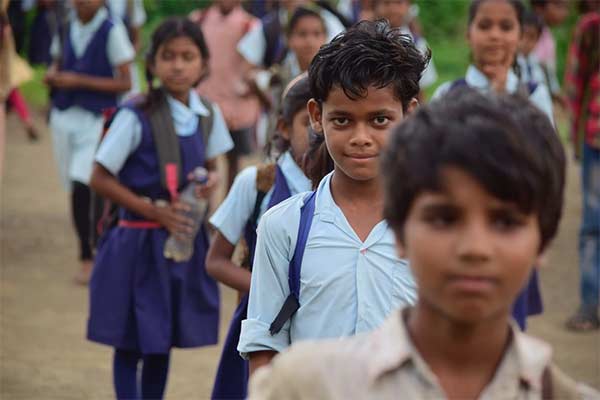
3. Magic Bus
Magic Bus foundation equips children and young people in the age group of 12 to 18, with the skills and knowledge they need, to grow up and move out of poverty.
The foundation has partnered with Classplus mobile OS for online education to poor kids enrolled in the Magic Bus Livelihood programme. Through the partnership, they will help over 2,000 youngsters across 22 states.
4. Smile Foundation
Smile Foundation provides education to thousands of children from Class I to Class XII running across 23 states.
The foundation found that about 56% of Indian children lack smartphones. In this scenario, amidst Covid-19, they are providing possible solutions to access education.
(24 June)
( November 8, 2020 )
The diyas in the hamper—which contains cookies box, pie box, special Bordough Bakery blend of coffee and other customisable options—are made by members of The Blind Relief Association in Delhi.
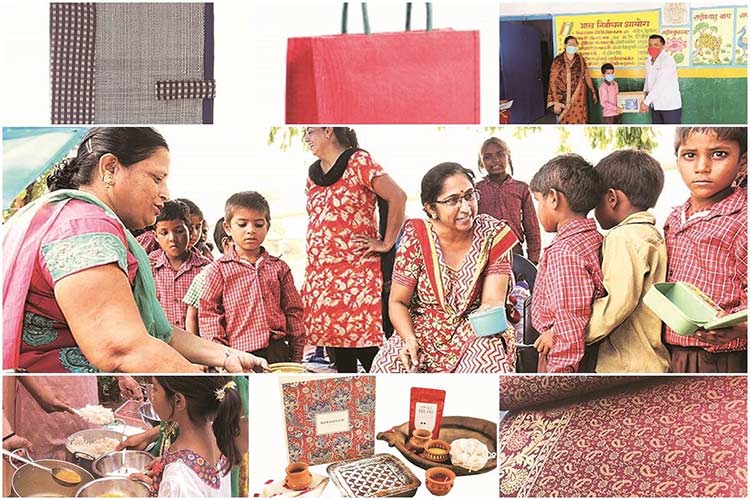
We have drawn a curated list of places and groups you can buy from or donate to help the needy.
Diwali this year is different. It is about being mindful of the people in need. It is about responsible gifting & conscious giving. We have drawn a curated list of places and groups you can buy from or donate to help the needy.
Floating wishes
Delhi-based NGO Wishes and Blessings sells floating candles and diyas, made by special children, priced between Rs 10 and Rs 200. The proceeds support the well-being of the special children. Contact 9625535026 or email wishesandblessings2014@gmail.com
Light it up
What’s the festival of lights without lights? From pyramid, cube, pillar, glass wax, flower and Dhanteras candles to little light balls and diyas, Agra-based NGO Ek Pahel, which works to uplift underprivileged children and women, offers all these and more. Made by underprivileged girls studying at Ek Pahel Pathshala, the products are priced between Rs 30 and Rs 200. Around 60% of profit goes to the organisation and the rest to the girls. Contact 7500176976, 8126906681 or visit www.facebook.com/ EKPAHELNGO/
Sustainable handicrafts
Handbags, table runners, stoles, mats, bedcovers— made by destitute women, including widows and sex workers, and physically challenged and autistic men—are sold by Varanasi-based Fix My Life Foundation. The products are priced between Rs 300 (handbags and stoles) and `1,800 (set of bedcover and pillow covers). Contact 9415204182 or mail sonakapoor008@gmail.com
Basket of hope
Diwali hampers can be bought from Bordough Bakery in Hauz Khas, Delhi. The diyas in the hamper—which contains cookies box, pie box, special Bordough Bakery blend of coffee and other customisable options—are made by members of The Blind Relief Association in Delhi. The bakery gives a part of the proceeds from sales to the association. Starting from Rs 999, each hamper includes five-six diyas. Contact 9910892668 or visit Bordough.co
Mask magic
What about gifting the need of the hour? A face mask! You can buy these from Haath ka Bana, which works with artisans at the grassroots level. Weavers from Pochampally (Telangana), Surat and Kutch (Gujarat), Varanasi (Uttar Pradesh), Nagaland and Assam and others have made masks for them as per WHO and ICMR guidelines. A two-ply washable handmade cloth mask is priced at Rs 50. Contact: 9899705787, email info@haathkabana.com
Handmade appeal
Diaries, sling bags, bottle covers, table tops, hand-embroidered pen stands. Utility handicrafts make for perfect little gifts. These visually appealing, durable and attractive products are developed under Project Karigari of Indha, an organisation born out of Literacy India, a not-for-profit organisation, which aims at imparting vocational training in sewing, embroidery, driving, computers, beauty culture, etc, to rural women artisans in Daulatabad, Sarai and Bajghera villages in Haryana. Prices start from Rs 20 (for a key ring) and go upto Rs 3,500 (for a quilt). Contact 0124-4109763, 8588853369 or email indha@indha.org
Recycled stationery
Perfect to gift to students, you can shop recycled pens and pencils from Odisha-based Solutions2Change, which provides sustainable livelihoods to more than 40 tribal women and youth in Kalahandi and Nuapad districts. They only use recycled newspaper and waste paper to make the products, which are priced at Rs 15. Contact 7399499599, 022-24983055, email operations@solutions2change.com or visit Solutions2change.com
Sweet delight
Chocolate can never be a bad gifting option. National Society For Equal Opportunities for the Handicapped (NASEOH), India, which works on comprehensive rehabilitation opportunities for persons with disabilities, offers milk chocolate in bags (Rs 500 per kg), 100-gm potpourri bags (nine pieces per bag, Rs 60), chocolates in cane basket, mixed variety (nine pieces, Rs 100) and more. Contact 022-25220224 or email admin@naseoh.org
DONATE
Aid the elderly
To ensure that the elderly get support in this time of crisis, three Vadodara-based students—Rishabh Somani, Soham Katewale and Ashvika Menon—started a campaign with crowdfunding platform Impact Guru to provide food to 20 senior citizens that Vadodara-based Lagni Foundation has adopted. They aim to raise Rs 2 lakh and have so far raised Rs 76,000. Visit https://www.impactguru.com/fundraiser/help-lagni-foundation or https://www.facebook.com/careminu12/
Green initiative
Goonj’s special initiative Green by Goonj reuses and upcycles even the last shred of clothing and other material it receives. Women from slums use the torn jeans, obsolete audio tapes, one side used paper, etc, to make a variety of products like purses, fancy bags, file folders, mats, etc. You can donate clothes at several drop-off locations or contact 011-41401216, 011-26972351 or visit https://goonj.org
Bring a smile
Festivals are all about bringing smiles to faces and you can do this by donating books and toys to needy children. Bengaluru-based Youth for Seva (YfS), a nationwide volunteering movement, accepts all kinds of books and toys for children of slum dwellers and migrant workers living in cities like Delhi, Hyderabad and Bengaluru.
Contact 7995026312 or visit https://www.youthforseva.org/
Inclusive welfare
You can help make education, healthcare and women empowerment accessible for many. Operational in over 2,000 villages and slums across 25 states of India, Smile Foundation focuses on areas of improvement in the educational and healthcare sectors and overall living conditions of underprivileged children through more than 400 live welfare projects. Contact 011-43123700 or visit www.smilefoundationindia.org
Food for good
If you want to donate food or surplus sweets, a group of organisations can make this possible. The Robin Hood Army empowers over 7,000 street children and has served over 28 million people across the world (visit https:// robinhoodarmy.com/). The India Food Banking Network is evolving an ecosystem for food security interventions to support thousands of feeding programmes in India (visit https:// www.indiafoodbanking.org/). With a network of over 26,000 volunteers across more than 100 cities in India, Zomato Feeding India continues to work towards its joint mission of ‘better food for more people’ and ‘food for everyone’. Contact 9871178810 or visit https:// www.feedingindia.org/
Happiness in a box
With schools shut, midday meal beneficiaries have been badly hit. Akshaya Patra Foundation’s The Happiness Box contains dry ration to serve upto 42 meals and stationery items to children. You can donate items for the box. Contact 18004258622 or visit https://www.akshayapatra.org/onlinedonations
Gift of learning
With classes going online, the worst affected are students of government schools who have no means of attending classes online. You can donate laptops or any other gadget or device to Bengaluru-based Project Sitara Foundation, which provides educational support and holistic training to underprivileged children. Contact 8310788617 or email info.projectsitara @gmail.com
Spread cheer
Guru Arjun Samajik Pratisthan was started by some citizens from Ahmednagar and Gadchiroli in Maharashtra to help people during lockdown. As part of their initiative Ghar Ghar Langar Sewa, they have distributed over four lakh food packets, over 2,000 ration kits and study material to underprivileged kids. One can donate stationery, books, mobiles, etc. Contact 9423162727, 9881463234, 8788495499 or email wadhwaharjeetsingh@gmail.com
Hygiene & dignity
Make this festive season more meaningful by giving back to the community. Uday Foundation works for the welfare of children with medical needs, provides support to the homeless and does disaster relief work. You can help provide food to the hungry, donate hygiene and dignity kits for women, educational kits for children, blankets, old clothes and other essential products. Contact 011-26561333 or visit Udayfoundationindia.org
Beyond textbooks
Project Zindagi by Dream Girl Foundation—which works to improve the life of girls, including issues like education, sanitation, health, income generation, AIDS awareness, etc—aims to organise crowdfunding campaigns to help raise funds and provide digital education beyond the black and white text of books as part of its ‘E-Learning’ campaign. One can donate laptops or computers. Contact 9873133134 or visit Dreamgirlfoundation.ngo
Donate from home
Keep all unwanted items out of the landfill by giving them to those in need. Share At Door Step (SADS), a doorstep pickup and donation organisation, helps deliver essentials to the underprivileged. #knotsofcare, its latest initiative with Nautica, accepts clothes as donation to help Covid-19 patients. Contact 8884784742 or visit Sadsindia.org