The key experts of the healthcare industry shared the virtual platform of the second edition of the Healthcare Transformation Summit to discussed the importance of managing the COVID-19, other infectious diseases and urged on the need for strong public health strategies.
Initiating the discussion, Dr Harshad P Thakur, Director, National Institute of Health and Family Welfare (NIHFW), Government of India, said, “Since the last few months we are focusing on COVID – 19 pandemic and trying to control the situation. This has given us the opportunity to focus also on public health. Side by side when we are managing the COVID-19 we are also trying to create awareness about other diseases. In infectious diseases, we have different types of diseases like airborne diseases, water-borne diseases, contact transmission is direct and indirect. Public health strategies are quite broad, when we are trying to identify the patients and treat them, we are only trying to control the diseases occurring. Every time a person becomes patient he is in the incubation stage and during that stage, he might have transferred his disease to many other people unknowingly so contact tracing becomes vital. Contact tracing is one of the important public health initiatives. If the patient is in a severe condition chances of transmitting are quite less. The most dangerous situation is when the patient is not affected by the serious disease but by mild disease so, with no clinical symptoms, the patient is unknowingly transmitting the disease when he/she is going to a public place. So that is where the major problem comes in, i.e why in COVID strategies like social distancing, wearing masks is necessary.”
Adding to it Thakur said, “The current pandemic has features of indirect and direct transmission and similarly we have various infectious diseases transmitted by blood transfusion, or coming in contact with hospital waste and water-borne diseases like typhoid, Hepatitis A. Prevention strategies in primary prevention might not be clinical strategies. The clinical aspect is only vaccination. Factors lik social, cultural, behavioral, and environmental are important and it is also part of public health engineering. Another factor which is important is creating awareness, for instance in COVID-19 we have created enough awareness about diseases transmitted through air, this should continue. At the same time, we should unknowingly not create fear among people. There are various stakeholders and all of them have to play their role, we have private and government health providers, media, NGOs, and common people. They have to play their role and it should be intersectional coordination.”
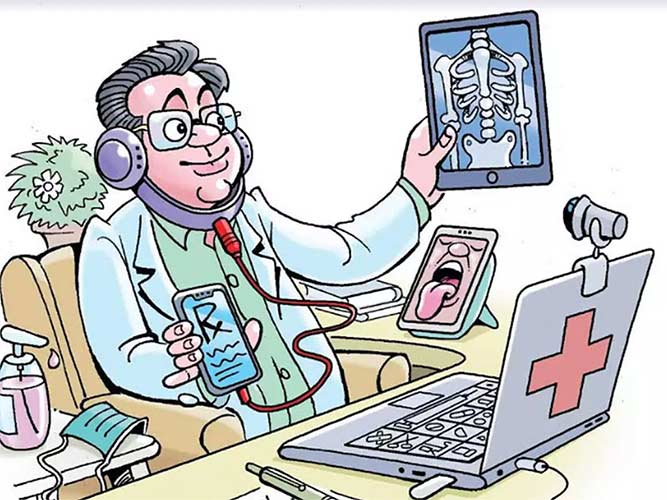
Giving perspective of NGO, Sanjeev Dham, COO, Smile Foundation, said,” If a country wants to solve infectious disease problems then they need to strengthen the primary healthcare system including infectious diseases through the prevention, screening, testing and curative. The importance of a robust primary healthcare system is a must. We as an organization run 40 mobile health units and complement the government efforts to provide primary healthcare in urban slums and rural areas. We are also running telemedicine centres across Rajasthan, Delhi & Kolkata. These are few centers that is being supported by the government to compliment, supplement, and to ensure the primary healthcare is robust and reaching out to the underprivileged population.”
Adding to it, Dham said, “Entire health system faced two key challenges awareness and behavioral change be it COVID-19, TB, Hepatitis or any infectious disease. We need to understand through research people are changing their behavior due to certain reasons, if we scientifically identify those barriers and if we work on them in a professional manner we can prevent a lot of problems. It’s not possible to reach out to everyone, curative services, and a structural referral system is very critical if you want to control all the infectious diseases. COVID-19 has changed our lifestyle, we are living on new norms and the way the government acted and enacted, media continuous projection of the pandemic if all stakeholders work together we can change the system. From the month of March as a nation we have progressed well we are able to 15 lakhs tests in a day for COVID-19 because all the forces are working together to achieve certain goals and objectives. We need to adopt new innovations, think out of the box. The government, which was sitting on the telemedicine policy for a long period got it approved in a day, it’s important that policy has to be updated, we need to be patient-friendly now the doctor can give consultation online. A customized approach is necessary. We need to modify the system and reach out to the target audience and people who are most vulnerable should be tackled first.”
Highlighting that the struggle of infectious disease is not new, Dr. Vikas Oswal, Senior Pulmonologist, said, “The struggle of combating infectious is not new to us, we have been dealing with tuberculosis. For tuberculosis, we had to make many alternative arrangements because of the social and economic status of the country, right from expensive drugs, the reach of it, uninterrupted treatment, and medication. Due to a strong collaboration between NGO, private, and public sectors, we were able to reach the maximum best outcome in Mumbai. The city with the highest cases all these three sectors came together gave the best outcomes. As for COVID-19 all the facilities crashed down, the treatment, giving medication to the needy, in time supply of door to door medication was the major challenge because patients were afraid to go to clinics or hospitals, clinics were shut down. All the clinics were converted to COVID-19 centers from TB which was again a challenge, next challenge was the availability of staff so we had to overcome all these challenges. Initially, we thought a lot of COVID-19 patients are there but more TB Cases were detected. There are 8000 TB patients just in two wards in two districts. We thought the chances of TB patients turning into COVID-19 patients were higher but we were proven wrong when we saw an isolation centre separately made for TB and COVID patients which were all vacant for two months. That gave us a thought that there is something to do with the immune system of TB patients was not allowing COVID-19 to enter the system. If you see the modality of children because of covid is less in case of developing countries like India there is already a BCG vaccination given from day 1 to children less five years in comparison to the modality of children in a developed country where there was no use of BCG vaccination again this gave us a thought of coming up with the trial of the better outcome of the BCG. ICMR also came up with the paper where adults from 60 to 80 are given BCG have shown better outcomes; the same trials have also been conducted for the other age group for less than 60 years. Challenge is definitely there these will be overcome in terms of tuberculosis but in the COVID era, we had shifted from clinics to virtual consultation we have used the maximum of Teleconsultation. We have come up with the apps, software where patients would join us and we are managing patients online not only TB patients but we are also screening all patients, we are trying to give home care to maximum patients.”
Talking about the role of Viatris, Naresh Hasija, Associate Vice President, Viatris, said,” We are playing a very active role with the government on the elimination of Viral Hepatitis & Tuberculosis now we have entered in the space of COVID-19 by introducing remdesivir. A comprehensive strategy is needed and we all should come together so we can create a real difference, this we saw while we were working with state governments on the elimination of Viral Hepatitis. The Central government took that programme and now we have a national scheme for the elimination of Viral Hepatitis. Similarly in India HIV cases, tuberculosis cases are going down. A comprehensive strategy end to end, with all the stakeholders, can play a big role in beating the infectious disease.”
“Our employee who was working on Remdesivir got COVID-19 positive and the post-pandemic effect was not that good at that time we decided on how to combat the after-effects of COVID-19. We shaped a program called Panacea and this programme was launched recently as a platform where we will have sessions where experts from yoga, mental health, nutrition background will guide and give awareness to the public. We are the most patient-centric company and we feel that we should do real justice to COVID care. We have a fantastic referral system developed by a TB Board here in India and it’s a very good programme where public and private partnership and a lot of models are existing and they are doing very well, it can be a fantastic example for COVID and viral hepatitis.”
Commenting that Covid- 19 has really opened up a lot of new things, we have to follow new norms,Dr. Dilip Patil, Founder Director, Trivector, said,” We were struggling to tell healthcare workers, administrators that hand and surface sanitization is not enough to control the hospital acquiring infection you have to take in consideration air, it is one of the major things in spreading the infection. In fact, there was not much awareness about air-borne infection even hospitals and infectious control departments were in denial, they were saying that we are taking precautions we have resources but it was not enough. Especially in a country which is having the highest number of cases of tuberculosis and Mumbai has the highest number of air-borne infection cases. Before COVID-19 we used to tell people that air-borne diseases are one of the major things and we have innovative ideas and solutions which are sustainable, green, and economical to disinfect the air continuously and to avoid the spread of infection from person to person. Pandemic has provided us a platform to create awareness about airborne infections, one should have six feet of social distance, wear a mask. We have a paper suggesting that airborne COVID-19 can be there for several hours or days in the air. It’s a blessing in disguise that India has such a big problem with TB but due to covid precautions which we are taking or rather adopting to take care of airborne diseases are so good and effective for Tuberculosis. We may control TB sooner than expected.”
Dr. Ravindra M Mehta, Senior Consultant Pulmonology & Critical Care, Apollo Hospitals Bengaluru, said, “Basically the respiratory and systemic onslaught that we suffered from was the whole spectrum of COVID – 19 it’s still in debate. If other infectious diseases compared to COVID-19 how it is going to be differentiated its quite challenging as the symptoms are Fever, cough, diarrhea, and nausea. Then came the spectrum of diseases doctor had to figure out the virus. If the patient is asymptomatic went to home isolation protocol but the most worrisome part where we got completely swept when pneumonia kicked in which requires hospitalization and maybe intensive care which each one of us dealt with. Now with the fresh round of regular bugs who are also coming to take their share in the disease spectrum of mankind, we will be dealing with all these at the same time but hopefully not in the same numbers. In the pandemic, we saw how horrible Xray got and pneumonia was spreading. More CT Scans happened ever than before people were hesitant to get scanned and now they are happening on a daily basis. Comorbidities are constantly alike chronic lung disease and smoking is something that will get worse in winters and also when it comes to bacterial and viral infections and other things that we have to deal with. We used a whole bunch of machines which have both been the challenge and have stabilized the people like ventilators, invasive ventilators all these have been used rapidly in massive numbers. The post covid syndrome is a thing which has not cropped up, we are also looking at it because we have reached the stage, it’s a disease with a long tail and there are many issues because of the multi-system nature which are going to come up now. Other infectious diseases like malaria and dengue will come especially when the rain starts. It is going to be part of the challenges which we are dealing with when we jump on the covid. Pulmonary fibrosis scarring is also a part which we are worried about as many people are getting lung damage. The post covid syndrome is going to be a challenge and the infectious component of what’s going to come down the line is going to coexist which we have to deal with.”
Highlighting the activities carried out by the government of Rajasthan, Dr Prem Singh, State Nodal Officer, National Health Mission, Government of Rajasthan, said, “Government is playing an active role in the supporting access of the treatment in COVID era and even authorizing public health authority to limit or to emphasize their power to control the infectious disease. The state government have the systems of immunization and universal immunization programme where we provide vaccines of TB, Hepatitis, Diarrhea, etc and similarly, the state is working for and preparing the database for covid – 29 vaccination, as soon as it will come in the picture the state will be ready to vaccinate those people as per government’s priority. Asha workers are also helping in the management of the COVID patients and the state also has a team of nurses, doctors who are going in the infectious areas and doing screenings and surveys and also treating them to control the process.”
“An integrated system is launched by union health ministry from 2004 to 2010 and still continues with an objective to strengthen and maintain the laboratories waste, IT enabled disease surveillance system to monitor disease trends and respond to outbreaks of the early rising diseases. It has central, state, and district surveillance units and district hospitals, sub-district hospitals, community health centres to report cases that are still present and under monitoring. Microbiologists, entomologist,s and others at the state level with a data management team, finance and procurement team tackle the problem, it is also supported by National Informatics System and ISRO to manage the data, Internet connectivity, and reporting systems. The new things happening in this field comes under Ayushman Bharat. We are struggling with some common infectious diseases which we can treat because we don’t have an established system or manpower to reach the masses. Some healthcare centres are led by community health officers who are from the nursing, pharma, medical background and they will be given the training for six months,” Singh added.