Month: November 2022
( January 6, 2020 )
Partners with Sukarya Foundation to provide nutritious mid-day meals in Education on Wheels program
New Delhi, Delhi, India: Global nutrition powerhouse Herbalife Nutrition has partnered with Sukarya Foundation for its third Casa Herbalife Program in India to support underprivileged children with nutritious mid-day meals. The Herbalife Nutrition Foundation Intervention for Education on Wheels [EOW] Children will provide nutritious mid-day meals to children to address nutritional requirement of the marginalized children studying under the Education on Wheels [EOW] Project across four slum locations in New Delhi.
The Education on Wheels [EOW] program for 200 underprivileged slum children in Delhi will work towards providing early education, pre-schooling, mainstreaming with formal school, health and nutrition care. The intervention will address and meet the nutritional requirements of children between the age of 6-12, to prevent conditions such as anaemia and malnutrition. The engagement aims to build the strong physical foundation for children to lead a healthier life.
Commenting on the partnership, Mr. Ajay Khanna, Vice President and Country Head, Herbalife Nutrition India, said, “We are proud to support the future generation with good nutrition through this initiative. Herbalife Nutrition Foundation recognizes every child’s right to good nutrition and works to provide healthy meals to over hundreds and thousands of children across the globe. This association will help children in need with mid-day meals that will help meet their energy and nutrition requirement.”
In India, the Herbalife Nutrition Foundation has partnered with Smile Foundation and SOS Villages of India to provide good nutrition to more than 2000 children in need.
Casa Herbalife Nutrition Program was founded in 1998 with the vision to provide under-privileged children with nutritious meals, education and opportunity to succeed and live better lives. The foundation works with programs in more than 50 countries across the globe to improve the lives of underprivileged children.
About Herbalife
Herbalife Nutrition is a global nutrition company whose purpose is to make the world healthier and happier. The Company has been on a mission for nutrition – changing people’s lives with great nutrition products and programs – since 1980.
Together with our Herbalife Nutrition independent distributors, we are committed to providing solutions to the worldwide problems of poor nutrition and obesity, an aging population, skyrocketing public healthcare costs and a rise in entrepreneurs of all ages. Herbalife Nutrition offers high-quality, science-backed products, most of which are produced in Company-operated facilities, one-on-one coaching with a Herbalife Nutrition independent distributor, and a supportive community approach that inspires customers to embrace a healthier, more active lifestyle.
Herbalife Nutrition’s targeted nutrition, weight-management, energy and fitness and personal care products are available exclusively to and through its independent distributors in more than 90 countries. Through its corporate social responsibility efforts, Herbalife Nutrition supports the Herbalife Family Foundation (HFF) and its Casa Herbalife programs to help bring good nutrition to children in need. Herbalife Nutrition is also proud to sponsor more than 190 world-class athletes, teams and events around the globe, including Cristiano Ronaldo, the LA Galaxy, and numerous Olympic teams. Herbalife Nutrition has over 8,000 employees worldwide, and its shares are traded on the New York Stock Exchange (NYSE: HLF) with net sales of approximately $4.4 billion in 2017. To learn more, visit Herbalife.com or IAmHerbalife.com.
Tackling Crisis Through Civic Interventions
- Post author By Smile Team
- Post date November 5, 2022
- No Comments on Tackling Crisis Through Civic Interventions
The social media frenzy and countless opinions, a lot of myths around taking precautions are also circulating amongst this group.
( March 31, 2020 )
Cases of coronavirus have been rising in India steadily and there is no doubt that the trajectory of infections is on an upward curve. Prime Minister’s recent address to the country, made it clear that this is not to be taken lightly, and as individuals, we have to take serious actions and hence put the country in lockdown. In his earlier address, he mentioned about taking care of yourself and also others and reiterated the need for social distancing. These steps are necessary since COVID-19 has been termed as a controllable pandemic by the World Health Organisation (WHO), and the Government is echoing, again and again, the measures one needs to take to avoid spreading the disease. Though there are straight forward and simple measures, the path to take the measures is not the same for all.
A number of international agencies have praised the Indian Government for controlling the pandemic and taking correct preventive measures at the appropriate time, however, issues on the number of tests being done are still debatable. Indian Council of Medical Research (ICMR) has clearly indicated that we are bound towards community transmission, and so far the disease is in primarily those individuals with travel history to affected countries or via close contact with positive cases. To single out such individuals, who have had a travel history, is fairly easy given the amount of documentation involved, but to know exactly if you interacted with an infected COVID-19 person, is a little challenging.
This becomes even more puzzling for service staff, like housemaids, drivers, and peons who sometimes do not even know the person they are interacting with. They go about doing their day to day job and hardly note that the people they are meeting might have a travel history or the virus itself. For them to be interacting with a person with symptoms or someone not taking appropriate precautions, is probably much higher than we can anticipate.
Moreover, with the social media frenzy and countless opinions, a lot of myths around taking precautions are also circulating amongst this group. Message forwards saying to light camphor or holding your breath for 10 seconds to check if you have coronavirus, are major hindrances in implementing proper self-care. With the lockdown in place, false information can be detrimental to one’s own health.
It is of utmost importance that as model citizens, we join hands and help our staff, colleagues or even friends bust myths around this pandemic. One on one talks outlining the preventive measures, need to be communicated to everyone around us on an immediate basis. This is can not only help us fight the situation but also help in making sure that if and when the virus reaches stage 3 of transmission, there is less chaos.
Another important aspect is to understand the background and family culture of our lesser privileged peers. We understand that most of them live in rural or urban slums, and have limited access to amenities of the urban society. If this virus were to spread in communities in India, with a population of over 132 crores[1], it would be a serious challenge to tackle the situation without a vaccine.
Looking at the population spread, as of 2018, India had 66% of its population living in rural areas,[2] making it one of the few countries where the majority of its population still lives in the hinterland. The challenge that persists is that the population living in this area does not have widespread access to healthcare services or in some cases even the basic infrastructure.
Moreover, India has less than one bed for 1,000 people according to OECD[3]. This means that either we get a vaccine, which according to multiple sources is still in progress or limit the spread among our population, specifically our rural population. With our Prime Minister, Shri Narendra Modi emphasising the need to take care of others, organisations, NGOs and civil society can work towards raising awareness and help in tackling this crisis.
The need of the hour calls for all stakeholders to raise as much awareness as they can. Wherever businesses have their operations in rural areas, whether it is through partners, subsidiaries or even CSR, they need to implement large scale community awareness programmes. NGOs also working in these areas need to join hands to make sure that even the remotest of the remote parts of the country are reached, and that people are educated on the preventive measures they can take.
Another challenge that we foresee and can be tackled through this approach, is the need to educate masses on the corrective measures. Knowing if one has symptoms what he/she needs to do in that case is crucial. Recent news on people consuming liquids and unauthorised medicines, claiming to cure symptoms against coronavirus are causing more damage to the situation.
Moreover, such awareness can reduce panic buying, help people understand what can be done, and what are the elements in their hands that they can be tackled. With the recent ICMR report Prudent public health intervention strategies to control the coronavirus disease 2019 transmission in India: A mathematical model-based approach, suggesting that community transmission can be visible anywhere from three weeks to a few months, more and more questions are being raised on the country’s capacity to do mass level testing, and also the infrastructure in place.
We can see that there is a gap, and a lot needs to be done, but given the circumstances and the speed at which this pandemic is spreading our best bet is to enforce a model behaviour bringing in civic driven change. Awareness, education, and prevention are our best call to action at the moment, and the same needs to be communicated to all parts of our society. A lot of corporates have already noted this recommendation and have implemented awareness sessions and diverted CSR contributions, but a lot more needs to be done in a short span of time to ensure that no one is left behind.
While these measures can help in tackling coronavirus at the moment, going forward such an understanding can also reduce the chances of other communicable diseases. Overall it is an effort that each and every one of us has to make, to ensure that as a community, as a country we tackle this pandemic and come out of it in the best way possible.
Source: http://www.businessworld.in/article/Tackling-Crisis-Through-Civic-Interventions/31-03-2020-187787/
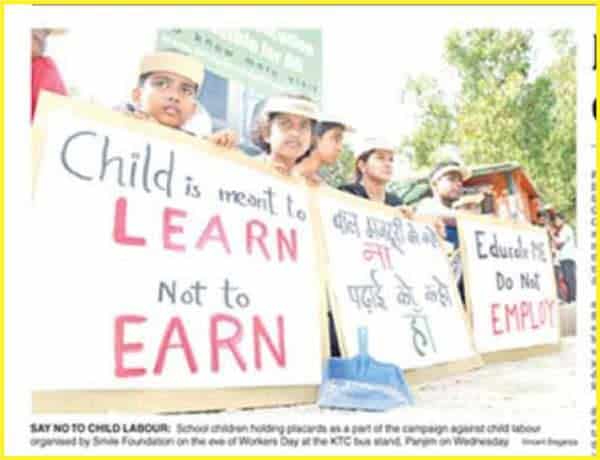
Say NO child Labour, Say YES to schools
- Post author By Smile Team
- Post date November 5, 2022
- No Comments on Say NO child Labour, Say YES to schools
( March 17, 2020 )
He was the first Indian musician to embark on a road trip to promote his music. He later rode from Kashmir to Kanyakumari. Now, Nitish Pires is back on the road to promote his latest single, titled ‘Fateh.’
He says that it has always been a dream to conduct a pan-India tour. So far, Pires has ridden his motorcycle across three states, while his bandmates and the rest of the crew follow in the tour bus. “It feels like I am leading a caravan,” he adds.
he returned from his sabbatical in Europe, Pires has been producing music as a part of a four-piece metal band. He says his journey over the years gave him a new perspective, “I want to be able to share my inspiration with fans and other listeners.”
Much of Pires’ work revolves around child development and ‘Fateh’ is no different. “We have collaborated with the SMILE Foundation for this tour,” he tells Metrolife. The band is carrying a sketch that they plan to auction at the end of the tour, in an effort to raise funds for charity. “‘Fateh’ explores the relationship between a father and son. While it is necessary to inspire hope in young children, it is even more important to inspire responsibility in adults.”
The band has already performed in Chennai, Bengaluru, and Hyderabad. However, the recent Covid-19 outbreak has put a dampener on things. “While we were able to perform in all three cities, the turnout was considerably low,” he says.
Even though several shows have been cancelled or postponed as a precaution, he says the band has no plans to halt the tour. “We have come so far, it does not make sense for us to stop now.” Despite being on the road, the band does not have too many health concerns. “Since we have been living on the tour bus, we are isolated from others. We have also been following health protocols diligently,” he says. “We are dealing with this by trying to be as positive as possible.”
‘Fateh’ will be a part of an untitled album that is scheduled to be released in October this year.
( March 17, 2020 )
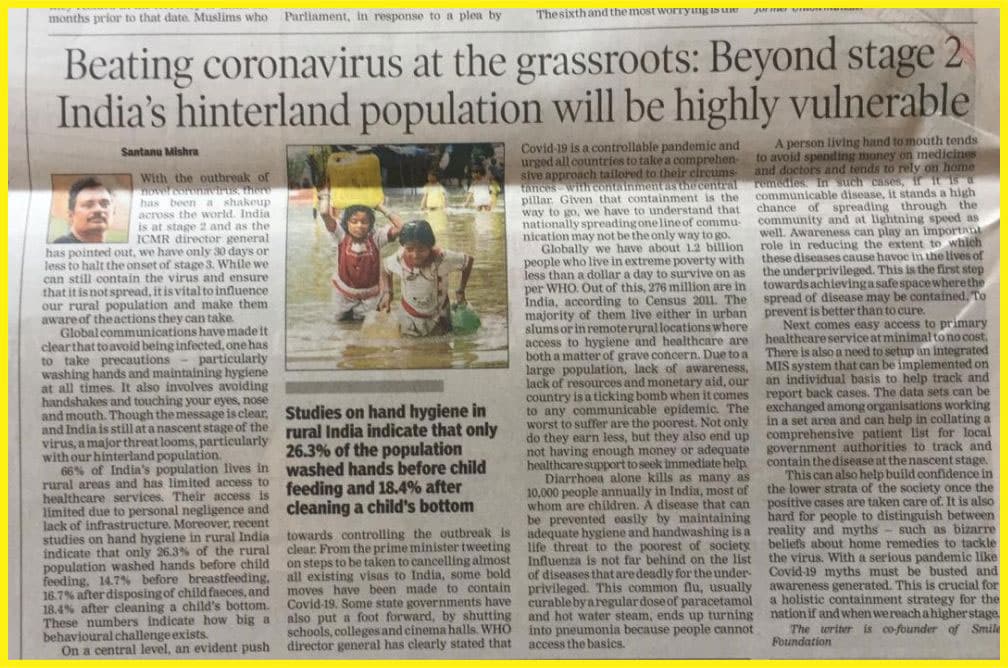
With the outbreak of novel coronavirus, there has been a shakeup across the world. India is at stage 2 and as the ICMR director general has pointed out, we have only 30 days or less to halt the onset of stage 3. While we can still contain the virus and ensure that it is not spread, it is vital to influence our rural population and make them aware of the actions they can take.
Global communications have made it clear that to avoid being infected, one has to take precautions – particularly washing hands and maintaining hygiene at all times. It also involves avoiding handshakes and touching your eyes, nose and mouth. Though the message is clear, and India is still at a nascent stage of the virus, a major threat looms, particularly with our hinterland population.
66% of India’s population lives in rural areas and has limited access to healthcare services. Their access is limited due to personal negligence and lack of infrastructure. Moreover, recent studies on hand hygiene in rural India indicate that only 26.3% of the rural population washed hands before child feeding, 14.7% before breastfeeding, 16.7% after disposing of child faeces, and 18.4% after cleaning a child’s bottom. These numbers indicate how big a behavioural challenge exists.
On a central level, an evident push towards controlling the outbreak is clear. From the prime minister tweeting on steps to be taken to cancelling almost all existing visas to India, some bold moves have been made to contain Covid-19. Some state governments have also put a foot forward, by shutting schools, colleges and cinema halls. WHO director general has clearly stated that Covid-19 is a controllable pandemic and urged all countries to take a comprehensive approach tailored to their circumstances – with containment as the central pillar. Given that containment is the way to go, we have to understand that nationally spreading one line of communication may not be the only way to go.
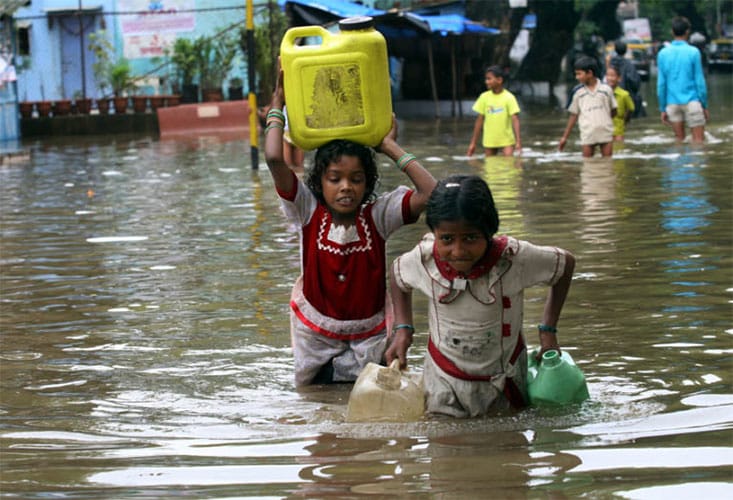
Globally we have about 1.2 billion people who live in extreme poverty with less than a dollar a day to survive on as per WHO. Out of this, 276 million are in India, according to Census 2011. The majority of them live either in urban slums or in remote rural locations where access to hygiene and healthcare are both a matter of grave concern. Due to a large population, lack of awareness, lack of resources and monetary aid, our country is a ticking bomb when it comes to any communicable epidemic. The worst to suffer are the poorest. Not only do they earn less, but they also end up not having enough money or adequate healthcare support to seek immediate help.
Diarrhoea alone kills as many as 10,000 people annually in India, most of whom are children. A disease that can be prevented easily by maintaining adequate hygiene and handwashing is a life threat to the poorest of society. Influenza is not far behind on the list of diseases that are deadly for the underprivileged. This common flu, usually curable by a regular dose of paracetamol and hot water steam, ends up turning into pneumonia because people cannot access the basics.
A person living hand to mouth tends to avoid spending money on medicines and doctors and tends to rely on home remedies. In such cases, if it is a communicable disease, it stands a high chance of spreading through the community and at lightning speed as well. Awareness can play an important role in reducing the extent to which these diseases cause havoc in the lives of the underprivileged. This is the first step towards achieving a safe space where the spread of disease may be contained. To prevent is better than to cure.
Next comes easy access to primary healthcare service at minimal to no cost. There is also a need to setup an integrated MIS system that can be implemented on an individual basis to help track and report back cases. The data sets can be exchanged among organisations working in a set area and can help in collating a comprehensive patient list for local government authorities to track and contain the disease at the nascent stage.
This can also help build confidence in the lower strata of the society once the positive cases are taken care of. It is also hard for people to distinguish between reality and myths – such as bizarre beliefs about home remedies to tackle the virus. With a serious pandemic like Covid-19 myths must be busted and awareness generated. This is crucial for a holistic containment strategy for the nation if and when we reach a higher stage.
NGO spreads awareness among domestic helps
- Post author By Smile Team
- Post date November 5, 2022
- No Comments on NGO spreads awareness among domestic helps
NGO spreads awareness among domestic helps
- Post author By Smile Team
- Post date November 5, 2022
- No Comments on NGO spreads awareness among domestic helps
( March 16, 2020 )
With the World Health Organization (WHO) declaring coronavirus as a pandemic, the underprivileged in India like domestic helps and drivers are at higher risk due to a lack of knowledge and weak access to health care.
Keeping the challenge in mind, Smile Foundation has created visual aids to explain what the virus is, how it spreads and preventive measures. The organisation has decided to share basic hygiene tips with people like washing hands frequently, avoiding social gatherings and seeking early medical care if one experiences fever, cough or difficulty in breathing.
For this purpose, the organisation has also created Smile on Wheels healthcare vans that travel across slum areas to create awareness against the spread of the coronavirus. “Poor urban settlements are extremely vulnerable as the residents are constantly on the move, often traveling within settlements, between cities and rural homes,” Dr K.S. Eswar, doctor from a healthcare van told IANS.
“A lot of them work as caregivers and domestic workers in households interacting with people, particularly with a history of foreign travel. We are using handmade charts depicting preventive measures that can be undertaken for effective communications with the residents,” he added. Volunteers from local universities are also supporting the initiative to spread awareness on the preventive measures.
Project Smile on Wheels (SoW) is a flagship initiative of Smile Foundation that has successfully benefited more than 10 lakh children and families with a special focus on children and women, in urban slums and remote rural areas.
Satnam Singh, Head Health Initiatives at Smile Foundation said, ” With our Smile on Wheels initiative, we are increasing awareness amidst people by sharing basic information about the disease through our 39 mobile vans that reach close to 3,000 patients everyday across 23 states in India.”
Over 70 cases of coronavirus have been confirmed in India. Even a three-year-old has tested positive in Kerala, who had a travel history to Italy with his parents. The coronavirus outbreak was first reported in December last year in Wuhan city of China. The disease has affected more than 100 countries and has been declared a global pandemic by the WHO. IANS
Boardroom men to battle it out in the kitchen
- Post author By Smile Team
- Post date November 5, 2022
- No Comments on Boardroom men to battle it out in the kitchen
DNA (18 May 2014)
Head honchos join Vikas Khanna for Cook for a Smile initiative to help raise funds to feed underprivileged kids

Thirteen head honchos are going to be judged today, not for their business acumen, but if they can dish up a delicious meal. And while children will be judging their culinary chops, the challenge is going to be no child’s play.
Celebrity chef Vikas khanna, who is a Goodwill Ambassador of Smile Foundation is hosting ‘Cook for a smile’, a fund raising event to provide for underprivileged children in India.
At Grand Hyatt Mumbai today, CEOs, MDs and directors from PepsiCo, BNY Mellon, BAE Systems, Hyatt, Harley Davidson, Air France KLM among others will have to cook up a meal within 30 minutes, a la Masterchef reality show style.
We hear Vikas has prepared different recipes for each of these contestants. “Each CEO is preparing a signature dish with a set of ingredients that will be given to them. They’ll also have kids from the Smile Foundation assist them. These kids along with Chef Vikas Khanna will later also taste the food to judge who is the best along with chef,” Manisha Singh, Manager Communications and Resources, Smile Foundation tells us.
But that’s not it. Finalists of round one will then have to face a food quiz devised by the chef.
This is the first initiative by Vikas since he became the goodwill ambassador. He intends to help raise funds to benefit 5,000 kids within one year. And with these company heads taking the initiative to be part of this event, funds to feed around 1,500 children have been raised.
“As a chef, I have been focusing my energies on taking Indian cuisine global, however, when I come back to India I see children suffering from malnutrition and that to me was a dichotomy. I am hoping with Cook for A Smile, we can start a new chapter in helping children. It’s small beginning and I am hoping that in one year, we can at least support 5000 children across India,” says Vikas.
Source : http://www.dnaindia.com/lifestyle/report-boardroom-men-to-battle-it-out-in-the-kitchen-1989364