NGO Smile Foundation, West Bengal, strives to prepare deliciously nutritious meals in a bid to bring kids to schools. Tiny tots from neighbouring regions stay in ardent anticipation to savour the day’s meal replete with vegetables. This initiative is to cater students’ hygienic and nutritious needs instrumental in honing academic excellence. Smile Foundation has designed various intervention projects to improve quality of services imparted under the ‘Mission Education’ programme in West Bengal. The entire operation is superintended by Gargi Kapoor, National Manager of the Mission Education programme in West Bengal at Smile Foundation.
Students under 3-18 years could avail the free meal scheme spanning over formal, non-formal and remedial centres. Formal sector falls under the purview of state board education while the non-formal is affiliated to National Institute of Open Schooling (NIOS); remedial centres receive Smile Foundation’s active collaboration to continue at their government or private schools. Currently, ME has branched out to 22 Indian states benefitting 47,000 children and hundreds of schools to improve retention rates and quality of meals.
Nutrition as an impetus to study harder
Over 975 students, enrolled at the ME centres, are now motivated by the likelihood of obtaining a full-plate. In West Bengal, ME has six centres proactively working towards eradicating hunger and malnutrition. West Bengal ranks 8 in India State Hunger Index which could be effectively combated by Smile Foundation’s initiative. The scheming allows students, irrespective of schools’ affiliations, avail Smile Foundation’s exclusive support model. It is a stepping-stone towards making nutrition a basic right for students belonging to families of daily wage earners. Students are also made to address gaps in hygiene practices followed by the meal. Besides ME’s mouth-watering menu, snacks such as ladoo and cakes are also provided. West Bengal’s Smile Foundation exceeds beyond a stomach full of savoury plate. It is engaged with schools to supply essentials like smart boards and teachers as required.
From Helpage India to Paryas Society, from Wockhardt Foundation’s MOBILE1000 to Niira Radia’s Nayati Healthcare, Mobile Medical Units are reaching the remote parts of India
From the mountains of Himalayas to the backwaters of Kerala – India as a country has a diversified population spread over an area of 3.28 million km2. As such, healthcare accessibility over the entire country is rather skewed – resulting in people flocking to major cities like Delhi, Mumbai, Bangalore and Chennai.
Thus, to ensure a decentralized approach to healthcare, Mobile Medical Units are often set up to ensure accessible healthcare. Offering essential services, Mobile Medical Units have helped mobilize healthcare to ‘conduct screenings, basic diagnosis and sometimes complex medical treatments closer to people’s homes’. The same, in effect, can be imagined across all terrains, communities, and socio-economic groups – all with minimum expenditure and relatively lesser operational bottlenecks.
Listed below are a few ways MMUs have impacted the country’s healthcare segment:
Health improvement in rural areas Disease-Specific care in the country Obstetric and Gynaecological care for pregnant women and mothers Trauma and Accident care Reducing burden from urban health centres and metropolitan cities Prescribe and Provide medication Controlling spread of diseases or epidemics Disease awareness and Family/Community counselling
To understand the impact of MMUs, let us take a look at a few Mobile healthcare initiatives in India:
Nayati Healthcare, Niira Radia
With respect to MMUs, Niira Radia led Nayati Healthcare has a rather unique Hub-Spoke-MMU model that offers healthcare services to the most far-flung locations of Uttar Pradesh, Eastern Rajasthan and Uttarakhand. Nayati Healthcare started its journey in 2012 from the pious grounds of Badrinath with 4 mobile medical units and a team of 36 paramedics and doctors. It is India’s first healthcare organization to bring tertiary & quaternary level healthcare to Tier-II & Tier-III cities, which has been long neglected. The group current operates multi-super speciality hospitals, Nayati Medicity in Mathura (377 bedded) and Nayati Hospital in Agra (60 bedded) in Uttar Pradesh. The last mile connectivity to the most remote villages which are devoid of even the basic healthcare facilities is provided by its fleet of Mobile Medical Units (MMUs). These fully equipped MMUs are manned by a team of over 100 paramedics, doctors and support staff, who work round the clock to deliver healthcare to the communities in the hinterlands. Talking about Nayati’s mission, Ms Radia says, “A huge portion of the Indian population die from preventable diseases and infections. In order to avoid this, it is necessary to make quality healthcare accessible to all. Nayati Healthcare has been working towards that since the start and has been able to touch the lives of more than 2 million people through their outreach activities.”
“Mobile Medical Units, are an integral part of our strategy to reach out to people living in the remote and underserved locations. The MMUs have been facilitators not just in fulfilling the objectives of taking healthcare to the doorstep of the communities but also promoting health awareness amongst the masses”.
Helpage India, NGO
HelpAge India, an NGO which specifically helps the elderly, runs 144 MMUs across 24 states in India, and 11 across seven districts in Himachal Pradesh. The MMU initiative by Helpage India targets the villages identified as having poor health infrastructure or being backward through a baseline survey.
“MMUs visit 5-12 of these villages consistently on the same day each week,” said Manoj Verma, social protection officer at HelpAge India’s Solan unit. “This helps us build trust within the community,” he adds. The initiative is further welcomed by the locals as it eliminates the terrain-limitation in the mountains.
Mobile Medical Unit operated by Helpage India in Kalihatti, Shimla
Smile on Wheels, Smile Foundation
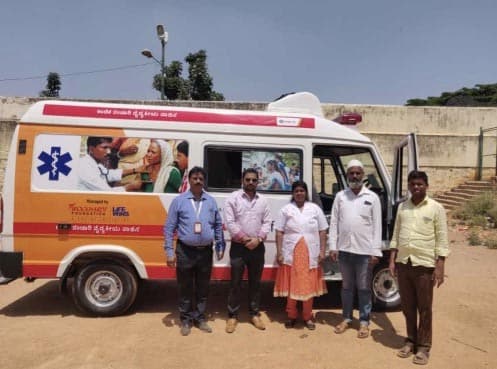
Governed by the philosophy – where every smile counts, Mobile1000 aims at reaching the rural community through professional healthcare delivery. Mobile 1000 Vans are operating across the country, providing medical aid to over 25,000 patients per year per van. It has helped over 171.47 lakh patients with free medicines.
Mobile1000 provides services in Madhya Pradesh, Uttar Pradesh, Uttarakhand, Gujarat, Punjab, Haryana, Andhra Pradesh, Bihar, Odisha, Rajasthan, Maharashtra, Jammu, Andhra Pradesh, Jharkhand, Delhi, Uttar Pradesh, and West Bengal.
Mobile1000 also recently launched its 200th healthcare van under the aegis of its Trustee & CEO, Sir Dr. Huz (Dr. Huzaifa Khorakiwala)
Smile on Wheels, Smile Foundation
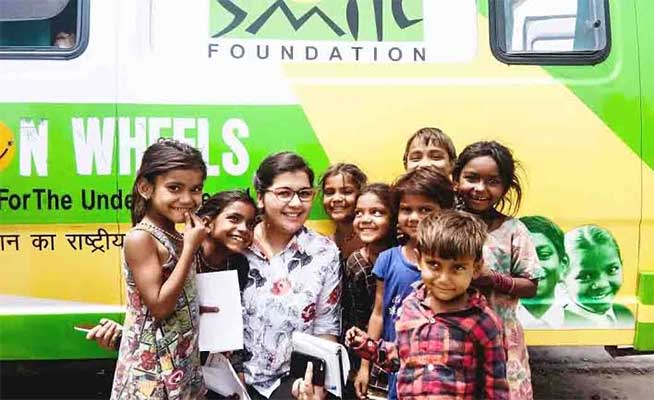
Smile on Wheel is a national level multi-centric project commenced by SMILE Foundation with an objective to provide an all-inclusive range of healthcare services to the underprivileged communities in the remote rural areas and slums through an equipped mobile medical van. The initiative focuses on providing a wide range of primitive, preventive and curative health services to the underprivileged.
Its main aim is to reach out directly to more than 3 lakh people, cover more than 20 lakh population through 30 Smile on Wheels in various cities of India.
Similar to government’s mid-day meal scheme, NGO Smile Foundation’s Mission Education program addresses the issue of health and nutrition through the medium of education
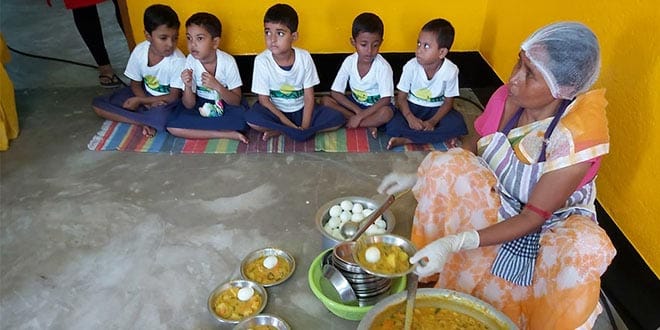
New Delhi: The clock strikes one o’clock, it’s lunch time and 6-year-old Asma (name changed) from Kasinathpur in West Bengal, is eagerly waiting for her favorite meal comprising khichdi with vegetables, which she gets to savour every Thursday during lunch hour, at school. Access to a scrumptious and nutritious meal is not just a Thursday motivation, but NGO Smile Foundation’s way to bring tiny tots to a play school. NGO Smile Foundation works with a mission to empower underprivileged children, youth and women through relevant education, innovative healthcare and market-focused livelihood programmes. The objective behind offering a meal is to inculcate good sanitation and hygiene practices from the formative years while providing them atleast one nutritious meal a day.
The concept might sound familiar to government’s mid-day meal scheme under which every child studying in primary and upper primary classes in government and government-aided schools gets free, nutritious meal. Whereas, Smile Foundation’s free meal model is a part of its national level programme ‘Mission Education’ committed to providing basic education and healthcare to underprivileged children. As part of its Mission Education programme, Smile Foundation implements a variety of intervention and development projects in different public, and private schools.
Smile Foundation’s educational initiatives include pre-school (3-6 years), formal education (3-18 years), non-formal and bridge education (6-18 years non-school going and/or dropouts) and remedial education (6-18 years school going).
As part of the programme, the team has Mission Education Centres. Explaining the concept of Mission Education Centre, Gargi Kapoor, National Manager of the Mission Education programme at Smile Foundation, says,
“Every Mission Education (ME) centre may or may not have nutrition support. Since we are focused towards providing educational support, we often work with government and in government schools we already have mid-day meal scheme. We run majorly three kinds of ME centres which function like any other school – formal, non-formal and remedial centres. While formal centres run in accordance with state board curriculum, informal centres are affiliated with the National Institute of Open Schooling (NIOS). At remedial centres students get extra educational support to remain in their respective schools – government or private. Apart from this, we have early childhood learning centres commonly known as playway schools or pre-school for children belonging to the age group of 3-6 years. Depending on the requirement of a public or private school, Smile Foundation intervenes. While some schools might need smart boards, other may require qualified teachers. Providing nutrition support is one such intervention one by Smile Foundation together with the help of private donors.
NDTV visited Smile Foundation’s Shishumon Learning Centre in Kashinathpur, which is basically a pre-school for children belonging to the age group of 3-6 years, catering to 75 children. When we reached, students were being served lunch and later given a handwashing lesson.
“This particular centre has been supporting the education and health of children for over three years now. Here we are preparing them for school while focusing on their well-being through sanitation, hygiene practices, awareness and regular health check-ups. We have a fixed weekly lunch menu and sometimes, on special request of children, we provide fruit cakes, ladoo, biscuits and other snacks, says Gargi Kapoor.
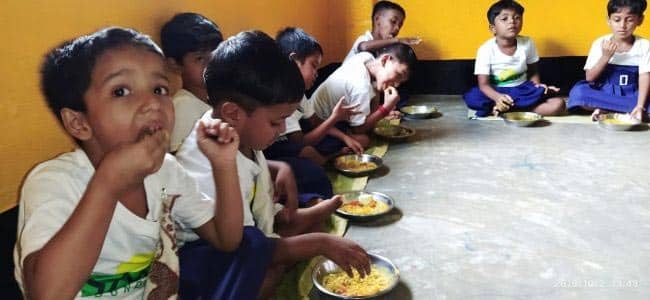
ME that addresses the issues of hunger and education majorly benefits underprivileged children, whose parents either work as a daily wage earner or farmer or take up odd jobs like auto driver, assisting a carpenter, bus conductor, among others. Women are usually housewives and only a handful work as a domestic helper or artisans.
The community we are addressing is needy; students here often come on an empty stomach. But with this programme, they get atleast one nutritious meal, it is a step towards eradicating hunger. Also, nutrition is an important aspect in helping children in continuing their education, says Gargi Kapoor.
How nutrition and the right amount of guidance has helped children is evident with commendable change in Asma’s mental and physical health. It is hard for Asma’s father, sole bread winner for a family of seven, to provide a nutritious meal to Asma and other family members. But since her enrollment in ME centre, she has been getting food rich in nutrients regularly and the prospect of a tasty and healthy meal has increased her motivation to attend classes regularly.
This is the story of the majority of ME centres providing educational and nutritional support in 22 Indian states and union territories benefitting over 47,000 children. In West Bengal alone, six ME centres offer nutritional support, benefitting 975 children. The team aims to expand their intervention in the field of eradicating malnutrition, hunger, improve retention rate in schools, through sensitisation and nutrition support.
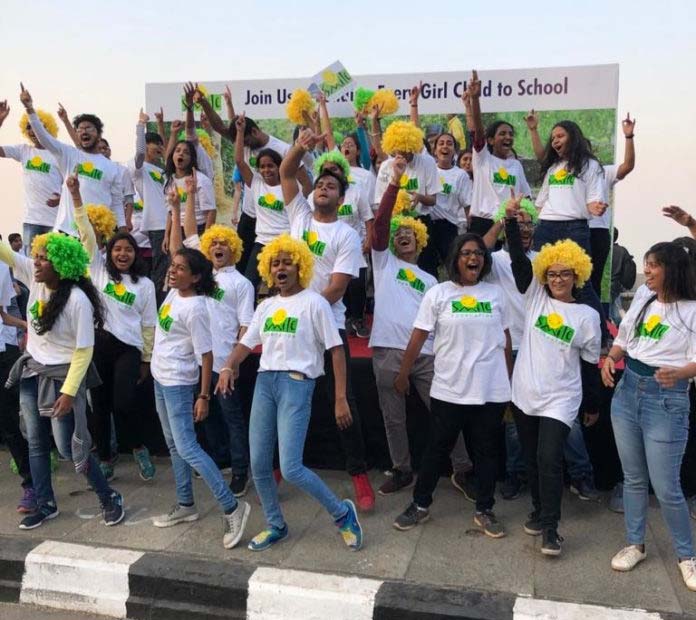
Report by Rashmi Ranjan Parida, New Delhi: Over 1000 employees from various corporates ran at the Tata Mumbai Marathon 2020 for Smile Foundation helping them support the education of more than 1600 underprivileged kids under its flagship program “Every Child in School”. The education costs for supporting each child, which covers cost of books and stationary, teacher and staff salaries, infrastructure upkeep, nutrition needs among other things was provided through them.
HDFC Life, Prudential, Cello, Abott Healthcare, Ion Foundation, Polycab, Coversto, SBI Life, LIC and Schindler helped support the cause by enabling Smile Foundation to provide cost free education to these children.
Speaking on the occasion Mr. Santanu Mishra, Co-Founder and Executive Trustee, Smile Foundation said, “To see such enthusiasm and participation from India Inc, reassures our commitment to bring in ‘Civic Driven Change’. Every Child in School is a unique campaign of Smile and is committed to ensuring that poverty doesn’t stand in the way of a child’s education. Through such generosity we can now safeguard continued education for at least 1600 more students for another year.”
An estimated 17.7 million children in India are out of school, working in hazardous conditions, living on the street, braving hunger, poverty and violence. The Mission Education programme, the overarching programme of Ever Child in School, identifies such out-of-school children from remote villages, tribal areas and urban slums, and provides them quality education. In addition to this the programme also looks after their health, nutrition, and holistic development through participation in co-curricular activities.
Last year 30,000 children across 22 states of India were directly provided education through 261 Mission Education projects. 51% of total beneficiaries were girls, while 74% of children were 1st generation learners from remote villages & tribal families. All of them received regular nutrition & health care support while the teachers received training in innovative teaching skills through the programme.
A digital campaign under which brand is urging consumers to capture candid smiles to help support the education of underprivileged children…
Happydent, one of Perfetti Van Melle India’s flagship brands, has partnered with Smile Foundation for #HappydentSparklingSmile, a digital campaign under which brand is urging consumers to capture candid smiles to help support the education of underprivileged children.
According to the company, known for its iconic advertisements, Happydent has traditionally brought smiles to the consumer through its quirky and humorous communication centered around the benefit of ‘Sparkling Smiles’ and this campaign is an extension of the brand’s core philosophy.
Rohit Kapoor, director marketing, Perfetti Van Melle India, said, “As a responsible corporate, Perfetti Van Melle believes in giving back to the communities where we operate and we aim to make a difference to the lives of these wonderful children by providing them better access to education. The cause coheres with Happydent’s brand proposition of adding ‘sparkling smiles’ to people’s lives. #HappydentSparklingSmile is a simple initiative at heart to ensure we are able to light up the lives of some underprivileged kids.”
For this campaign, the brand has partnered with the leading Indian photographers, Abhinav Chandel, Praveen Bhat, Shramona Poddar and Zaid Salman, to capture ‘candid sparkling smiles’ around them.
Under the campaign, these photographers have shared the images on their social handles and have also detailed the moment which led to that smile. Alongside, the brand is urging its consumers to share the candid moments on brand’s social handles through a simple process detailed out in the campaign video.
Santanu Mishra, co-founder and trustee, Smile Foundation, added, “The idea behind this partnership is to see more and more children enrolled in schools. Despite, us having a law that makes education a fundamental right of every child between the ages of 6 and 14, the harsh reality is that at least 32 million Indian children of age up to 13 years have never attended any school, majority of them belonging to the socially disadvantaged class. As socially responsible organisations, we will together work to bring back smiles to these children.”