

Summary:
- Assam’s recurring floods disrupt livelihoods, education, healthcare and local economies year after year.
- The Government of Assam has strengthened disaster response through coordinated rescue, relief and rehabilitation efforts.
- Smile Foundation supports government-led Assam flood relief through emergency aid, mobile healthcare and WASH initiatives.
- Donate to Smile Foundation to help deliver emergency relief, healthcare and long-term recovery for flood-affected families in Assam
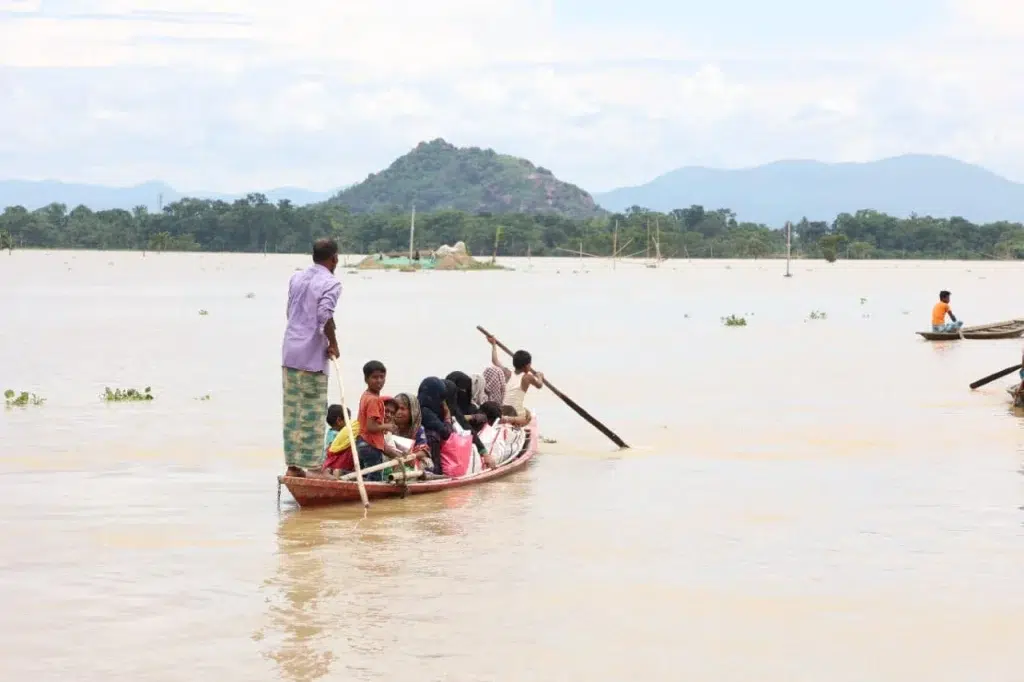
For generations, floods have shaped Assam’s landscape and the lives of the people who call it home. What has changed over the years, however, is not simply the recurrence of floods, but the growing scale of destruction they leave behind. Longer periods of inundation, accelerating riverbank erosion and repeated displacement have transformed what was once considered a seasonal challenge into a recurring development crisis.
The Government of Assam’s Flood Memorandum (2020) acknowledged this reality.
Unlike many parts of the country where floods occur sporadically, Assam experiences prolonged flooding caused by the Brahmaputra, the Barak and more than 50 tributaries that flow through the state. Alongside flooding, continuous riverbank erosion permanently alters landscapes, destroys livelihoods and forces thousands of families to rebuild their lives year after year.
Today, as the state once again undertakes extensive rescue, relief and rehabilitation efforts, one reality has become increasingly evident–
Assam’s flood should evolve into a long-term strategy that builds resilience alongside relief.
Why Assam Sees So Much Flooding
Floods have remained one of Assam’s defining developmental challenges for more than 7 decades. While the Brahmaputra river system has sustained the state’s rich biodiversity and agriculture, it has also made Assam one of India’s most flood-prone regions.

A Timeline of Assam’s Flood Journey
- 1954 – The First Major Post-Independence Flood
One of independent India’s earliest major floods brought national attention to flood management and embankment construction in Assam.
- 1962–1988 – Floods Become a Recurring Reality
Successive floods established flooding as an annual developmental challenge, disrupting lives, agriculture and infrastructure across the state.
- 1998–2004 – Rising Human and Economic Losses
Large-scale floods devastated livelihoods, public infrastructure and agricultural productivity, highlighting the increasing economic cost of recurring disasters.
- 2012–2020 – Climate Risks Intensify
Changing rainfall patterns, heavy sedimentation and riverbank erosion intensified flood impacts, culminating in the devastating 2020 floods that reshaped disaster management planning. - 2026 – Flood Risk Expands Beyond Traditional Zones
Floodwaters affected districts that had historically experienced lower levels of inundation, reinforcing the need for climate-resilient planning and stronger community preparedness.
The timeline reflects an important shift. Floods in Assam are no longer isolated natural events. Their increasing frequency, changing geography and growing socio-economic impact demand a broader development response.
Why Assam Flood Relief Cannot Wait
Between 2002 and 2022, floods affected nearly 40 million hectares across India, caused estimated economic losses of USD 608 million and displaced millions of people. Even now, Assam continues to remain among the country’s most flood-vulnerable states along with 8 other states across the nation,
However, Assam’s flood brings in more attention because of the magnitude and the changes in the Brahmaputra river. The Brahmaputra basin is recognised as one of India’s highest-risk river systems because of its heavy rainfall, changing river morphology, high sediment load and extensive floodplains.
The abovementioned numbers reveal more than the scale of a disaster.
They highlight :
A cycle where communities are forced to recover even as another flood season approaches. Homes are rebuilt, livelihoods restored and public services revived only to face renewed disruption.
The consequences extend far beyond emergency relief.
- Livelihoods and Local Economies Under Constant Stress
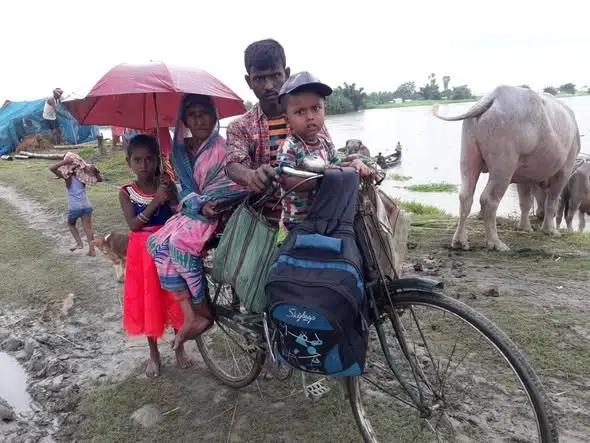
Agriculture remains the backbone of Assam’s rural economy. Recurring floods damage standing crops, livestock, local markets and transport networks, while riverbank erosion permanently reduces productive land. The resulting loss of income often pushes families into debt, migration and prolonged financial insecurity, making recovery increasingly difficult after every flood.
- Education Interrupted, Human Capital at Risk
When schools become relief shelters or remain inaccessible due to damaged roads and flooding, children lose more than classroom time. Repeated disruptions affect learning outcomes, increase dropout risks and weaken future employment opportunities, particularly for children from vulnerable communities.
- Healthcare Beyond Emergency Response
Floods place enormous pressure on healthcare systems. Damaged health facilities, disrupted medicine supply chains and inaccessible roads reduce access to essential services precisely when communities face heightened risks of water-borne diseases, maternal health complications and childhood illnesses. Ensuring continuity of healthcare is therefore as important as emergency rescue itself.
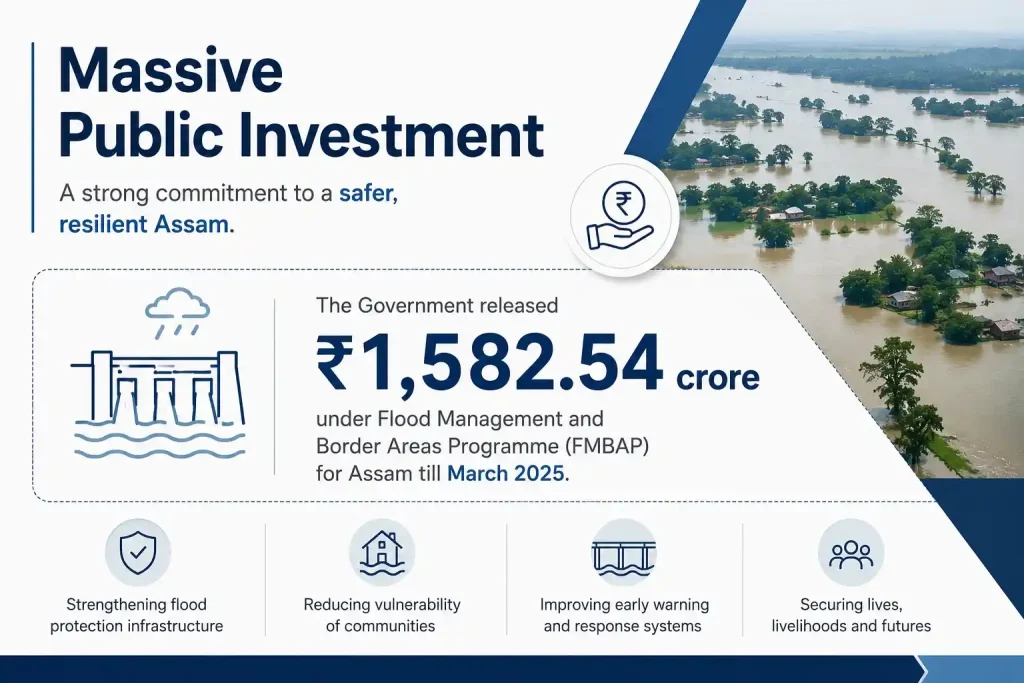
Taken together, these challenges demonstrate that floods in Assam are no longer simply humanitarian emergencies. They have become recurring barriers to sustainable development that require long-term investment in resilience, preparedness and rehabilitation.
From Relief to Resilience: What Changed After the 2020 Assam Flood Memorandum?
The Assam Flood Memorandum (2020) marked an important milestone in strengthening disaster governance.
It documented extensive damage across housing, agriculture, schools, healthcare infrastructure, roads, embankments and public utilities while outlining a coordinated response involving the National Disaster Response Force (NDRF), State Disaster Response Force (SDRF), Armed Forces, Police, Fire and Emergency Services, Civil Defence and district administrations.
Relief camps ensured access to food, safe drinking water, medicines, hygiene materials, baby nutrition and temporary shelter, while parallel efforts focused on restoring roads, healthcare facilities and other critical infrastructure.
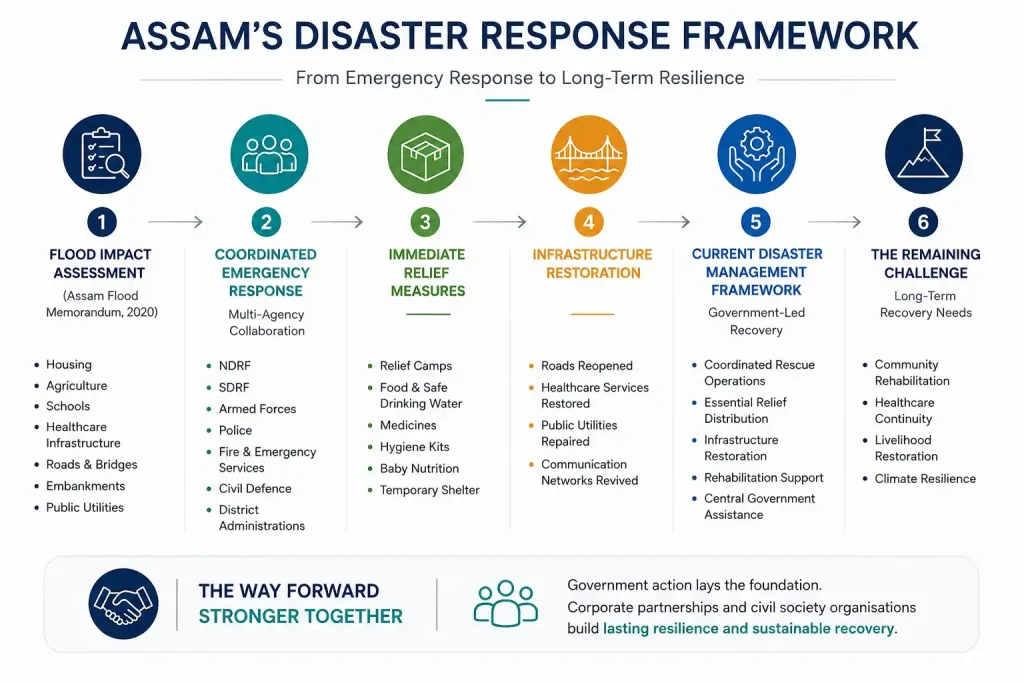
Government agencies continue to lead coordinated
- rescue operations
- restore communication networks and public infrastructure
- distribute essential relief materials and prioritise rehabilitation
This progression demonstrates that disaster management in Assam has become more organised and collaborative. Yet, the recurring nature of floods also highlights that government action alone cannot address every challenge.
Thus, to tackle the Assam floods, better in future, it is pivotal to create an ecosystem that helps in creating sustainable rehabilitation, healthcare, and livelihood restoration, which will need sustained support long after emergency operations end from all social stakeholders.
Strengthen Assam Flood Relief with Smile Foundation
The Government of Assam has developed a robust disaster response framework that prioritises rescue operations, relief distribution and infrastructure restoration through coordinated efforts involving the NDRF, SDRF, Armed Forces, district administrations and other emergency agencies. While this system ensures timely emergency response, the scale and recurring nature of floods create challenges that extend beyond government capacity.
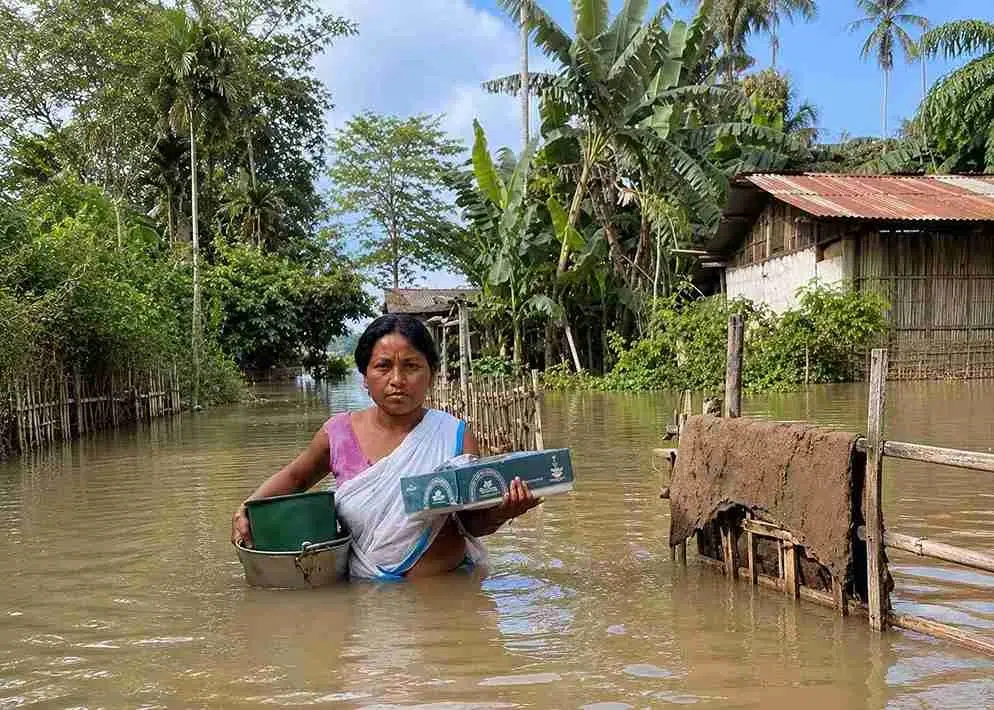
Therefore, in this race against time, we as the community should support Assam flood victims with sustained humanitarian support, healthcare continuity and rehabilitation long after floodwaters begin to recede.
Smile Foundation is currently in Assam providing complements these government-led efforts by strengthening the last mile of disaster response. Through its Disaster Response programme, the organisation works alongside local authorities and community networks to ensure that essential aid reaches vulnerable families quickly, efficiently and with dignity.
Emergency Relief: Meeting Immediate Humanitarian Needs
During Assam Floods, thousands of families are displaced who end up losing access to food, clothing and shelter. To mitigate the crisis, Smile Foundation responds by distributing dry ration kits, ready-to-eat meals, clean drinking water, baby food, women’s hygiene kits, blankets, clothing and other essential relief materials through flood relief camps.
Mobile Healthcare: Restoring Access to Essential Medical Services

Floods often disrupt healthcare infrastructure, making access to medical care difficult in remote and waterlogged regions. Building on its extensive experience in community healthcare through its Smile on Wheels and Smile on Boat programme, Smile Foundation supports healthcare continuity by deploying medical teams, facilitating medicine distribution and addressing immediate health concerns among flood-affected communities
Water, Sanitation and Hygiene (WASH): Preventing a Second Crisis
One of the greatest threats after flooding is contaminated drinking water and poor sanitation, which significantly increase the risk of disease outbreaks. Smile Foundation’s relief efforts prioritise the distribution of safe drinking water, hygiene kits and sanitation essentials that help families maintain health and dignity during displacement.
Donate for Assam Flood Relief
Disaster response does not end once rescue operations conclude. Recovery requires restoring stability, rebuilding livelihoods and strengthening community resilience. Smile Foundation adopts a long-term approach by supporting vulnerable communities beyond the emergency phase, helping families regain access to healthcare, education and essential services.
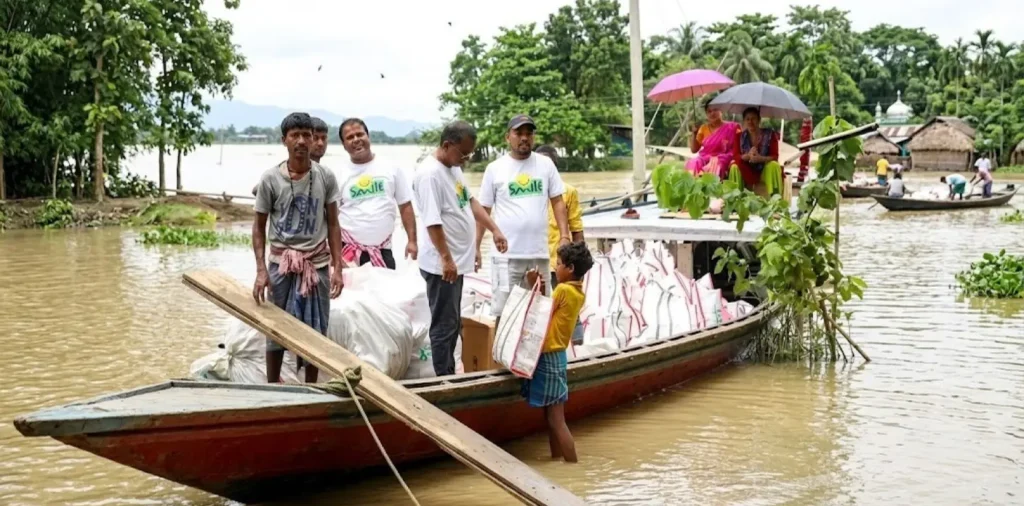
Smile Foundation’s Assam Flood Relief initiative offers an opportunity to become an active partner in India’s disaster response ecosystem. Every effort and contribution can strengthen government-led relief by enabling faster delivery of emergency supplies, healthcare support and rehabilitation services to communities that need them most.
Donate for Assam Flood Relief and Support Emergency Relief, Healthcare and Rehabilitation in Assam.
FAQs
1. Why is Assam flood relief needed every year?
Assam experiences recurring floods due to the Brahmaputra, Barak and over 50 tributaries, causing widespread displacement, livelihood loss and damage to infrastructure almost every year.
2. How can I donate to Smile Foundation for Assam flood relief?
You can donate to Smile Foundation to support emergency relief, food distribution, healthcare services, hygiene kits and long-term rehabilitation for flood-affected communities in Assam.
3. How does Smile Foundation support Assam flood relief?
Smile Foundation complements government efforts through flood relief camps, emergency ration distribution, clean drinking water, mobile healthcare, WASH initiatives and community rehabilitation.
4. Why should I support an NGO for flood relief?
An experienced NGO for flood relief helps deliver last-mile humanitarian assistance, ensuring food, healthcare and essential supplies reach vulnerable families quickly and efficiently.
5. What relief materials are distributed during Assam flood relief?
Relief efforts include dry ration kits, ready-to-eat meals, safe drinking water, baby food, women’s hygiene kits, blankets, clothing and other emergency essentials.
6. Does donating to Smile Foundation support long-term recovery?
Yes. Beyond emergency relief, donating to Smile Foundation supports healthcare continuity, rehabilitation, education and community resilience after floods.
7. How does Smile Foundation support healthcare during Assam floods?
Through its Smile on Wheels and Smile on Boat programmes, the organisation provides mobile healthcare, medicine distribution and medical support to flood-affected communities.
8. Why is long-term Assam flood relief important?
Flood recovery extends beyond rescue operations. Sustainable rehabilitation, livelihood restoration, healthcare access and climate resilience are essential for helping communities rebuild stronger after every flood.
Sources:
- Flood & Erosion Problems, Government of Assam
Large-Scale Flood Hazard Monitoring and Impact Assessment on Landscape: Representative Case Study in India - Assessing flood vulnerability in the Brahmaputra Valley of Assam using a mixed methods approach
- Assam Floods 2020
- National climate vulnerability assessment identifies eight eastern states as highly vulnerable
