

IN THIS ESSAY:
- Why menstrual hygiene in schools is essential for improving girls’ health, dignity, confidence and educational continuity.
- How schools can become menstrual-friendly spaces through awareness programmes, sanitation infrastructure and access to sanitary products.
- The role of menstrual hygiene education in reducing stigma, misinformation and absenteeism among adolescent girls.
- Key interventions needed to build inclusive school ecosystems that support girls during menstruation, especially in underserved communities.
- How Smile Foundation is strengthening menstrual health awareness and access for school girls through its Swabhiman programme.
“Every girl has the right to manage her menstruation safely and with dignity. When girls are forced to stay home due to a lack of menstrual hygiene products or facilities, their education is disrupted, and their potential is limited. By investing in menstrual hygiene management, we can unlock girls’ potential and accelerate progress towards gender equality.”
Henrietta Fore UNICEF’s Executive Director
This Menstrual Hygiene day comes with a pivotal realisation that menstrual hygiene is just not a sanitation issue, but is crucial for the health, dignity and well-being of girls and women. Poor menstrual hygiene practices can lead to a range of health issues, including infections, rashes and other long-term complications.
In addition to physical health risks, the lack of access to menstrual hygiene facilities can also affect girls’ education and social participation. Girls not having access to sanitary pads or private toilets may miss school during their periods or drop out altogether. This can have long-term consequences on their education and economic opportunities.
Promoting menstrual hygiene and ensuring access to adequate sanitation infrastructure, safe menstrual products and accurate awareness is critical to advancing public health, gender equity and human dignity.
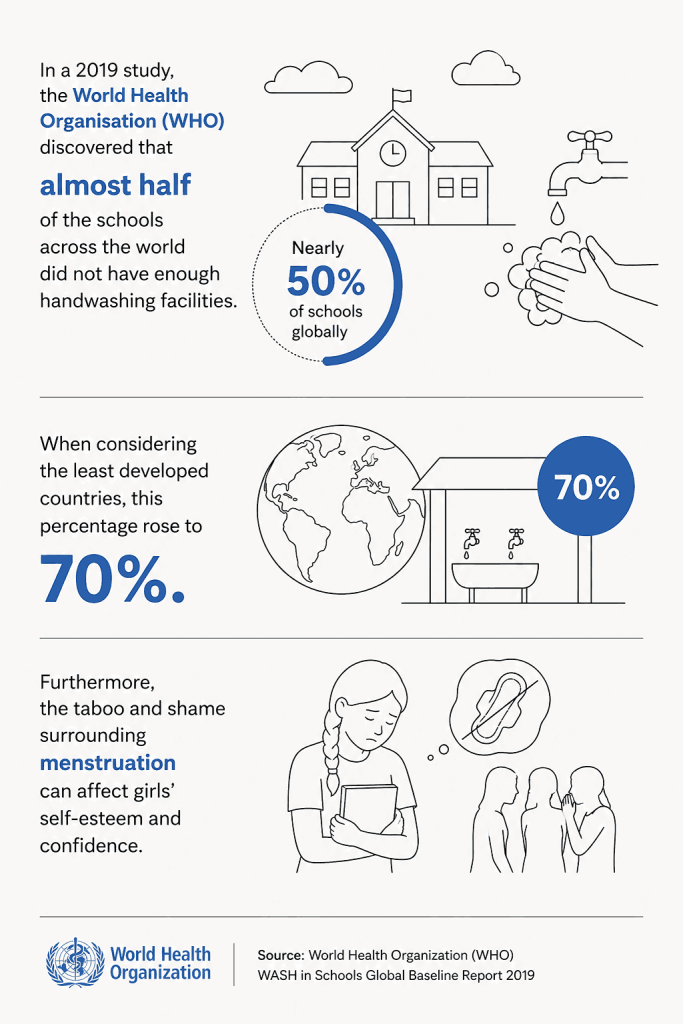
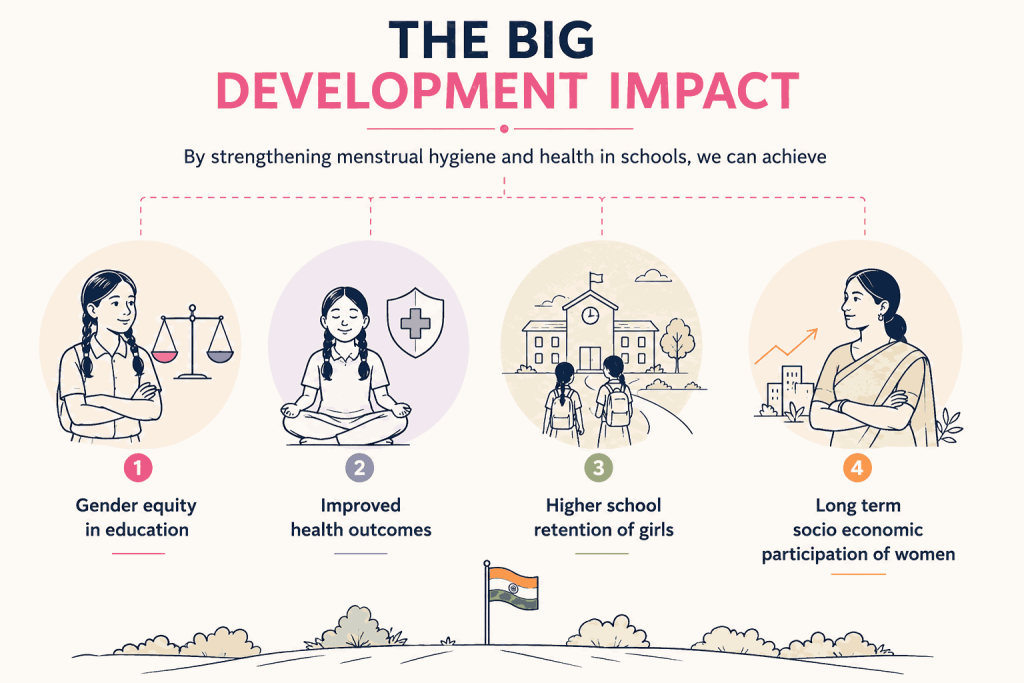
Limited menstrual hygiene management continues to affect girls’ educational continuity, confidence and social participation. Strengthening menstrual health systems enables girls and women to manage menstruation safely and with dignity, improving school attendance, workforce participation and long-term socio-economic outcomes. Beyond health, menstrual hygiene is closely linked to inclusive development, empowering women and girls to participate more equitably in education, livelihoods and community life.
Why Menstrual Hygiene in School Matters
Menstruation affects nearly half the global population, which gets furthermore challenging when young girls and women have limited menstrual hygiene management that continues to impact their education, health and economic opportunities. Therefore, school from the very start of a child’s education plays a critical role in creating informed, safe and inclusive learning environments for girls.
Building Awareness Beyond Biology
Schools can help normalise menstruation through structured and age-appropriate menstrual hygiene and education.
Key focus areas–
- Understanding the menstrual cycle
- Safe menstrual hygiene practices
- Awareness of menstrual product options
- Reducing stigma and misinformation
Impact
- Improved confidence and self awareness among girls
- Better hygiene practices and reduced infection risks
- Higher classroom participation and school retention
Ensuring Continuity In Education
Access to sanitary products remains a barrier for many girls , particularly in underserved communities and among differently-abled students.
Schools Can Support Through
- Availability of sanitary pads in schools
- Emergency menstrual hygiene products
- Inclusive access for differently abled girls
Impact
- Reduced absenteeism during menstruation
- Improved educational continuity
- Greater dignity and participation in school life
Building Menstrual Hygiene- Friendly School
Essential Infrastructure requirements
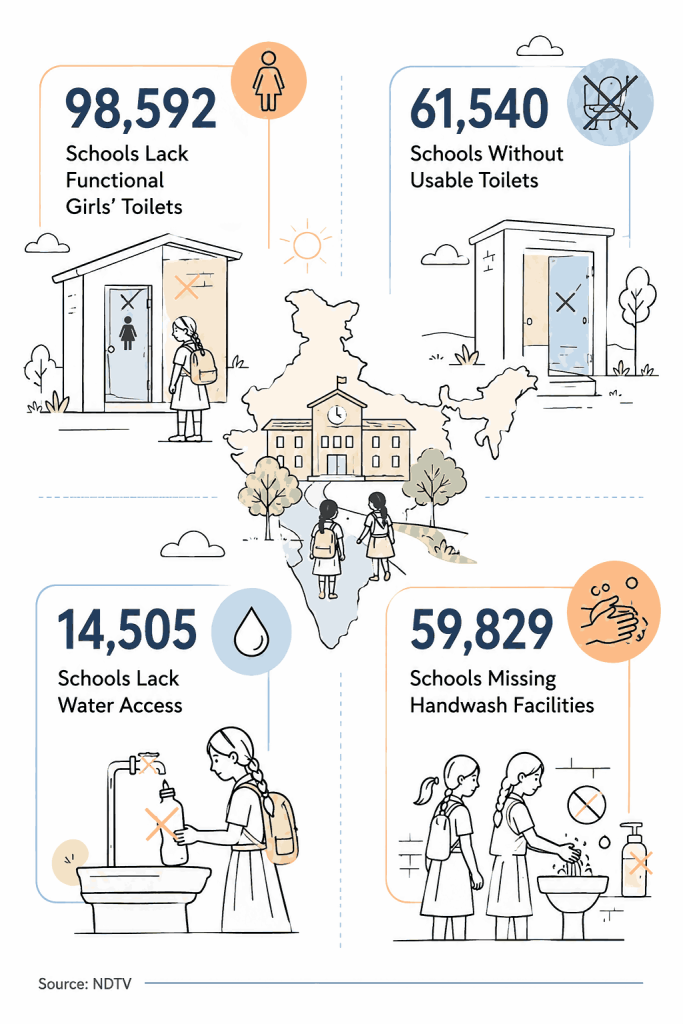
- Private and hygienic girls toilets
- Safe menstrual waste disposal systems
- Access to clean water and handwashing facilities
Institutional Support
- Sensitisation of teachers and school staff
- Improved confidence and emotional well being
- More equitable and inclusive school environments
Schools Leading The Menstrual Health Cause
By taking these steps, schools can promote menstrual health and hygiene among girls and contribute to a more equitable and inclusive society. Improving menstrual hygiene and health can help girls stay in school, while also taking control of their reproductive health.
Furthermore by providing comprehensive menstrual education, access to sanitary pads for schools, safe sanitation practices and creating a supportive environment, schools can help break down the stigma surrounding menstruation and promote better health outcomes for girls.
Recently, the Supreme Court has asked the centre to frame a uniform national policy to ensure menstrual hygiene by providing sanitary pads, vending and disposal mechanisms and exclusive washrooms for girl students in schools. The importance of menstrual hygiene for school girls is finally making a noise where it matters.
Smile Foundation and Menstrual Hygiene of School Girls
Smile Foundation contributes to the importance of menstrual hygiene for girls in schools through its Swabhiman programme.
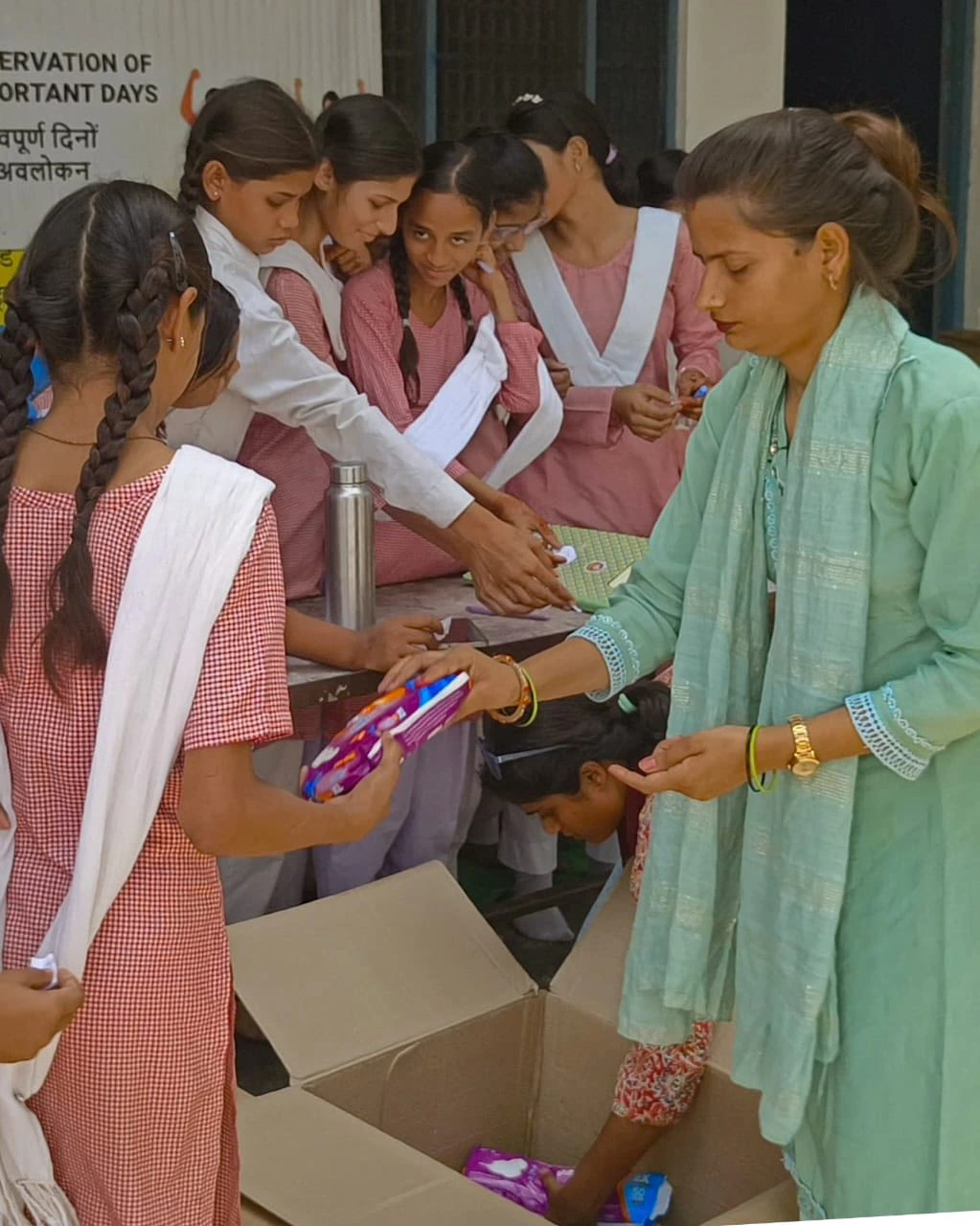
Under this programme, Smile Foundation provides menstrual health and hygiene education to adolescent girls. The programme also distributes sanitary pads to girls in need, ensuring that they can manage their periods hygienically and without shame.
Over the years by working closely with the underserved communities, one of the emerging solutions to make menstrual hygiene more accessible and acceptable in rural communities of India is through schools.
Schools remain one of the most influential institutions in advancing menstrual hygiene and health in India. Beyond education delivery, they play a critical role in building awareness, improving access to menstrual products and creating safe, inclusive infrastructure that enables girls to continue learning with dignity.
Strengthening menstrual health systems within schools contributes directly to higher retention among girls, improved health outcomes and greater gender equity in education. For organisations, policymakers and CSR stakeholders, investing in menstrual-friendly school ecosystems is not only a public health intervention, but also a long-term investment in human capital, socio-economic participation and building more equitable and resilient communities across underserved regions.
Build Schools with Smile, where girls can learn confidently. Partner with Smile Foundation to strengthen menstrual-friendly school ecosystems in India.







2 replies on “Menstrual Hygiene Day 2026: Build Schools Where Girls Can Learn Better”
Small initiation brings a great change…i suits to smile foundation….
The information is educative