Categories
Partners In Change

Swabhiman: Empowering the Girl Child

When women stand together to support one another, no one stands a chance against them! A woman feels empowered if she is uplifted by another woman. When this cycle continues, gradually, the entire society is benefited. Girl child education, proper nutrition for the girl child, girl child protection, empowering the girl child through various means are some of the ways this can be achieved.

Swabhiman’ means self-respect and is the most common emotion that binds all women, despite the diversity in their culture, religion or nationality. Looking for their own identity, women have, for centuries, been denied their self-respect. The Swabhiman programme is aimed at empowering the girl-child and women belonging to less-privileged backgrounds who, till date struggle to fight against societal barriers.

Through scholarship programmes, counselling sessions and various other interventions, about 72,000 women and girl child were benefited which was a step towards women empowerment.

It is very important to build confidence among young girls coming from less-privileged communities. Most of them never get a chance to realise their purpose in life and hence it is a step back from achieving women empowerment.

These girls are all first generation learners, with their parents engaged as domestic help, drivers, street vendors and daily wagers. Along with difficult financial conditions at home, the Swabhiman scholars also had to overcome the prevailing gender bias in their families and community, and the vicious trap of child marriage, to even go to school.

So far, the Swabhiman programme has made a difference to over 500,000 girls and women across India which can be counted as one of the accomplishments towards achieving women empowerment.

“My father owns a grocery store. My brother is a couple of years older to me and dreams of becoming a film star someday. Unlike him, I had always been unsure about myself, until one day, I was asked what I really wanted to do. When I told the community counselor how much I loved reading science books, she urged me to take a Swabhiman Scholarship test. I was very nervous about how I had performed, but my mother said- “There is so much more you can do than cook and clean for your family, like I do today.”

It has been 2 years now that I was accepted for the scholarship and started my education all free of cost. More than books and knowledge if I gained anything, it was the confidence that I can really do whatever I wish to if I work hard enough. My hard work has helped me realize what I really want to do is become a doctor.”

-14 year old Pooja is a Swabhiman Scholar studying in 9th Grade in Bengaluru.

Like Pooja, Swabhiman provides educational support to exceptionally talented girls through full scholarships to complete their schooling and aslo provides support for their higher education. In addition to this, the young girls are provided exposure and opportunities for holistic development to help them succeed in all spheres of life.

In addition, a two day learning fest for these talented young girls is also held to help them explore themselves completely and shape their own lives. With a view of making them self-aware, confident and take full charge of their own development, interactive and self exploration workshops are conducted to empower them with various life skills. They are helped by experts to develop their personality, interpersonal relationships and studies. 

So far, Swabhiman has successfully made a difference to the lives of over 500,000 women and girl children.

Categories
In The Spotlight

Smile’s STeP in the right direction for youth

Looking at the current job situation in our country, future for our youth appears dreary. Slow economy, lack of new investment, job cuts, rise of automation, stagnation in manufacturing activity and a “new normal” of hiring contract labour in the formal economy, are major hurdles preventing our semi-skilled workforce to find jobs.


As of date, unemployment in India is at a 45-year high of 6.1 per cent as per the officially unannounced NSSO statistics.  The Center for Monitoring Indian Economy (CMIE), a private think tank, has calculated unemployment rate at 7.7 per cent as of December 2019. Both the NSSO and the CMIE have found that the jobless rate among youth is significantly higher compared to the overall population and hence it requires immediate attention. 


States which are hardest hit are Tripura, Haryana, and Himachal Pradesh with unemployment rate of more than 20%. Delhi, the capital and employment hub of the country, presently has an unemployment rate of 11.2%. 


Smile Foundation’s STeP programme – (Smile Twin E-learning Programme) which is a livelihood programme for the youth comes as a sure ray of hope for many.


Smile’s STeP programme aimed at skilling the youth is not just a medium of education, but a means of nurturing the mental health and personality development of the underprivileged youth, facilitating them to do their part in making the world a better place.


The livelihood program has succeeded, where most ‘vocational’ training courses fail, i.e. to address the requirement of soft skills needed at the workplace and making the candidates confident through comprehensive training on personality development.


Data from the past five years of STeP programme, shows that of the 34,897 youth trained, 22,498 have successfully been placed, which is a good 65%.


But how is the big question? The Smile skilling program – with components of spoken English, basic computers, financial literacy, personality development and industry visits— in the form of exposure to the job-sites of potential recruiters, where these students get to see and feel things first hand. Mock interviews and group discussions are also conducted as part of the curriculum make the candidates job ready.


Youth trained in the STeP programme


Smile Foundation also also operates a Centralised Placement Cell, where the backend team often works with potential employers from different sectors to understand their needs, analyse them and create opportunities for students, both through on and off-campus placements. Over time, the course content is often tweaked according to the industry trends and requirements.


 STeP often ties-up with popular brands, often, start-ups like Paytm, OYO Townhouse, Café Coffee Day to name some that require semi-skilled workforce, then works out the course content accordingly.


The programme which caters to the underprivileged youth, also offers career counseling to help students choose the right employment in tune with their skills, ability and job expectations.


Most of the candidates trained at STeP centres evolve into first-generation organised sector professionals becoming an inspiration for their siblings, upcoming generations and communities at large.

Categories
Insights

Healthcare for Women in India

Quality healthcare for all is among the most crucial necessities that every individual must receive. As per a research conducted by All India Institute of Medical Sciences and Harvard University only 37% of women receive healthcare in India.


Even with improved intervention to better the situation of healthcare for women by both public and private agencies, it still lacks priority in the Indian society and is not limited to reproductive health of women and girls. Only 18% girls and women use sanitary napkins during menstruation the absence of availability and knowledge of its use being the primary reason for the same.


The state of pregnant women getting both ante natal and post-natal care is dire with as less as 21% women receiving full ANC including three visits to a doctor during the term and taking iron and folic acid tablets for at least 100 days of pregnancy.


The situation of non-reproductive healthcare for the female sex is, if not more, then equally worse. The sex ratio of the country is low, especially in states like Haryana, Uttar Pradesh, Bihar and in Rajasthan alone it is lower than that of the entire country. Even if a girl is born, the neonatal mortality rate for girls is grave. The major reason for this is the lack of care and nutrition provided to a girl child.


In a society where girls are considered to be a burden, her need for adequate nutrition and healthcare becomes an added expense for the family. As per National Family Health Survey, boys receive prompt medical attention as compared to girls for the same illness. The survey showed –


72% boys are treated for acute respiratory infections against 66% girls

Boys with diarrhoea are 7% more likely to be taken to a health facility than girls

Among last-born children, boys are 11% more likely to be breast-fed

And the proportion of fully immunised boys is 4% higher


Women in India die due to illnesses like anaemia and common infections like UTI. Tuberculosis which is easily treatable amount to 25% of non-maternal deaths for women. If provided with prompt medical aid, as many as half the deaths can be prevented but the same is far from reality.


A woman is required to feed on the leftovers after the rest of the family, primarily men, have eaten. This food is usually devoid of nutrition as basic and important as iron, calcium and iodine. As per World Health Organisation, more than 51% women of reproductive age in India are anaemic. Its affects might not be as acute among girls but can be life threatening for a pregnant woman; menstruating girls can suffer from irregular periods and tiredness, affecting their day to day life.


The lack of care is not just in terms of health and nutrition but also in terms of the kind of treatment these women are subjected to. The regard of privacy and dignity to quality life is often neglected. At times in rural and remote areas, women are often examined in presence of men at private clinics in the absence of any female assistant, leaving them distressed.


With lots being done for improving availability, affordability and quality of healthcare in country, there still is a need to pay special attention to healthcare of women. When a human is ill and weak, he/she cannot work to the best of their abilities at anything, neither at home nor outside of it. The same is true for women.


Smile foundation is working relentlessly to solve this issue. Through its women empowerment initiative Swabhiman, Smile has been creating awareness among women communities in rural areas and urban slums about their health needs and the medical care they must seek.


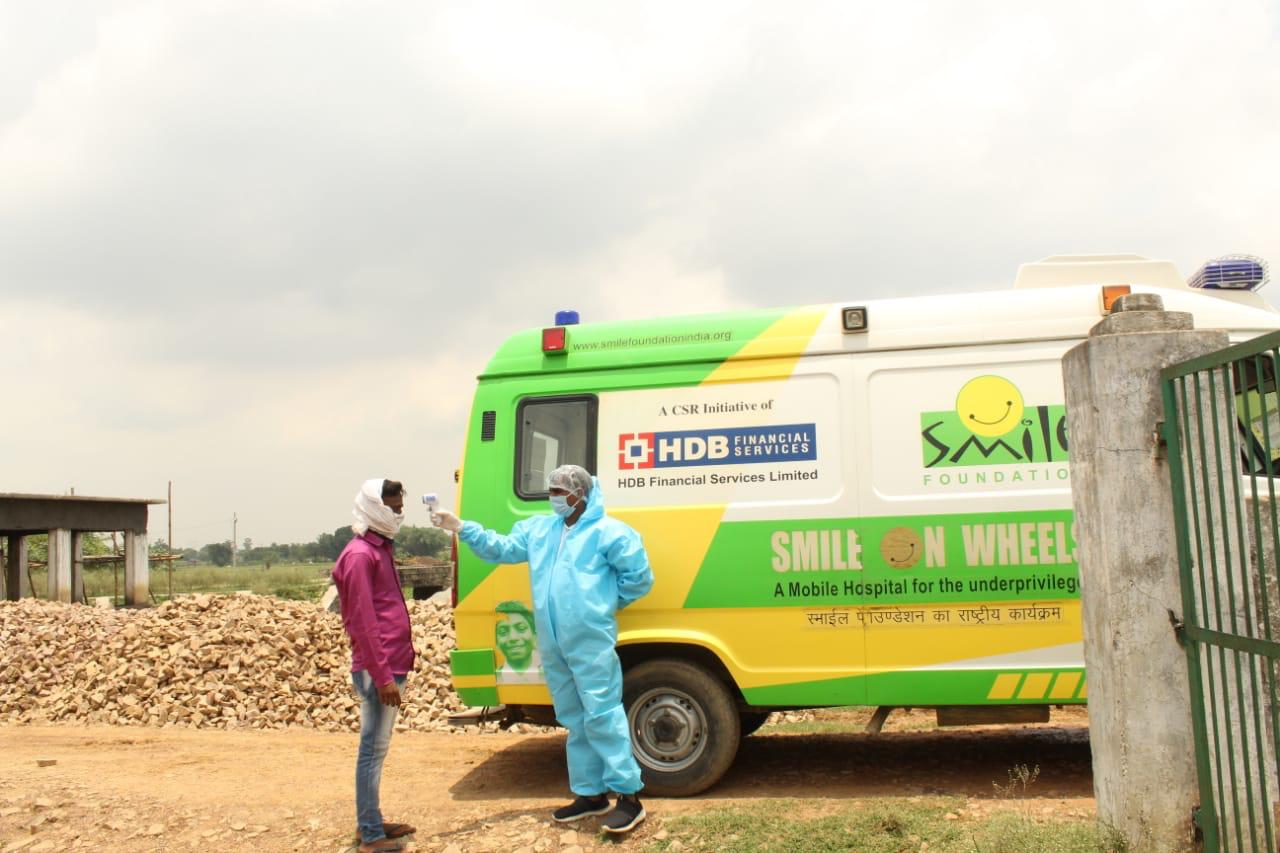
Through workshops and street plays, behavioural change towards women health and their needs is also addressed. Smile on Wheels, the mobile healthcare units, run under Smile’s healthcare program pays special attention to women and provides with suitable aid especially to pregnant women and elder women.


A healthy woman ensures a healthy family which in turns brings in a healthy community.

Categories
Smile

Health-care intervention in Jharkhand

Jharkhand – “The Land of Forest”, with its 3.2 million population scattered over 24 districts, is the 14th largest state of the nation. Primarily a rural state, with only 24% of the population living in cities, it is a multilingual state with acculturation of different indigenous people. 27% of the total population comprises of the indigenous tribes; 91% of whom reside in rural Jharkhand concentrated majorly in Gumla, West Singhbhum, and Lohardaga districts. Other than being renowned for its waterfalls, hills and holy places, the state also accounts for 40% of the mineral resources of India. However, 39.1% of the population is below the poverty line, suffer from various health issues. The primary factor of which is the low productivity of agriculture. Poverty results not only in the decline of the standard of living of the masses but also prevents people from accessing even basic rights like nutrition, healthcare, and education.


Although the capital city Ranchi has now become a health resort, with the presence of Ranchi Institute of Neuro-Psychiatry and Allied Sciences, which is regarded as the largest psychiatric hospital in the country, healthcare is still not accessible to the majority of the population of the state.


With most of the population living in remote rural areas, health facilities are not available despite the presence of the health care delivery system by the government, where primary, secondary & tertiary healthcare along with mother and childcare have been established at every level, resulting in a health crisis throughout the state.


The tribal, ethnic groups living in these villages are overblown by a plethora of communicable and non-communicable diseases, malnutrition, infant and maternal mortality and morbidity, etc. About 35 clans of these indigenous groups lack awareness and consciousness among themselves for utilising the healthcare facilities provided to them. Superstition-animism, naturism, taboos are still dominant among them. The ‘Ojhas’ and ‘Baidyas’ are still prevalent in these villages, influencing the people to use supernatural ways or home remedies for their cure diseases and other health-related problems. Poverty, low literacy rate and poor transport facilities become the one more reason for the inaccessibility to proper health care. ‘Hariya’ (a traditional drink made of rotten rice), rice and salt are the most common diets for these people which lacks in the required nutrition required by individuals and this leads to an increase in diseases and malnutrition among both adults and children.


19.6% of children in Jharkhand are malnourished, due to the undernourishment of the mother which results in both maternal and infant mortality. 67% of the children in Singhbum alone are underweight, the highest in the country. 70% of adolescents and pregnant women are anemic due to lack of iron-rich food as well as access to iron and folic acid tablets. Acute malnutrition has given rise to the disease of tuberculosis in Jharkhand. The unhygienic and unhealthy lifestyle of these tribes has made Jharkhand a breeding hub of malaria and dengue mosquitoes. Lack of awareness on family planning and sex education leads to an increase in the birth rate of these tribes resulting in a population explosion and increase in the rate of STDs like HIV.


At a glance, Jharkhand being one of the most resourceful states is under a severe health crisis and the scenario is still hopeless and requires initiatives with much deeper impacts.  


In such a scenario, Smile Foundation’s Smile on Wheels has brought much relief regarding health care in the lives of these underprivileged people by providing them the health facilities to cure their primary health needs. The Smile on Wheels currently operating in Jharkhand is reaching over 13 villages , under 3 Panchayats, of Chaibasa Sadar block of West Singbhum district.


All the members in the community are effectively treated and the patients suffering from various illness & diseases are diagnosed. Smile on Wheels also disseminates information related to health issues through awareness sessions to enhance the health seeking behaviour of the community. More than 10,000 people have been benefited so far.

Categories
In The Spotlight

Cinema: Food for Thought

The quintessential world of fantasy and drama viewed through the digital screen plays a crucial role in the day-to-day life. Cinema with its world of glitz and glamour becomes a notion of wonder for the ordinary. A movie-goer often walks into the theatre as a blank slate, eager to explore a new world of imagination and creativity. The cinema is a creative tool, powerful enough to instil emotions giving way to presenting a lasting impression in the minds of the audience. The capacity of the cinema to affect the audience often raises the question of, what is ‘good cinema’ and how does it influence the viewers? The Indian film industry produced over one thousand six hundred films in 2018 alone. According to IBEF, the industry is predicted to bank over US$ 3.7 billion by the year 2020. Through the years, the number of cinemas produced has increased rapidly. Encompassing varied genres and forms, the film industries around the world allow the viewers to choose from ample options.


The majority of the consumers of the cinema, as a means of entertainment, are made up by the youth. The youth population in any country becomes an important factor in the functioning of the society. Once, alerted and made cautious, the youth community will be able to develop into an active and productive constituent in the societal framework. In the present day society, we find young adults engaged in malpractices such as addiction and violence, along with being affected by various disorders such as anxiety and depression. Cinema as a tool can help counter this nature of vagueness and uncertainty. The idea of ‘movie with substance’ is an important notion to help improve and substantiate the film industry along with producing quality works for the audience. This would suggest the movies to become a source of relaying moralistic and ethical information to the audience for the purpose of assimilation. Hence, filmmakers should then take responsibility of creating content which has a ‘substance’ relevant for the masses. The freedom of artistic expression should thus be able to produce quality content invigorating the youth through its message and objective.


The act of using cinema as a means of expression can also allow the creators to venture and find solace in the art. The making of films becomes a means of creative expression, allowing the filmmakers to explore and use the medium as a means of self-expression. Woody Allen, the Academy Award winning director talked about how his, “films are therapy” for his “debilitating depression”, suggesting how cinema can be used as creative expression for self-improvement.


The medium of cinema has the capacity to affect the masses unlike any other, giving abundant freedom and creative space for the creator and audience to find perspective in. The tool when used appropriately can become a source of positive empowerment of the masses through its subject. Incorporating cinemas to motivate and stimulate the vulnerable groups such as children and the youth can be a significant mode of devising constructive plans for the society.

Thus, cinema becomes a versatile form of artistic expression, which when used dutifully can become a pragmatic solution, other than a mere form of amusement.


SIFFCY (Smile International Film Festival for Children & Youth) is one such special film platform devoted to a greater appreciation of meaningful cinema made for children and youth which can bring change in the society by showcasing those films, supporting emerging filmmakers, recognising the pioneers and leaders of the similar industry and by promoting the diverse perspectives of Good World Cinema. It caters to young people (aged 6 to 25) with just about every level of interest in film, whether to watch and enjoy, create their own work or take things a stage further and find out more about a career in the film or television industry.

Categories
Insights

A Ray of Hope and Health in Sonbhadra

Smile on Wheels, an initiative of Smile Foundation, provides its health-care services in urban slums and rural areas in India. Cherui and Markudi village of Sonbhadra and Robertsgang districts of Uttar Pradesh which are 27 and 30 Km away from the district headquarters in Robertsgang are two such places. The villages are situated in the hilly terrains with no public transport available in the villages to connect villagers to the cities. In case of health emergencies, people have to depend on personal transports which also are rarely available. Along with transport, poor mobile networks hamper their connectivity with the rest of the world.  To access any medical facilities from community healthcare or public healthcare centres, they travel as far as 40 km to Robetrsganj even in times of utmost emergency. The state presently faces a shortage of 3,621 doctors for its Public Health Centers that also lack basic infrastructures like electricity, water supply as well as motor-able roads to reach them.


When Smile Foundation’s healthcare team first intervened, they discovered that due to problems of illiteracy and lack of awareness, people had limited or no knowledge of even the most health-related necessities such as nutrition, immunization, family planning and more. Most of the children between the ages group of 4-8 are undernourished and women were found to be anemic. Water which is a fundamental human need is also scarce. A person requires at least 20 to 50 liters of clean, safe water a day for drinking, cooking, and cleaning but in a sad reality, these people are struggling to get safe drinking water and are depended upon ponds and well, most of which are contaminated due to overuse.


The mobile medical unit, Smile on Wheels, provides primary health care services at door-step and organizes awareness driven activities in the community to sensitize them on healthcare. The unit is equipped with a doctor, an auxiliary nurse midwifery(ANM) specialist, a pharmacist, a community mobilizer and a project coordinator. The ANM with the support of local accredited social health activists (ASHA) sensitizes women on cleanliness, immunization, sanitation, and family planning. Various IEC activities in the community and schools are conducted in order to provide sensitization on nutrition, sanitation, etc.


Lack of awareness about menopause and EED leads to home deliveries which in case of complications lead to maternal or infant mortality or both. Women are not aware of the benefits of institutional delivery. Lack of transportation and communication plays a major role in all this. Due to poor network coverage, people cannot even avail services of ambulance services provided by 108 ambulance services. Hence, ground workers of Smile on Wheels work tirelessly to help these women access to institutional delivery by providing much-needed awareness to understand and take care of their own bodies as well as of their children.


For its doorstep health services, Smile on Wheels is appreciated by the community as they do not need to go very far to avail healthcare services. This unique mobile hospital program is addressing problems of mobility, accessibility, and availability of primary healthcare with a special focus on children and women in the rural remote area.


Categories
In The Spotlight

Children’s Day: Stories of Courage

When we talk about children, we mostly think about happy kids who have big dreams; children who don’t have a care in the world, running and jumping around with friends, doing things that children are usually supposed to do. But there is another side to this; one which is filled with children struggling to set foot inside a classroom, yearning to own the story books on display in some book shop, dreaming of flying an air-plane in their cold harsh world of sleeping with the entire family on the floor of a single room house. This Children’s Day we bring you stories of courage from various places of India; children who are from very poor backgrounds, children for who, eating two meals a day is a struggle and yet they attend their classes regularly at the Mission Education centres run by Smile Foundation across India.


Shail


It is a hard life when you live in poverty, especially when you are a child. There are so many things that you want, but you cannot have them because you do not have the means to get them. Do you know what I wanted the most? I wanted to go to school regularly. Not just when my parents could afford it.
Both my parents are day labourers. Some days are good and they get work, and some days are not so good. When my parents get work, we can eat food that day; else we just manage like that.


I study in Grade 4 in Mission Education centre in Mankhurd. I see children of my age with so many good things – things I wish I could have. But what I want most is to gain knowledge about everything. I want to study hard. And one day, be able to provide for my family. I want to become a doctor when I grow up and help out the poor and needy people. I wish to remove poverty from our lives and this Children’s Day I pledge to do my best and make my dreams come true.”


Preeti, Sunaina, Rita and Azra


All of us go to the same school. Our parents did not want us to study initially but didi from the Mission Education centre convinced them that the education was free of cost and it will empower us for the future. Our parents work as agricultural labourers and cannot afford many things and we want to change that. Most girls in our village are married by the age of 14 or 15 but we are more interested in getting an education. Imagine how good it will feel when we can buy any amount of colour pencils or candy or ribbons for our hair with our own money and take our parents to see the big monuments in Delhi!”


Preeti, Sunaina, Rita and Azra study in a Mission Education centre of Smile Foundation in Uttar Pradesh. They are some of the few girls who attend school regularly. This Children’s Day they have pledged to sensitise other girls and their families about the benefits of girl-child education.

Categories
Insights

Education, Healthcare: Towards a better future

Regional conflicts, lack of daily resources, and reduced means of income has forced thousands of people from the state of Chhattisgarh to move in search of a life elsewhere. Marred with the lack of healthcare, proper sanitation, steady incomes and lack of information the first group consisting of 37 people which arrived in Telangana in 2002 were barely able to sustain their lives.


India is home to 645 tribes indigenous to forest areas with a total population of 104 million (Census 2011). Located mostly in remote forest covered regions, these tribes face extreme living conditions, primarily due to the lack of sanitation, clean water, proper food, healthcare, and more. Additionally, with the reduction in forest cover in the name of development, a significant part of these communities have also lost their homes.


A few such tribes dwell in dire conditions in the green belted plateaus of Manuguru, Kothagudem in Telangana. Living in the heart of these forest reserves are the tribes of Muriya who migrated from Chhattisgarh to Telangana when tensions in the region increased. There are now more than 20,000 people who have moved in the regions and live in small hamlets of 150-200 people at a given location.


These people who lived off the forests using its resources sustainably are now forced to work as labourer for meagre wages and conditions which directly violates a number of their human rights. Most of them work on daily wage in cotton and rice farming, the season for which is from June-January. The rest of the year they have no means of income nearby and have to travel over 100kms every day to the city in search of work.


Healthcare and Education for the children of Telangana


They have no electricity because the region being a forest reserve cannot be supplied with electricity due to the danger of forest fires. Food is scarce and mostly is whatever found in the forests, clean water supply is absent and the nearest water source is the stream flowing 1 km away. The entire settlement does not have even a single toilet.


All these factors combined, make the region a breeding of diseases, especially during rainy seasons. Malaria and diarrhoea are rampant with 70% of the affected losing their lives. Women and children suffer from malnutrition due to lack of food. In a community of over 100 women only one uses sanitary napkins which she has to get from a shop 12 kms away from the settlement. Imagine the state of healthcare!


 The nearest primary healthcare center is 12 kms away and the nearest hospital is 80 kms away from the location. Anganwadi facility provided is 3kms away but is difficult to access by the community due to a Godavari stream cutting them off from the nearest village with government facilities.


When asked why do they not live in the town of Manuguru, the answer was obvious – they are cattle herders and have always found home in the forests. Life in a city is alien to them and they are also not accepted by the town dwellers as their own. With eight hours of hard labour reaping them just 150 rupees in a day for 4-5 dependents, there is a literal fight for survival.


Coming to the state of education in the community, there is none. The community had zero literacy and acquiring any has never been a priority. In a bid to extend a hand of aid, Smile Foundation intervened with its Mission Education program in the community. Currently, 8 hamlets are covered under this program and provide education, nutrition and healthcare to more than 500 children.


Healthcare and Education for the children of Telangana


Studying under a thatched roof on top of clay-made walls, over 50 students chanted English alphabets when we reached there. A treasure trove of toys and cards lay open in the corner of the room full of figurines, teddy bears, balls and dolls that were yearning to reach and play with. These children studying under ME are provided with remedial classes till class 10, post which they are assisted in joining the nearest available formal school so that they can continue their education and make better lives for themselves. They are also provided with proper meals as well as basic medical care to help them deal with the common cold that grips the community throughout the year.


Sessions on maintaining basic hygiene standards are also held by the project coordinators in an effort to counter diseases caused due to lack of sanitation and cleanliness. The same has resulted in a decrease in cases of malaria. With no help from any external agency or government aid reaching them, these small steps have proved to be essential for these people.


The efforts put, even though not humongous, are a step towards providing such communities who have been uprooted from their homes and are living in a place foreign to them under conditions inhumane in nature, with some hope and dignity. Smile Foundation strives to bring smiles to all the children in this country and a life of means and dignity to every individual in the country.

Categories
Smile

Towards Zero Hunger through Sustainable Methods

821 million people were fighting hunger and were undernourished in 2017, as per a UN report. The number has since increased in the world among poor children, people living in urban slums and rural areas and one of the major factors for this is the drastic environmental changes leading to increase in natural calamities in the world.


Presently, two percent of the world’s population suffers from stunted growth due to lack of a nutrient rich diet and sufficient quantity of the same. Every year 5 million children under the age of five die due to undernourishment and over 60% of the total people suffering from hunger are women, as per the Food and Agriculture Organisation.


October 16 is celebrated as World Food Day in 150 countries in the world. The day that marks the beginning of a campaign started in 1945 to counter hunger and undernourishment completed 74 years in 2019. But even after constant efforts of numerous agencies to bring in Zero Hunger in the world, we are faced with increasing numbers of cases of undernourishment.


The worst affected are the poor children and women in the world, with 54% of the child mortality being accounted for by factors arising out of undernourishment.


In the fight to defeat world hunger lies another fight – to find sustainable means to also protect our environment while we achieve our aim. Globally, 25% of greenhouse gases are emitted by the present food system and processed food contribute to a major part of it. While 5 million poor children die each year due to the of lack of nutritional food, 1.3 billion people in the world are overweight; of which 672 million are obese, courtesy to the hike in consumption of processed and junk food.


In the light of the environmental impacts the food production and processing has adopted the theme of Zero Hunger in 2019 which is aimed at nourishing people while nurturing the planet – ‘Our Actions Are Our Future Healthy Diets for A #ZeroHunger World’. According to FAO, ‘This year, World Food Day calls for action across sectors to make healthy and sustainable diets affordable and accessible to everyone. At the same time, it calls on everyone to start thinking about what we eat’.


The food we eat does not have to kill the only world we have. A complete nutritious meal can be produced in more sustainable methods and with reduced use of chemicals to increase agricultural productivity. In a bid to make its contribution towards the goal of achieving zero hunger and also doing so in a sustainable way, Smile Foundation, through its initiative Plate Half Full, has launched projects all across India to provide poor children, adolescent girls and women with nutritional meals.


With association with names like PepsiCo, KFC, Quaker India, Vikas Khanna and more, Smile Foundation is successfully tackling hunger due to poverty as well as due to lack of nutrition by providing meals to more than 11,000 children, girls and women in India. A whole meal not only supplements the body but also the mind.


An increase in the number of children being sent to schools, specially girls, is also seen if a meal – free and made of complete nutritional diet is provided in schools. The meals are made keeping in mind the carbon footprint and waste every plate generates. The preparation and distribution of the food is done is a sustainable manner using more vegetarian options as well as reusable utensils in the centers.


Smile Foundation aims at not letting any child go hungry in the country and is currently providing nutritional support in 14 different locations in the country with the number of beneficiaries and locations served increasing every year.

Categories
In The Spotlight

Banega Swasth India: Healthcare for Mother and Child

An unacceptably high number of maternal and infant deaths occur in the first month after birth in our country. This can be prevented and together we can combat mother and child deaths by ensuring that right nutrition, hygiene, and supplements are made available directly to them along with the knowledge to use them.


Diarrheoa, Malaria, Pneumonia etc. are most common but life-threatening disease, caused mostly because of unhygienic practices. Promotion of hygienic practices is preventive measure to reduce infant morbidity and mortality.


NDTV and Dettol’s 12-hour Swasthagraha which was conducted on the 2nd of October commemorating the 175th year of Mahatma Gandhi’s birth anniversary, explained how swachhta (cleanliness) and swastha (health) go hand in hand. The Swasthagraha has been initiated as part of the Banega Swasth India campaign to make India not just cleaner but also healthier. NDTV and Dettol’s Banega Swasth India focuses on proper healthcare for new mothers and children to improve India’s health quotient with Smile Foundation as the implementation partner, which will reach across remote-rural areas to provide new mothers and babies with a Swasth Kit and also sensitize the mothers about taking care of their own health as well as the newborn’s.


The Swasth Kit has been developed by Smile Foundation for mothers and children based on technical know-how and years of on-ground experience of working with less privileged and hard to access communities which will support the health and hygiene needs of the mother for 45 days, a time extremely crucial for both the new mother and new born.


‘Swastha Box’ – which has been carefully curated by health care experts to address the health, sanitation and nutrition challenges among the underserved women and infant of our country.

According to the World Health Organisation, there are approximately 28 million pregnancies, 26 million live births, 67000 maternal deaths, and a million neonatal deaths. Though India has made strong progress towards reducing maternal and child deaths, a lot needs to be done.


The kit for mothers and children contains Bempu Temperature Device, Hand Sanitizer, Bar Soap, Dettol Wipes, Sanitary Napkins (preferably bio degradable), Iron Tablets, Calcium Tablets, Medicated Mosquito Net, Baby Blanket, Baby Nail Cutter, Zinc, ORS, Iodine Bindi, Cotton Roll, Baby Wrap, Small Toy for Kid, Socks & Cap for Kids, Feeding Kattori & Spoon and Literature on Neonatal and Child Care.


Speaking on the occasion about the health of women; Santanu Mishra, Co-founder and Executive Trustee of Smile Foundation said, “Indian women are very sacrificing in natureand give last priority to their own health. Even if they are pregnant at a particular point of time their first meal will be at 12.30 or 1. So our experience on ground has been very challenging to address this behavioral change.”


Awareness is a critical for ensuring uptake of the Swasth Box among the beneficiaries. To ensure this, a small booklet is made part of the kit. The topics of Lactational Amenorrhea and other Family Planning Methods, Colostrum Feeding, Exclusive Breastfeeding, Cord care, Hand washing Technique, Danger signs for new born, Nutrition for mother have been included in the information sharing booklet. The handbook will help new mothers to take care of herself and baby.


The event conducted at Mumbai also saw the participation of who’s who from Bollywood which included names like Amitabh Bachchan, Diya Mirza and Imitiyaz Ali.


To know more: https://www.smilefoundationindia.org/ndtv/

0%