Coding, Robotics & Curiosity: Skills Children Build in a STEM Lab
In India, public spending on health and education is often stretched thin. Demands are high, resources are scarce, and yet the need for last-mile solutions has never been greater. How do you reach a remote hamlet in Arunachal Pradesh with health services? How do you bring digital classrooms to children in villages where electricity is erratic? The answer, increasingly, lies in frugal innovation — the art of creating scalable, impactful solutions by making the most of what we already have.
Far from being a second-best approach, frugal innovation is about smart design, community trust and radical efficiency. It is also at the heart of Smile Foundation’s journey.
Frugal innovation: From concept to practice
Globally, frugal innovation has come to mean “doing more with less” — not as austerity, but as creativity. In France, abandoned industrial wastelands are being repurposed into new factories. In Boston, underused spaces are densified into modular housing. In India, the Digital Public Infrastructure stack (Aadhaar, UPI, DigiLocker) has become a frugal backbone, enabling secure, low-cost services for 1.4 billion people.
The lesson is that innovation doesn’t always mean cutting-edge labs. It often means rearranging existing resources for maximum value.
Smile Foundation embodies this in its approach — whether through mobile medical vans that double as rural clinics, solar-powered digital classrooms or training frontline health workers with simple yet powerful tools.
Exploiting what already exists
Instead of waiting for perfect infrastructure, Smile Foundation asks: what is already here that can be leveraged?
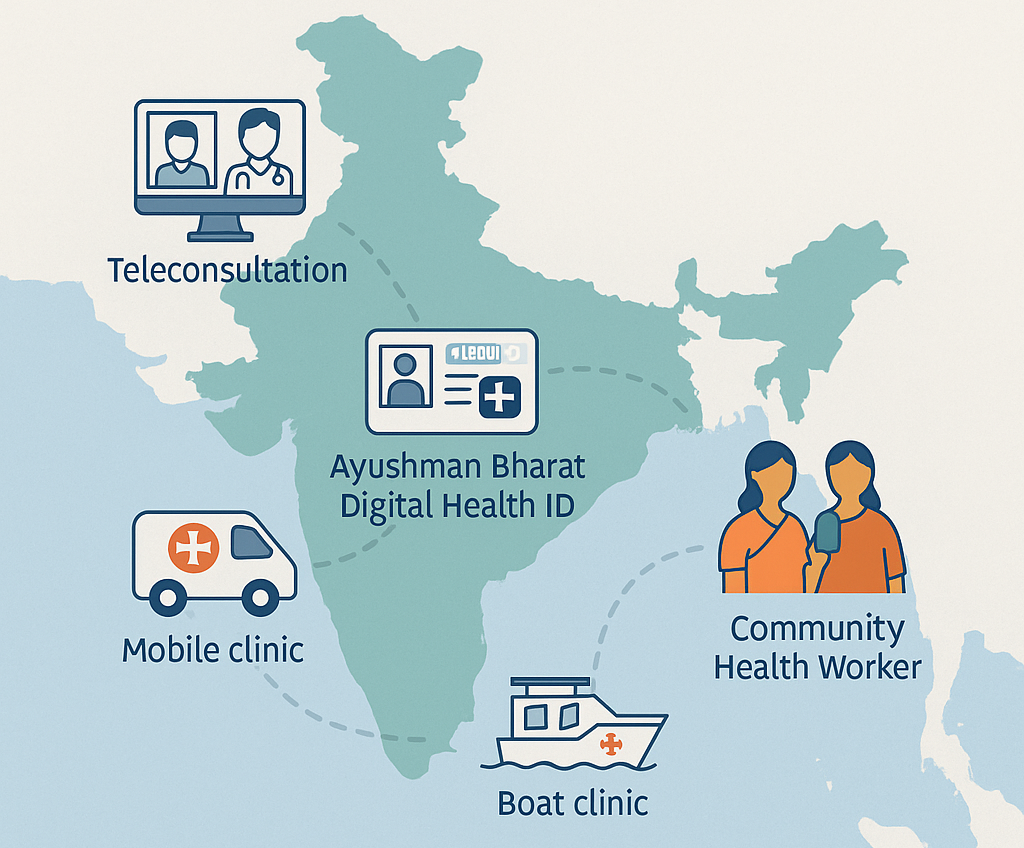
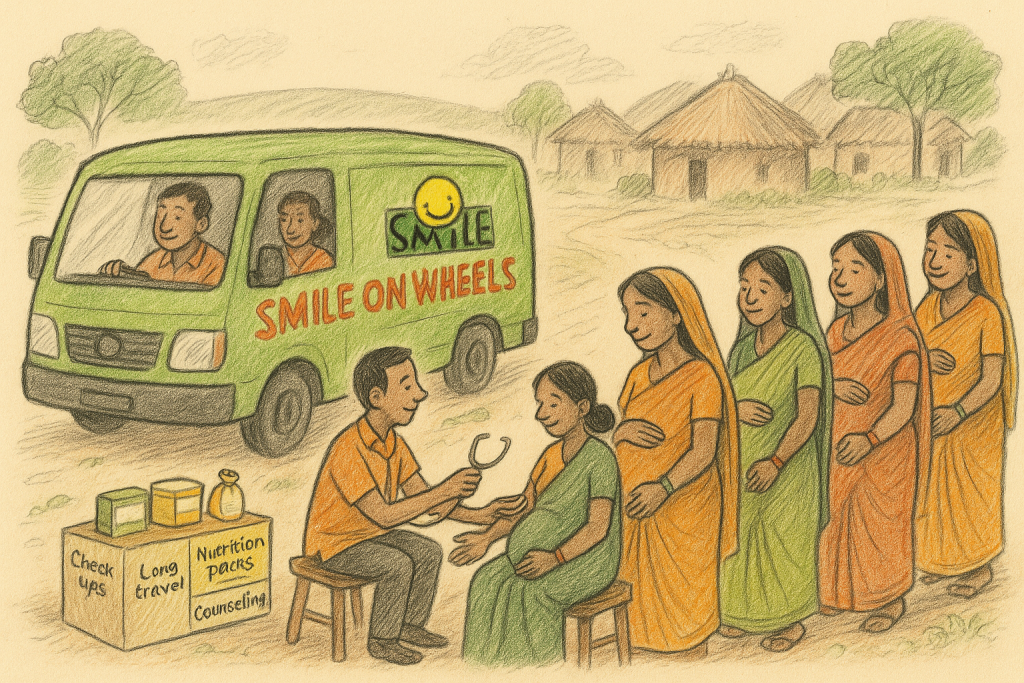
Smile on Wheels: In villages where building a hospital is unfeasible, Smile deploys mobile health vans staffed with doctors and nurses. One van covers multiple villages, offering preventive and primary care to thousands. The resource is modest, but its value is multiplied through rotation, efficiency and trust.
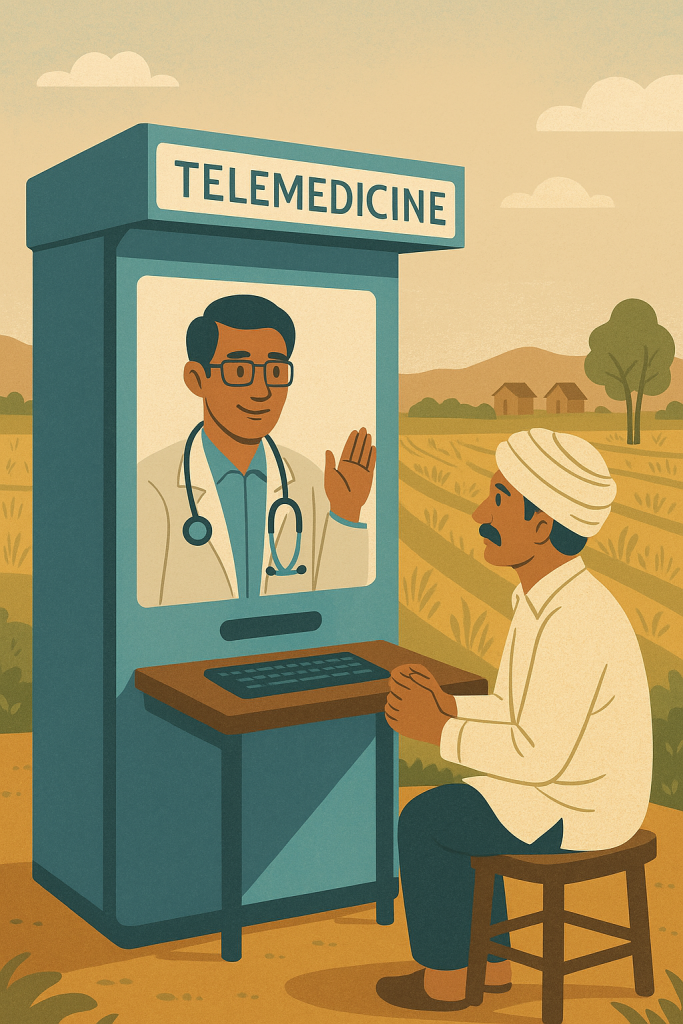
E-Arogya Clinics: Small kiosks, sometimes as simple as retrofitted shipping containers, are equipped with diagnostic kits and telemedicine. By reusing affordable spaces and digital platforms, healthcare reaches underserved communities without the costs of full-scale facilities.
School Upgrades: Rather than wait for state budgets to trickle in, existing government schools are supported with supplementary classrooms, smart boards or even trained para-teachers. Small additions, but with outsized impact.
This is frugal innovation valorising the underutilised.
Not reinventing the wheel
Smile Foundation does not chase shiny, siloed solutions. Instead, it builds on platforms and systems already in place.
Leveraging India’s DPI: Scholarship disbursements, nutritional allowances and training stipends use direct benefit transfer channels. This reduces leakage, lowers costs and builds trust with communities.
EdTech Partnerships: Instead of custom-building expensive apps, Smile collaborates with established providers, adapting content into local languages and making it device-friendly.
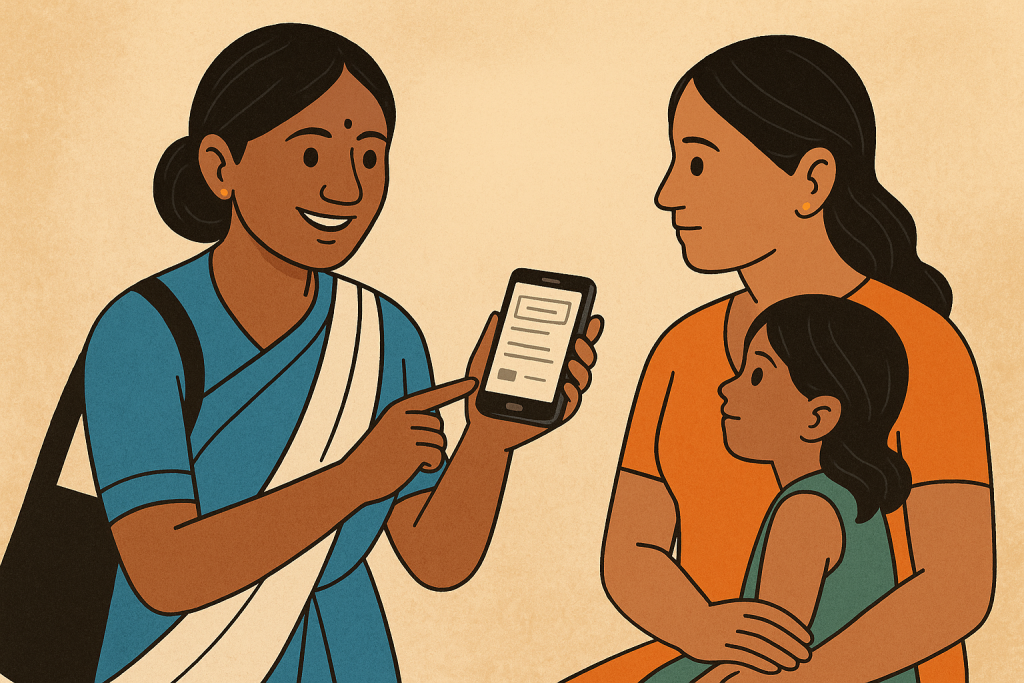
Community Health Networks: By working with ASHAs and Anganwadi workers — already embedded in communities — Smile strengthens existing human capital instead of creating parallel systems.
The approach is modular, like Lego blocks: combine existing elements, adapt and scale quickly.
Anticipating needs, not just reacting
Frugal innovation is about prevention and foresight.
Nutrition Enhancement with PepsiCo Foundation: Kitchen gardens are set up in villages, giving families sustainable access to vegetables and helping prevent malnutrition before it sets in.
Digital Classrooms: Training children in digital literacy isn’t just about today’s exams. It prepares them for tomorrow’s job market where 85% of jobs in 2030 may not yet exist.
Disaster Response: Smile Foundation doesn’t only send relief kits after floods in Assam or Himachal Pradesh. It also helps communities prepare with hygiene awareness, resilient learning spaces and healthcare continuity.
As Benjamin Franklin said, “an ounce of prevention is worth a pound of cure.” In Smile’s work, prevention is often low-cost, high-impact — the essence of frugality.
Case Studies of frugality: Smile’s work
1. Pink Smile, Uttar Pradesh
A mobile unit equipped for anaemia screening reached 4,000 women and children in Mathura. Cost: a fraction of building permanent centres. Impact: reduced anaemia, better maternal health and healthier children.
2. Solar-Powered Anganwadis, Maharashtra
Thirteen Anganwadis were upgraded with solar panels, water filters and basic furniture. For the price of one urban health centre, thousands of children gained safe, sustainable spaces for nutrition and early education.
Grouping children by learning levels instead of grades sounds simple — but it’s frugal pedagogy in action. Minimal costs, but it maximises learning outcomes by meeting children where they are.
Why frugality matters for CSR and policymakers
Frugal innovation isn’t just “NGO pragmatism.” It is a serious economic argument:
High ROI: Like community health workers worldwide, every rupee invested yields multiple rupees in productivity and avoided costs.
Scalability: Because frugal solutions use modular designs, they can be replicated across states quickly.
Alignment with ESG: Frugality builds resilience, maximises social outcomes and ensures governance through transparency. For companies mapping CSR to ESG, this is low-cost, high-trust impact.
Smile Foundation offers CSR partners frugal models that deliver results at scale.
The larger narrative: Dignity in simplicity
Frugal innovation isn’t about “cheap fixes.” It’s about dignity in design — ensuring communities get services that are affordable, accessible and aspirational. A mobile clinic isn’t second-best to a hospital if it delivers care with respect. A solar classroom isn’t a shortcut — it’s an innovation that works with India’s realities.
As India pushes toward becoming a $5 trillion economy, its development story will be judged not only by glittering urban projects, but also by how frugally and effectively we reach its most remote citizens.
Frugal is the Future
Frugality is often misunderstood as scarcity thinking. In reality, it is abundance thinking: unlocking the full value of what we already have. Governments, CSR partners, and non-profits that embrace frugal innovation will not only stretch their budgets but also deepen their impact.
Smile Foundation’s journey shows that small is scalable, simple is powerful and frugal is the future of social impact in India.
Development conversations in India usually revolve around numbers. Literacy rates, immunisation coverage, GDP growth, CSR spend, dropout percentages. The debate is framed in metrics and targets — vital, but often incomplete. What gets left out is the intangible: trust, dignity, imagination. These are not always measurable in neat columns, yet they are often the very things that determine whether a programme succeeds or falters.
This is where creativity enters the story. Not as a garnish, not as “soft skills,” but as social infrastructure that binds communities, accelerates learning and humanises public health. Over the past two decades, Smile Foundation has quietly embedded creativity in its education, health and livelihood initiatives. The result is interventions that don’t just deliver services, but transform how communities experience them.
In a world grappling with resource constraints, rising inequalities and fraying social ties, creativity may be the most overlooked yet powerful lever we have.
Why creativity belongs in development
Around the world, policymakers are waking up to the role of creativity in social systems. The World Health Organization, after analysing more than 900 studies, concluded that engagement in arts and creative practices improves both physical and mental health outcomes. UNESCO has placed “cultural participation” within the framework of sustainable development. And in the US, the Surgeon General has declared loneliness a public health crisis, with creative community activities emerging as a key antidote.
Why does this matter for India? Because our development challenges are not only about access to schools, hospitals or jobs. They are about ensuring that these structures are trusted, embraced and sustained by communities.
Creativity is the bridge. It turns a vaccination drive into a song that resonates in local dialect. It transforms a nutrition lesson into a cooking demo mothers can replicate at home. It converts rote classrooms into spaces where children sing, draw and imagine futures beyond their immediate constraints.
Without creativity, development risks becoming transactional. With it, development becomes transformational.
Education: When learning turns joyful
India’s education system is haunted by what the World Bank calls “learning poverty”— the inability of children to read a simple sentence by age 10. ASER 2022 revealed that only 20.5% of Grade 3 children in rural India could read a Grade 2 text. The crisis is not only about enrolment; it is about engagement.
Smile Foundation’s Mission Education programme offers an alternative lens. Here, creativity is not an extracurricular; it is central to pedagogy.
Storytelling as pedagogy: Mathematics lessons are woven into folk tales. Children solve subtraction through a story about goats crossing a bridge.
Theatre as confidence: Children too shy to answer questions in class often thrive when given roles in short plays.
Art as literacy: Drawing and visual storytelling allow children to grasp concepts before they master abstract alphabets.
Research backs this approach. A 2020 UNICEF report on playful learning shows higher retention rates among first-generation learners exposed to creative teaching methods. The OECD’s “Education 2030” framework identifies creativity as a core competency for future-ready citizens.
The lived experience at Smile centres echoes this. Teachers report that attendance spikes on days with music and theatre sessions. Parents notice children bringing songs and stories home, spreading learning beyond classrooms. For children at risk of dropping out, creativity is often the difference between disengagement and discovery.
Health: Stories that heal
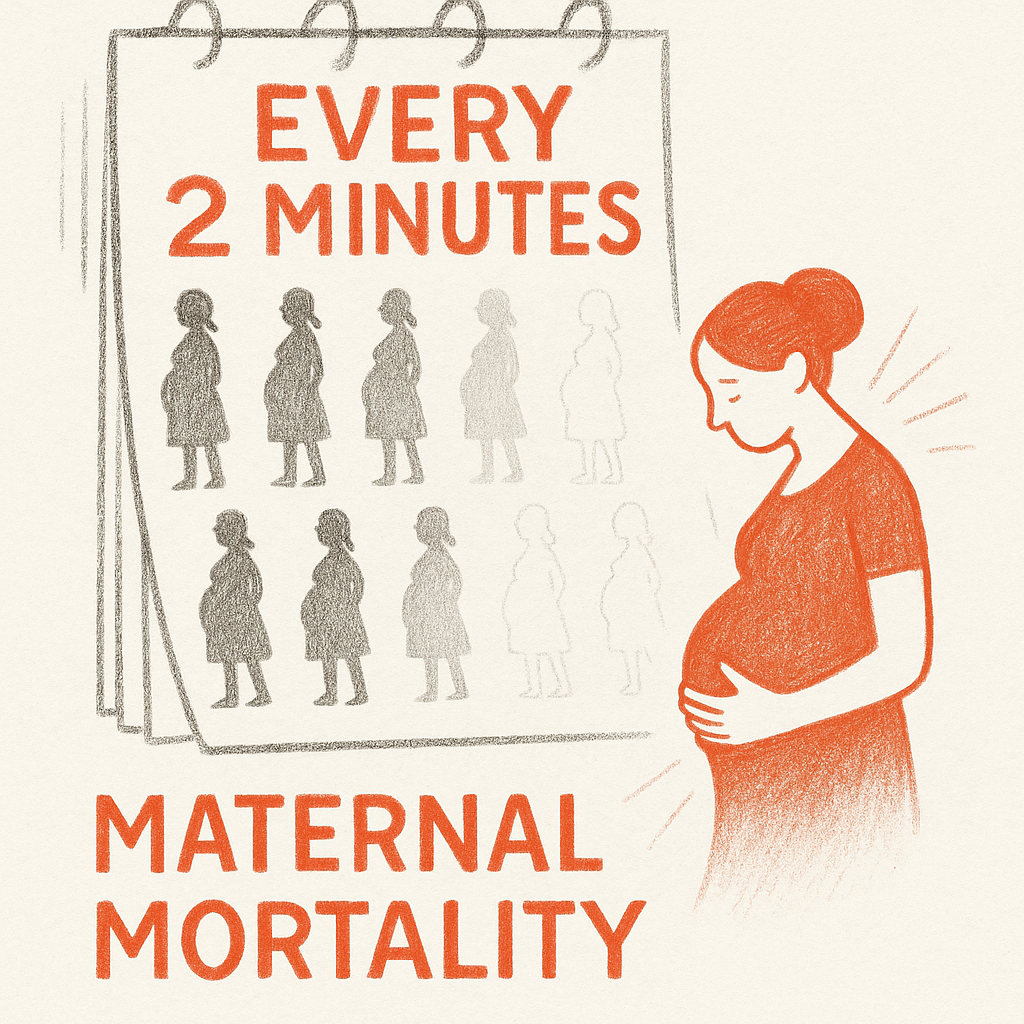
Public health in India is filled with gaps: maternal mortality rates, malnutrition, vaccine hesitancy. Government schemes are ambitious, but uptake is uneven, especially in marginalised communities. Why? Because information alone does not change behaviour. Trust does.
Smile Foundation’s Health Cannot Wait initiative demonstrates how creativity builds that trust.
In Uttar Pradesh, local women staged street plays explaining the benefits of institutional deliveries. Mothers who once resisted hospital births began to reconsider.
In Rajasthan, puppet shows broke down myths around child nutrition. The laughter of children often convinced parents more effectively than printed leaflets.
In Delhi’s slums, murals and wall art promoted hygiene and menstrual awareness in ways that text-heavy campaigns never could.
WHO studies show that culturally resonant creative methods produce higher health adoption rates than generic campaigns. During COVID-19, ASHA workers across India used songs and rhymes in local dialects to demystify vaccines — an approach that reduced hesitancy faster than top-down directives.
By embedding creativity into health outreach, Smile ensures that communities internalise the information passed onto them.
Livelihoods: Creativity as enterprise
India’s demographic dividend risks becoming a demographic disaster if youth lack meaningful livelihoods. Traditional skill training — tailoring, plumbing, mechanics—has value, but creativity adds resilience and adaptability.
Smile Foundation’s livelihood programmes integrate creativity into training:
Digital storytelling: Young people from low-resource backgrounds learn photography and media production, then use these skills for community campaigns and freelance work.
Craft revival: Women artisans in Odisha adapt traditional embroidery for digital platforms, connecting local heritage to e-commerce markets.
Entrepreneurial imagination: Youth are encouraged not only to seek jobs but to innovate — launching micro-businesses that blend traditional crafts with modern demand.
Globally, the “orange economy” — the creative economy — already contributes over $2 trillion annually. UNESCO notes its potential for inclusive growth, especially in emerging economies. Smile’s work illustrates how creative skill-building does more than provide income; it nurtures agency, pride and sustainability.
Disasters: Creativity as recovery
When floods sweep through Assam or earthquakes disrupt Himachal, relief often focuses on food, shelter and medicine. But once basic survival is secured, trauma lingers — especially for children.
Smile Foundation recognises this, integrating creative spaces into relief camps.
Art corners allow children to draw their fears and hopes. Psychologists note that such expression is vital for trauma processing.
Story circles give communities a space to narrate their experiences, building resilience through collective memory.
Music sessions restore a sense of normalcy, turning camps from sites of despair into spaces of hope.
In disasters, creativity is not entertainment. It is therapy, recovery and resilience.
Creativity as dignity
Perhaps the most profound role of creativity is its ability to restore dignity. Development often risks reducing people to data points: enrolments, vaccinations, beneficiaries. Creativity restores personhood.
When a girl paints her dream of becoming a doctor, she is asserting that her identity is larger than her circumstances. When women act in a play about domestic violence, they declare their agency. When youth document their communities through photography, they reclaim narrative power.
This dignity is not peripheral but central. True development is not just about distributing services. It is about enabling people to see themselves as creators of their own futures.
Lessons for policymakers and CSR leaders
For policymakers and corporate CSR leaders, the question is: why prioritise creativity in resource-constrained environments?
Because creativity is a multiplier.
Cost-effective: Puppet shows, songs and murals often cost less than glossy ad campaigns but deliver more impact.
Scalable: Stories and songs adapt across geographies faster than rigid program templates.
Sustainable: When communities co-create, initiatives last beyond external funding.
Equitable: Creative methods respect local culture, ensuring solutions are inclusive rather than imposed.
If India is serious about achieving its Sustainable Development Goals — quality education, good health, gender equity and more — creativity must be treated as essential infrastructure.
Smile Foundation’s creative edge
Over 20 years, Smile has demonstrated how creativity can be systematically embedded:
She Can Fly harnessed aspirational storytelling to galvanise support for girls’ education.
Shiksha Na Ruke leveraged digital storytelling during COVID to keep children engaged when schools were closed.
Nutrition Enhancement Programme turned health education into participatory cooking events.
Smile on Wheels used posters, songs and interactive games to make mobile clinics more welcoming.
Across programmes, creativity is not a side activity. It is the very reason programmes connect with people.
Global lessons, local action
India is not alone. Across the world, creativity is shaping social outcomes:
Rwanda’s Bandebereho programme uses role-play to shift gender norms around caregiving.
Brazil’s community theatre projects reduce domestic violence by opening dialogue.
Kenya’s art-based sanitation campaigns improved toilet usage in informal settlements.
Smile Foundation is part of this global movement, showing how creativity can anchor India’s development journey in trust, resilience and dignity.
Reimagining Development
The Indian state and its CSR ecosystem invest billions in schools, hospitals and infrastructure. These are vital. But without creativity, they often fail to reach hearts and minds.
Creativity is not ornamental. It is infrastructural. It transforms programmes from transactional to transformational. It shifts narratives from “service delivery” to “human dignity.”
Smile Foundation’s work reminds us that development is not just about roads and policies. It is about stories, songs and spaces where communities imagine better futures together.
If India wants to build a future that is not only prosperous but inclusive, it must recognise creativity as social infrastructure. Because without imagination, there is no sustainable change.
On a humid morning in Gurugram, Priya steps nervously onto the floor of a buzzing retail outlet. She has been training for weeks in Smile Foundation’s vocational centre — learning everything from basic English phrases to the fundamentals of customer service — but today is different. Today she is no longer just a student; she is standing behind an actual counter, shadowing an employee who handles twenty customers an hour without breaking a sweat. Priya watches closely: how he greets, how he scans a barcode, how he deals with a mildly irritated customer who insists that the discount isn’t showing up.
By the end of the day, she has scanned items herself, printed receipts, even attempted a polite upsell. Her hands tremble at first, but by the fifth customer, something clicks. What had seemed abstract in the classroom—“customer interaction,” “transaction accuracy,” “conflict resolution”—suddenly becomes muscle memory. When her trainer later asks what she learned, Priya laughs: “The book said five steps to handle complaints. I forgot them. But I remembered to listen first. That worked.”
This is the quiet revolution of industry interaction where training steps out of the four walls of a classroom and meets the messy, fast, exhilarating world of work. It is where theory bends to reality, where confidence is forged and where employability becomes tangible.
Why industry exposure is not a luxury but a necessity
India is a country of young people. Every month, over a million Indians join the working-age population. But employability remains a stubborn problem. Studies repeatedly show that while many youth have degrees or diplomas, fewer than half are “job-ready” by employer standards. The gap is not always knowledge — it is the ability to apply knowledge under real-world pressures: noise, deadlines, customers, systems, accountability.
Smile Foundation’s skilling programme was built with this gap in mind. Its philosophy is simple: exposure beats rote learning. Every trainee is encouraged to touch, feel and practice the rhythms of industry — whether in a warehouse, a clinic, a hotel kitchen, a call centre or a retail floor.
Why? Because workplaces are living classrooms. And just as doctors learn best in hospitals, future service workers, technicians or entrepreneurs learn best when immersed in actual environments of work.
The skill stack you don’t see in textbooks
Ask any employer and they’ll tell you: the first 90 days decide whether a fresher thrives or struggles. A candidate with theoretical knowledge but no exposure needs weeks of handholding. But one who has shadowed, practiced and made mistakes in real settings is productive almost from day one.
So, what exactly do trainees like Priya or Arjun (a healthcare trainee) gain when industry becomes their teacher? Let’s walk through it — narratively, not as a checklist.
1. Technical literacy becomes second nature
In a hospital ward, Arjun learns how to measure blood pressure. In the classroom, the sphygmomanometer looked like a complicated gadget. In the ward, guided by a nurse, he learns to wrap it snugly around a patient’s arm, to place the stethoscope just so, to listen carefully for the whoosh of blood flow. The first time he tries, he gets it wrong. The nurse smiles and says, “Again.” By the third attempt, he nails it.
That moment — when a skill shifts from anxiety to ease — is the essence of technical training. Whether it’s a multimeter in an electrical lab, a barcode scanner in a warehouse or a hotel’s reservation software, only practice in real conditions can demystify the tool.
2. Process discipline comes alive
Walk into a factory floor and you’ll see why processes exist. The yellow lines on the ground, the checklists taped to machines, the silence when a “defect” is spotted. Trainees often confess they never understood why teachers spoke so much about discipline — until they saw how one missed step could mean rework, loss or even danger.
For Arjun, it was the hand hygiene routine. “Wash for 20 seconds, dry with disposable tissue, sanitise before touching another patient.” It seemed tedious — until a nurse told him a single lapse could transmit infection. Suddenly, the ritual wasn’t about following rules; it was about protecting lives.
3. Safety becomes instinct
At a construction site, a trainer points to a trainee climbing a ladder without fastening his helmet. Work halts. Everyone watches as he’s corrected. It’s a lesson no PowerPoint slide could drive home. Safety, the trainees realise, isn’t theoretical — it’s survival, reputation, liability.
This is true across sectors. In hospitality, handling knives or boiling oil. In logistics, lifting heavy loads without injury. In healthcare, wearing gloves while handling blood samples. Industry exposure turns safety into instinct — something you do before you even think.
4. Quality is no longer abstract
In a retail store, Priya discovers the magic of “first-time-right.” She scans a product, but the discount doesn’t apply. She apologises, rechecks and corrects it. The customer nods, satisfied. Her trainer later explains: “A small error can mean a lost customer. Accuracy is respect.”
That’s the quality mindset: not perfection for its own sake, but precision because real people depend on it.
5. Communication adapts to context
Perhaps the most underrated skill trainees pick up is practical communication. At an Anganwadi centre, a health trainee realises mothers don’t understand technical jargon. “Nutritional deficiency” makes no sense. But “Halka khana, rozana doodh aur ande” (light meals, daily milk and eggs) clicks immediately.
In a call centre, another trainee learns the opposite: being precise, using scripts, logging details in the system. Same skill — adapted to audience.
6. Confidence under pressure
The magic moment comes when trainees face real customers or patients. They stumble, sweat, recover and succeed. Each interaction is a mini-apprenticeship in handling pressure. The confidence it breeds cannot be taught — it must be lived.
The invisible curriculum: Habits and attitudesduring industry exposure
What makes industry exposure transformative isn’t just technical learning. It’s the invisible curriculum trainees absorb:
Punctuality. Workplaces run on time, not on excuses.
Team spirit. Everyone’s job is interconnected; you don’t leave until the next person is briefed.
Accountability. Mistakes have consequences but so does honesty and fixing them.
Resilience. A tough customer, a long shift, a rude supervisor — bounce back, don’t break.
Employers often say these “soft” skills matter more than technical ones. Smile Foundation’s trainers, therefore, see industry visits as not just about skills, but about shaping professional identity.
Stories from the ground: When theory met reality
Ritu, hospitality trainee: “I had memorised how to fold napkins in class. But in the hotel banquet hall, with 200 chairs to set before a wedding, I learned speed and teamwork matter as much as technique.”
Faizan, retail trainee: “In class, we practiced customer greetings. But on the shop floor, I realised body language is half the greeting. The trainer taught me to stand tall, smile and look at the customer — not the screen.”
Meena, healthcare trainee: “I learned about empathy in class. But it became real when I held the hand of an anxious patient before a blood test. Sometimes care is touch, not words.”
Why industry exposure matters for employers
Employers benefit too. When trainees arrive with exposure, they require less handholding, adapt faster and reduce errors in the probation phase. Industry partners often remark that Smile Foundation trainees feel “workplace-ready” in weeks, not months.
This alignment also strengthens CSR linkages. Corporate partners see skilling as talent pipeline building — a strategic investment in future workers.
The policy angle: Why India must scale industry exposure
India’s skilling ecosystem is vast — multiple government schemes, private training providers and CSR initiatives. Yet one critique recurs: the employability gap. Reports by bodies like NASSCOM and McKinsey highlight how theoretical training often fails to translate into workplace readiness.
The National Skill Development Corporation (NSDC) has been pushing for more apprenticeships, internships and industry partnerships. Smile Foundation’s model complements this vision — proving that even short, structured exposures can dramatically improve outcomes.
Beyond jobs: Industry exposure as dignity
There’s a deeper layer too. For many trainees from marginalised backgrounds, stepping into an office tower, a hotel lobby or a hospital ward is transformative. It’s not just about learning skills — it’s about belonging.
When Priya tells her parents she worked a full shift at a retail store, they beam. For the first time, they can picture her in a professional role. That sense of dignity of seeing oneself as part of India’s modern economy is as important as the pay check.
Smile Foundation difference
Smile Foundation’s skilling programme integrates industry interaction not as an add-on, but as a core pedagogy. Partnerships with companies in retail, hospitality, healthcare, IT/ITeS and logistics ensure that trainees move fluidly between classroom drills and workplace immersion.
Exposure visits turn theory into observation.
Guest lectures bring role models into the classroom.
Job shadowing lets trainees watch, then try.
Internships embed learning in real workflows.
The result is higher placement rates, lower attrition and more confident youth.
The way forward
India’s demographic dividend is often described as an opportunity or a ticking time bomb. Which way it tilts depends on whether millions of young people like Priya and Arjun find meaningful, dignified and sustainable work. Classrooms are necessary, but they are not sufficient. The bridge between aspiration and employment is industry interaction—structured, mentored, reflective and scaled.
As one employer put it: “A trainee who has spent even a week on my shop floor is worth three months of classroom learning.”
From exposure to empowerment
When we talk about “hands-on skills,” we are really talking about hands-on lives. The skill to greet a customer confidently, to handle a tool safely, to log data correctly, to calm a nervous patient — they are pathways to dignity, growth and independence.
Smile Foundation’s skilling programme shows that with the right blend of classroom teaching and industry immersion, India’s youth are fully trained.
And in that transformation lies the promise of an employable, empowered and equitable future.
Why is Quality Education important for Sustainable Development?
On paper, school is free for most Indian children. In real life, families pay—often a lot. Fees (even in government schools in some places), uniforms, transport, textbooks, coaching: the small bills add up to a big barrier. When the national statistics office released its latest education-spending snapshot this August, it confirmed what parents already feel in their wallets and what many non-profits see in the field: the cost of schooling is rising, urban families pay more than rural households, private coaching is mainstream — and boys typically attract more spending than girls.
This matters because behind every rupee lies a choice. When a household decides which child gets a private school seat, who gets coaching, whether to buy the reference book or take the bus to school, it is making an investment judgment about a child’s future. If those judgments consistently favour boys — and the data suggest they often do — we shouldn’t be surprised when learning gaps and labour-market gaps persist years later.
The question, then, is not just how much India spends on school education, but who it spends on, what it spends on and whether that spending translates into learning. Put differently: How do we make every rupee count — for girls, for poor households and for the students most at risk of falling behind?
This essay is a field-level view of India’s school spending in 2025 and a practical playbook for making it work better. It draws on the Government of India’s Comprehensive Modular Survey: Education (CMS:E) 2025, the Annual Status of Education Report (ASER 2022), the government’s foundational literacy and numeracy mission (NIPUN Bharat), UDISE+ updates and frontline experience from educators and implementers—including Smile Foundation.
The bill for “free” education
The new CMS:E survey (April–June 2025) set out to answer a basic question: what do households actually spend on a child’s schooling in the current academic year? It deliberately separated schooling costs from private coaching costs (unlike earlier rounds) and it broke spending into realistic buckets — course fees, transport, uniforms, textbooks/stationery and “other.” Three patterns stand out.
Government schools dominate enrolment but families still pay. Government schools account for 55.9% of enrolments country-wide (about two-thirds in rural India). And while most children in government schools don’t pay course fees, a full 26.7% do — and that share rises to 25.3% in rural areas. In non-government schools, the near-universal expectation is payment: 95.7% of students report course-fee outgo.
The per-student cost to families varies massively by school type and location. Average household spending per student in government schools is ₹2,863, compared with ₹25,002 in non-government schools (rural + urban combined). Urban households spend more than rural households across every line item — fees, transport, uniforms and books. Course fees are the single biggest item, averaging ₹7,111 across India (urban ~₹15,143; rural ~₹3,979).
Private coaching is no longer niche. 27% of all currently enrolled students took (or are taking) private coaching this year — more in urban areas (30.7%) than rural (25.5%). At higher secondary, urban families spend nearly ₹9,950 a year on coaching versus ₹4,548 in rural India.
These are national averages; states differ widely. Early media analyses of the CMS:E point to higher total spends in states like Haryana and Manipur with Bihar on the lower end — reminding us that affordability and access are intensely local. And the top line gender story is sobering: families spend more on boys than girls, with boys more likely to be in private schools and in private coaching.
A final, crucial footnote: 95% of school-education spending comes from the family itself; government scholarships show up as the primary funding source in just 1.2% of cases. For the median Indian household, the school bill is personal and nontrivial.
Do higher outlays buy better learning? Not necessarily.
The uncomfortable truth is that spending is not the same as learning. India’s rural learning levels took a clear hit after COVID-19 disruptions. ASER 2022 found that just 20.5% of Grade-3 children in rural India could read a Grade-2 text — evidence of widespread “learning poverty.” A drop in basic arithmetic mirrored the reading slide. If more rupees automatically delivered outcomes, we wouldn’t see this picture.
The government’s answer is NIPUN Bharat — a national mission to ensure every child acquires foundational literacy and numeracy (FLN) by 2026–27 (end-Grade 3, or Grade 5 at the latest). The emphasis is on simple but powerful ideas: teach at the right level, mother-tongue based instruction in early years, hands-on learning, frequent low-stakes assessments and teacher support. The core insight is also financial: the cheapest remediation is the early remediation because every year a child falls behind, costs compound for families and the system alike.
The good news is that the current administrative data point to improving retention and lower dropouts, including in difficult transition grades. UDISE+ updates for 2024–25 highlight declining dropout rates at the preparatory, middle and secondary stages compared with recent years. But within the averages lie hard-to-reach districts and pockets where girls, tribal children and first-generation learners remain at greater risk.
Bottom line: Money matters—especially for transport, coaching and the “hidden” costs of school. But learning gains hinge on how we spend and what we do in classrooms and communities.
Where families bleed and how to plug the leak
If you trace the line items from the CMS:E tables to field realities, five drains explain why schooling feels expensive even in “free” systems:
(1) Transport For secondary school, the nearest viable option is often several kilometres away. Daily mobility — especially for girls — requires safe, affordable transport. CMS:E shows urban transport outlays far exceed rural spends, but in rural blocks with scattered habitations, simply getting to school is the barrier.
(2) Coaching Coaching fills perceived gaps — test prep, board exams, competitive entry. It also widens inequality when only some can pay. The survey’s 27% coaching uptake is an all-India average; in many towns it’s much higher at secondary levels.
(3) Fee “exceptions” Even where fees are officially minimal, parents report paying for “development funds,” “activity charges” or periodic collections — especially in low-fee private schools.
(4) Learning materials and uniforms Where textbook supply chains slip or where multiple “guide” books are encouraged, household costs rise.
(5) Lost time What the tables don’t price: hours spent navigating admissions, collecting scholarships or chasing transfers — costs that hit casual labour households hardest.
The policy fixes are not mysterious: reliable school transport for girls, predictable and timely textbook/uniform provision, transparent fee regulation and better in-school teaching so families don’t feel compelled to pay for coaching. India has many of these ideas on paper; the bottleneck is execution.
What does gender have to do with it?
A lot. The most striking finding in the new education-spend data is the gender gap in household outlays: boyssee higher average spend than girls, in both rural and urban settings and across school types. More boys are enrolled in private schools and more boys attend coaching. When money is tight, a household might rationalise: “Let the boy take the bus; the girl can study at home.” Repeat that logic in millions of homes and you get the macro picture we see today.
But there’s another, less discussed piece that girls’ learning levels recover faster when schools and communities invest in FLN and safe access. The returns to girls’ education are well documented — delayed marriage, lower fertility, better child health — but even at the micro level, when a Grade-3 girl moves from “can’t decode a sentence” to “can read a short paragraph unaided,” everything changes: her confidence, attendance and willingness to persist through Grade 10. That’s precisely why the focus on NIPUN Bharat is not “soft” — it’s hard economics. Early skills lower the need for expensive late-stage fixes (remedial coaching, re-enrolment drives) and raise the return on every rupee families spend.
Making rupees work harder: Five levers that align with what Smile Foundation does on the ground
Smile Foundation operates where budgets are to be utilised efficiently and choices are hard. The approach has increasingly converged on a simple rule: move early, move locally, move with families. Here are five spending-smart levers — policy + practice — that track closely with what organisations like Smile implement.
1) Fix the foundation (FLN), not just the façade
If a Grade-3 child can’t read a Grade-2 text, the entire edifice wobbles. ASER 2022’s reading shock underscored that we can’t coach our way out of foundational gaps. Smile Foundation’s learning centres and school support programmes tilt resources to early-grade reading and numeracy — teacher mentoring, small-group instruction by level, multilingual material, and continuous low-stakes assessments. Every percentage point of improvement at Grade 2–3 reduces downstream family spending on emergency coaching at Grade 9–10. This is the cheapest way to improve board-exam pass rates five years later.
Policy fit: NIPUN Bharat’s 2026–27 target makes this the system’s top priority; CSR and philanthropy should follow suit — fund early-grade teacher support and community-based reading camps before flashy test-prep grants.
2) De-risk the daily commute — especially for girls
A scholarship that pays for exam fees but ignores transport is a leaky subsidy. In many districts, bike grants, bus passes or pooled vans are the single most cost-effective way to raise girls’ attendance and reduce drop-outs. Smile’s community mobilisers often solve attendance problems by negotiating transport — sometimes as basic as mapping safe walking groups and arranging parent volunteers for the last mile.
Policy fit: State schemes that underwrite secondary-school transport for girls pay for themselves through higher retention (and lower early marriage). CMS:E’s line items show families already spend real money on transport; smart programmes co-pay that spend rather than duplicating it.
3) Replace after-hours coaching with in-school mastery time
Coaching will not disappear but it can shrink if school time is used for catch-up and mastery. Structured “practice hours” before or after school, run by trained community educators and teachers together, have shown results in multiple states at low cost. Smile Foundation leans on volunteer tutors, alumni and mothers’ groups to run reading circles and math clubs — free substitutes for paid coaching.
Policy fit: Schools that hit NIPUN benchmarks should get small, flexible grants for mastery periods; CSR partners can underwrite community tutors and basic learning aids that lower families’ coaching expenditures.
4) Put scholarships where they change behaviour
CMS:E shows just 1.2% of students report government scholarships as their first funding source. That is strikingly low. Part of the problem is friction — forms, bank links, proof documents; part is design — benefits that don’t target the biggest barriers. The empirical case is strong for girls-only, Grade-to-Grade persistence scholarships, transport stipends and device/data vouchers tied to attendance and FLN milestones. Smile’s own scholarship models increasingly “bundle” mentorship + counselling + cash so money translates into attendance — and attendance into learning.
Policy fit: Shift from generic fee reimbursements to barrier-aligned micro-scholarships that tackle transport, devices or exam fees at exactly the point families face the cost.
5) Make parents partners
Households finance 95% of school spending and make the hard calls; they must be in the loop. Parent workshops that demystify the syllabus, homework routines and exam timelines cost little and save a lot. In Smile-supported geographies, simple tactics — home-learning kits, attendance nudges via WhatsApp and parent–teacher circles — raise study time at home, reducing later coaching dependence.
What about the system side? Where the state can tilt the field
None of the above absolves the system from doing the heavy lifting. Four system-level moves will stretch household rupees and public budgets alike:
A. Lock in FLN as a non-negotiable K-3 outcome. Keep measuring what matters — decoding, fluency, number sense — and give teachers practical coaching, not just trainings. The best money in education is spent on teacher support tied to in-class practice, not one-off workshops.
B. Predictable textbooks and uniforms. CMS:E shows textbooks/stationery and uniforms are the second and third largest expenses after fees. When the supply chain is timely, families trust the public system and are less likely to jump to low-fee private schools simply for predictability.
C. Transparent fee rules and enforcement. Clarity on what can be charged, when and by how much reduces the nickel-and-diming that alienates parents. Where self-financed schools are part of the landscape, fee-transparency dashboards and grievance redress protect families.
D. Target the transition years. UDISE+ data show improvements, but the hardest grades remain VIII→IX and X→XI, when distances grow and exams bite. A mix of bridge courses, counselling, transport support and career exposure can keep students on track and make every preceding rupee spent worthwhile.
A note on caution and comparability
The CMS:E press note is admirably clear about its limits: it is designed for national-level estimates in the current academic year; state-level cuts require care; and the results aren’t directly comparable with 2017–18 NSS education rounds because the 2025 survey separated coaching from schooling costs and re-classified pre-primary. Treat it as a sharp snapshot, not a trend line.
That said, triangulation with UDISE+ and ASER gives a coherent picture: families pay substantial out-of-pocket costs; learning at the foundation needs urgent attention; dropouts are improving overall but remain fragile where distances and language barriers loom.
Where Smile Foundation fits: Stretching the household rupee
It’s tempting to think of a non-profit as a scholarship engine. But Smile Foundation’s field learning points to a different North Star: reduce the reasons families feel they must spend. A scholarship helps one bill; a stronger elementary experience lowers many bills for years.
Early-grade mastery (reading and number sense) that prevents costly remediation later.
Mother-tongue, activity-based classrooms that keep first-generation learners engaged and reduce reliance on coaching.
Teacher mentoring inside classrooms because the best “ed-tech” is a confident teacher with the right routines.
Parent engagement that turns households from passive payers into active learning partners.
Barrier-aligned micro-support (transport, exam fees, devices) to keep girls in school through transition grades.
Career exposure and skilling bridges (for older students) so families see the return on schooling and persist through secondary.
Each of these levers is low-cost, scalable and — crucially — evidence-aligned with the way India’s education rupees actually flow.
The equity case: Spend where it bends the curve
If boys attract more spending, then public and CSR rupees must tilt to girls as return-maximising investments. Three principles help:
Pay for the barrier, not the label. In a district where distance is the killer, transport stipends for girls will outperform generic fee scholarships. Where language is the barrier, fund bilingual FLN materials and classroom assistants.
Front-load money. ₹1 spent in Grade 2 is worth ₹10 in Grade 10. Put cash, coaching and materials early.
Make funding visible to families. When parents see their daughter decode a paragraph, commute safely and pass board exams, their own spending follows on books, on continued schooling, on aspirations.
The real “ROI” of school spending
Economists debate rates of return; families care about something simpler: Does my child learn? Does she stay in school? Does he get a fair shot at a job or higher study? By those measures, India’s education rupees will work hardest when three links strengthen together:
Access (you can get to school),
Learning (you make real progress there) and
Momentum (you keep going through the tough transitions).
Data can tell us where the money goes. Only practice — in schools, households and communities — can tell us how to make it go further.
If the CMS:E survey is a mirror, the reflection is clear: families are carrying the system. Let’s carry them back by investing where their burden is heaviest and where each rupee has the biggest multiplier: early learning, safe access, transparent costs and targeted support that keeps girls and first-generation learners in the game.
That is the surest path to making “free” education feel free again.
Sources (select)
MoSPI (NSO) Press Note: Results of Comprehensive Modular Survey: Education, 2025 (April–June, 2025)—key tables on enrolment by school type; share paying course fees; per-student spending by school type and item; private coaching prevalence; funding sources; comparability caveats.
Times of India summary of CMS:E gender gap in household education spending (boys higher than girls; with rural–urban splits and coaching differentials). (The Times of India)
Careers360 recap of CMS:E boys’ greater presence in private schools/coaching and higher per-student spending. (Careers360)
ThePrint on state-level expenditure contrasts (highest vs. lowest). (ThePrint)
ASER 2022 national findings on foundational learning (Grade-3 reading at 20.5% in rural India). (ASER Centre)
Exploring the Everyday Challenges of Women in India
Where do women stand in India’s social and political landscape today? The answer is a story of both inspiring progress and ongoing struggle. For generations, Indian women have fought to claim their space in society – from legendary freedom fighters in the Independence movement to modern lawmakers shaping the nation.
A legacy of women leaders in Indian politics
When we look back, women’s participation in Indian politics is anything but static – it’s been a dynamic force growing stronger each decade. Even during the freedom struggle against British colonialism, women played crucial roles: from Sarojini Naidu raising her voice for equality to the fierce leadership of Sucheta Kripalani and Aruna Asaf Ali. These trailblazers proved that women’s leadership was integral to India’s destiny. After independence, India broke global norms by granting universal suffrage to women and men alike from the very first election – a historic step that many Western democracies took decades to achieve. In fact, it was only in 1950 – with the birth of the Republic of India – that all women in India finally won the unconditional right to vote. This early commitment set the stage for women to enter public life as equals in principle, if not always in practice.
Over the years, women have risen to some of the highest offices in the country, shattering glass ceilings that once seemed impenetrable. India was one of the first nations in the world to elect a woman Prime Minister – Indira Gandhi took office in 1966, showing that a woman could lead the world’s largest democracy. Since then, we’ve seen women become Presidents (like Pratibha Patil), powerful Chief Ministers (from Jayalalithaa to Mamata Banerjee) and influential opposition leaders.
At the grassroots too, change was set in motion by progressive policies: the 73rd Constitutional Amendment (1992) reserved one-third of seats in village panchayats for women, a quota later increased to 50% in many states. This means millions of women in rural India have had a chance to serve as village council heads (sarpanchs) and local representatives. From village councils to Parliament, more women than ever before are stepping into leadership roles, determined to shape their communities and country.
Yet alongside these shining examples, the reality for most Indian women remains a mix of advancement and adversity. Today, far more girls attend school and university than in previous generations, and many more women join the workforce and community leadership roles than before. The very sight of women gathering in village meetings or contesting elections – once a rarity – is gradually becoming commonplace. Women in India continue to raise their voices for equal rights and social change, whether on the streets in protest or within the halls of policymaking. But despite this active participation, deep-rooted challenges persist and the journey toward true equality is far from over.
Women representatives participate in a local governance meeting in India, highlighting the growing (if still limited) presence of women in grassroots politics. Over the decades, the numbers tell a story of both progress and disparity. Indian women have proven their resolve by increasingly exercising their right to vote and contest office, but they still struggle to secure a fair share of actual power. In the following sections, we’ll dig into the data on women’s political participation, examine the barriers that continue to hold women back and explore the efforts – from legal reforms to grassroots initiatives – that aim to bridge the gender gap in Indian politics.
By the numbers: Women’s political participation today
In recent years, data shows that women’s political participation in India has been steadily rising, even if representation in power remains skewed. Consider the act of voting – the most fundamental expression of democracy. Women’s voter turnout has climbed dramatically since the early decades of independence. In 1962, only about 46.6% of eligible women cast their ballots, reflecting both social barriers and an enduring gender gap. Fast forward to the latest national election in 2024 and nearly 65.8% of women voters turned out to vote. This surge in female voter participation signifies an important cultural shift.
In fact, the once-wide turnout gap between men and women has virtually evaporated. For the first time in India’s history, women matched or even slightly surpassed men in voting rates in the 2010s – notably in 2019, female voter turnout actually exceeded male turnout (women made up roughly 49.5% of voters that year). Indian women, even in rural and traditionally conservative areas, are increasingly claiming their political voice at the ballot box, often outnumbering men in polling booths and defying anyone who doubts their commitment to democracy.
This growing assertiveness isn’t limited to voting. More women are also stepping forward to contest elections – to not just vote for leaders, but to be the leaders. The change from the past is striking. Back in 1957 (India’s second general election), only 45 women in the entire country ran as candidates for Parliament. At that time, seeing a woman’s name on the ballot was like spotting a unicorn. Fast forward to the 17th and 18th Lok Sabha elections in 2019 and 2024 and the number of women candidates swelled into the hundreds.
In the 2024 general election, 797 women candidates entered the fray out of 8,337 total candidates. That’s a seventeen-fold increase in women’s participation as candidates since the 1950s. It’s an encouraging sign that more women want to run for office and serve, even if many face an uphill battle in the male-dominated arena of electoral politics. For context, women’s share among all candidates was about 9.5% in 2024 – a slight rise from 9% in 2019. Clearly, political parties are still overwhelmingly fielding men, but the needle is slowly moving as women push into these spaces.
Now, how about representation in the legislatures – the people who actually win and hold office? Here too, the trend is upward, though the pace has been agonisingly slow. In 1952, women made up just about 5% of the Lok Sabha, India’s lower house of Parliament. Only 22 women were elected in that first Lok Sabha of independent India, out of 489 MPs. Fast forward over 70 years: in the current Lok Sabha (elected in 2024, the 18th Lok Sabha), 74 women MPs were elected, comprising 13.6% of the house. This is the highest number of women Parliament has ever seen – yet it’s still only one out of every seven MPs.
In fact, women’s representation dipped slightly in 2024 compared to 2019 (when there were 78 women MPs, about 14.4%), reminding us that progress is not always linear. The upper house, Rajya Sabha, has seen a similar gradual rise – from roughly 7% women in the 1950s to about 13% in 2023. These figures underscore a sobering reality: even in 2025, Indian women are vastly underrepresented in the highest corridors of power. A country that had a woman Prime Minister over fifty years ago still hasn’t cracked the code to gender balance in its Parliament.
At the state level and local levels, however, there are some bright spots. Several state assemblies have seen increases in women MLAs (Members of Legislative Assembly), though none have anywhere near parity. But it’s at the level of local governance – the panchayats and municipalities – where India has made a quantum leap, thanks to constitutional quotas. Today, women form almost half of all local government representatives. As of 2023, about 46.6% of the 3.23 million panchayat representatives are women. That’s roughly 1.5 million women leading village councils, sitting in block committees and making decisions for their communities. This is a stunning transformation from a few decades ago when village leadership was almost entirely male.
In many local bodies, reserved seats for women have normalised the presence of sarpanchnis (women village heads) and council members – creating a pipeline of experienced female leaders at the grassroots. In 2022, women made up about 44% of local government representatives nationwide and that share has only grown. This means the face of local governance in India is increasingly female, which could, over time, change attitudes about women in leadership and create bottom-up pressure for greater representation in higher offices.
The data points to an optimistic conclusion: women in India are more politically engaged than ever before – they are voting in massive numbers, contesting elections in greater frequency and gradually winning more positions of power. Each percentage gain represents millions of women’s voices being heard. However, numbers alone don’t tell the full story. A rising graph of participation doesn’t automatically equal real empowerment. To truly understand where women stand in India’s socio-political spaces, we must also confront the harder question: what obstacles are women still facing, and why – despite greater participation – do they remain so underrepresented in actual decision-making? The next section delves into these challenges.
The gender gap and ongoing challenges
For all the gains women have made, stark gender gaps and deep-rooted barriers continue to define their political journey – in India, as in much of the world. It’s a bitter truth that while women make up nearly half of India’s population and voters, they occupy only a small fraction of its power structures.
Globally, women remain underrepresented at all levels of decision-making and India is no exception. According to the World Economic Forum’s latest analysis, at the current rate of progress it will take an estimated 123 years to achieve full gender parity worldwide. (This bleak figure is actually an improvement – it was 132 years as of 2024, so the world inched 9 years closer in the past year.) Still, 123 years is far too long to wait for equal representation. And for many Indian women, the pace of change feels glacial, especially when their daily reality includes discrimination, safety concerns and unequal access to resources.
Let’s talk about Indian politics on the ground – a realm still dominated by men, where women who dare to enter often face hostility or condescension. One major challenge is sheer cultural inertia and patriarchal attitudes. For decades, politics was seen as a “man’s domain,” and vestiges of that mindset linger. Female politicians frequently have to work twice as hard to be taken seriously. They are subjected to sexist remarks, their competence questioned, their private lives scrutinised.
The idea of a woman wielding authority can provoke backlash in a society where many still expect women to be deferential. The system wasn’t built with women in mind and sometimes it shows its teeth to those trying to change it. Indeed, women who speak up or step out of “their place” often face disproportionate criticism and even abuse. It’s not uncommon to see outspoken women leaders being trolled on social media or heckled in legislatures with misogynistic jibes. This toxic environment can discourage women from pursuing public life – yet many persist, fuelled by a desire to change the very system that marginalises them.
One of the most pernicious manifestations of patriarchy in Indian politics is the phenomenon of “proxy women” or Pradhan Pati (literally, “husband of the chief”). This refers to situations – particularly in rural local bodies – where a woman is elected to a position (often due to a reserved seat), but the real power is wielded by her husband or a male relative.
In some village councils, the elected woman sarpanch is essentially a figurehead while her husband (jokingly dubbed the sarpanch pati) sits in on meetings, makes decisions, and signs documents on her behalf. It’s the oldest trick in the patriarchy playbook: satisfy the letter of women’s reservation laws by installing a woman in the seat, but preserve male control behind the scenes. This “proxy politics” undermines the very purpose of empowering women through reservations and unfortunately it’s widespread in certain areas.
As one government report noted, women constitute nearly 46% of panchayat representatives, “however, their effective participation remains low, especially in northern states like Uttar Pradesh, Bihar, Haryana, and Rajasthan, where male relatives often control decision-making”. The term Pradhan Pati has entered the political lexicon to name and shame this practice. It highlights how deeply entrenched gender norms can subvert progressive laws – families and communities may feel uncomfortable with women in power, so they enforce the old norms by propping up the men in the shadows.
Women serving in local office often face immense pressure from family and community to act as rubber stamps. Interference by husbands or male kin not only robs women of agency but also robs the community of genuine female leadership. As a result, many women representatives struggle to exercise their authority. They are talked over in meetings, excluded from important discussions or simply ordered by their family on how to vote or govern. It’s common to hear anecdotes of a villager approaching the husband of a woman pradhan to get things done – because everyone “knows” he’s the real boss. This is profoundly disempowering for women who genuinely want to lead. It also shows that changing laws (like introducing quotas) is not enough on its own; social attitudes have to evolve so that a woman leader is respected in her own right.
Additionally, lack of support and resources holds many women back. Politics is a game that often runs on money, connections and the old boys’ network. Women, who historically have had less access to financial resources and public networks, find it harder to fund their campaigns or connect to mentors. Political parties – the gatekeepers of electoral tickets – often hesitate to nominate women in winnable seats. Some party leaders still harbour biases that women are “weak candidates” or won’t be able to handle the rough-and-tumble of electoral combat. This results in women being passed over for party tickets or being fielded in unwinnable constituencies as token candidates.
The old prejudiced question, “Can she win?” still hangs over women aspirants, even when data shows women legislators perform as well or better than their male counterparts when given a chance. There’s also a networking gap – many male politicians groom their sons or younger male colleagues to succeed them, whereas women often lack similar patronage. The absence of adequate support systems – from funding to security to mentorship – means women entering politics must often blaze a trail on their own.
Another harsh reality: violence and safety concerns. Politics in some parts of India can be violent and women candidates have faced harassment, threats and even physical assault. In areas with intense political rivalries, a woman canvassing door-to-door might fear for her safety in ways her male colleagues don’t. Online violence is another modern scourge – women in public life are routinely subjected to trolling, abuse and threats on social media, with attacks often targeting their gender or personal life. This creates a chilling effect, as some women decide the mental toll of a public role is simply too high.
Finally, the double burden of domestic responsibilities cannot be ignored. Society still largely expects women to be primary caregivers and homemakers. Thus, a woman in politics often juggles multiple roles – managing her household and children alongside a demanding public career. The long hours and travel that political life entails can strain family life, and without supportive partners or infrastructure (like childcare), many women simply cannot afford to devote themselves fully to politics. It’s a classic Catch-22: we need more women in leadership to push for policies (like childcare, flexible work, parental leave) that would help ease these burdens, but the burdens themselves make it harder for women to ascend to leadership.
One might imagine the everyday heroism of women who persist despite these challenges: the young woman sarpanch who studies government manuals at night because her husband never lets her speak in meetings; the female MP who endures jeers in Parliament with steely grace; the first-time candidate who campaigns with a baby on her hip because she has no alternative. These stories exemplify both the resilience of Indian women and the unfair weight placed upon them.
The Indian government and civil society are aware of many of these issues, and there have been efforts to address them. For instance, a government panel in 2023 recommended “exemplary penalties” for those caught engaging in proxy leadership, to crack down on the Pradhan Pati culture. They suggested measures like publicly swearing in women leaders in open village assemblies (to affirm that she holds the office), appointing women-only ombudspersons to hear complaints and even creating support networks and training for elected women. The logic is clear: it’s not enough to reserve seats for women; we must ensure women can actually exercise the power of those seats.
Similarly, activists and NGOs are conducting leadership workshops for women in local government, teaching them about their legal powers, budgeting and public speaking, and crucially, how to push back when someone tries to usurp their role. These efforts, though on a modest scale, are vital sparks of change.
The United Nations and other international bodies have also emphasised the importance of women’s equal participation. UN Women has repeatedly stated that women’s underrepresentation in decision-making is a loss for society and achieving gender parity in political life is a prerequisite for true democracy and sustainable development.
The World Economic Forum’s Gender Gap Report ranks countries on political empowerment – and India currently ranks low (in 2023, India was 127th out of 146 countries on overall gender gap, with particularly poor scores in political representation). This is a reminder that India, despite being the world’s largest democracy, has much work to do to ensure that its democracy is inclusive of all its citizens.
In summary, women in India stand at a crossroads of change. They have made significant strides in participation and visibility, yet they continue to battle systemic sexism and structural barriers that men do not face. The gender gap in politics is about power, attitude and culture. Bridging it requires a transformation in how we as a society view women as leaders.
Pushing forward: Reforms and the road ahead
The challenges are steep, but they are not insurmountable. History shows that change is possible when pushed by collective will and bold reforms. To truly elevate women’s position in India’s political sphere, a multi-pronged approach is needed – combining legal mandates, institutional reforms and social initiatives. This means tackling the problem at all levels: from Parliament down to the village and from political parties to households.
A critical step that has long been discussed, and finally saw a breakthrough, is the idea of reservations (quotas) for women in state and national legislatures. For decades, activists and progressive politicians campaigned for a Women’s Reservation Bill that would reserve 33% of seats in the Lok Sabha and State Assemblies for women (similar to the quota in panchayats). After many false starts, this historic reform was passed by Parliament in 2023. The Constitution (106th Amendment) Act, 2023 – often hailed as the Nari Shakti Vandan Adhiniyam – became law, aiming to ensure that one-third of all seats in the national and state legislatures will be earmarked for women. If implemented, it could swiftly raise women’s representation in the Lok Sabha from the current ~14% to at least 33% – the biggest leap in history. It’s as if the political map of India is being redrawn with women at the centre.
However, the bill comes with its own caveats and timeline (its provisions will be enacted after the next delimitation of constituencies, which means it may not take effect until a future general election, possibly 2029). The journey from 13.6% to 33% representation will still take time and political will to realise. Activists are urging that the implementation be expedited and not lost in procedural delays. Passing a law is only half the battle; enforcing it is the next. Still, the very passage of the Women’s Reservation Bill marks a paradigm shift. It’s an official acknowledgment that extraordinary measures are required to correct the historical imbalance.
It is turning the slow drip of progress into a fire hose – forcing open the gates for women to enter en masse into decision-making roles. If one out of every three lawmakers in India is a woman in the near future, it could profoundly change not just legislation on women’s issues, but the very culture of policy-making (potentially making it more collaborative and inclusive, as some studies suggest happens with more women at the table).
Yet, quotas alone won’t solve everything. Political empowerment must be accompanied by social, economic and cultural empowerment. There’s a saying: “Give a woman a seat at the table and then watch to ensure she isn’t on the menu.” Women who enter politics need an environment that allows them to thrive and lead effectively. This is where capacity-building and support systems become crucial. We need robust programmes to train and mentor aspiring women leaders.
Imagine leadership development workshops across the country, where experienced women politicians and professionals coach younger women in public speaking, navigating party structures, crafting policy and running effective campaigns. Some of this is already happening in pockets – for instance, the government committee on Panchayati Raj recommended creating federations of women panchayat leaders for peer support and partnering with educational institutions to provide leadership training for women in local office.
Similarly, civil society organisations are running “campaign schools” for women, teaching them practical skills like filing nominations, fundraising and using social media for outreach. Expanding these training programmes nationally could massively boost women’s confidence and competence in the political arena. When a woman knows her stuff – knows the rules, the procedures, the tricks of the trade – it’s much harder for others to sideline her.
Mentorship is another key. Every successful person in politics often has a mentor or a guide. Creating mentorship networks that pair young female political aspirants with seasoned women leaders can help transfer knowledge and create solidarity. Senior women who have broken barriers can lend a hand to the next generation, advising them on handling both policy issues and bias they will inevitably face.
In an ideal scenario, each political party would have a structured mentorship and training wing for women – identifying promising talent at the grassroots and grooming them for larger roles. This is not wishful thinking; some parties have started women’s wings and leadership programs, but these efforts need to be more than symbolic. Parties must also walk the talk when it comes to candidate selection. One concrete ask from activists is for parties to voluntarily field women in at least 33% of the constituencies, even before the reservation law compels them to. This means winnable seats, not just token contests.
A few parties in recent state elections have indeed given 40–50% tickets to women (with notable success – women candidates often have a higher win ratio). It’s time this becomes the norm, not the exception, across the political spectrum. Voters, too, can play a role by demanding their parties put forward more women and by supporting women candidates at the polls.
Another area of focus should be strengthening laws and mechanisms to ensure women’s safety and dignity in politics. This includes stricter action against those who harass or assault female candidates and better enforcement of codes of conduct to prevent sexist hate speech during campaigns. The Election Commission of India could consider guidelines to rein in candidates who make misogynistic comments or attempts to intimidate women opponents.
On the logistical side, providing facilities like childcare or flexible meeting times can make it easier for women (especially young mothers) to participate in politics. Some local bodies have experimented with creches at panchayat meeting venues – small steps like these send a powerful message that women are welcome and accommodated in these spaces, not just reluctantly tolerated.
Education and awareness campaigns at the community level are also vital. If a village’s elders understand that a woman sarpanch has the same authority as any man, they might be less likely to default to the husband for decisions. Public campaigns to celebrate women leaders or community dialogues about the value of women’s leadership, can slowly chip away at societal biases. The media, too, has a role: representation of women politicians in media should move beyond focusing on what they wear or their family background and instead highlight their work and impact. Visible success stories of women leaders can inspire others and change perceptions.
The road ahead requires a coalition of stakeholders – government, civil society, communities and women themselves – pushing together. It means not just top-down reforms, but bottom-up societal change. Revolutions don’t happen by waiting politely; they happen by persistent pressure and rebellious hope. Indian women and their allies must keep the pressure on – to implement the reservation law quickly, to hold parties accountable, and to challenge sexist norms wherever they see them. Each barrier knocked down creates momentum for the next.
Women as agents of change
Amid these systemic efforts, it’s important to remember that women are not just beneficiaries of change – they are often the drivers of change themselves. Across the globe and in India, women have proven themselves indispensable agents of change, activism and social transformation. Whenever society has moved forward – whether in movements against colonialism, fights for civil rights or struggles for environmental justice – women have been on the frontlines, leading with courage and compassion. They have organised communities, challenged oppressive systems and advocated for the marginalised.
In India, think of the Chipko movement in the 1970s where village women literally hugged trees to prevent deforestation or the anti-liquor agitations led by women that spurred social reform in states like Andhra Pradesh. From grassroot activism to policy innovation, women’s contributions have been game-changing. They bring perspectives that prioritise community well-being, inclusivity and long-term thinking – qualities the world desperately needs in leadership.
Women activists and leaders also often embed storytelling in their approach to change. They use the power of personal narrative and empathy to rally others. Whether it’s a mother advocating for better sanitation in her village by recounting how lack of toilets affected her daughters or a young parliamentarian sharing her journey to inspire schoolgirls, these stories break through cynicism and inspire action. Stories have the power to transform hearts and transformed hearts change the world.
While discussing activism, it’s crucial to highlight that women’s empowerment is not just a political issue, but a social one that touches education, health and economic independence. Empowerment is holistic: a woman who is educated, healthy and financially independent is more likely to participate in politics and community leadership. Recognising this, many organisations in India are working at the grassroots to enable women to stand on their feet and raise their voices. One such initiative is the Swabhiman programme by Smile Foundation – a flagship women’s empowerment program that epitomises the idea of change starting from within communities.
Swabhiman (meaning “self-respect” or “pride”) was launched in 2005 to bridge the very gaps that hold women back, especially in underserved communities. The philosophy is equip women with the resources, knowledge and skills they need to become self-reliant change-makers. This involves ensuring access to education, because knowledge truly is power. The programme helps girls and young women pursue schooling and vocational training – whether it’s computer courses, tailoring or financial literacy – opening up economic opportunities for them.
Economic independence is a game changer for women. When a woman earns her own income, she gains confidence, bargaining power in her family and the freedom to make life choices. Swabhiman focuses on exactly this, helping women get job-ready or start small enterprises so they can support themselves and their families. Over the years, tens of thousands of women have received vocational training through Swabhiman, turning their talents into livelihoods.
Equally important is health and nutrition, an often overlooked facet of empowerment. A woman who is chronically ill or malnourished cannot participate fully in public life. Swabhiman’s community health workers visit neighbourhoods to educate women about reproductive health, maternal care and nutrition. They organise health camps and connect women to medical services, ensuring they and their children stay healthy. This not only improves quality of life but also frees women from the constant worry of illness, allowing them to focus on personal growth and civic engagement. As an example, through health and nutrition counselling, thousands of women have learned about family planning and child healthcare, leading to better outcomes for entire communities.
What’s truly inspiring is how Swabhiman fosters leadership at the grassroots level. The programme forms women’s groups and community networks. Women who once rarely stepped out of their homes are now attending weekly meetings, voicing their concerns and learning to solve problems collectively. They discuss issues like local sanitation, girls’ education or domestic violence, and they approach local authorities as a united front to demand action.
In essence, these women are practising politics at the micro level – getting a taste of advocacy and governance in their own communities. Many have gone on to become community leaders, such as members of school committees or health volunteers, and a few have even contested local elections, emboldened by the confidence and support system they developed.
The ripple effects of empowering one woman are immense. Take, for instance, the story of Shyama from Haryana (one of the women highlighted by Swabhiman’s Stories of Change). During the COVID-19 pandemic, Shyama’s husband lost his job and her family was pushed to the brink. Through Swabhiman, Shyama accessed a vocational course in tailoring and was provided initial support to start a small tailoring business at home. She not only earned income to sustain her family through the crisis, but she also gained a newfound confidence.
Today, Shyama trains other village women in stitching and together they’ve formed a self-help group to sell handcrafted garments. Her journey from a housewife with no say in family finances to an entrepreneur and mentor is a testament to what empowerment programmes can achieve. There are countless such stories – of Yashoda in Bengaluru, who used health workshops to become a community health advocate after seeing her family struggle or Ishwati in Maharashtra, who transformed from a daily wage laborer to a savvy small business owner with a micro-loan and training. Each story echoes the truth that when women are given knowledge and opportunity, they uplift not only themselves but everyone around them.
Programmes like Swabhiman illustrate the power of investing in women at the grassroots. They address the interconnected challenges of gender inequality – education gaps, lack of skills, poor health, social norms – in a holistic way. By doing so, they create a pathway to dignity and equality for women who have been on the margins. An educated, skilled, healthy woman with self-confidence is far more likely to assert her rights, participate in local governance or even pursue a political career.
In other words, the seeds of future women leaders are being sown in these community programmes today. The women who learn to raise their voice in a community meeting might tomorrow raise their voice in a state assembly.
These women are living proof that empowerment is not a top-down gift but a bottom-up revolution. When women stand up for themselves, they inevitably stand up for broader social progress, be it in fighting poverty, improving healthcare or demanding justice. We see this in how empowered women invest in their children’s education, campaign against social evils like child marriage and form the backbone of grassroots movements. They are the unsung heroes making daily revolutions in homes and neighbourhoods, which eventually ripple out to transform society.
In conclusion, where do women stand in India? They stand at the forefront of change – as voters, leaders, activists, mothers, workers, dreamers and doers. They stand on the shoulders of the giants who came before (the freedom fighters, the pioneers in politics) and they stand arm-in-arm with each other, forging a path where none existed. India’s socio-political landscape is being slowly reshaped by their hands. Every additional percentage of women voting, every new woman elected to office, every girl who finishes school, every woman who learns a skill and gains confidence – these are the foundation blocks of a more just and equal India.
Women’s participation is growing, their voices getting louder. But the work is far from finished. The halls of power are still largely male, and centuries-old patriarchal attitudes don’t vanish overnight. The promising laws and policies (from reservations in Panchayats to the new Women’s Reservation Bill) now need faithful implementation and societal support. The challenges of proxy power, gender bias and violence must be met with firm resolve and innovative solutions.
Yet, if there is one thing to be optimistic about, it is the indomitable spirit of Indian women. They have shown that they will not be passive or silent. Whether it’s a village woman asserting herself in a Gram Sabha or the women’s movements that have swept urban streets on issues of safety and equality, there is a relentless energy pushing forward. Each generation of women builds on the victories of the last and breaks new ground for the next.
It is the hope that keeps a woman contesting an election she’s told she can’t win, the hope that fuels activists demanding a seat at the table and the hope passed to a young girl that she can be anything she wants – even the Prime Minister. And it is collective action that will turn that hope into reality: action by women and men, by communities and leaders, to ensure women are not just standing, but thriving and leading in every arena of Indian life.
In the final reckoning, empowering women is not a zero-sum game – it uplifts entire families, communities and the nation. As more women take their rightful place in India’s socio-political spaces, India’s democracy itself becomes more vibrant, responsive and just. The road to equality may be long, but with each step taken by strong women (and supportive allies), the destination draws nearer. Where do women stand in India? They stand resolutely on the frontlines of change and if we listen to their voices and support their rise, they will lead India to a brighter, more equitable future for all.
Sources:
Firstpost – Women in Indian Politics: A story that has changed little over the years
Indian Express – From 1951-2019: How women voters outnumbered men in Lok Sabha polls
Indian Express – Govt panel proposes ‘exemplary penalties’ for husband proxies running panchayats
Drishti IAS – Issue of Pradhan Pati in Panchayats (analysis of proxy leadership in local bodies)
World Economic Forum – Global Gender Gap Report 2025: Key Findings
NextIAS Current Affairs – Women’s Political Participation in India (summary of female voter turnout trends)
Shankar IAS Parliament – Women’s Participation in Politics (historical Lok Sabha representation data and global comparison)
Hindustan Times – 22 in 1951 to 78 in 2019: How has India fared in electing women? (historical data on women MPs in Lok Sabha)
Smile Foundation – Women Empowerment Programme – Swabhiman (programme description and impact statistics)
In Joynagar and Kadamtoli — two villages in Bangladesh’s Kachua upazila — the closure of a single school did more than halt classes. It ripped a seam in the community life. The effects are not contained to the children who once filled its benches. They spread into homes, businesses and the ambitions of a generation that will now come of age without the anchor of a nearby school.
We talk a lot about access to education in the abstract — about literacy rates and enrolment figures, about Sustainable Development Goal 4’s promise of inclusive, quality education for all by 2030. But the conversation rarely lingers on the lived reality of what happens when that access is physically removed. This is the story we avoid because it forces us to confront the uncomfortable truth that losing one rural primary school can erase decades of progress, not just for individual children but for entire communities.
A symbol of hope, born from the ground up
The story of this school began not with a government budget but with a gift of land. In 2004, local social worker Abdur Rahim Patwary and other community members pooled 20 decimals of land so children could learn without walking miles. It was a humble building — three classrooms, a handful of teachers, 200 eager pupils. For a brief time, the school was a living proof of what collective action can achieve.
Then, two years later, the money ran out. The bureaucratic support never arrived. And one day, the gates closed. No formal announcement, no relocation plan. Just an absence that settled into everyday life, quietly rearranging futures.
Primary school education interrupted, lives derailed
When a rural primary school closes, children don’t simply move to the next nearest one. In practice, it means longer walks — often along unsafe or flood-prone routes — or prohibitive transport costs. Parents, weighing the risks, sometimes decide it’s safer or cheaper to keep children at home.
For girls, the consequences are especially severe. In the absence of a local school, concerns about safety and propriety rise. Early marriages become more likely. Household work replaces homework. Over time, the educational gap between boys and girls widens, entrenching inequality for another generation.
And the impact is not only academic. Rural schools are often the hub for vaccination drives, midday meal schemes and community meetings. Their closure cuts off these lifelines, leaving a void in both services and social connection.
The quiet economics of school closures
Education experts often frame school closures as an educational crisis. But they’re also an economic one. In Joynagar and Kadamtoli, families with means began migrating to areas with better schools. Property values dipped. Local shops saw fewer customers. The absence of young families made it harder to justify investment in roads, water systems or even internet connectivity.
This is the downward spiral rarely captured in policy debates: the loss of a school accelerates rural decline. It’s not just that children lose lessons; it’s that entire villages lose reasons to stay, invest and grow.
The teachers left behind
When the school closed, its teachers — once community pillars — were left jobless. Many had no choice but to move away or take up work unrelated to education. The loss isn’t just about headcount; it’s about mentorship, continuity and the trust built between educators and families over years.
A national problem in microcosm
The case of Joynagar and Kadamtoli is not an anomaly. Across South Asia, rural school closures are becoming more frequent — often justified under the logic of “rationalisation” or budget efficiency. But these closures disproportionately hit low-income and marginalised communities, the very groups most at risk of being left behind.
Globally, UNESCO estimates that 272 million children and young people are out of school — a 3% rise since 2015, reversing hard-won gains. In countries like India and Bangladesh, where rural populations remain large, the loss of a local school can set back not just educational attainment but public health, gender equality and economic resilience.
The human cost behind the numbers
The children affected by school closures don’t fade neatly into statistics. In Joynagar, one girl now spends her mornings collecting water instead of learning to read. A boy who used to dream of becoming a doctor now helps his father in the fields. These shifts may seem small to outsiders, but they shape trajectories in permanent ways.
When a child misses the foundation years of education, catching up becomes exponentially harder. Illiteracy limits job opportunities, reduces awareness of rights and keeps families locked in poverty. The deprivation is quiet, almost invisible to those outside the village — but its effects will echo for decades.
The missing safety net
It shouldn’t take the personal intervention of a new upazila education officer to reopen a school. Yet in Joynagar, that’s exactly what locals are hoping for. They’ve submitted a petition. The officer has promised a site visit. It’s a small step, but it reveals the fragility of rural educational infrastructure: without sustained funding and oversight, these institutions can vanish overnight.
National education policy often assumes that if a school closes, children will simply transfer elsewhere. But this ignores the realities of rural geography, poverty and gender norms. What’s missing is a mandatory safety net: a guarantee that no community will be left without a functioning primary school within accessible distance.
A matter of justice
We often talk about education as a human right. But rights are only as strong as the systems that uphold them. Closing a rural school without a plan for immediate replacement is not just a logistical oversight — it’s a breach of that right.
The irony is painful: in a world obsessed with digital progress and AI breakthroughs, there are children counting on their fingers because they don’t own a notebook.
From loss to action
Not all is despair. Initiatives like Smile Foundation’s Shiksha Na Rukeare stepping into the breach, helping children in difficult circumstances continue their studies through community-based learning kits, mentorship and alternative learning centres. But these are stopgaps, not substitutes for a functioning public education system.
If we are serious about meeting SDG 4, the starting point is deceptively simple: keep existing schools open. Fund them adequately. Staff them with trained teachers. Make closure the absolute last resort, not the first budget-cut option.
Because when a school disappears, the loss is not contained to a building. It’s in the wedding of a 14-year-old girl who might have been a teacher. It’s in the empty shop on the village’s main road. It’s in the silence where children’s voices used to rise in chorus, reciting lessons they believed would take them somewhere.
If you are a policymaker: write protection clauses into education budgets. If you are a philanthropist or corporate leader: fund not just new schools but the survival of existing ones. If you are a citizen: ask your elected representatives what they are doing to prevent closures in the most vulnerable areas.
Because in Joynagar and Kadamtoli, the community’s future is hanging on whether those gates will ever open again. And in thousands of villages like them, the story is the same.
The question is whether we’ll notice before the silence spreads.
By the time India’s children in metro cities sit down in air-conditioned classrooms with smart boards, interactive modules and specialised subject teachers, millions of their peers in rural, tribal and remote areas have already faced their first educational barrier of the day – a school with only one teacher
Far from being a rare aberration, the single-teacher school has become entrenched in India’s rural education landscape. It is a symptom of systemic neglect — a gap not just in resources, but in political will.
The hidden architecture of educational inequality
The concept of a “school” conjures up an image of multiple classrooms, teachers and a structured timetable. In much of rural India, this is fiction. Here, one teacher is responsible for everything: teaching multiple grades and subjects, managing attendance records, administering midday meals, maintaining the school premises and often doubling as the community’s go-to liaison for government schemes.
The impact on learning outcomes is immediate and damaging. Multi-grade teaching without adequate support leads to shallow, fragmented instruction. Foundational literacy and numeracy suffer, lessons are interrupted for administrative duties and children are often dismissed early after lunch. This environment erodes parental trust and fuels dropout rates, creating a generational cycle of exclusion.
What the data tells us
The Unified District Information System for Education (UDISE) 2021–22 reveals an uncomfortable truth:
Jharkhand has the highest proportion of single-teacher schools in central India — 30.9% of government primary schools, with each teacher serving an average of 46 students.
Andhra Pradesh (33.9%), Telangana (30.3%), Karnataka (29%), Rajasthan (27.2%) and Himachal Pradesh (28.2%) also have alarming ratios.
Even states with a lower percentage face extreme overcrowding — in Bihar, 9.7% of schools have a single teacher, but each serves an average of 96 students; Uttar Pradesh sees 70 students per teacher in these cases.
Kerala remains an outlier with only 4% single-teacher schools, averaging just 10 students each.
These figures point to a clear inequity: poorer, rural and tribal communities are consistently underserved, perpetuating an educational geography of neglect.
Mini-schools vs. Single-teacher schools — A policy blind spot
One of the more pernicious issues in policy discourse is the conflation of “mini-schools” with single-teacher schools. Mini-schools were intended as temporary setups in sparsely populated areas, a stop-gap measure before full-fledged facilities could be established.
The Right to Education (RTE) Act, 2009, mandated a minimum of two qualified teachers per school — not as a recommendation, but as a legal requirement. Yet, more than a decade later, the mini-school model has not been phased out. Instead, many such setups have simply been reclassified as single-teacher schools without the necessary upgrades.
Economist and education activist Dr. Jean Drèze underscores the distinction: “Mini-schools are easy to identify. The problem of single-teacher schools is much larger, certainly in Jharkhand.” This conflation allows policymakers to downplay the scale of the crisis and delay systemic reform.
Why this model fails the RTE promise
At its core, the single-teacher model undermines the RTE’s objective of equitable, quality education. Multi-grade classrooms without pedagogical support limit individualised learning. Teacher burnout is inevitable, with educators juggling lesson planning, supervision, administration and even non-academic community tasks.
The absence of co-teachers means there is no peer collaboration to improve methods, no safety net in emergencies and no scope for co-curricular learning. Girls, in particular, face higher risks — from lack of supervision to early withdrawal from school. Over time, the model entrenches educational inequities, reducing the odds of upward mobility for marginalised children.
The case for investing in teacher capacity
Global research from the World Bank and UNESCO repeatedly shows that teacher quality is the single most important school-based factor in student learning. But quality is inseparable from adequate staffing.
Reform must go beyond filling vacancies. It requires:
Targeted recruitment in underserved regions, with incentives for qualified teachers to work in rural and tribal areas.
Structured mentorship for first-time teachers to navigate multi-grade classrooms effectively.
Administrative support staff to free teachers from non-teaching burdens.
Community engagement to build parental trust and reinforce attendance.
Smile Foundation’s Mission Education Model
While government systems struggle to reform at scale, civil society organisations are stepping in to innovate. Smile Foundation’s Mission Education programme is one such intervention.
Instead of accepting the isolation of the single-teacher model, it builds collaborative ecosystems. Local educators — often called change-makers — are trained in child-friendly, activity-based methods that work in multi-grade settings. They receive ongoing capacity-building, mentoring and monitoring. Volunteers, digital tools and parent committees form a support network, ensuring no teacher is left to manage alone.
In rural communities, this model has demonstrated higher retention rates, improved foundational learning and greater parental involvement. Most importantly, it restores dignity and motivation to teaching — conditions without which no reform can succeed.
Only one teacher: Breaking the cycle of neglect
Addressing the single-teacher crisis is not just about meeting the RTE’s legal mandate. It is about redefining rural education as a public good worthy of the same investment, planning and innovation that urban schooling receives.
This means political prioritisation — teacher recruitment as a budgetary imperative, not a discretionary expense. It means policy clarity — separating the mini-school model from single-teacher schools to ensure targeted interventions. And it means partnerships — leveraging the expertise of NGOs like Smile Foundation to demonstrate scalable, community-led solutions.
If India is serious about equitable growth, it cannot afford to leave its most marginalised children in classrooms where one overburdened adult is expected to carry the weight of an entire education system. The single-teacher school is not a model; it is a warning. And we ignore it at our peril.
India loves its degrees. From the bustle of Tier-II towns to the lanes of metropolitan coaching hubs, an M.A., M.Com., M.Sc. or MBA is often seen as the ticket to upward mobility. Families make sacrifices, students invest years of their youth and the state pours staggering sums of public money into postgraduate education.
But when you scratch the surface, a troubling paradox emerges. Postgraduate education in India is overfunded but underperforming. Despite heavy subsidies, outcomes remain weak. Graduates struggle with underemployment, universities underdeliver on research and society at large reaps little return on investment.
Meanwhile, India’s schools and undergraduates — where human capital is truly forged — remain underfunded, uneven in quality and riddled with gaps that perpetuate inequality.
The real question is not whether higher education matters. It absolutely does. The question is whether India has put its money in the wrong places — and whether a bold rebalance of priorities is overdue.
Following the money: Where the state spends
According to the Ministry of Education’s Analysis of Budgeted Expenditure on Education (2023), the state spends:
~₹22,000 annually per primary student
~₹44,000 per senior secondary student
~₹2,00,000 per undergraduate
~₹2,50,000 per postgraduate
This means that a single PG student consumes resources equivalent to over 10 primary students. The skew becomes sharper when we factor in elite institutions like IITs, IIMs and AIIMS, where subsidies are even higher.
On paper, this might be justifiable. Advanced degrees are expected to generate research, innovation and specialised skills. But does this investment actually deliver?
Outcomes: A sobering mismatch
1. Jobs that don’t need a master’s
Employers from corporate firms to the civil services consistently note that a bachelor’s degree is sufficient for most generalist roles, provided candidates possess relevant skills such as digital literacy, communication and problem-solving.
Lakhs of students pour into PG programmes not because they add value, but because they see no alternative in a saturated job market. The result is a glut of postgraduates with weak employability.
2. Research without impact
Where postgraduate systems should shine — knowledge creation — India underperforms. According to Scopus and Web of Science, India contributes only a modest share to global research output, despite its massive PG enrolment. Quality is an even bigger concern: predatory journals and recycled theses abound.
Fields that India urgently needs like social sciences to design inclusive policies or STEM research to drive innovation remain patchy, underfunded or detached from real-world challenges.
3. Underemployment, overqualification
The paradox manifests on the ground: taxi drivers with MAs, clerks with PhDs, young people trapped in cycles of coaching for the next exam. Degrees multiply, but opportunities don’t.
Why this imbalance persists
Cultural prestige of higher education: In Indian society, a postgraduate degree is still seen as a badge of respectability. Families often push children toward PGs regardless of labour market demand.
Policy inertia: Governments continue expanding PG seats, seeing it as a part of election manifesto while difficult investments like school teacher training lag.
Weak undergrad quality: Since undergraduate programmes are patchy in quality, students see PGs as a way to “make up” for earlier deficits.
Misaligned subsidies: Blanket funding, instead of targeted research grants, props up quantity over quality.
The opportunity cost: What schools could have done
Imagine redirecting even 20% of PG subsidies toward schools:
Modern classrooms in rural areas
Teacher training programmes
Anganwadis with electricity, water and play spaces
Foundational literacy and numeracy programmes for children under 10
Smile Foundation’s Mission Education initiative provides a glimpse of what this rebalancing looks like in practice. By investing at the school level — whether in tribal Kangra or flood-hit Assam — the foundation demonstrates that the real returns come when children get foundational learning, not when young adults are endlessly recycled through underperforming PG degrees.
Smile Foundation lens: Where the ground shifts
While the state debates postgraduate funding, organisations like Smile Foundation focus on the other end of the spectrum: early and foundational education, skilling and employability.
1. Mission Education
Operating in over 2,000 villages, the programme addresses foundational literacy and numeracy (FLN) ensuring that by age 10, children can read and do basic math. This directly tackles the learning poverty that leaves later graduates ill-prepared for higher education.
2. Shiksha Na Ruke
When the pandemic threatened to derail schooling, Smile stepped in with digital tools, teacher support and parental engagement. The idea was to prevent dropout at the earliest stages, so that children don’t stumble later.
3. Skilling and employability
Rather than waiting for postgraduate degrees to “fix” employability, Smile Foundation equips youth with practical, industry-linked skills — retail, healthcare, IT — ensuring they enter the job market with confidence.
This grassroots, practical approach contrasts sharply with the ivory-tower subsidies of the PG system.
Global lessons
1. China: Invest in undergrad + research, not mass PGs
China reformed its higher education by emphasising world-class undergrad programmes and targeted research funding. It avoided the trap of overproducing master’s students with little employability.
2. Finland: Schools first
Finland became a global education leader not by producing more PhDs but by investing in teachers, schools and equity at the foundational level.
3. Africa: Scholarship targeting
Several African nations are now targeting scholarships to critical research fields rather than funding mass PG enrolments.
Rethinking postgraduate education in India
If India must move beyond being “overfunded but underperforming,” three shifts are needed:
Undergraduate excellence: Revamp curricula to integrate AI, digital skills and interdisciplinary thinking.
Targeted PG funding: Restrict subsidies to research, teaching and specialised professions. Encourage cost-sharing elsewhere.
Research ecosystems: Link funding to impact, originality and contribution to knowledge, not just enrolment.
And most importantly: 4. Rebalance toward schools: Grassroots investments yield exponential returns.
Narrative change: From degrees to dignity
The heart of the matter is narrative. For too long, Indian society has equated “more degrees” with “more respect.” But dignity and opportunity come not from paper credentials but from quality learning, employable skills and research that matters.
Smile Foundation’s work embodies this change. From children in remote tribal villages learning to dream, to youth in skilling programmes walking into jobs with pride, the focus shifts from chasing degrees to building capability and confidence.
A bold rebalancing
India stands at a demographic inflection point. If we continue to pour disproportionate resources into postgraduate expansion, we will produce more degrees than jobs, more research papers than real innovation and more frustration than opportunity.
But if we rebalance toward school education, toward quality undergraduates, toward targeted research, we can truly unlock our demographic dividend.
Why Women-Centric Business Models Look Different (And Should!)
In the quiet lanes of Girgaum, Mumbai, in 1959, seven women with no formal education and barely any money came together on a rooftop with a simple yet powerful idea: to make papads. With just ₹80, they started this venture from a small kitchen. Operating in a socio-cultural context that largely relegated women to the domestic sphere, these women defied prevailing gender norms by founding what would later become one of India’s most iconic women-led cooperatives. Without access to formal financial support, professional training or external investment, the founders built a decentralised, home-based model that enabled women to generate income without leaving their households. They deliberately rejected hierarchical business structures, adopting instead a cooperative model in which every member was treated as an equal “sister,” sharing both labor and profits. This egalitarian ethos remains a foundational principle of ‘Lijjat Papad’ till date.
By the 1990s, Lijjat had achieved national recognition and was operating in over 62 locations across India. As of 2023, the organization employs more than 45,000 women and reports an annual turnover exceeding ₹1,600 crore (approximately USD 190 million), all while maintaining a no-outsider ownership policy. More than a commercial success, Lijjat stands as a transformative model of gender-inclusive enterprise, demonstrating that when women are empowered to design economic systems around their lived realities, they do not merely participate in business—they redefine it.
This case study, in fact, offers a valuable lens through which to examine the importance of women-centric business models and how they consistently challenge conventional approaches to enterprise.
Defying conventional systems with women-centric businesses
For decades, the prevailing blueprint for business success has been a linear, high-growth, venture-capital-driven model. Silicon Valley’s ethos—move fast, scale faster, exit big—has shaped not only how startups are built but also who gets to build them. This emphasis often sidelines businesses that are rooted in community, sustainability and long-term resilience, thus, as more women, and especially women from marginalised communities, enter entrepreneurship, they signal a quiet revolution. Women-centric business models often look radically different. For starters, such organisations tend to be community-led, care-oriented and often circular by design. And in fact, women-led organisations ‘must’ look different. They are solving a different set of problems and often from a more inclusive, human-centered perspective.
According to a 2025 study by research scholars at Mahatma Gandhi Kashi Vidyapith, published in the Journal of Marketing and Special Research, women entrepreneurs are emerging as powerful agents of change—economically and socially. Their involvement in business introduces new ways of thinking that often emphasise sustainability, inclusiveness and community welfare. Unlike conventional models, their approach tends to be more flexible and rooted in real-world social needs. Importantly, women-led enterprises do more than create jobs or generate revenue—they actively disrupt gender stereotypes and expand what leadership looks like. In doing so, they lay the groundwork for a more equitable entrepreneurial landscape, inspiring the next generation of women to lead on their own terms.
Thus, it is no doubt that women entrepreneurs frequently prioritise stability over hypergrowth, collaboration over competition and long-term impact over short-term profit. This is so because they are building businesses that are not just scalable, but also sustainable.
Advancing community, culture and care
In contrast to the top-down model of leadership celebrated in traditional startup culture, women entrepreneurs often adopt horizontal leadership structures that empower team members and encourage shared ownership. This care-oriented lens doesn’t just humanise business but it makes it more robust in the face of systemic challenges. This shows up in flexible work arrangements, trauma-informed leadership, ethical sourcing and cooperative ownership models.
Let’s take the case of the garment and textile industry, where women make up an estimated 80 per cent of the global workforce, according to the International Labour Organization (ILO). This sector, particularly in Asia and the Pacific, holds immense transformative potential—not just economically, but socially—as it employs millions of women, often from marginalised backgrounds. The ILO notes that women’s leadership in this space is proving to be a catalyst for more sustainable business practices and alternative forms of governance. The report cites the example of Ka-Sha and its approach of producing custom-made products in small quantities. The business is profitable and contributes to environmental and social sustainability goals. In the process, Ka-Sha engages in enabling circular processes and focuses on community development efforts.
While these approaches may not align with traditional investor metrics focused on rapid scale and profit, they offer powerful benefits: reduced waste, stronger local economies and a more equitable distribution of value. These examples underscore the need to recognise and support women-led innovations that prioritise sustainability and community well-being.
Building inclusive, rooted entrepreneurship
In rural India, many women with entrepreneurial spirit remain sidelined—not for lack of drive, but due to deep structural barriers: limited access to finance, low digital literacy, mobility constraints and social norms that confine them to the private sphere. Smile Foundation’s Swabhimanprogramme operates on the understanding that true empowerment is holistic.
Swabhiman’s entrepreneurship training equips women—including adolescents—with business skills, financial literacy and hands-on mentoring. The holistic curriculum includes digital marketing, linkages to government schemes and confidence-building. In 2023–24, the programme:
Impacted over 190,000 women across six states
Helped create 68 women-led micro-enterprises
These businesses span food processing, tailoring, handicrafts, beauty services and more.
India can’t achieve inclusive prosperity without integrating rural women into the growth story. Swabhiman’s results show that small, smart investments—particularly in training, infrastructure and agency—can unlock massive social and economic dividends.
On a humid June morning in rural Bihar, 32-year-old Sunita Devi (name changed) cycles seven kilometres to reach the first home on her list. She’s the only Accredited Social Health Activist (ASHA) for five villages, tasked with everything from checking on expectant mothers to persuading families to vaccinate their children. By mid-morning, she’s rushing to an Anganwadi centre — a one-room space without electricity — to coordinate nutrition for toddlers. She does this six days a week. For her labour, she takes home a base honorarium of ₹2,000 a month from the central government, topped up by small, task-based incentives. There’s no paid leave, no retirement plan, no health insurance.
Yet without Sunita and millions like her, India’s public health and nutrition system — especially in rural areas — would collapse.
India’s first responders, without the recognition
India’s ASHA programme, launched in 2005 under the National Rural Health Mission, is the world’s largest volunteer health workforce. As of June 2022, more than 1.05 million ASHAs were serving across the country. In the remotest hamlets, they are often the first and only point of contact with the formal health system. Their roles span maternal care, facilitating institutional births, ensuring immunisation, promoting hygiene, distributing medicines and contraceptives, and sometimes handling emergencies with little more than determination and community trust.
But the work is relentless: 8–12 hours a day, often without protective gear, without job security and with pay that would barely cover a week’s groceries in a city. The model relies on a gendered and caste-based assumption — that care is “natural” for women, and therefore doesn’t deserve the wages or protections of “real” work.
The COVID-19 pandemic exposed this contradiction. ASHAs became frontline warriors — delivering medicine, raising awareness, tracking cases, escorting patients to hospitals. Many contracted the virus; hundreds died. A few states paid token bonuses. For most, their status as “volunteers” meant no compensation to their families.
The Parallel Pillar of public health: Anganwadi workers
Alongside ASHAs are Anganwadi workers — the educators, caregivers and nutrition providers for millions of children under six and their mothers. India’s 13.9 lakh Anganwadi centres (AWCs) operate under the Integrated Child Development Services (ICDS) scheme, offering early childhood care, meals, health check-ups and preschool education.
But here too, systemic neglect is rife. According to Poshan Tracker data from June 2025, 10,868 AWCs across the country functioned for less than 20% of working days in that month — mostly in Uttar Pradesh, Bihar, Arunachal Pradesh and Manipur. That’s an improvement from June 2024, when nearly 30,000 centres failed to open regularly, but it’s still unacceptable for a service that underpins early childhood development.
The disparities are stark: Delhi, Goa and Chandigarh report almost full functionality, while large rural states struggle to keep doors open. The reasons range from inadequate infrastructure to chronic underfunding, to workers juggling multiple roles without support. In many villages, Anganwadi centres operate in borrowed spaces with no toilets, unsafe drinking water, no play materials and no storage for food.
The costs of public health neglect
The economic argument for investing in these frontline systems is unassailable. Neglecting them means higher maternal and infant mortality, greater malnutrition, more children starting school at a disadvantage and heavier long-term burdens on the healthcare system.
The social costs are just as severe. These centres are often the only spaces where rural women can gather, learn and exercise leadership. When they decay, so does the community’s sense of collective welfare. The undervaluation of ASHAs and Anganwadi workers is part of a broader, global pattern in which women’s unpaid or underpaid care labour props up entire economies — while remaining invisible in national accounts.
What needs fixing — Now
The fixes aren’t rocket science, but they require political will.
Recognise their work as work ASHAs must be recognised as part of India’s formal health workforce, with salaries that reflect their essential role. Calling them “volunteers” while expecting them to deliver professional-level outcomes is unjust and unsustainable. Anganwadi workers should have structured pay scales, pensions and benefits.
Upgrade infrastructure Every Anganwadi centre needs a permanent, safe building with electricity, clean water, functional toilets and space for learning and play. ASHAs need secure transport, basic equipment and facilities for their community health duties.
Capacity building Ongoing training is critical — whether for using digital tools, counselling on nutrition, tracking child growth or managing emergencies. Better-trained workers produce better health outcomes and training has a proven multiplier effect on community resilience.
Protective gear and safety protocols COVID-19 made clear the dangers of leaving frontline workers unprotected. Gloves, masks, sanitisers and first-aid kits should be non-negotiable basics.
Mental health and grievance redressal These jobs are emotionally and physically taxing. Support systems, peer groups and accessible complaint mechanisms must be institutionalised.
Proof that targeted interventions work in public health
Smile Foundation offers a glimpse of what’s possible when investment meets intent. Working with corporate partners like PepsiCo and Mars Wrigley, we have strengthened Anganwadi capacity and supported ASHA networks in multiple states.
Punjab: The Nutrition Enhancement Programme improved maternal and child nutrition for over 60,000 people. Initiatives included kitchen gardens, 260 health camps and skills training for Anganwadi workers.
Maharashtra: Upgrades to 13 Anganwadi centres brought solar lighting, toilets, furniture and water filters — directly benefiting nearly 5,000 people.
Mathura, Uttar Pradesh: The Pink Smile initiative delivered anaemia screening and treatment to over 4,000 women and children via mobile medical units.
These projects are modest in budget compared to mega-infrastructure schemes, yet their impact is profound and immediate.
The global context
Globally, frontline community health workers are increasingly recognised as cost-effective public health investments. Studies in sub-Saharan Africa and Latin America show that every dollar spent on community health yields multiple dollars in economic benefits through improved productivity, reduced disease burden and higher educational attainment.
India’s demographic and geographic scale means it stands to gain even more — but only if these roles are professionalised, funded and supported. Otherwise, the cycle of underinvestment and attrition will continue, weakening the country’s human development indicators.
A matter of justice
This is not just about efficiency. It’s about justice. India’s ASHAs and Anganwadi workers are overwhelmingly women from marginalised backgrounds. They navigate gender discrimination, caste hierarchies and bureaucratic indifference — yet remain the face of the state in millions of homes. They are the ones who knock on doors, carry vaccine coolers in the heat, comfort sick children and weigh newborns on hanging scales.
To continue exploiting their labour without recognition or protection is to betray the very principles of equity and dignity that the public health system claims to uphold.
The smartest investment India can make for public health
In the coming years, India will spend billions on new hospitals, AI health platforms and biomedical research. All of that will be undermined if the base of the pyramid remains fragile. Strengthening ASHA and Anganwadi capacities is the smartest, most cost-effective public health investment India can make. It builds healthier mothers, stronger children and more resilient communities.
The question is not whether we can afford to pay them fairly and equip them properly. The question is whether we can afford not to.