Categories
Women Empowerment

Whispering Threads

In the late afternoons in Hoskote Taluk, when the sun lowers itself into a pale gold and the day’s louder obligations begin to soften, the hour of thread appears.

A woman reaches for a small steel tin. Inside it are balls of cotton, sometimes acrylic, sometimes something bought years ago in a weekly market. The slender, unassuming crochet hook rests against the rim. Her fingers move without rehearsal. A chain forms. Then another. A small pattern emerges, no larger than her palm.

For years, this was how crochet lived in these villages as a gesture of care and blessings in the form of a baby cap for a neighbour or a lace border for a sari blouse.

4 1

The Skill That Wasn’t Supposed to Be a Skill

Hoskote Taluk sits in Karnataka, close enough to Bengaluru to feel the hum of a growing city, yet distant enough that opportunity does not arrive uninvited. In many households, women’s days are full but hardly monetized. Cooking, tending livestock, supervising homework, seasonal agricultural labour bring to them whole lots of work but not income always.

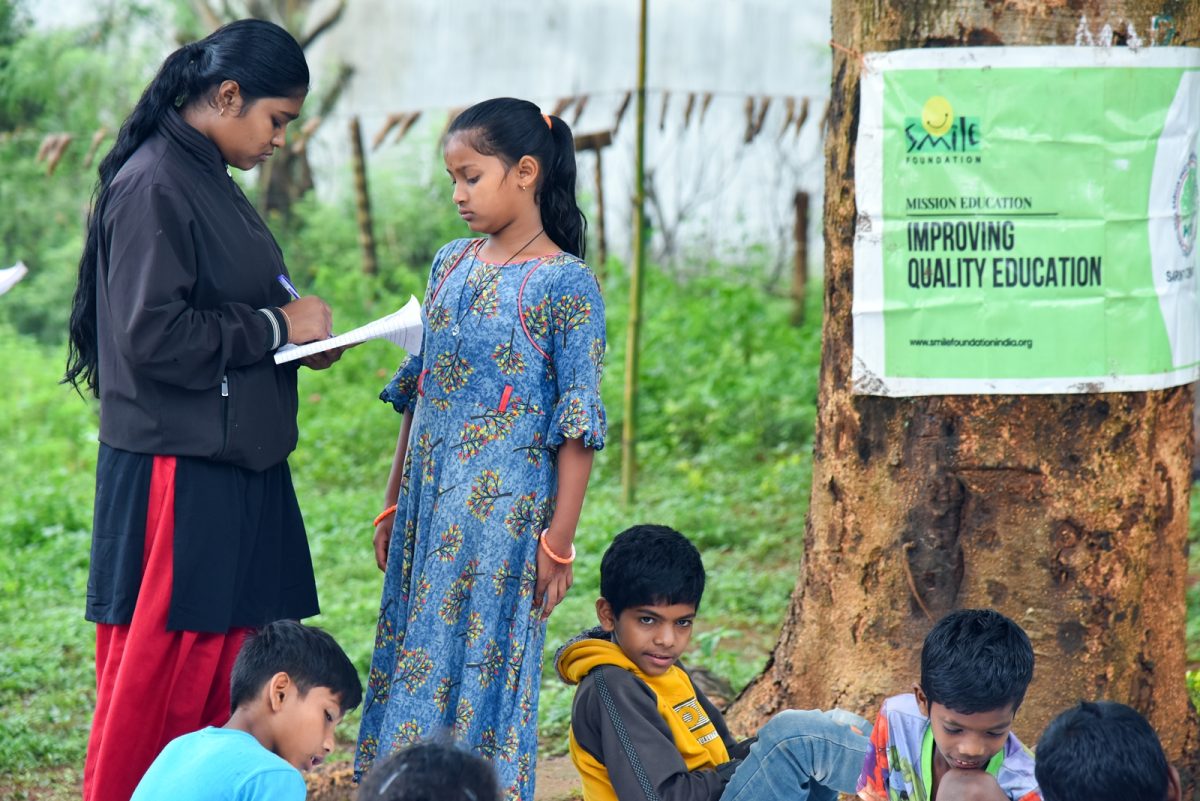
When Smile Foundation began conversations across local panchayats, the questions were broad. What are the barriers to steady income? What resources already exist here? What do women know how to do?

The answers did not initially sound ambitious. Some mentioned tailoring, others embroidery, and a few, almost apologetically, mentioned crochet.

But when the team began to look closely, what surfaced was not hobby work. It was precision. Tight, even stitches. Complex motifs remembered from mothers and grandmothers. Finishes that suggested not hobby, but habit.

The skill had been there for decades, passed along in kitchens and courtyards, rarely stepping beyond them.

2

When a Question Changes the Scale of a Skill

Elsewhere in the world, crochet has periodically stepped into public consequence. During the Irish famine, lacework sustained families when little else did. In wartime Europe and America, women crocheted garments and supplies as part of national relief efforts. More recently, crochet has resurfaced in unexpected arenas like museum installations, climate activism and Olympic stadiums.

At the Tokyo Games, cameras repeatedly cut to Tom Daley, calmly knitting and crocheting in the stands between dives. The images travelled widely. A decorated athlete, yarn in hand, unbothered by stereotype. What had once been coded as domestic and feminine was suddenly athletic, public and unapologetic.

On film sets, Julia Roberts has spoken about crocheting between takes, using the repetition to steady herself in an industry built on speed. In high fashion, designers have reclaimed crochet as artisanal luxury; Indian actors such as Sonam Kapoor have worn hand-crafted textures on global red carpets, reframing what handmade can signify.

Crochet, in other words, has been rebranded.

In Hoskote, the women had not been waiting for that rebrand. But they were poised for it.

Naming Themselves

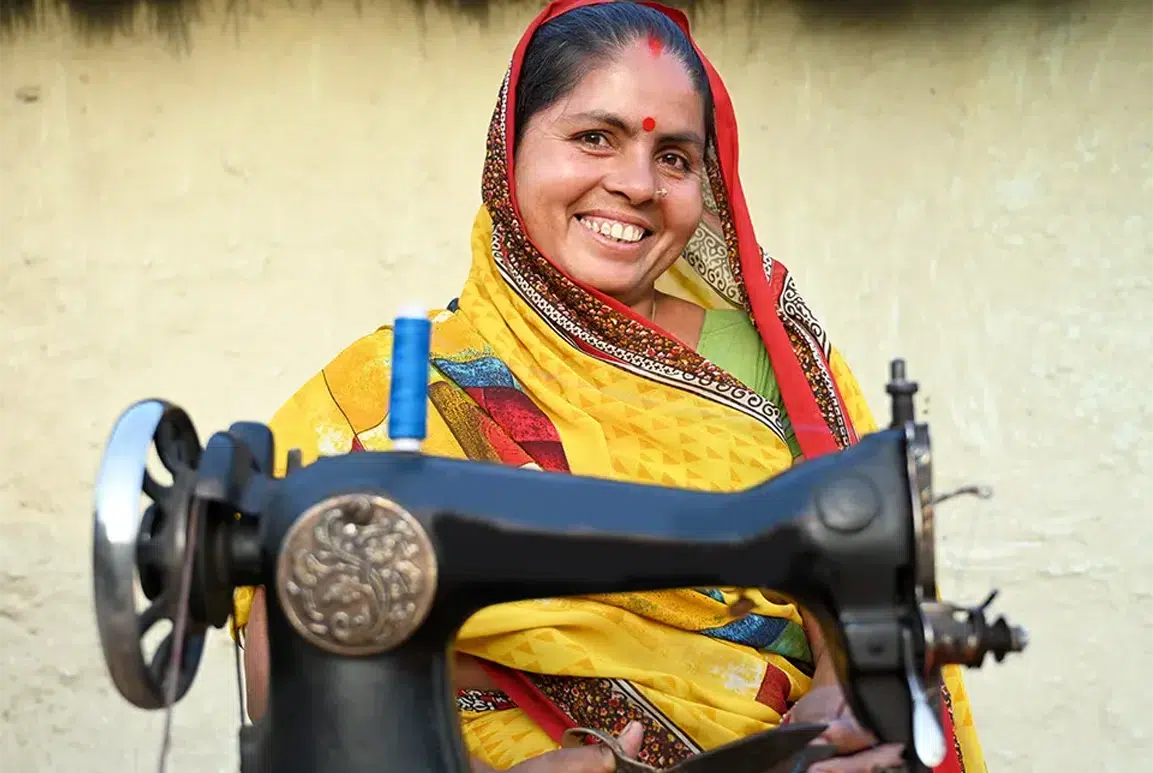
Through Smile Foundation’s Entrepreneurship Development Programme (EDP), a group of women began meeting not to exchange patterns, but to consider possibility. They formed a collective and named it Whispering Threads — a name that acknowledges both where they began and what they hoped to become. For women accustomed to describing crochet as “just something I do,” the language of enterprise required adjustment.
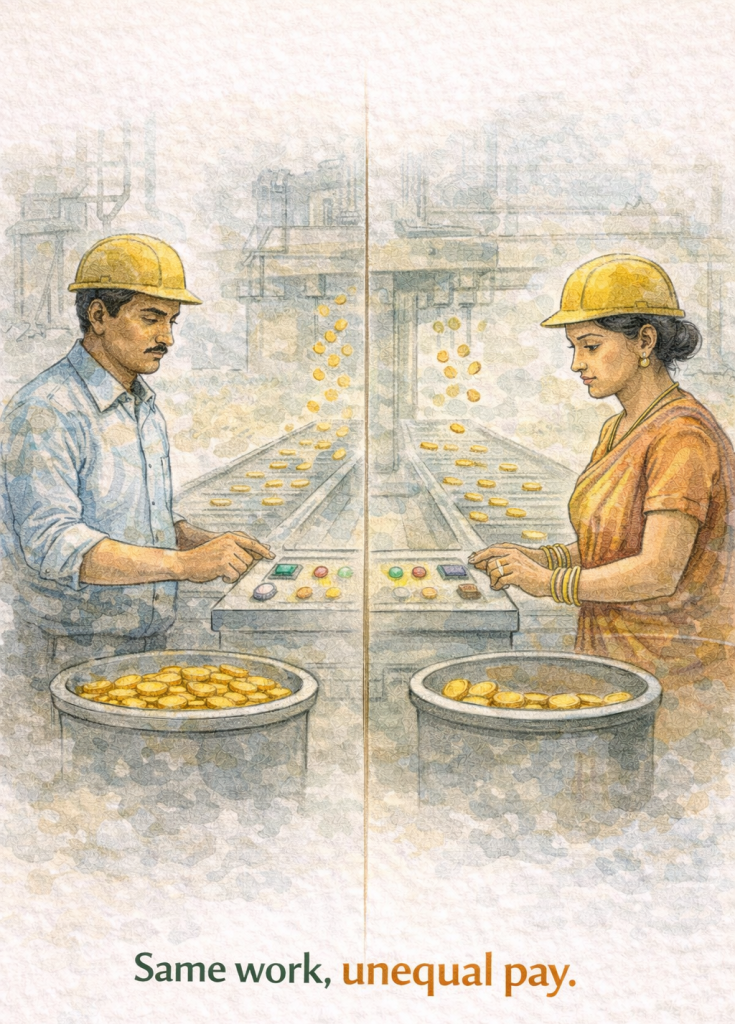
The early sessions were practical.

  • Costing raw materials
  • Understanding margins
  • Calculating profit instead of guessing
  • Learning how to speak about their work without apology

The name holds both history and intention. The work had been whispering for years, present but unheard beyond family circles. Now it would speak in markets, exhibitions and order books.

The EDP training did not attempt to replace craft with theory. It built structure around what already existed.

Technical training followed with learning more intricate patterns, contemporary colour palettes and product lines suited to urban buyers like

  • Table runners with tight lace geometry
  • Babywear designed for gifting markets
  • Home décor pieces that could sit as easily in Bengaluru apartments as in village homes

Each member began earning between ₹4000 and ₹5000 per month to start. In cities, the figure might be shrugged at, but in households accustomed to fluctuating daily wages, it is steadiness. It is predictability and a buffer against shock.

But the more significant shift is harder to tabulate.

The First Public Display

1

At their first mela, the stall was arranged with care bordering on ritual. A clean cloth spread flat. Crochet pieces aligned with price tags attached — small declarations that this work had value.

Standing behind that table required a new posture. Customers asked questions. Some ran their fingers across lace edges. Some purchased, others hesitated. The women explained their process, negotiated and calculated totals without deferring to anyone else.

It was a crossing from private production to public exchange.

Soon, orders extended beyond local fairs. Exhibitions multiplied and corporate gifting inquiries followed, requiring coordination, quality checks and collective accountability. What had once been solitary handwork now moved through a small but disciplined supply chain.

The thread had entered circulation.

ChatGPT Image Mar 2 2026 06 40 53 PM

The Cultural Moment They Inhabit

It is difficult to ignore the timing. Across the world, there has been a return to tactile practices. During pandemic lockdowns, yarn sales surged globally as people sought structure and solace in repetitive motion. Crochet groups proliferated online. What had seemed quaint became therapeutic, even essential.

Celebrity visibility accelerated that shift. When global figures crochet openly, the craft sheds some of its inherited diminishment. It becomes gender-neutral, mindful and contemporary.

For rural collectives like Whispering Threads, this broader reappraisal is not superficial. Markets respond to cultural signals. When handmade gains cachet, artisans gain leverage.

The women of Hoskote Taluk did not engineer this global moment. But they are part of it.

What Endures

In the late afternoon, the rhythm continues much as it always did.

From afar, crochet can look repetitive. But anyone who has worked a pattern knows that a mistake in the early rows can distort everything that follows. It requires attention, correction and a large trunk of patience.

Livelihood is similar.

Support Women-Led Enterprise

Across India, skills like these remain unseen until someone chooses to see them. Through structured training, mentorship and market linkage, Smile Foundation works to transform existing strengths into sustainable livelihoods.

When women’s work is recognized and connected to opportunity, the results are lasting.

Support women-led entrepreneurship.
Help more whispering threads be heard.

Categories
Smile Education Girl Child Health Livelihood

135th Dr. B.R. Ambedkar Jayanti: Honouring a Legacy of Justice and Equality in 2026

Each year, on 14th April, India solemnly celebrates Dr. B.R. Ambedkar Jayanti, marking the birth anniversary of the principal architect of the Indian Constitution and a tireless champion for social justice. As we observe Ambedkar Jayanti 2026, it becomes essential to reflect not only on his monumental contributions but also on the relevance of his ideals—liberty, equality, and fraternity—in our modern-day context. His enduring vision continues to guide movements for social reform and inspire institutions, including numerous NGOs in India, which strive to build an inclusive and just society.

Dr. B.R. Ambedkar: A Visionary for the Marginalised

Born in 1891 into a marginalised Dalit family, Dr Ambedkar’s life was a testament to resilience and intellectual brilliance. Rising above entrenched discrimination, he emerged as a formidable scholar, economist, and social reformer. His most historic achievement—drafting the Indian Constitution—laid the groundwork for a democratic republic rooted in equality, justice, and human dignity.

Central to Dr. Ambedkar’s philosophy was the belief that education and economic empowerment were essential to dismantling social hierarchies. He championed Dalit rights, fought for women’s emancipation, and emphasised the necessity of labour reforms, shaping policies that still resonate in India’s socio-political framework.

Why Ambedkar’s ideals still matter in 2026

Even in today’s India, Dr. B.R. Ambedkar’s teachings hold profound significance. Social inequities, caste-based discrimination, and economic disparity persist, making his principles a roadmap to address the challenges of our time:

1. Social Justice and Equal Opportunity

Unequal resources and opportunities remains a challenging reality, particularly in rural and underserved communities. Dr. Ambedkar’s advocacy for affirmative action and reservation policies has enabled countless individuals to access education and employment. Yet, ongoing efforts are vital to extend these opportunities universally.

2. Education as a Catalyst for Change

Dr. Ambedkar famously declared education as the “milk of a lioness,” urging the oppressed to pursue learning with courage. In the digital era, educational inequity remains a challenge, especially in rural India. His call for inclusive and quality education remains ever-relevant.

3. Economic Empowerment and Livelihood

His commitment to economic justice—through land reforms, wage security, and employment opportunities—serves as a cornerstone for current policies targeting poverty alleviation and inclusive growth. Livelihood programmes that provide vocational training and promote self-employment are clear extensions of his vision.

4. Women’s Rights and Gender Equality

Dr. Ambedkar was one of the earliest advocates for women’s rights, championing reforms that granted them agency in marriage, property, and employment. Today, his legacy lives on through initiatives that seek to ensure equal pay, reproductive rights, and political representation for women.

5. Democracy and Constitutional Morality

In an age of global political flux, Dr. Ambedkar’s belief in constitutional morality and democratic governance is more relevant than ever. His insistence on upholding civil liberties and secular values offers crucial guidance in preserving the spirit of Indian democracy.

How NGOs in India continue to uphold Ambedkar’s vision

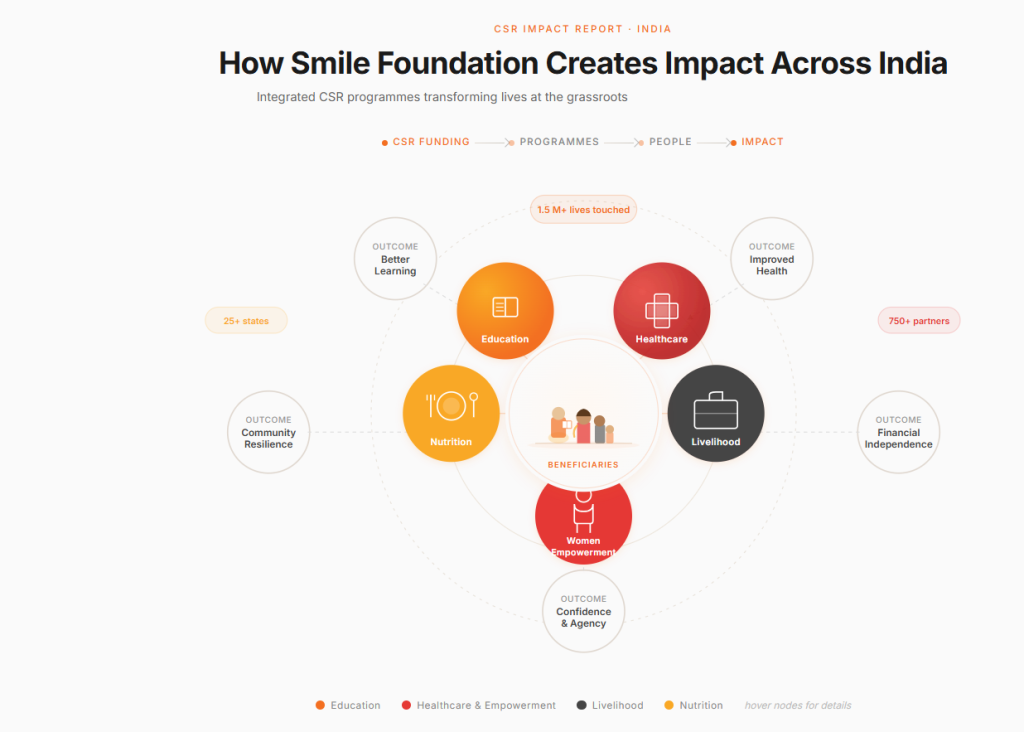
Across the country, NGOs in India remain committed to carrying forward Dr. Ambedkar’s legacy. Smile Foundation too works towards bringing change for good at the grassroot communities of India, aligning its efforts with his principles through a holistic and integrated approach to development.

Founded in 2005, Smile Foundation quickly recognised that education alone could not guarantee the holistic development of underprivileged children. We understood that systemic barriers—starting with poor maternal and neonatal care—impacted a child’s ability to thrive from the earliest stages of life.

From lack of healthcare to limited access to trained educators and infrastructure, children in rural and marginalised communities face multifaceted obstacles. Financial hardship often compels families to withdraw children—especially girls—from school, while undernutrition and poor sanitation perpetuate cycles of poverty and vulnerability.

In response, Smile Foundation adopted a life-cycle approach to address the interlinked issues affecting individuals and communities by offering integrated solutions in education, healthcare, and livelihood.

The life-cycle approach: Nurturing change from cradle to career and beyond

  • Mission Education aligns with the National Education Policy, focusing on foundational literacy, numeracy, and STEM disciplines, ensuring children develop strong cognitive and critical thinking skills.
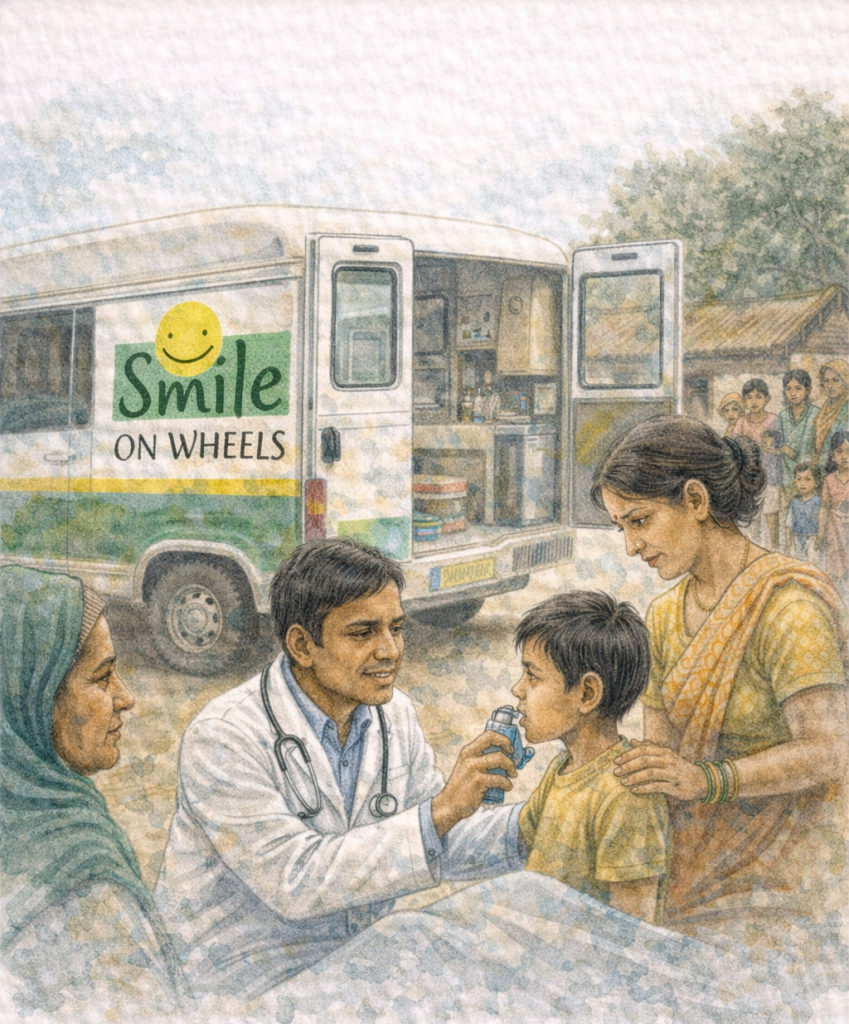
  • Smile on Wheels mobile health units bring essential medical services, including diagnostics, outpatient care, and free medication, to under-resourced communities.
  • Swabhiman champions maternal, menstrual, and neonatal health, creating awareness about hygiene and equipping women with knowledge crucial for their wellbeing.
  • STeP and advanced vocational training programmes empower youth and women with the skills required for employment and entrepreneurship, thus enhancing economic self-sufficiency.

Ambedkar’s ideals and the life-cycle approach: A shared vision

Dr. Ambedkar envisioned an India where every citizen, regardless of birth, had the chance to realise their full potential. His insistence on structural reform, access to education, economic equity, and gender equality finds deep resonance in Smile Foundation’s life-cycle approach.

Both stand for a future where transformation is not episodic, but continuous—built layer by layer, across generations and therefore, as we mark the 135th Dr. B.R. Ambedkar Jayanti in 2026, let us do more than remember his legacy—let us live it. 

Let’s build a society where equality is not an aspiration but a reality. Support children with education and their communities an empowered life. 

Categories
Gender In The Spotlight Insights

National Science Day 2026: Women in Science and Viksit Bharat

Every year on 28 February, India celebrates National Science Day — commemorating the discovery of the Raman Effect by Sir C.V. Raman in 1928. The day is more than a tribute to scientific curiosity. It is a reminder that science has shaped India’s past, and will define its future.

As India envisions a Viksit Bharat — a developed, innovation-driven nation — science is central to that ambition. But in 2026, the conversation must go further.

The theme “Women in Science: Catalysing Viksit Bharat” invites us to ask a deeper question:

Can India truly become a developed nation without fully unleashing the scientific potential of its women?

ChatGPT Image Mar 3 2026 10 39 54 PM

India’s Scientific Moment

India’s scientific journey has moved from resource constraints to global recognition.

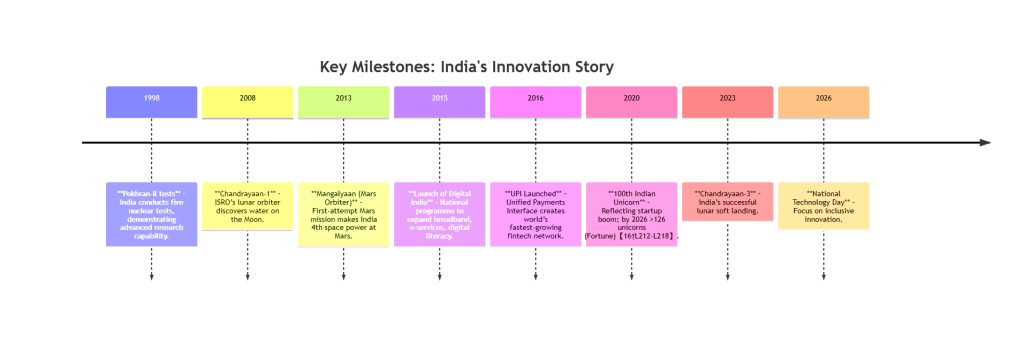
The Indian Space Research Organisation (ISRO) has placed India among elite spacefaring nations. From Chandrayaan missions that expanded lunar understanding to cost-effective Mars exploration, India demonstrated that innovation need not be expensive to be transformative.

India’s vaccine manufacturing capacity positioned it as a global supplier during the COVID-19 pandemic. Indigenous vaccine development, including Covaxin, reflected the country’s growing biotech capability.

In pharmaceuticals, India became known as the “pharmacy of the world,” producing affordable generics that expanded access to life-saving medicines globally.

Digital public infrastructure such as Aadhaar and UPI redefined financial inclusion at scale. These systems are now studied globally as models of technological architecture.

India has built supercomputers under constraints, expanded renewable energy research, advanced genomics through national initiatives and strengthened biotechnology start-ups.

The ambition is clear: science and innovation are central to India’s development pathway.

Yet one statistic continues to temper celebration.

India spends roughly 0.6–0.7% of GDP on research and development — significantly lower than global innovation leaders. And within this ecosystem, women remain underrepresented at senior research levels.

The next leap toward Viksit Bharat requires both deeper investment and wider inclusion.

Women in Science: The Untapped Multiplier

India produces a large number of women STEM graduates each year. In some disciplines, female enrolment in undergraduate science programmes is strong.

Yet the numbers narrow as careers advance.

Fewer women occupy senior research positions, lead laboratories, or hold decision-making roles in R&D institutions. Structural barriers — caregiving expectations, limited mentorship networks, institutional biases — contribute to attrition.

The paradox is clear: India trains women in science, but does not always retain them in science leadership.

Research across global innovation systems shows that diverse research teams produce stronger outcomes. Inclusion enhances problem-solving, interdisciplinary thinking and societal relevance.

For a nation aspiring toward scientific leadership, inclusion is not symbolic. It is strategic.

Women in science are not a peripheral theme. They are catalysts.

ChatGPT Image Mar 3 2026 10 39 12 PM

Science, Society and Systems this National Science Day 2026

Science is not confined to laboratories.

When women scientists contribute to public health research, vaccine development improves. When they become engineers design digital platforms, accessibility expands, and when women climate researchers lead renewable innovation, sustainability strengthens.

The ripple effects extend beyond invention.

Consider healthcare innovation. India’s biomedical research institutions contribute to vaccine development, diagnostic tools and public health surveillance. Yet healthcare access gaps remain across regions.

Bridging research and access requires inclusive thinking — scientists who understand community realities.

Women researchers often bring lived experiences that influence problem framing and solution design.

In agriculture, biofortified crops addressing micronutrient deficiencies have emerged from research collaborations. Nutrition-sensitive science can transform public health outcomes.

In digital innovation, India’s public infrastructure demonstrates how large-scale technological architecture can serve millions. Ensuring gender-inclusive design in such systems determines who benefits.

Science is powerful when it serves society.

From Frugal Innovation to Frontier Science

India’s scientific reputation has long been associated with frugal innovation — high-quality engineering under cost constraints.

Low-cost medical devices, affordable diagnostics, and generic drug manufacturing reflect this strength.

But Viksit Bharat requires expansion into frontier science as well — quantum computing, semiconductor research, advanced materials, AI ethics, green hydrogen and space commercialization.

To compete globally in these domains, India must:

  • Increase R&D spending
  • Strengthen academia-industry linkages
  • Reduce bureaucratic bottlenecks
  • Encourage interdisciplinary collaboration
  • Expand participation of women scientists

Frontier science thrives where ecosystems are inclusive.

Education as the Starting Point: National Science Day 2026

National Science Day is not only about celebrating laboratories. It is about nurturing curiosity in classrooms.

In many parts of India, girls show strong interest in science subjects. Yet access to advanced labs, mentorship and exposure varies widely.

Rural and underserved communities often lack structured STEM exposure. Without sustained encouragement, potential fades.

Building a pipeline for women in science begins early — in schools where girls are encouraged to ask questions, experiment and imagine careers in research.

Science education must not reinforce stereotypes. It must dismantle them.

Women Scientists Shaping India’s Future

Across sectors, women scientists are contributing to:

  • Space research missions
  • Vaccine development
  • Climate modelling
  • Artificial intelligence research
  • Biotechnology startups
  • Environmental conservation

Their presence challenges outdated narratives about who belongs in science.

Representation matters. When girls see women leading research missions, publishing studies, or designing complex systems, aspiration shifts from possibility to probability.

Catalysing Viksit Bharat requires visible role models.

ChatGPT Image Mar 3 2026 10 46 56 PM

The Road to Viksit Bharat

Commemorating the Raman Effect reminds us that scientific discovery can reshape global understanding.

But today’s scientific moment demands collective action.

“Women in Science: Catalysing Viksit Bharat” is not a ceremonial slogan. It is a developmental imperative.

A developed India must:

  • Invest more deeply in research.
  • Create equitable institutional cultures.
  • Support re-entry pathways for women researchers.
  • Expand mentorship networks.
  • Integrate science access with social inclusion.

Scientific excellence and equity are not competing goals. They are mutually reinforcing.

National Science Day 2026: From Celebration to Commitment

ChatGPT Image Mar 3 2026 10 31 25 PM

A Viksit Bharat is one where innovation is not confined to elite institutions but is nurtured in classrooms across cities, towns and villages. Where research talent is identified early. Where girls are encouraged not only to study science, but to lead it.

This is where the journey truly begins.

Across underserved communities, many girls demonstrate curiosity in mathematics and science but lack exposure, mentorship and access to laboratories or digital tools. Without structured encouragement, that curiosity can diminish under social and economic pressures.

Through its education initiatives, Smile Foundation works to strengthen foundational learning, digital literacy and STEM exposure among children from underserved backgrounds. By improving access to quality education, integrating experiential learning opportunities and encouraging scientific inquiry among girls, the foundation supports the early pipeline of future researchers, engineers, and innovators.

Exposure visits, digital classrooms, science-led workshops and life skills integration help students connect classroom theory with real-world applications. When girls participate in hands-on learning — whether through digital tools, science modules or guided exploration — confidence grows alongside competence.

Building a future-ready India requires expanding this pipeline.

Encouraging girls to pursue science is not only about representation. It is about strengthening India’s research ecosystem in the long term. Every girl who remains in school, who develops analytical thinking skills, and who is exposed to scientific problem-solving becomes a potential contributor to India’s innovation story.

National Science Day 2026 reminds us that scientific progress begins with curiosity — and curiosity must be nurtured equitably.

India has shown the world what it can achieve in space exploration, vaccine development, digital infrastructure and affordable innovation.

The next milestone is ensuring that girls from every background have the opportunity to participate in shaping that future.

When education systems support girls in science, when institutions retain women researchers, and when policy invests in inclusive R&D ecosystems, the path toward Viksit Bharat becomes stronger and more sustainable.

Science has propelled India forward.
Inclusive science will propel it further.

On this National Science Day, the call is clear:
Invest in research.
Support women in science.
Strengthen the pipeline from classrooms to laboratories.

Because a developed India will be built not only by discovery —
but by opportunity.

Categories
Gender

Rights Gap: Empowering Women through Education and Enterprise

A new UN Women report finds that no country grants women full legal equality, globally women hold only about 64% of the legal rights that men enjoy[1]. These gaps, from weak equal-pay laws to laws allowing child marriage, leave women exposed to discrimination, violence and exclusion throughout life[1][2]. For instance, in nearly 75% of countries, girls can still be legally forced into marriage, and 44% of countries have no equal-pay requirement[2]. These legal shortfalls translate into lost opportunities: girls drop out of school and women stay out of the formal workforce. In India alone, 12.3% of secondary-school girls drop out, often due to early marriage or household pressures[3]. With laws lagging, organizations like Smile Foundation step in on the ground, strengthening girls’ education and women’s economic agency to counter these structural barriers.

Screenshot 2026 03 03 174541
Screenshot 2026 03 03 174554

Education as Empowerment

When laws don’t guarantee rights, families often deprioritise girls’ schooling. Smile Foundation combats this through scholarships and mentorship. For example, its Scholarships@Smile programme has supported over 100,000 students (mainly girls) nationwide with financial aid, life-skills workshops and mentoring[4]. By covering fees and school supplies, Smile keeps girls learning instead of dropping out. This matters: well-educated women earn more and lift up their communities[5]. (In fact, one analysis showed countries with the least gender-education gaps enjoy higher per-capita income than those with the widest gaps[6].

Scholarships for girls


Figure: Girls in Smile’s scholarship programme attend a skills and mentoring session. Beyond tuition, Smile’s “She Can Fly” campaign provides laptops, stipends and life-skills workshops to keep talented girls in school[7].

Investing in girls also brings big social dividends. Educated women tend to marry later, have fewer children and give their families better health care[8][5]. For example, UNICEF finds that children of literate mothers are far more likely to survive childhood[8]. Smile’s programmes seize on this: its She Can Fly campaign explicitly provides scholarships, laptops, mentoring and confidence-building to vulnerable girls[7]. Another programme offers secondary and college scholarships plus communication and leadership training[9]. These efforts ensure that girls can finish school, and even pursue STEM studies, despite the legal and cultural barriers around them.

Entrepreneurship and Skills Training

When formal laws leave gaps (for example, no guaranteed equal pay in many countries[10]), many women end up in informal, low-paid work. In India over 90% of women-owned enterprises are informal[11], meaning no formal contracts or protections. Smile Foundation’s Women’s Economic Empowerment programmes step in here. Through structured training, women learn business planning, financial literacy, marketing and digital skills[12][13]. They also get help developing business models (via Generate-Your-Business and Start-Your-Business workshops) and access to seed capital or government scheme funds[12][13]. In short, women emerge with real enterprises rather than subsistence activities.

fb5cc411 8c75 40ed 94fe 8b9206830ef4 1


Figure: A woman artisan practices weaving as part of a Smile-supported microenterprise. Smile’s entrepreneurship training helps turn traditional skills into viable businesses by pairing craftsmanship with financial and digital training[12][13].

This integrated approach pays off. Smile’s Swabhiman livelihood initiative has supported 68 women-led micro-enterprises in 2023–24[14], directly creating income-earning opportunities. The impact is multi-fold: women gain financial independence, build digital literacy, and become decision-makers in their households[12][13]. These local enterprises, in turn, inspire others; a trained woman entrepreneur can mentor the next. As Smile’s own analysis notes, empowered women spend more on education and nutrition for their families, generating an education and nutrition dividend that fuels community development[5][6].

Screenshot 2026 03 03 174618

The UN report makes clear that legal reform alone won’t happen overnight. Discriminatory norms persist even where laws exist[15]. That’s why Smile Foundation’s model is so aligned: it works at the community level to translate opportunities into access. While advocacy pushes for better laws, Smile gives women the skills and support they need today. By keeping girls in school and training women to start businesses, Smile helps bridge the gap between rights on paper and rights in practice. Each scholarship or entrepreneurship workshop is a step toward the equality that law promises but has yet to deliver.

Screenshot 2026 03 03 174628

Join the effort: Empowering a girl or woman now pays dividends far beyond her lifetime. Donations and partnerships that fund Smile’s education and livelihood programmes are investments in healthy families, stable incomes and stronger economies. As Smile’s experience shows, when girls finish school and women build businesses, entire communities benefit[5][6], making progress toward the equality we all deserve.

Screenshot 2026 03 03 174644

Sources: Global legal-rights data from UN Women (reported in Down To Earth[1][2]); Smile Foundation program statistics and analyses[4][12][14][5][7] (see Smile Foundation annual reports and blogs for full details).

[1] [2] [10] [15] UN Report: Women Hold Only 64% of Men’s Legal Rights Globally

https://www.downtoearth.org.in/governance/women-globally-hold-just-64-of-the-legal-rights-of-men-un

[3] [4] The Future She Deserves Starts With A Scholarship

[5] [6] [7] [8] [9] Investing in Girls Changes Entire Economies – Smile Foundation

[11] The Present Must Be Female: Ft. Female Entrepreneurship

[12] [13] Smile Foundation Connect

https://www.smilefoundationindia.org/csr/partner-for-economic-empowerment

[14] Women Empowerment NGO in India | Empower Futures

https://www.smilefoundationindia.org/women-empowerment

Categories
Nutrition

India’s Protein Gap: Why Nutrition Is Foundational to Education

India has made significant strides in expanding access to schooling. Enrolment rates have improved, gender parity at the primary level has strengthened and millions of children now enter classrooms each year with aspirations for a better future.

Yet access to school is only the first step.

A child who is undernourished cannot fully participate in learning.

India’s “protein gap” — the shortfall between recommended protein intake and what many people actually consume — remains one of the country’s most under-recognised development challenges. While caloric intake has improved over time, diet quality continues to lag, particularly among low-income households. The implications are far-reaching, affecting not only health but also cognitive development, school attendance and long-term opportunity.

If education is to be transformative, nutrition must be foundational.

Understanding the Protein Gap

Health experts recommend approximately 0.8 to 1 gram of protein per kilogram of body weight per day for healthy individuals, with higher requirements for children, adolescents and pregnant or lactating women. However, multiple national surveys suggest that a substantial proportion of Indians fall short of these recommendations.

Indian diets remain heavily cereal-based. Rice and wheat form the core of daily meals for many households, especially those supported by public food distribution systems. While cereals provide calories and some protein, they do not supply all essential amino acids in sufficient quantities unless combined with diverse sources such as pulses, dairy, eggs or meat.

For families managing limited incomes, dietary diversity is often constrained by affordability. Protein-rich foods typically cost more per calorie than staples like rice or wheat. When budgets are tight, quantity understandably takes precedence over quality.

The result is not visible hunger in the traditional sense, but hidden deficiency — children who consume enough calories to feel full, yet lack the nutrients required for optimal growth and development.

ChatGPT Image Mar 3 2026 07 06 59 PM

Why Protein Matters for Learning

Protein plays a crucial role in building and repairing tissues, supporting immune function and enabling cognitive development. For children and adolescents, adequate protein intake is particularly important during periods of rapid growth.

When protein intake is insufficient, the consequences may include:

  • Impaired physical growth
  • Reduced muscle development
  • Frequent illness
  • Fatigue
  • Difficulty concentrating

In a classroom setting, these challenges directly affect a child’s ability to learn. Attention span, memory retention and problem-solving capacity are all influenced by nutritional status. A child who feels weak or unwell is less likely to engage actively in lessons or participate confidently in discussions.

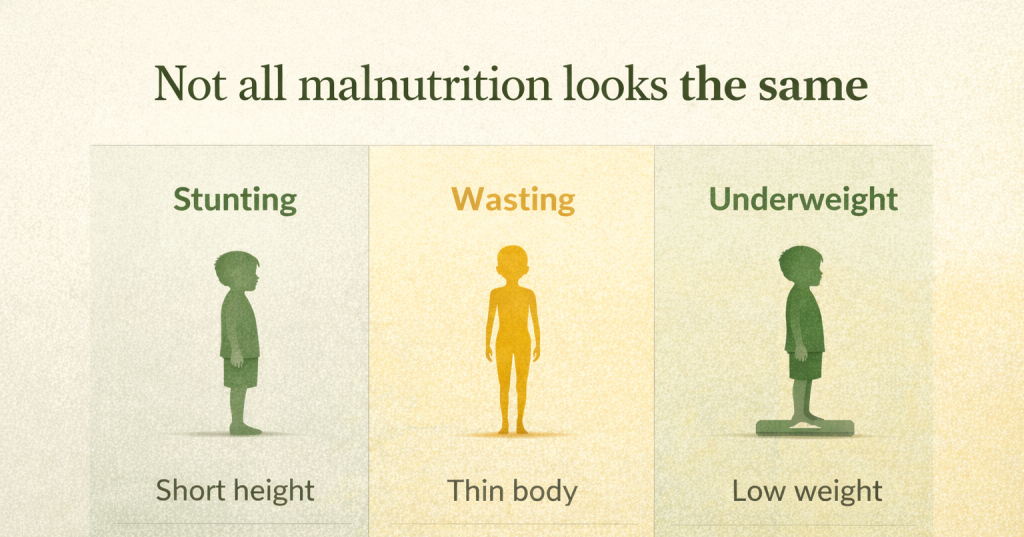
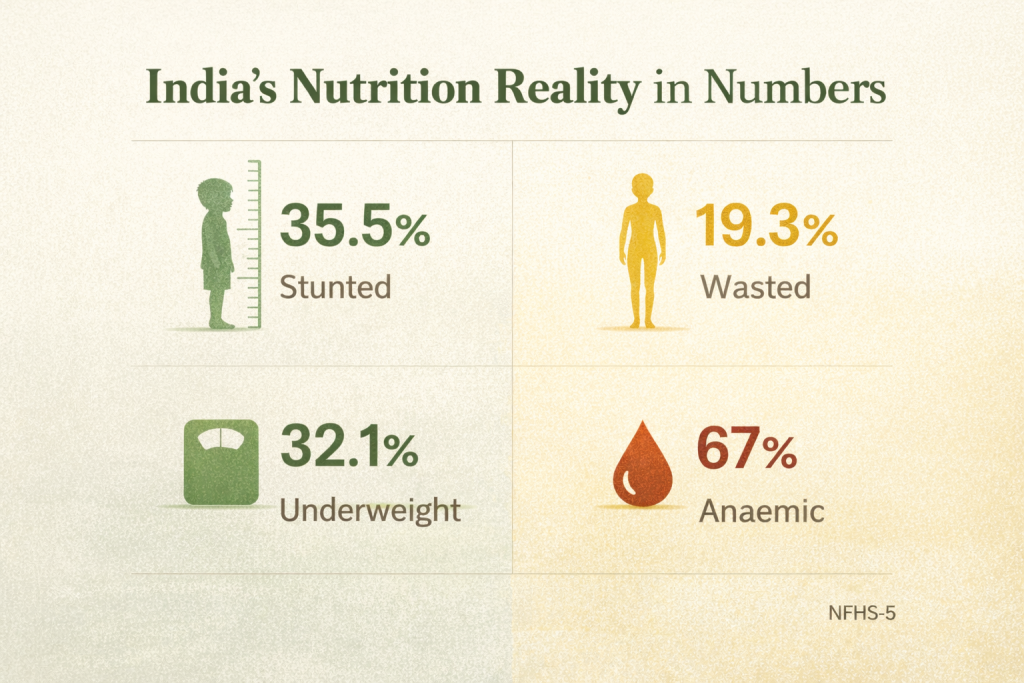
India continues to report high levels of child stunting and anaemia, particularly among girls and women. While these conditions arise from multiple factors, inadequate dietary protein contributes to weakened resilience and developmental delays. Over time, these deficits can translate into poorer educational outcomes and reduced economic prospects.

Nutrition, therefore, is not separate from education policy. It is central to it.

ChatGPT Image Mar 3 2026 07 09 26 PM

The Gendered Reality of the Protein Gap

The protein gap in India has a pronounced gender dimension.

In many households, food distribution is influenced by social norms. Women and girls may eat after male family members or consume smaller portions when protein-rich foods are limited. Over time, this pattern compounds inequality.

Adolescent girls are especially vulnerable. During adolescence, protein requirements increase due to rapid growth and hormonal changes. Inadequate intake during this stage can affect height attainment, reproductive health and future maternal outcomes.

When undernourished girls become mothers, the cycle of malnutrition can continue into the next generation.

Improving protein intake among girls is therefore not only about immediate well-being. It is an investment in healthier families and stronger communities.

For organisations working at the intersection of education and gender equity, this connection is critical. Keeping girls in school requires ensuring they are physically equipped to thrive there.

The Role of School-Based Nutrition

India’s school meal programmes have played a transformative role in increasing enrolment and attendance. For many children from low-income households, school meals provide a significant portion of daily nutritional intake.

Where meals are diverse and include adequate protein sources — such as pulses, eggs or dairy — they contribute meaningfully to growth and cognitive function. In several states, the inclusion of eggs in school meals has been associated with improved attendance and participation.

However, the quality and composition of school meals vary across regions. In some contexts, meals remain heavily cereal-based, limiting their ability to close the protein gap effectively.

Optimising school nutrition programmes is therefore not simply a matter of food provision. It is about designing meals that support learning outcomes.

Nutrition and Educational Continuity

From Smile Foundation’s experience working in underserved communities, one pattern is clear: children who are healthier attend school more regularly.

Under its Mission Education programme, Smile Foundation supports access to quality education while recognising that health and nutrition are integral to sustained learning. Community engagement efforts often include awareness-building around balanced diets, hygiene and preventive healthcare.

When parents and caregivers understand the importance of affordable protein sources such as pulses, lentils, groundnuts, seasonal legumes and dairy, dietary improvements become more feasible. Small shifts in household food choices can make meaningful differences in children’s growth and energy levels.

Educational continuity is strengthened when children are not repeatedly absent due to illness or fatigue. Confidence grows when physical well-being supports active participation.

The Urban–Rural Contrast

In urban middle-class settings, conversations around protein often revolve around fitness supplements, fortified foods and lifestyle choices. Yet this narrative contrasts sharply with realities in many rural and low-income communities.

For millions of children, the challenge is not optimising protein intake for performance enhancement. It is securing sufficient protein for basic growth.

Bridging this divide requires a public conversation that moves beyond trends and acknowledges structural inequities in food access. Nutrition must be framed as a rights-based issue linked to educational opportunity and economic mobility.

Protein, Productivity and India’s Future

India’s demographic dividend is frequently cited as a driver of future growth. But a demographic advantage yields returns only when human capital is strong.

Children who grow up with inadequate nutrition face lifelong consequences. Physical growth may be stunted, cognitive development may be constrained and earning potential may be reduced. These individual effects accumulate into broader economic implications.

Addressing the protein gap is therefore not just a health intervention. It is a long-term investment in national productivity and resilience.

Toward Integrated Solutions

Closing India’s protein gap requires coordinated efforts across policy, education, and community engagement.

Public food systems must prioritise dietary diversity. School meal programmes must ensure adequate protein content. Community-level awareness initiatives must promote affordable, locally available sources of nutrition.

For development organisations, integration is key. Education programmes cannot operate in isolation from health realities. When nutrition awareness, preventive healthcare and academic support work together, children are better positioned to achieve their potential.

The connection is simple but powerful: a nourished child learns better. A well-educated child has greater opportunity. And opportunity, sustained over time, transforms communities.

From Hunger to Human Potential

India has made meaningful progress in reducing overt hunger. The next frontier is improving diet quality.

The protein gap reminds us that development challenges are interconnected. A child’s plate and a child’s future are part of the same story.

If we are committed to building an inclusive education system that unlocks potential for every child, nutrition must be treated not as an auxiliary concern, but as a foundational pillar.

Because before a child can aspire, innovate or lead, that child must first be nourished.

Categories
Women Empowerment Employee Engagement

Mother’s Day Gift Ideas That Make a Real Difference – Celebrate With Smile Foundation

There was a time when Mother’s Day gift ideas meant a handwritten card, a breakfast tray carefully balanced, or a bouquet bought with saved pocket money. The gesture mattered more than the price tag. It was about gratitude.

Over the years, the idea of motherhood has evolved. So have the ways we celebrate it.

Today, mothers are caregivers, professionals, entrepreneurs, farmers, educators and community leaders. They balance paid and unpaid labour, often invisibly. According to recent global estimates, women perform three times more unpaid care work than men. In India, Time Use Survey data shows women spend several hours daily on unpaid domestic responsibilities, often alongside income-generating work.

As our understanding of motherhood deepens, so should our celebrations. This year, perhaps the most meaningful Mother’s Day gift ideas are those that extend beyond our own families — gifts that empower other mothers and educate children who need support.

Why Celebrating Mother’s Day With a Purpose Matters

Mother day is celebrated on the second Sunday of May in many countries. What began as a personal tribute has gradually become commercialised. Yet beneath the marketing, the essence remains: honouring care, resilience and sacrifice.

But what if the celebration could grow with us?

Across India, millions of children are enrolled in school, yet foundational learning gaps remain. ASER 2023 notes that while enrolment is high, reading and arithmetic levels in several rural regions are still below expected grade standards. At the same time, NFHS-5 highlights persistent challenges in maternal nutrition and anaemia among women.

These statistics are not abstract. They shape everyday motherhood.

When we choose to celebrate Mother’s Day with intention, we recognise that empowering mothers — through education, health and livelihoods — strengthens entire communities.

Mother’s Day Gift Ideas

Moving Beyond Traditional Mother’s Day Gifts

Flowers wilt. Chocolates disappear. Jewellery sparkles but sits in drawers.

Traditional gifts are expressions of affection, but their impact fades.

Today, many families are rethinking how they celebrate. Instead of simply exchanging presents, they choose to:

  • Gift education to a child who might otherwise drop out
  • Donate on Mother’s Day in honour of their mother
  • Support learning materials for underserved schools
  • Fund skill development workshops for women

These choices reflect a broader cultural shift. Gratitude becomes action.

In this sense, every day is Mother’s Day when we contribute to a world where all mothers and children can thrive.

How Purpose-Driven Celebrations Create Lasting Impact

Research from the World Bank and UNICEF consistently shows that when mothers are educated and economically empowered, their children are more likely to stay in school and receive proper healthcare.

The impact is generational.

A donation made in your mother’s name may support a girl’s education. That girl may one day become a teacher, a nurse, an entrepreneur — perhaps a mother who ensures her own children never leave school.

Purpose-driven Mother’s Day gift ideas are not about replacing affection. They are about expanding it.

If you are exploring ways to celebrate differently, you can learn more about supporting children and mothers through Smile Foundation’s education and empowerment programmes.

Gift Education as a Meaningful Mother’s Day Tribute

As societies evolve, so does the meaning of motherhood. It is no longer confined to caregiving within the home. It includes advocacy, economic participation, and leadership.

Education lies at the heart of that transformation.

Donate in Honour of Your Mother

Donating in your mother’s name turns appreciation into opportunity.

A contribution toward a child’s education or a women’s empowerment initiative carries symbolic weight. It says that your mother’s values — care, perseverance, generosity — extend beyond your household.

More families are choosing to donate on Mother’s Day instead of purchasing material gifts. It is a powerful way to honour legacy.

Sponsor a Child’s Education This Mother’s Day

To sponsor a child’s education is to create continuity.

Education sponsorship can help cover school supplies, uniforms, digital access and mentoring support. While India has achieved high enrolment rates, learning continuity remains fragile in many underserved communities.

When you choose to gift education, you are not just funding school attendance. You are supporting confidence, aspiration and resilience.

These are qualities mothers everywhere hope their children will develop.

Sponsor a Child’s Education This Mother’s Day

Support Underprivileged Mothers Through Education Initiatives

The modern understanding of motherhood recognises that economic independence strengthens family well-being.

Underprivileged mothers often face limited access to skill training and income opportunities. Supporting literacy programmes, vocational training and financial education helps women build sustainable livelihoods.

According to UN Women, increasing women’s economic participation has measurable effects on poverty reduction and national growth.

Purposeful Mother’s Day gift ideas can therefore support not only children but also the mothers working tirelessly to support them.

How Smile Foundation Supports Education and Women Empowerment

Motherhood evolves with society. Organisations working at the grassroots witness this transformation firsthand.

Smile Foundation integrates education and women empowerment within its programmes, recognising their interdependence.

Ensuring Access to Quality Education for Children

Through its Mission Education initiative, Smile Foundation supports children from underserved communities with academic assistance, digital tools and mentorship.

In a post-pandemic context, bridging learning gaps is critical. Education today is not only about classroom access but also about sustained support.

When children remain in school, families experience stability. Mothers gain reassurance that their sacrifices contribute to real progress.

Empowering Mothers Through Skill Development Programmes

Smile Foundation also works with women to enhance income opportunities and self-reliance.

Skill development workshops for women in tailoring, entrepreneurship, and digital literacy enable mothers to contribute economically. When mothers earn, household investments in nutrition and education often increase.

Empowerment strengthens dignity. Dignity strengthens families.

Celebrate Mother's Day

Creating Sustainable Change in Underserved Communities

Sustainable impact requires long-term engagement.

Smile Foundation partners with communities to ensure programmes are culturally relevant and accountable. Monitoring and reporting frameworks ensure transparency.

When you choose Mother’s Day gift ideas that support structured initiatives, you become part of a larger movement toward equity.

Make This Mother’s Day Truly Meaningful

The story of motherhood has always been one of adaptation.

From homemakers to professionals, from caregivers to community leaders, mothers continually reshape expectations. Our celebrations should evolve too.

Create a Legacy of Education in Your Mother’s Name

Imagine gifting your mother a certificate that confirms a child’s schooling has been supported in her honour.

It transforms the conversation from “What did you receive?” to “Whose future did we change?”

Legacy gifts carry emotional depth. They reflect values passed from one generation to the next.

Celebrate Motherhood by Giving Back to Society

To celebrate Mother’s Day with purpose is to recognise that motherhood is both personal and social.

When we extend care beyond our immediate circles, we honour the universal spirit of nurturing.

Whether you choose to gift education, support women’s training, or contribute to community programmes, your gesture carries forward the ethos of care.

Turn a One-Day Celebration Into Lifelong Impact

Mother’s Day is a date on the calendar. But its meaning can endure.

Thoughtful Mother’s Day gift ideas transform a single day into sustained support. They align celebration with responsibility.

Instead of fleeting consumption, they create continuity.

In doing so, they remind us that gratitude is most powerful when shared.

Frequently Asked Questions

1. What are meaningful Mother’s Day gift ideas that create real impact?

Meaningful options include donating in your mother’s name, sponsoring a child’s education or supporting women’s empowerment initiatives that improve livelihoods and access to education.

2. Why choose to gift education on Mother’s Day?

Education creates lasting opportunity. It supports children’s development and honours the nurturing values associated with motherhood.

3. Can I donate on Mother’s Day through Smile Foundation?

Yes. Smile Foundation offers structured programmes supporting education and women empowerment. Donations are transparently managed and aligned with measurable impact goals.

4. How does supporting mothers improve children’s futures?

Research shows that educated and economically empowered mothers invest more in their children’s health and schooling, creating long-term social benefits.

Celebrate With Purpose

Motherhood has always been about shaping futures.

This year, let your celebration reflect that truth.

Choose Mother’s Day gift ideas that extend love beyond your home. Support education. Empower mothers. Create opportunity.

Visit Smile Foundation to explore how you can gift education or sponsor a child’s education in honour of your mother.

Because when we invest in mothers and children, we celebrate more than a day.
We celebrate possibility.

Categories
Gender Health Nutrition

From the First 1,000 Days to Financial Independence

For decades, development programming has treated women’s health, nutrition, and economic empowerment as separate verticals. Maternal health sits in one policy bucket. Nutrition in another. Livelihoods in a third.

On paper, this separation creates administrative clarity.

On the ground, it creates fragmentation.

A pregnant woman who is anaemic does not experience her life in verticals. Her health affects her productivity. Her productivity affects household income. Household income affects her child’s nutrition. Child nutrition affects cognitive development. And that development shapes the next generation’s economic trajectory.
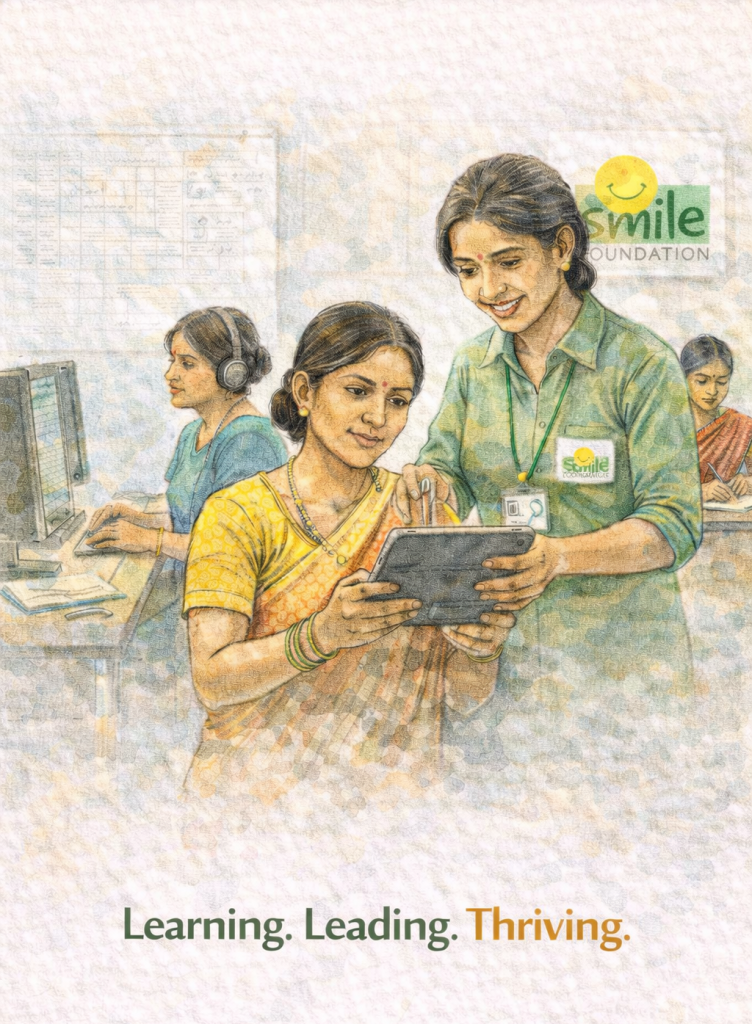
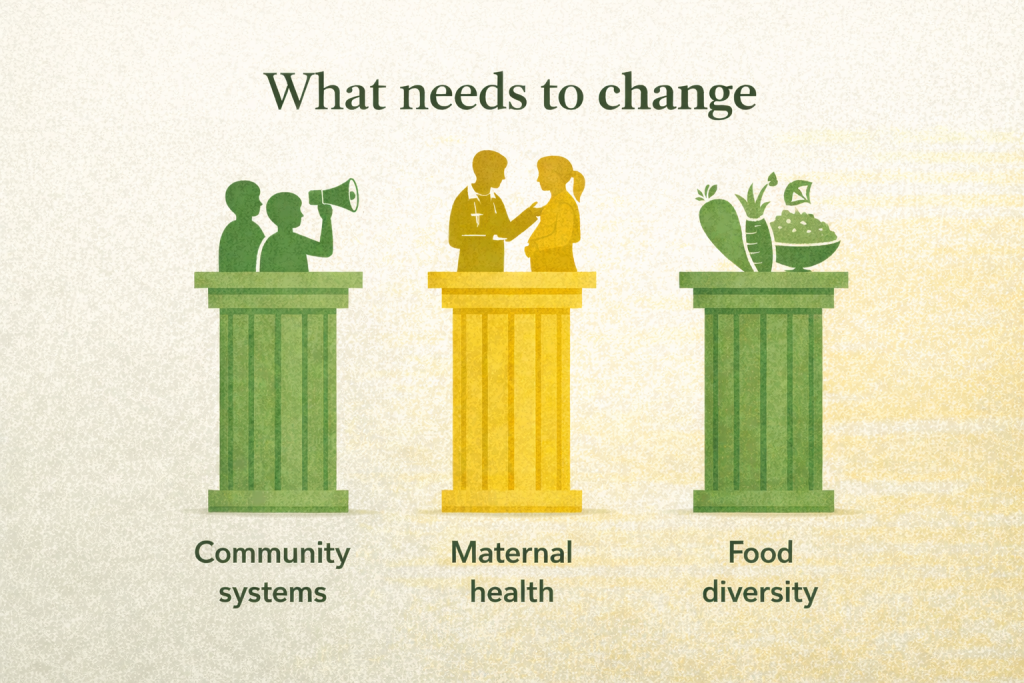
If we are serious about advancing women’s well-being in India, we must move from fragmented interventions to integrated systems.

The Context: Persistent Gaps in Women’s Health and Agency

India has made measurable progress in maternal and child health over the last two decades. Yet structural gaps remain.

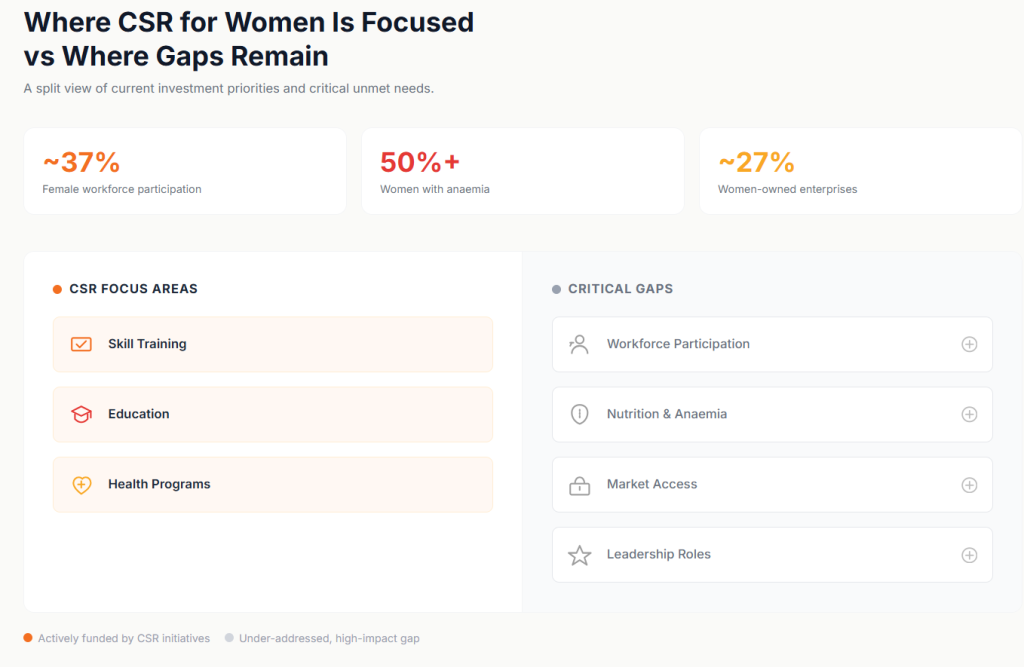
Recent studies highlight that only a minority of women receive comprehensive essential healthcare services. Meanwhile, over half of women of reproductive age continue to face anaemia — a condition that directly impacts maternal outcomes, productivity and economic participation.

Health and economic participation are not isolated realities.

Global research consistently shows that when women lack access to quality healthcare and nutrition, their labour force participation declines. Conversely, when women gain income and financial agency, health-seeking behaviour improves.

The relationship is circular, and reinforcing.

This is precisely why integrated models are no longer optional. They are essential.

Rethinking the First 1,000 Days

The first 1,000 days of a child’s life — from conception to two years of age — are widely recognised as critical for long-term physical and cognitive development.

But maternal health during this period is equally critical.

If a woman enters pregnancy anaemic, without access to antenatal care, and without adequate nutrition knowledge, the impact extends beyond delivery outcomes. It influences birth weight, early immunity and long-term growth trajectories.

Yet maternal health programmes often stop at clinical indicators.

What happens after childbirth? Does the mother regain nutritional stability? Does she have the agency to make health decisions? What about income security? Does she access government schemes? Does she have mobility to seek care?

These questions require a broader lens.

An Integrated Model for Financial Independence: Health, Nutrition and Enterprise

An emerging systems approach recognises that women’s well-being requires simultaneous strengthening of health services, nutrition behaviour and economic pathways.

Over the past year, the Swabhiman programme has demonstrated what this integration looks like in practice .

In FY 24–25:

  • 76,401 women and adolescent girls were reached with reproductive health education and healthcare services.
  • 7,200 pregnant and lactating women and young children engaged in maternal and child health awareness.
  • 68 women-led entrepreneurs were nurtured through structured business training and digital literacy.
  • Over 1,90,000 total beneficiaries were reached across health and livelihood interventions.

These figures are not standalone achievements. They reflect a systems design.

Health awareness sessions are paired with entrepreneurship training. Nutrition counselling is reinforced through community kitchen gardens. Digital literacy supports access to teleconsultation services and financial inclusion.

Integration becomes reinforcement.

Strengthening Public Systems, Not Replacing Them

One of the most critical insights in development today is that sustainability depends on public system strengthening.

Parallel systems may produce short-term outcomes. Integrated systems produce long-term transformation.

The programme supported:

  • Capacity building for 319 frontline workers.
  • Strengthening of 7 Health and Wellness Centres.
  • Refurbishment of 17 Anganwadi Centres.
  • Deployment of teleconsultation services through government-linked platforms.

By investing in infrastructure, training, and convergence, the approach enhances the quality of public service delivery rather than substituting it.

This alignment with missions such as POSHAN Abhiyaan, National Health Mission, Skill India, and Digital India ensures policy coherence .

When women receive services through strengthened public platforms, continuity improves.

The Economic Agency Multiplier: Financial Independence

Health without income leaves women vulnerable. Income without health is unsustainable.

Through Entrepreneurship and Skill Training Programmes, women were trained in business planning, digital finance and enterprise management. International Labour Organization models such as GYB (Generate Your Business) and SYB (Start Your Business) were integrated into training frameworks.

The results were measurable:

  • 5,048 women trained in entrepreneurship.
  • 116 enterprises established.
  • Average income increase of 20–30 percent among entrepreneurs.

Income increase is not merely financial. It shifts decision-making power.

When women contribute economically, household investments in education and nutrition often rise. Studies consistently confirm that women reinvest a higher proportion of earnings into family well-being compared to men.

Economic empowerment, therefore, feeds directly back into maternal and child outcomes.

Behaviour Change at the Community Level

Infrastructure and training alone do not shift norms. Behaviour change communication is essential.

Home visits, mothers’ meetings, and recipe demonstrations addressed diet diversity, breastfeeding, complementary feeding, hygiene and early pregnancy registration.

Over 24,500 nutrition snack boxes were distributed monthly for seven months, coupled with counselling for caregivers.

Meanwhile, 275 kitchen gardens were established to ensure local, low-cost access to nutrient-rich produce.

These interventions may appear small in isolation. Together, they reshape food environments.

When nutrition knowledge meets practical access, sustained change becomes possible.

Telehealth and Digital Convergence

Digital inclusion has opened new pathways for women in underserved geographies.

Teleconsultation services enabled women to access qualified doctors without travel constraints. Concerns related to maternal health, breastfeeding, and minor ailments were addressed in real time.

Digital literacy training supported use of UPI systems, savings platforms and government schemes.

The intersection of digital health and digital finance represents a significant opportunity for scale.

Women who can access telehealth, receive digital payments and market products online are positioned differently within their communities.

Adolescents: The Preventive Lens

If the first 1,000 days are critical, adolescence is transformative.

Menstrual awareness sessions, introduction of reusable sanitary napkins and adolescent reproductive and sexual health education aim to disrupt cycles of stigma and vulnerability.

Anaemia in adolescent girls is not merely a health statistic. It predicts future maternal risk, productivity loss and educational disruption.

Intervening early protects long-term trajectories.

Beyond Outputs: Qualitative Shifts

Quantitative achievements are necessary. But qualitative outcomes tell a deeper story.

Women reported:

  • Improved awareness of reproductive and sexual health.
  • Greater confidence in accessing services.
  • Increased financial decision-making within households.
  • Recognition of economic rights and gender equality.

Communities demonstrated stronger convergence between health departments, SHGs and local institutions.

A cadre of change agents emerged at the grassroots level.

These are the early markers of structural transformation.

Why Integration Matters for Policy

India’s policy architecture increasingly recognises convergence. Programmes such as RMNCHA+N, Anaemia Mukt Bharat and Skill India operate across health and livelihood domains.

However, implementation often remains siloed.

Integrated models demonstrate how convergence can function at the community level:

  • Health workers trained alongside livelihood facilitators.
  • Teleconsultations integrated with nutrition counselling.
  • Enterprise development linked with digital financial inclusion.
  • Infrastructure refurbishment paired with behaviour change communication.

Such models provide replicable frameworks for scaling through government platforms.

ChatGPT Image Mar 3 2026 09 00 55 PM

The Road Ahead: Scaling with Precision

Looking toward FY 25–26, the next phase involves deepening rather than merely expanding.

Priorities include:

  • Sector-specific enterprise models and advanced business training.
  • Expanded anaemia reduction campaigns aligned with national missions.
  • Mobile medical units focused on women and adolescent girls.
  • Tech-enabled monitoring for real-time case tracking.

Scale without precision risks dilution. Precision with scale creates transformation.

A Systems Future

Development discourse often celebrates individual success stories. These matter.

But systemic resilience requires integrated thinking.

Women’s health cannot be decoupled from economic participation. Nutrition cannot be separated from digital inclusion. Public infrastructure cannot be sidelined in favour of isolated interventions.

The pathway forward is clear:

From first 1,000 days to financial independence, maternal health to market access and from behaviour change to system strengthening.

When these elements converge, women do not merely survive. They lead.

And when women lead healthier, economically secure lives, communities move from vulnerability to vitality.

That is not a vertical solution.

It is a systems transformation.

Categories
Insights

Raising Digital Citizens: Why Cyber Security Education for Children Cannot Wait

A decade ago, conversations about children and safety focused largely on physical spaces — roads, schools, playgrounds. Today, another space demands equal attention: the digital world.

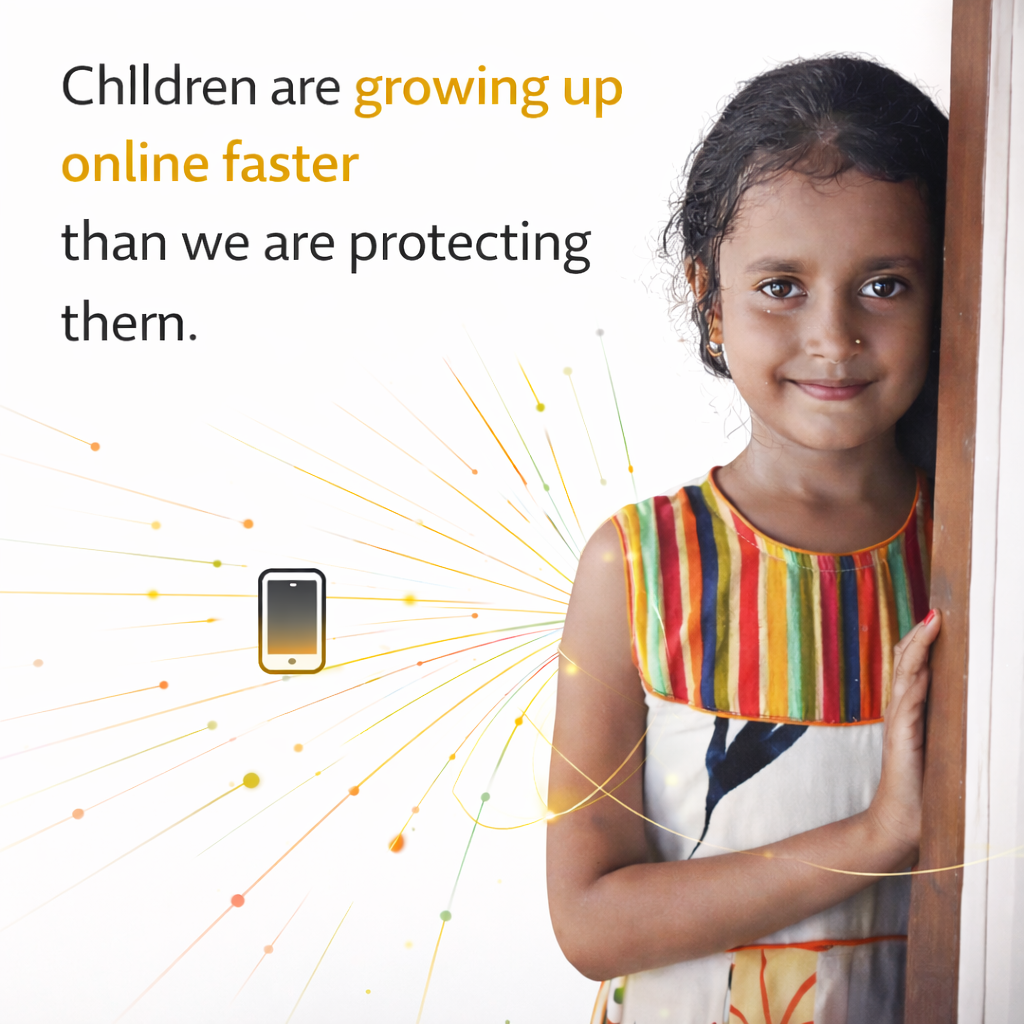
Children are going online earlier than ever before. Smartphones, online classes, gaming platforms and social media are part of daily life. But while access has expanded rapidly, digital safety education has not kept pace.

For organisations working in education and child development, this gap is increasingly urgent.

Cyber security education for children is no longer an optional add-on. It is foundational to safe learning in the 21st century.

Choices for children

The Digital Reality Children Face

According to UN global research on children in digital environments, a significant proportion of young people are online before the age of 15. Exposure includes learning platforms, entertainment and social networking — but also risks such as cyberbullying, exploitation, misinformation and identity theft.

The International Telecommunication Union (ITU) has repeatedly emphasized that digital inclusion must be paired with child online protection frameworks. Access without protection increases vulnerability.

In India, the digital expansion has been particularly rapid. Post-pandemic hybrid learning models, affordable data plans and government-led digital initiatives have accelerated connectivity. At the same time, National Crime Records Bureau reports indicate rising cybercrime cases, including those affecting minors.

Children are not just users of technology. They are participants in digital ecosystems that shape identity, behaviour and opportunity.

What the Research Says

Recent studies published in journals such as Computers & Education and Journal of Cybersecurity Education highlight important findings:

  • Early digital safety education (ages 8–12) significantly improves risk recognition.
  • Gamified cyber safety learning increases retention compared to lecture-based sessions.
  • Structured curriculum-based interventions outperform one-time awareness workshops.
  • Parental engagement strengthens safe online behaviour outcomes.

The OECD’s research on educating 21st-century children further reinforces that digital literacy must include critical thinking skills. Students trained to question sources are less susceptible to misinformation.

Cyber safety is not just about passwords. It is about digital judgement.

The Gendered Dimension of Online Risk

Research from Child Abuse & Neglect and EU Kids Online shows that girls face disproportionately high levels of online harassment, image-based abuse and coercion.

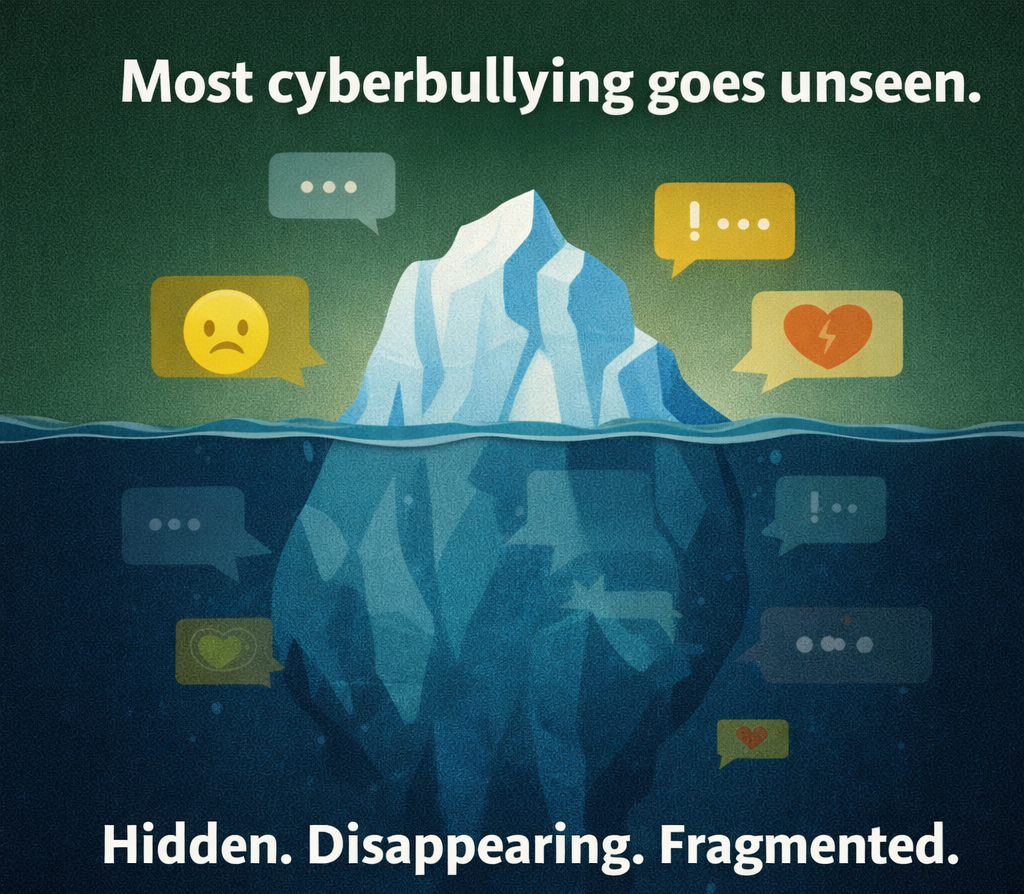
In many contexts, online bullying silences participation. Girls withdraw from digital spaces that should empower them.

For organisations working toward gender equity, cyber security education becomes part of protection against digital gender-based violence.

Teaching girls about privacy settings, reporting mechanisms and digital confidence is not only about safety. It is about participation.

The Indian Education Context

India’s National Education Policy 2020 emphasises digital literacy and 21st-century skills. CBSE has issued cyber safety manuals. CERT-In regularly publishes cyber hygiene advisories.

Yet implementation remains uneven, especially in rural and government schools.

Digital classrooms are expanding. Tablets and smartphones are entering homes. But structured cyber security education for children is not consistently embedded into school curricula.

The risk is clear: expanding digital access without expanding digital protection.

A Case for Integrated Digital Safety Education

The global evidence converges on one conclusion: cyber security education works best when it is integrated into broader educational programming.

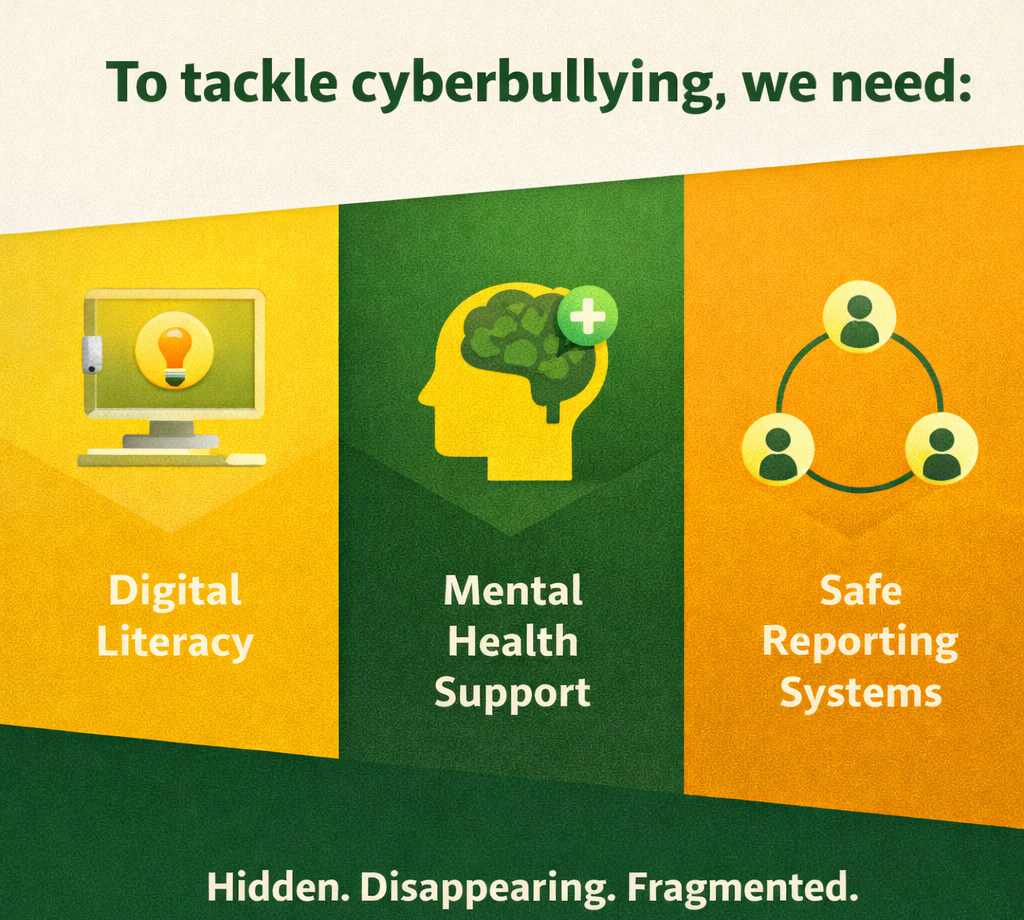
It should include:

  • Personal data protection (password hygiene, OTP awareness)
  • Recognising phishing and online scams
  • Understanding digital footprints
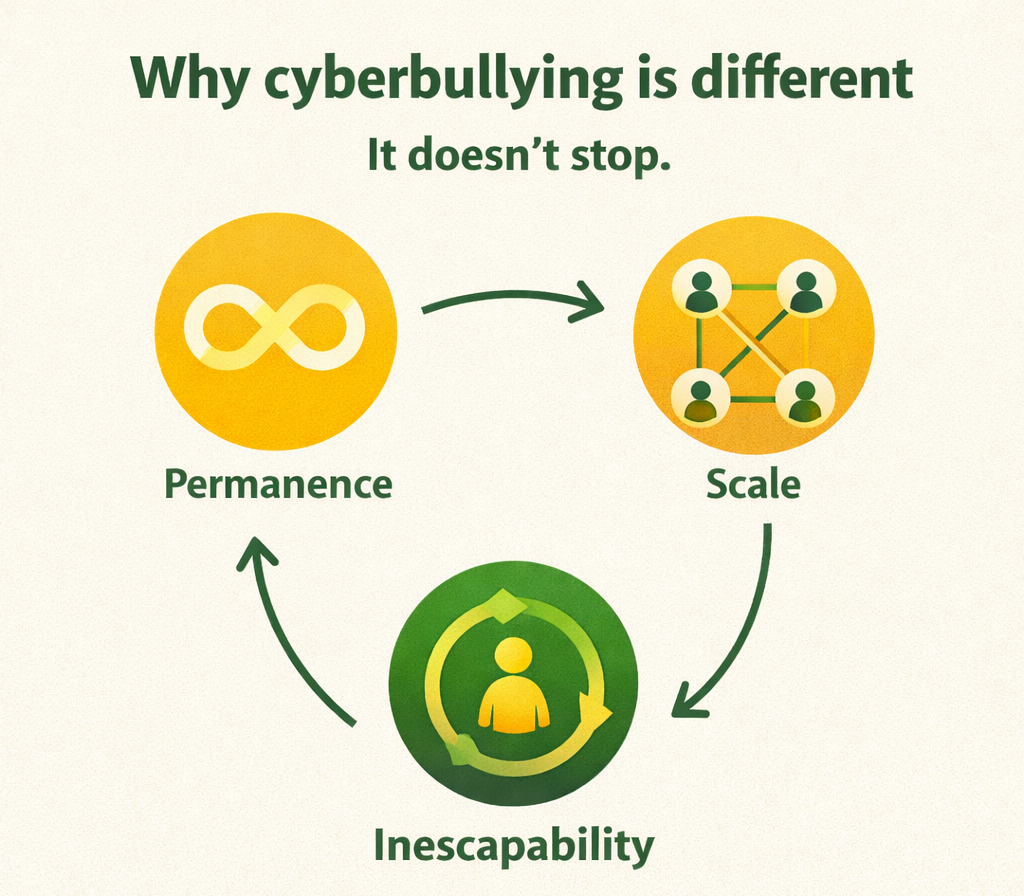
  • Cyberbullying prevention and response
  • Responsible gaming behaviour
  • Critical thinking and misinformation detection

But beyond content, it requires delivery through trained educators.

Teacher capacity building is essential. Research shows that when teachers are confident in digital safety topics, students report higher awareness and safer behaviours.

Cyber Security Education as a Development Issue

Digital safety is often framed as a technical issue. It is not.

It is a development issue.

Children from low-income households may have less parental supervision online due to digital literacy gaps among caregivers. Rural students may access shared devices with limited guidance. First-generation learners navigating online platforms may not recognise fraud attempts.

Without structured training, the digital divide becomes a digital risk divide.

Cyber security education for children must therefore be viewed through an equity lens.

Safe access strengthens educational continuity.

Unsafe access disrupts it.

What an Integrated Model Could Look Like

For organisations like Smile Foundation working in underserved communities, cyber security education can be embedded within digital learning initiatives.

A structured model could include:

  1. Age-Specific Modules
    Primary students learn basic safety and privacy.
    Adolescents learn about misinformation, consent and reporting mechanisms.
  2. Teacher Training Workshops
    Equip educators with tools to guide safe digital behaviour.
  3. Parent Engagement Sessions
    Help caregivers understand online risks and support safe usage at home.
  4. Peer-Led Safety Clubs
    Encourage student ambassadors to promote digital citizenship.
  5. Monitoring and Feedback Systems
    Track behaviour changes and adapt modules accordingly.

This multi-layered approach aligns with international best practices from UNICEF and ITU frameworks.

digital literacy for children

Digital Resilience Over Digital Fear: Cyber Security Education

The goal is not to make children afraid of the internet.

It is to make them resilient.

Digital resilience includes:

  • Knowing when to pause before clicking.
  • Understanding how to report harmful content.
  • Recognising manipulation.
  • Protecting personal identity.
  • Supporting peers facing cyberbullying.

Education builds confidence. Confidence reduces harm.
Why the Moment Is Now

India is one of the world’s youngest nations. It is also one of the fastest-growing digital markets.

The Microsoft Digital Civility Index and other global surveys have consistently shown that online civility challenges persist. Exposure to harassment and misinformation is widespread.

If digital literacy education does not evolve to include structured cyber safety components, we risk creating digitally connected yet digitally vulnerable generations.

The window for preventive education is narrow.

Early intervention yields stronger outcomes.

A Call for Collaborative Action

The responsibility does not lie with schools alone.

Governments, NGOs, private sector partners and parents must collaborate.

Public-private partnerships can scale curriculum integration. CSR initiatives can fund digital safety modules alongside device distribution. Teacher training institutions can embed cyber security in pedagogy.

For organisations committed to child development and education, integrating cyber security education into existing programmes is both timely and necessary.

The digital world is not separate from children’s lives. It is woven into them.

If we are to raise informed, confident digital citizens, we must ensure that protection grows alongside access.

Because in today’s world, safeguarding a child’s future includes safeguarding their digital presence.

From Access to Agency

Digital education is often celebrated as empowerment. But empowerment requires protection.

When children understand cyber risks, they engage more confidently in online learning. When girls feel safe, they participate. When adolescents develop critical thinking skills, they resist misinformation.

Cyber security education for children strengthens agency.
It protects learning, safeguards mental health and supports long-term employability in an increasingly digital workforce.

But beyond frameworks and policy discussions, what does this look like in practice?

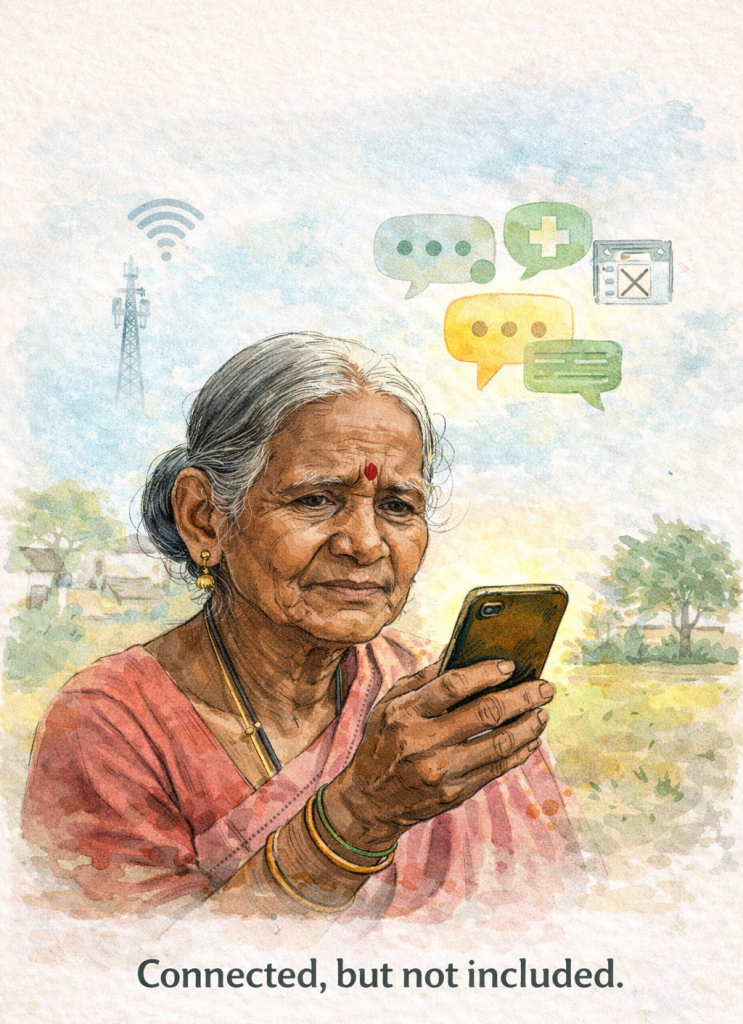
For many young students, digital access is growing faster than digital awareness. As online spaces become part of everyday learning and communication, gaps in understanding cyber safety, privacy and responsible behaviour can leave students vulnerable. Timely guidance plays an important role in helping them navigate the digital world with confidence and care.

Under the Sodexo-supported scholarship programme, Smile Foundation works with scholars from migrant and underserved communities to support their continued education alongside essential life skills. As part of this effort, a Cyber Safety and Security training was conducted, focusing on safe internet use, protecting personal information, identifying online risks and responding to cyber threats.

The session encouraged open conversations around digital boundaries, online behaviour and informed decision-making. Students discussed real-life scenarios, reflected on peer experiences and explored practical steps to stay safe online.

By integrating cyber safety into its education support, the programme aims to help scholars engage with technology safely, responsibly and with greater awareness.

This is what digital resilience looks like at the grassroots level. Not abstract policy. Not one-time awareness. But embedded, contextual guidance that grows alongside access.

The digital world is not separate from children’s lives. It is woven into them.

If we are to raise informed, confident digital citizens, protection must expand with connectivity.

Because in today’s world, safeguarding a child’s future includes safeguarding their digital presence.

A child sharing important mental health things with his mother
Categories
Education

STEM Labs in India: Building a Science First Future

India’s demographic dividend is often described in numbers. A young population. A rapidly expanding workforce. Millions of school-going children.

The expansion of STEM Labs in India represents one of the most promising shifts in the country’s education ecosystem. If India is serious about becoming a global innovation leader, a science first approach must begin early, in classrooms where curiosity is encouraged and experimentation is possible.

For decades, science education in many schools has remained largely theoretical. Students memorise definitions, reproduce diagrams and prepare for examinations. Yet science, by its very nature, is experiential. It requires testing, failure, iteration and discovery. Without laboratories that allow students to engage with concepts hands-on, science remains abstract.

STEM labs change that equation.

STEM labs statistics
STEM labs median age

Why STEM Labs in India Matter Now

India’s economic future is closely tied to sectors driven by technology and innovation. Artificial intelligence, robotics, renewable energy, data science and biotechnology are no longer niche fields. They are central to the global economy. Preparing science students for this landscape requires more than syllabus completion.

A science first education model means creating spaces where Indian students can build circuits instead of merely drawing them, program robots instead of only reading about automation and apply mathematical reasoning to real-world design challenges.

When students physically assemble components, debug code or test prototypes, learning shifts from passive absorption to active creation. Confidence grows alongside competence. This is particularly important during middle school years, when subject preferences begin to solidify and long-term academic pathways take shape.

However, access to high-quality STEM Labs in India remains uneven.

In metropolitan private schools, robotics studios and coding labs are increasingly common. In contrast, many government or low-income schools struggle with even basic laboratory facilities. This disparity risks deepening educational inequality, creating two parallel systems of science education: one experiential and future-ready, the other theoretical and constrained.

Ensuring equitable access to STEM labs is therefore not just an educational reform issue. It is a question of social mobility.

STEM Labs Smile Foundation

Beyond Infrastructure: The Pedagogy Gap

While India has witnessed large-scale efforts to establish innovation labs through government initiatives, infrastructure alone does not guarantee transformation. Equipment that sits unused, teachers who lack training in facilitation or curriculum that does not integrate lab-based learning can limit impact.

A science first approach requires three interconnected elements:

  • Hands-on infrastructure that allows experimentation
  • Teacher capacity building to guide inquiry-based learning
  • Curriculum alignment that integrates lab work meaningfully

Without this ecosystem, STEM labs risk becoming symbolic rather than transformative.

This is where development and CSR-led interventions have begun to play a vital role.

STEM labs Future of India

Smile Foundation’s Approach to STEM Labs in India

Recognising the importance of experiential learning, Smile Foundation has integrated STEM education within its broader Mission Education framework. Rather than treating science labs as standalone projects, the organisation situates them within a continuum of educational access, scholarships and long-term support.

STEM labs the scientific India

Smile Foundation’s STEM programme is built on inquiry-driven learning. Students are introduced to robotics kits, coding platforms, DIY science modules and electronics tools in ways that encourage problem-solving rather than rote execution. The aim is to nurture analytical thinking and creativity, not just technical familiarity.

In partner schools, dedicated STEM labs create structured environments where students can engage with experiments that complement classroom lessons. This approach allows science students to connect theoretical concepts to tangible outcomes. When a student sees a coded instruction translate into movement in a robot, or watches a circuit illuminate after careful assembly, learning becomes memorable.

STEM labs India

One of the most innovative models implemented by Smile Foundation has been the mobile STEM lab, often referred to as STEM on Wheels or Tinker-on-Wheels. These mobile units carry fully equipped laboratories directly to underserved schools and communities, addressing the infrastructural and geographic barriers that prevent many Indian students from accessing advanced facilities.

Instead of waiting for permanent infrastructure to be built, the lab travels to the learner. In rural or semi-urban areas, this model ensures that exposure to robotics, digital tools and hands-on experimentation is not restricted by location. The mobility also signals a powerful message: quality science education should not be a privilege determined by geography.

STEM labs girls in STEM

Encouraging Girls in Science

Even as enrolment rates for girls have improved, participation in advanced science streams often declines in higher grades. Social norms, lack of role models and limited exposure contribute to this pattern.

Smile Foundation’s STEM-Nayika initiative addresses this challenge directly. By creating supportive environments, providing mentorship and building confidence, the programme encourages girls to engage deeply with STEM subjects. When girls see themselves represented in science spaces and are given consistent opportunities to experiment and lead projects, aspirations begin to shift.

Gender-inclusive STEM Labs in India do more than teach technical skills. They broaden the imagination of what is possible.

Partnerships for Scale

Scaling quality STEM education requires collaboration. Through partnerships such as its collaboration with the BMW India Foundation, Smile Foundation has supported the establishment of STEM labs in multiple schools across the Delhi NCR region. These labs serve thousands of middle-school students annually, particularly in government-aided and community schools.

Importantly, these partnerships extend beyond equipment installation. Teacher training, structured engagement modules and sustainable models ensure that labs remain active learning environments rather than static facilities. Solar-powered mobile labs further demonstrate how sustainability can be integrated into educational outreach.

By combining infrastructure with training and ongoing engagement, these initiatives exemplify how STEM Labs in India can be both inclusive and durable.

The Broader Development Impact

The importance of STEM labs extends beyond career preparation. Experiential science fosters habits of mind that are essential for democratic and economic resilience. Students learn to question assumptions, test hypotheses and evaluate evidence. These competencies strengthen scientific temper, a value enshrined in India’s constitutional vision.

When Indian students engage with hands-on science, they begin to see themselves not merely as recipients of knowledge but as contributors to innovation. For first-generation learners, this shift can be transformative. Exposure to a functioning robotics module or a structured coding session can reframe identity, reinforcing the belief that they belong in scientific spaces.

Moreover, when STEM labs are embedded within scholarship and skilling programmes, as in Smile Foundation’s integrated model, pathways from classroom discovery to higher education and employability become clearer. Students who discover aptitude in science are more likely to persist academically when supported through financial assistance and mentorship.

The Road Ahead

For India to fully realise the promise of STEM Labs in India, expansion must prioritise equity. Rural districts, aspirational regions and low-income communities should be at the forefront of future investments. Teacher training must remain central, and curriculum integration should ensure that labs complement, rather than sit apart from, formal learning.

A science first approach is not simply about increasing the number of labs. It is about creating ecosystems where curiosity is nurtured and experimentation is normalised.

STEM Labs opportunities

Smile Foundation’s work illustrates that when STEM education is combined with intentional inclusion, sustained engagement and systemic support, its impact extends far beyond academic outcomes. It shapes confidence, aspiration and opportunity.

India’s next generation of innovators is already in classrooms today. The expansion of meaningful, accessible STEM Labs in India will determine whether their potential remains theoretical or becomes transformative.

If science is to be the foundation of India’s future, it must begin where it matters most — with Indian students, equipped not only with knowledge, but with the tools to create.

STEM labs partnerships
Categories
Smile

Nature’s Classroom: Learning Beyond Walls Matters

For generations, education has been defined by four walls, a blackboard, and a timetable.

But long before formal classrooms existed, learning happened outdoors. Children observed seasons change, watched insects build homes, understood soil through touch and recognised the rhythm of nature through experience.

Today, as childhood becomes increasingly screen-bound and urbanised, reconnecting children with nature is not a nostalgic idea. It is an educational necessity.

Nature’s classroom — learning in and through natural environments — is gaining renewed relevance in conversations around child development, mental health and experiential education.

ChatGPT Image Mar 3 2026 09 54 10 PM

The Science Behind Nature-Based Learning

Research across psychology, education and environmental studies consistently shows that time spent in natural environments supports holistic development.

Studies published in journals indicate that children exposed regularly to green spaces demonstrate improved attention spans and better emotional regulation. Nature exposure has also been linked to reduced stress levels and enhanced working memory.

In a world where children are increasingly exposed to digital stimuli, the calming effect of natural environments provides cognitive balance.

Nature does not rush learning. It allows it to unfold.

Learning That Is Seen, Felt and Remembered

When children read about ecosystems in textbooks, the concept remains abstract. When they observe a butterfly’s lifecycle, feel tree bark or study soil layers, the learning becomes embodied.

Experiential education strengthens retention.

Environmental education research shows that students who engage with biodiversity firsthand demonstrate stronger long-term interest in science subjects. They also show greater environmental stewardship as they grow older.

Nature-based learning is not limited to science. It builds observation skills, patience, collaboration and curiosity.

These are life skills, not just academic outcomes.

Mental Well-being and the Outdoor Advantage

The post-pandemic years have seen increased conversations around children’s mental health. Screen time has risen sharply. Physical activity levels have declined.

Outdoor learning offers an antidote.

Time in green spaces has been shown to reduce anxiety and improve mood among children. Unstructured exploration supports creativity. Shared outdoor activities strengthen peer relationships.

Nature’s classroom is not only about biodiversity. It is about balance.

Reimagining Education for a Changing World

India’s National Education Policy 2020 encourages experiential and multidisciplinary learning. Eco-clubs and school gardens are increasingly promoted. Yet implementation varies widely, especially in underserved communities.

For many children in urban low-income neighbourhoods, access to safe green spaces is limited. Exposure to biodiversity may be confined to textbook illustrations.

Bridging this gap is not simply about environmental awareness. It is about educational equity.

Every child deserves the opportunity to experience learning beyond walls.

ChatGPT Image Mar 3 2026 09 55 21 PM

Nature, Climate and Responsibility

As climate change becomes central to global discourse, environmental literacy is no longer optional.

Children who engage directly with natural ecosystems develop systems thinking more intuitively. They understand that soil health affects food, that biodiversity supports balance and that human behaviour shapes environmental outcomes.

Nature-based learning nurtures responsibility.

It helps children see themselves not as passive observers of environmental change, but as participants in shaping sustainable futures.

Integrating Nature into Educational Support

For organisations working in underserved communities, integrating nature into education programmes can amplify impact.

Outdoor learning experiences can:

  • Strengthen science engagement
  • Encourage teamwork and collaboration
  • Improve school attendance
  • Support physical and emotional well-being
  • Foster curiosity and independent thinking

The goal is not to replace classroom learning, but to enrich it.

When theory meets experience, understanding deepens.

Nature’s Classroom: Students Experience Learning Beyond Walls

Students from Mumbai recently had an enriching exposure visit at the Bombay Natural History Society (BNHS). For many, it was their first opportunity to engage directly with structured environmental education outside a traditional classroom.

The day began with a visit to the zoo, where children observed biodiversity up close. Animals they had only seen in pictures became living, breathing examples of ecological systems.

The experience continued with guided exploration of the Botany and Zoology departments. Students engaged with scientific specimens, interacted with educators and explored the museum and sculpture sections that illustrated the interconnectedness of art, history and natural science.

For the children, learning shifted from memorising to observing.

They asked questions. They noticed patterns. They connected what they had studied in textbooks to what they saw before them.

The visit helped bridge the gap between theory and reality, encouraging a deeper interest in nature and science. It sparked conversations about conservation, ecosystems and the role individuals play in protecting the environment.

Moments like these reaffirm that education does not begin and end within school walls.

When children step into nature’s classroom, curiosity expands. Confidence grows. Understanding deepens.

A Future Rooted in Experience

In a rapidly urbanising and digitising world, children risk losing daily contact with the natural systems that sustain life.

Nature’s classroom offers reconnection.

It reminds us that learning is not only about information, but about relationship — with the environment, with community and with self.

For children navigating complex modern realities, the outdoors provides perspective.

And for education systems seeking to nurture well-rounded, resilient learners, integrating nature is not an extracurricular choice.

It is foundational.

ChatGPT Image Mar 3 2026 09 57 20 PM
0%