
According to UNICEF’s digital fundraising insights, digital giving channels have become the fastest-growing source of charitable contributions globally. Yet most donors still hesitate, unsure whether their money actually reaches the cause they care about, whether their chosen NGO is trustworthy, or how to claim the tax benefit they are legally entitled to.
If you have ever typed “donate online” into a search bar and felt overwhelmed by questions, this guide is written for you.
Whether you are a working professional who wants to support education or healthcare, or a business leader building a structured CSR program, donating online offers speed, transparency, and measurable impact that traditional giving cannot match.
In this guide, you will learn exactly how to donate online safely, how to verify a legitimate NGO, how to claim your 80G tax benefit, and how businesses can turn one-time giving into a strategic impact program. Let us begin.
| Key Takeaways
• Online donations are tax-deductible under Section 80G of the Income Tax Act, 1961, for donors who opt for the old tax regime • Always verify an NGO on NITI Aayog’s NGO Darpan portal before donating • Businesses can claim CSR deductions under Section 135 of the Companies Act for qualifying donations • Smile Foundation offers direct online giving across education, healthcare, women empowerment, and livelihood causes • Recurring donations create more sustained impact than one-time gifts and simplify annual tax planning |
What Does It Mean to Donate Online?
An online donation, sometimes called a digital donation, is the act of transferring funds to a registered charitable organization through an internet-based channel. This includes NGO websites, donation portals, mobile apps, or direct UPI transfers.
When you donate online, your payment passes through a secure payment gateway, is verified by the organization’s system, and is credited to the NGO’s bank account, often within 24 to 72 hours. The entire process is digital, documented, and traceable.
According to the World Bank’s digital financial services research, digital payment adoption has directly accelerated online charitable giving, with mobile-first populations giving more frequently through digital channels. This reflects a permanent behavioral shift, not a passing trend.
For NGOs like Smile Foundation, receiving an online donation is faster and more cost-efficient than processing offline contributions. For donors, it means instant confirmation, an automated 80G receipt, and the ability to track how their funds are used.
| 💡 Key Takeaway
Online donation is a secure, digital method of charitable giving that benefits both donors and nonprofits through speed, convenience, and transparent fund tracking. |
Why Online Donations Are Transforming Charitable Giving in India
The Rise of Digital Giving
Digital giving has moved from a convenience to the default mode of charitable contribution. According to UNICEF’s digital innovation reports, digital and mobile channels are now the primary mode of donor engagement globally. In India, the nonprofit sector receives over Rs. 75,000 crore annually, with digital channels accounting for a rapidly growing share.
Mobile giving accounts for a significant and growing share of all online donations. In India, UPI now accounts for 57% of all payment transactions, surpassing cash at 38%, according to a Finance Ministry commissioned study. NPCI data for February 2026 shows 20.39 billion UPI transactions in the month alone, a 27% year-on-year surge, with January 2026 hitting an all-time record of 21.70 billion transactions. Donation by QR code or UPI link is now a mainstream behavior across urban and rural India.
Smile Foundation has digitized its entire donor journey, allowing supporters to browse campaigns across education, healthcare, women empowerment, and livelihood, choose a cause, donate in under 60 seconds, and receive an automated 80G receipt by email.
Benefits for Donors and NGOs
For donors, making an online charitable donation offers:
- Instant confirmation and a digital receipt for tax filing
- Option to set up recurring monthly giving with one click
- Access to multiple verified causes from a single trusted source
- Real-time updates and impact reports on fund utilization
- Lower risk of misappropriation compared to cash or cheque giving
For NGOs, digital donations reduce administrative overhead, improve cash flow predictability through recurring giving, and allow outreach to donors far beyond their physical geography.
| 💡 Key Takeaway
Online donations benefit both donors and NGOs: donors get convenience and transparency, while nonprofits gain efficiency and broader reach. |
How to Donate Online Safely: A Step-by-Step Guide
Step 1: Verify the NGO’s Registration Status
Before entering any payment details, verify the organization on NITI Aayog’s NGO Darpan portal. Every legitimate nonprofit registered in India should have a Unique ID on this government portal. Search by name or registration number.
Step 2: Confirm 80G and 12A Certification
80G registration with the Income Tax Department allows you to claim a deduction on your taxable income. 12A registration confirms that the organization itself is tax-exempt. Ask for both registration numbers and verify them on the Income Tax India portal before donating.
Step 3: Review Audited Annual Reports and Impact Data
A credible NGO publishes its audited annual report and fund utilization disclosures on its website. Smile Foundation, for example, publishes annual reports and quarterly program updates showing exactly how donor funds are deployed across its education, health, and livelihood initiatives.
Step 4: Check for FCRA Registration if Donating from Abroad
If you are donating from outside India, or if your company is routing CSR funds to an Indian NGO, verify the organization’s FCRA (Foreign Contribution Regulation Act) registration. Without valid FCRA status, the NGO cannot legally accept foreign contributions.
Step 5: Use a Secure, Official Payment Channel
Recommended payment methods:
- UPI: Fastest and most secure for Indian donors. Supported universally.
- Credit or Debit Card: Use only on HTTPS-secured pages with SSL certification.
- Net Banking: Reliable for larger donations; bank-level encryption applies.
- Digital Wallets: Confirm the NGO officially integrates with the wallet before using.
Important: Legitimate NGOs never ask for donations through personal bank accounts, WhatsApp, or informal links. Always donate through the official website.
| 💡 Key Takeaway
Safe online donating requires verifying the NGO’s registration on NGO Darpan, confirming 80G/FCRA status, reviewing published impact reports, and using a secure payment method on the official website. |
What Can You Donate Online For? Causes That Create Real Impact
When you donate online to a verified NGO like Smile Foundation, you can direct your giving toward specific causes, or contribute to an unrestricted general fund that the organization deploys where it is most needed.
Here is a breakdown of cause areas and the type of impact your online donation creates:
| Cause Area | Program Focus | Who Benefits | Impact Metric Example |
|---|---|---|---|
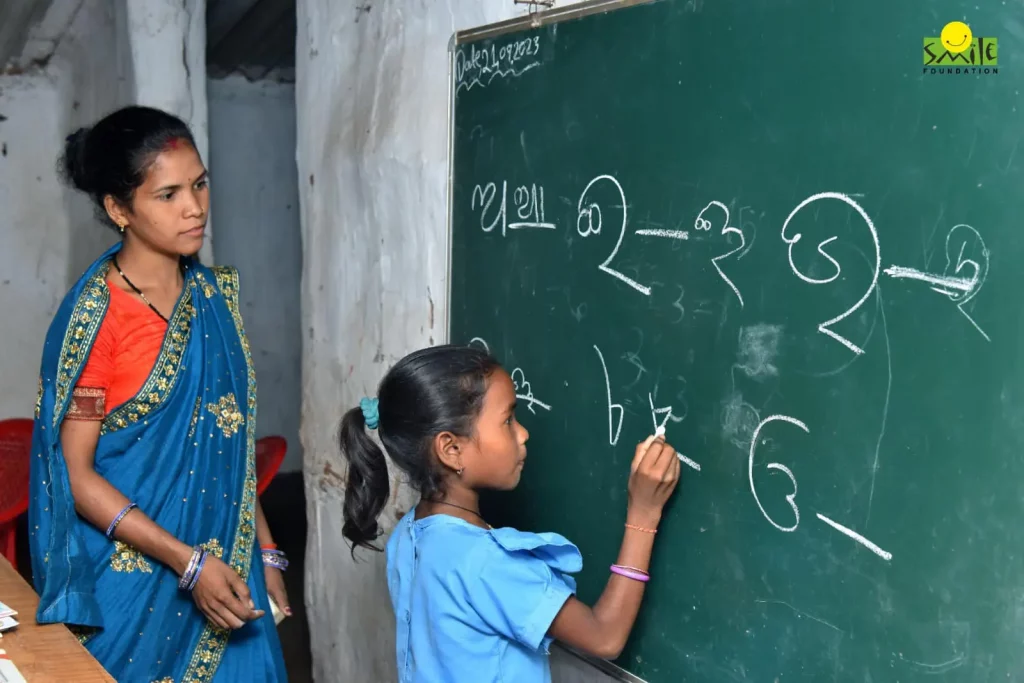
| Education | School enrollment, digital literacy, dropout prevention | Children aged 6-18 in underserved communities | Child supported for full academic year |
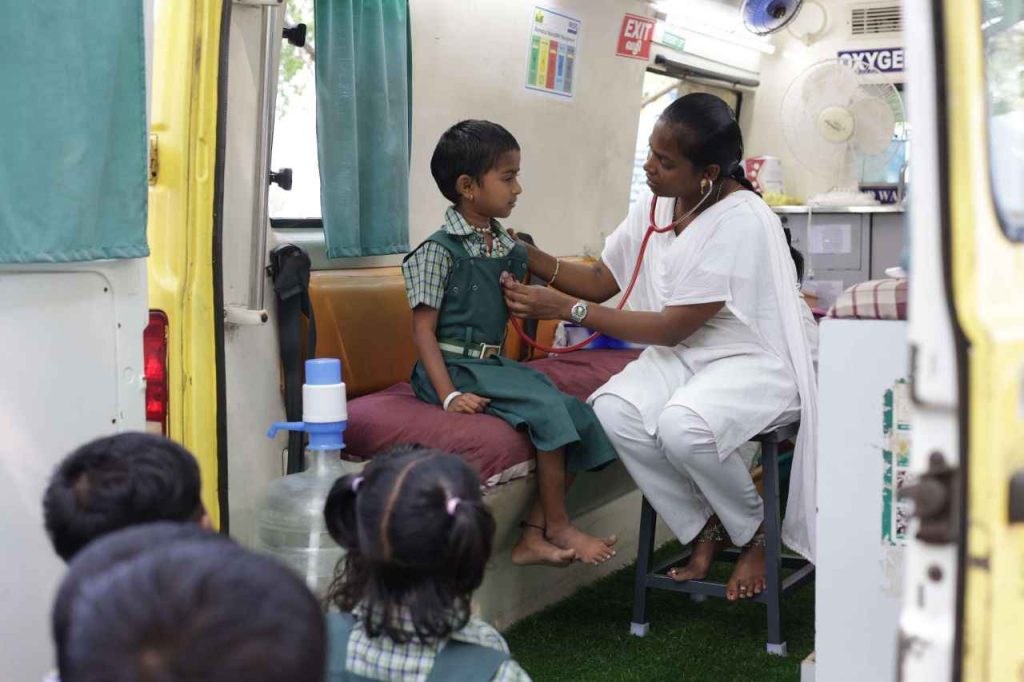
| Healthcare | Mobile health units, maternal care, preventive checkups | Women, children, and rural families | Medical consultations per Rs. 1,000 donated |
| Women Empowerment | Vocational training, self-help groups, financial literacy | Women in low-income households | Women trained in livelihood skills |
| Livelihood | Skill development, employment linkages, entrepreneur support | Youth and adults aged 18-35 | Individuals placed in employment per quarter |
| Disaster Relief | Emergency food, shelter, rehabilitation | Disaster-affected communities | Families reached per relief campaign |
Smile Foundation publishes program-specific impact data on its official website, allowing every donor to see exactly how their online donation translates into measurable outcomes. Visit Smile Foundation’s donation portal to explore current campaigns and choose your cause.
| 💡 Key Takeaway
Donating online to a cause-specific program allows you to align your giving with your personal or organizational values, while verified impact reporting ensures your contribution is accounted for. |
Tax Benefits When You Donate Online in India (FY 2025-26)
Section 80G Deduction: What Every Donor Must Know
Section 80G of the Income Tax Act, 1961 allows taxpayers to claim a deduction on donations made to specified funds, charitable institutions, and relief organizations. Smile Foundation holds a valid 80G registration (Number: AACTS7973GF20210, PAN: AACTS7973G), making your online donation eligible for this benefit, provided you meet the conditions below.
Who can claim Section 80G?
As confirmed by the Income Tax Department’s official Section 80G FAQ, this deduction is available to individuals, HUFs, companies, firms, and NRIs, provided they have taxable income in India and have opted for the old tax regime.
Important: Section 80G is not available under the new tax regime.
As per Section 115BAC of the Income Tax Act, 1961, deduction under Section 80G cannot be claimed if you opt for the new tax regime, which has been the default regime since AY 2024-25. To claim this deduction for FY 2025-26 (AY 2026-27), you must explicitly opt for the old tax regime while filing your ITR.
How much deduction on a donation to Smile Foundation?
Donations to NGOs registered under Section 80G fall in the 50% deduction category, subject to a qualifying limit of 10% of your Adjusted Gross Total Income. This means:
- If you donate Rs. 10,000, the deduction eligible is Rs. 5,000 (50% of donation amount)
- However, if 10% of your Adjusted GTI is lower than Rs. 5,000, your deduction is capped at that lower figure
- Any excess donation amount cannot be carried forward to the next financial year
What you need to claim Section 80G (FY 2025-26):
- Form 10BE: The official donation certificate issued by Smile Foundation under Rule 18AB of the Income Tax Rules. It contains their 80G registration number, PAN, your name, amount donated, and Unique Registration Number (URN). Always ask for this certificate after donating.
- Your PAN at time of donation: Smile Foundation is required to file Form 10BD with the Income Tax Department, listing all donors by PAN. Your ITR deduction claim is matched against this filing. If your PAN is not provided correctly at the time of online donation, your deduction may be disallowed.
- Old tax regime: You must have opted for the old tax regime. The 80G deduction is not available under the new default tax regime (Section 115BAC).
- Non-cash payment above Rs. 2,000: As per Section 80G(5D), cash donations above Rs. 2,000 are completely ineligible. Donate via UPI, card, cheque, demand draft, or net banking.
- Monetary donations only: In-kind contributions such as food, clothes, medicines, or any goods do not qualify for Section 80G deduction under any circumstances.
Verify Smile Foundation’s 80G registration status at the Income Tax India exempted institutions portal before donating.
CSR Online Giving for Businesses
For Indian companies meeting qualifying thresholds, CSR spending is mandatory under Section 135 of the Companies Act, 2013. Online donations to organizations working in Schedule VII areas, such as Smile Foundation’s programs in education and healthcare, count toward this obligation. Note: As per the Income Tax Department, CSR donations made to Swachh Bharat Kosh or Clean Ganga Fund under Section 135 do not separately qualify for 80G deduction, since they are already treated as CSR expenditure.
According to the National CSR Portal, Ministry of Corporate Affairs, Indian companies spent Rs. 34,908.75 crore on CSR in FY 2023-24, a 13% rise from FY 2022-23. While FY 2024-25 final disclosures are still being compiled, early trends indicate continued growth. Companies donating online to compliant NGOs receive full documentation, including Form 10BE and fund utilization reports, for MCA compliance filing.
| 💡 Key Takeaway
Section 80G, Income Tax Act 1961, is fully valid for FY 2025-26. Key rules from the official Income Tax Department FAQ: (1) Available only under old tax regime – not under new regime (Section 115BAC). (2) Smile Foundation donations fall in 50% deduction category, capped at 10% of Adjusted GTI. (3) Cash donations above Rs. 2,000 are ineligible. (4) In-kind donations are ineligible. (5) Obtain Form 10BE and always provide your PAN when donating online to ensure your deduction is matched in the ITR system. |
How Businesses Can Build a Strategic Online Giving Program
Many companies treat CSR as an annual compliance exercise. The most impactful organizations build structured giving programs that create measurable outcomes, strengthen employee engagement, and reinforce brand values simultaneously.
Setting Up an Employee Giving Program
Employee giving programs allow staff to donate online to verified causes, often with the company matching each contribution. Corporate matching doubles impact without doubling budget.
Research consistently shows that when employees are informed about employer matching programs, participation in workplace giving rises significantly. According to Ministry of Corporate Affairs CSR guidelines, companies that establish structured employee giving programs alongside their CSR mandates report stronger compliance outcomes and higher employee satisfaction scores.
Steps to set up an employee giving program:
- Define the annual giving budget and CSR focus areas (e.g., education, healthcare)
- Select a verified NGO partner like Smile Foundation with documented 80G and FCRA compliance
- Create a dedicated giving portal or integrate with your HRMS for payroll giving
- Set a matching ratio (1:1 is most common; 2:1 for high-priority campaigns)
- Publish an annual impact report showing total donations and beneficiary outcomes
Measuring Social Impact from Online Donations
A frequent frustration for corporate donors is the absence of clear impact data. “We donated Rs. 50 lakh, but what changed?” is a question every CSR manager should be able to answer.
Smile Foundation addresses this directly by providing quarterly impact reports, beneficiary data, photo and video documentation, and program-level outcome metrics for all corporate partners. When evaluating an NGO for a business giving program, ask for:
- Number of direct beneficiaries reached per rupee spent
- Program-specific outcome metrics (literacy improvements, healthcare coverage, income levels)
- Third-party audit reports and NITI Aayog NGO Darpan compliance status
- Annual fund utilization disclosures and audited financial statements
| 💡 Key Takeaway
Businesses that treat online giving as a strategic function build stronger employee engagement, better brand reputation, and more accountable impact relationships with their NGO partners. |
Common Mistakes to Avoid When You Donate Online
Mistake 1: Donating without verifying the NGO’s registration
This is the most common and costly error. Always cross-check the organization on NITI Aayog’s NGO Darpan portal and confirm their 80G/12A status before making any payment.
Mistake 2: Clicking donation links shared on social media
Fraudulent fundraising links circulate on WhatsApp, Facebook, and Instagram, especially during disasters. Always navigate directly to the NGO’s official website rather than clicking a forwarded link.
Mistake 3: Not saving your donation receipt and Form 10BE immediately
Your Section 80G deduction claim requires Form 10BE from the NGO. If you do not save your receipt and transaction confirmation immediately, retrieving it later can be difficult, especially from smaller organizations.
Mistake 4: Treating a one-time donation as a complete giving strategy
A single donation creates a moment of relief. Recurring monthly giving creates sustained programs. Even Rs. 500 per month builds Rs. 6,000 in annual funding that an NGO can plan budgets around.
Mistake 5: Ignoring fund utilization transparency
Before donating online, check whether the NGO publishes audited fund utilization reports. If this information is not publicly available, that is a meaningful red flag about organizational accountability.
Mistake 6: Forgetting to check FCRA status for international or corporate giving
If you are based outside India or routing corporate funds to an Indian NGO, verify the organization’s FCRA registration. Donations to NGOs without FCRA approval are legally problematic.
Mistake 7: Donating to restricted funds when unrestricted giving is more impactful
Restricting a donation to a very specific project limits an NGO’s operational flexibility. If you trust the organization, consider contributing to their general fund so resources can be deployed where they are most needed in real time.
Expert Tips to Maximize Your Online Donation Impact
| Pro Tip #1: Consolidate your giving into fewer, deeper relationships
Giving Rs. 5,000 to one deeply vetted NGO creates more accountability and relationship than giving Rs. 500 each to ten different causes. Fewer giving relationships also simplify your Section 80G documentation, as you need to track fewer Form 10BE certificates at tax filing time. |
| Pro Tip #2: Treat your giving like a SIP, not a one-time investment
Set up a recurring monthly donation, even as small as Rs. 500. Over 12 months, this creates Rs. 6,000 in predictable funding that an NGO like Smile Foundation can use to plan education or healthcare programs in advance. |
| Pro Tip #3: Check your employer’s matching gift policy before donating
Many Indian companies and MNCs have workplace giving or matching gift policies as part of their CSR framework. Check with your HR or CSR team to find out if your employer matches employee donations. A matched donation doubles your charitable impact at zero additional personal cost. |
| Pro Tip #4: Donate unrestricted funds to organizations you trust
If you have verified an NGO’s track record and find their work credible, donate to their unrestricted general fund. This gives program teams the flexibility to respond to emerging needs rather than being locked into predetermined projects. |
| Pro Tip #5: Donate before March 31 to claim your FY 2025-26 Section 80G benefit
March 31, 2026 is the cutoff for FY 2025-26. Donations made on or before this date qualify for a Section 80G deduction in the current financial year, provided you have opted for the old tax regime. Ensure you receive Form 10BE from Smile Foundation and keep your transaction confirmation for ITR filing. |
Frequently Asked Questions About Donating Online
Q: Is it safe to donate online using UPI or a credit card?
A: Yes, it is safe when you donate through an NGO’s official website using an HTTPS-secured page with a trusted payment gateway. Legitimate NGOs never ask for donations through personal bank accounts, WhatsApp, or informal links. Always navigate directly to the official website rather than clicking on forwarded links.
Q: How do I claim a Section 80G deduction for my online donation in FY 2025-26?
A: First, ensure you have opted for the old tax regime, as Section 80G deduction is not available under the new tax regime (Section 115BAC). Then collect Form 10BE from Smile Foundation, which is your official donation certificate under Rule 18AB of the Income Tax Rules. Enter the donee details (name, PAN, address, 80G registration number, and donation amount) in Schedule 80G of your ITR. Always provide your PAN correctly when donating online, as Smile Foundation files Form 10BD with the Income Tax Department and your claim is verified against this data.
Q: Can NRIs claim a Section 80G deduction for donations to Smile Foundation?
A: Yes. As confirmed by the Income Tax Department, the benefit of claiming a deduction under Section 80G is available to both resident and non-resident Indians (NRIs), provided they have taxable income in India and opt for the old tax regime. The same documentation requirements, including Form 10BE and non-cash payment, apply.
Q: What is the difference between an 80G donation and a CSR donation?
A: Section 80G of the Income Tax Act, 1961 allows voluntary donation deductions for individuals, companies, and firms, but only under the old tax regime. CSR donations under Section 135 of the Companies Act, 2013 are a mandatory legal obligation for eligible companies and must go toward Schedule VII approved activities. A key rule from the Income Tax Department: if a deduction is claimed under Section 80G for a donation, that same amount cannot be claimed as a deduction under any other provision of the Act.
Q: How do I verify that an NGO is legitimate before donating online?
A: Check the NGO on NITI Aayog’s NGO Darpan portal and verify their 80G registration on the Income Tax Department’s exempted institutions portal. Confirm their 12A registration (tax exemption) and review their publicly available audited annual reports. Smile Foundation publishes all compliance documentation, including its 80G number (AACTS7973GF20210) and PAN (AACTS7973G), on its official website.
Q: Are all types of donations eligible for Section 80G deduction?
A: No. As per the Income Tax Department’s official FAQ, only monetary donations qualify. In-kind contributions such as food, clothes, medicines, or any other goods are not eligible for Section 80G deduction. Additionally, cash donations above Rs. 2,000 are not eligible under Section 80G(5D). Only donations made via cheque, demand draft, UPI, or other electronic modes are accepted.
Q: Can I set up a recurring online donation and still claim 80G?
A: Yes. Smile Foundation’s donation portal allows recurring monthly, quarterly, or annual giving. Each recurring payment qualifies as a separate donation and is eligible for Section 80G deduction in the respective financial year, provided you are on the old tax regime, pay via non-cash mode, and collect Form 10BE for each financial year from Smile Foundation.
Q: How can my company set up an online CSR giving program?
A: Identify Schedule VII approved cause areas aligned with your CSR policy. Partner with a registered NGO like Smile Foundation that holds valid 80G, 12A, and FCRA credentials. Set a giving budget, establish employee participation through a payroll giving or internal portal, and collect quarterly impact reports and Form 10BE for MCA compliance documentation. Remember that the same donation cannot be claimed both as a CSR expense and under Section 80G.
Conclusion: Your Online Donation Can Change a Life
Choosing to donate online is one of the most direct ways a working professional or business leader can create social impact, and with the right information, it takes less than 60 seconds to do it safely and meaningfully.
Here is what you now know:
- Always verify an NGO on NITI Aayog’s NGO Darpan portal and confirm 80G status before donating
- Opt for the old tax regime and save your Form 10BE to claim your Section 80G deduction during ITR filing for FY 2025-26
- Businesses can fulfill CSR obligations and get full compliance documentation through strategic online giving
- Recurring donations create more sustained impact than one-time contributions
- Smile Foundation provides full transparency: 80G receipts, FCRA compliance, quarterly impact reports, and verified cause programs across education, health, women empowerment, and livelihood
Ready to make your contribution count? Visit Smile Foundation’s official donation portal to browse verified causes and donate securely online in under 60 seconds. Whether you give Rs. 500 or Rs. 5 lakh, every online donation you make moves resources from where they are to where they are needed most.
Share this guide with a colleague or teammate who is thinking about charitable giving. And if your organization is ready to build a structured CSR giving program, reach out to Smile Foundation’s partnership team directly.
Sources & References
- Income Tax Department – Official FAQs on Section 80G (Nudge Campaign)
- Income Tax Department – Exempted Institutions Portal (80G Verification)
- NITI Aayog NGO Darpan Portal
- National CSR Portal, Ministry of Corporate Affairs – CSR Expenditure FY 2023-24
- NPCI – UPI Transaction Statistics 2026
- Ministry of Home Affairs – FCRA Registration Portal
- Ministry of Electronics and IT – Digital Personal Data Protection Act 2023
- Companies Act 2013 – Section 135 CSR Provisions (MCA)
- UNICEF – Digital Fundraising and Innovation
- Smile Foundation – Official Website