Women’s empowerment has become a major focus of CSR in India. Companies are investing in skills training, health services, education and finance to uplift women at the community level. Leading firms now report large-scale women-centric programmes that benefit hundreds of thousands. Recent data highlight the need: female literacy is 74.6% and female labour-force participation has has risen significantly to 41.7% in 2023-24 from 23.3% in 2017-18. CSR initiatives can help close these gaps. Evidence shows that women who receive vocational training or small loans significantly increase household income. Yet challenges remain: persistent drop-out of girls from school, lack of women in leadership roles and ensuring sustained funding.
Why Women Empowerment Is a Key CSR Focus Area
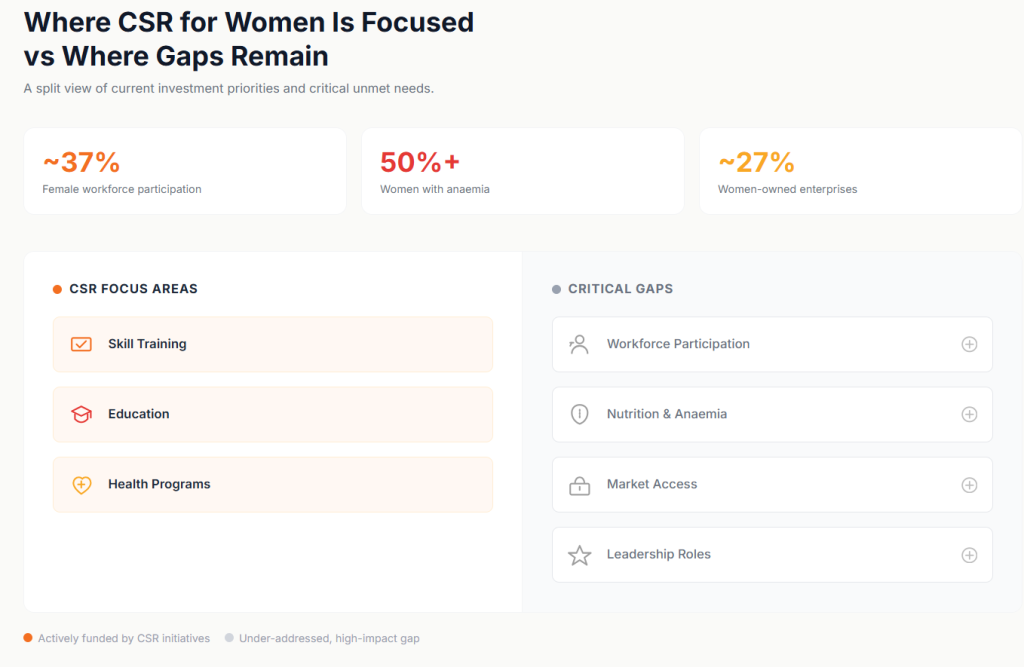
Gender inequality is stark in India. Adult female literacy is only about 59.3%, compared to 78.8% for men. Women’s workforce participation is low (~37% in 2024) and many women work in low-paid informal jobs. Laws have explicitly recognized this: Schedule VII of the Companies Act lists “promoting gender equality, empowering women” as CSR activities.
Corporates increasingly see empowering women as both a moral duty and a sound investment. Educated women tend to invest in their children’s health and education, breaking cycles of poverty. For example, studies suggest each extra year of female schooling boosts a woman’s wages by ~10%. CSR leaders note that programmes which increase girls’ graduation rates can have outsized social returns.
International frameworks amplify this focus. According to the World Economic Forum’s (WEF) Global Gender Gap Report 2025, released in June 2025, India ranks 131st out of 148 countries, having slipped two places from 129th in 2024. CSR is thus seen as one path to address these disparities at scale.
Gender Inequality in India — Numbers That Drive Action
Concrete statistics underline the CSR agenda:
- Education: While enrollment of girls has improved at primary levels, secondary school completion lags. Recent data show only ~41% of girls finish 12th grade. In rural areas, up to half of school-age girls drop out by high school.
- Workforce Participation: Female labour-force participation rose to 41.7% in 2023-24 from 23.3% in 2017-18, but researchers note this spike partly reflects survey changes. True full-time employment gains are modest. Across India, many women are subsistence-level entrepreneurs or unpaid laborers. CSR aims to transform subsistence into sustainable livelihoods.
- Health & Hygiene: India’s Maternal Mortality Ratio (MMR) has dropped significantly to 88 per 100,000 live births (2021-2023), down from 130 in 2014-16, indicating major progress in maternal health. Anemia affects 57% of women. 78% of Indian women use modern sanitary products but many schools lack girl-friendly toilets. CSR health camps and sanitation drives seek to improve these indicators.
- Economic Rights: Women’s share of household income and savings is often small. Only 13.76% to 20%of Indian enterprises are women-owned (World Bank). Limited asset ownership (land, bank accounts) hampers financial security. CSR microfinance and skill programmes aim to address this by providing capital and training.
Such gaps make empowerment urgent. Corporate CSR strategies now explicitly target these areas, using data to guide decisions. For instance, companies may track the number of women trained or loans disbursed and set targets for improvement.
How CSR Is Helping Drive Gender Equality at the Grassroots
Companies are deploying CSR capital in diverse ways:
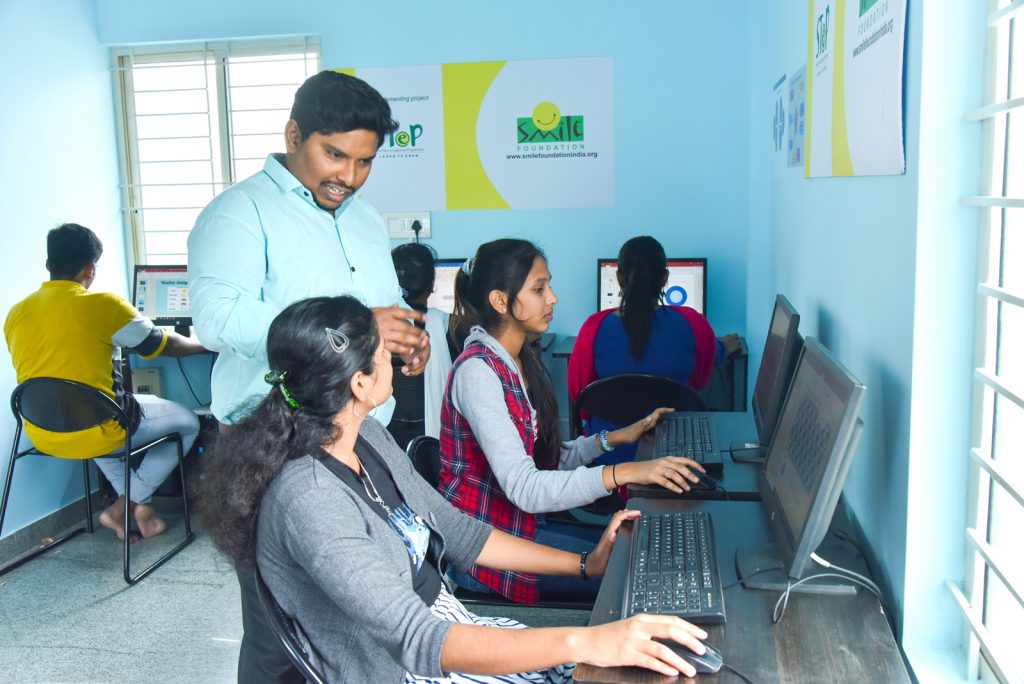
- Livelihoods and Skill Training: Vocational centers for tailoring, IT skills, handicrafts and agriculture equip women with marketable abilities. For example, Tata Consultancy Services runs rural IT training centers for women, and community colleges funded by CSR teach sewing and handicraft to girls. These programmes often include job placement or seed funding for businesses.
- Self-Help Groups (SHGs) and Microfinance: Many companies support SHGs, turning women into informal banks. ICICI Bank’s CSR programme helped form over thousands of SHGs, reaching millions of women. These groups provide loans for small enterprises (like dairy farming or retail stalls) and financial literacy training.
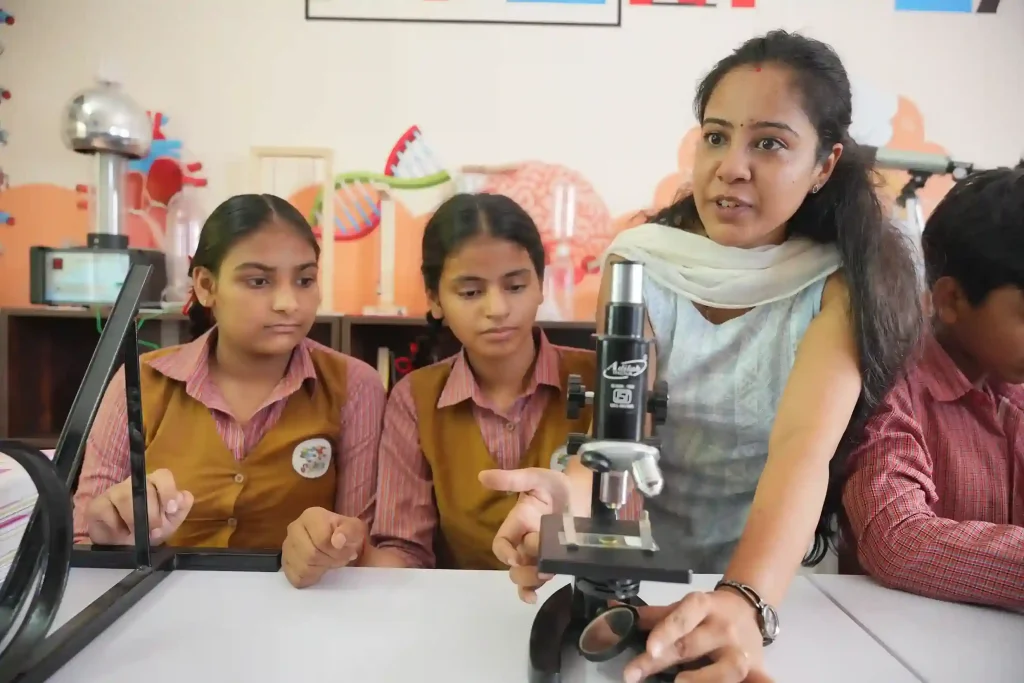
- Education and Scholarships: Corporate-funded scholarships and school programmes keep girls in education. Smile Foundation’s scholarship programme, for instance, has supported 300,000+ girls through various interventions. Other companies finance girls’ anganwadis or sponsor STEM camps for young women.
- Health, Nutrition and Hygiene: Business-funded health camps screen for conditions like anemia, diabetes and cancers. Xiaomi India’s breast cancer screening initiative is a notable example: in 2025, the company screened thousands of women and educated many more about breast health. CSR also funds clean water taps and menstrual hygiene education in villages, allowing girls to attend school during menstruation.
- Digital and Financial Inclusion: Tech firms train rural women in smartphone use and e-commerce (for example, selling products online). Some banks set up mobile ATM vans in remote villages with women staff. Companies like Paytm have introduced digital payments classes for women, broadening their economic engagement.
- Advocacy and Support: A few CSR initiatives focus on rights and safety. For instance, some corporates run awareness campaigns against domestic violence or fund legal aid clinics. These are rarer but growing areas.
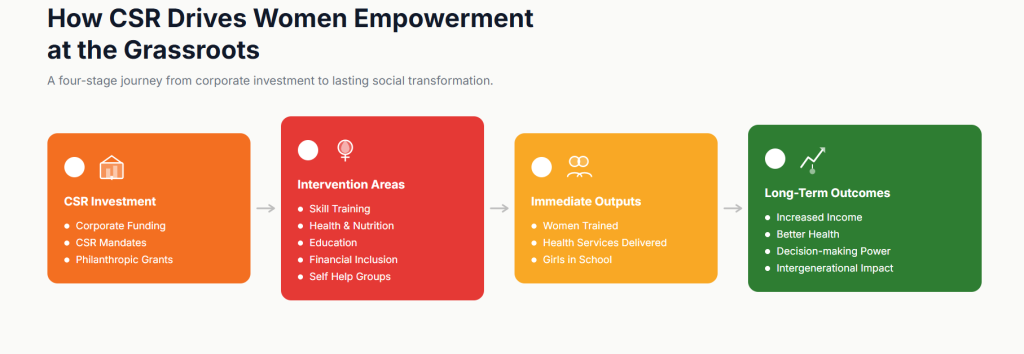
Overall, CSR acts as a multiplier. By partnering with NGOs, governments and community leaders, companies leverage their technology and networks to reach women. The result is that many empowerment gains are sustained beyond the CSR funding cycle – women keep businesses running, girls remain in school and awareness stays elevated.
Types of CSR Activities for Women Empowerment
CSR activities typically fall into these categories:
- Skill Training & Livelihood: Training in trades (cooking, beauty services, electronics repair) and professional courses increases employability. Example: Pearl Academy partnered with SETU Foundation to train women in fashion and design, resulting in securing jobs. Similarly, AmEx’s CSR tech programme trained women in IT (AI, cloud), opening paths to high-paying jobs.
- Health & Hygiene: Projects include health camps, nutrition, sanitation and menstrual products. One company built girls’ toilets in schools; another distributed free sanitary pads to girls in tribal areas. These projects directly reduce school drop-outs and health issues. For instance, menstrual hygiene workshops by NGOs (supported by corporate grants) have shown a drop in girls missing classes.
- Education & Scholarships: CSR funds cover tuition, uniforms and textbooks for girls. Tech companies sometimes establish ‘girl tech hubs’ teaching coding to teenagers. Educational CSR also includes adult literacy for mothers, fostering lifelong learning.
- Financial Inclusion & Microfinance: Microcredit programmes give small loans to women entrepreneurs. CSR banking schemes train women to manage their finances. For example, a PSU bank’s CSR arm offered collateral-free loans to rural women, doubling their family incomes over two years.
- Support Services: Some businesses fund shelters for victims of domestic abuse or day-care centers so mothers can work. Others run gender-sensitivity training for their own workforce. These supporting initiatives create enabling environments for women’s progress.
- Combined Programmes: Integrated models like Smile Foundation’s Swabhiman address multiple needs. Swabhiman provides girls with education support and life skills and hygiene facilities, recognizing that empowerment is holistic.
Challenges and the Way Forward
While CSR progress is encouraging, obstacles persist:
- Sustained Funding: Many projects are short-term pilots. Year-over-year commitment is needed to see lasting change. Companies are urged to adopt multi-year plans, similar to how Smile Foundation secures 3-year funding for its programmes.
- Measurement of Impact: Unlike financial returns, social impact is harder to quantify. Only a minority of companies track outcomes (e.g. changes in women’s incomes or school retention). Introducing common metrics (like the increase in female household earnings or girls’ test scores) would improve accountability.
- Reaching Marginalized Women: CSR often targets easily accessible communities. The poorest and most isolated (e.g., tribal women or those with disabilities) are still under-served. A policy push to incentivize projects in these groups could help (for example, extra CSR credit for work in designated backward areas).
- Cultural Barriers: Deep-seated norms (early marriage, gender roles) can limit impact. CSR programmes must be paired with community advocacy. Corporate campaigns for female education and leadership can gradually shift mindsets, but results are slow and need persistence.
To maximize CSR’s role in gender equality, experts recommend a three-pronged strategy:
- Align with National Goals: Link CSR women’s programmes to national initiatives (e.g., Beti Bachao campaigns, skill missions) and SDGs. This ensures coherence with public policy.
- Encourage Collaboration: Public-private partnerships (like Xiaomi+YouWeCan) demonstrate how joint efforts magnify impact. Sharing successful models across companies/NGOs can replicate benefits.
- Strengthen Women’s Leadership: Companies can empower female employees to lead CSR projects, and support women in the workforce through policies (flexible work, anti-harassment measures). This internal gender equality will reinforce external efforts.
Ultimately, CSR is a powerful force for change but must be wielded thoughtfully. When companies view women’s empowerment as an investment in human capital, the results uplift entire communities.
Every business and citizen can support this cause. Corporates should integrate gender targets into their CSR and consumers can back women-led brands. By driving CSR women empowerment India, we help build a more equitable and prosperous nation for all.