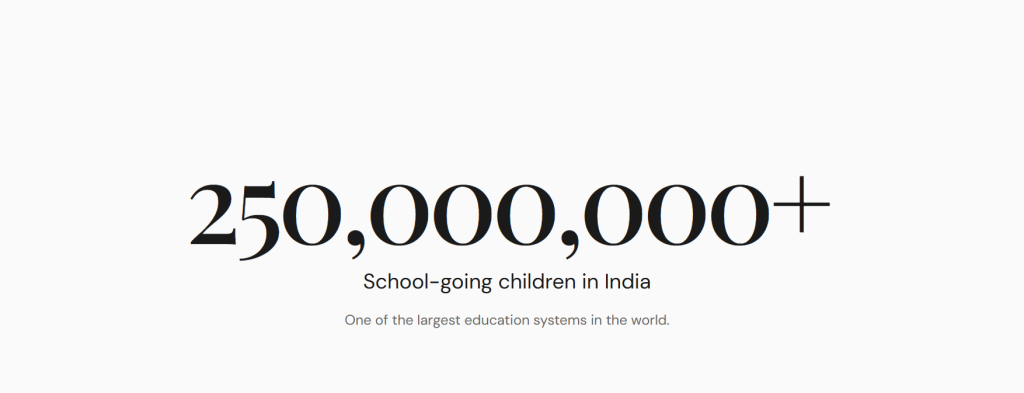
India’s demographic dividend is often described in numbers. A young population. A rapidly expanding workforce. Millions of school-going children.
The expansion of STEM Labs in India represents one of the most promising shifts in the country’s education ecosystem. If India is serious about becoming a global innovation leader, a science first approach must begin early, in classrooms where curiosity is encouraged and experimentation is possible.
For decades, science education in many schools has remained largely theoretical. Students memorise definitions, reproduce diagrams and prepare for examinations. Yet science, by its very nature, is experiential. It requires testing, failure, iteration and discovery. Without laboratories that allow students to engage with concepts hands-on, science remains abstract.
STEM labs change that equation.

Why STEM Labs in India Matter Now
India’s economic future is closely tied to sectors driven by technology and innovation. Artificial intelligence, robotics, renewable energy, data science and biotechnology are no longer niche fields. They are central to the global economy. Preparing science students for this landscape requires more than syllabus completion.
A science first education model means creating spaces where Indian students can build circuits instead of merely drawing them, program robots instead of only reading about automation and apply mathematical reasoning to real-world design challenges.
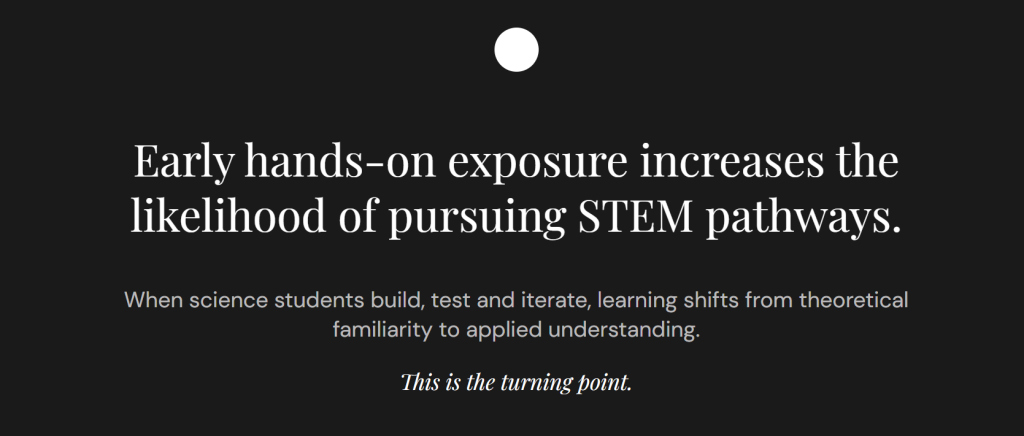
When students physically assemble components, debug code or test prototypes, learning shifts from passive absorption to active creation. Confidence grows alongside competence. This is particularly important during middle school years, when subject preferences begin to solidify and long-term academic pathways take shape.
However, access to high-quality STEM Labs in India remains uneven.
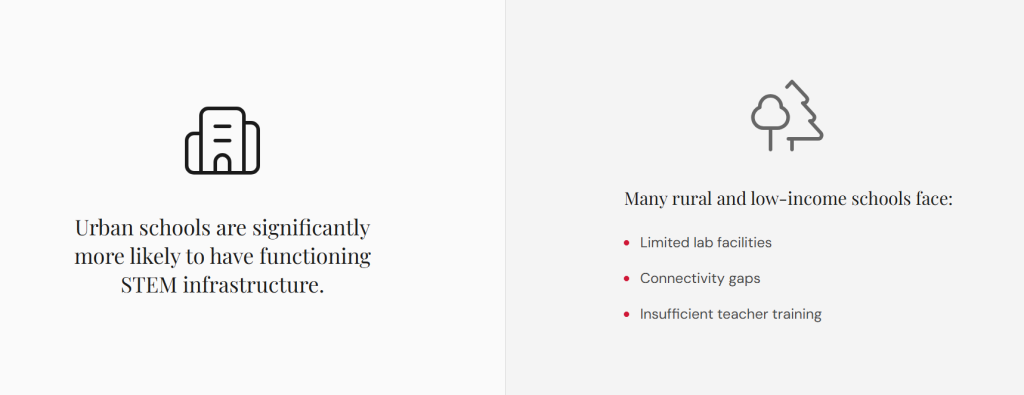
In metropolitan private schools, robotics studios and coding labs are increasingly common. In contrast, many government or low-income schools struggle with even basic laboratory facilities. This disparity risks deepening educational inequality, creating two parallel systems of science education: one experiential and future-ready, the other theoretical and constrained.
Ensuring equitable access to STEM labs is therefore not just an educational reform issue. It is a question of social mobility.
Beyond Infrastructure: The Pedagogy Gap
While India has witnessed large-scale efforts to establish innovation labs through government initiatives, infrastructure alone does not guarantee transformation. Equipment that sits unused, teachers who lack training in facilitation or curriculum that does not integrate lab-based learning can limit impact.
A science first approach requires three interconnected elements:
- Hands-on infrastructure that allows experimentation
- Teacher capacity building to guide inquiry-based learning
- Curriculum alignment that integrates lab work meaningfully
Without this ecosystem, STEM labs risk becoming symbolic rather than transformative.
This is where development and CSR-led interventions have begun to play a vital role.
Smile Foundation’s Approach to STEM Labs in India
Recognising the importance of experiential learning, Smile Foundation has integrated STEM education within its broader Mission Education framework. Rather than treating science labs as standalone projects, the organisation situates them within a continuum of educational access, scholarships and long-term support.
Smile Foundation’s STEM programme is built on inquiry-driven learning. Students are introduced to robotics kits, coding platforms, DIY science modules and electronics tools in ways that encourage problem-solving rather than rote execution. The aim is to nurture analytical thinking and creativity, not just technical familiarity.
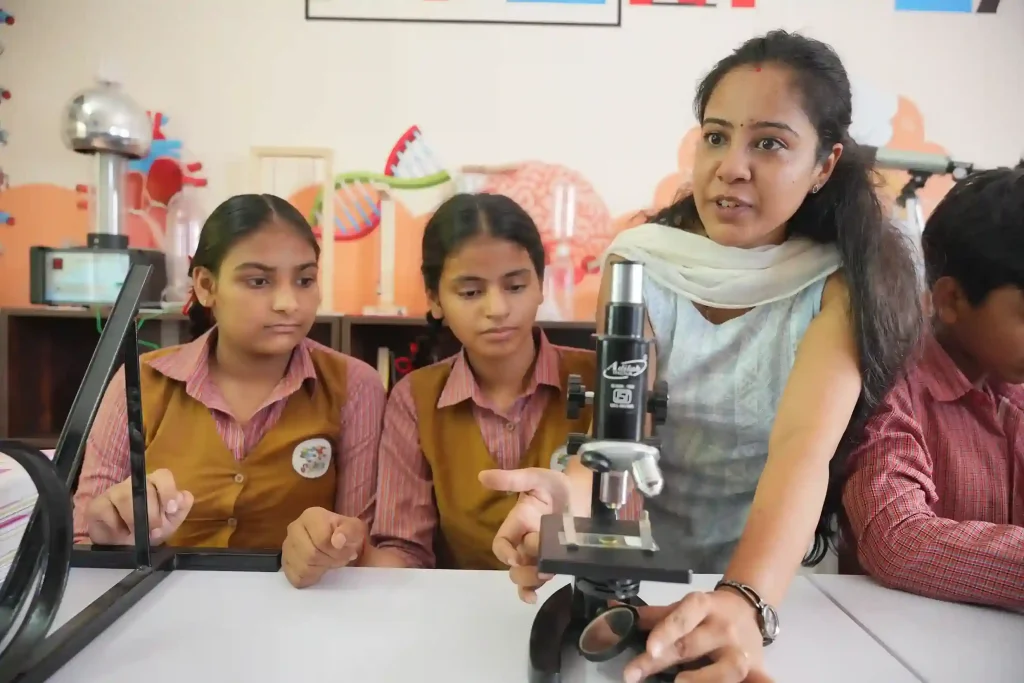
In partner schools, dedicated STEM labs create structured environments where students can engage with experiments that complement classroom lessons. This approach allows science students to connect theoretical concepts to tangible outcomes. When a student sees a coded instruction translate into movement in a robot, or watches a circuit illuminate after careful assembly, learning becomes memorable.
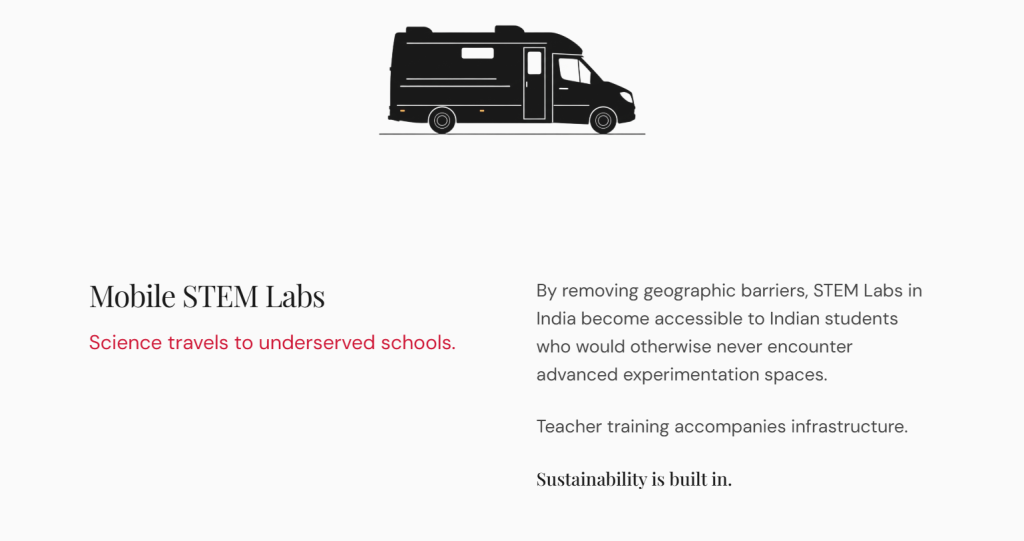
One of the most innovative models implemented by Smile Foundation has been the mobile STEM lab, often referred to as STEM on Wheels or Tinker-on-Wheels. These mobile units carry fully equipped laboratories directly to underserved schools and communities, addressing the infrastructural and geographic barriers that prevent many Indian students from accessing advanced facilities.
Instead of waiting for permanent infrastructure to be built, the lab travels to the learner. In rural or semi-urban areas, this model ensures that exposure to robotics, digital tools and hands-on experimentation is not restricted by location. The mobility also signals a powerful message: quality science education should not be a privilege determined by geography.
Encouraging Girls in Science
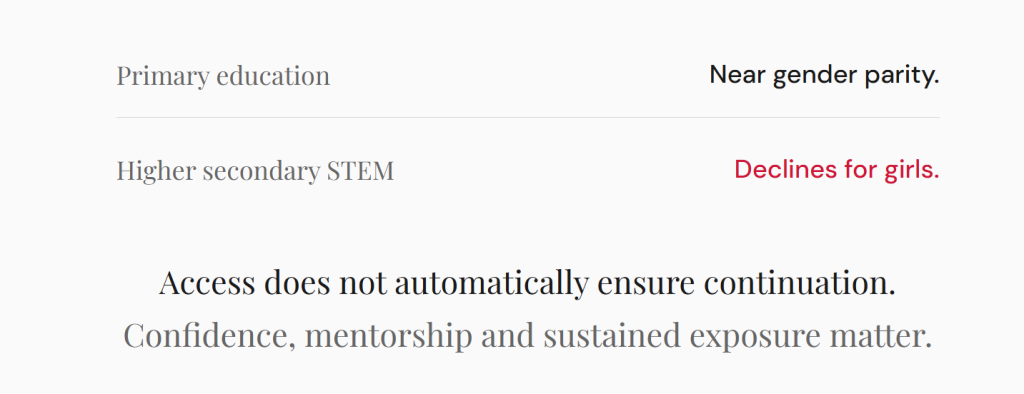
Even as enrolment rates for girls have improved, participation in advanced science streams often declines in higher grades. Social norms, lack of role models and limited exposure contribute to this pattern.
Smile Foundation’s STEM-Nayika initiative addresses this challenge directly. By creating supportive environments, providing mentorship and building confidence, the programme encourages girls to engage deeply with STEM subjects. When girls see themselves represented in science spaces and are given consistent opportunities to experiment and lead projects, aspirations begin to shift.
Gender-inclusive STEM Labs in India do more than teach technical skills. They broaden the imagination of what is possible.
Partnerships for Scale
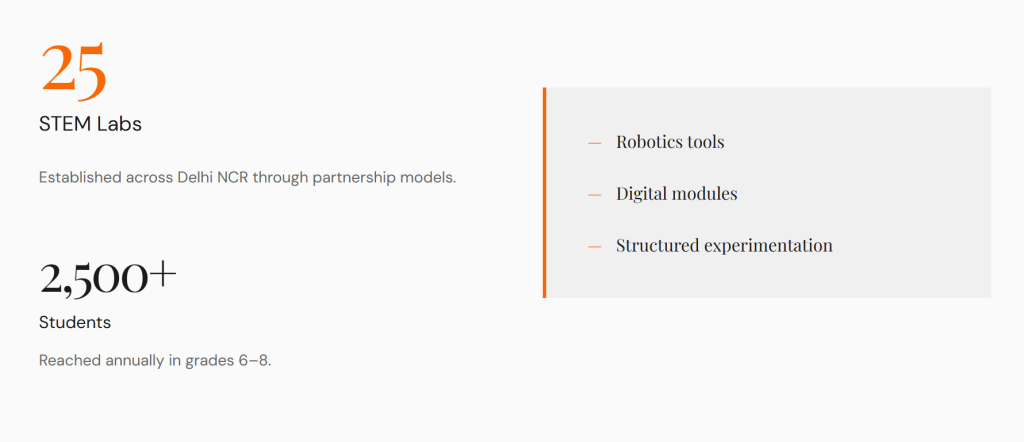
Scaling quality STEM education requires collaboration. Through partnerships such as its collaboration with the BMW India Foundation, Smile Foundation has supported the establishment of STEM labs in multiple schools across the Delhi NCR region. These labs serve thousands of middle-school students annually, particularly in government-aided and community schools.
Importantly, these partnerships extend beyond equipment installation. Teacher training, structured engagement modules and sustainable models ensure that labs remain active learning environments rather than static facilities. Solar-powered mobile labs further demonstrate how sustainability can be integrated into educational outreach.
By combining infrastructure with training and ongoing engagement, these initiatives exemplify how STEM Labs in India can be both inclusive and durable.
The Broader Development Impact
The importance of STEM labs extends beyond career preparation. Experiential science fosters habits of mind that are essential for democratic and economic resilience. Students learn to question assumptions, test hypotheses and evaluate evidence. These competencies strengthen scientific temper, a value enshrined in India’s constitutional vision.
When Indian students engage with hands-on science, they begin to see themselves not merely as recipients of knowledge but as contributors to innovation. For first-generation learners, this shift can be transformative. Exposure to a functioning robotics module or a structured coding session can reframe identity, reinforcing the belief that they belong in scientific spaces.
Moreover, when STEM labs are embedded within scholarship and skilling programmes, as in Smile Foundation’s integrated model, pathways from classroom discovery to higher education and employability become clearer. Students who discover aptitude in science are more likely to persist academically when supported through financial assistance and mentorship.
The Road Ahead
For India to fully realise the promise of STEM Labs in India, expansion must prioritise equity. Rural districts, aspirational regions and low-income communities should be at the forefront of future investments. Teacher training must remain central, and curriculum integration should ensure that labs complement, rather than sit apart from, formal learning.
A science first approach is not simply about increasing the number of labs. It is about creating ecosystems where curiosity is nurtured and experimentation is normalised.
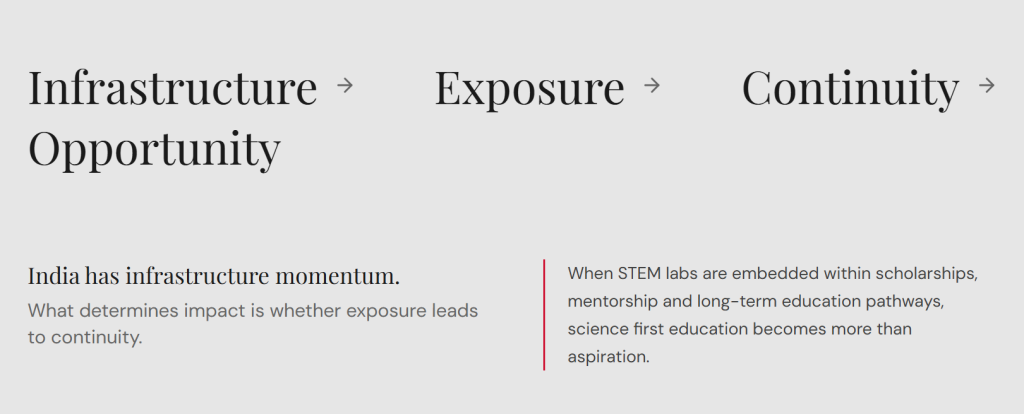
Smile Foundation’s work illustrates that when STEM education is combined with intentional inclusion, sustained engagement and systemic support, its impact extends far beyond academic outcomes. It shapes confidence, aspiration and opportunity.
India’s next generation of innovators is already in classrooms today. The expansion of meaningful, accessible STEM Labs in India will determine whether their potential remains theoretical or becomes transformative.
If science is to be the foundation of India’s future, it must begin where it matters most — with Indian students, equipped not only with knowledge, but with the tools to create.