Search
Close this search box.
Categories
Print/ Online Media

Survey highlights change in educational needs of underprivileged children

Survey highlights change in educational needs of underprivileged children

( December 30, 2020 )

The need for textbooks, technology to access classes such as mobile phones, computers and internet is on the rise

With the Covid-19 pandemic bringing in a new normal by disrupting everyday lives, a survey has shown that the educational needs of the poor and underprivileged have undergone a change with more than half highlighting the need for textbooks and support system like mobile phone, internet and other accessories to continue the learning process with desired results.

The survey commissioned by NGO Smile Foundation among students and families also showed that more among the poor and underprivileged in the southern parts of the country do not follow hygiene and precautionary measures to avoid Covid-19 compared to those in other parts of the country, indicating the need for a sustained action among the community.

With schooling moving into the internet, the survey of 3,353 respondents claimed that only 51% are satisfied with current learning methods while 80% are waiting for schools to reopen due to altered work and home routine of parents who might be finding it difficult to adjust to the online learning schedules of children.

One of the concerns was that the online classes were scheduled at a time the parents are out for work or they do have just one mobile phone while they have more than one child at home.

The survey showed that 68% felt that the scheduling of the classes was a problem while 95% said that they have two or more children, which was posing a challenge in providing mobile phones to each one of them, with almost all classes scheduled at the same time for all children.

One of the problems with online education highlighted by the respondents was that they were not able to access properly (68%) or guide their children properly (74%). It also said 44% do not have adequate availability of educational resources to facilitate home-based learning for their children.

Highlighting the need for more orientation and support in terms of digital literacy, the survey showed that 48% of parents felt that they were not prepared or equipped to help their children’s e-learning process.

However, the survey claimed, 53% emphasised the need for adequate educational resources, inclusive of books and other teaching-learning materials. Other kinds of support mentioned include mobile phones, internet support and related accessories to continue the learning process with the desired results.

“The above figure specifies the needs expressed by the respondents with the majority of them requesting for books and teaching learning materials to help facilitate their children’s learning. While 8% mentioned need for phones and 9% require internet support to follow the current mode of teaching extended by schools. Around 21% respondents prefer direct interaction with teachers where they visit homes and support the children on a one to one basis,” it said.

“Orientation and basic digital literacy to support academics would be absolutely essential in bridging the gap and continuing the learning process with better results. Lack of digital equipment, facilities and learning materials like phone, internet, data pack, notebook, charts and other resources is a crucial gap that needs addressal to accommodate an effective learning process,” it said.

The survey also showed that a majority of the respondents — 83% in South and 79% in West, 58% in East and 48% in North — “do not follow” the necessary Covid-19 norms “regularly”. If one considers all Covid-19 norms are being followed, then South India stands at 53%, West 56%, East 47% and North 26%.

When it came to washing hands regularly, wearing masks, maintaining social distancing and consuming immunity-boosting food, the rural and urban folk in south India fared badly compared to other parts of the country.

According to the survey results, 93% in rural and 77% in urban areas in the South did not wash hands regularly while it was 35% and 59% in the North respectively.

Similarly, 77% in rural and 66% among the poor in urban localities in southern India were not wearing masks while 88% in rural and 94% in urban areas were also not maintaining social distancing.

When it comes to consuming immunity-boosting food, all regions in the country fare similarly. The survey showed that 98-100% among those surveyed were not able to consume such food.

“The survey data reveals that more than 50% of households still do not have access to proper nutritious food. It is observed that more than 51% respondents acknowledged that children feel hunger pangs occasionally as well as quite often. Almost 20% of the households are not able to have three full meals a day owing to the current situation. Around 53% face difficulty in accessing home-made food with 21% finding it challenging to have access to nutritional products like full meals, pulses, etc,” the survey added.

Source: https://www.deccanherald.com/national/north-and-central/survey-highlights-change-in-educational-needs-of-underprivileged-children-933215.html

Categories
Print/ Online Media

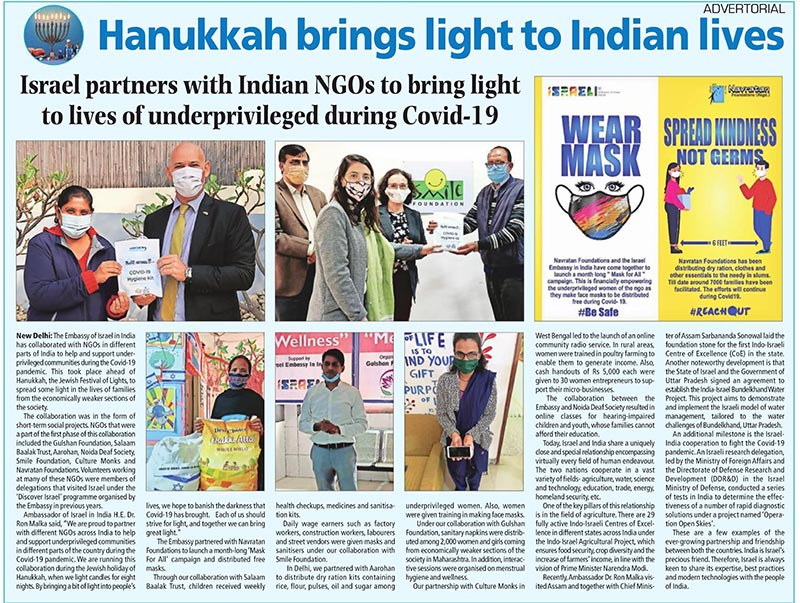
Hanukkah brings light to Indian lives

Categories
Print/ Online Media

Hindustan Times

Hindustan Times

(04 June)

Categories
Print/ Online Media

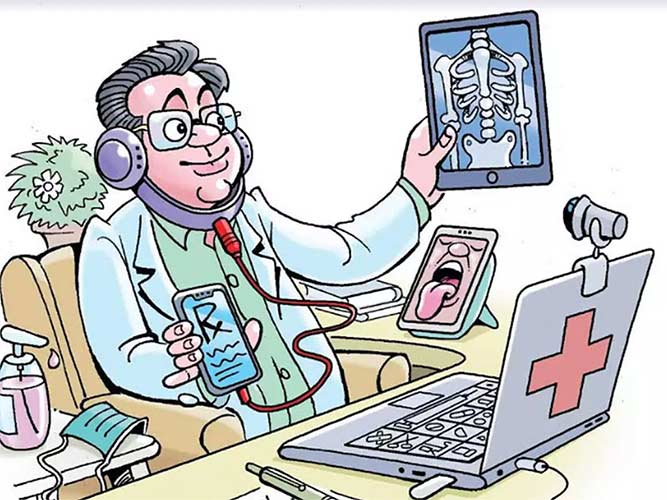
Telemedicine can provide timely access and last mile connectivity for peri-urban and rural populations: Santanu Mishra, Smile Foundation

Telemedicine can provide timely access and last mile connectivity for peri-urban and rural populations: Santanu Mishra, Smile Foundation

( December 15, 2020 )

Telemedicine has been gaining traction after the Government of India and the Medical Council of India released their new guidelines for the use of telemedicine during the Covid-19 pandemic.

by Santanu Mishra Co-Founder, and Executive Trustee, Smile Foundation
The Covid-19 pandemic has been a harsh reality-check and has exposed the gaps of overall healthcare system across the world. The virus has shown the world that there is an urgent need for a paradigm shift in the provision of healthcare. Instead of a patient visiting a doctor, the need of the hour is to reach out to vulnerable sections of society. From March 2020 onwards, the healthcare system has focused on Covid-19 and all other health priorities have been put on the back burner. In India, marginalized groups such as pregnant women and women in general have been adversely impacted and civil society, self-help groups (SHGs), the development sector, and the central and state governments have struggled to managed the healthcare for vulnerable.

As of end October 2020 there were 7,305,070 confirmed cases of Covid-19 in India with 812,172 being active, and the cumulative death total was 111,311; making India the country with second highest number of Covid-19 cases in the world. The unlocking of the country has been done in five phases till date, and this along with the upcoming festive season has led to a spurt in the number of cases, thereby leading to an urgent need for testing at the grassroot level. To address the urgency at the grassroot level, the entire healthcare system is now focusing on the prevention, diagnosis, treatment and containment of the Covid-19 infection. This is leading to the possibility of missing opportunities for the timely diagnosis and treatment of other diseases. Patients with mild and moderate complaints or diseases are encountering difficulties while seeking quality healthcare services, and are ending up with chronic conditions. The situation is even more critical in backward districts, which have minimal health services and limited means of conveyance to reach healthcare facilities.

Source: https://health.economictimes.indiatimes.com/news/health-it/telemedicine-can-provide-timely-access-and-last-mile-connectivity-for-peri-urban-and-rural-populations-santanu-mishra-smile-foundation/79730561

Categories
Print/ Online Media

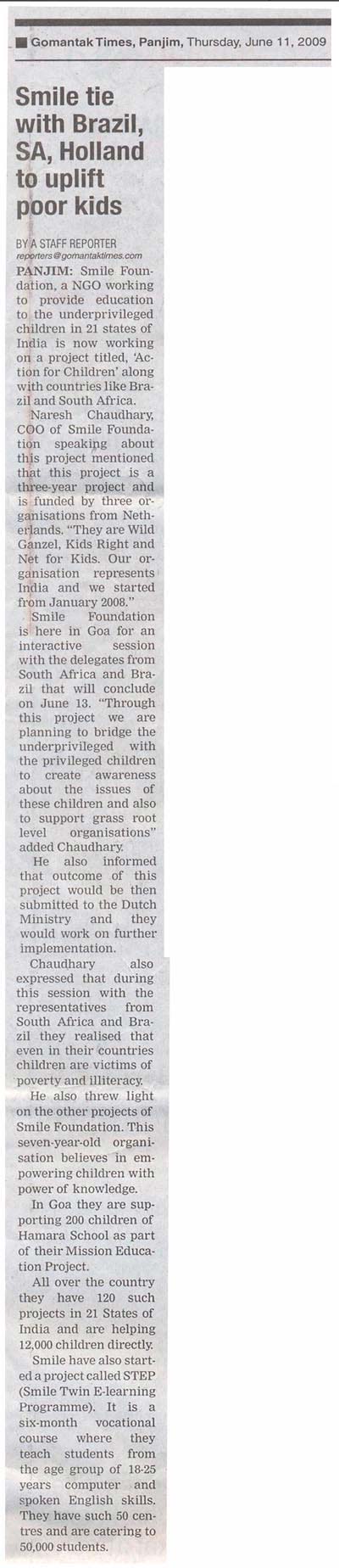
Smile Foundation to Uplift poor kids

Smile Foundation to Uplift poor kids

(11 June)

Categories
Print/ Online Media

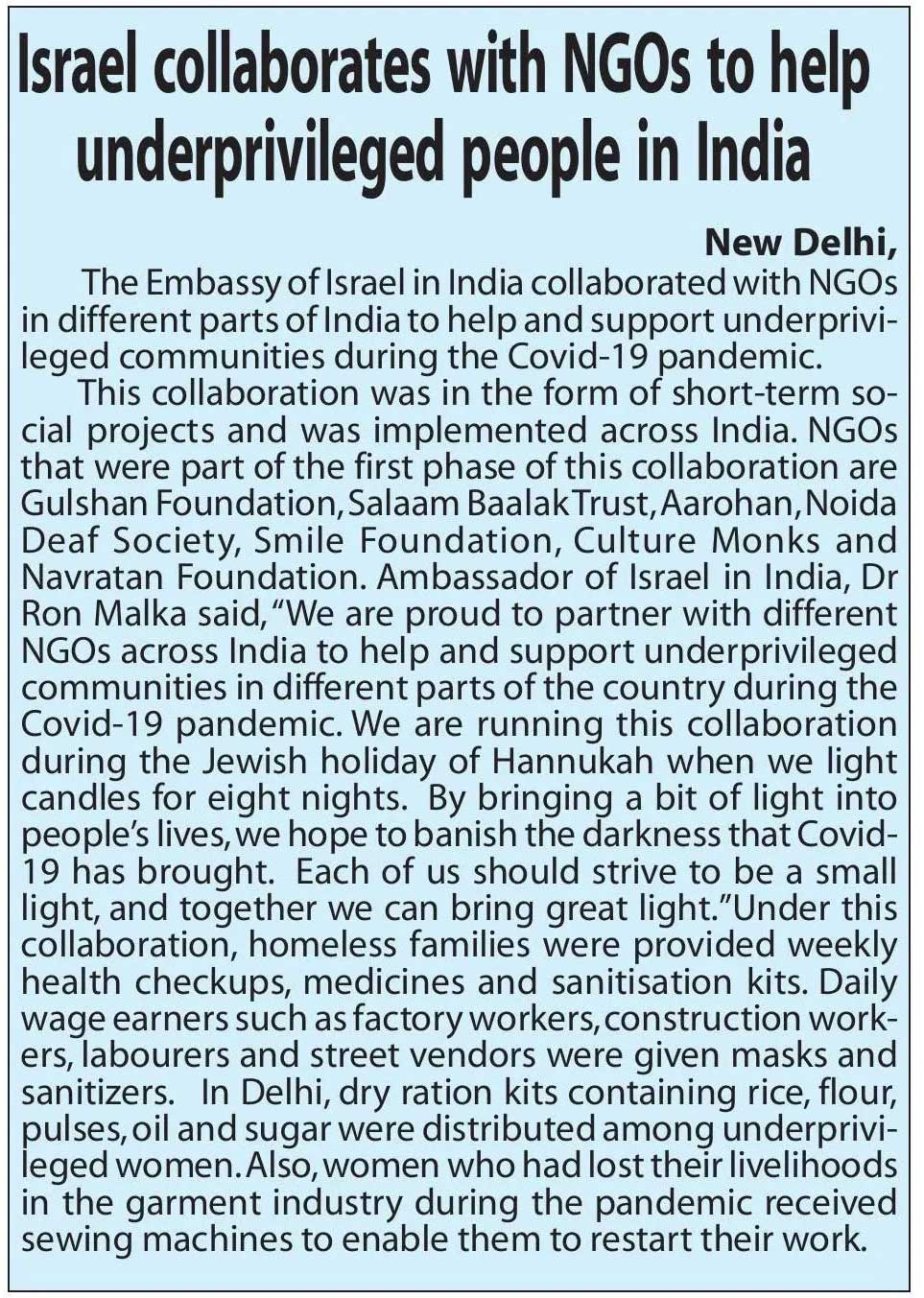
Isrel collaborates with NGOs to help underprivileged people in India

Categories
Print/ Online Media

SIFFCY’s Festival Director elected President of CIFEJ

SIFFCY’s Festival Director elected President of CIFEJ

( December 4, 2020 )

New Delhi: In an important development, the Director of Smile Foundation’s International Film Festival for Children and Youth (SIFFCY) has been unanimously elected the President of CIFEJ General Assembly 2020-2022. Smile Foundation being the pioneers for promoting good cinema this is a proud moment where India’s premiere film festival for children and youth, SIFFCY, is highlighted at a global level.

CIFEJ hosted an online election for the President and the other Members of the CIFEJ Board of Directors in which more than 50 active members from 40 different countries voted. Mr. Jitendra Mishra, Director of Smile Foundation’s International Film Festival for Children and Youth (SIFFCY) bagged a historic unopposed presidential win with 100% votes.

Founded in 1955 under the auspices of UNESCO, CIFEJ is one of the oldest global networks of audio-visual media professionals working for children and young people. CIFEJ aims to promote the production of films and audio-visual media for children and young people, films that are culturally diverse, artistic, educational, informative, and entertaining. CIFEJ was established in Brussels, Belgium in 1955 and after five years of operations moved to Paris where its head office was active for 30 years. Between 1990 and 2007, the head office was located in Montreal, Canada. For the last ten years, its headquarters has been in Iran. At present, Mr. Mohsen Chiniforoushan, Former General and Managing Director of Kanoon, Iran, is the Secretary-General of CIFEJ.

Commenting on Mr. Mishra’s win, Mr. Santanu Mishra, Co-Founder, and Executive Trustee, Smile Foundation said, “It is an absolute privilege for Smile Foundation and our team at SIFFCY to receive such an honor. We are focused on bringing creative and educational content, staying true to SIFFCY’s founding principal. To showcase the best stories from the world, SIFFCY has quickly grown into a unique platform, gaining international acclaim. Jitendra’s election is global recognition of our commitment to increase access to children’s cinema in India. This win will help strengthen our resolve to work harder to bring high quality content to national and international audiences.”

Mr. Jitendra Mishra, Festival Director, SIFFCY said, “This is a clear reflection of the trust and respect that all CIFEJ members have towards the work we have been doing at SIFFCY and Smile Foundation. If we put ourselves to it, we can bring change on a global scale and achieve our goals. I am grateful to the management of Smile Foundation for creating this opportunity.”

Since the onset of the pandemic, more and more children are choosing online education. While it has helped fill the last-mile gap in the delivery of education, screen fatigue and social isolation have taken a toll on children’s mental health, a fact highlighted in a recent study conducted by Smile Foundation across its Mission Education centres. SIFFCY is a platform dedicated to celebrating togetherness and collaboration among children and youth.

Source: https://orissadiary.com/siffcys-festival-director-elected-president-of-cifej/

Categories
Print/ Online Media

Hindustan Times

Hindustan Times

(15 June)

Categories
Print/ Online Media

Public Health Strategies to Control Infectious Disease

Public Health Strategies to Control Infectious Disease

( November 28, 2020 )

The key experts of the healthcare industry shared the virtual platform of the second edition of the Healthcare Transformation Summit to discussed the importance of managing the COVID-19, other infectious diseases and urged on the need for strong public health strategies.

Initiating the discussion, Dr Harshad P Thakur, Director, National Institute of Health and Family Welfare (NIHFW), Government of India, said, “Since the last few months we are focusing on COVID – 19 pandemic and trying to control the situation. This has given us the opportunity to focus also on public health. Side by side when we are managing the COVID-19 we are also trying to create awareness about other diseases. In infectious diseases, we have different types of diseases like airborne diseases, water-borne diseases, contact transmission is direct and indirect. Public health strategies are quite broad, when we are trying to identify the patients and treat them, we are only trying to control the diseases occurring. Every time a person becomes patient he is in the incubation stage and during that stage, he might have transferred his disease to many other people unknowingly so contact tracing becomes vital. Contact tracing is one of the important public health initiatives. If the patient is in a severe condition chances of transmitting are quite less. The most dangerous situation is when the patient is not affected by the serious disease but by mild disease so, with no clinical symptoms, the patient is unknowingly transmitting the disease when he/she is going to a public place. So that is where the major problem comes in, i.e why in COVID strategies like social distancing, wearing masks is necessary.”

Adding to it Thakur said, “The current pandemic has features of indirect and direct transmission and similarly we have various infectious diseases transmitted by blood transfusion, or coming in contact with hospital waste and water-borne diseases like typhoid, Hepatitis A. Prevention strategies in primary prevention might not be clinical strategies. The clinical aspect is only vaccination. Factors lik social, cultural, behavioral, and environmental are important and it is also part of public health engineering. Another factor which is important is creating awareness, for instance in COVID-19 we have created enough awareness about diseases transmitted through air, this should continue. At the same time, we should unknowingly not create fear among people. There are various stakeholders and all of them have to play their role, we have private and government health providers, media, NGOs, and common people. They have to play their role and it should be intersectional coordination.”

Giving perspective of NGO, Sanjeev Dham, COO, Smile Foundation, said,” If a country wants to solve infectious disease problems then they need to strengthen the primary healthcare system including infectious diseases through the prevention, screening, testing and curative. The importance of a robust primary healthcare system is a must. We as an organization run 40 mobile health units and complement the government efforts to provide primary healthcare in urban slums and rural areas. We are also running telemedicine centres across Rajasthan, Delhi & Kolkata. These are few centers that is being supported by the government to compliment, supplement, and to ensure the primary healthcare is robust and reaching out to the underprivileged population.”

Adding to it, Dham said, “Entire health system faced two key challenges awareness and behavioral change be it COVID-19, TB, Hepatitis or any infectious disease. We need to understand through research people are changing their behavior due to certain reasons, if we scientifically identify those barriers and if we work on them in a professional manner we can prevent a lot of problems. It’s not possible to reach out to everyone, curative services, and a structural referral system is very critical if you want to control all the infectious diseases. COVID-19 has changed our lifestyle, we are living on new norms and the way the government acted and enacted, media continuous projection of the pandemic if all stakeholders work together we can change the system. From the month of March as a nation we have progressed well we are able to 15 lakhs tests in a day for COVID-19 because all the forces are working together to achieve certain goals and objectives. We need to adopt new innovations, think out of the box. The government, which was sitting on the telemedicine policy for a long period got it approved in a day, it’s important that policy has to be updated, we need to be patient-friendly now the doctor can give consultation online. A customized approach is necessary. We need to modify the system and reach out to the target audience and people who are most vulnerable should be tackled first.”

Highlighting that the struggle of infectious disease is not new, Dr. Vikas Oswal, Senior Pulmonologist, said, “The struggle of combating infectious is not new to us, we have been dealing with tuberculosis. For tuberculosis, we had to make many alternative arrangements because of the social and economic status of the country, right from expensive drugs, the reach of it, uninterrupted treatment, and medication. Due to a strong collaboration between NGO, private, and public sectors, we were able to reach the maximum best outcome in Mumbai. The city with the highest cases all these three sectors came together gave the best outcomes. As for COVID-19 all the facilities crashed down, the treatment, giving medication to the needy, in time supply of door to door medication was the major challenge because patients were afraid to go to clinics or hospitals, clinics were shut down. All the clinics were converted to COVID-19 centers from TB which was again a challenge, next challenge was the availability of staff so we had to overcome all these challenges. Initially, we thought a lot of COVID-19 patients are there but more TB Cases were detected. There are 8000 TB patients just in two wards in two districts. We thought the chances of TB patients turning into COVID-19 patients were higher but we were proven wrong when we saw an isolation centre separately made for TB and COVID patients which were all vacant for two months. That gave us a thought that there is something to do with the immune system of TB patients was not allowing COVID-19 to enter the system. If you see the modality of children because of covid is less in case of developing countries like India there is already a BCG vaccination given from day 1 to children less five years in comparison to the modality of children in a developed country where there was no use of BCG vaccination again this gave us a thought of coming up with the trial of the better outcome of the BCG. ICMR also came up with the paper where adults from 60 to 80 are given BCG have shown better outcomes; the same trials have also been conducted for the other age group for less than 60 years. Challenge is definitely there these will be overcome in terms of tuberculosis but in the COVID era, we had shifted from clinics to virtual consultation we have used the maximum of Teleconsultation. We have come up with the apps, software where patients would join us and we are managing patients online not only TB patients but we are also screening all patients, we are trying to give home care to maximum patients.”

Talking about the role of Viatris, Naresh Hasija, Associate Vice President, Viatris, said,” We are playing a very active role with the government on the elimination of Viral Hepatitis & Tuberculosis now we have entered in the space of COVID-19 by introducing remdesivir. A comprehensive strategy is needed and we all should come together so we can create a real difference, this we saw while we were working with state governments on the elimination of Viral Hepatitis. The Central government took that programme and now we have a national scheme for the elimination of Viral Hepatitis. Similarly in India HIV cases, tuberculosis cases are going down. A comprehensive strategy end to end, with all the stakeholders, can play a big role in beating the infectious disease.”

“Our employee who was working on Remdesivir got COVID-19 positive and the post-pandemic effect was not that good at that time we decided on how to combat the after-effects of COVID-19. We shaped a program called Panacea and this programme was launched recently as a platform where we will have sessions where experts from yoga, mental health, nutrition background will guide and give awareness to the public. We are the most patient-centric company and we feel that we should do real justice to COVID care. We have a fantastic referral system developed by a TB Board here in India and it’s a very good programme where public and private partnership and a lot of models are existing and they are doing very well, it can be a fantastic example for COVID and viral hepatitis.”

Commenting that Covid- 19 has really opened up a lot of new things, we have to follow new norms,Dr. Dilip Patil, Founder Director, Trivector, said,” We were struggling to tell healthcare workers, administrators that hand and surface sanitization is not enough to control the hospital acquiring infection you have to take in consideration air, it is one of the major things in spreading the infection. In fact, there was not much awareness about air-borne infection even hospitals and infectious control departments were in denial, they were saying that we are taking precautions we have resources but it was not enough. Especially in a country which is having the highest number of cases of tuberculosis and Mumbai has the highest number of air-borne infection cases. Before COVID-19 we used to tell people that air-borne diseases are one of the major things and we have innovative ideas and solutions which are sustainable, green, and economical to disinfect the air continuously and to avoid the spread of infection from person to person. Pandemic has provided us a platform to create awareness about airborne infections, one should have six feet of social distance, wear a mask. We have a paper suggesting that airborne COVID-19 can be there for several hours or days in the air. It’s a blessing in disguise that India has such a big problem with TB but due to covid precautions which we are taking or rather adopting to take care of airborne diseases are so good and effective for Tuberculosis. We may control TB sooner than expected.”

Dr. Ravindra M Mehta, Senior Consultant Pulmonology & Critical Care, Apollo Hospitals Bengaluru, said, “Basically the respiratory and systemic onslaught that we suffered from was the whole spectrum of COVID – 19 it’s still in debate. If other infectious diseases compared to COVID-19 how it is going to be differentiated its quite challenging as the symptoms are Fever, cough, diarrhea, and nausea. Then came the spectrum of diseases doctor had to figure out the virus. If the patient is asymptomatic went to home isolation protocol but the most worrisome part where we got completely swept when pneumonia kicked in which requires hospitalization and maybe intensive care which each one of us dealt with. Now with the fresh round of regular bugs who are also coming to take their share in the disease spectrum of mankind, we will be dealing with all these at the same time but hopefully not in the same numbers. In the pandemic, we saw how horrible Xray got and pneumonia was spreading. More CT Scans happened ever than before people were hesitant to get scanned and now they are happening on a daily basis. Comorbidities are constantly alike chronic lung disease and smoking is something that will get worse in winters and also when it comes to bacterial and viral infections and other things that we have to deal with. We used a whole bunch of machines which have both been the challenge and have stabilized the people like ventilators, invasive ventilators all these have been used rapidly in massive numbers. The post covid syndrome is a thing which has not cropped up, we are also looking at it because we have reached the stage, it’s a disease with a long tail and there are many issues because of the multi-system nature which are going to come up now. Other infectious diseases like malaria and dengue will come especially when the rain starts. It is going to be part of the challenges which we are dealing with when we jump on the covid. Pulmonary fibrosis scarring is also a part which we are worried about as many people are getting lung damage. The post covid syndrome is going to be a challenge and the infectious component of what’s going to come down the line is going to coexist which we have to deal with.”

Highlighting the activities carried out by the government of Rajasthan, Dr Prem Singh, State Nodal Officer, National Health Mission, Government of Rajasthan, said, “Government is playing an active role in the supporting access of the treatment in COVID era and even authorizing public health authority to limit or to emphasize their power to control the infectious disease. The state government have the systems of immunization and universal immunization programme where we provide vaccines of TB, Hepatitis, Diarrhea, etc and similarly, the state is working for and preparing the database for covid – 29 vaccination, as soon as it will come in the picture the state will be ready to vaccinate those people as per government’s priority. Asha workers are also helping in the management of the COVID patients and the state also has a team of nurses, doctors who are going in the infectious areas and doing screenings and surveys and also treating them to control the process.”

“An integrated system is launched by union health ministry from 2004 to 2010 and still continues with an objective to strengthen and maintain the laboratories waste, IT enabled disease surveillance system to monitor disease trends and respond to outbreaks of the early rising diseases. It has central, state, and district surveillance units and district hospitals, sub-district hospitals, community health centres to report cases that are still present and under monitoring. Microbiologists, entomologist,s and others at the state level with a data management team, finance and procurement team tackle the problem, it is also supported by National Informatics System and ISRO to manage the data, Internet connectivity, and reporting systems. The new things happening in this field comes under Ayushman Bharat. We are struggling with some common infectious diseases which we can treat because we don’t have an established system or manpower to reach the masses. Some healthcare centres are led by community health officers who are from the nursing, pharma, medical background and they will be given the training for six months,” Singh added.

Source: https://republish.in/health/public-health-strategies-to-control-infectious-disease.html

Categories
Print/ Online Media

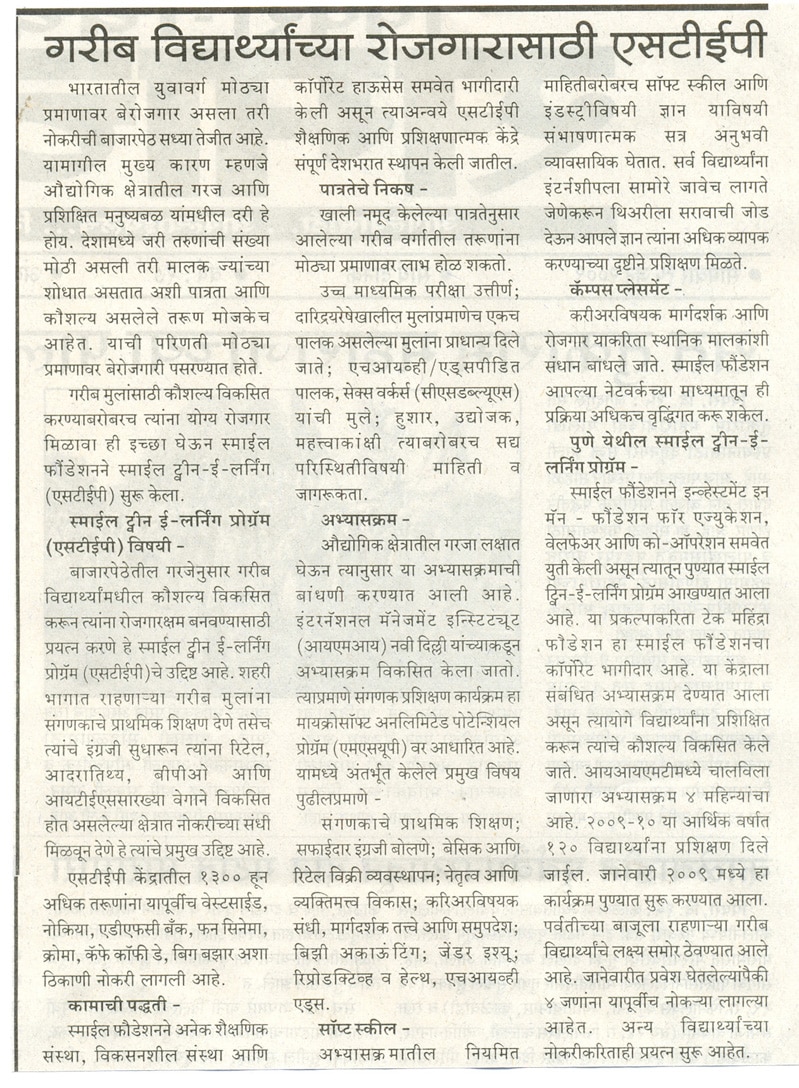
Twin e-Learning Programme

Twin e-Learning Programme

(15 June)

Privacy Policy - Smile Foundation

Information Gathering

1. Smile Foundation collects information from the users in a number of ways, for example when the user:

  • Makes a donation
  • Signs up for a campaign
  • Signs up to stay updated

2. While forwarding a donation for Smile Foundation the well-wishers have to submit some personal information as it would help us ensuring genuine contributions:

  • Your name
  • Your email and mailing address
  • Your telephone number
  • Your payment processing details
  • Any other data as required

3. Smile Foundation does not collect or record the user’s personal information unless he/she chooses to provide it.

Use of Personal Information

1. General browsing of Smile Foundation website is anonymous and it does not register the user’spersonal information except the time, date and place of visits and the name of internet service provider. This data is used only for statistics and diagnosis.

2. By signing up for various services offered by Smile Foundation, the user explicitly authorizes us to collect information based on the user’s usage. The information is used to help provide a better experience to the user and is used as per the user’s specified instructions.

3. Smile Foundation keeps the user information strictly confidential and this information is secured safely. All relevant information collected through Smile Foundation website is handled and used by internal and/or authorized officials only. It is nevershared with any external agencies or third party individuals.

4. Smile Foundation uses the information givento it in the following ways:

  • To keep an accurate record of all the donations received
  • To update users about its happenings and developments through bulletins and newsletters, with an option of not to subscribe for the same
  • To make sure the user is receiving the most appropriate and relevant information
  • To find out more about the people who are visiting the Smile Foundationwebsite, donating, or joining its campaigns

5. Usually, Smile Foundation does not store user data. In case of specific sign-ups, the data is stored as per user request. The user can opt to delete all the information he/she has provided by simply requesting such by mail. All information, without exception, will be deleted in two working days.

Privacy of e-mail lists

Individuals who join Smile Foundation’s mailing lists via its website or through its campaigning engagements are added to its email database. Smile Foundation does not sell, rent, loan, trade, or lease the addresses on our lists to anyone.

Cookie Policy

1. Cookies are pieces of electronic information which will be sent by Smile Foundation when a user visitsthe website. These will be placed in the hard disk of the user’s computer and enable Smile Foundation to recognise the user when he/she visits the website again.

2. The user can configure his/her browser so that it responds to cookies the way he/she deems fit. For example, you make want to accept all cookies, reject them all or get notified when a cookie is sent. The users may check their browser’s settings to modify cookie behaviour as per individual behaviour.

3. If a user disables the use of cookies on the web browser, or removes or rejects specific cookies from Smile Foundation’swebsite or linked sites then he/she may not be able to use the website as it is intended.

Payment Gateway

1. SmileFoundation uses well-recognised and proven technology for payments. Payment information is transferred by the use of an SSL connection which offers the highest degree of security that the donor’s browser is able to support.

2. Several layers of built-in security, including an advanced firewall system, encryption of credit card numbers, and use of passwords, protect the collected information.

External Web Services

1. Smile Foundation uses a number of external web services on its site to display content within its web pages. For example, to display video it uses YouTube. As with the social media buttons, Smile Foundation cannot prevent these sites, or external domains, from collecting information on the user’s consumption of the content embedded on its site.

2. The Smile Foundation website contains links to other websites for the benefit of its visitors. This Privacy Policy does not apply to such other websites.

3. Smile Foundation is not expressly or impliedly responsible for, or liable to any loss or damage caused to a user by the collection, use and retention of Personal Information by such website in any manner whatsoever. It is important that the users review the privacy policies of all websites they visit before disclosing any information to such websites.

Changes to Privacy Policy

1. As and when the need arises, Smile Foundation may alter its privacy policy in accordance with the latest technology and trends. It will provide you with timely notice of these changes. The users may reach out to Smile Foundation if they have any queries about any changes made to its practices.

2. If you have any questions at all about Smile Foundation’s privacy policy, please write to us at: info@smilefoundationindia.org

Refund and Cancellation Policy

Welcome to this web-site of SMILE FOUNDATION. We make public our policy on refund and cancellation of donations received for the social cause on payment gateway as under:-

  • No refund/cancellation for the donated amount by any donor will not be entertained, the online donations through the online payment gateway.
  • No cash or refund of money will be allowed.
  • If any in-kind support received by the donor from any where the material will be reached to the poorest of the poorer communities.
  • Once received the donation for a cause will not be refunded to the donor. No cancellation to be made. The donation will be used for the community development, children education or women’s empowerment.
Terms and Conditions

Use of this site is provided by SMILE FOUNDATION subject to the following Terms and Conditions:

SMILE FOUNDATION reserves the rights to change these terms and conditions at any time by posting changes online. Your continued use of this site after changes are posted constitutes your acceptance of this agreement as modified. You agree to use this site only for lawful purposes, and in a manner which does not infringe the rights, or restrict, or inhibit the use and enjoyment of the site by any third party.

This site and the information, names, images, pictures, logos regarding or relating to SMILE FOUNDATION are provided “as is” without any representation or endorsement made and without warranty of any kind whether express or implied. In no event will SMILE FOUNDATION be liable for any damages including, without limitation, indirect or consequential damages, or any damages whatsoever arising from the use or in connection with such use or loss of use of the site, whether in contract or in negligence.

SMILE FOUNDATION does not warrant that the functions contained in the material contained in this site will be uninterrupted or error free, that defects will be corrected, or that this site or the server that makes it available are free of viruses or bugs or represents the full functionality, accuracy and reliability of the materials.

Copyright restrictions:

Commercial use or publication of all or any item displayed is strictly prohibited without prior authorization from SMILE FOUNDATION. Nothing contained herein shall be construed as conferring any license by SMILE FOUNDATION to use any item displayed.

Documents may be copied for personal use only on the condition that copyright and source indications are also copied, no modifications are made and the document is copied entirely. However, some documents and photos have been published on this site with the permission of the relevant copyright owners (who are not SMILE FOUNDATION). All rights are reserved on these documents and permission to copy them must be requested from the copyright owners (the sources are indicated within these documents/photographs).

SMILE FOUNDATION takes no responsibility for the content of external Internet sites. Other websites that we link to are owned and operated by third parties and SMILE FOUNDATION has no control over them. The fact that we include links to other websites does not mean that SMILE FOUNDATION approves of or endorses any other third party website or the content of that website. We accept no liability for any statements, information, products or services that are published on or are accessible through any websites owned or operated by third parties.

Any communication or material that you transmit to, or post on, any public area of the site including any data, questions, comments, suggestions, or the like, is, and will be treated as, non-confidential and nonproprietary information. If there is any conflict between these terms and conditions and rules and/or specific terms of use appearing on this site relating to specific material then the latter shall prevail.

These terms and conditions shall be governed and construed in accordance with the laws of India.

If these terms and conditions are not accepted in full, the use of this site must be terminated immediately. SMILE FOUNDATION for Social Welfare Service is a registered at

161 B/4, 3rd Floor, Gulmohar House
Yusuf Sarai Community Centre
New Delhi-110049
Phone : +91-11-43123700

Supplementing & In Alignment with Government Initiatives

donation for child education in india

EDUCATION

Sarva Shiksha Abhiyan
National Education Policy
Beti Bachao, Beti Padhao
Digital India

donation for child education

lIVELIHOOD

Skill India
Enhancing Formal Skilling


donation for health care

HEALTH

National Rural Health Mission
Universal Health Coverage
National Digital Health Mission
Promotion of Govt. Health Schemes

livelihood skills training programs

WOMEN EMPOWERMENT

Anaemia Mukt Bharat
Poshan Abhiyan
Atmanirbhar Bharat Abhiyan
Anganwadi Strengthening