
Search
Close this search box.
Categories
Print/ Online Media

Organizations Helping Unemployed Youths in India

Organizations Helping Unemployed Youths in India

( September 17, 2020 )
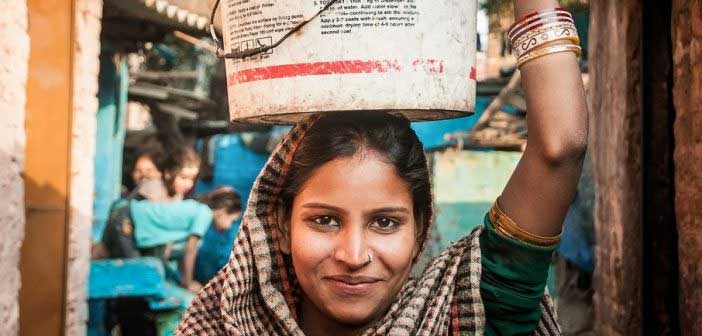
SEATTLE, Washington — India is home to more than 1.3 billion people, making India the second-most populous country next to China. Some of the major causes of urban poverty in India are the scarcity of job opportunities and a lack of practical skills. These factors have contributed to many young adults under the age of 25 becoming unemployed. Often the skills and resources that unemployed youths in India lack are computer training, personal skills and a mastery of the English language, the most commonly used language in the Indian business world. While India’s government has created the Skills India program that provides training to young adults, organizations like TechnoServe and STeP have heavily impacted the fight against youth unemployment.

Skill India

Skill India is the Indian government’s answer to the country’s high youth unemployment rate. Established in 2015 and run by the Ministry of Skill Development and Entrepreneurship, the program aims to empower 400 million youths for success in the workplace by 2022. The national scheme is comprised of different elements, including short-term training, where unemployed youths are educated in personal skills, e-skills and enterprise business. Moreover, the program recognizes prior learning so that students can take courses that fill in the missing gaps in knowledge, and offers placement guidelines to ensure candidates are assigned in a suitable field placement.

The program had a shaky start due to complex bureaucracy and has ultimately fallen behind its goal of employing 400 million people by 2022, with only 25 million young people trained so far. However, despite its challenges, the government program offers hope to unemployed youth with reliable courses and resourceful guidance.

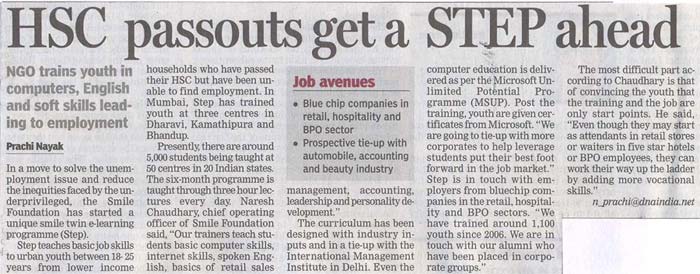
The Smile Foundation’s STeP program

The Smile Foundation is a non-governmental organization that operates welfare programs in India focused on the “education for poor children, healthcare for families, skills training and livelihood for youth and community engagement through women empowerment,” according to their platform.

In response to India’s youth unemployment rate and youth undertraining, the Smile Foundation created the Smile Twin e-Learning Program. Underprivileged city youths are enrolled in the program and trained in business-relevant skills, including English communication, computer proficiency, business management and personal skills. In the last decade, more than 25,000 young adults were taught these essential skills, and more than 15,000 trainees were placed with well-known companies by the STeP program.

TechnoServe’s Youth Employability Program: Youth Helping Youth

Technoserve is a global organization that operates in 29 countries and focuses on improving business, farming and industries. Its Youth Employment Program (YEP) focuses on eliminating obstacles for young adults from impoverished communities by providing them opportunities among the private and public sectors in India’s capital, Mumbai. Often it is not technical skills these youths are missing, but softer skills like the mastery of the English language or the lack of networking connections. TechnoServe’s YEP trainers are often youths from Mumbai training their peers, which YEP states build confidence, creates stronger relationships and a more fun environment. In its first phase, YEP was able to find 1000 youths jobs in 2015 and has since expanded to 5000 students in 2019.

COVID-19 and the Future of Youth Employment

Unemployment among India’s youth population, mostly from impoverished communities, remains a challenge today. COVID-19 has shaken the Indian job market like much of the world, sending the unemployment rate as high as 24%. Yet, while unemployed youths in India remains high, the COVID-19 pandemic has led organizations to shift their efforts toward helping those in need. For example, the Indian government has transformed a number of its training centers into quarantine units. However, youths with healthcare training are being referred to the Ministry of Health and Welfare to help with the pandemic response.

Return to a pre-pandemic life will be slow. Still, when India is ready again to invest heavily in its large reserve of youths, there is a real promise for economic gain with a possible 2% future growth in the country’s economy.

Source: https://www.borgenmagazine.com/unemployed-youth-in-india/
Categories
Print/ Online Media

Economic Times

Economic Times

(02 May)

Categories
Print/ Online Media

COVID-19 chaos: Forget computers, tablets and high-speed internet, many don’t even have access to a quiet study space

COVID-19 chaos: Forget computers, tablets and high-speed internet, many don’t even have access to a quiet study space

( August 17, 2020 )

There still seems no end in sight to the COVID crisis. There is the Russian vaccine, Sputnik V, but across the world, scientists have raised a red flag at the rush to hit the market at the expense of trials that test the safety and efficacy of the drug. As nations limp back out of lockdowns, there are new waves of patients, putting additional strain on an already exhausted system. No one seems to know when this will end. When we can all get back to ‘normal’ life.

In all this, the economies of many nations have taken a battering, with high unemployment, low demand, and no easy way out of the crisis. The people most hit are those who were just clawing their way out of poverty. Across the world, low-income workers have borne the brunt of the lockdowns, and a lack of a comprehensive social security net has created acute distress amongst a variety of service professionals, who otherwise kept households, offices, infrastructure, and factories running. And, nowhere is the impact on these households more stark than on the hope that they had for the future – the education of their children, to help them start at a higher level on the socio-economic ladder.

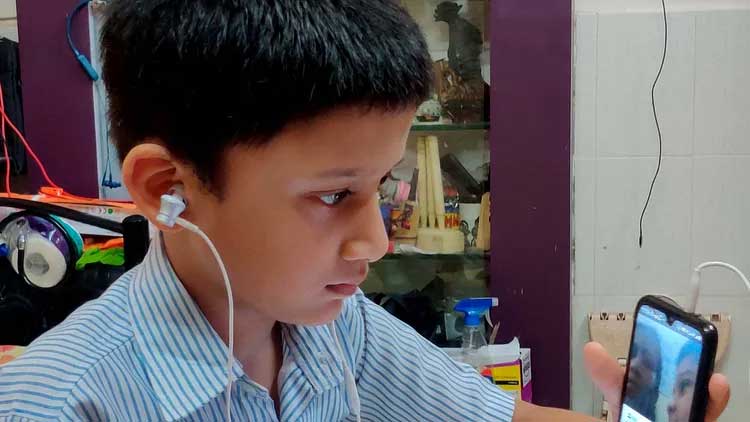
With Covid and the lockdown, educational institutes shut their doors. Students have been passed, classes have moved online, teachers have adapted, and all seems normal, with many asking why this wasn’t possible earlier. But not everyone has access to computers, tablets, and high-speed internet. Most students in India do not have access to these. Many don’t even have access to a space where they can study in relative quiet. And, for these students, school was a place where they got some education, and some food. Right now, neither seems accessible. There are around 250 million students in the school system, and 37.4 million students in the higher education system. And, many of them have been impacted with teaching moving online.

There are stories from across the country about young men and women dying by suicide because of their inability to access online education. Some have no access to the basic equipment needed to attend a class – a basic smartphone; others found it difficult to cope with the transition to online education. In all cases however, the most impacted were from the marginal socio-economic classes.

A survey by the NGO Smile Foundation reveals that over 56% of students in rural India and urban slums do not have access to even a smartphone, let alone a laptop. Over 69% of the respondents said they had no access to a TV set. By all accounts, it seems that this year is a lost one for many. For students who are also first-generation learners, the pressure to drop out and find a job to feed their family will be huge.

A core issue is going to be how to get these students back on the education grid and ensure that the move to online does not end up moving them out of education. A policy initiative to get a tablet into the hands of every student, and steady internet connection is going to be vital. The Prime Minister has promised optic fibre network to every village in the next 1,000 days but this time-frame has to be halved if we want to ensure that large numbers of students aren’t left behind. But we need more than just optic cable, we need a robust approach to online learning, that is easily accessible, usable, and scalable.

For online education to be optimal, you need a screen that is bigger than that of a smartphone, a steady internet connection, and a learning management system that allows the teacher to control the flow of the classroom. Ideally, the system should allow interactivity and the teacher in control, to ensure that the class does not end in chaos. Right now, we are cobbling together lectures using free software – Zoom, Google Meet, Microsoft teams – but to be effective, e-learning must be a lot more than an online class. It has to be an integrated ecosystem, where lectures are one part of the overall offerings to the student. If we are to move to more classes online, more thought must go into this.

Finally, this is not just an India-specific problem. The UNESCO estimates that 826 million students worldwide do not have access to a computer, and 706 million have no internet at home. In sub-Saharan Africa, for example, 89% of students have no access either to computers or to the internet. Both poverty reduction and the rise in education are part of the Sustainable Development Goals. India would do well to help build a global consensus on rebuilding educational systems for the poorest, ground up. The question is whether the Government can rise up to the challenge.

Source: https://www.freepressjournal.in/analysis/covid-19-chaos-exacerbates-the-digital-divide

Categories
Print/ Online Media

DNA

DNA

(10 March)

Categories
Print/ Online Media

Policy watch: The good, the bad and the positively ugly of the new National Education Policy

Policy watch: The good, the bad and the positively ugly of the new National Education Policy

( August 17, 2020 )

Just glance through the main recommendations of the last education policy brought out by the Kothari Commission (1964-66). Then compare it with the National Education Policy (NEP) brought out recently by the Government of India.

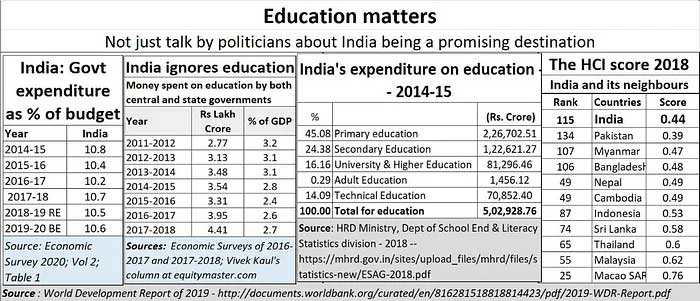
In both policies you will find the exhortation that more (6% of GDP) should be spent on education. Yet, the truth is that government after government has spent little on education. With little vision and less learning, India has tried to push through an NEP that has many similarities with the views of the Kothari Commission, but will less vision.

In 1964, when India was still struggling with basic necessities, the inability to spend was understandable. But today, when India talks about being a world power, this poor spending on education is scandalous, even criminal.

Worse, in the NEP of 2020, you will also find a bit of dogmatism, even prejudicial approaches. And you will also discover a great way to dream and fantasize. You could even call it hallucinate.

Consider for instance (see chart) that India’s ranking on the HCI or the Human Capital Index. And then look at what the NEP’s faith in government spending. Touching indeed!

The good

Yes, the NEP has some very good parts.

It includes pre-school education into the main education structure. This allows for two things.

First, it seeks to regulate an unorganized, unregulated, and even profiteering part of education, sometimes with very unhealthy linkages to primary school admission in urban centres like Mumbai and Delhi.

Second, it allows for the mid-day meal being extended to preschool children right from the age of three. In a country where 50% of children are malnourished, this will be a big benefit. As any nutritionist knows, if proper nutrition is not provided to a child at the age of 3, brain development suffers. This measure alone will benefit millions of children across the country. But whether this will mean an upgradation of skills, certification, and salaries for the 1.2 million anganwadis remains to be seen.

Another good thing is the focus of the NEP on the all-round flexibility in course structures. But then this was suggested by the Kothari Commission as well. It talked about vocational courses even then. The 10+2+3 was devised so that children could opt for vocational course after the 10th standard examination. This author was on the sub-committee advising the Maharashtra State government on vocational courses, and it was distressing how these courses were sought to be taught at the +2 stage, in classrooms, without any exposure to workshops or fieldwork. There is no guarantee that this won’t happen again. True, the government has modified the 10+2+3 into 5+3+3+4. And it has introduced a credit system, which allows for more lateral migration between subjects and courses. It remains to be seen how the 1.5 million schools in India adapt to this new structure.

The bad

Then come some not so good parts.

The NEP is full of impressive phrases like holistic and multi-disciplinary. Yet scratch at the paint, and you can see signs of fundamentalism and prejudice.

Take the emphasis on foreign languages. Why bring politics into education? The NEP excludes Mandarin. This defies logic. Did the US ban the teaching of Russian during the cold war? Even if China is an enemy, it is good for Indians to learn Mandarin. To understand an enemy better. To understand Asian history. To explore business opportunities in a territory where China accounts for the world’s largest population.

Moreover, irrespective of whether an India works for a multinational corporation from the West, or from countries like South Korea or Japan, or whether he works for an Indian enterprise, knowledge of Mandarin would allow for better business negotiations. The NEP seeks to slam shut such doors for Indians and thus create employment opportunities for people from other nations. It is also true that while India and China have strained relations currently, both countries have peacefully coexisted for over 2,500 years. Wy confuse the long-term with the short-term and possibly transient?

The irony is that even while Chinese Universities encourage the learning of Indian languages, India prefers to do without such learning. That will give Chinese an edge over Indians in the global employment market. How chauvinistic and myopic can the makers of an education policy get?

Take another example. The Kothari Commission was emphatic that English should be the link language in higher education for academic work and intellectual inter-communication. Hindi could also be a link language. But it advocated a three-language approach. A focus on regional languages, any other language approved as an official language by the Union of India and a foreign language. There was no prescription or exclusion. The first draft of the NEP actually tried to make Hindi a compulsory language and backed off only in the face of stiff opposition from all the Southern States.

True, English is spoke only by a sliver of the population. Regional languages and Hindi account for a higher circulation when it comes to newspapers and magazines. But English is increasingly relevant for corporate and financial worlds – not just in India, but globally. That is why Germany insists on courses in English, as does China. That is why even housemaids want their children to study English. They know market realities which politicians choose to ignore. And don’\t even think of changing the language in Indian courts, because there are not enough precedents or case studies for fords in other languages. It will make judicial redress even more complicated than it is now.

Typically, India has not come to terms with the basic fact that – unlike the North – the South has enjoyed greater continuity of culture and amity. The Chola dynasty lasted over 1500 years. Yes, it waxed and waned, but it lasted longer than any northern dynasty. When it was large, it covered territories up to Malaysia and Indonesia. It was South India that brough gold in from territories controlled by Rome. Today, the South has temples which exude culture and learning. Yet, the politicians of North India appear to have got the upper hand, and have tried to re-write history, and learning.

Source: https://www.freepressjournal.in/analysis/policy-watch-the-good-the-bad-and-the-positively-ugly-of-the-new-education-policy

Categories
Print/ Online Media

Why the new economic landscape needs to be innovatively disruptive

Why the new economic landscape needs to be innovatively disruptive

( August 12, 2020 )

A consistent and leading narrative today amongst policymakers, civil society organisations and corporations is on the evolving landscape of jobs in the country. There is underlying stress in the system to be innovative and agile in the current situation so that we can equip the roughly 18 to 20 million Indians who will enter the job market over the next two decades with the required skill sets to grow our country.

According to the fifth edition of International Labour Organisation (ILO) Monitor, Covid-19 and the world of work, the recovery in the global labour market for the rest of the year will be uncertain and incomplete. The report further states that if another Covid-19 wave hits in the second half of 2020, there would be a global working-hour loss of 11.9 per cent, equivalent to the loss of 340 million full-time jobs. We have already seen a disruption in the traditional ways we work. Work From Home has become a norm and our ability to have access to online technology and its knowhow a boon.

The statics above, though approximate, give a view of the fast-changing landscape for jobs today. Even before the pandemic, the World Economic Forum (WEF) had released a report that stated that by one popular estimate, 65 per cent of children entering primary school today will ultimately end up working in completely new job types that don’t yet exist. Considering that in the last decade itself we have seen innovative disruptors that have changed the way we consume content online (Netflix and Wikipedia), to how we communicate (Skype, etc.), education now needs to encompass more than traditional classroom lessons. But above all, it needs to be digitised. And we need a workforce that is able to work online.

Our Today

Diversification and digitisation have been at the forefront of schemes for our government. We are already laying the ground. The recent New Education Policy has made vocational lessons a priority. The integration of vocational education with internships for students with carpenters, laundrymen or craftsmen has been mentioned in the document. The policy also has a large focus on digitising the education space from using software to impart lessons, to monitor progress and to make lessons adaptable to students, it looks to Edtech to build the new workforce for the country. The National Educational Technology Forum (NETF) that is to be set up, will be a platform for free exchange of ideas, impart knowledge, share best practices and improve learning, assessment and administration for educational setups.

However, digitisation of school education is not the only rung in the ladder. We need to overcome the challenges that exist in our workforce. For India to play a vital role in the global supply chain, a skilled and knowledgeable workforce is required at every level. Successfully skilling India and ensuring continuity to its labour force is not the responsibility of schools alone. This has to be a multi-stakeholder effort.

Our industries also need to warrant that the skills being taught are relevant to them and can be useful in an increasingly globalised world. The Pradhan Mantri Kaushal Vikas Yojana (PMKVY) — the flagship scheme of the Ministry of Skill Development & Entrepreneurship (MSDE) — was set up in order to support individuals in finding jobs. There are many more such schemes. However, a gap still exists as the employability rate of trained individuals is comparatively low due to the non-availability of jobs in industries.

On another level, the increasing globalisation of the working world and our people also needs to be incorporated in our training. And our government recognises this. The National Skill Development Council (NSDC) is spearheading the Technical Intern Training Program (TITP) with the governments of India and Japan. The aim of the program is to empower Indian youth by providing them with skill development and career advancement opportunities. From Japan, the youth will be trained in specialised technical skills gained from interning with Japanese industries. We had similar programs with Australia, UAE and UK.

Another big challenge is the participation of women in the workforce. According to a recent report from the Centre for Monitoring Indian Economy’s (CMIE) Consumer Pyramids Household Survey (CPHS) published by an independent think tank, between March and April 2020 an estimated 17 million women were rendered jobless in both the formal and informal sectors. There are many skilling centres, government schemes for enabling and empowering women. However, we also need structures in place that can support their participation. Though a complex issue, it is nonetheless an important one. To be a global powerhouse, our workforce needs to be skilled and wholesome, irrespective of gender, identity, religion, caste or race.

Our Tomorrow

What Covid-19 has taught us is that our actions need to be adaptable and innovative. The NSDC has already taken a lead on this. Last month, they unveiled a single-window platform for a skilled workforce, including those who have migrated to the rural areas due to Covid-19. The online platform promises to bridge the demand-supply gap of region-specific skilled workers across sectors and match them with local industry needs. States like Goa have offered virtual internships to ensure continuity in learning under NSDC’s Samagra Shiksha scheme.

A large pool of corporates through their CSR partners and networks and NGOs are also taking an innovative route to understand and fill in the gaps. While some are opening skill centres right in the heart of communities ensuring that migration is not an issue, others are repurposing and repositioning their existing programmes to meet the future demands of the industry. Earlier, where a heavy emphasis was given on soft-skills, it has now shifted to digital skills. Students are picking up more courses in digital marketing, data science, and cloud computing across the country.

Pre-empting the situation of the employment market can not only reduce the dependency on existing programmes but can also tailor them to meet industry needs. Though we see there are solutions, and decisions have been made in keeping with the macro-level growth across the nation, there is no ‘one size fits all’. Further understanding of the market demand and anticipating its trajectory will lead to less stress for our workforce. Of all the uncertainty that our realities beget, we have begun. We need to now come together and build. And like the online world, our solutions need to be easily accessible, tailored to audiences and have the ability to reach all. But above all, they need to be innovatively disruptive.

Source: https://www.dailyo.in/variety/covid-19-digital-education-employment-nep-2020-women-workforce-employable-education/story/1/33489.html

Categories
Print/ Online Media

3-day online fest to screen films made by children

3-day online fest to screen films made by children

( 12 August 2020 )

Categories
Print/ Online Media

Virtual film fest curated by children, for children from Aug 14

Virtual film fest curated by children, for children from Aug 14

( August 8, 2020 )

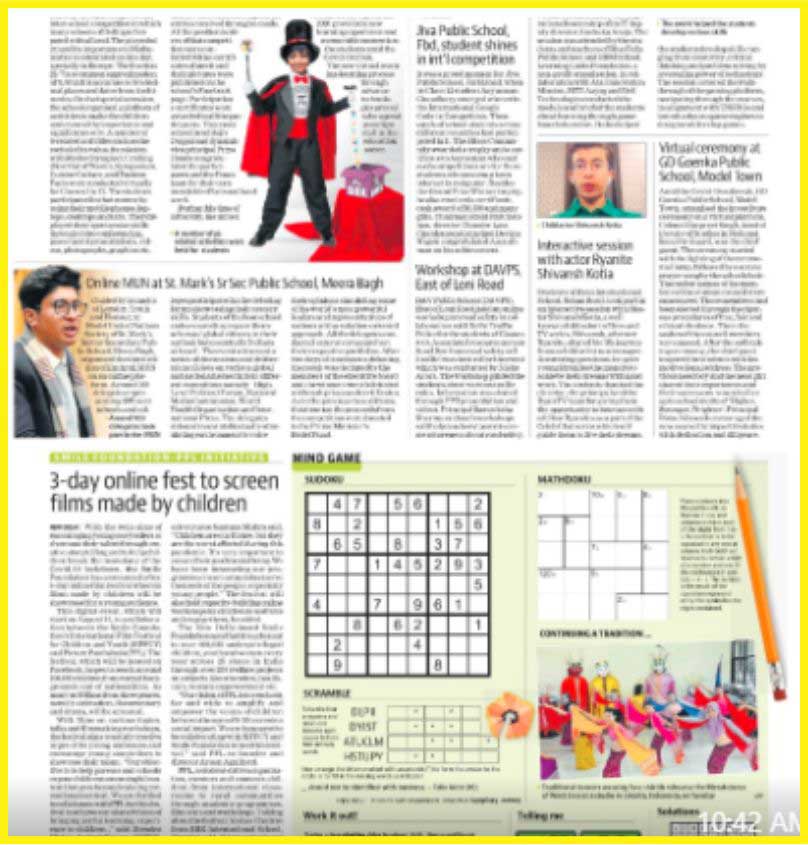
A virtual film festival curated by children and for children aims to encourage the young generation to showcase their talent through creative storytelling. The free online film festival will be held on Facebook from August 14 to 16.

The organisers wish to break the monotony of lockdown that children are going through, due to the ongoing Covid-19 pandemic.

For the fest, children were told to make films under three categories — Animation, Drama and Documentary with an objective to showcase expression free of any biases. There are 30 ilms, and some of the titles are Popcorn Girl, Hook, Beti, Rang, Patang, Control, Hope, and Family.

The mix of handpicked films by children on various topics aim to be relevant to young audiences, and the festival will also feature pep talks and filmmaking workshops. The festival is a result of collaboration between Smile Foundation’s International Film Festival for Children and Youth (SIFFCY) and Picture Paathshala.

“The fest will showcase inspiring films made only by children. Various capacity-building online workshops are also part of it,” said Santanu Mishra, co-founder and executive trustee, Smile Foundation.

Source: https://m.dailyhunt.in/news/india/english/cinemaexpress+english-epaper-cnmexpe/virtual+film+fest+curated+by+children+for+children+from+aug+14-newsid-n205027808

Categories
Print/ Online Media

Virtual film fest curated by children, for children from Aug 14

Virtual film fest curated by children, for children from Aug 14

( August 8, 2020 )

A virtual film festival curated by children and for children aims to encourage the young generation to showcase their talent through creative storytelling. The free online film festival will be held on Facebook from August 14 to 16.

The organisers wish to break the monotony of lockdown that children are going through, due to the ongoing Covid-19 pandemic.

For the fest, children were told to make films under three categories — Animation, Drama and Documentary with an objective to showcase expression free of any biases. There are 30 ilms, and some of the titles are “Popcorn Girl”, “Hook”, “Beti”, “Rang”, “Patang”, “Control”, “Hope” and “Family”.

The mix of handpicked films by children on various topics aim to be relevant to young audiences, and the festival will also feature pep talks and filmmaking workshops. The festival is a result of collaboration between Smile Foundation’s International Film Festival for Children and Youth (SIFFCY) and Picture Paathshala.

“The fest will showcase inspiring films made only by children. Various capacity-building online workshops are also part of it,” said Santanu Mishra, co-founder and executive trustee, Smile Foundation.

Source: https://www.weeklyvoice.com/virtual-film-fest-curated-by-children-for-children-from-aug-14/

Categories
Print/ Online Media

Virtual film fest curated by children, for children from Aug 14

Virtual film fest curated by children, for children from Aug 14

( August 08, 2020 )

A virtual film festival curated by children and for children aims to encourage the young generation to showcase their talent through creative storytelling. The free online film festival will be held on Facebook from August 14 to 16.

The organisers wish to break the monotony of lockdown that children are going through, due to the ongoing Covid-19 pandemic.

For the fest, children were told to make films under three categories — Animation, Drama and Documentary with an objective to showcase expression free of any biases. There are 30 ilms, and some of the titles are Popcorn Girl, Hook, Beti, Rang, Patang, Control, Hope, and Family.

The mix of handpicked films by children on various topics aim to be relevant to young audiences, and the festival will also feature pep talks and filmmaking workshops. The festival is a result of collaboration between Smile Foundation’s International Film Festival for Children and Youth (SIFFCY) and Picture Paathshala.

“The fest will showcase inspiring films made only by children. Various capacity-building online workshops are also part of it,” said Santanu Mishra, co-founder and executive trustee, Smile Foundation.

Source: https://www.cinemaexpress.com/stories/news/2020/aug/08/virtual-film-fest-curated-by-children-for-children-from-aug-14-19703.html

Privacy Policy - Smile Foundation

Information Gathering

1. Smile Foundation collects information from the users in a number of ways, for example when the user:

  • Makes a donation
  • Signs up for a campaign
  • Signs up to stay updated

2. While forwarding a donation for Smile Foundation the well-wishers have to submit some personal information as it would help us ensuring genuine contributions:

  • Your name
  • Your email and mailing address
  • Your telephone number
  • Your payment processing details
  • Any other data as required

3. Smile Foundation does not collect or record the user’s personal information unless he/she chooses to provide it.

Use of Personal Information

1. General browsing of Smile Foundation website is anonymous and it does not register the user’spersonal information except the time, date and place of visits and the name of internet service provider. This data is used only for statistics and diagnosis.

2. By signing up for various services offered by Smile Foundation, the user explicitly authorizes us to collect information based on the user’s usage. The information is used to help provide a better experience to the user and is used as per the user’s specified instructions.

3. Smile Foundation keeps the user information strictly confidential and this information is secured safely. All relevant information collected through Smile Foundation website is handled and used by internal and/or authorized officials only. It is nevershared with any external agencies or third party individuals.

4. Smile Foundation uses the information givento it in the following ways:

  • To keep an accurate record of all the donations received
  • To update users about its happenings and developments through bulletins and newsletters, with an option of not to subscribe for the same
  • To make sure the user is receiving the most appropriate and relevant information
  • To find out more about the people who are visiting the Smile Foundationwebsite, donating, or joining its campaigns

5. Usually, Smile Foundation does not store user data. In case of specific sign-ups, the data is stored as per user request. The user can opt to delete all the information he/she has provided by simply requesting such by mail. All information, without exception, will be deleted in two working days.

Privacy of e-mail lists

Individuals who join Smile Foundation’s mailing lists via its website or through its campaigning engagements are added to its email database. Smile Foundation does not sell, rent, loan, trade, or lease the addresses on our lists to anyone.

Cookie Policy

1. Cookies are pieces of electronic information which will be sent by Smile Foundation when a user visitsthe website. These will be placed in the hard disk of the user’s computer and enable Smile Foundation to recognise the user when he/she visits the website again.

2. The user can configure his/her browser so that it responds to cookies the way he/she deems fit. For example, you make want to accept all cookies, reject them all or get notified when a cookie is sent. The users may check their browser’s settings to modify cookie behaviour as per individual behaviour.

3. If a user disables the use of cookies on the web browser, or removes or rejects specific cookies from Smile Foundation’swebsite or linked sites then he/she may not be able to use the website as it is intended.

Payment Gateway

1. SmileFoundation uses well-recognised and proven technology for payments. Payment information is transferred by the use of an SSL connection which offers the highest degree of security that the donor’s browser is able to support.

2. Several layers of built-in security, including an advanced firewall system, encryption of credit card numbers, and use of passwords, protect the collected information.

External Web Services

1. Smile Foundation uses a number of external web services on its site to display content within its web pages. For example, to display video it uses YouTube. As with the social media buttons, Smile Foundation cannot prevent these sites, or external domains, from collecting information on the user’s consumption of the content embedded on its site.

2. The Smile Foundation website contains links to other websites for the benefit of its visitors. This Privacy Policy does not apply to such other websites.

3. Smile Foundation is not expressly or impliedly responsible for, or liable to any loss or damage caused to a user by the collection, use and retention of Personal Information by such website in any manner whatsoever. It is important that the users review the privacy policies of all websites they visit before disclosing any information to such websites.

Changes to Privacy Policy

1. As and when the need arises, Smile Foundation may alter its privacy policy in accordance with the latest technology and trends. It will provide you with timely notice of these changes. The users may reach out to Smile Foundation if they have any queries about any changes made to its practices.

2. If you have any questions at all about Smile Foundation’s privacy policy, please write to us at: info@smilefoundationindia.org

Refund and Cancellation Policy

Welcome to this web-site of SMILE FOUNDATION. We make public our policy on refund and cancellation of donations received for the social cause on payment gateway as under:-

  • No refund/cancellation for the donated amount by any donor will not be entertained, the online donations through the online payment gateway.
  • No cash or refund of money will be allowed.
  • If any in-kind support received by the donor from any where the material will be reached to the poorest of the poorer communities.
  • Once received the donation for a cause will not be refunded to the donor. No cancellation to be made. The donation will be used for the community development, children education or women’s empowerment.
Terms and Conditions

Use of this site is provided by SMILE FOUNDATION subject to the following Terms and Conditions:

SMILE FOUNDATION reserves the rights to change these terms and conditions at any time by posting changes online. Your continued use of this site after changes are posted constitutes your acceptance of this agreement as modified. You agree to use this site only for lawful purposes, and in a manner which does not infringe the rights, or restrict, or inhibit the use and enjoyment of the site by any third party.

This site and the information, names, images, pictures, logos regarding or relating to SMILE FOUNDATION are provided “as is” without any representation or endorsement made and without warranty of any kind whether express or implied. In no event will SMILE FOUNDATION be liable for any damages including, without limitation, indirect or consequential damages, or any damages whatsoever arising from the use or in connection with such use or loss of use of the site, whether in contract or in negligence.

SMILE FOUNDATION does not warrant that the functions contained in the material contained in this site will be uninterrupted or error free, that defects will be corrected, or that this site or the server that makes it available are free of viruses or bugs or represents the full functionality, accuracy and reliability of the materials.

Copyright restrictions:

Commercial use or publication of all or any item displayed is strictly prohibited without prior authorization from SMILE FOUNDATION. Nothing contained herein shall be construed as conferring any license by SMILE FOUNDATION to use any item displayed.

Documents may be copied for personal use only on the condition that copyright and source indications are also copied, no modifications are made and the document is copied entirely. However, some documents and photos have been published on this site with the permission of the relevant copyright owners (who are not SMILE FOUNDATION). All rights are reserved on these documents and permission to copy them must be requested from the copyright owners (the sources are indicated within these documents/photographs).

SMILE FOUNDATION takes no responsibility for the content of external Internet sites. Other websites that we link to are owned and operated by third parties and SMILE FOUNDATION has no control over them. The fact that we include links to other websites does not mean that SMILE FOUNDATION approves of or endorses any other third party website or the content of that website. We accept no liability for any statements, information, products or services that are published on or are accessible through any websites owned or operated by third parties.

Any communication or material that you transmit to, or post on, any public area of the site including any data, questions, comments, suggestions, or the like, is, and will be treated as, non-confidential and nonproprietary information. If there is any conflict between these terms and conditions and rules and/or specific terms of use appearing on this site relating to specific material then the latter shall prevail.

These terms and conditions shall be governed and construed in accordance with the laws of India.

If these terms and conditions are not accepted in full, the use of this site must be terminated immediately. SMILE FOUNDATION for Social Welfare Service is a registered at

161 B/4, 3rd Floor, Gulmohar House
Yusuf Sarai Community Centre
New Delhi-110049
Phone : +91-11-43123700

Supplementing & In Alignment with Government Initiatives

donation for child education in india

EDUCATION

Sarva Shiksha Abhiyan
National Education Policy
Beti Bachao, Beti Padhao
Digital India

donation for child education

lIVELIHOOD

Skill India
Enhancing Formal Skilling


donation for health care

HEALTH

National Rural Health Mission
Universal Health Coverage
National Digital Health Mission
Promotion of Govt. Health Schemes

livelihood skills training programs

WOMEN EMPOWERMENT

Anaemia Mukt Bharat
Poshan Abhiyan
Atmanirbhar Bharat Abhiyan
Anganwadi Strengthening