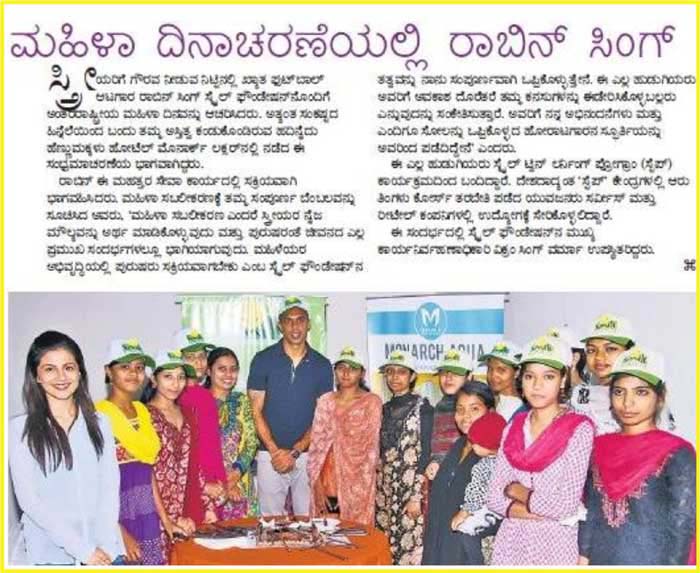
DNA (02 February 2014)
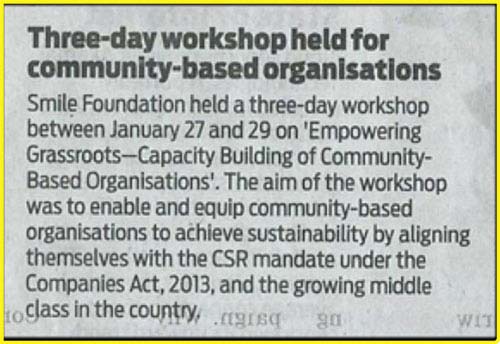


DNA (02 February 2014)
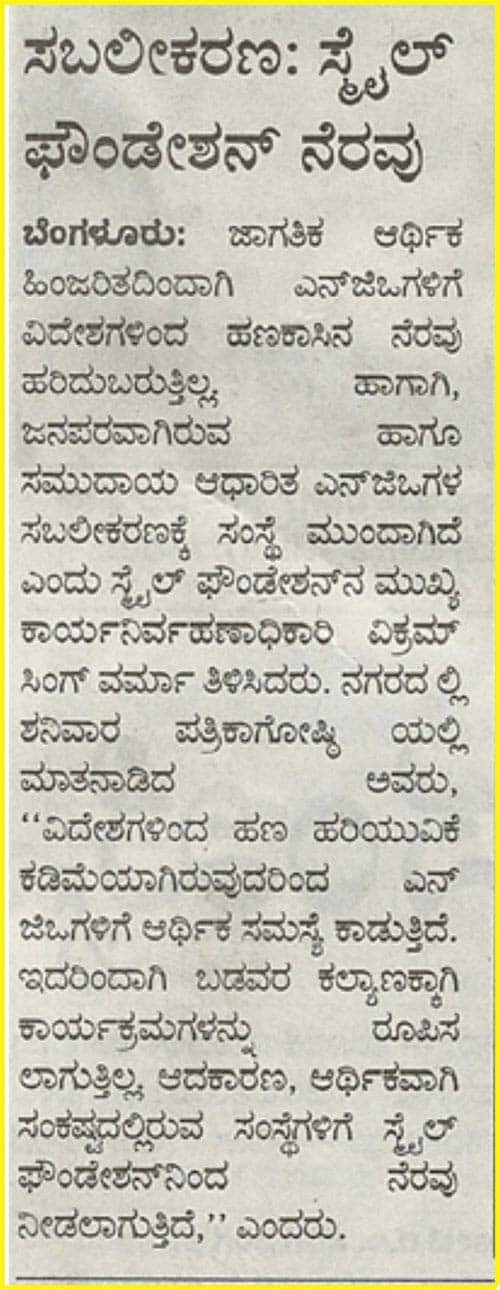
Vijayavani (03 February 2014)
( October 16, 2019 )
Smile on Wheels in Chennai’s Pattinambakkam and Velachery block is addressing to the primary healthcare needs of the poor by offering free, door step medical facilities
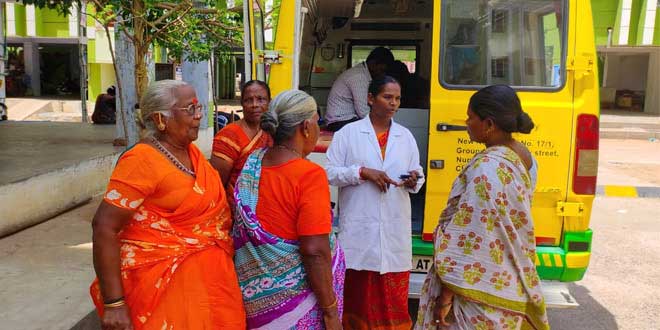
New Delhi: “I remember in 2016 I saw a van standing close to my house, on enquiring I was informed it is a mobile medical unit van called Smile on Wheels, present in our village to address our medical needs that too free of cost. The medical van came as a blessing for people like me who can’t afford private hospitals and going to government hospitals means taking a day off from work”, says 30-year-old Jaya from Mattan Kuppam village in Chennai, while speaking to NDTV. Jaya is one of the many villagers reaping benefits of NGO Smile Foundation’s Smile on Wheels initiative launched in the city in 2015.
Smile on Wheels is a custom-tailored mobile medical unit van, armed with modern equipment, a doctor and qualified nursing attendant on board, made available to cater to the primary healthcare needs of beneficiaries. The mobile van addresses three challenges – accessibility, affordability, and unavailability by providing free of cost, door step consultation, basic medical check-ups and follow up medicines.
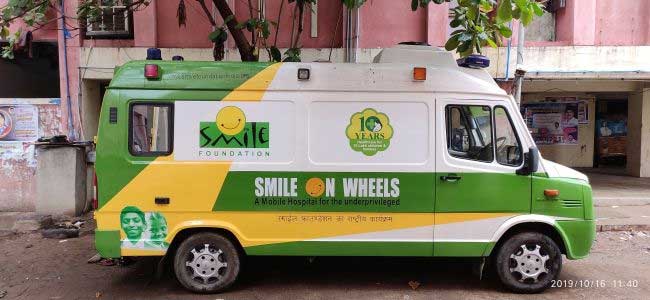
Smile on Wheels, mobile medical unit van, providing free healthcare at doorstep
Talking about getting free medical treatment, elated Jaya belonging to anglers community says,
Be it cold and cough or stomach ache, I and my family reach out to the doctor at SOW. One of the major problems I had was UTI (Urinary tract infections) which has been completely eradicated through medication and counselling.
In September 2015, Smile Foundation with the help of Ericsson Global India Pvt. Ltd. introduced Smile on Wheels in Pattinambakkam and Velachery block of Chennai, covering 20 villages and since then it has been meeting villagers for all their medical needs. Talking about the selection of project location, Santanu Mishra, co-founder and trustee, Smile Foundation, says,
Whenever we start a new project, the broader location like Chennai is selected by the donor. In the second step, urban settlement or a particular community is identified by assessing the current status of healthcare – need, accessibility and availability, population, size of the families, number of bread winners in a family, their occupation, among others.
One Medial Unit, 20 Villages: How Smile On Wheels Addresses Primary Healthcare Needs
As per the information shared by Vignesh, project coordinator, one mobile medical unit van has been allotted for the two target blocks in Chennai. The medical van covers five villages in a week (Monday to Friday) which means, it visits every target village once a month. With an aim to reduce the out of pocket health expenses by urban slum dwellers, the mobile van provides free healthcare – check-up and medicines usually for 7-10 days. In case a patient needs long term treatment, the medical practitioner (from SoW) refers him/her to a better hospital.
Explaining how do villagers get to know about the arrival of SOW, Jaya says,
The days are fixed like for our village Mattan Kuppam it is the first Monday of every month. Also, on its arrival, ANM (Auxiliary Nurse Midwifery) informs and mobilises us.
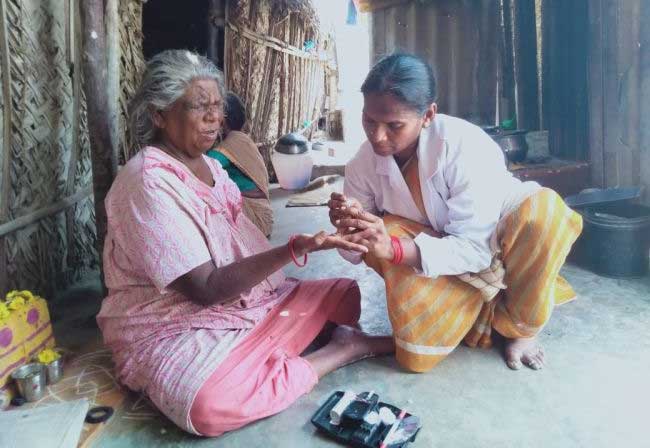
In the last four years, the SoW in Chennai has reached out to over 1.5 lakh (1,54,834) people in the villages and has impacted 66,261 beneficiaries through 1,008 OPD (outpatient department) session, as of August 2019.
Sharing her experience of availing healthcare facilities from SoW and why she chooses it over government hospitals, 50-year-old Kalai Selvi says,
I dread going to a government hospital for three reasons: it is 5 kms away, the usual waiting time is of 5 hours (approximately) and standing in long queue increases my blood pressure (BP). Through SOW, in the last six months, I have got my health check-up done on a regular basis, treatment for headache, body ache and fever and even a face mask for my smoke allergy.
Talking about providing healthcare, Satnam Singh, head, health vertical at Smile Foundation, says,
Most of the patients coming to us are women in their reproductive age group of 18-45 years. While gynecological problems are by far few, the maximum disease burden comes from lifestyle ailments like diabetes, arthritis and respiratory tract infections.
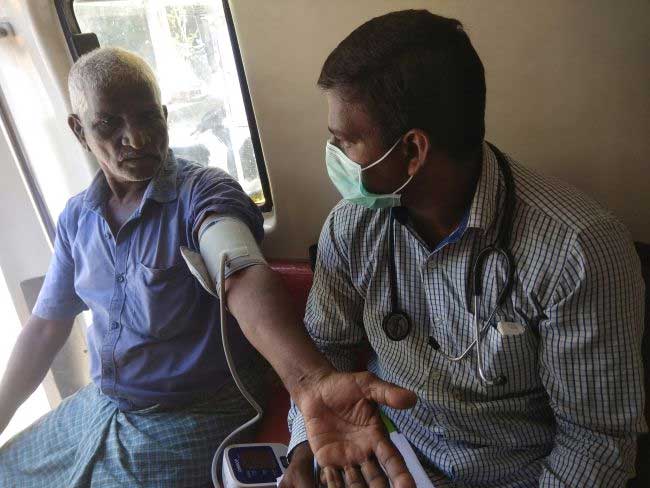
The team working in Chennai tried identifying top symptomatic ailments in MattanKuppam in Pattinambakkam Block and the findings majorly revealed the prevalence of lifestyle diseases like respiratory problems, diabetes, skin, anaemia, muscular skeletal system, alimentary tract infections and other infectious diseases. Talking about the reason behind the rise in lifestyle diseases, Santanu Mishara says,
Lifestyle diseases are not restricted to the rich populations alone. The diet pattern of a community is responsible for this sharp rise in diabetes and hypertension. A leaning towards carbohydrates, sugars and fats in the diet is responsible for this growing trend of non-communicable disease burden in this part of the country. As part of our programme, doctors and paramedics often hold awareness sessions on lifestyle diseases, sexually transmitted diseases, the importance of nutrition, right eating and sanitation among other things.
Community outreach is a crucial component of Smile Foundation’s health initiative and the team aims to continue with it to inculcate health seeking behavior in the community.
Vijay Karnataka (03 February 2014)
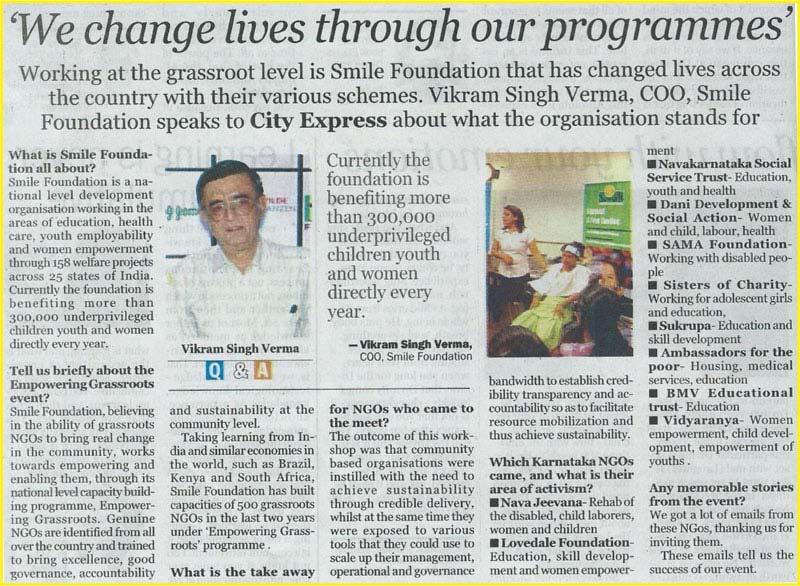
The New Indian Express (20 February 2014)
( September 12, 2019 )
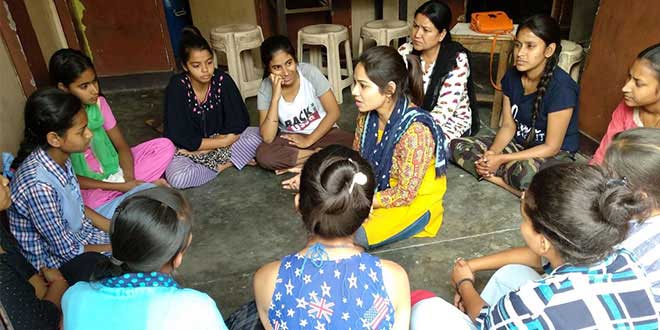
Through its project Swabhiman and support from Avery Dennison, NGO Smile Foundation has helped adolescent girls of Surat Nagar Phase 2, of Gurugram (erstwhile Gurgaon) overcome iron deficiency anaemia
New Delhi: In 2016, World Bank estimated that India loses 0.9 percent of GDP, amounting to a loss of up to $ 20.25 billion (RS.1.35 lakh crore) because of anaemia. The disease primarily caused by lack of essential nutrients like iron, vitamin B12 reduces the productivity of people it afflicts and in extreme cases can be fatal. In India, Anaemia is more prevalent among women (pregnant and non-pregnant) belonging to the age group of 15-49 years when compared to men of the same age group. 53.1 per cent of women were found to be Anaemic in National Family Health Survey (NFHS) 4 of 2015-16, as opposed to 22.7 per cent of men who were Anaemic.
A small effort to improve the health of 100 adolescent girls by controlling iron deficiency (anaemia) in the selected community of Surat Nagar Phase 2 Gurugram (erstwhile Gurgaon) was initiated by a Delhi based NGO Smile Foundation and adhesive manufacturing company in January this year.
he project was introduced under Smile Foundation’s umbrella project Swabhiman instigated in 2005 to make a difference to the status of women’s health. Giving out details of the Swabhiman project, Seema Kumar, project lead, says, “Unfortunately, far from being empowered, most women are denied even their basic rights like health, education, employment and a respectable status in the society. To address these challenges, a tailor-made strategy called the ‘4 S Model’ has been developed under Swabhiman (self-respect) project.
Identification Of The Target Group
Over the years, Gurugram, known as the financial and technological hub, has witnessed a rise in the number of migrant labour, moving into the city for work. The demographic study of the identified location revealed that it is dominated by underprivileged and gender-biased community where girls are often deprived of proper nutrition.
Through regular health check-ups, the prevalence of anaemia among the women and girls was noted. It is only then Smile Foundation and Avery Dennison decided to improve the health of 100 adolescent anaemic girls (10-19 years) through education and awareness.
Improving Iron Deficiency Anaemia In The Selected Community Of Surat Nagar Phase 2, Gurugram
In January 2019, when Haemoglobin (Hb) tests were done, on an average, Hb levels were recorded between 6-11 gm/dl (grams per decilitre) as opposed to ideal levels of 11-16 gm/dl among children. After six months, in June, another blood test was done and significant improvement in the Hb levels of the beneficiaries was recorded.
Among all the beneficiaries was a 15-year-old Sapna, working as a volunteer with Smile Foundation since 2018; who was diagnosed with anaemia during one of the health check-ups. Recalling the day and how her Hb levels improved in just six months, Sapna says,
“One day my mentor noticed my eyes and asked me to get a health check-up done because my eyes looked extra white. In January this year, I was diagnosed with anaemia and my Hb levels were recorded at 7 gm/dl (as opposed to the ideal Hb of minimum 11 gm/dl). I was given iron and folic acid supplements and asked me to inculcate nutritious food in my diet which majorly included add green leafy vegetables, milk, chick peas and jaggery. Back then I didn’t know how severe anaemia can be, let alone how to cure it.
After six months, in June, Sapna’s Hb level rose to commendable 8.5gm/dl. But the question here is, what motivated the 15-year-old girl and other adolescents to adopt healthy practices and diet and how did they do it.
To create awareness among girls and educate them about the health benefits of having adequate Hb levels, focus group discussions, group meetings, one on one counselling sessions, workshop with nutrition expert, and community medical doctor was organised.
Until and unless individuals are educated about the health implications of a particular disease, they take little to no preventive and corrective measures. Keeping that in mind, during all the discussions and workshops, various aspects of anaemia – symptoms, treatment and prevention, and nutritious diet were discussed. Talking about the same, Seema says,
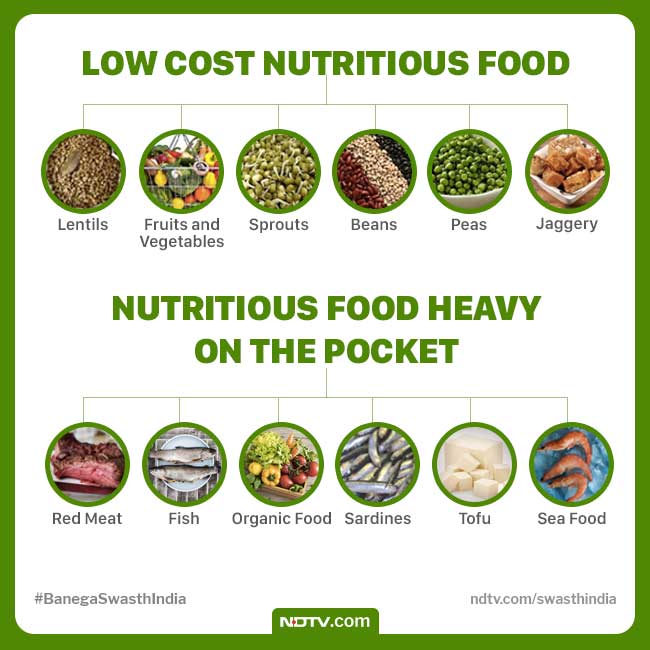
“People residing in the rural region can’t afford luxurious or expensive nutritious food like red meat, fish, tofu, sea food, so we would suggest low cost nutritious food like lentils, sprouts, seasonal fruits and vegetables, and jaggery. We discussed good practices of cooking to preserve nutrients like steaming and boiling, nutritious and balanced diet (protein rich food like lentils, beans, seasonal fruits and vegetables, whole grains, iron and vitamin C rich food and dairy products) for overall development, among other things.
With education and expert guidance, the team managed to improve the Hb levels among the adolescent girls and within six months results started showing. Earlier, in January, the minimum Hb among the target group was 6gm/dl, but in June, it shot upto 8gm/dl. Also, before Smile Foundation’s intervention, only a couple of girls had Hb levels more than 9gm/dl, but today 82 girls have Hb levels at 9 and above.
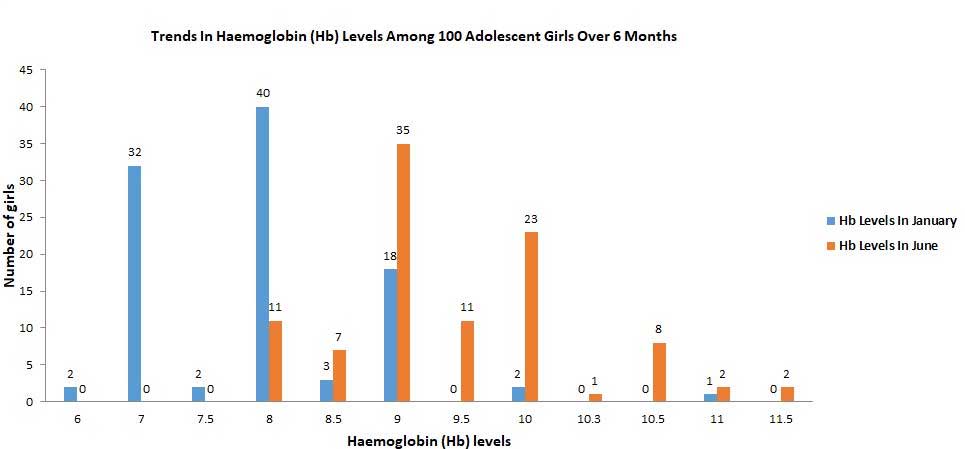
“The adolescence period is an intense anabolic period when the requirements for all nutrients increases. The poor food habits, lack of resources and lack of nutritional awareness are considered to be the main factors in determining nutritional status. During the intervention period, we tried to change the poor food habits, and raise awareness about anaemia and how even poor people can have nutrients rich diet, says Seema Kumar.
Dangers Of Anaemia
Experts believe Anaemia can be acute to fatal. People with severe levels of Anaemia may face cardiac attack and can die due to complications. Pregnant women, if Anaemic, can witness impediments during delivery. Also, if a pregnant woman is anaemic, new born will also be anaemic which can hamper the child’s growth.
“Most of the people who have Anaemia have decreased capacity to work and are often breathless, they are less productive and can’t exert themselves. Even GDP contribution will be less from such people, suggests Dr Giridhara R Babu, Professor, Head Lifecourse Epidemiology, PHFI, Bangalore.
Eenadu (23 February 2014)
( September 10, 2019 )
Through its project Swabhiman and support from Avery Dennison, NGO Smile Foundation has helped adolescent girls of Surat Nagar Phase 2, of Gurugram (erstwhile Gurgaon) overcome iron deficiency anaemia
New Delhi: In 2016, World Bank estimated that India loses 0.9 percent of GDP, amounting to a loss of up to $ 20.25 billion (RS.1.35 lakh crore) because of anaemia. The disease primarily caused by lack of essential nutrients like iron, vitamin B12 reduces the productivity of people it afflicts and in extreme cases can be fatal. In India, Anaemia is more prevalent among women (pregnant and non-pregnant) belonging to the age group of 15-49 years when compared to men of the same age group. 53.1 per cent of women were found to be Anaemic in National Family Health Survey (NFHS) 4 of 2015-16, as opposed to 22.7 per cent of men who were Anaemic.
A small effort to improve the health of 100 adolescent girls by controlling iron deficiency (anaemia) in the selected community of Surat Nagar Phase 2 Gurugram (erstwhile Gurgaon) was initiated by a Delhi based NGO Smile Foundation and adhesive manufacturing company in January this year.
The project was introduced under Smile Foundation’s umbrella project Swabhiman instigated in 2005 to make a difference to the status of women’s health. Giving out details of the Swabhiman project, Seema Kumar, project lead, says, “Unfortunately, far from being empowered, most women are denied even their basic rights like health, education, employment and a respectable status in the society. To address these challenges, a tailor-made strategy called the ‘4 S Model’ has been developed under Swabhiman (self-respect) project.
Identification Of The Target Group
Over the years, Gurugram, known as the financial and technological hub, has witnessed a rise in the number of migrant labour, moving into the city for work. The demographic study of the identified location revealed that it is dominated by underprivileged and gender-biased community where girls are often deprived of proper nutrition.
Through regular health check-ups, the prevalence of anaemia among the women and girls was noted. It is only then Smile Foundation and Avery Dennison decided to improve the health of 100 adolescent anaemic girls (10-19 years) through education and awareness.
Improving Iron Deficiency Anaemia In The Selected Community Of Surat Nagar Phase 2, Gurugram
In January 2019, when Haemoglobin (Hb) tests were done, on an average, Hb levels were recorded between 6-11 gm/dl (grams per decilitre) as opposed to ideal levels of 11-16 gm/dl among children. After six months, in June, another blood test was done and significant improvement in the Hb levels of the beneficiaries was recorded.
Among all the beneficiaries was a 15-year-old Sapna, working as a volunteer with Smile Foundation since 2018; who was diagnosed with anaemia during one of the health check-ups. Recalling the day and how her Hb levels improved in just six months, Sapna says,
“One day my mentor noticed my eyes and asked me to get a health check-up done because my eyes looked extra white. In January this year, I was diagnosed with anaemia and my Hb levels were recorded at 7 gm/dl (as opposed to the ideal Hb of minimum 11 gm/dl). I was given iron and folic acid supplements and asked me to inculcate nutritious food in my diet which majorly included add green leafy vegetables, milk, chick peas and jaggery. Back then I didn’t know how severe anaemia can be, let alone how to cure it.
After six months, in June, Sapna’s Hb level rose to commendable 8.5gm/dl. But the question here is, what motivated the 15-year-old girl and other adolescents to adopt healthy practices and diet and how did they do it.
To create awareness among girls and educate them about the health benefits of having adequate Hb levels, focus group discussions, group meetings, one on one counselling sessions, workshop with nutrition expert, and community medical doctor was organised.
Until and unless individuals are educated about the health implications of a particular disease, they take little to no preventive and corrective measures. Keeping that in mind, during all the discussions and workshops, various aspects of anaemia – symptoms, treatment and prevention, and nutritious diet were discussed. Talking about the same, Seema says,
“People residing in the rural region can’t afford luxurious or expensive nutritious food like red meat, fish, tofu, sea food, so we would suggest low cost nutritious food like lentils, sprouts, seasonal fruits and vegetables, and jaggery. We discussed good practices of cooking to preserve nutrients like steaming and boiling, nutritious and balanced diet (protein rich food like lentils, beans, seasonal fruits and vegetables, whole grains, iron and vitamin C rich food and dairy products) for overall development, among other things.
Prajavani (10 March 2014)