

Categories
Print/ Online Media

The Logical Transition from MDGs to SDGs

The Logical Transition from MDGs to SDGs

United Nations Economic & Social Council (February 2016 Issue)

Commission for Social Development
Fifty-fourth session
3-12 February 2016
Follow-up to the World Summit for Social Development and the twenty-fourth special session of the General Assembly: priority theme: rethinking and strengthening social development in the contemporary world

Statement submitted by Smile Foundation, a non-governmental organization in consultative status with the Economic and Social Council*

The Secretary-General has received the following statement, which is being circulated in accordance with paragraphs 36 and 37 of Economic and Social Council resolution 1996/31.

Statement

The Logical Transition from MDGs to SDGs

The MDGs have been substantially successful in achieving desirable results; however, the outcomes have been uneven. Whilst the MDGs are set to expire in 2015, there is a need to continue the development agenda; hence SDGs are set to take over from 2016.

India’s progress towards MDGs has so far been mixed. The country is moderately on track to achieve the targets on universal primary education, reducing child mortality, etc. However much ground still remains uncovered when it comes to issues like poverty, hunger and malnutrition, sanitation, gender discrimination or reduction of maternal mortality. There is no denying the fact that India remains critical to the global attainment of the MDGs and forthcoming SDGs.

The SDGs have been designed to focus on building a sustainable world where environmental sustainability, social inclusion, and economic development are equally valued.

Smile Foundation: Making a Difference

Smile Foundation was established in 2002 with the mission to make a difference in the lives of underprivileged people. Smile Foundation is a catalyst for bringing change to the lives of poor children, youth and women, through a life-cycle approach with focus on six MDGs (poverty and hunger, education, empowering women, child and maternal mortality, health, etc.). Smile believes that ‘Life Cycle Approach’ holds the key for addressing the issues like healthcare, poverty, population control, unemployment, eco system, justice or human rights. Smile Foundation empowers the underprivileged by helping them realize their potential, emerge as productive assets, and sets the foundation for nation building.

Currently, Smile Foundation directly benefits over 350,000 children and their families every year, through 175 welfare projects on education, healthcare, livelihood and women empowerment, in more than 750 remote villages and slums across 25 states of India.

Driven by a Global Development Agenda — Doing it in the Sustainable Way

At the very core of Smile’s intervention policy, lays the emphasis on sustainable development of the underprivileged with special focus on women and children. Smile’s philosophy has been grounded in the requirements of people and resonates the essence of the SDGs, which will shortly steer the international development agenda.

People — at the Core of Interventions

People form the core for every intervention. Smile came into existence to improve the lives of the underprivileged, economically weaker or disadvantaged sections of the society. Through our interventions in the field of education, we have been providing education to underprivileged children including school dropouts, street children, orphans, single parent children as well as children affected by HIV/Aids, etc. Underprivileged youth have been grappling with the lack of relevant skills and struggle to get decent jobs. Smile Foundation has been running employment skills training centres where youth from marginalized communities are trained in English, computing and soft skills to create a life of dignity, independence
E/CN.5/2016/NGO/54
15-20275 3/4
(including financial), freedom, self-reliance and help them to break out of the vicious cycle of poverty, misery and oppression.

Healthy people contribute towards a prosperous family as well as nation. Smile Foundation runs an innovative Mobile Health Program called Smile on Wheels with special focus on women, children and elderly. The program tries to address the issues of accessibility, availability and affordability by providing quality basic healthcare to underprivileged people.

The plight of underprivileged women is grave, and therefore women remain at the very core of all interventions of smile Foundation, be it education, livelihood, or healthcare. Besides this, Smile Foundation runs a special women’s empowerment program called ‘Swabhiman’ that aims to improve self-esteem and inner strength for marginalized and socially excluded women and adolescent girls through innovative community practices.

Dignity — Reinforcing the Right of Dignified Life

Living a dignified life is an inherent right of every human. Smile has a two pronged strategy — working with underprivileged and engaging with privileged to promote Civic Driven Change — for reinforcing this tenet. The objective is to bridge the gap between underprivileged and the privileged and thereby work towards eradicating inequality.

On the one hand, Smile empowers marginalized people so that they are able to lead a life of dignity. So far, over 1.5 million people have been helped to move out of the vicious cycle of poverty/misery through Smile’s Life Cycle approach (interventions around education, healthcare, women’s empowerment and livelihood).

Smile also works with the privileged [corporations and individuals] to communicate that dignity is an intrinsic right for all, including the underprivileged without discrimination. Smile runs ‘Value Education’ sessions for privileged children, emphasizing their responsibility to accord dignity to all so that we live in a cordial society free from discord and disdain. Over half a million children have been reached every year under the ‘Child for Child’ program to lead change-makers for ensuring dignified life.

Partnership — Coming together is the beginning; staying together is progress; working together is success

Smile believes in socially driven change where corporations, the public sector, international institutions and individuals contribute towards the wellbeing of underprivileged people. Thus, Smile acts as a catalyst to provide a platform for the ‘powerful’ to contribute towards the development of people at the bottom of the development pyramid.

Through Smile’s Social Venture Philanthropy Model, partnerships are forged with community based organisations (CBOs) to empower them to reach underprivileged communities. The programme also focuses on bringing excellence, good governance and sustainability in local CBOs.

Planet — Survival of people and planet is intertwined

The fragility of the ecosystem has been staring us in the face and nature’s fury does not distinguish. Therefore the need of the hour is to act to protect the ecosystem for the survival of mankind. Smile realizes the importance of the survival
of the people and planet, which are intertwined, and has been working to enlighten communities about the issue.

Smile runs awareness building campaigns including painting competitions, poster making, group discussion, slogan writing, etc. with underprivileged and privileged children. Children learn to respect natural resources and use them judiciously. Various days are commemorated to instil respect for the planet such as Earth Day, World Environment Day and World Water Day. Children are at the forefront of Smile’s strategy to be ‘Environment Ambassadors’ and bring desirable change within their families as well as the larger community.

Justice — Making Safe and Peaceful Society a Reality

All the interventions of Smile Foundation aim at creating a safe and peaceful society and helping the underprivileged to move out of the vicious cycle of poverty and thereby end their miseries/misfortunes. So far over 1.5 million people have been helped to move out of the shackles of poverty. This has set the foundation for creating and contributing to promoting a safe and peaceful society.

Realizing Prosperity — Creating a Prosperous Humankind

Over last 13 years, Smile has contributed in its own way to the lives of over 1.5 million underprivileged. Smile has supported over 1 million women and children with basic healthcare facilities through a mobile hospital program. We have educated over two hundred thousand children and provided employability skills training to over 40 thousand youth and almost 50 thousand women and adolescent girls have been empowered to act as change agents. Further half a million privileged children have been sensitized for social development every year.

A Way Forward: Promoting Sustainable Development

• Through the structured, scientific and holistic ‘Life Cycle Approach’, Smile Foundation has helped underprivileged people fight the menace of poverty.
• Smile’s interventions focus on economically weaker as well as social disadvantaged people with special focus on women and children. It aims is to empower them with the power of education, health and employability skills.
• The program interventions have been designed to eradicate inequality and create a society where people are treated with dignity.
• Focus on environment conservation is critical for the survival of humankind and respect for planet needs to be instilled early for rational use of natural resources.
• Partnering with key players is critical for sustainable development and Smile has been successful in leveraging over 100 partner organizations in joining the mission of bringing about change.
• Smile’s interventions have been successful in brining success and prosperity to lives of the underprivileged.

In conclusion, Smile’s innovative interventions have brought hope and change in the lives of millions of underprivileged people. However, there is a long way to improve the social conditions of all underprivileged people, and Smile’s success story has the potential to expand to a bigger scale.

Categories
Print/ Online Media

I am Kalam Selected for London Film Fest

I am Kalam Selected for London Film Fest

The Economic Times (September 16, 2010)

Categories
Print/ Online Media

Story of the unsung heroes-spirit of volunteerism

Story of the unsung heroes-spirit of volunteerism

Extraveller (January 13, 2016)

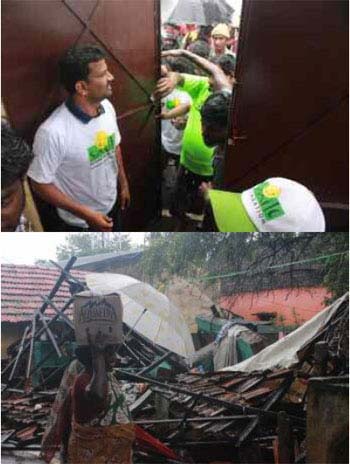
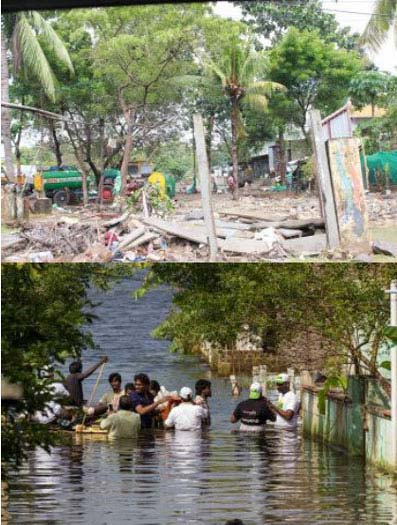
We all know about the recent torrential rains in the southern state of India, Tamil Nadu. The fury of nature was so vast that continuous days of rain left the major areas reeling under 3-4 feet of water. It was water everywhere and the capital city of Chennai was also very badly affected. Though this recent flood in Chennai devastated the city but the spirit of Chennai refused to succumb during the devastation and at this time they had the support of Smile Foundation.

Smile Foundation is a national level development organisation came forward at such a time of calamity. Smile Foundation benefits over 300,000 underprivileged children, their families and the community directly through 158 welfare projects on subjects such as education, healthcare, livelihood, and women empowerment across 25 states of India. Adopting a life cycle approach of development, Smile Foundation focuses its interventions on children, their families and the community.

Smile Foundation, with its welfare interventions focused on children and their families, responds to the call of humanity in times of calamities under its Disaster Response programme. From the Kashmir earthquake in 2005 to the Uttarakhand floods, J&K floods and the recent Nepal earthquake, Smile Foundation has acted promptly to reach out and respond to the immediate needs of the disaster affected people, while also maintaining a sustainable approach to help them rebuild their lives by facilitating their education, healthcare and livelihood.

During the recent unleash of torrential rains everything in Chennai was reeling under water, the only thing refused to die down was the Spirit of Chennai. Chennai stood tall and faced the calamities fearlessly, hand in hand.

Smile Foundation started relief work as the rain got heavier and flood hit Chennai. From day one Smile Foundation reached out the flood stricken areas with dry foods, bottled water, survival kits and medical facilities. The Disaster Response team of Smile Foundation actively aided the rescue and immediate relief efforts in the city and reached approx 6 lakh people with water and food. The team had procured and distributed relief materials through 12 distribution hubs with each distribution point catering to 6-8 sub locations.

As per the need assessment done by the team on ground, water contamination was identified as a major issue, and a possible outbreak of water-borne diseases was detected. Hence the first priority was to mobilize safe drinking water in large quantity, along with dry and packaged food. In the phase I operation, Smile Foundation’s Disaster Response team had been able to distribute over 37780 kgs of dry food and 7, 56,000 litres of water supplied by PepsiCo.

The areas being covered during flood were mainly Pallavaram, Annaputtur, Naagai keni, Karima Nagar and Mudichur in Kanchipuram district; Ponneri, Ennor, Seethanambakkam and Minjur in Thiruninravuur district and the entire Chennai city region. As the water receded, the mobile hospital of Smile Foundation, Smile on Wheels (SOW) started delivering healthcare services. The Smile on Wheels van was equipped with doctors, lab technicians, Pathology services etc and also distributed medicines as well. In the next phase multi specialty health services are going to start to cope up with aftermath of the disaster.

But all said and done it was a mammoth task to accomplish alone. The team from Smile got people who offered their selfless service and helped us in reaching out. There were almost 500 such volunteers who fearlessly set out, risking their own lives and safety, to help their fellow citizens. Several of them are first-time volunteers and also those who have been rescued from the floods themselves. The volunteers worked day in & day out in extreme weather conditions, half submerged in water , exposed standing in stagnating water with sometimes cuts and bruises. There was no electric supply with feeble network coverage that hampered the co-ordination between rescuing teams and made it worse. Rain, flood, stagnant water & the high risks of adopting water borne diseases thereafter, nothing could stop them to continue the selfless service. I salute Smile Foundation and the volunteers, i.e. those unsung heroes who braved everything and stood up in the time of devastation.

All said and one, now the bad times are over but still further need assessment is now being done to devise short term and long term plans for rehabilitation and revival of the affected children and families in identified flood affected areas.

For more information about Smile Foundattion – please visit – www.smilefoundationindia.org

Categories
Print/ Online Media

I am Kalam Selected for London Film Festival

I am Kalam Selected for London Film Festival

The Comlete Cinema (September 16, 2010)

Categories
Print/ Online Media

SPREADING SMILES

SPREADING SMILES

Brew Magazine (January 2016 Issue)

Peter Senge is an American systems scientist who founded the Society for Organization Learning. He wanted to help large corporations find sustainable solutions to their problems. He also believed that social equality and environmental issues were business problems, and it was up to corporate leaders to solve them. His philosophy inspired a group of professionals in India, and the Smile Foundation was born. They started in 2002 with the aim of empowering children, youth and women via education, health care and relevant livelihood programs. 15 years in, Smile Foundation is doing a wonderful job. Ajay Srikanth speaks to its co-founder and Executive Trustee, Mr. SantanuMisra, about the organization, successes and plans for the

Ask him about the beginnings, and he says “Smile Foundation was established in 2002 by a group of friends- well established corporate professionals, who came together with the sole aim of giving back to the society. Smile Foundation has always thought of its role as a catalyst in bringing sustainable change in the lives of underprivileged children, and their families, by working effectively on the ground and encouraging civil society to be a part of the development process.”

Smile decided to begin with child education, but soon realised that it could not be done without ensuring the total welfare of the child’s family. It is a familiar story; the child wants to go to school to learn, but has to earn a living so that his/her family can live. Once they realized this, they adopted a life-cycle approach of development, keeping children at the centre, but looking at familial well-being as well.

Regarding Smile’s working, Santanu says “Smile Foundation is now working largely in, but not limited to, four subject areas- education, livelihood, health and women empowerment. We have 158 welfare projects on the ground, spread across 732 villages and slums in 25 states of India, directly benefitting more than 3,00,000 children and families.”

The foundation has core programs in all of these areas. Their flagship program, Mission Education, aims to provide basic education and healthcare to underprivileged children. More than 2,00,000 children have been a part of Mission Education since its inception in 2002. The program currently reaches out to 19,000 children via 90 projects in 21 different states.

Smile On Wheels is their national level mobile hospital program. It is essentially a travelling hospital. Mostly active in rural areas, the aim is to discharge direct healthcare to regions that need it the most. Smile On Wheels also made an appearance during the Chennai floods, dispending medicines and other medical supplies.

Step (Smile Twin e-Learning Program) is a livelihood programme that trains urban underprivileged youth with job and soft skills. Participants learn English, basic technical literacy, personality development and similar things. 11,5000 people have been placed in 140 odd companies via STeP.

They also run an empowerment programme for the girl child and women, Swabhiman. Swabhiman runs on the ‘4 S Model’, which means Seeking Healthcare as a Behaviour, Support through Education, Support from Men through Male Involvement, and Sustaining Change in the Community.

Regarding the issues Smile faces, Santanusays “For any development organization, the major challenge is to sustain its projects on the ground to ensure maximum SROI (Social Return on Investment), while also scaling up to reach out to a large number of people.In a country of size and diversity of India, this challenge becomes intensified.”

Smile adopts a service delivery approach of development, rather than the advocacy based one, which means their projects are operational 365 days in a year, with the situation on ground being far from ideal. He says the journey, while challenging, is definitely rewarding.

He also says that the CSR mandate has been a boon to NPOs and NGOs across the country, as this guarantees some amount of funding. However, he claims that individuals are prone to religious giving than social giving. He believes that a change here will be a huge boost to social causes across the country.

Smile has a rather unique feature called “Social Venture Philanthropy”. They train grassroot NGOs across the country to function better, and have trained over 500 organizations via their Empowering Grassroots Program. Which makes sense when you think about it. Change always begins at the roots, and these organizations have played a large role in bettering the lives of those at the bottom of the economic pyramid. Training and giving these NGOs the tools to perform better is undoubtedly the best way to level that pyramid.

Smile Foundation has won quite a few awards for the conception and handling of their programs. As of date of writing, all four programmes focused on their core areas have been awarded and recognized by organizations such as ASSOCHAM (Education Excellence Award 2013 and Best NGO of Skill Development and Placement Training 2014), Institute of the Chartered Accountants of India (Best CSR Project in Women Empowerment 2015) and GE Healthcare (Modern Medicare Excellence Award).

Smile Foundation has been evaluated by some of the most reputed Indian and International evaluators including INTRAC London, KPMG, India Development Foundation and PRIA, and has met their expectations and norms. Santanu stressed that credibility and accountability have always been the benchmark for Smile Foundation, and are achieved through the promotion of principles of good governance in its processes and practices. “We have a four-tier audit and evaluation mechanism which reviews programmes and projects, internal operations, compliance of statutory norms and conducts an external evaluation to ensure the impact of various welfare projects, as well as complete transparency and accountability in utilisation of funds.”

Regarding the future, this is what he has to say. “In the coming years, Smile Foundation will be making further efforts to benefit a larger population with its projects, at the same time enhancing the existing ones and turning them into model grassroots projects, that are scalable and replicable. We will also be taking up more initiatives to reach out and sensitize the civil society, particularly children and youth, to be change makers.”

“Smile Foundation is now working largely in, but not limited to, four subject areas- education, livelihood, health and women empowerment. We have 158 welfare projects on the ground, spread acros “For any development organization, the major challenge is to sustain its projects on the ground to ensure maximum SROI (Social Return on Investment), while also scaling up to “In the coming years, Smile Foundation will be making further efforts to benefit a larger population with its projects, at the same time enhancing the existing ones and turning them into model grassroots projects, that are scalable and replicable. We will also be taking up more initiatives to reach out and sensitize the civil society, particularly children and youth, to be change makers.”

Categories
Print/ Online Media

‘I am Kalam’ wins award at Lucas

‘I am Kalam’ wins award at Lucas

Box Office (September 18, 2010)

Categories
Print/ Online Media

NGO Leadership Development in India: From Pioneer-Founders to Homegrown Leaders

NGO Leadership Development in India: From Pioneer-Founders to Homegrown Leaders

As the trailblazers who built India’s nonprofit sector begin to step aside, a new study shows that NGOs face a significant gap in next-generation leadership. There are barriers to bridging this gap and building blocks to surmount them, but progress depends on founders and funders viewing leadership development as mission critical.

Disheartened over the teacher-student disconnect that impeded learning in India’s mainstream public education system, a veteran educator named Elizabeth Mehta believed she had a solution: a model where teachers, teacher educators, and students learn from each other. In 2003, having developed seven women from Mumbai’s marginalized community into skilled, early childhood teachers, she and her husband Sunil Mehta launched an NGO called Muktangan, derived from Hindi, meaning “free space.”

Over the ensuing years, they launched seven municipal schools plus a teacher education center, and partnered with UNICEF to train government “master educators” who, in turn, trained more than 10,000 teachers in the state of Maharashtra.

As Muktangan scaled and the work of managing the NGO grew, the Mehtas decided to gradually transition out of day-to-day leadership. They recruited three separate executives in succession, in an attempt to find a new leader for Muktangan. For different reasons, all three amicably departed.

The Mehtas have now turned to building a senior team from within the organization and coaching its members to lead, as it is this team that shares Muktangan’s values and vision. They have identified a promising individual from the team, who will ultimately take the NGO’s helm. “If Muktangan is going to sustain and expand, it can no longer be led just by us,” says Elizabeth Mehta. They just had to find the right leader.

The Mehtas’ story is not uncommon. Their conundrum—how to let go of an organization they brought to life and successfully transition to a new leader—extends across much of India’s social sector. Our research reveals that widespread doubts persist about whether NGOs and funders have done enough to develop the leaders who will replace the sector’s first-generation pioneers.

Gaps in Leadership Development

In part, the sector’s misgivings stem from a growing recognition that many Indian NGOs overly depend on a single leader, often the founder. A recent Bridgespan Group survey of approximately 250 NGOs (to the best of our knowledge, the first data-driven study of NGO leadership development in India) revealed that founder dominance runs deep. Founders are engaged with about 88 percent of NGOs launched more than 20 years ago and have remained at the helm (as “founder-leaders”) of more than a quarter of these organizations. And founders are involved in 99 percent of NGOs launched between 11 to 20 years ago. Yet these founder-leaders do not often think about the next generation; 50 percent of the surveyed NGOs do not have any leadership succession plans in place, and more than 70 percent of NGOs lack a succession plan even for their senior-most leader.

Diving in further, we probed a set of exemplar NGOs profiled in the Stanford Social Innovation Review article, “Why Indian Nonprofits Are Experts at Scaling Up,” which spotlights 20 organizations that have extended their reach to millions of constituents. With an average tenure of 22 years, founders currently lead—in title or in practice—65 percent of them.

Like the Mehtas, some of the pioneering social entrepreneurs who launched NGOs a decade or two ago are beginning to relinquish their spot at the peak of the organization’s pyramid. Those who are contemplating a transition or have recently done so include: Madhu Dasa, who gave up the CEO post at Akshaya Patra, which he founded in June 2000; Dipak Basu, who conceived Anudip in 2005 and recently brought on an executive director to begin managing the NGO day to day; Matthew Spacie, who founded Magic Bus in 1999, attempted to bring in a successor for several years and recruited Jayant Rastogi as the CEO in 2016; and Vishal Talreja, who launched Dream a Dream with 15 others in 1999 and remains as chief executive, but restructured the organization in part so he could relinquish some of the decision-making.

Given the long tenures of some NGO founders, the pace of turnover will likely accelerate in the coming years. The next generation of leaders will soon have to fill the vacuum. But according to our survey and more than 50 follow-up interviews,1 they are ill-equipped to do so. More than half of the surveyed NGOs do not feel confident that anyone internally could effectively lead the organization in the absence of their senior-most leader.

“Most leaders do not strive to develop leaders,” says Megha Jain, an associate director at the strategic philanthropy foundation Dasra. “Many acknowledge [the need] when pointed out, but do not think about it as a primary part of their job or prioritize it against other urgent, day-to-day deliverables.”

Source: https://ssir.org/articles/entry/ngo_leadership_development_in_india_from_pioneer_founders_to_homegrown_lead

Categories
Print/ Online Media

CHANGE THE GAME ACADEMY COMES TO BANGALORE

CHANGE THE GAME ACADEMY COMES TO BANGALORE

BANGALORE ( September 4, 2017 )

Bringing Digital India to grassroots NGOs and CBOs

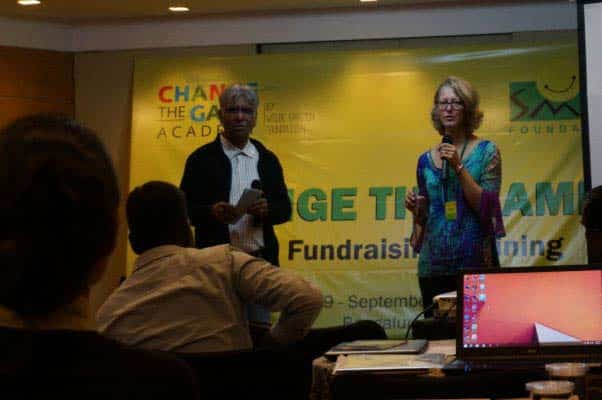
Smile Foundation in collaboration with The Wilde Ganzen Foundation, the Netherlands, have organized a national five day capacity building workshop in Bangalore for grassroots NGOs and CBOs under Change the Game Academy from 29th Aug to 2nd Sep 2017. Grassroots NGOs and CBOs, despite their last mile connect, are often faced with challenges in funding and resource mobilization due to lack of proper management system, communication and mobilization skills. Driven with a vision to mitigate these challenges, Change the Game Academy is launched to help the local community welfare projects to reap benefits of “Digital India” at the very grassroots.

Change The Game Academy www.changethegameacademy.org, a unique and one of its kind, e-learning platform that offers training to the Grassroot NGOs on sustainable solutions such as – local fundraising, building organizational capacity and mobilizing support to name a few. Fourteen grass root NGOs from across India have participated in the workshop. The curriculum of this 5 day workshop is scientifically designed which matches international standards and yet is applicable to India’s socio-political scenario. The workshop is conducted by experienced trainers who have been specially trained for this occasion. The academy follows a mentoring approach as this physical workshop will be complimented by the online platform as well.

Through this effective five-days National Consultation, the NGOs received a first-hand training by the industry experts in areas such as – CSR Act – how to raise and manage CSR funds, Proposal writing, Project Management, Good governance etc. Speaking on the role and governance of NGO’s in India in getting benefited from the CSR ACT, Mr. Santanu Mishra, Co- Founder & Executive Trustee, Smile Foundation emphasised that “ It demands a high degree professionalism of NGOs if not corporatisation to access the available CSR Fund. Ideally, grassroots NGOs and CBOs should become an interface between the community and the government, helping implement the schemes and policies to the last mile and reflecting the gaps by becoming the voice of the community. But to make this possible, there is an imminent need to incubate and handhold grassroots NGOs. We are hopeful this training will be instrumental in equipping these grassroots NGOs at a larger scale.”

Change the Game Academy uses the blended learning approach, combining face-to-face courses, full e-learning courses, separate e-learning modules and toolkits and collective and individual coaching. The e-learning platform has easy modules, designed by international experts, adopted in the Indian context by the Smile Foundation. Representatives from the CBOs and grassroots NGOs can learn and complete the courses at their own pace and convenience.

Source: http://www.gobarefootblog.com/uncategorized/change-the-game-academy-comes-to-bangalore/

Categories
Print/ Online Media

I am Kalam at BFI London Film Festival

I am Kalam at BFI London Film Festival

The Comlete Cinema (September 18, 2010)

Categories
Print/ Online Media

CHANGE THE GAME ACADEMY COMES TO BANGALORE

CHANGE THE GAME ACADEMY COMES TO BANGALORE

BANGALORE ( September 2, 2017 )

Bringing Digital India to grassroots NGOs and CBOs

Bangalore.Smile Foundation in collaboration with The Wilde Ganzen Foundation, the Netherlands, have organized a national five day capacity building workshop in Bangalore for grassroots NGOs and CBOs under Change the Game Academy from 29th Aug to 2nd Sep 2017. Grassroots NGOs and CBOs, despite their last mile connect, are often faced with challenges in funding and resource mobilization due to lack of proper management system, communication and mobilization skills. Driven with a vision to mitigate these challenges, Change the Game Academy is launched to help the local community welfare projects to reap benefits of “Digital India” at the very grassroots.

Change The Game Academy www.changethegameacademy.org, a unique and one of its kind, e-learning platform that offers training to the Grassroot NGOs on sustainable solutions such as – local fundraising, building organizational capacity and mobilizing support to name a few. Fourteen grass root NGOs from across India have participated in the workshop. The curriculum of this 5 day workshop is scientifically designed which matches international standards and yet is applicable to India’s socio-political scenario. The workshop is conducted by experienced trainers who have been specially trained for this occasion. The academy follows a mentoring approach as this physical workshop will be complimented by the online platform as well. Through this effective five-days National Consultation, the NGOs received a first-hand training by the industry experts in areas such as – CSR Act – how to raise and manage CSR funds, Proposal writing, Project Management, Good governance etc. Speaking on the role and governance of NGO’s in India in getting benefited from the CSR ACT, Mr. Santanu Mishra, Co- Founder & Executive Trustee, Smile Foundation emphasised that “ It demands a high degree professionalism of NGOs if not corporatisation to access the available CSR Fund. Ideally, grassroots NGOs and CBOs should become an interface between the community and the government, helping implement the schemes and policies to the last mile and reflecting the gaps by becoming the voice of the community. But to make this possible, there is an imminent need to incubate and handhold grassroots NGOs. We are hopeful this training will be instrumental in equipping these grassroots NGOs at a larger scale.”

Change the Game Academy uses the blended learning approach, combining face-to-face courses, full e-learning courses, separate e-learning modules and toolkits and collective and individual coaching. The e-learning platform has easy modules, designed by international experts, adopted in the Indian context by the Smile Foundation. Representatives from the CBOs and grassroots NGOs can learn and complete the courses at their own pace and convenience.

Source: http://www.pressnote.in/udaipur-plus_355647.html

Privacy Policy - Smile Foundation

Information Gathering

1. Smile Foundation collects information from the users in a number of ways, for example when the user:

  • Makes a donation
  • Signs up for a campaign
  • Signs up to stay updated

2. While forwarding a donation for Smile Foundation the well-wishers have to submit some personal information as it would help us ensuring genuine contributions:

  • Your name
  • Your email and mailing address
  • Your telephone number
  • Your payment processing details
  • Any other data as required

3. Smile Foundation does not collect or record the user’s personal information unless he/she chooses to provide it.

Use of Personal Information

1. General browsing of Smile Foundation website is anonymous and it does not register the user’spersonal information except the time, date and place of visits and the name of internet service provider. This data is used only for statistics and diagnosis.

2. By signing up for various services offered by Smile Foundation, the user explicitly authorizes us to collect information based on the user’s usage. The information is used to help provide a better experience to the user and is used as per the user’s specified instructions.

3. Smile Foundation keeps the user information strictly confidential and this information is secured safely. All relevant information collected through Smile Foundation website is handled and used by internal and/or authorized officials only. It is nevershared with any external agencies or third party individuals.

4. Smile Foundation uses the information givento it in the following ways:

  • To keep an accurate record of all the donations received
  • To update users about its happenings and developments through bulletins and newsletters, with an option of not to subscribe for the same
  • To make sure the user is receiving the most appropriate and relevant information
  • To find out more about the people who are visiting the Smile Foundationwebsite, donating, or joining its campaigns

5. Usually, Smile Foundation does not store user data. In case of specific sign-ups, the data is stored as per user request. The user can opt to delete all the information he/she has provided by simply requesting such by mail. All information, without exception, will be deleted in two working days.

Privacy of e-mail lists

Individuals who join Smile Foundation’s mailing lists via its website or through its campaigning engagements are added to its email database. Smile Foundation does not sell, rent, loan, trade, or lease the addresses on our lists to anyone.

Cookie Policy

1. Cookies are pieces of electronic information which will be sent by Smile Foundation when a user visitsthe website. These will be placed in the hard disk of the user’s computer and enable Smile Foundation to recognise the user when he/she visits the website again.

2. The user can configure his/her browser so that it responds to cookies the way he/she deems fit. For example, you make want to accept all cookies, reject them all or get notified when a cookie is sent. The users may check their browser’s settings to modify cookie behaviour as per individual behaviour.

3. If a user disables the use of cookies on the web browser, or removes or rejects specific cookies from Smile Foundation’swebsite or linked sites then he/she may not be able to use the website as it is intended.

Payment Gateway

1. SmileFoundation uses well-recognised and proven technology for payments. Payment information is transferred by the use of an SSL connection which offers the highest degree of security that the donor’s browser is able to support.

2. Several layers of built-in security, including an advanced firewall system, encryption of credit card numbers, and use of passwords, protect the collected information.

External Web Services

1. Smile Foundation uses a number of external web services on its site to display content within its web pages. For example, to display video it uses YouTube. As with the social media buttons, Smile Foundation cannot prevent these sites, or external domains, from collecting information on the user’s consumption of the content embedded on its site.

2. The Smile Foundation website contains links to other websites for the benefit of its visitors. This Privacy Policy does not apply to such other websites.

3. Smile Foundation is not expressly or impliedly responsible for, or liable to any loss or damage caused to a user by the collection, use and retention of Personal Information by such website in any manner whatsoever. It is important that the users review the privacy policies of all websites they visit before disclosing any information to such websites.

Changes to Privacy Policy

1. As and when the need arises, Smile Foundation may alter its privacy policy in accordance with the latest technology and trends. It will provide you with timely notice of these changes. The users may reach out to Smile Foundation if they have any queries about any changes made to its practices.

2. If you have any questions at all about Smile Foundation’s privacy policy, please write to us at: info@smilefoundationindia.org

Refund and Cancellation Policy

Welcome to this web-site of SMILE FOUNDATION. We make public our policy on refund and cancellation of donations received for the social cause on payment gateway as under:-

  • No refund/cancellation for the donated amount by any donor will not be entertained, the online donations through the online payment gateway.
  • No cash or refund of money will be allowed.
  • If any in-kind support received by the donor from any where the material will be reached to the poorest of the poorer communities.
  • Once received the donation for a cause will not be refunded to the donor. No cancellation to be made. The donation will be used for the community development, children education or women’s empowerment.
Terms and Conditions

Use of this site is provided by SMILE FOUNDATION subject to the following Terms and Conditions:

SMILE FOUNDATION reserves the rights to change these terms and conditions at any time by posting changes online. Your continued use of this site after changes are posted constitutes your acceptance of this agreement as modified. You agree to use this site only for lawful purposes, and in a manner which does not infringe the rights, or restrict, or inhibit the use and enjoyment of the site by any third party.

This site and the information, names, images, pictures, logos regarding or relating to SMILE FOUNDATION are provided “as is” without any representation or endorsement made and without warranty of any kind whether express or implied. In no event will SMILE FOUNDATION be liable for any damages including, without limitation, indirect or consequential damages, or any damages whatsoever arising from the use or in connection with such use or loss of use of the site, whether in contract or in negligence.

SMILE FOUNDATION does not warrant that the functions contained in the material contained in this site will be uninterrupted or error free, that defects will be corrected, or that this site or the server that makes it available are free of viruses or bugs or represents the full functionality, accuracy and reliability of the materials.

Copyright restrictions:

Commercial use or publication of all or any item displayed is strictly prohibited without prior authorization from SMILE FOUNDATION. Nothing contained herein shall be construed as conferring any license by SMILE FOUNDATION to use any item displayed.

Documents may be copied for personal use only on the condition that copyright and source indications are also copied, no modifications are made and the document is copied entirely. However, some documents and photos have been published on this site with the permission of the relevant copyright owners (who are not SMILE FOUNDATION). All rights are reserved on these documents and permission to copy them must be requested from the copyright owners (the sources are indicated within these documents/photographs).

SMILE FOUNDATION takes no responsibility for the content of external Internet sites. Other websites that we link to are owned and operated by third parties and SMILE FOUNDATION has no control over them. The fact that we include links to other websites does not mean that SMILE FOUNDATION approves of or endorses any other third party website or the content of that website. We accept no liability for any statements, information, products or services that are published on or are accessible through any websites owned or operated by third parties.

Any communication or material that you transmit to, or post on, any public area of the site including any data, questions, comments, suggestions, or the like, is, and will be treated as, non-confidential and nonproprietary information. If there is any conflict between these terms and conditions and rules and/or specific terms of use appearing on this site relating to specific material then the latter shall prevail.

These terms and conditions shall be governed and construed in accordance with the laws of India.

If these terms and conditions are not accepted in full, the use of this site must be terminated immediately. SMILE FOUNDATION for Social Welfare Service is a registered at

161 B/4, 3rd Floor, Gulmohar House
Yusuf Sarai Community Centre
New Delhi-110049
Phone : +91-11-43123700

Supplementing & In Alignment with Government Initiatives

donation for child education in india

EDUCATION

Sarva Shiksha Abhiyan
National Education Policy
Beti Bachao, Beti Padhao
Digital India

donation for child education

lIVELIHOOD

Skill India
Enhancing Formal Skilling


donation for health care

HEALTH

National Rural Health Mission
Universal Health Coverage
National Digital Health Mission
Promotion of Govt. Health Schemes

livelihood skills training programs

WOMEN EMPOWERMENT

Anaemia Mukt Bharat
Poshan Abhiyan
Atmanirbhar Bharat Abhiyan
Anganwadi Strengthening