Delhi Times (22 November 2010)




Delhi Times (22 November 2010)
( November 17, 2017 )
Phulmati is dressed in a bright yellow sari. But its glittery embroidery doesn’t hide the anxiety on her face. As she awaits her turn to see the doctor, the 50-year-old keeps glancing at the sheet of paper in her hand.
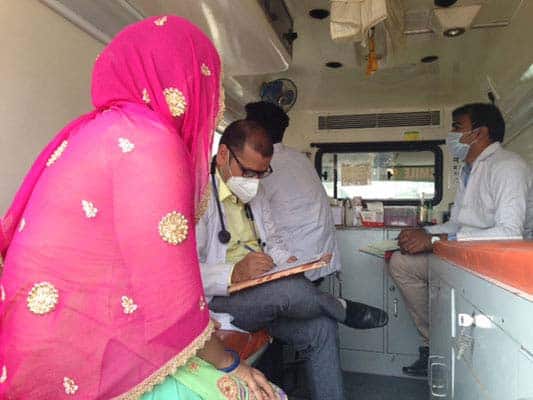
Thankfully, she doesn’t have to wait long. Phulmati is able to meet the doctor within ten minutes of her standing in the queue in front of the mobile health van stationed in Noida’s JJ colony slums where she stays. On being told that her hypertension was under control and she should continue with the medicines advised, the smile returns to Phulmati’s face.
Now she can return to work without any worries or lose a day’s wage.
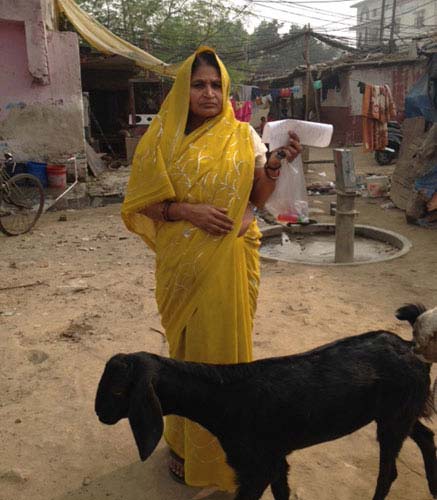
This is the essence of such ‘mobile hospitals’. In a country where the poor must routinely make the difficult choice of giving up a day’s wages to get medical treatment, quick and reliable clinics close to their residences can be true life-changers.
India has a population of 1.21 billion people, of which 833.3 million people live in rural areas, according to 2011 census. Further, about 23 per cent of the population living in major cities and towns lives in slums.
Lack of infrastructure and a cheek-by-jowl existence in urban slums means a majority of these people stay in surroundings where open drains, unhealthy drinking water, lack of sanitary toilets and waste disposal systems increase their risk to infections and disease.
Bringing doctors to their doorsteps not only ensures quality essential healthcare services to underprivileged communities but is also in keeping with India’s efforts towards achieving the sustainable development goal to promote healthy lives and wellbeing for all.
To find more about the realities of running such mobile operations, we got in touch with the Smile Foundation, whose flagship health initiative is the ‘Smile on Wheels’.
( November 17, 2017 )
The Michelin-starred Indian chef was in Delhi to launch his 28th book, and talked about a number of issues close to his heart.
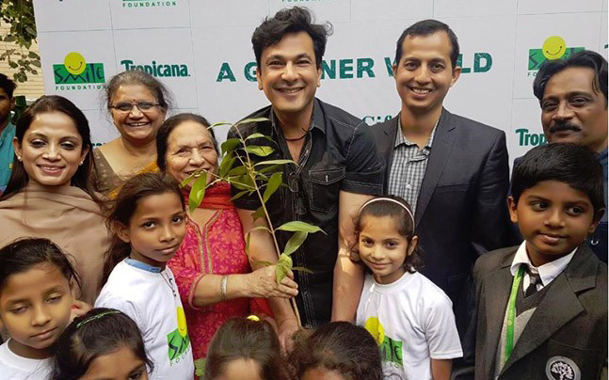
If there’s one thing that celebrity chef Vikas Khanna always does, it is to strike the right chord through everything he does. The Michelin-starred chef did the same again, during his recent trip to Delhi.
Khanna was in town to launch his new book, A Tree Named Ganga, but also took the opportunity to take into account the current climatic situation. As the goodwill ambassador for the Smile Foundation, he felt he needed to take his new book–his third work of fiction for children–to the kids of Delhi, while teaching them a valuable lesson through example.
Mail Today (22 November 2010)

( November 17, 2017 )
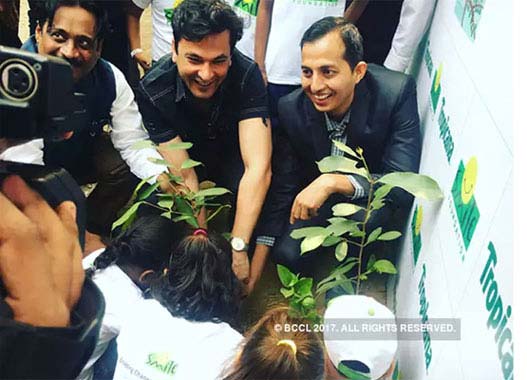
From left: Santanu Mishra, Co-Founder and Executive Trustee, Smile Foundation, Chef Vikas Khanna, and Vineet Sharma, Brand Manager – Tropicana, PepsiCo India at the plantation drive
Vikas Khanna is one busy man. From running a Michelin-starred restaurant to hosting TV shows, opening a culinary museum, creating a record for the world’s most expensive cookbook, this chef seems to have his plate full.
And that’s not all. The celebrated chef, who has published 28 books so far, has now diversified his writing skills, turning author for children. With ‘A Tree Named Ganga’, Khanna, has turned to Nature for inspiration.
And the timing couldn’t have been better as Khanna launched his first-ever work of fiction work on a smog-filled Thursday in the national capital, smiled and encouraged by 250 children who had gathered there as a part of an initiative by Smile Foundation and Tropicana’s ‘Gift a Tree’ campaign. Ask him if it was deliberate, and he replies dismissively.
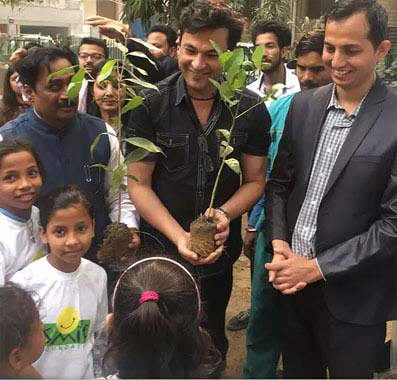
Vikas Khanna joined children from the Smile Foundation to plant saplings in the city in an initiative by Tropicana.
“The story has been in the works for many years now. It just happened to come at a time when we all need to learn the importance of nature, and stop taking it for granted,” Khanna says, referring to the situation around Delhi.
Loki Muthu has given shape to the illustrations in the 48-page book which are inspired by sketches made by Khanna’s niece.
Poltical and Business Daily (22 November 2010)

(16 November 2017)
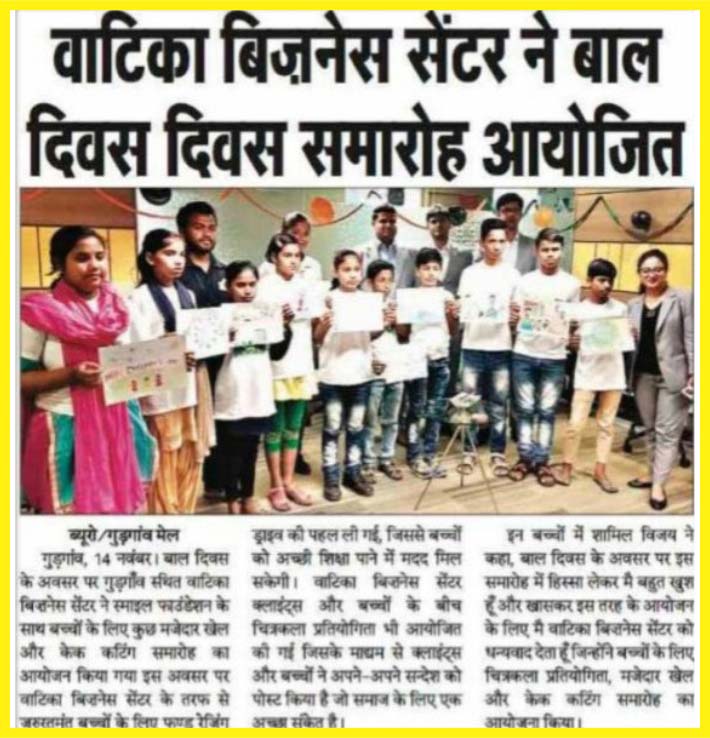
( November 16, 2017 )
The world is white and the air is full of smog. It’s that crisp winter morning chill when you’d rather snuggle in your bed and sip on coffee or tea. But cuckoo! The smog looming over the city of Delhi has been causing some serious health problems. And if you’re like us who cannot deal with it – get this! Tropicana the brand that gives us so many amazing juices came forward with a brilliant idea. One that we found would help curb the smog in Delhi. And helping them in this initiative was Chef Vikas Khanna!
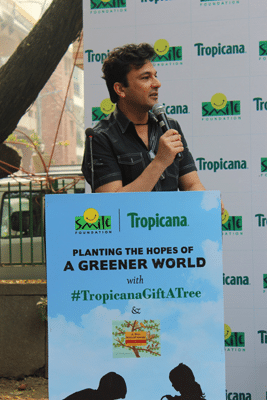
Chef Vikas Khanna launched his new book! A children’s book that aims to educate kids about the importance of trees in the ecology; about their service and humility. So, let us give you some perspective. According to reports, Delhi is one of the greenest cities in India – with 20% forest cover, which still falls short of the 33% prescribed greenery as per national forest policy. It is now also the worlds most polluted city. The book and the campaign (that Tropicana started earlier this year – ‘Gift A Tree’) are both splendid initiatives to build a more environmentally friendly tomorrow. And it’s important that children, who are our future, know about it in their primitive years.
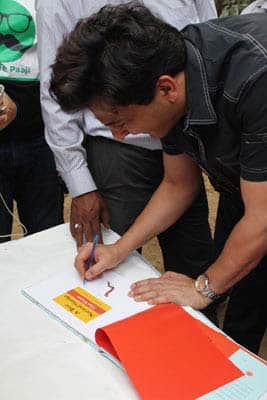
And it’s not just the 250 kids from Smile Foundation who joined the Chef in planting trees in the city that was so superb. The thought of initiating a cause that’s meant to give back to nature, at a time when it’s most relevant, is absolutely admirable. Tropicana has already committed 25000 trees as part of the cause.
So, come join hands with the brand that believes in sustainable growth and gift a tree back to nature.
Rashtriya Sahara (22 November 2010)

( November 16, 2017 )
Chef Vikas Khanna launched his 28th book ‘A Tree Named Ganga’ and led the campaign ‘Gift a Tree’, with more than 250 schoolchildren by planting saplings in Delhi.
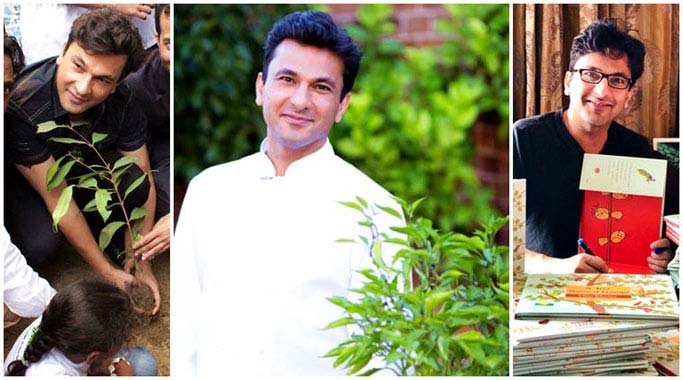
Chef Vikas Khanna, a film-maker, humanitarian and the judge of MasterChef India, has not only struck the right note with his food recipes but his fiction stories too. In no mood to stop, the award-winning Michelin-starred restaurateur and cookbook writer unveiled his new book A Tree Named Ganga on November 16. Joining hands with Delhi’s Smile Foundation as part of Tropicana’s ‘Gift a Tree’ initiative, the event saw more than 250 schoolchildren planting saplings in the city.
Giving lessons to the little ones about the importance of planting trees, he encouraged them to learn the virtue of giving, making them promise to become “responsible young guardians of nature”. He also shed light on examples from the book. “For me trees have always been an inspiration as they teach us to give without expecting anything in return….I’m excited to share this experience of planting trees with children… who are our future generation. Through the story of A Tree Named Ganga, I’ve made an honest effort to help children understand the value of staying humble and the essence of giving,” he said.
This is the chef’s 28th book, and it revolves around the story of a seed that grows into a tree with everyone’s love and support. Due to its arrogance it loses all its friends before going on to finally learning the greatest lesson of life – read the book to find out what that is.
The tree plantation drive saw children from Delhi International School and Health and Care Society planting trees at the NGO’s Aarohan – Mission Education Centre in Malviya Nagar.
Highlighting children’s role in social transformation, Santanu Mishra of Smile Foundation said that sensitising children can make “lifelong difference to the environment…Children are the future of our country. With their unprejudiced minds and unique way of seeing the world, they are a powerful resource to initiate social transformation. If we sensitise them about environmental issues from an early age, they develop positive habits that will make a lifelong difference to the environment.”
The fruit-based beverage brand, which has partnered with the ‘Rally for Rivers’ and grow-trees.com, has pledged to plant over 25,000 trees.