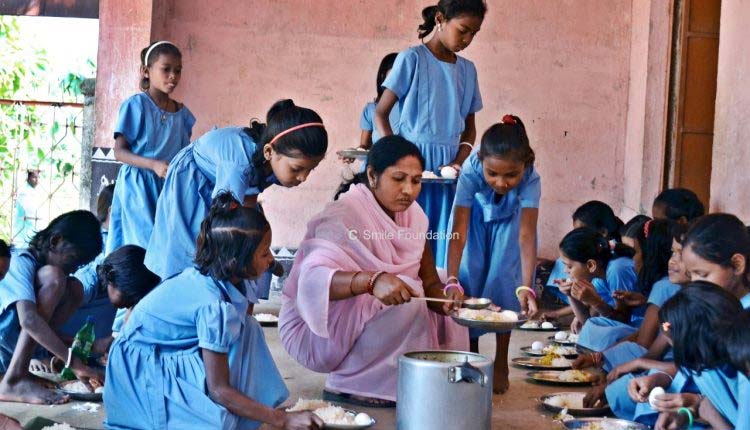
Smile Foundation’s campaign #IndiaShares has crossed serving 27 Million Meals providing nutrition support for the families affected by COVID-19 lockdown and restrictions
New Delhi: Smile Foundation through its #IndiaShares campaign which started on 6th April 2020 as an answer to fight against the pandemic of COVID-19 in the form of a food distribution program has achieved the milestone of distributing more than 27 million meals today. Marking the one year of the Janta curfew, Smile so far has served 27.34 million meals.
The program ensured that three nutrition meals reach more than 3.03 Lac children and families, comprising of 5 members each, for a month. The program spread across 23 states of the country so far is now targeting to reach a distribution of over 30 million meals.
“The onset of COVID-19 changed the economic and industry outlook in a very short period. As an organization working towards social causes we understood the challenge and mobilized resources towards the most urgent need i.e. food. Providing nutritional food became our topmost priority, and we started to reach out to the most underserved areas of the nation to ensure that no one sleeps on an empty stomach. With restrictions being eased, we hope to continue to work towards providing and supporting basic amenities, while aiding our partners in their social mission.” said Mr. Santanu Mishra, Co-Founder, and Executive Trustee, Smile Foundation.
Queen Rania of Jordan said: “If you educate a woman, you educate a family, if you educate a girl, you educate the future.” As it is with education, giving importance to skilling is also a major requirement in this day and age. Acquiring a mastery in a skill can open doors of opportunities previously unknown. The past years have witnessed a consistent expansion in women empowerment but there is a section that needs attention considering the present scenario i.e. rural areas.
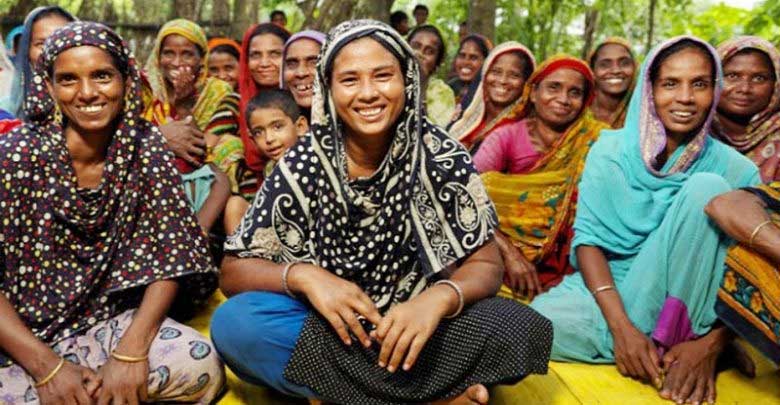
Women should have self-esteem, certainty, and the opportunity to pick their necessities and prerequisites, but many fall under the category of underserved and underprivileged. To provide this section with the upliftment they deserve and to celebrate their existence, some organisations are working untiringly to be the catalyst to these women by providing them skill training in different verticals and making them self-sufficient so they can sustain their family and look forward to a brighter future.
Here are some Indian organisations that have brought a positive impact on the lives of rural unprivileged and undeserved women:
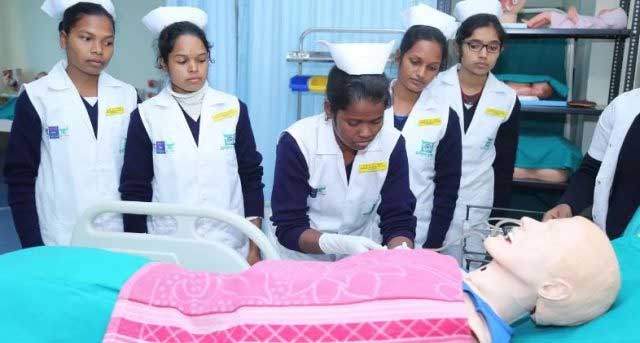
PanIIT Alumni Foundation – The CSR arm of Pan IIT Alumni works towards providing various skill training programmes for the underprivileged youth of the country and the most affected group – women – facing challenges to earn a living and secure a financially independent life. PanIIT provides skill training and vocational courses for women such as Assistant Nurse Midwifery (A.N.M) – a curriculum in nursing skills keeping in mind women who want to pursue a career as a nurse in the healthcare services; ITI manufacturing to skill and make them secure equal opportunities in the IT sector. PanIIT set up ‘Rural Skill Gurukuls’ (short-term skilling programmes) and Kaushal Colleges (a two-year residential programme) for underprivileged and tribal youth with 100 per cent-assured placements and loan financing and has a joint venture with the Government of Jharkhand. It is now expanding its presence to Bihar, Madhya Pradesh, Orissa and Chhattisgarh. Over the last ten years, the Foundation has established a successful collaborative model with governments and businesses as stakeholders and delivered at scale on a self-sustainable, job-assured, loan-funded, vocational skilling model enhancing the incomes and livelihood of the underprivileged. Their short-term courses have impacted over 18,000 underprivileged youth and over one lakh lives so far.
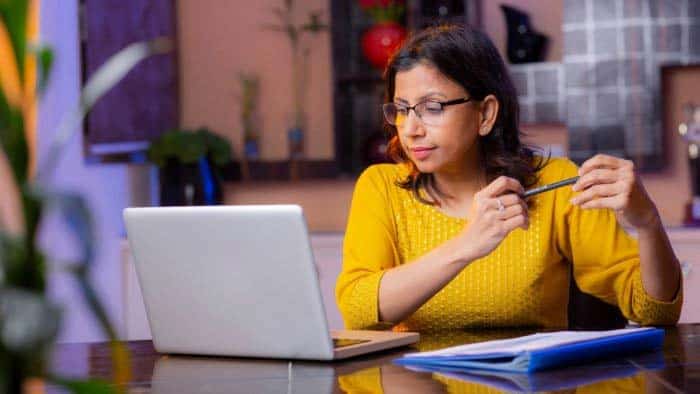
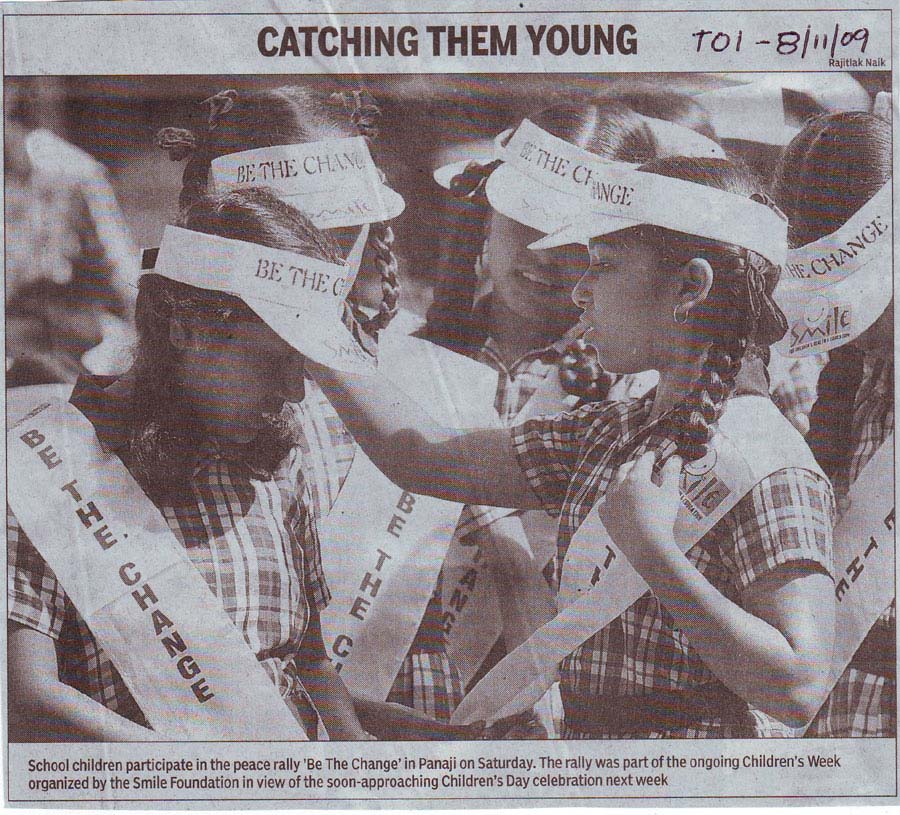
Smile Foundation – Through its e-learning programmes, this Foundation targets underprivileged groups like youth and women who are not able to complete their school education or were forced to drop out of school due to financial crisis and challenges. Their skill training programmes are designed following the current industry requirements to provide underprivileged women equal opportunities to work in fast-emerging sectors of India such as hospitality, retail, IT, etc. Their short-term, six months courses in computers, spoken English and soft skills have provided confidence and a ray of hope to many women to live a financially-secured life. Apart from this, the beneficiaries are trained on their overall personality to aid them to adjust better to their work surroundings. The Foundation directly benefits over 15 lakh children and their families every year through more than 400 live welfare projects on education, healthcare, livelihood, and women empowerment in over 2000 remote villages and slums across 25 States of India.
Meera works as a domestic help in around half-a-dozen houses besides doing odd jobs to earn around Rs 30,000 a month. She manages to save around Rs 750-1,000 a month but does not know where to invest. She is unaware that she could even deposit money in post offices.
More and more women are working but several, especially among the underprivileged, do not know how to operate a bank account or tools available for investments and this financial illiteracy appears to have an adverse impact amid the Covid-19 pandemic when they are among the worst affected in the job market.
As the world observes Women’s Day on Monday, activists and NGOs urge authorities to take extra steps to ensure that women are educated on financial tools to enable them in exercising prudent investment options.
“There are women who inspite of earning money, do not know how to operate a bank account or invest their money. They don’t know about different financial tools available in the market. They do not even know about life insurance. Women generally leave all the decisions about finances to the male members of the family,” National Women’s Commission Chairperson Rekha Sharma told DH.
Seema Kumar, General Manager (Programmes) of Smile Foundation that runs a financial literacy programme for underprivileged women and girl children under its ‘Swabhiman’ programme, said a well balanced and just society comes with empowering women. “It cannot be denied that the Covid-19 pandemic has exposed the need for improved basic health care at all levels and as we celebrate International Women’s Day in the post-Covid world, there is acute need to work with underprivileged communities on women health and their economic empowerment,” she said.
An analysis by the Smile Foundation, which trained around 60,000 women and girls so far under the ‘Swabhiman’ programme, showed that there is a huge gap in information and awareness on financial management and opportunities among women, who need to acquire financial knowledge, confidence and skills to effectively participate in economic activities and financial decision-making within and outside their households. “If women are given relevant exposure and training, they can take better decisions to improve the quality of their family’s lives,” it said.
While the Swabhiman programme trains women in understanding interest rates and loans and availing schemes of government and NGOs among other things, the NCW has recently launched a business and management course ‘Empowering Women through Entrepreneurship’ to train 5,000 aspiring women entrepreneurs in collaboration with IIM-Bengaluru.
With Covid-19 changing the economic scene, activists and authorities also are aware of the vulnerabilities of women in the job market as well as dealing in finances.
Sharma said that the pandemic not only changed the way of working but it is going to impact the number of opportunities for women in the workforce.
“When organisations are cutting the number of employees, they first send women out because the mind set is that women are not the primary breadwinners and it’s only the duty of men to earn money. The gender divide at work is huge,” she said.
At the same time, she said, there are a number of women who started small ventures from home to support the family income when their husbands lost jobs or there was lack of finances.
“We have to give skill to women along with education and train them to take up entrepreneurship. We must teach them how they can take help of all the schemes of the government and how they can take loans etc from the bank. Financial Institutions also must give them equal opportunities and hand hold them even if they fail initially,” she said.
One of the issues highlighted by activists is gender inequality at homes where women, even if earning, are not given a say in financial matters. They argue that schools and colleges should also give basic knowledge on personal finances.
Airbus, IndoStar Capital Finance, Roche Pharma (India), Merck (USA), Roboclub (New Delhi), Police DAV School (Jalandhar), and Smile Foundation join hands to strengthen STEM learning among underprivileged communities in India.
New Delhi, March 09, 2021: Leading corporates, academia, and NGOs joined hands to bring STEM education to the underserved parts of India, and shape online learning in the post-pandemic normal. Understanding that the blended learning approach improves access to education for students across India through multiple means – smart phones, tablets, television sets and, radio, leading players from the industry committed to shaping the Indian education system.
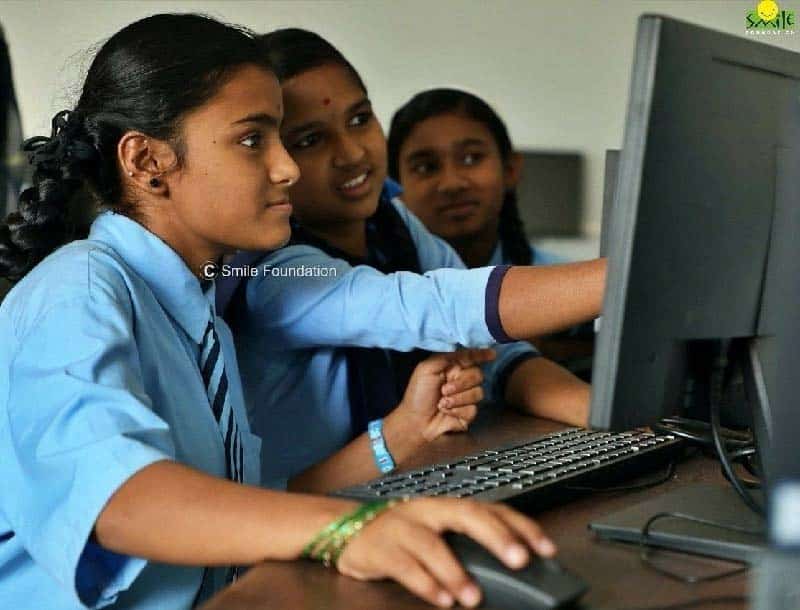
At a webinar hosted by Smile Foundation, “The need and importance of STEM education”, senior management from Airbus, IndoStar Capital Finance, Roche Pharma (India), Merck (USA), Robo club (New Delhi), and Police DAV School (Jalandhar) brought forth key challenges and solutions faced by children in developing cognitive abilities and accessibility to quality education during the Covid-19 pandemic. They reiterated on the learning disabilities created due to social exclusion and also deliberated on access to online learning specifically for rural and urban slum students.
Speaking at the webinar, Dr. Ravindra Kumar, Associate Director, Global Technical Operations, CoE, Vaccines and Biologics Analytics, Merck, USA, said: “Great advancements have been made in medical sciences and innovation, and the pandemic is a clear example of how the scientific community has come together to solve complex problems. Today’s students are tomorrow’s leaders, and hence a shifted focus on interactive learning, allowing kids to learn faster, is of the utmost importance”.
Dr. Rashmi Vij, Principal, Police DAV Public School, Jalandhar, pointed out how man evolved critical thinking and problem solving since Stone Age and that these skills are as relevant today. She added, “We have to prepare our children with 21st-century skills because as they go in the job market it will not only help them with employability but also give them the ability to solve problems like handling a pandemic.”
Sheetal Ranganathan, Corporate Strategy Head, Roche India added: “STEM learning helps one crossover in many subjects, and boosts the overall confidence. Children trained in STEM subjects are trained to be courageous enough and realize humanism.” Sunaina Sood, Founder, RoboClub (New Delhi), also agreed and added that they have introduced STEM learning with a goal to inculcate overall confidence in students.
While Himani Gupta, Company Secretary, and Legal Counsel at Airbus Group India Private Limited- India and South Asia, said that “Corporates can play an important role in investing and developing the future generation through investing in STEM learning by sponsoring, donating and capacity building.”
Benaifer Palsetia, Chief Human Resource Officer & CSR Head – Indostar Capital pointed out, inequalities in learning opportunities, and said: “before we groom and train the kids, it is our mindset that needs to change.”
“The New Education Policy has also stressed on improving the quality of education, and of shifting focus from a rote-learning system to an educational system that encourages critical thinking skills, and generates creativity and curiosity – for every child, irrespective of his/her socio-economic background. At Smile, we have been making efforts in this direction, under our Mission Education programme through various methods under a blended learning approach” said Mr. Sanjeev Dham, COO, Smile Foundation.
The webinar brought forth a commitment by the corporates, academia, and NGOs to work together in shaping the new normal in line with revised policies and the ‘new normal’ in an inclusive way for the underprivileged communities of the country.
About Shiksha Na Ruke
With one year’s gap in education, over 24 million children globally are at the risk of dropping out of school. In India, 5.3 percent of rural children aged 6-10 years have not enrolled in school this year, compared to 1.8 percent in 2018. Through its Shiksha Na Ruke initiative, Smile Foundation has been making an effort to help less privileged children continue their education through a blended learning approach during the pandemic.
About Smile Foundation
Smile Foundation, is an NGO in India directly benefitting over 15,00,000 children and their families every year, through more than 400 live welfare projects on education for poor children, healthcare, livelihood and women empowerment, in over 2000 remote villages and slums across 25 states of India. Adopting a life cycle approach of development, Smile Foundation focuses its interventions on children, their families and the community.
Over the years, there has been consistent expansion in women empowerment but there is a section that needs attention considering the present scenario i.e. rural areas. Women should have self-esteem, certainty, and the opportunity to pick their necessities and prerequisites but many fall under the category of underserved and underprivileged.
Some organisations are working to provide this section the upliftment they deserve and to celebrate their existence. From providing skill training in different verticals to making them self-sufficient, these organisations help women envision a bright future.
Here are the five Indian organizations who deserve appreciation this Women’s Day for impacting the lives of rural underprivileged and underserved women.
1. Smile Foundation
Smile’s skill training programmes are designed specially in accordance with the current industry requirements to provide the underprivileged women equal opportunities to work for fast-emerging sectors of India such as hospitality, retail, IT, etc. Short term courses for six months in computers, spoken English and soft skill have given many women a ray a positive hope to live a financially secure life. The beneficiaries are also trained on their overall personality development so as to aid them in adjusting better to their work surroundings.
2. PanIIT Alumni Foundation
The Nation Building arm of Pan IIT Alumni works towards providing skill training programmes for underprivileged youth in India. PanIIT provides skill training and vocational courses for women, such as Assistant Nurse Midwifery (A.N.M) a curriculum in nursing skills, which has been designed keeping in mind women who want to pursue a career as a nurse in the healthcare services; ITI manufacturing to skill them in the field of manufacturing so that women can secure equal opportunities. Their short-term courses have impacted over 18,000 underprivileged youth and over 1 lakh lives so far.
3. Nidhi Foundation
Nidhi Foundation is a NGO that aims to work with the women in the urban slums and villages and believes that helping women develop their inherent latent potentialities would bring about holistic development for the society at large. Unnati is a community-based initiative with the aim of empowering women to become entrepreneurs and teach sewing and stitching within the precincts of their community. This programme is “inclusive” in character, implying that Unnati is implemented for the economically poor irrespective of caste, class, religion, or creed.
4. Saksham
Launched in 2010, Saksham focuses on another kind of NEET – ‘Neither in Education, Employment or Training’ – for youth, especially girls from urban and rural disadvantaged areas. The programme equips them with free, market-oriented vocational skills and job and entrepreneurial training, This not only helps them access employment and pursue entrepreneurship options, according to their capability, aptitude, and choice, but also makes them representatives of a gender-equal society.
Through these training programmes, women can pursue entry-level jobs as customer care executives, general duty assistants, floor executives, data entry assistants, store assistants, cash, and front office management. Saksham’s skilling project has reached out to over 12,000 youth with over 7,000 of them being placed in respectable jobs and other livelihood activities to date.
Women need to acquire financial knowledge, confidence, and skills to effectively participate in economic activities and financial decision-making, both within and outside their households
Without financial literacy, it is impossible to pull oneself out of poverty. One has to be aware of the way money can be saved, can be invested, and can be used for the benefit of the family.
Women in underserved communities of India have traditionally been engaged with managing their household chores, with the upbringing of their children and with any type of work-related to family trade. This includes taking care of domestic livestock, providing support in farm work especially during sowing and harvesting of crops, working as labour in construction work, and many more.
The magnitude of work that is done by women in a typical Indian household especially in the lower-income strata is gargantuan. Over time we have seen an increase in women’s participation in the labour market to support their household. Women need to acquire financial knowledge, confidence, and skills to effectively participate in economic activities and financial decision-making, both within and outside their households.
A research suggests that 62% of Indian women, which is an approximate figure of 411 million, either do not own a bank account or have limited access to banking services. This further becomes problematic if we consider the gender gap in technology. With gender barriers in access to phone and internet, only 2% of women have mobile accounts, making it difficult to bring them under the ambit of digital banking.
In our experience, while engaging with the women in underprivileged communities, we realized that there is a huge gap in their information and awareness on financial management and opportunities. If they are given relevant exposure and training then they can take better decisions to improve the quality of their family.
Planning in advance for future expenses is imperative. Unforeseen expenses on illness and other emergencies, planning for the education of children, building a house, saving for old age care and expenses are important. Unfortunately, this type of advanced financial planning is unheard of amongst them and hence many families fall into debt traps. Women if trained in financial literacy are able to guide their family better in budget management and for future financial planning.
The financial literacy training provided by financial experts under the Swabhiman programme of Smile Foundation aims to support women and train them simplistically such that they are able to:
—keep an account of their expenses and savings —understand interest rates and loans and make responsible decisions —understand investments, costing-pricing, time and quality relation for economic well-being —avail schemes and opportunities offered by the government, banks and NGOs —bring about positive changes within their household and small business —make their monthly expenditure and saving plans —become empowered to choose and access appropriate financial services and products, as well as to develop and manage entrepreneurial activities in a better manner.
This Women’s Day we hope that more women seek financial education and become empowered to conduct day to day activities with greater confidence!
International Women’s Day is considered a movement to bring equality and we celebrate this day for its righteous cause. Started in 1911, its roots lie in the labour movement. The cause for which women fought against — poor working conditions — has since evolved drastically.
Today, the challenges faced by women across the world range from equal pay to access to quality education. Though significant progress has been made with involvement from the government, academia, industry, and the social sector, a ground-up approach needs to be adopted to help young girls develop as strong women leaders of tomorrow.
Nishtha Satyam, Deputy Country Representative, UN Women, told News18, “Today, India has seen several women trailblazers in virtually every STEM field — from defence research and aeronautical systems to India’s Mars Orbital Mission-2. With women comprising 48% of the Indian population, we clearly need more women engineers, technicians, scientists and researchers, and it is up to all of us to show girls and young women that their contributions, creativity and abilities are of immense value and potential.”
A study published by Quest Alliance cites that women constitute only about 14% of the 2,80,000 scientists and engineers in research and development institutes in India.
This alarming number is a clear indication of the low participation of women in STEM (Science, Technology, Engineering, and Mathematics) disciplines though education institutes and schools in India clearly outline the need for developing STEM mindsets early on to boost creativity and help develop problem-solving skills.
Dr Rashmi Vij, principal, Police DAV Public School, Jalandhar, said, “Children are curious and question how things happen but, as they grow older, we see that they start to lose curiosity. This is because of our previous education system which has primarily not been able to address creativity, and with the New Education Policy in place, we see the integration of STEM and creative subjects like arts coming forward. I believe that STEM is not just an array of subjects but a way of life, a way of teaching and a way of learning. We are now looking at not just STEM but STEAM (science, technology, engineering, arts and math).”
SETTING UP STEM LABS
But this effort cannot be executed in silos, where a single stakeholder takes the responsibility. Corporates and NGOs need to align efforts to achieve the common goal. Speaking to News18, Himani Gupta, company secretary and legal counsel at Airbus Group India and South Asia, resonated the sentiment. “We as corporates have an important role in investing and developing our future generation. From identifying why girls are not taking science subjects to setting up STEM labs, we are in a position to help young girls understand their true potential and shape the next generation women leaders.”
Santanu Mishra, co-founder and executive trustee, Smile Foundation, also agreed. “There is still a large gap when it comes to equal access and opportunity between boys and girls, men and women — right from primary education, which further amplifies in higher education or while seeking a job. When it comes to subjects like mathematics or science, gender-based preconceptions also play an adverse role in demotivating girls to specialise in the same. These issues must be overcome if we want our daughters to rise to their true potential.”
This shows a deep-found resonance among the corporates, academia and NGOs to help young girls grow up as capable individuals, and as we celebrate this women’s day, we hope that through imparting the right set of skills and training in STEM, this becomes the new norm across the country.