(01 March)


(01 March)
( October 23, 2020 )
Smile Foundation is focusing on strengthening the system by setting up telemedicine clinics at subcenters to increase the access to primary healthcare and reduce the burden at the primary healthcare level, under the PPP model.

Shahid Akhter, editor, ETHealthworld, spoke to Santanu Mishra, Co-Founder and Executive Trustee, Smile Foundation to know more about the adoption and implementation of telemedicine in providing healthcare services to the most underserved sections of society.
With guidelines set under the “Telemedicine Practice Guidelines” by the Medical Council of India, how would you evaluate the future?
The guidelines give us a clear understanding of the three tiers of telemedicine for communicating through video, audio, and text-based applications. Due to the Covid-19 pandemic people are reluctant to visit doctors and telemedicine in now the new normal for both urban as well as rural populations. The private sector has jumped onto the bandwagon and is interested in providing telemedicine services, particularly in urban areas.
From a policy perspective, what changes do see coming in for telemedicine and telehealth?
There is a strong need for public-private partnerships (PPP) in this domain and policy changes can influence their development at a holistic level. We envisage a larger influx of new players, especially startups, entering the space through various collaborations with the government and other private entities. Policies incubating such organizations, will not only help forge stronger partnerships but also enable a wider audience to access quality healthcare at a lower cost. Smile Foundation is focusing on strengthening the system by setting up telemedicine clinics at subcenters to increase the access to primary healthcare and reduce the burden at the primary healthcare level, under the PPP model. Sustainability will be achieved, by later handing over the functioning telemedicine clinics to the government, for them to operate.
(March 03, 2009)
( October 23, 2020 )

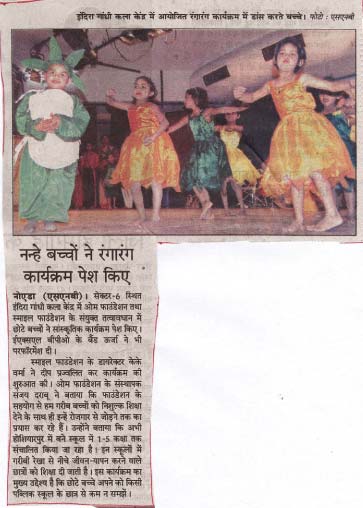
CSR: KFC India partners with Smile Foundation to support Dabbawalas families – Dabbawalas – are today faced with the challenge, as these meal providers and therefore the very face of Mumbai – fending for themselves. The worsening COVID-19 situation in Maharashtra, with most businesses and offices closed, has rendered members of this Six Sigma organization struggling to supply for his or her families.
To increase support to the dabbawalas, KFC India has partnered with Smile Foundation a community that has been delivering meals to several officegoers in Mumbai and is today severely impacted by the extended periods of lockdown. As a part of the brand’s KFC Care CSR initiative, kits of essentials including dry ration and essential items are going to be disseminated to the dabbawalas community and their quite 5000 members of families, from across Mumbai & Pune.
KFC India has undertaken various CSR initiatives to spot and reach bent communities in need, especially to those impacted during the continuing pandemic. The brand served quite 10000 ‘Thank You’ meals to healthcare workers across hospitals in several cities as a token of gratitude for his or her relentless services. As a part of the brand’s ‘Feed a Million’ pledge, quite 2 million meals were provided to daily wagers and migrant workers during the extended periods of lockdown.
The Chief Marketing Officer, KFC India on this CSR initiative, Moksh Chopra, said, “Giving back is one among the core values of KFC. The pandemic has had an enormous socio-economic impact on several communities, including the dabbawalas. As a food brand that aims to feed the planet, we are committed to the present pledge even outside of our restaurant’s partnership with the Smile Foundation, we pledge to support the dabbawalas’ community and their families; enabling them access nutritious food and essentials.”
We are working around the clock to assist communities who are suffering from the pandemic, where we’ve been providing meals, dry ration, and hygiene kits across the country. Coming along side a responsible food brand like KFC India, we would like to now make sure that the ‘meal-providers’ of Mumbai city don’t themselves go hungry.”
( October 17, 2020 )
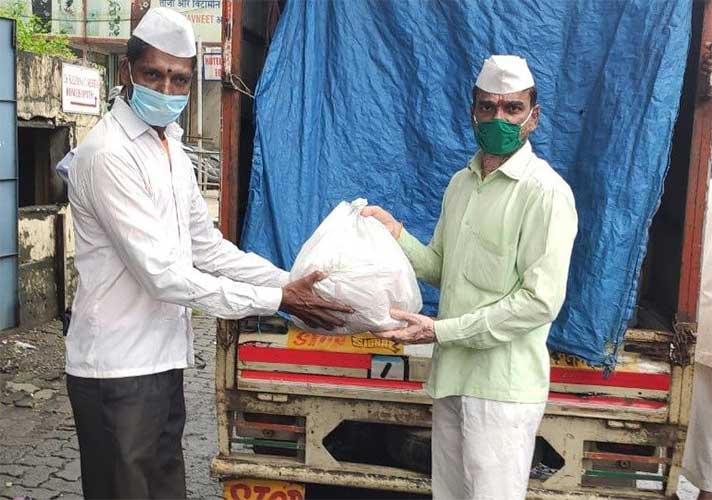
Mumbai/Pune, October 16, 2020: The meal providers and the very face of Mumbai – the Dabbawallas – are today faced with the challenge of fending for themselves. The worsening COVID-19 situation in Maharashtra, with most businesses and offices closed, has rendered members of this Six Sigma organisation struggling to provide for their families. KFC India has partnered with Smile Foundation to extend support to the Dabbawalas – a community that has been delivering meals to many office-goers in Mumbai and is today severely impacted by the extended periods of lockdown. As part of the brand’s KFC Care initiative, kits of essentials including dry ration and essential items will be disseminated to more than 5000 members of the Dabbawalas community and their families, from across Mumbai and Pune.
Speaking about the initiative Moksh Chopra, Chief Marketing Officer, KFC India said, “Giving back is one of the core values of KFC. The pandemic has had a huge socio-economic impact on several communities, including the Dabbawalas. As a food brand that aims to feed the world, we are committed to this pledge even outside of our restaurants. Under KFC Care, and in partnership with Smile Foundation, we pledge to support the Dabbawalas community and their families, enabling them access to nutritious food and essentials. We are all together in this fight against COVID-19, and I have faith that we will come through stronger and better.”
Santanu Mishra, Co-founder and Executive Trustee, Smile Foundation, added: “We have been working round the clock to help communities who have been affected by the pandemic, where we have been providing meals, dry ration and hygiene kits across the country. Coming together with a responsible food brand like KFC India, we want to now ensure that the ‘meal-providers’ of Mumbai city don’t go hungry themselves.”
KFC India has undertaken various initiatives to identify and reach out to communities in need, especially to those impacted during the ongoing pandemic. The brand served more than 10,000 ‘Thank You’ meals to healthcare workers across hospitals in different cities as a token of gratitude for their relentless services. As part of the brand’s ‘Feed a Million’ pledge, more than two million meals were provided to daily wagers and migrant workers during the extended periods of lockdown. Through Smile Foundation’s campaign, “India Shares”, the NGO has come forward and developed a multi-pronged approach to mitigating the ongoing crisis. Fighting against hunger, Smile has a comprehensive food supply programme, where they are providing hunger survival kits to children and families in urban slums and rural areas across 22 States of India. So far, they have provided 10 million meals, with a goal of providing 25 million meals.
(02 May 2009)
( October 08, 2020 )
We can argue that technology driven education has opened the doors for few but has closed the doors for many

With the onset of Corona virus disease, world has seen the largest disruption of education in more than 190 countries and affecting approximately 1.6 billion learners. Closure of educational institutions and other learning spaces had its impact on 94 percent of student population and up to 99 percent students of low income countries. In India alone 320 million children from pre nursery to higher education got affected. Almost 24 million additional children may drop out or may not get access to schools next year due to economic impact of covid 19 across the globe. Before the covid pandemic our education system was fighting hard to overcome already existing disparities but covid crises has exacerbating effect to these already existing disparities by reducing the opportunities and access to education for most of the vulnerable children living in poor, rural areas, girls, refugees and persons with disabilities (UN report Aug 2020).
As the covid induced lockdown was abrupt, educational institutions were left with little space to prepare for these impending disruptions. While responding to these crises situations our educational institutions have become more responsive and proactive with the limited resources available at their disposal. A shift from face to face physically embedded classroom to online education was made and certain platforms like zoom classes, Google meet, Google classroom start functioning which earlier most teachers and students were not familiar with though radio and television were already in place. So we saw wide spread popularization of online teaching and learning during these testing times but with some question marks like what about those children who are already affected by lack of resources or enabling environment to access learning. Recently in June 2020 a child rights NGO ‘Smile foundation’ carried out a study “Scenario amidst covid 19 on ground situations and possible solutions” and it was found that 56% of children were found to have no access to smart phones which have emerged as essential tools for online teaching and learning during pandemic times. In another study it was found that only 8% homes with young members have computer with internet connection. So in this way we can argue that technology driven education has opened the doors for few but has closed the doors for many.
We are aware of the fact that education is the dynamic force in the life of every individual influencing physical, emotional, mental, social and ethical aspects of development. Online education does have a positive role to play but it is not the panacea. I strongly believe we must use these online platforms of teaching and learning with utmost care and wisdom as the purpose of education is not merely dissemination of information which through online tools is being bombarded into the minds of students. Education is transformation of life. We need creative minds and their response in order to transform the society. Our students should know that they are the creators of culture.
Education is sensitivity, sensitivity to self, sensitivity to life and world. Online teaching and learning cannot have this sensitivity. This human touch is possible only in face to face physically embedded classroom. Education is communion between the teachers and students, the communion of thought, communion of feelings and more importantly communion of experiences. In physical classroom situation a teacher activates all faculties of a student viz. emotional, physical, intellectual, social, moral, ethical and spiritual which is not possible by way of online teaching and learning.
Using technology without human element of teacher and student is making objects of most of us. If we keep on using technology like this we will not develop with human characteristics but will be programmed like robots. Learning is social in nature but unprecedented use of online education can lead us to social isolation. Glorifying online education will have its serious implications on the socialization process of our young ones. Ambit of teachers in online teaching has been only that of service providers and those of students as consumers. Amidst all this creativity is casualty. Justifying and legitimizing online education because of technology is not a right vision or frame of mind to have. Neoliberalism has taken the control of education and markets are deciding what is good and palatable for our students. It has engulfed all our value system, critical thinking, logical enquiry and humanistic traditions.
To make our nation strong we need a vibrant and strong educational system. To realize this aim our schools, colleges and universities are the pathways for better life to generations to follow. Technology should not be allowed to replace the cohesive, sensitive and cordial relationship between a teacher and his student. This intimate contact between the teacher and his disciple is like a corner stone in resurrecting the building of education.
Source: http://risingkashmir.com/news/rise-of-online-education-during-covid-19-and-challenges-thereof
(07 March)

( September 21, 2020 )

Art always comes to the rescue in times of crisis, and what the world is facing right now is nothing short of one. Artwork for Heartwork is an initiative by NGO Smile Foundation, which aims to support workers in essential services through the sale of a range of artworks, curated by the platform Art & Found.
It features an eclectic mix of pieces by artists Aniruddh Mehta, Hansika Sharma, and celebrities such as Chitrangda Singh, Arshad Warsi, Karan Tacker and Manushi Chhillar. When you buy an artwork, 100 per cent of the sale proceeds will be utilised for providing face masks and sanitisers to frontline workers.
Source : https://www.mid-day.com/articles/canvases-with-soul/23002251
( September 17, 2020 )
SEATTLE, Washington — India is home to more than 1.3 billion people, making India the second-most populous country next to China. Some of the major causes of urban poverty in India are the scarcity of job opportunities and a lack of practical skills. These factors have contributed to many young adults under the age of 25 becoming unemployed. Often the skills and resources that unemployed youths in India lack are computer training, personal skills and a mastery of the English language, the most commonly used language in the Indian business world. While India’s government has created the Skills India program that provides training to young adults, organizations like TechnoServe and STeP have heavily impacted the fight against youth unemployment.
Skill India
Skill India is the Indian government’s answer to the country’s high youth unemployment rate. Established in 2015 and run by the Ministry of Skill Development and Entrepreneurship, the program aims to empower 400 million youths for success in the workplace by 2022. The national scheme is comprised of different elements, including short-term training, where unemployed youths are educated in personal skills, e-skills and enterprise business. Moreover, the program recognizes prior learning so that students can take courses that fill in the missing gaps in knowledge, and offers placement guidelines to ensure candidates are assigned in a suitable field placement.
The program had a shaky start due to complex bureaucracy and has ultimately fallen behind its goal of employing 400 million people by 2022, with only 25 million young people trained so far. However, despite its challenges, the government program offers hope to unemployed youth with reliable courses and resourceful guidance.
The Smile Foundation’s STeP program
The Smile Foundation is a non-governmental organization that operates welfare programs in India focused on the “education for poor children, healthcare for families, skills training and livelihood for youth and community engagement through women empowerment,” according to their platform.
In response to India’s youth unemployment rate and youth undertraining, the Smile Foundation created the Smile Twin e-Learning Program. Underprivileged city youths are enrolled in the program and trained in business-relevant skills, including English communication, computer proficiency, business management and personal skills. In the last decade, more than 25,000 young adults were taught these essential skills, and more than 15,000 trainees were placed with well-known companies by the STeP program.
TechnoServe’s Youth Employability Program: Youth Helping Youth
Technoserve is a global organization that operates in 29 countries and focuses on improving business, farming and industries. Its Youth Employment Program (YEP) focuses on eliminating obstacles for young adults from impoverished communities by providing them opportunities among the private and public sectors in India’s capital, Mumbai. Often it is not technical skills these youths are missing, but softer skills like the mastery of the English language or the lack of networking connections. TechnoServe’s YEP trainers are often youths from Mumbai training their peers, which YEP states build confidence, creates stronger relationships and a more fun environment. In its first phase, YEP was able to find 1000 youths jobs in 2015 and has since expanded to 5000 students in 2019.
COVID-19 and the Future of Youth Employment
Unemployment among India’s youth population, mostly from impoverished communities, remains a challenge today. COVID-19 has shaken the Indian job market like much of the world, sending the unemployment rate as high as 24%. Yet, while unemployed youths in India remains high, the COVID-19 pandemic has led organizations to shift their efforts toward helping those in need. For example, the Indian government has transformed a number of its training centers into quarantine units. However, youths with healthcare training are being referred to the Ministry of Health and Welfare to help with the pandemic response.
Return to a pre-pandemic life will be slow. Still, when India is ready again to invest heavily in its large reserve of youths, there is a real promise for economic gain with a possible 2% future growth in the country’s economy.
Source: https://www.borgenmagazine.com/unemployed-youth-in-india/