Summary:
- Intergenerational poverty is a self-reinforcing cycle between nutrition, education and opportunity passed down like an inheritance nobody asked for.
- A landmark World Bank study found that India’s intergenerational mobility has barely moved in four decades, despite sustained economic growth.
- Breaking the cycle takes early, sustained, combined intervention.
- Some families are already finding ways to interrupt the pattern and their experience points to what works.
Rita Majhi’s father farms other people’s land in Kalahandi, Odisha, for a daily wage. Most days, that wage doesn’t stretch far enough to feed the family and keep Rita in school. So, he picks one. He goes hungry and she stays in school.
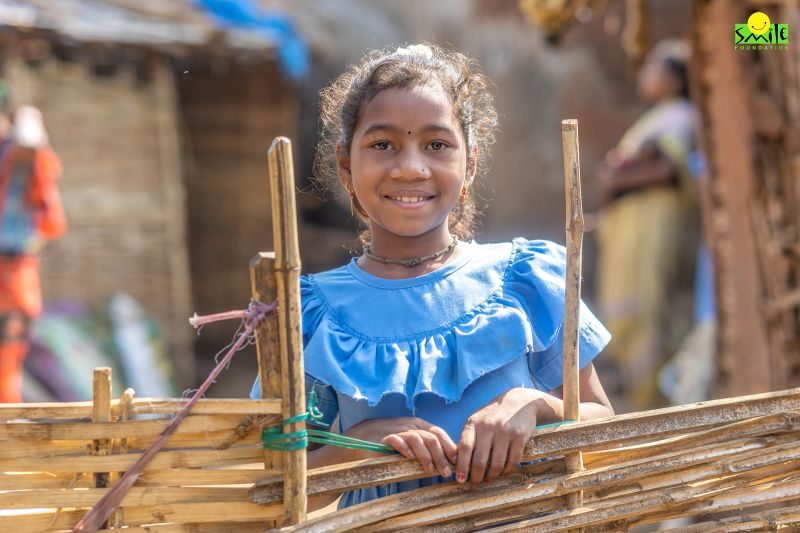
There’s no defining moment in that story, no single crisis you could point to and say, this is where everything changed. Just a man choosing hunger, so his daughter’s life might end up looking nothing like his.
It’s a calculation being made right now, in households across India with very little room for error. Why does it still take so long for a family to move up, even when a parent is sacrificing this much?
Economists describe this as intergenerational poverty: the persistence of poverty across generations, driven not by a lack of effort, but by the unequal starting points that shape the chances of a person long before they can influence them.
A Concept, Not Just a Condition
Here’s the distinction worth understanding: being poor is a condition. Intergenerational poverty is a pattern, and patterns are harder to shake.
A condition can change with one good year, one job or one piece of luck. A pattern means a child’s starting line is largely decided by where their parents stood, regardless of how capable that child turns out to be.
We’d like to believe growth fixes this on its own. India’s growth story over the last few decades should, in theory, have loosened the cycle’s grip for families at the bottom.
However, World Bank economists found that intergenerational mobility in India has barely moved in four decades, even through a period of rapid growth and rising education access. Separately, India shows the lowest income mobility of any country in South Asia.
So, the economy has grown. The odds, for the families who needed them to change most, largely haven’t.
Why the Cycle Forms in the First Place
It often starts before a child is even born. A mother’s nutrition influences her baby’s birth weight, brain development and long-term health. By the time a child enters school, the disadvantages may already be years in the making.
According to the National Family Health Survey (NFHS-5), 35.5% of children under five in India are stunted and 32.1% are underweight. Maternal health, sanitation, access to healthcare and adequate nutrition all shape a child’s earliest years. When those foundations are weak, children carry the consequences into classrooms, workplaces and adulthood, regardless of how hard they later work to overcome them.
Then comes the trade-off that millions of families know all too well: choosing between immediate survival and long-term wellbeing.
For Khemraj and his wife, Mangla, farmers in Rajasthan, a severe drought destroyed their harvest. Debt followed and they lost their land to moneylenders and eventually sold both their cows simply to stay afloat.
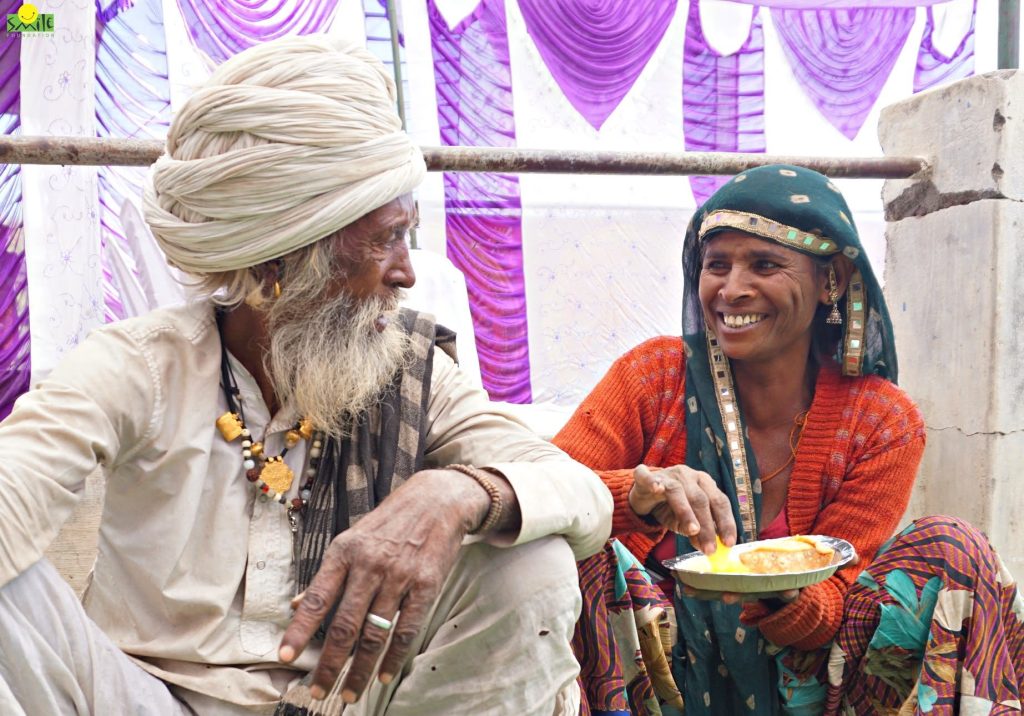
“Spending on healthcare was still difficult for us,” Khemraj recalls. “Private clinics and medicines would cost us half of our earnings. And when the choice comes between food and medicine, you know what one would choose.”
A drought, an illness or an unexpected expense forces a family to sacrifice something essential. The decision may solve today’s crisis, but it leaves them more vulnerable to the next one. For families living within margins, another setback is rarely far away.
Education is often described as the surest route out of poverty. But for millions of children, that path narrows long before they reach adulthood. India’s secondary school retention rate stands at just 47.2%, meaning nearly half of the students who enter Class 9 do not complete Class 12. Although enrolment has improved steadily over the years, the gap remains more pronounced in rural India, where girls are especially likely to leave school early because of financial pressures, domestic responsibilities or early marriage.
For many families, education becomes a luxury they can no longer afford. Around the world, an estimated 138 million children were engaged in child labour in 2024, many of them in India, stepping into work the moment another income becomes necessary for the household.
More than 90% of India’s workforce is employed in the informal economy, where work is often insecure and protections are minimal. There are no written contracts, paid leave or guaranteed income. A period of illness, a failed harvest or a slowdown in local demand can erase a family’s earnings almost overnight.
The nature of informal work also makes recovery difficult. Many workers own few productive assets, have little or no savings and depend on wages that arrive daily or weekly, barely covering immediate needs. Without a financial cushion, even a brief interruption in income can undo years of painstaking progress.
Where a person is born continues to matter as much as how hard they work. Although legal barriers have diminished over time, caste, geography and social identity still influence access to education, employment and opportunity. Research consistently shows that economic mobility remains uneven across regions and communities, even as India’s economy has expanded.
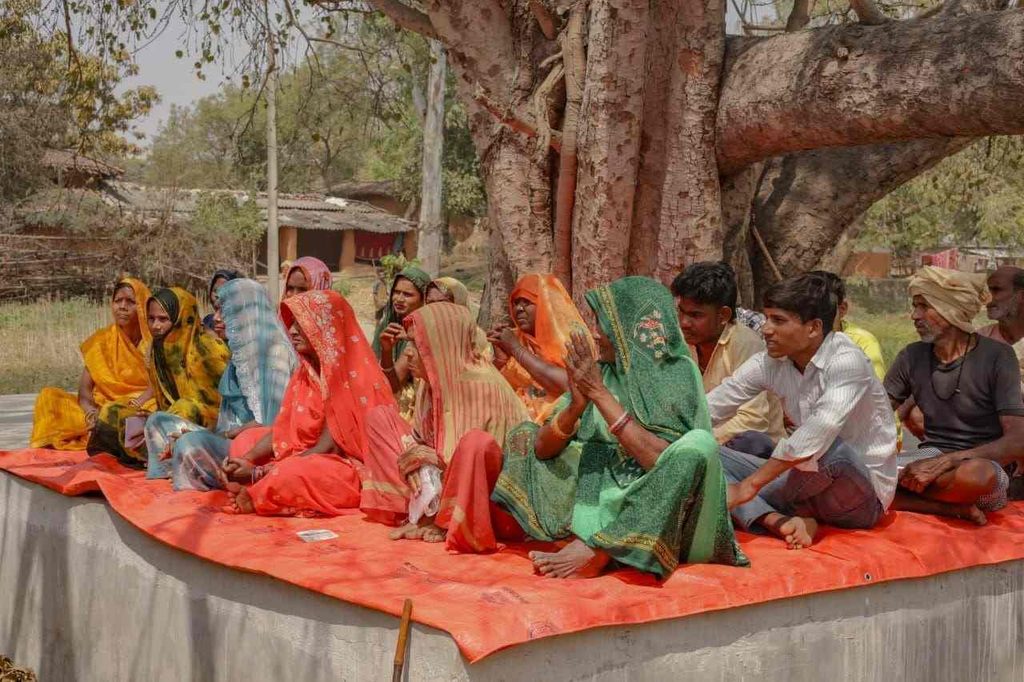
Physical infrastructure shapes opportunity just as powerfully. A village without reliable roads, electricity or clean water remains disconnected from schools, healthcare facilities and markets in ways that individual determination alone cannot overcome. But the absence can be observed beyond government datasets. In many communities, there is not even a common public space where residents can meet. Organising around shared concerns often means asking one family to host everyone else and bear the cost of refreshments — a burden that many simply cannot afford. When gathering itself becomes expensive, collective action becomes harder and solutions remain out of reach.
There is another inheritance, less visible but equally consequential. Children from wealthier families inherit more than financial security. They inherit networks like a relative who understands university admissions or a family friend who recommends them for their first job or a parent confident enough to navigate a bank or government office without hesitation.
The strongest evidence on these social networks comes from studies outside India, but the pattern is instantly recognisable. Researchers have found that children who grow up surrounded by people from diverse economic backgrounds are more likely to experience upward mobility than those whose communities remain economically isolated. In India, where referrals and personal connections continue to shape access to education, employment and credit, these invisible networks often matter as much as formal qualifications. Families living in poverty are no less capable or determined; what they frequently lack is someone who can open the first door.
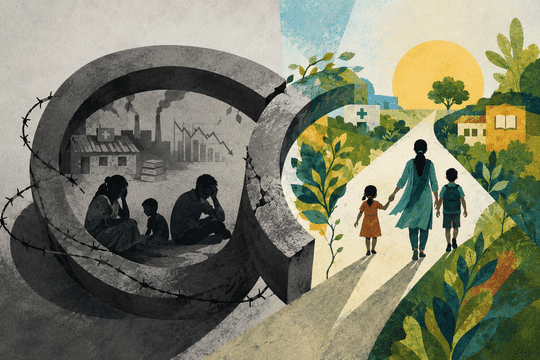
None of these forces operates alone. Each disadvantage reinforces the next until poverty is no longer the result of a single setback, but the cumulative effect of many.
That is what makes intergenerational poverty so persistent. It is not one barrier, but an ecosystem of barriers, each quietly strengthening the others.
What It Takes to Break the Cycle
If poverty persists because disadvantages accumulate over time, breaking the cycle demands the opposite: sustained support that reaches people early, addresses multiple barriers at once and continues long enough for change to take root.
Programmes that combine income support with investments in health, nutrition and education produce some of the strongest gains in children’s long-term outcomes. The impact is greatest in the earliest years of life, when the foundations of physical and cognitive development are still being laid. Support at that stage shapes the opportunities children carry into adulthood.
For Rita Majhi’s family, transformation grew out of her father’s repeated decision to protect her education, even when doing so demanded personal sacrifice. For Khemraj and Mangla, the turning point was not one visit to a doctor but reliable access to healthcare that reduced the impossible choices they had been forced to make for years.
Where Smile Foundation Fits In
One example of this integrated approach is Smile Foundation’s lifecycle model — the belief that you cannot lift a child out of poverty while ignoring their family, and you cannot lift a family while ignoring their health, their income, their community.
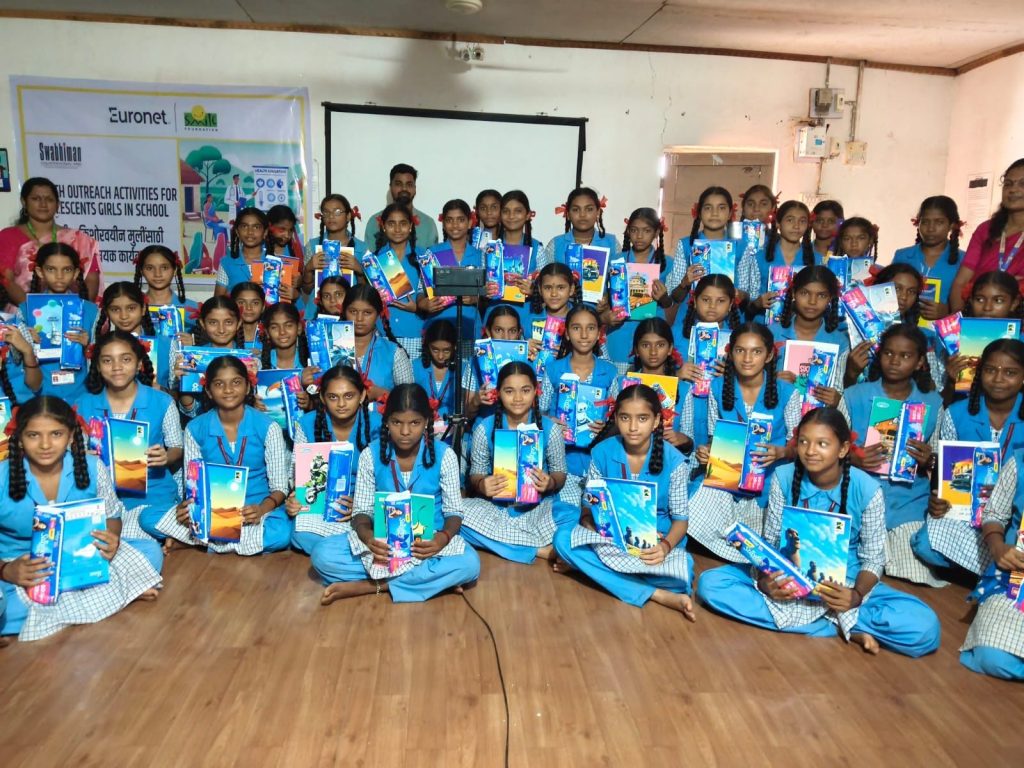
Through Mission Education, the organisation works to keep children like Rita in school, with remedial learning support and the slower work of helping parents see why that education is worth the cost. Through Smile on Wheels, families like Khemraj and Mangla’s get healthcare at their doorstep, so the choice between a meal and a medicine stops being a choice at all. And through Swabhiman, women gain the skills and resources to build their own income, addressing the instability that sits underneath everything else.
Each initiative addresses a different dimension of poverty. Together, they reinforce one another, reflecting the same interconnected reality that allows poverty itself to persist across generations.
The Long Arc of Breaking a Cycle
This isn’t a story about one bad decision, or about people not trying hard enough. Disadvantage compounds quietly, generation after generation, until it starts to look like fate. It’s circumstance.
But cycles, by definition, can be broken. Rita’s father understood that when he chose hunger over pulling her from school. Khemraj and Mangla understood it when they kept showing up for a doctor they could finally afford.
Breaking a cycle like this doesn’t happen in one year, or through one scheme. It happens through staying — in classrooms, in clinics, in the small decisions families make every day to want something different for their children than what they inherited.
Intergenerational poverty is often mistaken for inevitability. When disadvantage is passed from parent to child for decades, it can begin to resemble fate. But it doesn’t need to be.
It is the cumulative effect of unequal beginnings, limited opportunities and repeated setbacks. And because it is built over time, it can also be dismantled over time.
Rita’s father understood this every time he chose to keep his daughter in school despite the cost. Khemraj and Mangla understood it each time they sought care before illness became a financial crisis. Their stories are reminders that breaking the cycle depends on hundreds of decisions, supported by systems that make those decisions possible.
That is the work of ending intergenerational poverty. Not a single intervention or a single year of support, but the patient work of ensuring that children remain in classrooms, families have access to healthcare, women can earn stable incomes and communities have the resources to build a different future.
Because poverty may be inherited, but so can opportunity. The difference lies in whether society creates the conditions for one generation to pass something better on to the next.
Frequently Asked Questions (FAQs)
- What is intergenerational poverty?
Intergenerational poverty refers to the pattern by which economic disadvantage is passed from parents to children, who in turn pass on a similar disadvantage to their own children, creating a cycle that persists across generations.
- Is intergenerational poverty the same as being poor?
No. Being poor describes a current economic condition. Intergenerational poverty describes a pattern, where a family’s economic position tends to repeat itself across generations regardless of individual effort.
- Does economic growth automatically reduce intergenerational poverty?
Not on its own. Research shows that intergenerational mobility in India has remained largely unchanged for four decades despite sustained economic growth, suggesting that growth alone does not guarantee that families move up the economic ladder.
- What causes intergenerational poverty to persist?
It is driven by several interlocking factors, including early childhood malnutrition, the trade-off families make between healthcare and other necessities during a crisis, the instability of informal work and the absence of savings or assets to fall back on, barriers to completing education such as child labour, the lack of basic infrastructure and shared public spaces in many villages, limitations on social and occupational mobility tied to caste and geography, and unequal access to the networks and connections that help people navigate opportunities.
- Can intergenerational poverty be broken?
Yes, though it typically requires sustained, combined intervention across nutrition, education and healthcare, rather than a single short-term fix, particularly when support reaches children early in life.
- How does Smile Foundation address intergenerational poverty?
Smile Foundation takes a lifecycle approach through programmes like Mission Education, Smile on Wheels and Swabhiman, addressing education, healthcare and livelihood together rather than in isolation, recognising that a child’s future is tied to their family’s overall circumstances.
- Why does education alone not always break the cycle?
Education is a critical lever, but its impact is limited when a child is malnourished, pulled into labour to support household income, or part of a family facing a health or income shock. Education tends to be most effective when paired with nutritional and economic support.
Sources
World Bank: Advances in Measuring Intergenerational Mobility Shed New Light on Opportunity in India
National Family Health Survey-5 (NFHS-5)
Smile Foundation: Why Children Dropout Even When Schools Are Free
UNICEF/ILO data on child labour, 2024
WIEGO: Informal Workers in India, A Statistical Profile
Chetty et al., “Social Capital I: Measurement and Associations with Economic Mobility,” Nature, 2022