
Summary
- Despite free education policies, India’s secondary school dropout rate stood at 8.2% in 2024–25, with nearly one in two students failing to complete Class 12.
- Poverty remains the single biggest driver, as indirect costs like uniforms, transport and stationery make schooling financially unviable for low-income families.
- Child labour, migration, gender inequality, and lack of digital access compound the crisis, disproportionately affecting girls, rural communities and migrant households.
- The COVID-19 pandemic widened learning gaps significantly, with UNESCO estimating over 24 million children globally at risk of never returning to school.
- Addressing dropouts requires a holistic approach — combining financial support, infrastructure, nutrition, healthcare, emotional well-being and community engagement alongside classroom learning.
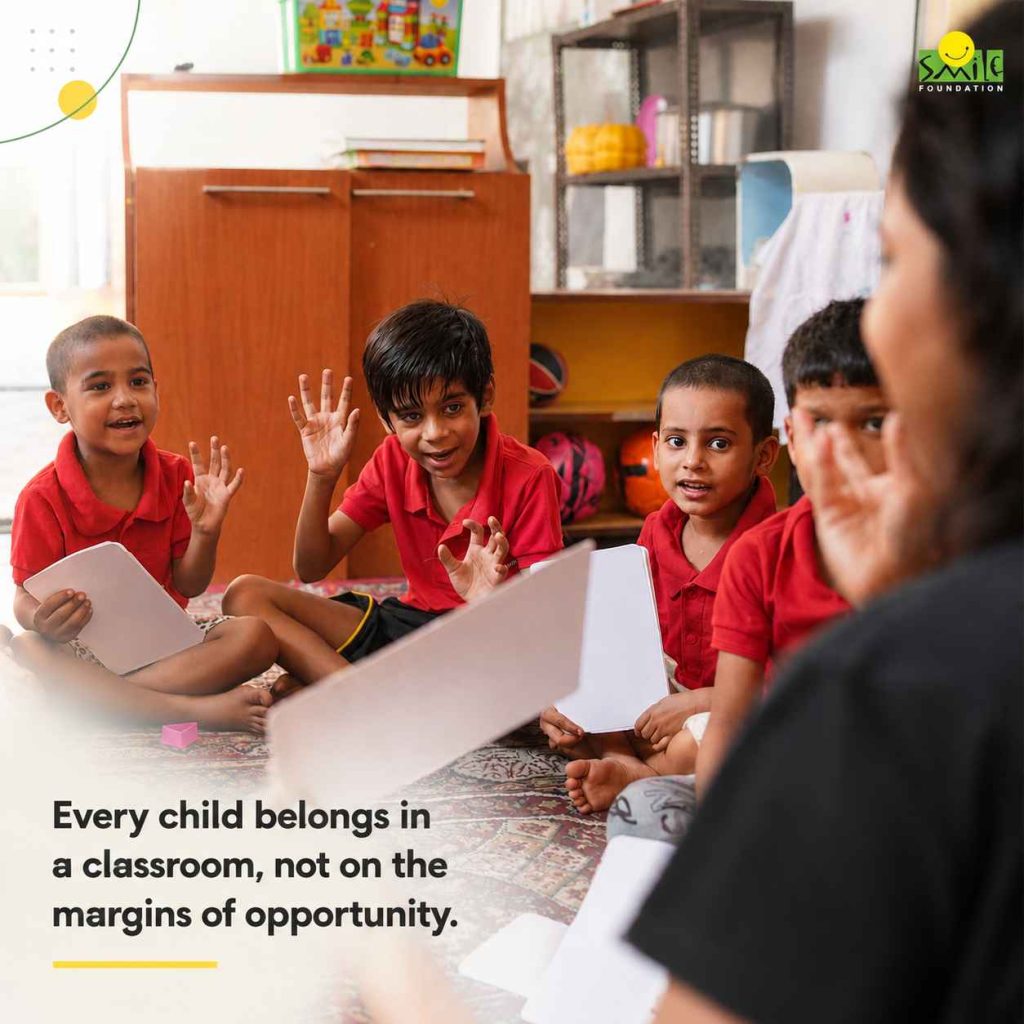
Education is often rightly called a foundation for a better future, and governments around the world have been investing heavily in compulsory and free education policies. These state-backed interventions aim to ensure that every child has the opportunity to learn and build a better life for themselves. Despite this, millions of children continue to dropout of school every year. It raises a very important question: if education is free, why are children still leaving classrooms behind?
The answer lies in understanding the systemic problems that children continue to face, and it is much more than just the tuition fees. Especially for children from underprivileged backgrounds, the barriers to education are deeply connected and rooted in poverty, social imbalance and inequality, health, child labour, migration, gender, family issues and circumstances and a glaring lack of support systems. All of these need to be understood and addressed to get these children who choose not to pursue an education back into the classrooms.
India’s Dropout Problem: What the data shows
India has made significant progress over the past few decades in improving access to education for children. According to UDISE+ (Unified District Information System for Education) data released by the Ministry of Education, dropout rates remain significantly higher at the secondary level than at the elementary level, despite all progress. By implementing policies such as the Right to Education (RTE) Act, the national secondary dropout rate dropped from 13.8% in 2022-23 to 8.2% in 2024-25, indicating progress, but there is a lot more to be done.
The data also reflects that the primary education retention rate is a very healthy 92.4%, the elementary retention rate is 82.8%, the secondary retention rate is 62.9% and the higher secondary retention rate is 47.2%. This means that nearly one out of two students entering class 9 does not even complete class 12. The situation is exponentially worse in economically vulnerable and weaker sections and in rural areas, where dropout rates rise due to societal inequalities.
The biggest barrier
Without an iota of doubt, poverty remains the biggest hurdle to school dropouts. Free schooling does not entail cost-free education, as families still need to bear indirect expenses such as uniforms, transportation, digital access, stationery, books, exam fees, etc. For low-income households, managing all such ancillary costs becomes unbearable and unmanageable. UNICEF’s 2024 report on child labour and schooling in India highlights that poverty and economic distress remain the key drivers of children dropping out of school early. Many children are pushed into labour to supplement household income, especially in informal sectors like agriculture, construction, domestic work and family businesses.
Globally, UNICEF and the International Labour Organisation (ILO) estimated that about 138 million children were engaged in child labour in 2024, with 54 million being involved in hazardous work, with a majority of the numbers accounting for Africa and Asia. In India, the overlap between child labour and school dropout remains significant, particularly among migrant families and underserved communities.
Recent challenges faced
The COVID-19 pandemic of 2020 and 2021 recently exposed the deep crevasses and inequalities of the Indian education system. It exacerbated and accelerated the risk of school dropout among the society’s most vulnerable students. According to the Annual Status of Education Report (ASER) 2024, while smartphone access improved considerably, nearly 1 in 4 students still lacked access to digital learning resources during school classes. This disproportionately affected children from low-income families, migrant households and rural and remote communities.
Educational experts have always warned that prolonged learning gaps often lead to disengagement among students and children, reduced confidence, and eventually school dropout, especially among first-generation learners. Migration-related issues have also worsened the situation, with students in migrant families facing the brunt of school dropouts. UNESCO estimates that globally, more than 24 million children may never return to school after pandemic-related disruptions, with children in developing economies facing the greatest risk.
Recognising these gaps, Smile Foundation has widened its focus to strengthen foundational learning and community-based education support. Through our Mission Education programme, we work directly in underserved communities to provide remedial learning support, bridge literacy and numeracy gaps, and ensure continuous academic engagement for children at risk of dropping out. Along with providing classroom support, we heavily engage with parents and local stakeholders to build awareness of the importance of schooling and of children’s need to continue attending school.

Secondary education is the worst performer
While India has significantly improved in cutting down primary dropout rates, the transition to secondary education remains the biggest challenge. Various external factors, such as pressure to earn income, lack of nearby secondary schools, poor transportation access, early marriage, academic stress, inadequate career guidance and low perceived value of education, remain the biggest hurdles for children attending secondary schools.
In Maharashtra, the UDISE+ data shows that over 12% boys and about 10% of girls dropped out of Class 9 and 10 standards during the 2024-2025 academic year. Experts have also been pointing to various infrastructure gaps in the system, where thousands of students in the country continue to learn without adequate teachers being available, and most lack digital learning facilities and proper sanitation infrastructure.
Girl students face an even greater challenge in completing their own education. Some common reasons include early marriage, domestic responsibilities, menstrual hygiene challenges, safety concerns during travel and other social norms prioritising boys’ education. Girls still face an abnormally bigger hurdle in completing their own education in the country.
Role of civil society vis-à-vis Smile Foundation
Our programmes play a crucial role in reducing school dropouts by addressing the broader ecosystem around education and proactively implementing strategies to help children stay in school and pursue a meaningful education.
Through Mission Education, we support underprivileged children across rural and urban India by providing access to quality education, remedial learning support, digital education, nutrition and healthcare, community engagement and life skills development.
Our Shiksha Na Ruke initiative was launched to ensure continuity of learning during and after the COVID pandemic. The programme specifically targeted vulnerable students, helping them stay connected to education through digital devices, worksheets, bridge learning and mentoring support.

Our models are designed to recognise that education cannot be separated from nutrition, emotional well-being, family income and community awareness. By working directly with children, parents, teachers and local stakeholders, the organisation helps build long-term educational resilience.
Moving beyond the numbers
India’s education system has made important gains in access, but several other challenges remain, such as student retention and meaningful learning. The dropout crisis demonstrates that free schooling alone is not sufficient, and children also need financial stability, a safe learning environment, emotional support and well-being, quality teaching, digital inclusion and inclusivity, nutrition and healthcare and also eventually find pathways to future employment.
Reducing dropout rates requires a holistic approach that addresses both classroom learning and the social realities and challenges that the children face outside school.
Every child who leaves school prematurely represents lost human potential, which must be curbed on a war footing if we are to make meaningful education gains beyond mere data and numbers. Ensuring that children not only enrol but remain and thrive in school is essential for India’s social and economic future. Education must not stop at access; it must continue until every child has the opportunity to learn, grow, and build a dignified future for the country.
FAQs
Q1. Why do children drop out of school even when education is free?
Free schooling doesn’t eliminate all costs. Families still pay for uniforms, textbooks, transport, and exam fees. Beyond finances, barriers like poverty, child labour, early marriage, poor infrastructure and lack of support systems push children — especially from vulnerable backgrounds — out of school.
Q2. What do India’s current school dropout statistics look like?
According to UDISE+ data, India’s national secondary dropout rate fell to 8.2% in 2024–25. However, the higher secondary retention rate is only 47.2%, meaning nearly half of students who enter Class 9 don’t complete Class 12 — a stark indicator of how much work remains.
Q3. Which children are most at risk of dropping out of school in India?
Children from low-income and migrant families, girls facing early marriage or safety concerns, students in rural and remote areas, and those belonging to socially and economically disadvantaged groups face the highest dropout risk.
Q4. How did COVID-19 affect school dropout rates?
The pandemic disrupted learning for millions of students. With nearly 1 in 4 students lacking access to digital learning resources, prolonged gaps led to disengagement and reduced confidence — particularly among first-generation learners and children in low-income households.
Q5. What role does child labour play in school dropouts?
Globally, around 138 million children were engaged in child labour in 2024. In India, the overlap between child labour and school dropout is significant, especially in informal sectors like agriculture, construction and domestic work, where economic distress forces families to prioritise income over education.
Q6. What measures are being taken to reduce dropout rates in India?
Government policies like the Right to Education Act have made notable progress. Organisations like Smile Foundation complement these efforts through programmes like Mission Education and Shiksha Na Ruke, offering remedial learning, digital access, nutrition, healthcare and community engagement to keep vulnerable children in school.