
The promise and the paradox
It is a story of both triumph and tragedy. In just two decades, India has pulled off extraordinary feats: it eradicated polio, halved maternal mortality, extended life expectancy and, during the pandemic, ran the world’s largest vaccination drive, administering more than two billion doses through a homegrown digital platform.
But, for every success, there is a worrisome statistic. India remains home to the largest number of stunted children in the world — more than one in three under the age of five. Tuberculosis still kills more Indians every year than any other infectious disease. And even as communicable diseases linger, non-communicable conditions like diabetes, hypertension and heart disease have surged, accounting for more than 60 percent of deaths today.
The paradox of India’s public health system is not of absence, but of unevenness: breath-taking achievements on one hand, persistent fragility on the other.
Legacies of a patchwork system
India’s health system was designed, at least on paper, to be comprehensive. The pyramid model envisioned sub-centres and primary health centres in villages, community health centres at the block level and district hospitals serving as the backbone, with medical colleges and apex institutes offering specialised care.
But this architecture was always underfunded. India spends only 2.1 percent of its GDP on health — among the lowest in the world. As a result, infrastructure has been skeletal in many states: sub-centres without doctors, hospitals without oxygen plants and rural clinics lacking even electricity or running water.
The result is a patchwork of experiences. In Kerala, a pregnant woman can expect near-universal institutional delivery and skilled care. In parts of Madhya Pradesh, that same mother might deliver without trained assistance, her child facing an infant mortality rate nearly nine times higher. India does not have one health system; it has many, divided by geography, wealth, caste and gender.
The human face of health: Frontline workers
If the system has not collapsed under the weight of these inequities, it is because of the invisible army of women who keep it standing.
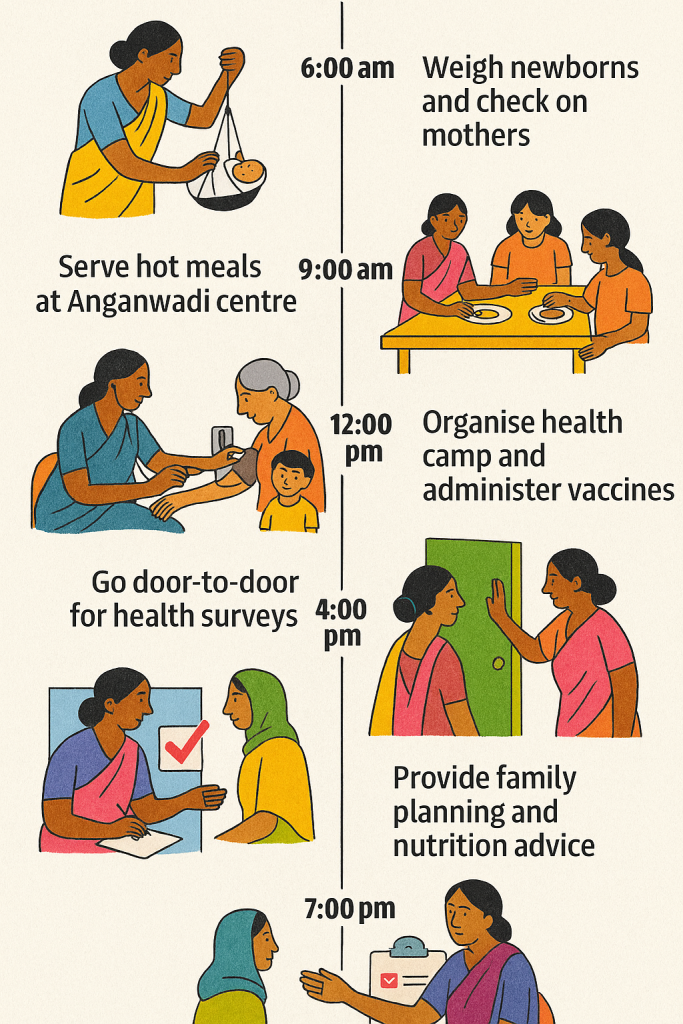
The ASHAs — Accredited Social Health Activists — serve as the first link between the state and her community. She walks miles under the sun to convince families to vaccinate their children, accompanies expectant mothers to health centres and explains to adolescents why nutrition matters. Anganwadi workers, another 1.3 million, provide early childhood care, hot meals and basic education in village centres, often with little more than a single room and a blackboard.
During COVID-19, these women became frontline warriors — tracking cases, delivering medicines, escorting patients to hospitals. Many fell sick themselves; some died. Their honorarium, often less than a daily wage in the city, was their only compensation.
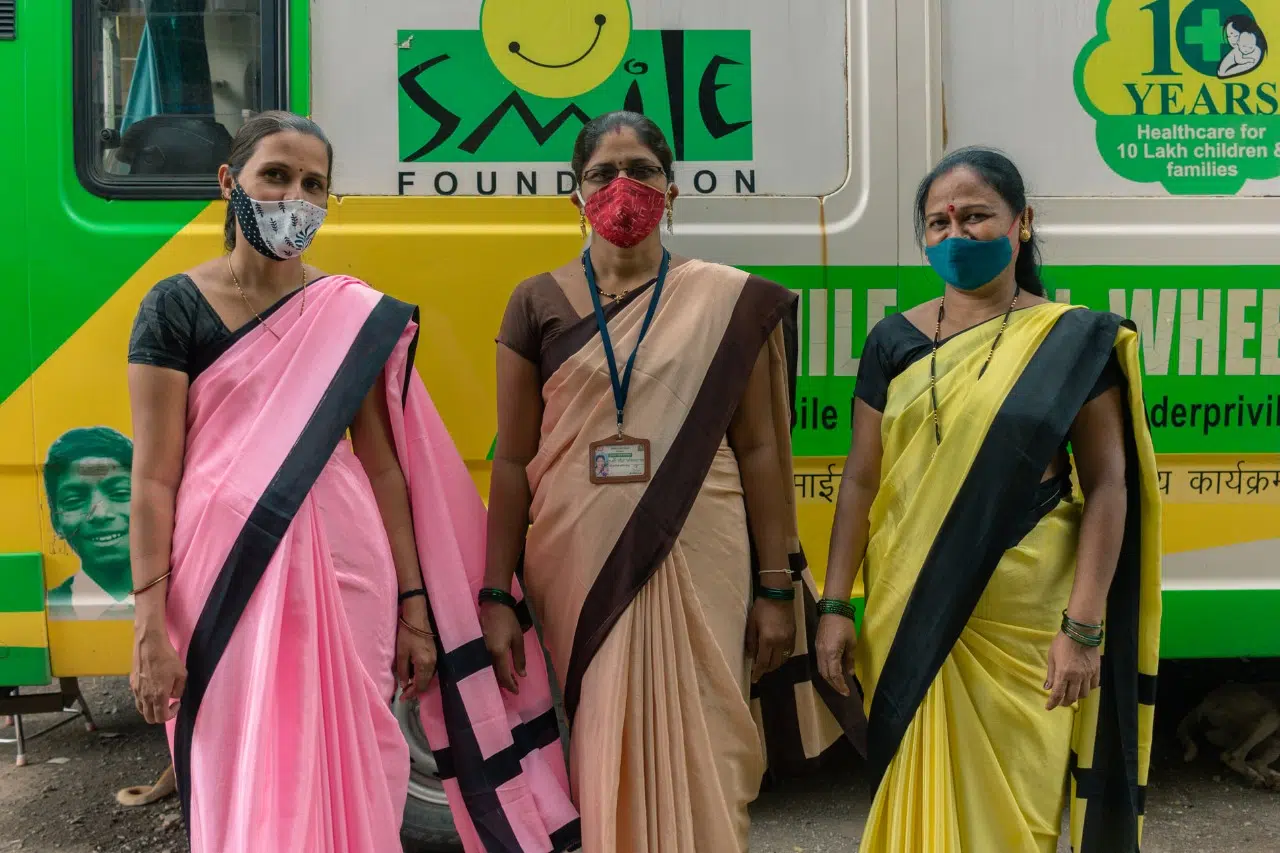
Civil society organisations, including Smile Foundation, have long recognised the value of working with this cadre. From supporting ASHAs in maternal health awareness campaigns to strengthening Anganwadi infrastructure through partnerships with corporate donors, NGOs amplify what the state begins. But somehow India’s public health system rests on the shoulders of women who are still not formally recognised as workers.
Ambitious programmes, uneven realities
India does not lack ambition. The launch of the National Health Mission in 2005 created a new vocabulary of primary care and community participation. The Ayushman Bharat programme of 2018 sought to transform health access through two pillars: Health and Wellness Centres offering preventive, comprehensive care; and the Pradhan Mantri Jan Arogya Yojana (PM-JAY), the world’s largest health insurance scheme, covering half a billion people.
On paper, these are game-changing interventions. In reality, they face hurdles. PM-JAY has struggled with uneven participation by private hospitals, especially in rural areas and allegations of fraud. Health and Wellness Centres, envisioned as the new fulcrum of primary care, have been slow to scale. Critics warn that without strong investment in preventive health, insurance will end up subsidizing hospitalisation, not reducing it.
Nutrition policy tells a similar story. POSHAN Abhiyaan, launched in 2018, was meant to converge multiple schemes to reduce stunting and anaemia. Progress has been incremental but insufficient with more than half of Indian women of reproductive age are still anaemic and childhood wasting rates remain stubbornly high.
Ambition is not India’s problem. Execution is.
The COVID-19 stress test
The pandemic exposed both the fragility and resilience of India’s health system. Hospitals ran out of oxygen, families scrambled for beds and crematoriums overflowed during the devastating second wave. At the same time, local innovations saved lives: community kitchens, mobile health vans, grassroots volunteers and the relentless work of ASHAs and Anganwadi workers.
India also delivered a remarkable achievement: over two billion vaccine doses administered, powered by CoWIN, a digital platform built at scale and speed. It proved that with political will and technological innovation, the country can deliver. The question is whether that urgency can be applied outside a crisis.
The new frontiers: NCDs, mental health and climate
While India is still fighting tuberculosis and dengue, new frontiers of public health demand attention.
- Non-communicable diseases (NCDs): With 77 million diabetics, India is often called the “diabetes capital of the world.” Hypertension affects one in four adults. These chronic conditions require lifelong management — a challenge for systems designed to tackle acute infections.
- Mental health: For decades, mental illness was pushed to the margins. The Mental Healthcare Act (2017) promised parity with physical health, but funding remains below 1 percent of the health budget. The pandemic worsened the crisis, yet services are woefully inadequate, with less than one psychiatrist per lakh people.
- Climate change: Rising heatwaves, floods and pollution are no longer environmental issues alone — they are health issues. Air pollution is now the second-highest risk factor for premature death in India. Climate-resilient health systems are no longer optional.
The cost of neglect
Underinvestment in health is not just a moral failure; it is an economic one. Out-of-pocket spending still makes up more than half of total health expenditure. Every year, millions are pushed below the poverty line because of medical bills. Productivity losses from malnutrition, untreated illnesses and NCDs run into billions of dollars.
The World Bank estimates that every dollar invested in early childhood health and nutrition yields up to $14 in returns. By that measure, India is leaving trillions on the table by failing to invest enough in its people’s health.
Civil society and the bridges they build
Government programmes, however ambitious, cannot succeed alone. Civil society organisations have long filled the gaps — in awareness, last-mile delivery and innovation. Smile Foundation, for instance, runs Smile on Wheels, a fleet of mobile hospitals that bring doctors and diagnostics to underserved areas. During floods in Kerala and Assam, Smile worked on restoring schools and health services, not just distributing rations.
These interventions may be small compared to national schemes, but they matter deeply to the families they touch. More importantly, they demonstrate what works combining state resources with community trust and pairing ambition with grassroots execution.
Towards a public health state
So, what will it take for India to move from survival to dignity in public health? Three shifts are essential.
First, money on the table. Without raising public health spending to at least 3 percent of GDP, infrastructure, workforce, and primary care will remain fragile. Second, focus on prevention, not just cure. Insurance schemes must not crowd out investments in nutrition, sanitation and awareness. Finally, recognition of the frontline. ASHAs and Anganwadi workers must be professionalised, paid and supported — because the future of India’s health depends on their labour.
Choosing the future
India stands at a crossroads. It has proven that it can deliver — eradicating polio, expanding institutional births, building a digital vaccination platform at scale. But it has also revealed how underinvestment, inequity and neglect can undo progress overnight.
The next chapter of India’s public health story must be about systems, not silos; dignity, not just survival. The state must lead, but it cannot do it alone. Civil society, corporations and communities all have a role to play.
As Smile Foundation’s work across villages and slums shows, health is not just about hospitals or insurance cards. It is about the confidence of a mother that her child will survive, the assurance of a worker that illness will not bankrupt him and the dignity of a frontline health worker who is finally valued for her labour.
In the end, public health is not a sector. It is the foundation of everything else — education, productivity, growth, equality. India’s future depends on whether it chooses to build that foundation strong and unshakeable.