
Categories
Education

Rethinking Equity in Indian Education

In 2010, India enshrined the Right to Education into law. Yet, more than a decade later, for millions of children, especially those in marginalised communities, education remains a promise deferred. The law guarantees a seat in the classroom, but it does not ensure what happens inside it — nor does it address the ecosystem that surrounds the child.

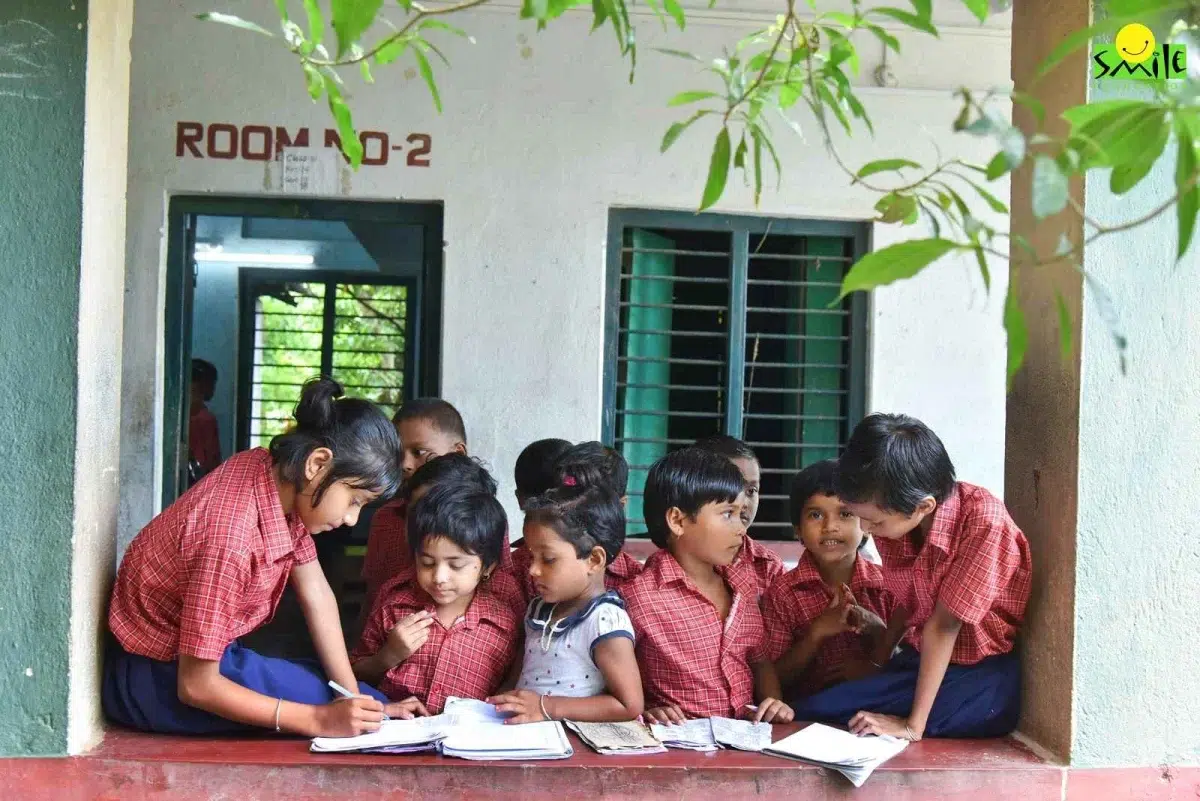
Smile Foundation working across 27 states in India has taken a systems-level view to bridge this gap. Through our Mission Education initiative, it reaches over 160,000 children annually — not just enrolling them in school, but investing in the constellation of factors that enable true learning: infrastructure, pedagogy, nutrition, community, and digital equity. The result is one of India’s most scaled, holistic, and evidence-informed education programmes in the development space.

At its core, the initiative is driven by a belief that access alone is not equity. Without a shift in how India delivers and supports education, vulnerable children risk being left behind — in learning outcomes, in life opportunities, and in the promise of economic mobility.

A systems problem, not just a school problem

India’s National Education Policy (NEP) of 2020 made bold moves by calling for universal foundational literacy and numeracy, reformed curriculum design, and emphasised experiential learning. But implementation, especially in government schools, has been uneven. Foundational gaps in literacy and numeracy persist. According to ASER 2023, only 50% of Class 5 students can read a Class 2-level text. This is a signal of systemic failure.

What holds children back is not just the quality of teaching but the world around them: a school without toilets, a home without electricity, a mother too burdened to attend a PTA meeting, or a teacher untrained in how to help a first-generation learner cope with trauma. Smile Foundation’s work is rooted in recognising this complexity.

A four-pronged model

Rather than pursue scale in the Indian education space through replication alone, Smile Foundation has adopted a four-pronged strategy that adapts to local contexts while keeping children at the centre:

  1. Child-Centric Support: From early childhood education through senior secondary school, the Foundation supports children aged 3 to 18. The emphasis is on socio-emotional well-being alongside academic success — a crucial element in high-poverty settings. Students receive counseling, nutritious meals, hygiene sessions, and health interventions to foster readiness for learning.
  2. Teacher Empowerment: In 2023–24, 86 training sessions were conducted for 482 teachers and 116 principals. These sessions covered activity-based learning, classroom management, lesson planning, and use of digital tools. It’s both professional development and a pipeline for pedagogical resilience.
  3. Learning Environments: The programme invests in green infrastructure (solar panels, drinking water facilities), visual learning through BaLA (Building as Learning Aid) artwork, and safe campuses with CCTV and repaired plumbing. STEM and language labs have been established across centres, complemented by the distribution of math toolkits, DIY kits, and educational tablets.
  4. Community Engagement: Through mothers’ groups, school management committees, and local leadership, Smile Foundation anchors its centres in community ownership. When parents feel part of their child’s education journey, dropout rates decline and aspirations rise.

Rewiring equity through innovation in Indian education system

The Foundation’s partnerships reflect a commitment to pushing boundaries. In collaboration with Symbiosis Institute of Management, children have been exposed to coding, mechanics, and bot-making. IIT Mumbai facilitated workshops in robotics and energy. Entecres and Elements brought DIY kits and digital video libraries into classrooms. And with iDream Education and BYJU’S, students gained access to customised digital learning resources that extend beyond textbooks.

These are not one-off CSR interventions. They are structured knowledge partnerships that speak to a new model of social innovation — one that bridges the nonprofit, academic, and private sectors to serve public good.

Girls in focus: From vocational learning to leadership in the story of Indian education

Gender remains one of the most persistent axes of inequality in the Indian education landscape. Smile Foundation has gone beyond parity in enrollment by supporting over 44,000 girls through in-school vocational education programmes in 15 states. These programmes cover trades like organic farming, recycling, basic electronics, and repair — skills often overlooked in formal curricula but crucial for local employment.

Such training not only builds confidence but enables girls to envision futures outside the limitations of early marriage or unpaid domestic labour. Vocational exposure is a bridge to dignity.

From scholarship to social mobility

The Foundation also manages a merit-based scholarship programme to support higher education, especially in technical and engineering streams. In 2023 alone, over 2,000 students were provided with multi-year scholarships, laptops, employability skills, and industry exposure.

These are not just financial awards. The programme ensures that scholars receive domain-specific skills, placement readiness training, and mentoring — creating a scaffold for transformation. Scholars like Sneha from Karnataka and Sakshi from Mumbai speak of a deep personal shift: from survival to ambition, from subsistence to contribution.

“My father is an electrician, and my mother manages the household with impossible grace,” says Sneha, now a second-year engineering student. “The scholarship makes me feel that I’m not alone in this journey.”

Outcomes, not optics

The scale of operations — 735 education centres660+ government schools supportedover 44,000 girls in vocational programmes — is significant. But the Foundation resists the temptation of impact-washing. Instead, we place faith in longitudinal tracking, school assessments, and third-party evaluations.

In collaboration with Erewhon Innovation Consulting, a study was conducted to identify gaps in Atal Tinkering Labs, and how best to train teachers to leverage them. This kind of reflective loop, from program delivery to systems diagnosis, is what separates Smile Foundation from transactional service providers.

Rethinking what it means to “Scale”

One of the most critical insights from Smile Foundation’s work is that scale does not mean homogeneity. Instead, it means deep localisation with systemic intelligence. A classroom in Kalahandi, Odisha, has different realities than one in Mumbai’s Dharavi. Yet, what connects them is a framework of dignity, inclusion, and possibility.

This is where traditional education interventions often falter. They push for scalability at the cost of relevance. By contrast, Smile Foundation’s model has found a way to scale without flattening diversity by anchoring deeply in local needs while embedding global best practices.

The way forward

The Indian education landscape is at a pivotal moment. On one hand, digital inclusion is accelerating. On the other, foundational learning remains precarious. AI-based English reading software might coexist with first-generation learners still struggling to grasp basic numeracy. The bridge between these two Indias will not be built by technology or policy alone but by practice, perseverance, and proximity.

Smile Foundation’s model is not perfect. It is not simple. But it is intentional, and that is what systemic change demands.

As the world looks at India — home to the largest youth population on the planet — the question is no longer whether we can get every child into school. The question is: What happens after the child gets there?

Categories
Education

How Web 3 is Changing the Indian Education System?

Education is a key element for human flourishing – Education author Paul Spears

Societies have discussed growth, innovation and progress throughout history. Following independence, Indian education system didn’t invite many changes for several decades.

In the last few decades, things began to improve and the tech boom has made the sector ready to make significant advancements.

Similar to Y2K and the beginning of the digital information age, we are currently on the verge of a significant change. The main distinction is that this transformation is accompanied by a sense of exhilaration and development rather than dread.

The shift being discussed here is the current hot topic– the introduction of Web3, often known as the “semantic Web,” “spatial Web,” or “the 3D Web of the future.”

System of Education Evolution

The Indian education system is undergoing constant change, with the first stage focusing on colleges and universities taking their course materials online.

An era of online learning systems, including Khan Academy, Udemy, and Coursera, among others, that make some curriculum accessible to students across the world is gaining enviable traction. Currently, as we transition into the upcoming next generation educational system, we are still in the “second phase.”

Our learning processes are evolving. We are no longer restricted to conventional classrooms or the college calendar. Thanks to technological advancements, learning is now practically always taking place outside of the four walls of a traditional classroom or educational institution.

We have modern access to resources and ideas because of technology. Access to these materials will increase as we move into the digital age. Future education will be decentralised and increasingly collaborative in nature.

Arrival of Web3 and Significant Changes to Our Education System

By 2030, India wants to have a Gross Enrollment Ratio of 100%. Decentralising education will make this possible by integrating attendance, evaluation, content production and results into one platform.

A tamper-proof record will be used to track academics, fees, extracurricular activities and elective courses. Additionally, Web3’s decentralised approach will make it simpler to sustain faculty performance. Mobile learning has only accelerated the expansion of independent learning from anywhere around the world. 

Mobile learning is the fastest growing market in education, with an average growth rate of 20% year-on -year. By 2027, its market value would be $80 billion!” – Edapp

In conclusion, the web 3.0 technology provides several advantages for the educational field. Among these advantages are– 

  • Improved Accessibility to Educational Resources and Materials– With web 3.0, educational institutions can use blockchain technology to make their information more available to a wider audience. This makes it possible for students who live in rural locations or are unable to travel to obtain important course materials.
  • Increased Security and Data Privacy– Due to its decentralised nature, blockchain technology offers a safe environment for the transmission and storage of data. This means that educational institutions can safeguard student information themselves, independent of outside parties like insurers or landlords, from misuse and unlawful access.

Education Decentralisation

Credentials won’t be managed by a single institution in a Web 3 world. The ability of blockchains to preserve proof of labour and history allows students to build their own portfolios, which may include group projects with classmates or internships during the school year. 

Web3 and Experience of Teaching and Learning

The Decentralised Autonomous Organisations (DAOs) of MOOCs (Massive Open Online Courses) are establishing a new era of social and financial incentive models. MOOCs have started to integrate authority and value from traditional legacy systems like schools and universities. It won’t be long before education systems are powered by web 3 instead of outdated systems.

The following are some uses for Web3 technology–

  • The incorporation of Scalable Vector Graphics (SVG) will provide a 3D online experience that is immersive. Rich multimedia can also be used to provide a significant amount of content for the Virtual Encyclopaedia that will support the context.
  • The use of multisensory effects like animation and virtual reality by educational institutions can help primary school students learn more effectively (VR).
  • The modern search engines have evolved into “intelligent search engines” with the help of learning Web3 and Web3 Semantic web and organised data. Therefore, finding instructional content will take less time.
  • The implementation of Web3 will make it simpler for educational institutions to raise donations because of its feature decentralisation.

Additionally, access to the Internet has become simpler for a small cost because of digitisation initiatives. As a result of knowledge being readily available on mobile devices, learning expenses would be decreased. Access to education in an organised fashion will also significantly reduce the illiteracy rate.

Finally, a variety of tools will be available to double-check the veracity of any response. Additionally, students will contribute to the construction of instructional content.

How Web3 education will address the issues with the current Indian educational system

There’s no doubt that the impact of technology on education is huge. A decentralised platform called Web3 that utilises blockchain technology might be able to address some of the issues of the current Indian education system. 

Both a brain drain and a shortage of funding and resources make it difficult for schools to offer high-quality education. By giving students and teachers a more effective and user-friendly platform, Web3 could aid in resolving these problems.

With Web 3, students will have accessibility to information from any location at any time, allowing them to learn how to generate their own content. 

There are some problems, such as censorship or developer-related problems. Who will tag the online informational pieces, furthermore? By developing policies and establishing specific goals, we can eliminate these problems.

The government is prepared to use Web3 and Blockchain to give every individual an enormous opportunity. The India Blockchain Forum was introduced in August 2022 by Jayesh Ranjan, Principal Secretary, Industry & Commerce and IT, Government of Telangana to incorporate Web3 in the Indian educational system holistically, with a focus on raising awareness and encouraging collaboration between regulators, academics and industry.

The goal is to work together with international research organisations to establish a thriving higher education sector in India. Less brain drain will occur as a result of improved education and employment prospects. Young people will be more willing to support the development of the Indian economy.

India is in a Good Position to Adopt Web3

Countries with a robust and expanding technology sector will have an advantage in the coming years. This is particularly true for a nation like India, that is quickly embracing Web3, a brand-new area of blockchain technology. 

Developers with aptitude and expertise in coding and cryptography can be found in great abundance in India. Additionally, there are many software engineers and business owners in the nation. All these elements put India in a strong position to adopt Web3 and take the lead in this emerging industry. 

As entry hurdles for higher learning continue to decrease, education will be more accessible and efficient than ever before in a Web3 world!

Conclusion: Is it Credible?

The quick response is yes. The legitimacy of Web3 comes from the fact that learning institutions in the metaverse will need a DAO (decentralised autonomous organisations) certification, much like institutions that demand accreditations and certifications from Registrars to demonstrate validity. 

In order to play to their strengths and improve their life skills, students will finally be able to learn on their own terms. The DAO will enable greater openness in governance and provide students—the main stakeholders—a role in decisions regarding information’s source, substance and distribution.

Web3 brings advantages and access like never before. Experiential learning becomes a lifelong endeavour, a habit led by motivation, and not just a standardised chalk-n-talk methodology.

Smile Foundation and Education

Smile Foundation as a leading development organisation in child education cares strongly about the changes happening in the Indian education system.

It is actively involved in incorporating the digital changes happening in the education landscape through its flagship programme, Mission Education and educating the children who need it the most from underprivileged communities in India.

0%