Categories
Smile

Quality Education & Good Health- Keys to Development

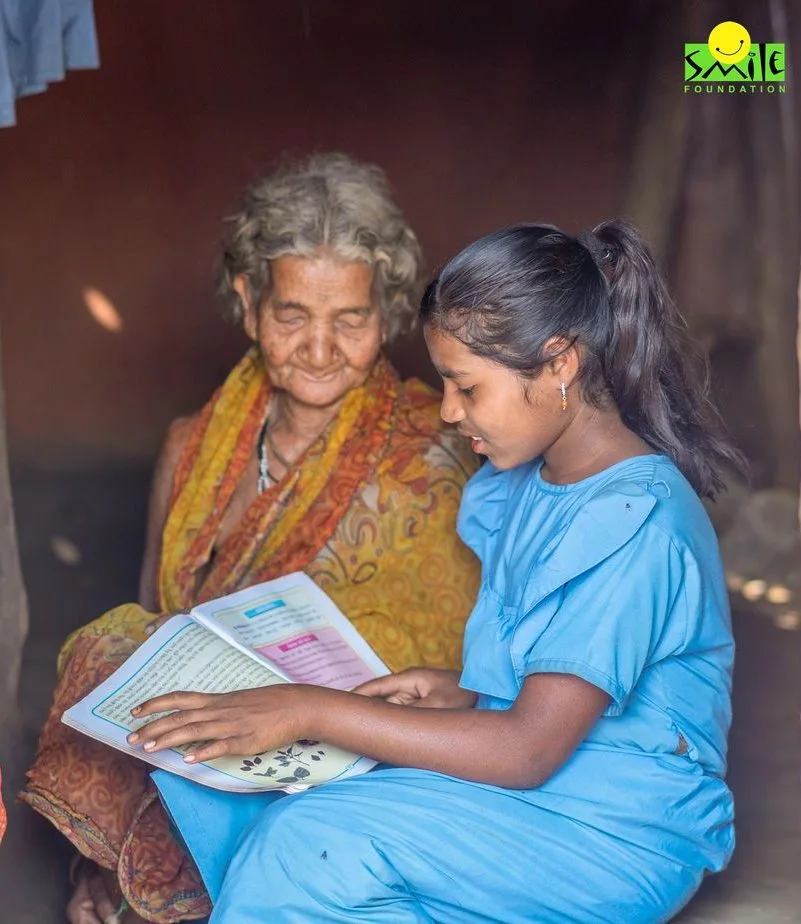
Good health and quality education are often viewed as two distinct pillars of personal and societal development. However, a closer look reveals they are deeply interconnected, creating a powerful synergy that can transform lives and uplift entire communities. Good health enables learning, while quality education can lead to healthier life choices, forming a cycle of improvement that benefits individuals and societies alike. 

As we look toward a future of sustainable development, it’s crucial to understand how health and education intersect and why promoting both together can lead to far-reaching positive change. In a world striving for equity and growth, the symbiosis of health and education is essential for creating not only a better life but a brighter future.

Good Health and Quality Education- The Connection

Health and education do not exist in silos; rather, they profoundly influence each other across multiple levels. Studies reveal that better education leads to healthier life choices. According to the World Health Organization (WHO), educated individuals are more likely to avoid smoking and understand nutrition, exercise, and mental health. Education facilitates awareness of diseases, vaccines, and preventive care, reducing mortality rates. Educated women, for example, are more likely to seek maternal healthcare, benefiting both mother and child.

Likewise, good health is crucial for educational success. Well-nourished, vaccinated children perform better in school. UNICEF notes that malnutrition can significantly reduce school performance due to developmental delays and chronic health conditions. This issue is especially pressing in India, where nearly 43 lakhs of children are malnourished. Tackling these health barriers ensures that children can not only attend school but thrive academically. 

Schools as Catalysts for Health

Schools play a crucial role as hubs of health promotion, especially in communities where healthcare services may be limited. Initiatives within schools can effectively reach large groups of children.  From comprehensive sex education to hygiene and nutrition classes, schools can be ideal platforms for promoting lifelong healthy behaviors. Evidence suggests that countries investing in integrated health and education strategies see improved outcomes in areas like school attendance, literacy, and life expectancy.

In developing countries, where lack of access to basic healthcare, poor sanitation, and limited health education contribute to higher absenteeism and dropout rates, the need for health services in schools is even more pressing.

Bridging Health and Education: Global Efforts and Indian Initiatives

The Sustainable Development Goals (SDGs) have dedicated two separate but linked goals—Goal 3 for health and Goal 4 for quality education. These goals encourage nations to create systems that allow children to learn in safe, healthy environments. Programs like UNICEF’s WASH (Water, Sanitation, and Hygiene) in Schools provide clean water, sanitation, and hygiene practices, transforming health and education for millions in low-income countries. Similarly, the WHO’s Global School Health Initiative promotes school-based health programs, particularly in lower-income areas, enhancing student well-being, reducing absenteeism, and boosting health literacy. 

Rashtriya Kishor Swasthya Karyakram is an initiative that aims to bridge health and education by providing young people with resources on physical, mental, and reproductive health. Additionally, the Midday Meal Scheme, serving over 100 million children every day, combats malnutrition and boosts attendance. These programs recognize the inseparable link between health and education and underscores the importance of investing in both for widespread societal benefits.

Breaking the Poverty Cycle Through Health and Education

Poverty is a barrier to both health and education. Poor health often leads to higher absenteeism in school, hindering educational progress and limiting future economic opportunities. Similarly, lack of education may lead to low-income jobs and restricted access to health services, perpetuating poverty across generations.

WHO estimates that 100 million people are pushed into extreme poverty every year due to healthcare costs. In India, out-of-pocket health expenses constitute a significant burden for low-income families, resulting in reduced investment in education and dropouts. Breaking this cycle by implementing policies that improve both health and education access can lift entire families out of deprivation.

Mental Health: The Overlooked Link Between Health and Education

While physical health has long been associated with educational success, mental health is often overlooked. Mental health issues like anxiety and depression can severely affect academic performance and social development, especially among adolescents. Globally, the WHO reports that 10–20% of children and adolescents experience mental health conditions, yet these often go unaddressed, particularly in low-income regions.

In India, mental health support in schools is limited, but the need is growing. Schools that integrate mental health education and provide support through counseling and peer support programs can improve learning outcomes and contribute to healthier, more resilient individuals. 

Challenges and Opportunities

Despite significant progress, barriers like inadequate funding, infrastructure, and trained staff limits the effectiveness of health programs in schools, particularly in rural areas. Bridging these gaps will require sustained investment and a sincere commitment from the government, non-governmental organizations, corporate sector as well as community.

The rise of digital health tools offers an innovative solution to the challenges of integrating health services into educational systems. Telemedicine, mobile health apps, and online mental health resources are beginning to bridge healthcare gaps, even in remote areas. Such tools can support school health initiatives and extend their reach to students who would otherwise have limited access to healthcare.

The Bottom Line

The relationship between good health and quality education is clear and profound. Investing in both not only allows individuals to become healthier but also more capable of contributing meaningfully to society. Recognizing that health enables learning and learning promotes health can guide policies toward more holistic development goals. Global and local efforts that bridge health and education gaps move us closer to a future where every child can grow in a healthy, supportive environment. This synergy is more than just a path to personal growth; it forms a foundation for stronger, more resilient societies, creating lasting benefits for future generations.

Smile’s Efforts & Results

Smile Foundation’s LifeCycle approach is grounded in the belief that every aspect of a person’s life is interconnected. Therefore, addressing these dimensions in a holistic and parallel manner is essential. Through initiatives like Mission Education and Smile on Wheels, we support underserved children and their communities, ensuring that improvements in education are coupled with better health and vice versa, creating a continuous cycle of growth.

Each year, over 1.5 million children and families across 2000 villages in 25 states benefit from our targeted interventions in education, health, women’s empowerment and community development.

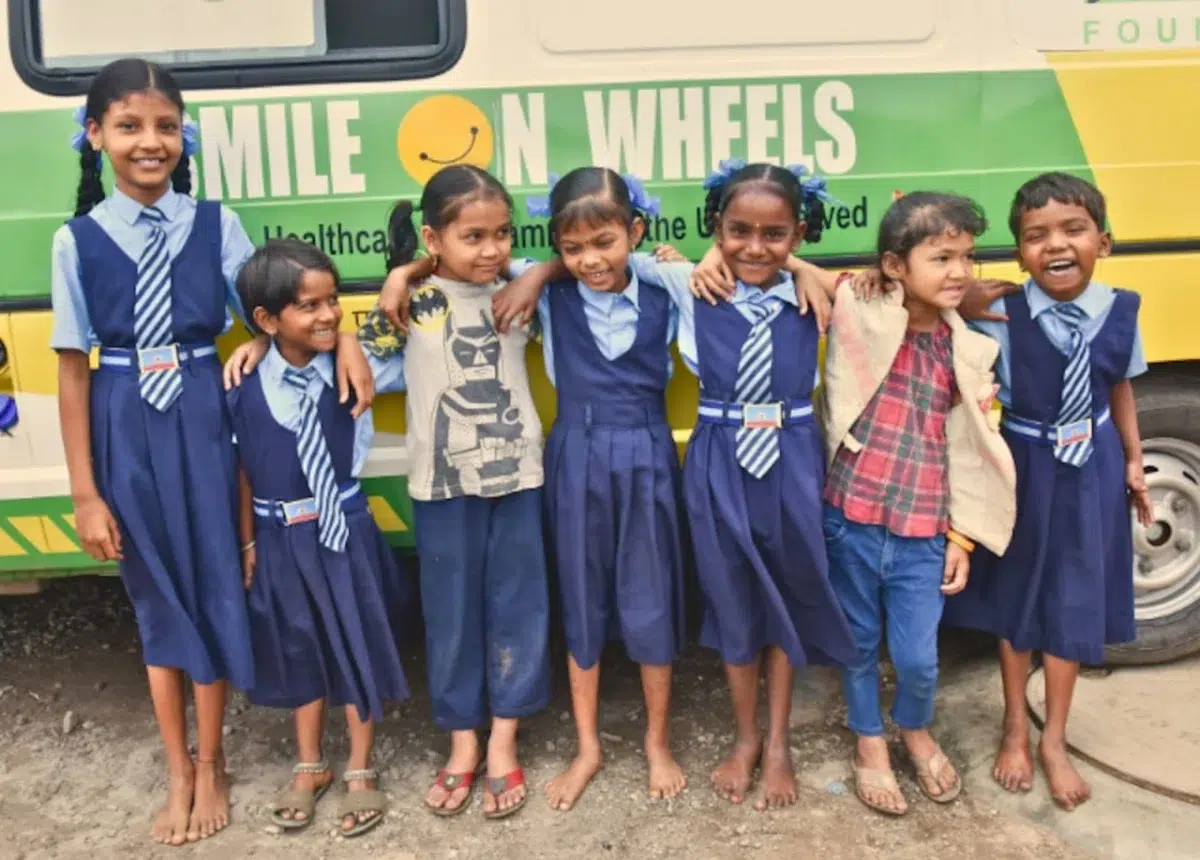
Our flagship educational programme, Mission Education, focuses on foundational literacy and numeracy (FLN) as well as STEAM subjects, ensuring the cognitive development of children. Meanwhile, Smile on Wheels, our mobile healthcare initiative, reaches remote villages, providing preventive healthcare through OPD services, point-of-care testing, and regular health and eye care check-ups, ensuring better health and nutrition for children within healthier communities.

Through these focused efforts, we support marginalised communities with the essential building blocks for an empowered life. To help us continue working towards a healthier, educated, and empowered India, you can support our mission by clicking here.
Categories
Education Smile

Children’s Day: The Promises We Must Keep for Our Children’s Sake

Since 1956, Children’s Day has been celebrated annually in India on November 14, to honour the birth anniversary of former Prime Minister Jawaharlal Nehru. The day is dedicated to recognising the innocence, joy and potential of children, holding immense significance across the country. More than just a celebration, it serves as an opportunity to reflect on the state of children’s rights in India and remind government bodies, educators and parents of their responsibility to provide a safe, healthy and supportive environment for children.  

Various initiatives are undertaken on this day to raise awareness about children’s rights, needs and the importance of their holistic development. Below are some of the key promises we must keep for the sake of our children’s future.

Key Promises for a Healthy Childhood

  1. Promise to Provide Quality Education

For centuries, efforts have been made to ensure that education is both free and mandatory for all children. Yet, we still struggle to ensure that every child attends school. Gone are the days when survival with little or no education was a reality. In today’s fast-paced world, education—acknowledged as a fundamental right—is essential to thrive. It equips children not only with knowledge but also with the skills required to navigate and succeed in a highly competitive marketplace. Only through quality education can a child’s full potential be realised. Education builds confidence, empowers decision-making and offers the means to break the cycle of poverty.  

An educated individual contributes to the economic growth of society and the nation. Countries with strong education systems and higher literacy rates often experience increased productivity and economic development. That’s why the promise to provide quality education must be fulfilled without delay.

  1. Promise to Provide a Clean and Healthy Environment

Modernisation, driven by industries and factories, has undoubtedly contributed to societal progress. However, it has also led to a growing environmental crisis, with pollution levels rising across the globe. Many areas struggle to access clean water, air and sanitation. Exposure to environmental toxins—such as air pollution, lead and pesticides—can severely impact a child’s development, resulting in conditions like asthma, developmental delays and long-term health issues.  

A clean and healthy environment is crucial for a child’s physical, emotional and cognitive development. Access to clean water, nutritious food, and proper sanitation helps prevent health complications, ensuring that children can grow and thrive. In light of the global healthcare challenges we face, it has become urgent to fulfil our promise of providing a healthy and safe environment for children.

  1. Promise of Safety

A child’s environment plays a critical role in shaping their emotional and mental well-being. Children need a safe, nurturing and supportive atmosphere to develop resilience, self-esteem and emotional health. Those who grow up in unsafe or chaotic conditions, characterised by violence, neglect or poverty, are at greater risk of developing mental health issues such as anxiety and depression. On the other hand, children raised in secure, loving environments are more likely to develop empathy, strong social skills and positive relationships.  

Ensuring that children are free from violence, exploitation, and abuse is essential for their safety. A secure environment fosters emotional well-being, promotes positive social behaviours and teaches children to value diversity and inclusivity. These qualities are fundamental for shaping socially responsible and compassionate adults. Ensuring the safety of children is a promise we must uphold to secure their future and well-being.

Smile Foundation’s Contribution 

Founded in 2002, Smile Foundation has worked to uplift children, focusing on education as a primary pillar of empowerment. We believe that education is the key to breaking barriers and creating opportunities. Through our flagship programme, Mission Education, we support underserved children by providing access to quality education, nutrition and healthcare support.  

We support children between the ages of three and 18 from disadvantaged communities, offering them quality education, remedial education, vocational training, scholarships and more. In the financial year 2022-23, Smile Foundation reached over 120,000 children through our education programmes, provided vocational training to more than 44,000 children, supported infrastructure development for 25,000 children and awarded scholarships to nearly 2,000 girls for education.  

Conclusion 

Children’s Day in India is a celebration of our future generation. On this day, we recognise the vast potential of every child and reaffirm the nation’s commitment to nurturing and protecting its youngest citizens. It is a time for reflection on the progress we have made, but also a reminder of the challenges that lie ahead. By keeping the promises made to our children, we can create a just, equitable, and hopeful future for all.

Categories
Education

India trying to Internationalize its Education System

Ancient India has long been celebrated as a global knowledge hub. From the early roots of education in Vedic culture to the famed ancient universities of Takshashila and Nalanda, India attracted students and scholars from across the world. These institutions were not just centers of learning but symbols of a holistic education system that emphasised philosophy, science, mathematics, medicine and arts.  In contrast, the modern Indian education system, though vast, has been criticised for being exam-centric and focused on rote learning rather than inquiry-driven learning. 

Post-colonial India adopted a more rigid education structure, which, although improved access, often left little room for creativity or multidisciplinary exploration. The constraints of this system have been a barrier to innovation, research and critical thinking. This has led an increasing number of Indian students to seek educational opportunities abroad. About 7,50,000 students have traveled abroad to pursue higher education in 2022 alone, while a little over 30,000 international students have enrolled in India in the same year. This emphasises the importance of expanding internationalisation efforts at home.

National Education Policy 2020

The National Education Policy (NEP) 2020 introduced a framework that aims to increase international collaborations, attract foreign students and make Indian institutions more competitive globally. One of its core objectives is to make India an attractive destination for higher education and research by aligning Indian education standards with global quality metrics. By promoting the exchange of ideas and students, NEP aims to create a rich learning ecosystem.

The policy encourages Indian universities to establish partnerships with foreign institutions and attract international students by offering world-class facilities and flexible credit systems. NEP also introduced the concept of dual degrees, joint degrees and credit transfers between Indian and foreign institutions, all of which simplify the education pathway for international students. 

Global Partnerships and Exchange Programmes

International collaborations have been a focus area for India. Several universities have signed Memoranda of Understanding (MOUs) with foreign institutions to facilitate research, student exchange and curriculum development. In addition, India has promoted exchange programmes under initiatives such as Study in India and the Global Initiative of Academic Networks (GIAN). 

Study in India aims to attract students from countries across Africa, Asia and the Middle East by offering scholarships and simplified admission processes. A dedicated portal called ‘Study in India’ has been developed to address the issues of international students. The portal acts as a single entry point for all students coming to study in Indian Universities onboard all HEIs above a certain ranking and lists all programmes they offer. 

This will facilitate international students in navigating all information about studies in India and act as a guide in choosing the right institute and course that fits their requirements. In 2018, the Indian government allocated around INR 150 crores for Study in India, with the goal of reaching 200,000 foreign students by 2023. However, actual enrollment numbers have fallen short of these expectations, indicating the need for further reforms and better infrastructure.

Education and the Sustainable Development Goals (SDGs)

India’s drive to internationalise its education system aligns with the UN Sustainable Development Goals, especially SDG 4, which advocates for inclusive, high-quality education and lifelong learning. By broadening access to international programmes and elevating curriculum standards, India takes steps toward SDG 4. 

Additionally, SDG 17 emphasises global partnerships, enabling India to collaborate with other countries and adopt educational best practices while sharing its advancements. India’s commitment to these SDGs is reflected in its emphasis on inclusivity and quality improvements in NEP. Initiatives like foreign faculty exchange and encouraging research partnerships can further strengthen India’s education system in line with these goals.

Scholarships and Financial Support 

Financial incentives play a key role in attracting international students. The government and various institutions have introduced scholarships, such as the ICCR (Indian Council for Cultural Relations) scholarships, which fund students from developing countries to study in India. Despite these offerings, however, international student applications have been limited. For example, ICCR awards over 3,000 scholarships annually, yet many scholarships remained underutilised because of complex application procedures. 

Limited awareness, complex application process and the need for additional financial aid might be some of the reasons for the low uptake of scholarships. Additionally, visa processes and administrative hurdles create barriers for international students considering India as their educational destination.

Language and Cultural Barriers

Language and cultural differences might be another crucial barrier in India’s internationalisation efforts. While English is widely used in higher education, many international students may not be proficient. Creating language support systems or multilingual courses can boost inclusivity. Additionally, enhancing cultural integration through orientation programmes, peer support and student clubs helps international students feel welcome, fostering a more accessible and enriching educational experience.

Strengthening Research and Innovation

Research is often the backbone of a globally competitive education system. India’s expenditure on research and development, however, remains low at around 0.65% of its GDP, compared to developed nations like the US, which spends over 2.5% of GDP on R&D. Increasing this funding could significantly improve India’s reputation as a research-friendly destination, attracting international students and faculty with diverse backgrounds and interests.

Conclusion

Higher education plays a crucial role in shaping individuals, societies and the world at large. In today’s interconnected, globalised landscape, internationalising higher education has become essential to equip students for success in a complex, diverse global environment. Embracing global perspectives, encouraging cultural exchange and building partnerships with international institutions can position India as a leading force in the global education arena. 

India has taken significant steps towards internationalising its education system, however, the path faces hurdles in funding, infrastructure and quality alignment with global standards. NEP 2020, scholarship programmes and global partnerships are promising initiatives, yet improvements are needed to attract a more diverse student base and help India establish itself as a true global education hub.

Smile Foundation’s Mission Education programme works to bridge these gaps by promoting inclusive, high-quality education, echoing the goals of India’s National Education Policy (NEP) 2020, which seeks to revitalise the system through international collaborations and a more multidisciplinary approach.

Aligned with the UN’s Sustainable Development Goals, Smile Foundation aims to create a learning environment that empowers children with both academic knowledge and critical life skills, preparing them to engage with the world beyond the classroom. Through partnerships and community support, the programme addresses barriers to education and advocates for accessible learning experiences, nurturing a new generation equipped to contribute meaningfully to society and the global workforce.

Categories
Smile

Why was 15 August 1947 chosen as Independence Day?

As India celebrates its 78th year of independence in 2025, millions across the nation and diaspora unite to commemorate this historic milestone. The Prime Minister hoists the tricolor at Red Fort while Chief Ministers and district officials perform similar ceremonies across states and districts respectively.

Celebrating Freedom and Remembering Sacrifice

Independence Day serves a dual purpose: celebrating our liberty while honoring the countless freedom fighters who sacrificed their lives over nearly two centuries of resistance against British colonial rule. The British Empire controlled India for approximately 200 years before finally departing in 1947.

The Rise and Fall of British Colonial Rule

Initially, the British East India Company arrived in India with commercial ambitions, seeking to establish profitable trading networks for spices, silk, tea, and cotton. India represented an attractive market rich in natural resources and commercial potential. The company aimed to dominate Indian Ocean trade routes.

Gradually, the company expanded beyond commerce into political and military control, officially ruling from 1757. Following the widespread 1857 rebellion against English rule, authority was transferred to the British Crown.

Throughout two centuries of struggle, Indian freedom fighters organized numerous resistance movements including the Quit India Movement, Swadeshi Movement, and Satyagraha. Many gave their lives as martyrs while thousands made tremendous sacrifices. This struggle persisted until India achieved freedom at midnight on August 15, with Jawaharlal Nehru becoming the first Prime Minister as British forces withdrew.

The Curious Choice of August 15

Why was August 15 specifically selected for India’s independence declaration? The answer lies in historical circumstances and personal decisions.

Facing overwhelming pressure from Indian freedom fighters, the British Parliament decided to grant India independence. They mandated Lord Louis Mountbatten, the final British Governor-General, to transfer power by June 30, 1948. According to C. Rajagopalachari, India’s first Governor-General, delaying until 1948 would have left Britain with no meaningful power to transfer.

Instead, Mountbatten moved the date forward to August 15, 1947. He initially justified this acceleration as necessary to prevent further violence and bloodshed, though riots and violence occurred regardless. He later acknowledged that bloodshed typically accompanies the end of colonial rule, calling it “the price you pay.”

A Date with Personal Significance

Mountbatten’s choice of August 15 held personal meaning – it marked the second anniversary of Japan’s surrender in World War II. As he later revealed in “Freedom at Midnight,” the date came spontaneously during questioning. When pressed about timing, he knew it needed to be soon and impulsively suggested August 15, specifically because it commemorated Japan’s surrender.

Japan’s Emperor Hirohito had announced surrender to the Allies via radio on August 15, 1945, following the atomic bombing of Hiroshima and Nagasaki.

Based on Mountbatten’s recommendation, the British Parliament introduced the Indian Independence Act on July 4, 1947, which passed within two weeks. This legislation ended British rule on August 15, 1947, and created the separate dominions of India and Pakistan.

Educational Transformation Post-Independence

Pre-independence education was severely limited, primarily serving urban elites and specific communities. Access depended on gender, caste, and religious factors. The colonial education system aimed to create clerical workers for British administration, emphasizing British standards while discouraging local languages and regional culture.

Independence brought educational revolution. Indian leaders developed curricula celebrating Indian history, culture, and freedom struggle alongside global knowledge. Regional languages gained prominence, reflecting India’s linguistic diversity. Education became universally accessible regardless of gender, caste, or religion.

The government mandated education for all children up to a certain age, with reserved seats ensuring marginalized communities’ participation. Educational institutions expanded nationwide without geographical barriers. The focus shifted from rote memorization to holistic development, promoting critical thinking and creativity. Vocational education and skill development programs emerged to enhance employability and economic growth.

Economic and Livelihood Revolution

The transformation in Indian livelihoods over 78 years has been remarkable. Pre-independence, most people depended on agriculture or hereditary occupations, lacking access to formal or vocational education. Limited industrialization existed, with the economy serving British interests rather than Indian development. Landlords and zamindars exploited farmers while workers faced poor wages and long hours without labor rights.

Post-independence India evolved into a diversified economy with multiple sectors and industries. Rising GDP improved household incomes and living standards. Industrial growth created employment opportunities while education and skill development fostered innovation and modernization across all sectors, including agriculture.

Labor rights implementation prevented worker exploitation and ensured fair wages. Economic reforms promoted growth, attracted foreign investment, and strengthened domestic businesses. Government welfare programs enhanced quality of life for citizens.

Modern Freedom: Beyond Political Independence

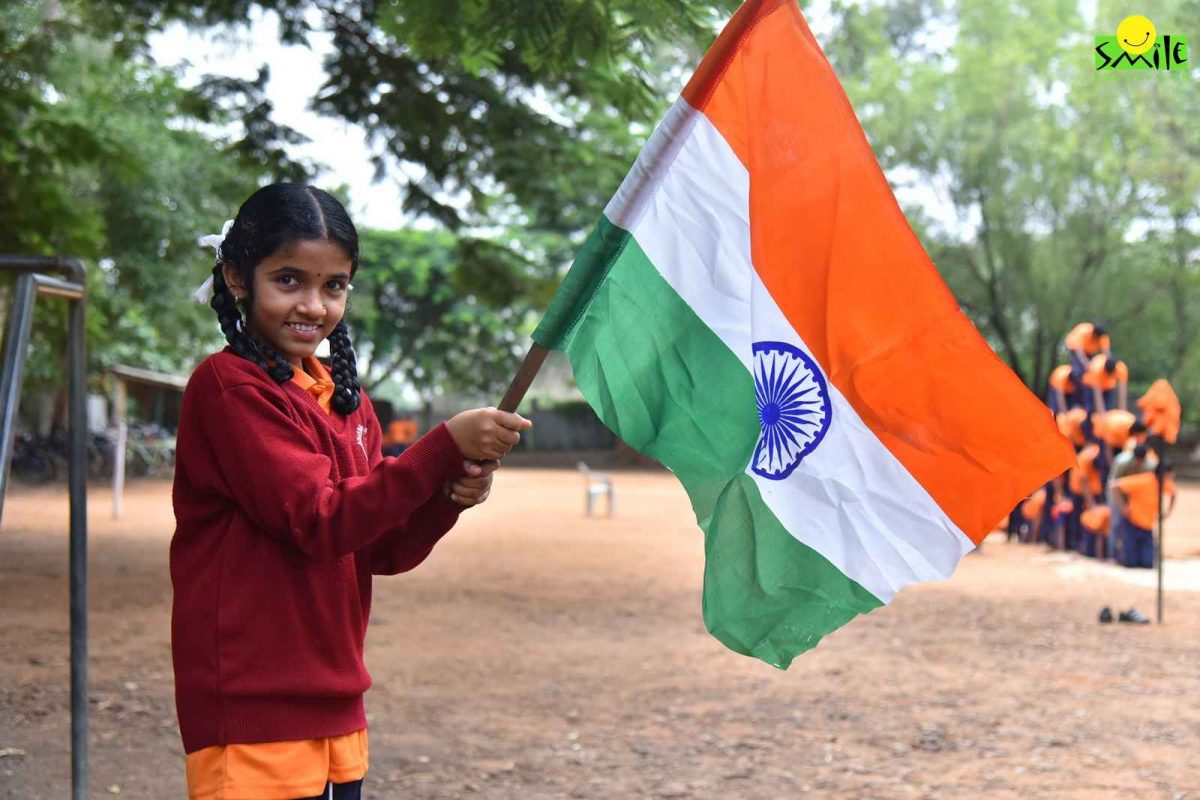
For today’s children, especially those supported by organizations like Smile Foundation, freedom extends beyond political definitions. It encompasses educational access – the joy of literacy and knowledge as pathways from poverty. It means health and safety, growing up free from preventable diseases and malnutrition.

Freedom includes the power to dream ambitiously. Children now envision careers as doctors, engineers, teachers, and leaders – possibilities their parents could barely imagine. These aspirations, fueled by daily support and care, represent hope for India’s future.

As we celebrate Independence Day 2025, we honor both our nation’s hard-won freedom and the individual freedoms today’s children are experiencing. These personal liberties form the foundation for their futures and contribute to building a more equitable society. Ensuring children not only understand freedom but live it daily remains our ongoing mission. Their growth and potential to contribute to a better India represents a victory worthy of continuous celebration.

Categories
Education Uncategorized

5 Education Trends 2023 to Change Education in India

The future of education is digital. We need to prepare our students for a world where technology is omnipresent.

Susan Wojcicki (A Polish-American business executive who was the CEO of YouTube from 2014 to 2023)

As a student, you might remember sitting in a classroom listening to teachers giving lectures about different subjects, and taking notes with a pen and paper. If we had a question, we raised our hands and waited for the teachers to respond to our queries. The most high-tech tool in the room was a chalkboard. 

Fast forward to today, and the classroom looks very different. Students are using laptops or tablets to take notes and complete assignments. Teachers are incorporating virtual reality experiences and interactive whiteboards into their lessons. 

With the COVID-19 pandemic forcing many schools to adopt remote learning, education has become even more technology-driven. Video conferencing and online learning platforms became the norm. 

These changes are just a few examples of the education trends that have emerged over the past few decades. As technology advances and society evolves, so does the way we approach education. Here we’ll explore some of the most important education trends 2023. We will try to understand what they mean for students, teachers, and society as a whole.

Artificial Intelligence

“Artificial Intelligence has the potential to transform education by providing personalized learning experiences, improving access to education, and bridging the knowledge gap. However, we must ensure that AI is adopted in a fair and equitable manner, with the ultimate goal of reducing, rather than reinforcing, existing inequalities in education.”

Audrey Azoulay, Director-General of UNESCO

The impact of Artificial Intelligence (AI) has been revolutionary across various fields, including education. Virtual assistants and tutoring systems are increasingly being used in classrooms to help students and teachers manage time, complete assignments, and deliver personalized learning experiences to learners of all ages and abilities. 

Online and remote learning systems also use AI to adjust the pace of teaching and cater to individual student needs. Furthermore, language translation technology is being utilized in educational settings where multiple languages are spoken. Some schools in China have even started using facial recognition technology to monitor student engagement in class. This surely indicates the rise of education trends 2023.

UNESCO acknowledges that AI has the potential to address some of the most pressing challenges facing the education sector today. These include bridging the gap in access to quality education and improving knowledge–sharing worldwide. However, AI implementation also poses its own set of challenges, such as ensuring a fair and equitable rollout of this highly disruptive technology, which doesn’t exacerbate existing inequalities in the education system.

Remote, Digital and Personalized Learning

Prior to the global Covid-19 pandemic, the popularity of massive online open courses (MOOCs) was already transforming the landscape of online learning. However, due to the pandemic, schools, universities, and course providers were forced to quickly adapt to deliver education remotely. 

Remote and online learning has become a means of reaching students who live in isolated or rural communities, providing them with access to education that they might not otherwise have had. This has the potential to greatly advance equality of educational opportunity, particularly in light of the fact that millions of children around the world do not attend school due to living in remote areas.

Personalised learning is a successful and innovative approach to education. It tailors teaching to the unique strengths, needs, talents, and interests of each student. This means creating an individual learning plan that is specific to the learner. The concept behind this approach is that every student has a different learning style and pace. 

With personalised learning, each student receives a customised plan based on their prior knowledge, abilities, and interests. This approach moves away from the traditional “one size fits all” philosophy often seen in schools. To ensure that students have a hands-on learning experience, the plan is project-based and designed to help them learn as they progress through their education.

This is one of the most hopeful of the education trends 2023.

Augmented Reality and Virtual Reality

The use of virtual reality (VR) and augmented reality (AR) in education is becoming increasingly prevalent. VR enables users to enter a virtual world, with numerous experiences available ranging from historical recreations to hazardous environment training. In 2023, virtual classrooms and experiential learning will become more popular.

VR already finds use in healthcare training for various purposes, such as training nursing students to provide emergency care and teaching doctors surgical procedures.

Augmented reality (AR) is different from virtual reality (VR) as it overlays computer-generated images onto the real world that the user is seeing through a device such as a phone or a headset. The advantage is that it can provide real-time information, like warning a trainee about dangerous machinery in a manufacturing environment. 

AR textbooks are also available, containing images and models that come to life when viewed through a smartphone camera. This provides students with an in-depth understanding of various subjects. AR is also being used by museums and other educational sites to create more immersive learning experiences for visitors.

College Courses Not Enough

In the year 2023, high schools will dedicate more resources to prepare students for career paths beyond traditional college courses. This will result in the growing popularity of vocational and technical courses that teach diverse skill sets. Schools will collaborate with employers to find new solutions to tackle the problem of the skills gap. 

In the US, a significant number of high school graduates enroll in college courses, but school resources primarily focus on preparing this minority group. On the other hand, the emphasis on preparing students for non-traditional pathways, such as apprenticeships or on-the-job training needs more focus.

As the job market demands a workforce with the necessary skills, schools will shift their focus toward vocational education and training alongside traditional academic, subject-based training. In Europe, 2023 is designated as the European Year of Skills to recognize the importance of vocational education and training in developing new drivers of economic growth during a global slowdown or recession.

“The future of the economy is in skill specialization. Technical schools and vocational training will be more valuable than an Ivy League degree. Because if you have a specific skill, you’ll always be employable.”

Naval Ravikant (An Indian-American entrepreneur and investor. He is the co-founder, chairman, and former CEO of AngelList)

STEM (Science, Technology, Engineering, Mathematics) and Soft Skills

Soft skills refer to human skills such as communication, teamwork, problem-solving, and conflict resolution that are unlikely to be replaced by machines. As AI takes on more technical responsibilities, these skills will become increasingly important and will be taught alongside technical education. 

HR experts believe that while soft skills are essential to company success, they are harder to measure than hard skills such as math and programming. In 2023, STEM education will place more emphasis on these skills, and there will be increased efforts to measure and assess them within organizations.

In 2023, India’s National Education Policy (NEP) will drive significant educational reforms, with a focus on STEM-based learning and skill-based education. Policy developments aim at promoting digital literacy and providing equitable access to quality learning methods. As experiential learning gains popularity, school curriculums will undergo significant changes. The greater emphasis is on making learning enjoyable through innovative programs.

STEM as one of the most progressive education trends 2023 is not only about imparting knowledge, it’s about inspiring the next generation of innovators, problem-solvers, and creators who will lead us toward a better and brighter future.

Smile Foundation Empowering Education for a Better Tomorrow

Smile Foundation is a nonprofit providing quality education to underprivileged children in India. Through our various programmes and initiatives, namely, Shiksha Na Ruke, She Can Fly and Tayyari Kal Ki, the Smile Foundation aims to bridge the education gap and ensure that every child has access to education and the opportunity to reach their full potential. 

Incorporating your support through volunteering and individual/corporate partnerships, Smile Foundation provides resources and support to students, schools, and teachers. All these activities are in place to make a significant life-changing impact on the lives of many children.

0%