In the age of artificial intelligence and quantum computing, it is sobering to realize that nearly 244 million children and youth globally remain out of school. The global learning crisis, long simmering, was thrust into sharp relief by COVID-19, which revealed the fragile and unequal infrastructure underpinning education systems worldwide. For millions, classrooms did not just close, they disappeared. Devices were unavailable, connectivity was a luxury, and even power was unreliable.
Digital learning, while not a silver bullet, holds potential to equalize opportunities. But to succeed, its design must center not on the average learner, but the one most often left behind.
India’s community-driven digital leap
In India, where digital inequality intersects with caste, geography, and poverty, organizations like Smile Foundation through its flagship Mission Education programme has built a layered and inclusive digital education strategy that now spans 26 states, reaching more than 75,500 children in over 260 schools.
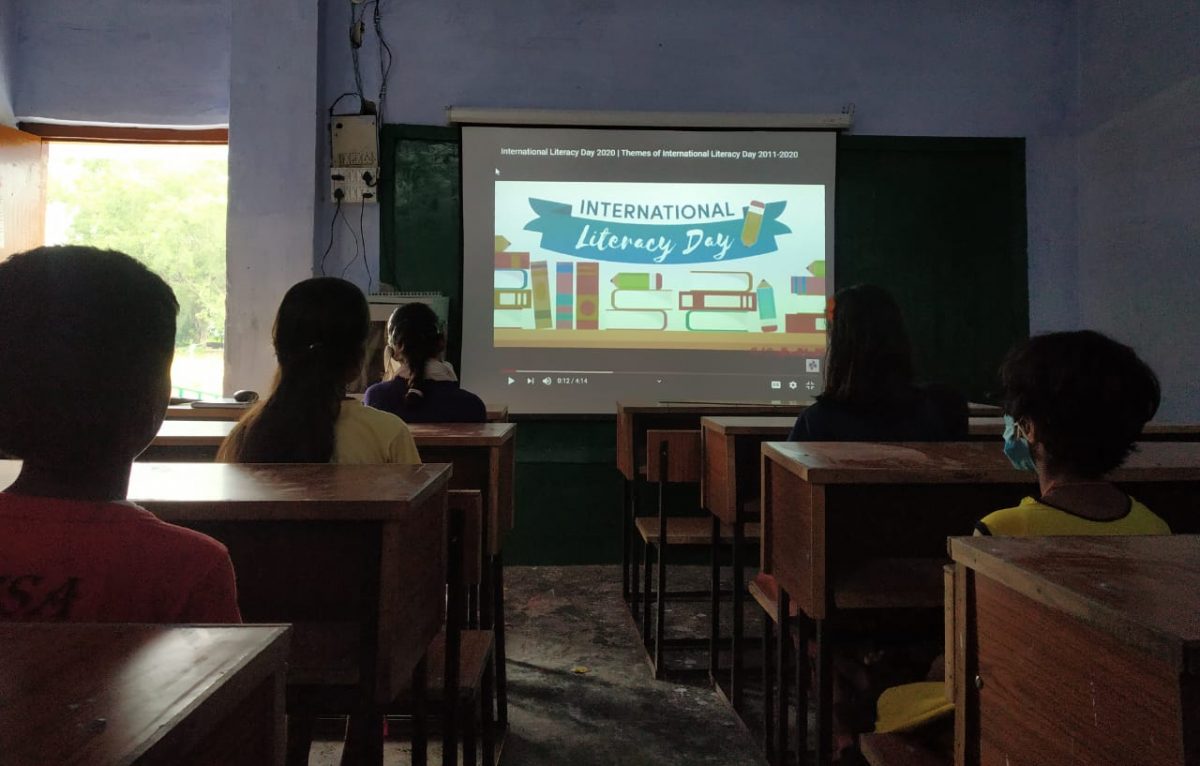
Our interventions are not generic. They are embedded in local realities offering tablets with preloaded content, smart classes with multilingual material, and TV-based digital teaching via Android devices in schools where smart boards are not feasible. The focus is not on showcasing technology but ensuring learning outcomes.
Take, for instance, Smile Foundation‘s Tab Lab Model, where each child’s learning journey is individualized. After a baseline assessment, students access subject modules aligned with their performance level. This ensures that children are not forced to progress within rigid grade-level expectations, but rather are scaffolded based on real-time understanding. It mirrors models such as Onebillion in Malawi, where similar individualized apps have led to dramatic improvements in foundational literacy and numeracy.
Lessons from across the globe
Global experiences underscore the value of combining EdTech with human facilitation. In Kenya, the Tusome (Let’s Read) programme supported by USAID equipped schools with tablets for instructional support and teacher feedback. It improved literacy outcomes for over 7 million children across 23,000 schools. Notably, it didn’t replace teachers, but empowered them with actionable data and aligned content.
Similarly, Uruguay’s Plan Ceibal distributed laptops to all public school children but also invested in training educators, developing content, and establishing community tech hubs. Over time, it became a model of equitable digital integration in public education, reducing dropout rates and narrowing gender gaps in digital literacy.
Smile Foundation’s approach echoes these best practices. Their smart classes are designed not to displace teaching but to enrich it. Teachers use curated audiovisual content that is curriculum-aligned and available in multiple languages. This matters, especially in India, where children from linguistic and socio-economic minorities often experience educational exclusion despite being enrolled.
Technology as a bridge, not a barrier
A common misconception about digital education is that it leads to detached learning. However, well-designed models can increase teacher effectiveness and reduce burnout. In India, many rural schools are severely under-resourced—some with only two teachers for five grades. Digital content helps maintain engagement, standardize quality, and ease the instructional burden.
Moreover, Smile Foundation’s use of Impact Dashboards to track slow learners’ progress is crucial. By translating operational data into actionable insights, educators can identify gaps, adjust instruction, and ensure no child is left behind. This resonates with recommendations by the World Bank’s EdTech Readiness Index, which highlights the importance of data-informed teaching as a marker of success in technology-assisted education.
Equity, not just efficiency
Digital transformation in education is often hijacked by narratives of scale and efficiency. But if it doesn’t serve the last child in the queue, it fails the development mandate. UNESCO notes that less than 40% of low-income countries have policies ensuring inclusive use of digital learning. In sub-Saharan Africa, only 10% of households have internet access. Without adaptation, the very tools meant to close gaps may widen them.
Smile Foundation has actively mitigated this risk. Its content is offline-enabled, devices are preloaded, and infrastructure is low-tech compatible. In schools where smart boards are impractical, TVs are connected to Android boxes loaded with curriculum-based content. This principle—designing for constraint, not abundance—is what makes the programme scalable and sustainable.
Pathways beyond the classroom
One of the most impactful aspects of digital learning is its ability to expose children to pathways they never imagined. Smile Foundation also integrates career counseling, aptitude tests, and access to online portals that help students explore higher education and vocational training. For children from underprivileged backgrounds, these digital windows into the world serve as life-altering tools.
This is reminiscent of Estonia’s national digital curriculum, where students begin learning computational thinking from primary grades, and by high school, many can code or build web applications. Estonia’s success didn’t come from flashy technology, but from a consistent, equity-driven investment in digital infrastructure and curriculum.
Moving forward: Policy, investment, and people
As countries recalibrate their education strategies in the wake of the pandemic, it’s clear that hybrid, resilient, and inclusive models will define the future. But this will require policy alignment, sustained funding, and most importantly, community-led implementation.
The global EdTech market is expected to exceed $400 billion by 2025. Much of this capital is being directed toward innovation hubs and urban centers. If we are to meet Sustainable Development Goal 4 (quality education for all), a large share of this investment must prioritize rural, underserved, and marginalized learners.
Smile Foundation’s model demonstrates that with the right design and intent, digital solutions can be engines of both access and excellence. They don’t require the newest gadgets but they do require the oldest principles: empathy, equity, and a relentless focus on learning outcomes.
Sources
- UNESCO (2023). Global Education Monitoring Report
- UNICEF (2022). Education and COVID-19: A Year into the Pandemic
- World Bank (2021). EdTech Readiness Index
- USAID Kenya, Tusome Early Grade Reading Activity
- Onebillion.org: Improving literacy in Malawi
- Plan Ceibal, Uruguay (https://www.ceibal.edu.uy/)
- Estonian Ministry of Education and Research, Digital Strategy