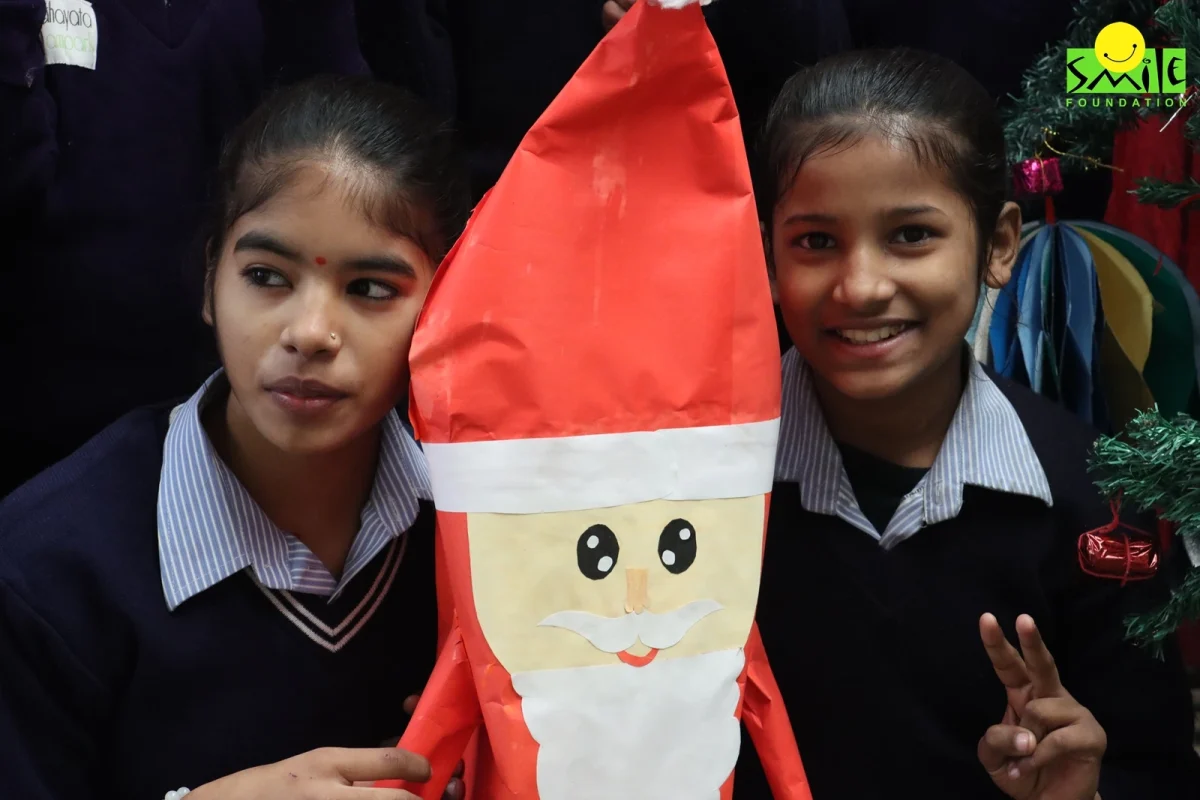
Christmas is that time of the year when the air carries the gentle hum of carols, evenings are wrapped in the warmth of chocolate milk and plum cake while the steers glow with lights that symbolise hope and new beginnings. For children, Christmas brings the joy of waiting for Santa Claus, of believing that their goodness shall be rewarded.
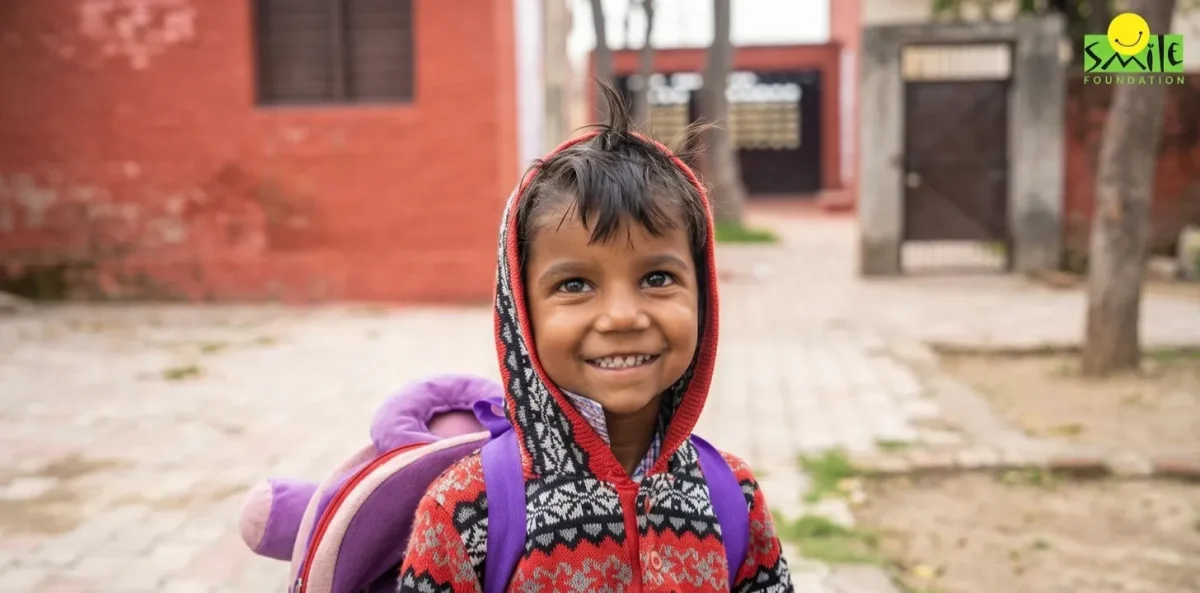
Yet, for countless children across rural and underserved communities, especially girls, the season also mirrors a harsher reality. For them, Christmas often arrives with long and difficult journeys to schools through cold winter mornings– a struggle that can decide their fates of continuing the education or dropping out of the school.
Christmas Call to Strengthen Girl Child Education in India
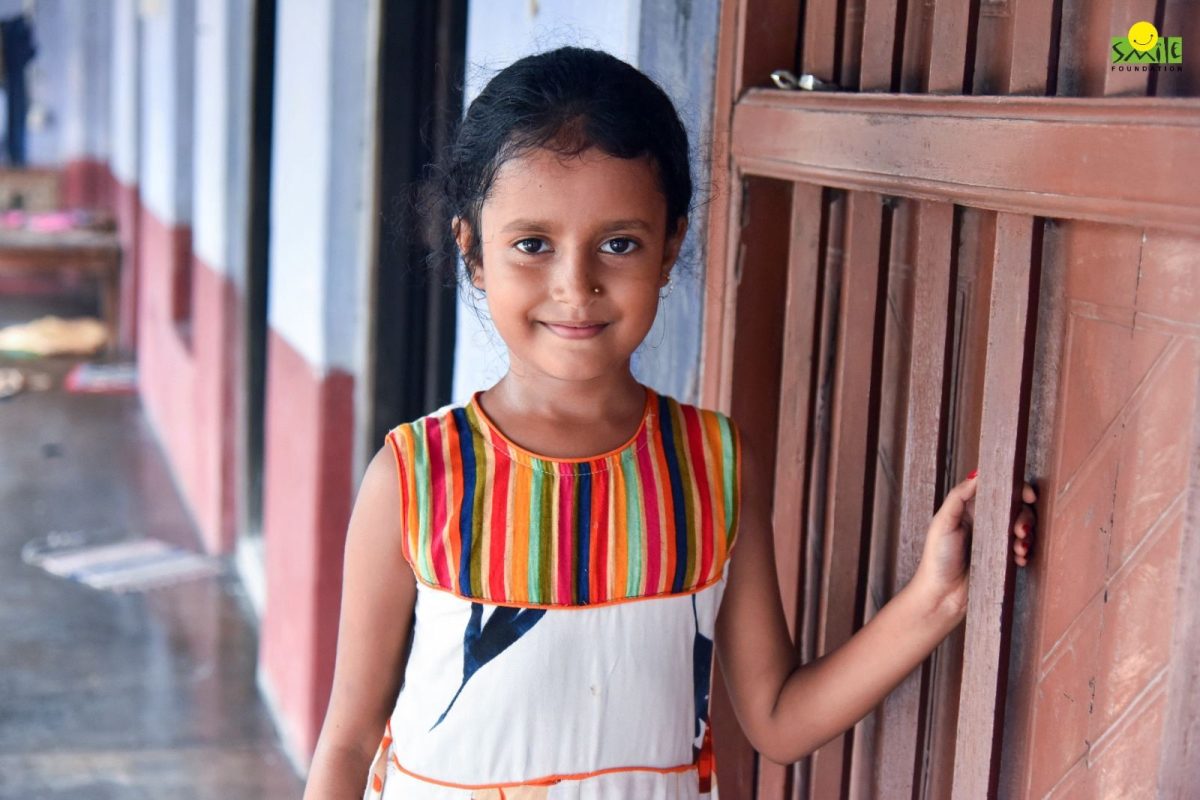
Education is the cornerstone of empowerment, and every child deserves the gift of learning. However, girl child education in India continues to face systematic barriers rooted in gender inequality. As highlighted in UNESCO’s SDG 4 Scorecard 2025, while access and enrolment have improved- equitable education still remains uneven. India’s ranking in the Global Gender Gap Index further underscores the distance the country must travel to achieve true gender parity.
In this scenario, strengthening girl child education in India must go beyond enrolments. It demands sustained focus on retention, learning outcomes, trained teachers, safe infrastructure and dignity-driven school environments to ensure that their education is not just a seasonal hope, but a lasting promise which empowers every girl to learn, thrive and shape her own future.
Donate on Christmas, Make a difference
The festive season of Christmas begins with Thanksgiving around the world. It is an occasion where people express their gratitude for the blessings and sacrifices of the past year and celebrate by feasting with family and friends. Festivals often remind us to be grateful for the fortunes we are blessed with. Giving back to society and sharing our abundance with the ones deprived of it can be a great way to show our thankfulness to God.
Here’s a list of few Christmas Donation Ideas:
1.Donate for girl child education: When it comes to a poor family struggling for two square meals a day, education becomes their least concern. But education has the power to change lives, especially girl child education. You can give the precious gift of education to these under-privileged children and transform their lives.
Smile Foundation through its Shiksha Na Ruke initiative has been working relentlessly to make sure that poverty doesn’t deter education for a child. You can join hands with the Smile Foundation and donate online in a one-time or monthly payment mode to help educate a child and gift them a better future.
2.Donate educational gifts to poor kids: There are many poor and marginalized kids who are eager to read and write but cannot afford books or educational stationery. This Christmas, you can be their Santa Claus and buy them notebooks, pencils, erasers, crayons and other stationery which might not cost you much but would surely bring a big smile on these kids’ faces.
3. Share your Christmas Treat: Christmas is incomplete without a scrumptious and elaborate feast with friends and family. In case you are hosting one such Christmas feast and have cooked or arranged food that’s more than what you need, remember there are lots of hungry people you can feed. You can donate your extra food by finding the needy yourself or call the helpline numbers which provide assistance in this regard.
4.Donate winter clothes to the homeless: Christmas time is winter time when many parts of the country experience extreme cold. In such climatic conditions, the homeless people and footpath dwellers suffer the most. You can donate bed sheets, blankets, shawls or any winter clothing to keep them warm and survive the chilly weather.
5.Cook a special Christmas meal for poor kids: Christmas is about sharing food, fun and festivities. You can take like-minded friends or family members and spend your Christmas at any orphanage, children’s home or old age home and cook a special meal for them. Believe us, the twinkle in their eyes and glee on their face would make the most cherished Christmas memories.
6. Be the Secret Santa to a needy person: Playing secret Santa and giving surprise gifts to colleagues has become part of Christmas celebrations in corporate offices in recent times. How about being a secret Santa to a person or family that expects it the least but needs it the most. For example, the watchman of your apartment, or the lift attendant in your office, the maid who works in your house or the delivery boy of your neighbourhood grocery store. If you know any specific requirement of a needy person in your vicinity or a community helper, which you can afford to fulfill, then go ahead and grant their wish. You’ll not just pleasantly surprise them but earn loads of sincere blessings.
Final Takeaway
A small act of charity by you could mean a world of difference to someone. Never stop being kind because kindness keeps the world going and has a positive impact on the self and society. Not just Christmas or any festival, let’s make kindness and compassion a way of life because as the common saying goes, “Service to Mankind is service to God.”
So set out with all your heart to donate, volunteer and serve others at every opportunity you can. Learn about Smile Foundation’s flagship programme, Mission Education and know what it is doing with respect to girl child education. Donate for girl child education today. Wish you a Merry Christmas!
In modern business, where evolution is constant, the engagement of employees emerges as foundational for organisational success. Beyond mere productivity, engaged employees embody loyalty and innovation, shaping a path to enhanced business outcomes. Among the myriad factors influencing employee engagement, Corporate Social Responsibility (CSR) in India emerges as a potent catalyst, weaving a narrative of purpose and commitment within the organisational fabric.
Corporate Social Responsibility (CSR)
CSR stands as a testament to the commitment of a company to ethical and responsible business practices, transcending profit motives. It encompasses a spectrum of activities, from philanthropy and sustainability efforts to ethical business conduct and community engagement. The thoughtful implementation of CSR not only shapes the reputation of an organisation but also influences its corporate culture and, significantly, the engagement levels of its employees.
The Intrinsic Link between CSR and Employee Engagement
Cultivation of a Sense of Purpose: CSR instills a profound sense of purpose among employees, fostering deep engagement and motivation by connecting their work to a broader societal good.
Augmented Job Satisfaction: CSR initiatives, such as volunteering opportunities and sustainability efforts, elevate job satisfaction levels by instilling pride in employees for the values and actions of their company.
Nurturing a Positive Organisational Culture: CSR plays a pivotal role in cultivating a positive and inclusive organisational culture, communicating a commitment to ethical values that fosters a cohesive and engaged workforce.
Talent Attraction and Retention: Actively engaging in CSR facilitates the attraction and retention of top talent, as professionals increasingly seek alignment between personal values and the commitment of their employees to societal contributions.
Employee Well-Being as a Component: CSR extends to employee well-being programmes, encompassing mental health support, wellness initiatives, and work-life balance policies, contributing to overall employee satisfaction and engagement.
What to Look for in CSR Initiatives?
Alignment with Company Values Effective CSR initiatives seamlessly align with the core values and business objectives of a company, ensuring a cohesive integration with the organisational mission and cultural ethos.
Measurable Impact Seek CSR initiatives with tangible and measurable impacts, supported by transparent reporting, accountability measures, and clear key performance indicators (KPIs) to evaluate success.
Employee Involvement and Empowerment Encourage active employee participation by selecting initiatives that provide opportunities for volunteering, idea contribution, and leadership roles, enhancing a sense of ownership and commitment.
Long-Term Commitment Sustainability should be at the heart of CSR strategy, with initiatives reflecting a long-term commitment to creating lasting and meaningful change rather than short-term endeavors.
Flexibility and Adaptability CSR initiatives should be adaptable to changing circumstances and responsive to evolving societal needs, allowing organisations to remain relevant and effective over time.
Engage Teams with Smile
Corporate Social Responsibility emerges as a versatile tool empowering organisations to enhance employee engagement in India and foster positive workplace cultures. The benefits extend beyond the workplace, creating a better world for all.
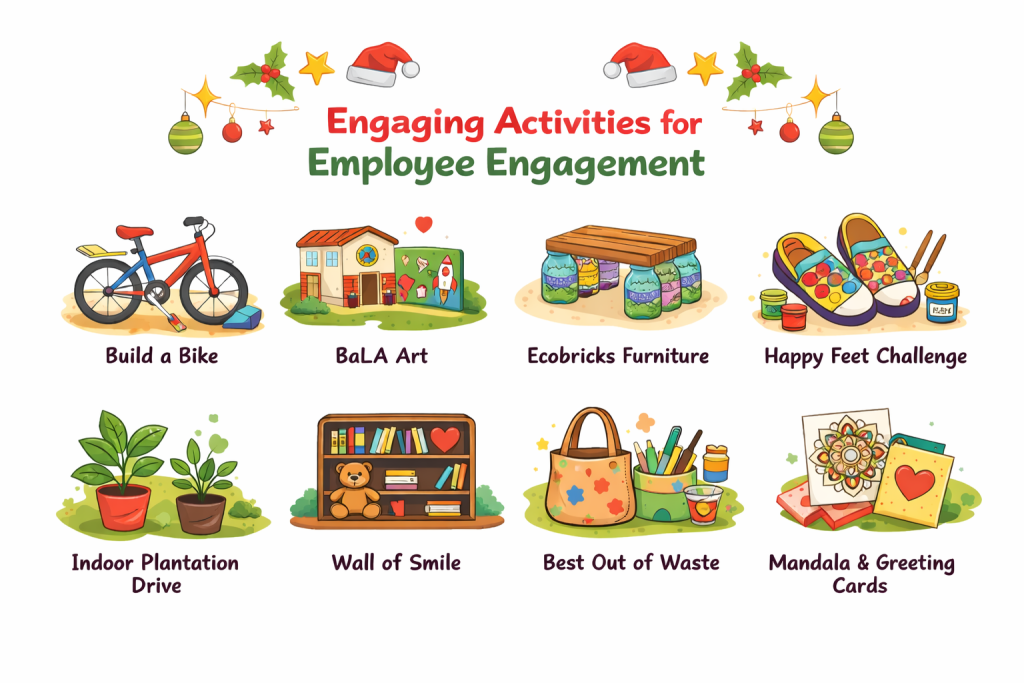
As organisations look to close the year with purpose, employee engagement is increasingly being viewed not just as an internal HR initiative, but as an opportunity to create shared value for communities. Smile Foundation offers a thoughtfully curated range of employee engagement activities that allow organisations to celebrate Christmas and the New Year meaningfully by combining team bonding, creativity, sustainability, and social impact.
Smile Foundation’s employee engagement programmes are designed to bring teams together through hands-on experiences that directly benefit underserved children and communities. Each activity is structured to encourage collaboration, empathy, and a sense of collective achievement, making them ideal for year-end engagement calendars, festive volunteering days, or New Year kick-off events.
One of the most impactful offerings is the Build-a-Bike activity—a dynamic team-building experience where employees assemble bicycles that are later donated to children in need. Beyond the mechanics, the activity reinforces teamwork, problem-solving, and the joy of giving, while addressing mobility challenges that often hinder access to education.
For organisations seeking to support education creatively, BaLA (Building as Learning Aid) Art initiatives enable employees to transform school spaces through educational wall art, classroom painting, and interactive learning visuals. These interventions help create stimulating learning environments while allowing employees to contribute directly to a child-friendly school ecosystem.
Sustainability-focused organisations can engage teams through Ecobricks Furniture Making and Best Out of Waste workshops, where employees repurpose non-recyclable plastic or waste materials into functional items such as furniture or utility products. These activities promote environmental responsibility while reinforcing innovation and circular thinking within teams.
Festive engagement can also take a more emotional and creative form. The Happy Feet Challenge invites employees to paint shoes that are later distributed to underprivileged children—adding colour not just to footwear, but to aspirations. Similarly, Mandala Art and Greeting Card Making sessions allow employees to create motivational cards and artworks for children, fostering mindfulness and compassion during the festive season.
Activities such as Indoor Plantation Drives and the Wall of Smile further extend the spirit of giving. From creating greener learning spaces to donating books and essential items in good condition, employees experience the fulfilment of contributing to long-term wellbeing and dignity.
For organisations planning Christmas and New Year activities, partnering with Smile Foundation offers more than volunteering—it offers a structured, impactful, and scalable engagement experience aligned with CSR goals. With end-to-end facilitation, community linkages, and measurable outcomes, Smile Foundation helps organisations begin the new year with purpose, connection, and a lasting social footprint.e for society at large.
India’s enthusiasm for STEM education has grown rapidly over the past decade. Coding classes for young children, robotics kits for primary schools and corporate-funded innovation labs have become familiar features of the education landscape. In policy circles and classrooms alike, STEM is increasingly presented as a shortcut to future readiness — a way to equip children early for an economy shaped by technology and automation.
This momentum is not without merit. Scientific thinking, problem-solving and numeracy are essential skills in a knowledge-driven economy. But the question confronting India’s education system is not whether STEM belongs in early education. It is whether the form and pace of early STEM, as it is currently being implemented, align with how children actually learn.
The evidence suggests a clear answer: early STEM needs restraint, not rollback. The danger lies not in introducing children to scientific thinking, but in doing so prematurely, abstractly or inequitably — in ways that risk undermining foundational learning rather than strengthening it.
What early STEM was meant to achieve
At its core, early STEM education is not about producing engineers at the age of eight. It is about cultivating habits of mind: curiosity, observation, reasoning and comfort with uncertainty. When approached thoughtfully, early exposure to scientific and mathematical ideas can support cognitive development and foster confidence in learning.
International research has consistently shown that young children are capable of engaging with scientific concepts when these are presented through exploration and play. Studies by the OECD and the U.S. National Academies of Sciences emphasise that inquiry-based, play-led STEM experiences can improve problem-solving skills and long-term engagement with learning.
India’s National Education Policy (NEP) 2020 reflects this understanding. It explicitly calls for experiential, play-based learning in the early years, and cautions against content-heavy instruction before children have developed strong foundational literacy and numeracy. The policy’s emphasis is on learning how to think, not on mastering technical skills prematurely.
Where the current enthusiasm goes wrong with early STEM education
Despite this policy intent, the implementation of early STEM in India often departs from these principles. In many settings, STEM is interpreted narrowly as exposure to technology — coding platforms, robotics kits and digital tools — rather than as a way of thinking.
This has led to three recurring problems.
First, adultisation of learning. Concepts designed for older students are pushed down into primary classrooms, often without adaptation. Coding is introduced as syntax rather than logic; science becomes vocabulary rather than inquiry. For children who are still developing basic reading and comprehension skills, this can create confusion rather than clarity.
Second, equipment-driven approaches. STEM initiatives are frequently built around kits and devices rather than pedagogy. While tools can enhance learning, they cannot substitute for trained teachers or thoughtful curriculum design. In under-resourced schools, these kits often remain unused once initial training ends.
Third, performance pressure. Competitive STEM models — hackathons, contests and assessments — seep into early grades, turning exploration into evaluation. This risks discouraging precisely the qualities early STEM is meant to nurture: experimentation, failure and play.
The foundational learning gap
India’s foundational learning challenge adds urgency to the need for restraint. Data from the Annual Status of Education Report (ASER) consistently shows that a large proportion of children in primary school struggle with basic reading and arithmetic. Introducing advanced STEM content into classrooms where foundational skills are weak risks widening learning gaps.
The World Bank’s concept of “learning poverty” — children unable to read and understand a simple text by age 10 — is particularly relevant here. When early STEM is layered on top of unresolved foundational deficits, it benefits children who already have support at home while leaving others further behind.
This is not a theoretical concern. In practice, early STEM initiatives are more easily absorbed by children from urban, middle-class families with access to devices, parental guidance and supplementary learning. For first-generation learners, the same initiatives can feel alienating and inaccessible.
Equity as the central concern in early STEM
The most compelling argument for restraint in early STEM is not pedagogical but ethical. Education policy must ask not only what works, but for whom.
If early STEM becomes synonymous with technology-heavy instruction, it risks entrenching inequality. Children in private schools may experience STEM as creative exploration, while those in government schools encounter it as unfamiliar jargon delivered without context or support.
True early STEM must be low-cost, context-sensitive and grounded in everyday experience. Measuring rainfall, observing plant growth, experimenting with balance and structure — these are STEM activities that require no screens or kits. They rely instead on attentive teaching and curricular flexibility.
In this sense, restraint is not resistance to innovation. It is a commitment to inclusion.
What restraint actually looks like
Restraint does not mean delaying exposure to scientific thinking. It means aligning learning with developmental readiness.
In practice, this involves:
prioritising play-based exploration over formal instruction
embedding STEM concepts in local, familiar contexts
focusing on questions and processes, not correct answers
avoiding early assessment and competition
investing in teacher capacity, not just materials
This approach is consistent with cognitive science, which shows that young children learn best when concepts are concrete, social and connected to their lived environment.
CSR and the temptation of scale
Corporate involvement in education has accelerated the spread of early STEM initiatives in India. While CSR funding has brought resources into schools that need them, it has also introduced pressures to demonstrate scale and visibility.
The temptation to deploy standardised kits or digital platforms across diverse contexts is understandable, but risky. Education does not scale like software. What works in one classroom may fail in another if it does not account for language, culture and teacher preparedness.
CSR in education must therefore exercise caution. Funding should prioritise teacher training, curriculum development and long-term support rather than short-term visibility. Restraint here is a mark of responsibility, not hesitancy.
Civil society and grounded practice
Some education organisations have demonstrated how early STEM can be introduced with restraint and sensitivity. Smile Foundation’s education programmes offer a relevant example from the field.
Through its Mission Education initiative, STEM concepts are integrated into primary learning through activity-based methods rather than formal technical instruction. Children engage with basic scientific ideas through observation, hands-on tasks and problem-solving linked to their immediate environment — water use, sanitation, energy and health.
Importantly, these activities are embedded within a broader framework that prioritises foundational literacy and numeracy. STEM is not treated as a standalone track, but as a way of reinforcing core learning skills. Teachers are supported to adapt activities to local contexts, ensuring that exploration remains inclusive rather than intimidating.
This approach reflects the principle that early STEM should deepen understanding, not displace fundamentals.
Aligning with intent
The NEP 2020 offers a clear roadmap for early education in India. Its emphasis on foundational learning, play-based pedagogy and reduced curricular load is well-aligned with the case for restraint in early STEM.
What is needed now is coherence between policy and practice. States, school systems and funders must resist the urge to interpret STEM narrowly or accelerate it prematurely. Instead, they should focus on creating learning environments where curiosity is protected and foundational skills are secure.
This requires patience — an undervalued virtue in education reform.
The long view
The goal of early education is not to predict labour markets two decades in advance. It is to equip children with the capacity to learn, adapt and think critically across domains. STEM, done well, contributes to this goal. Done poorly, it risks becoming another layer of pressure in an already crowded curriculum.
India does not need to retreat from STEM in primary schools. It needs to slow down, simplify and refocus. Restraint, in this context, is not caution for its own sake. It is an evidence-based strategy to ensure that early STEM strengthens learning rather than distorting it.
As India debates the future of its education system, the question is not whether children should learn science and mathematics early. They should. The real question is whether we are willing to respect how children learn — and to design systems that serve all of them, not just the most advantaged.
References and further reading:
National Education Policy 2020, Ministry of Education
Why First-Generation Learners Are Where Education Investment Matters Most
India’s debate on education reform often begins too late. It starts in secondary school, in skills training programmes, in employability dashboards and workforce projections. But decades of evidence from economics, cognitive science and public health point in a different direction: the largest returns on education investment accrue much earlier, particularly for children who begin life at a disadvantage.
First-generation learners — children whose parents have not completed formal schooling — sit precisely at this intersection of early disadvantage and high potential returns. How India supports them will determine not only individual mobility, but the productivity and equity of its future workforce.
This is not a moral claim. It is an economic one.
Disadvantage compounds early
Human development is not linear. Skills build on skills. Early cognitive and socio-emotional capacities make later learning more efficient; deficits, once entrenched, are costly to remediate. This principle, long established in developmental economics, has particular relevance in India, where a large share of children enter school without exposure to language-rich environments, structured play or stable nutrition.
For first-generation learners, the starting line is not the same. Parents value education deeply, but lack the institutional knowledge to support it. The result is not disinterest, but fragility — learning that is easily disrupted by illness, migration, household stress or climate shocks.
Data from India’s Annual Status of Education Report (ASER) consistently shows that children from households with lower parental education levels fall behind early in foundational literacy and numeracy. Once these gaps open in the primary years, they tend to persist into adolescence.
From an economic perspective, this is a warning sign. When foundational skills are weak, later investments in schooling yield diminishing returns. The system ends up spending more to achieve less.
Why first-generation learners offer the highest returns
Economic models of human capital formation suggest that interventions targeted at disadvantaged children in early and middle childhood generate the highest benefit-cost ratios. These returns are not confined to test scores. They include improved health outcomes, higher lifetime earnings, reduced reliance on social protection and stronger intergenerational mobility.
For first-generation learners, the marginal return on investment is especially high because the counterfactual is steep. Without support, many will remain trapped in low-skill trajectories. With timely intervention, the gains multiply across a lifetime.
This is why early remediation, mentoring and socio-emotional support matter. They do not merely help children “catch up”; they change the efficiency of all subsequent investments.
The limits of late-stage correction
India’s policy architecture still places disproportionate emphasis on secondary and tertiary interventions: scholarships, skilling programmes, STEM labs, digital credentials. These have value, but they often arrive after foundational gaps have hardened.
From a cost-effectiveness standpoint, this is inefficient. Remediating learning deficits at age 14 is far more expensive than preventing them at age 7. Yet the system repeatedly chooses the former.
First-generation learners pay the price. They are expected to absorb advanced content without the scaffolding that makes learning cumulative. Predictably, dropout rates rise, confidence falls and the returns on public and private investment decline.
Where CSR has quietly aligned with evidence
Despite its uneven quality, CSR engagement in education has often gravitated — sometimes unintentionally — toward interventions that economic evidence supports for first-generation learners.
Three patterns are notable.
First, a focus on foundational learning. Many CSR-supported programmes prioritise basic literacy and numeracy through remedial education and small-group instruction. This aligns closely with what evidence shows works: short-cycle, targeted interventions that meet children at their current learning level.
Second, integration of non-academic inputs. Nutrition support, health check-ups and psychosocial counselling are frequently embedded in CSR education programmes. From a human capital perspective, this is essential. Cognitive development is inseparable from physical and emotional well-being.
Third, sustained engagement rather than one-off exposure. Where CSR programmes commit to multi-year engagement, they mirror the economic insight that capability formation requires time and continuity, not episodic inputs.
These features matter because they raise the productivity of education spending overall.
Smile Foundation and capability formation through education investment
Smile Foundation’s education work offers a practical illustration of these principles in an Indian context.
Through its Mission Education programme, the Foundation works with children from low-income communities, many of whom are first-generation learners. The programme emphasises foundational learning, remedial support and individual attention, particularly in the early and middle grades.
Crucially, education is not treated as a standalone input. Health services, nutritional support and counselling are integrated, recognising that learning outcomes are shaped by multiple, interacting constraints. This reflects a core insight from human capital economics: isolated interventions yield limited returns when complementary inputs are missing.
By engaging families and communities, such programmes also address a less visible but critical factor — the transmission of aspiration and self-belief. For first-generation learners, confidence is not an add-on; it is a prerequisite for persistence.
Attendance, not enrolment, as the real metric
Another area where CSR initiatives often outperform formal systems is attention to attendance. Enrolment figures are a weak proxy for learning. Attendance, by contrast, captures the cumulative exposure required for skill formation.
First-generation learners are more vulnerable to absenteeism due to household responsibilities, health shocks and migration. CSR programmes that track attendance, provide transport support or address menstrual health barriers are effectively protecting the rate of return on education investment.
From an economic standpoint, reducing absenteeism is one of the most cost-effective interventions available.
What accountability should look like for education investment
If first-generation learners represent the highest-return segment of education investment, accountability frameworks must reflect that reality.
This requires shifting metrics from outputs to outcomes: from classrooms built to learning gained, from beneficiaries enrolled to skills retained. It also requires independent evaluation and longer funding horizons.
Short-term pilots may generate visibility, but they rarely alter life trajectories. Capability formation unfolds over years, not quarters.
CSR actors willing to commit to this timeline can play a stabilising role, particularly in contexts where public systems face capacity constraints.
The broader implication
India’s demographic advantage is not guaranteed. It depends on whether today’s children acquire the skills and capabilities that make growth inclusive and sustainable.
First-generation learners are central to this equation. Supporting them early is not charity; it is economic prudence.
CSR’s most valuable contribution lies not in innovation theatre, but in reinforcing what evidence already tells us works: early, sustained, holistic investment in children who start with less.
Conclusion
Education debates often oscillate between ambition and anxiety. But the economics of human development offers clarity. When societies invest early and wisely in their most disadvantaged children, the returns compound across lifetimes and generations.
First-generation learners embody both India’s risk and its promise. CSR initiatives that recognise this — and align their strategies accordingly — are not merely filling gaps. They are strengthening the foundation on which future growth depends.
The challenge now is to ensure that such approaches are not exceptions, but the norm.
Green Jobs for the Indian Youth: Progressive Nation, Protected Nature
With nearly 65% of Indians under the age of 35, the nation’s youth carry the aspirations of a rising economic powerhouse. But a critical challenge persists: employability. In a growing economy, the issue is not simply a lack of jobs, but a shortage of well-rounded, job-ready young people. Unless this skills gap is addressed, the promise of India’s demographic dividend could remain only partially fulfilled, leaving much of this generation’s potential unrealized.
Beyond technical training: The role of soft skills
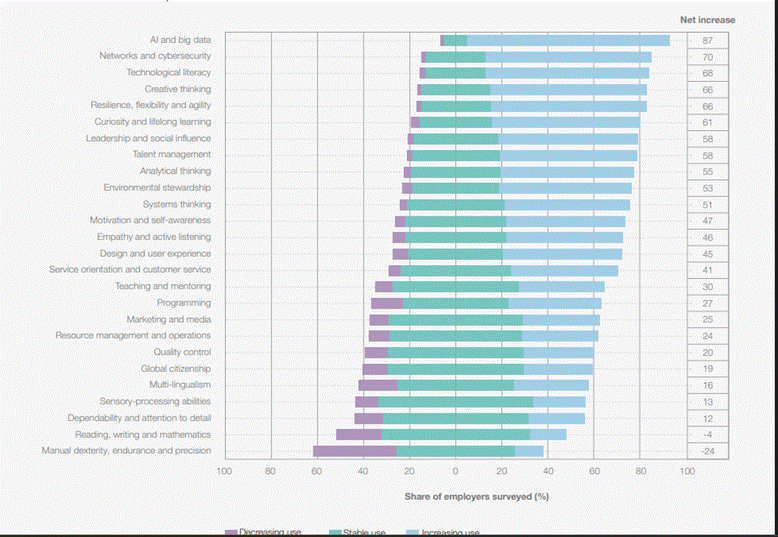
Employability today is shaped by more than academic degrees or technical certificates. The World Economic Forum’s Future of Jobs Report 2025 makes this clear – “soft skills” like creative thinking, resilience and curiosity are more important than ever in the workforce. Employers are looking beyond hard technical expertise to qualities like adaptability, effective communication, teamwork and problem-solving. In India, the challenge is sharper when many youth enter the job market with solid theoretical knowledge but little exposure to workplace behaviour, customer engagement or confident communication.
Global programmes have demonstrated the power of pairing technical training with soft skills development. For instance, the European Union’s Youth Guarantee, the U.S.-based Year Up, and WorkAdvance in multiple countries all show that combining sector-specific training plus soft skills coaching and job placements leads to stronger employment outcomes. These integrated models produce graduates who not only have the knowledge for a job, but also the workplace readiness to excel – yielding higher hiring rates and even long-term earnings gains.
For India, this points to a need for an integrated approach to employability where a mix of competencies is cultivated:
Technical skills – solid sector-specific knowledge and digital literacy.
Communication skills – fluency in communication, customer engagement and confidence-building.
Teamwork and problem-solving – ability to collaborate, think critically and solve real-world problems.
Adaptability and resilience – agility to learn and cope with changing technologies and work environments.
Emerging Themes Shaping Employability
As India’s economy grows and technology advances, it’s increasingly clear that a standalone college degree or an isolated short course is no longer sufficient to secure meaningful employment. The World Bank and other experts have found that blended models – combining soft skills training with practical work experience and targeted industry placements – deliver significantly higher returns on investment than traditional education or training alone. In other words, a holistic preparation makes a young person far more employable than theoretical knowledge by itself.
Global best practices reinforce this approach. Initiatives such as the EU’s Youth Guarantee, Year Up and WorkAdvance show that pairing technical instruction with “employability” skills and on-the-job learning not only accelerates job placements but also enhances long-term career growth. The evidence unequivocally is that soft skills are not optional but fundamental to workforce readiness.
The World Economic Forum’s Future of Jobs Report 2025 highlights several key trends and data points underscoring why soft skills matter for the future:
Digital readiness as a priority: Broadening digital access is expected to be the most transformative trend – with 60% of employers anticipating it will reshape their business by 2030. Indian youth will need technical literacy alongside adaptability and communication skills to thrive in increasingly digital and hybrid workplaces.
AI and automation reshaping roles: Technologies like AI, big data and robotics are driving both job creation and displacement. In fact, 86% of employers expect AI and information-processing tech to transform their operations by 2030. To stand out in this new market, young workers must complement hard tech know-how with resilience, complex problem-solving and critical thinking.
Economic volatility fuels demand for adaptability: Rising living costs and slower economic growth are top concerns globally. In such uncertainty, agility, creativity and emotional resilience become crucial for young professionals to navigate job instability and shifting opportunities.
Demographic shifts intensify the skills challenge: India’s expanding working-age population is a double-edged sword – a huge talent supply if adequately skilled. Employers increasingly value mentorship, motivation and self-awareness training to channel this youth potential effectively in the workplace. Young Indians will need guidance in soft skills to convert demographic advantage into productivity.
Soft skills needed for tech adoption: As fields like AI, cybersecurity and data analytics dominate emerging roles, purely technical proficiency isn’t enough. Companies seek creativity, teamwork, flexibility and empathy in candidates to ensure human collaboration enhances technology. The human touch – driven by soft skills – is what enables tech to be applied effectively.
Health, well-being and inclusivity are valued: 64% of employers globally have flagged supporting employee health and well-being as a key strategy for talent retention. Additionally, 83% of employers report implementing diversity, equity and inclusion (DEI) initiatives. This means traits like empathy, emotional intelligence and social awareness are increasingly seen as core professional skills – attributes that improve team dynamics and innovation, and thus boost a young candidate’s employability.
Upskilling is a universal imperative: An estimated 59% of the global workforce will need reskilling or upskilling by 2030. In India, this translates into not only building new domain knowledge, but also continually honing soft skills like communication, leadership and adaptability to seize new-age opportunities. Lifelong learning mindsets – often rooted in self-motivation and curiosity – will be essential soft skills themselves.
India’s Unemployability on the Rise – Why?
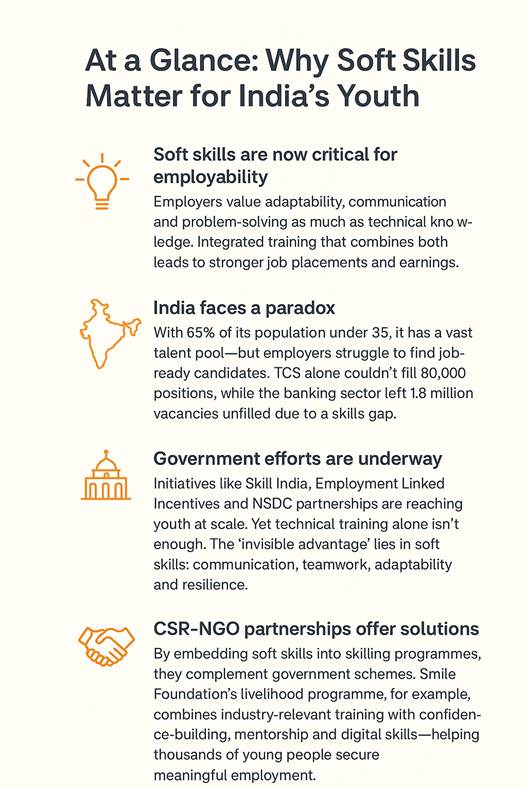
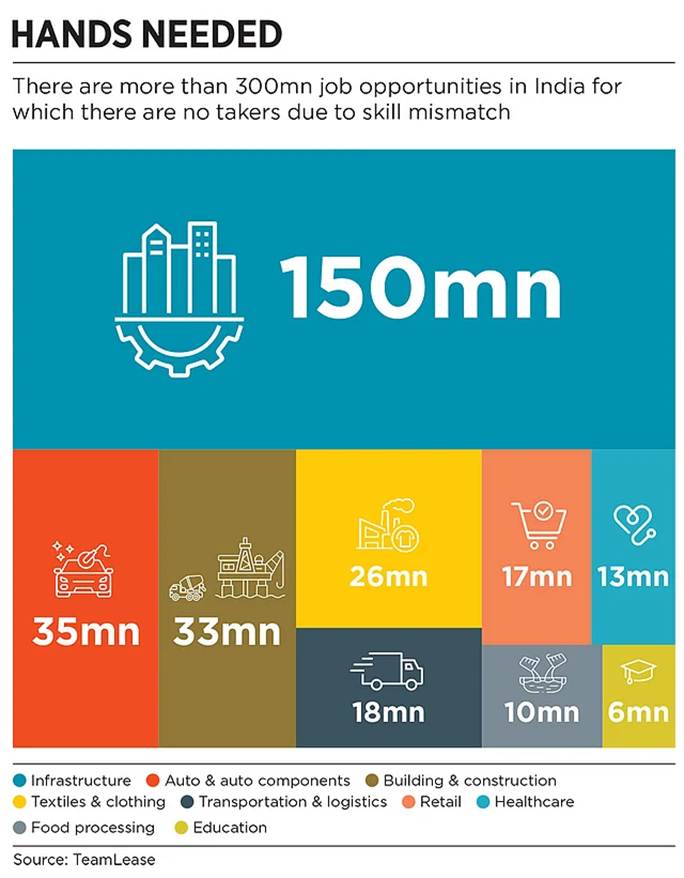
Despite a growing economy and millions of young job seekers, India is experiencing a troubling skills paradox – plentiful jobs on offer, but not enough “employable” candidates to fill them. The issue of youth unemployment in India is not due to an absolute lack of jobs, but a lack of job-ready skills among graduates.
Major employers have sounded the alarm. In mid-2024, TCS reported it was unable to fill 80,000 open positions because applicants lacked the required skills. At the same time, the financial services sector had about 1.8 million (18 lakh) vacancies go unfilled in a single year despite high demand for talent. These stark examples highlight a critical gap in India’s youth development spectrum: a large portion of the educated youth are graduating without the practical skills or workplace competencies that industries need.
In short, India’s young population is struggling with “unemployability.” According to the latest data, only about 51% of Indian youth are considered employable upon entering the workforce – meaning nearly one in two young people are not adequately prepared for the jobs available. This gap stems from mismatches between academia and industry needs, insufficient vocational and soft skills training, and limited opportunities for real-world exposure. If unaddressed, the country risks losing out on the full benefit of its demographic dividend, as educated but unskilled youth remain underemployed or unemployed.
India’s Skill Development Initiatives: Progress So Far
Recognising the urgency of the skills gap, the Government of India has launched a series of initiatives to boost youth employability. Drawing inspiration from its success with Production-Linked Incentive (PLI) schemes in manufacturing, the government introduced Employment Linked Incentive (ELI) schemes to encourage employers to create formal jobs. The logic is to provide incentives for companies to expand their workforce and they will hire more. While these schemes signal strong intent and have had some positive impact, India’s massive youth demographic means that scaling up collaboration across public and private stakeholders is necessary for a truly transformative impact.
Industry linkages lie at the heart of effective skilling. Through the Skill India Mission, public agencies like the National Skill Development Corporation (NSDC) have partnered with industry to align training with market demand. As of March 2024, NSDC had partnered with 62 corporate employers on 131 skilling projects, benefiting over 3.1 lakh young people across the country (including youth in 42 aspirational districts). These partnerships ensure that training curricula are relevant to industry needs and that trainees gain exposure to real work environments.
Innovative financing models are also being explored. In 2021, NSDC launched the Skill Impact Bond, a pioneering Development Impact Bond that leverages private sector investment with a pay-for-results approach. By tying funding to measurable outcomes like job placement and retention, this model increases accountability in skilling programmes. Early results are promising – between November 2021 and March 2024, about 29,365 candidates were enrolled (74% of them women), with over 23,000 completing certification and 19,209 securing job placements under the Skill Impact Bond initiative. Such outcome-focused approaches ensure that training efforts actually translate into employment, especially for women and underserved groups.
These steps mark commendable progress in laying the foundation for youth skilling. However, given the pace of change in job markets and technology, sustaining and strengthening this foundation is crucial. Technical training must be continually updated and, importantly, augmented with the soft skills and support systems that enable youth to thrive in the workplace.
How CSR–NGO Partnerships Strengthen Government Efforts
While government programmes set the macro framework for skills development, it is clear that they cannot do it alone. To truly empower rural and marginalized youth to compete and thrive in the job market, collaborative support from the private sector and civil society is essential. This is where CSR (Corporate Social Responsibility) initiatives and NGO partnerships can play a transformative role, complementing government efforts with innovation and grassroots reach.
Corporate-NGO partnerships can add value in several key ways:
Bridging the Last Mile: Ensuring that skilling schemes reach remote and rural youth who need them most. NGOs can mobilise and train young people in underserved areas – especially women in aspirational districts – who might otherwise be missed by urban-centric programmes. This last-mile connectivity helps make youth in every region employable, not just those in the metros.
Adding Soft Skills: Embedding crucial soft skills development into technical training programs. CSR-funded projects can integrate modules on communication, teamwork, professional etiquette and adaptability alongside teaching trade skills. This combination produces well-rounded candidates ready for workplace challenges, rather than just technicians.
Local & Inclusive Solutions: Designing community-driven skilling models tailored to local needs. For example, a non-profit might run digital literacy classes for rural girls, or partner with industry to create “green jobs” training for semi-urban youth in sustainable agriculture or solar panel installation. Such localised innovations ensure inclusivity – bringing marginalised groups into the skilled workforce with programmes relevant to their context.
Connecting Training to Jobs: Creating apprenticeship and placement pipelines. Companies can provide on-the-job training slots or internships for trainees, while NGOs offer mentorship, counseling and follow-up support to improve retention. This handholding through the transition into formal employment is often the key to turning training into a stable career.
Fostering Innovation & Accountability: CSR funding can support outcome-oriented and tech-enabled models that the government alone might not implement. For instance, performance-linked funding (where training partners are paid more when trainees get jobs) can be piloted, or digital platforms can be used to track alumni employment progress. These innovations drive greater impact and ensure that resources are used effectively, with measurable results.
In essence, CSR–NGO partnerships can amplify the reach and effectiveness of government skilling efforts. They bring in additional resources, fresh ideas, and on-ground experience working with communities. By working in tandem – government setting broad policy and quality standards, companies providing expertise and demand insights, and NGOs delivering training and mentorship – India can build a skilling ecosystem that is holistic and future-ready.
Smile Foundation’s Livelihood Programme: Bridging the Skills Gap
One example of a successful collaborative approach is the Smile Foundation’s Skill Training and Employability Programme (STeP), which focuses on empowering youth with a blend of market-oriented skills and soft skills. This livelihood programme targets young people – often school or college dropouts from economically weaker sections – and equips them with the competencies needed to secure decent jobs in growing industries.
Holistic Training: Smile Foundation’s STeP curriculum goes beyond technical know-how. Yes, participants receive industry-relevant training (for example, in sectors like BFSI – Banking, Financial Services and Insurance – retail management, digital marketing, healthcare, etc.), but they also undergo rigorous soft skills development.
Communication skills are honed through spoken English and customer handling exercises Confidence-building is achieved via personality development and interview preparation
Workplace etiquette and teamwork are taught through group projects and role-plays
Modules oncomputer literacy ensure youth are digitally savvy.
This holistic training bridges the education-to-employment gap by producing graduates who can not only do the job, but also fit into modern workplace culture from day one.
Industry Partnerships: A cornerstone of the programme is its close partnership with employers. Smile Foundation collaborates with over 400 companies – from retail chains and banks to hospitality firms and IT/BPO companies – to ensure training aligns with real job requirements. Industry experts frequently conduct guest lectures or practical sessions, and many trainees visit corporate offices or shop floors for exposure. Such industry linkages also create a pipeline for job placements: employers often recruit directly from STeP batches, knowing that these youth have been trained in both hard and soft skills. By aligning with the Government’s Skill India initiative and working hand-in-hand with industry, the programme increases the chances that students find sustainable jobs after training.
Impact at a Glance:
9,000+ youth trained through Smile Foundation’s livelihood programme to date
5,500+ youth placed into jobs across sectors (a majority of graduates gain employment within months of completing the training)
74 skill training centres operated across 8 states in India, ensuring local access to quality training
800+ industry exposure and counselling sessions conducted, connecting youth with mentors and real-world insights
400+ employment partners actively providing job opportunities, internships or apprenticeships to program graduates
100,000+ painters upskilled through a specialized collaboration (the Berger Paints iTrain project) across 25 states, demonstrating the scale of impact possible when corporates join hands with skilling initiatives
Through a combination of classroom training, personalised counseling and on-the-job exposure, Smile Foundation’s STeP is enabling thousands of young Indians to become confident, competent contributors to the workforce. Each success story not only transforms one life but also has a ripple effect on families and communities – inspiring others to pursue skill development.
Stories of Impact
To understand the human impact, consider a few individual journeys shaped by soft skills training:
Priyanka (name changed)
Coming from a low-income background, Priyanka enrolled in Smile Foundation’s BFSI training course. Over several weeks, she gained technical knowledge in banking operations, loans, and financial products. Equally important, she built soft skills in customer engagement, problem-solving and professional etiquette. Graduating with this well-rounded preparation, Priyanka now feels job-ready and has secured an entry-level position at a microfinance bank, where her confidence in dealing with clients is setting her apart.
Aadhya (name changed)
Once uncertain about her future due to limited means, Aadhya joined Smile Foundation’s 21st-century skills programme. The training equipped her with basic computer literacy, resume writing and interview skills, and workplace soft skills such as communication, teamwork and time management. Today, Aadhya is employed by a reputable organisation in Hyderabad – the first girl in her family to attain formal employment. Her success has not only lifted her family’s economic status but also changed mindsets in her community about women working.
Suman (name changed)
Suman grew up in a semi-urban town where career options seemed limited. She enrolled in Smile Foundation’s Retail Management course under STeP. During the course, she learned practical skills like customer service, inventory management, billing systems and workplace behaviour. Alongside, she underwent intensive soft skills coaching – improving her communication, self-presentation and self-belief. Upon completing the training, Suman started working as a retail associate at a large supermarket. She aspires to grow step by step into supervisory roles and become a role model for her younger siblings. Her journey exemplifies how confidence and soft skills can unlock ambition.
These stories underscore that when youth are given the right opportunities, training and encouragement, they are capable of overcoming socioeconomic barriers and excelling in the professional world. Soft skills often provide the crucial spark that turns their knowledge into action and their aspirations into reality.
Turning Intent into Progress: A Call for Collective Action
India’s demographic window – its youthful population – is still open, but to harness it fully we must go beyond technical know-how and provide young people with the “invisible advantage” of soft skills. The challenge is urgent, yet the pathway is clear. It requires a collective will and coordinated action across all stakeholders.
By combining the strengths of government initiatives, industry expertise and the on-ground reach of NGOs, we can build an ecosystem where every young Indian has access to the full spectrum of skills needed for success. It means embedding training, mentoring and placement support into local contexts, and ensuring that even a rural youth or a first-generation graduate in a small town receives the same polish and opportunities as one in a big city. It means proving that when we invest in soft skills and human potential at scale, the returns are immense – not just in employability, but in inclusion and national growth.
For the coming year, Smile Foundation encourgaes that in 2026, each of us – whether an employer, an educator, a policy-maker or a citizen – we must take a role, in nurturing the next generation’s talents. Through innovative partnerships and dedicated livelihood programmes, we can equip our youth to not only find jobs, but to thrive and become leaders in their fields. Together, let’s turn intent into progress. Partner now to support and amplify these efforts and help secure the three pillars of youth development: Employability, Inclusion and Scale.
Ultimately, empowering India’s youth with soft skills is about enabling them to drive the nation’s progress, with confidence and competence, into the future.
Every morning, before the first bell rings, Sunita Devi has already put in hours of invisible work. She has coaxed a child to come to school after maybe a night of domestic violence, reassured another who hasn’t eaten since yesterday afternoon, and calmed a student terrified about an exam she knows he is not prepared for. By the time Sunita steps into her classroom in a government school on the outskirts of Patna, she has already played the roles of counsellor, mediator, caregiver and crisis manager.
None of this appears in her job description.
Across India’s low-resource schools, teachers carry an emotional workload that is rarely acknowledged, measured or supported. They are expected not only to teach, but to absorb the anxieties, disruptions and vulnerabilities that children bring into classrooms shaped by poverty, migration, illness and instability. This emotional labour is not incidental to teaching; for millions of educators, it has become central to the job.
But policy conversations around education continue to focus almost exclusively on infrastructure, curriculum and learning outcomes. The emotional work of teachers remains largely invisible.
Teaching in the shadow of social distress
India has made significant progress in expanding access to schooling. Enrolment rates are high, and classrooms are fuller than ever. But the profile of students has changed. A large proportion of children in government and low-fee private schools are coming from households facing economic precarity, food insecurity and social stress.
Teachers are often the first adults outside the family to notice signs of distress. A sudden drop in attendance, unexplained aggression, withdrawal or declining performance frequently has less to do with academic difficulty and more to do with what is unfolding at home.
Studies on child mental health in India suggest rising levels of anxiety, behavioural challenges and emotional dysregulation among school-going children, trends exacerbated by the pandemic and its aftermath. In low-resource settings, where access to counsellors or psychologists is minimal, teachers become the default emotional support system.
This is labour that requires empathy, patience and constant emotional regulation. It is also labour for which teachers receive little training.
The cost of caring without support
Unlike academic instruction, emotional labour cannot be standardised or scheduled. It spills into breaks, after-school hours and weekends. Teachers worry about children long after they have left the classroom.
Over time, this takes a toll. Research globally has linked high emotional demands in teaching to burnout, stress and attrition. In India, where teacher shortages already strain the system, emotional exhaustion compounds existing challenges.
A recent survey by teacher unions highlighted increasing reports of fatigue, anxiety and a sense of being overwhelmed among educators in government schools. Many teachers speak of feeling responsible for problems they are not equipped to solve, from child abuse to severe poverty.
The irony is stark: while teachers are expected to nurture emotionally resilient children, there is little investment in their own emotional well-being.
Administrative load and emotional labour of teachers
Emotional labour does not exist in isolation. It intersects with growing administrative demands. Teachers in low-resource schools often juggle teaching with data entry, compliance reporting, election duties and census work. Each additional task chips away at time and emotional bandwidth.
When a teacher must choose between completing paperwork and listening to a distressed student, the system has already failed both.
This overload also affects how emotional labour is perceived. Because it is not formally recognised, it is treated as an individual failing rather than a systemic issue when teachers struggle to cope.
Why emotional labour of teachers matters for learning
The connection between emotional well-being and learning is well established. Children who feel safe, seen and supported are more likely to attend school regularly, participate in class and persist through difficulty.
Teachers are central to creating this environment. Their ability to manage classrooms, build trust and respond to emotional cues directly shapes learning outcomes, especially for children facing adversity.
Ignoring the emotional labour of teachers, therefore, is not just an issue of workforce welfare. It undermines educational quality itself.
Gendered expectations in the classroom
Emotional labour in teaching is also deeply gendered. A majority of primary school teachers in India are women, and societal expectations around caregiving often spill into professional roles. Female teachers are implicitly expected to be nurturing, patient and self-sacrificing.
This expectation normalises emotional labour as part of “good teaching” rather than recognising it as work that requires support and boundaries. Male teachers, too, face emotional demands, but are often less encouraged or trained to address them.
The result is a silent burden disproportionately carried by women, with little acknowledgment or institutional backing.
Training gaps and missed opportunities
Teacher training in India has traditionally focused on pedagogy, subject knowledge and classroom management. Emotional literacy, trauma-informed teaching and self-care are rarely prioritised.
But many teachers are navigating classrooms where students have experienced loss, displacement or chronic stress. Without training, teachers rely on instinct, personal experience and improvisation.
This gap is not inevitable. Countries that have invested in social-emotional learning frameworks for teachers report better outcomes for both educators and students. India’s National Education Policy acknowledges the importance of holistic development, but translating this vision into teacher support remains uneven.
Where civil society steps in
In this landscape, civil society organisations have begun to play a complementary role. Some NGOs working in education recognise that supporting teachers emotionally is essential to sustaining learning interventions.
Smile Foundation’s education programmes offer one such example. While the organisation’s primary focus is on improving access and learning outcomes for children in underserved communities, its work increasingly acknowledges the emotional dimensions of teaching.
Through teacher training modules, mentoring and on-ground support, Smile Foundation equips educators to handle classroom challenges that go beyond textbooks. Teachers are trained to recognise signs of distress, manage mixed-ability classrooms and engage with families sensitively.
Importantly, these interventions do not position teachers as therapists, but as supported professionals with referral pathways and peer networks. By reducing isolation and offering practical tools, such programmes help mitigate emotional burnout.
Smile Foundation’s integrated approach — combining education with health, nutrition and psychosocial support — also reduces the emotional load on teachers by addressing some root causes of student distress outside the classroom.
The blind spot with emotional labour of teachers
Despite growing recognition of mental health and well-being in education discourse, teachers’ emotional labour remains a policy blind spot. Budget allocations focus on infrastructure and teacher recruitment, but rarely on emotional support systems.
School counsellors are scarce, especially in government schools. Where they exist, they are often shared across multiple institutions, limiting their impact.
A more realistic approach would treat emotional labour as a shared responsibility rather than an individual burden. This means investing in counsellor networks, peer support groups, and ongoing professional development focused on emotional resilience.
Reframing teacher support as system investment
Supporting teachers emotionally is often framed as a “soft” intervention. In reality, it is a strategic investment. Teachers who feel supported are more likely to remain in the profession, engage students effectively and adapt to reform.
As India grapples with learning recovery post-pandemic, teacher well-being becomes even more critical. Expecting educators to rebuild learning while ignoring their emotional strain is neither fair nor effective.
Towards recognition and respect
Making emotional labour visible does not mean adding another expectation to teachers’ already full plates. It means acknowledging what they are already doing and providing the support structures to sustain it.
This includes:
integrating emotional literacy into teacher training,
reducing administrative overload,
strengthening referral systems for child mental health,
and fostering school cultures where teachers can seek help without stigma.
Civil society initiatives demonstrate that such support is possible even in resource-constrained settings. Scaling these practices requires political will and sustained investment.
Conclusion
The emotional labour of teachers in low-resource schools is one of India’s quiet educational pillars. It keeps children coming back to classrooms, holds communities together and absorbs shocks that the system is slow to address.
Recognising and supporting this labour is not optional. It is central to any serious effort to improve learning outcomes and build resilient schools.
As the country debates the future of education, it is time to look beyond metrics and mandates, and to acknowledge the emotional work that makes learning possible — one teacher, one classroom, one day at a time.
The Road to Health Ministry’s National Menstrual Hygiene Policy
For decades, India’s progress on girls’ education has been measured in enrolment numbers. How many girls entered school and how many stayed until Class 8. How many cleared secondary examinations. These figures tell an encouraging story, one of narrowing gender gaps and expanding opportunity. But they obscure a quieter question: how many days of school do girls actually attend, and at what cost?
For millions of adolescent girls, schooling is not a continuous experience but a punctuated one, interrupted regularly by something as predictable as the calendar itself. Each month, menstruation quietly redraws the boundaries of participation. A few days lost here, a few days missed there. Over time, the interruptions accumulate, shaping learning outcomes, confidence and the likelihood of staying in school at all.
Menstrual poverty is rarely framed as an education issue. It is discussed in the language of hygiene, health or dignity, often siloed away from classrooms and curricula. Yet its effects are deeply educational. When schools lack functional toilets, when sanitary products are unavailable or unaffordable, when stigma makes asking for help impossible, attendance becomes conditional. Education, in practice, becomes something girls can access only part of the month.
This is not an accident of culture or biology. It is the result of infrastructure choices, policy blind spots and a persistent discomfort with acknowledging how girls’ bodies shape their access to public life. In a country where staying in school through adolescence increasingly determines economic and social mobility, these monthly absences are not minor inconveniences. They are structural barriers hiding in plain sight.
What the data reveals, and what it smooths over
India has made real progress in bringing girls into classrooms. According to the Unified District Information System for Education (UDISE+), gender parity at the primary level has largely been achieved. But attendance and retention tell a more fragile story, especially after puberty.
The National Family Health Survey (NFHS-5) reports that nearly one in four girls aged 15–19 has missed school during menstruation, citing pain, lack of facilities, or fear of embarrassment. Other studies suggest the number may be higher in rural areas and urban informal settlements, where sanitation infrastructure is weakest.
What these figures rarely capture is accumulation. Missing two or three days of school every month translates into weeks of lost instruction over the course of a year. For students already navigating crowded classrooms, limited teacher attention and household responsibilities, the margin for falling behind is narrow. Over time, learning gaps widen, participation drops and disengagement sets in.
Attendance data, averaged across the year, masks these patterns. A girl may be counted as enrolled and “regular,” even as she misses nearly a quarter of instructional days.
Menstrual poverty is more than a product gap
Public discussions of menstrual poverty often centre on access to sanitary pads. Cost matters, especially for low-income families, but the problem is broader and more structural.
Menstrual poverty includes:
lack of private, functional toilets in schools
unreliable access to water and disposal facilities
absence of pain management or basic health support
stigma that discourages conversation and help-seeking
According to UNICEF, only about 42 percent of schools in India have separate, usable toilets for girls. Even where toilets exist, many lack doors, running water or safe waste disposal. In such environments, attending school during menstruation becomes an exercise in managing risk and humiliation.
For adolescent girls, especially first-generation learners, this vulnerability is magnified. A single incident—stained clothing, teasing, a reprimand—can be enough to trigger prolonged absence.
The role of stigma in shaping absence
Menstruation in India remains surrounded by silence. Many girls are taught early on to conceal it, endure discomfort quietly and restrict their movement. At school, teachers may lack training or comfort to address menstruation openly. Boys are often excluded from any education on the subject, perpetuating myths and ridicule.
Fear, rather than pain alone, drives absence. Fear of staining uniforms and fear of being singled out. And, the fear of becoming the subject of gossip that travels beyond the classroom.
Studies conducted across several states indicate that girls may stay home for two to five days each month during their period. These absences are often normalised within families and schools. Over time, missing school becomes routine, and returning becomes harder.
From absence to exit
The link between menstruation and school dropout is rarely linear. Girls do not leave school because of one missed day. But repeated absences intersect with other pressures: household work, caregiving responsibilities, early marriage expectations and safety concerns during travel.
For girls at the secondary level, academic momentum matters. Once that momentum breaks, catching up becomes difficult. Teachers move forward. Exams approach. Confidence erodes.
UNESCO’s Global Education Monitoring reports consistently show that adolescent girls who experience irregular attendance are significantly more likely to drop out, particularly in low-resource settings. Menstrual poverty acts as a quiet accelerant, pushing girls closer to the edge of the system without ever being recorded as the cause.
The intent, and the uneven reality
India has not ignored menstrual health. Government schemes under the National Health Mission promote menstrual hygiene awareness and subsidised product distribution. The Swachh Bharat Mission and school infrastructure guidelines mandate separate toilets for girls.
But implementation remains uneven. Distribution of products can be irregular. Facilities may exist on paper but remain unusable in practice. Teachers and frontline workers are often overburdened, and menstrual education is delivered inconsistently.
Crucially, menstrual health is often treated as a health issue, detached from educational outcomes. Attendance records do not track menstrual-related absence. Dropout data rarely accounts for it. Without visibility, the problem remains peripheral.
The economic logic of keeping girls in school
From an economic perspective, menstrual poverty represents a striking inefficiency. Relatively low-cost interventions—safe sanitation, reliable products, education—can protect years of schooling.
The World Bank has repeatedly shown that each additional year of schooling for girls improves lifetime earnings, health outcomes and educational attainment for the next generation. Conversely, early dropout carries long-term costs: reduced labour force participation, poorer maternal health and intergenerational disadvantage.
When girls miss school because they cannot manage menstruation safely, the loss is not just personal. It is societal.
What evidence suggests works
Evidence from India and comparable contexts points to a simple but often ignored conclusion: single interventions are rarely enough.
Pad distribution without toilets has limited impact. Toilets without water go unused. Education without safe spaces fails to translate into behaviour change.
Programmes that show measurable improvements in attendance tend to combine:
consistent access to menstrual products
functional, private sanitation facilities
school-based education for all genders
engagement with families and communities
Where these elements converge, stigma reduces and attendance stabilises.
Civil society filling critical gaps
In areas where public systems struggle to deliver consistently, civil society organisations often play a bridging role. Smile Foundation’s work offers insight into how menstrual health can be addressed as part of a broader education and well-being framework.
Through initiatives such as Swabhiman and Mission Education, menstrual health is integrated into school health programmes rather than treated as a standalone issue. Girls receive access to sanitary products alongside education on menstrual health, nutrition and hygiene. Schools are supported in improving sanitation facilities, and teachers are engaged to create safer, more responsive environments.
Importantly, Smile Foundation extends its work beyond the classroom. Community sessions involve mothers, fathers and caregivers, addressing stigma where it originates. Mobile health units under the Smile-on-Wheels programme reach remote and underserved areas, where school infrastructure is weakest and absenteeism highest.
By linking menstrual health to attendance, confidence and academic continuity, these interventions demonstrate how addressing menstrual poverty can keep girls engaged in education during the most vulnerable years.
Why this connection matters now
As India pushes to improve secondary and higher education outcomes, the adolescent years have become decisive. Completing secondary school is increasingly the minimum threshold for economic participation.
Menstrual poverty, when left unaddressed, undermines this goal quietly and consistently. It does not announce itself as a crisis. It shows up as irregular attendance, slipping grades and gradual withdrawal.
The pandemic exposed how fragile school attendance can be. As education systems rebuild, menstrual health must be recognised not as an add-on, but as foundational infrastructure.
From silence to systems
Breaking the link between menstruation and school absence requires more than awareness campaigns. It demands systemic change: better data, stronger coordination between education and health departments, and sustained investment in school infrastructure.
It also requires listening to girls. Many already know what would help them stay in school. Privacy. Products. Permission to speak.
The question is no longer whether menstruation affects education. The evidence is clear. The question is whether India is willing to treat this monthly interruption as a public responsibility rather than a private burden.
Ensuring that girls can attend school every day of the month is not only a matter of dignity. It is a matter of educational equity—and of recognising that progress is measured not just by who enters the classroom, but by who is able to stay.
Innovating for Good: The Role of Digital Technology in Nonprofits
Economists like to ask what replaces what. When a new technology enters everyday life, what does it substitute, and at what cost? In India, the smartphone has substituted classrooms during pandemics, libraries in crowded homes, and long journeys to government offices. It has replaced waiting with immediacy and distance with access. What it has not replaced—at least not yet—are the social protections that usually accompany entry into public life.
For adolescent girls, this gap has proved consequential.
India now has more than 750 million smartphone users. The growth has been swift and uneven, propelled less by leisure than by necessity. During the pandemic, phones became classrooms. After it, they remained lifelines—to teachers, friends, government portals, potential employers. Digital access, once a marker of privilege, hardened into expectation. Digital safety, by contrast, lagged behind, treated as a private matter to be negotiated within families.
The result is a familiar pattern in development history: the benefits of progress arrive upfront, while the costs surface later, distributed quietly and unevenly. Girls, as they often do, absorb those costs first.
An incomplete market
From an economist’s perspective, this is an incomplete market. Access expanded without safeguards; participation increased without protection. Girls were invited into a vast public space—the internet—without the social infrastructure that usually regulates public life: norms, accountability, recourse.
Consider how this plays out. A smartphone lands in a household during COVID-19, bought for online classes. The device is shared. Passwords are known. Privacy is conditional. A girl learns to navigate WhatsApp groups and YouTube tutorials with speed and ingenuity, often teaching adults around her. She also learns, without instruction, to manage attention from strangers, rumours among peers, and the lingering fear that a screenshot can travel faster than truth.
National surveys capture the expansion of access but struggle to register its texture. According to IAMAI–Kantar’s Internet in India 2023 report, adolescents are among the fastest-growing cohorts online, with a narrowing gender gap in access. What the data doesn’t show is how access feels when it is policed, shared, and surveilled—when the promise of connection arrives bundled with risk.
When safety becomes surveillance
In many households, concern about online harm translates into control rather than conversation. Phones are confiscated at night. Passwords are demanded. Girls are warned to “be careful” without being told what caution looks like. If something goes wrong—an unsolicited message, a doctored image—the response is often punitive. Why were you online? Why did you reply?
This is not parental cruelty so much as institutional absence. Schools rarely teach digital citizenship in ways that grapple with consent, boundaries, and reporting. Teachers themselves are uncertain, wary of discussing sexualised harassment in online spaces. The National Education Policy gestures toward digital literacy, but implementation remains uneven and narrow, focused on functional skills rather than social ones.
In the vacuum, responsibility is individualised. Safety becomes a test of character. Girls learn to self-censor, to disappear from platforms, to carry risk quietly. The phone does not close at night; the anxiety does not either.
The economics of attention
The smartphone is not a neutral tool. It is an attention economy designed to reward visibility and engagement. For adolescents—especially girls—this creates pressures that are hard to name and harder to resist. Social comparison is constant. Algorithms surface ideals of beauty, success, and romance that are both aspirational and punishing.
Clinicians in urban India report a rise in anxiety and sleep disruption among adolescent girls, patterns mirrored in global research linking heavy social media use to mental distress. India’s mental health data remains sparse, but the stories accumulate: girls who withdraw from class discussions, who scroll late into the night, who feel watched even when alone.
What makes these harms elusive is their invisibility. A girl scrolling appears occupied, not overwhelmed. Distress is mistaken for distraction.
Gendered risk
Boys and girls experience the internet differently. Boys are more likely to be encouraged to explore, to fail and recover. Girls are taught to anticipate harm and avoid it. The asymmetry mirrors the offline world, where public spaces are navigated with caution. Online, the consequences can be swift and amplified.
Cyberstalking, non-consensual image sharing, grooming—these are not rare. The National Commission for Protection of Child Rights has repeatedly warned about gaps in reporting mechanisms for minors. Yet reporting remains low. Shame travels faster than help.
Here, an economist’s concept is useful: capabilities. Access alone does not equal freedom. What matters is whether individuals have the real ability to use resources to pursue lives they value. A smartphone without the capability to navigate it safely is not empowerment; it is exposure.
Education systems catch up—slowly
Schools could be the obvious place to build those capabilities. They are not. Digital literacy curricula, where they exist, emphasise tools, not terrain. How to submit an assignment. How to search. Rarely: how to recognise manipulation, how to set boundaries, how to seek redress.
Teachers cite discomfort and lack of training. Parents, many of whom came online late themselves, feel outpaced. Platforms promise safety features that are poorly understood and inconsistently enforced. The architecture of protection is fragmented.
And so girls learn informally, through peers and trial and error. Mistakes are inevitable. Support is not.
The first generation to grow up online
What distinguishes this moment is scale. Today’s adolescent girls are the first generation to grow up with digital footprints that begin in childhood. Their reputations—social and academic—are shaped online early. The internet does not forget easily, and forgiveness is not automated.
India’s digital public infrastructure is expanding rapidly, from education portals to health records. The state understands scale. It has not yet matched it with care.
Where civil society steps in
In the absence of robust institutional support, civil society has begun to do the slow work of translation. Digital safety, in practice, is less about rules than relationships—about spaces where girls can speak without fear of punishment and learn without spectacle.
Smile Foundation’s work with adolescent girls offers a window into what this looks like. Through programmes such as Swabhiman and Mission Education, digital safety is folded into life-skills education rather than isolated as a warning. Conversations begin with lived experience: what it feels like when a message crosses a line; how rumours move; what consent means online and offline.
Parents are brought into the room—not to police, but to listen. Counsellors link online harm to mental health, recognising that anxiety, withdrawal, and academic decline often share a digital root. The goal is not to eliminate risk—an impossible task—but to distribute responsibility.
These efforts are small compared to the scale of the problem. They matter because they treat girls as citizens-in-training rather than liabilities to be managed.
The cost of getting this wrong
The stakes extend beyond individual safety. Digital participation shapes who speaks, who leads, who is visible. If girls learn that public space—online included—is unsafe unless they shrink themselves, the costs are civic.
Economists warn that when risks are borne privately but benefits accrue publicly, markets fail. The smartphone era has delivered collective gains—connectivity, efficiency, growth—while offloading safety onto those least equipped to negotiate it. Girls pay with time, attention, and silence.
Toward a public understanding of safety
What would it mean to treat digital safety as a public good? It would mean teaching consent and boundaries alongside coding and training teachers to recognise online harm as a learning barrier. It would mean designing platforms with accountability that does not require victims to become investigators and, above all, shifting the moral frame—from “be careful” to “be prepared, and be supported.”
The girl with the cracked phone in Delhi is not naïve. She is navigating a world built quickly and explained poorly. Her safety depends less on her restraint than on our willingness to build the social infrastructure that should have accompanied access.
Progress, economists remind us, is not just about substitution. It is about who bears the costs. In India’s smartphone era, girls have carried those costs quietly. Making them visible is the first step toward sharing them.
Every morning before school, 14-year-old Rina wakes up before the rest of her family in a low-income neighbourhood on the outskirts of Patna. She sweeps the floor, prepares tea, fetches water and helps her younger brother get ready. By the time she reaches school, she is already tired. When she returns in the afternoon, the work resumes—cooking, cleaning, caring. Homework is pushed to late evenings, if it happens at all.
Rina’s day is not unusual. Across India, millions of adolescent girls shoulder a volume of unpaid domestic and care work that remains largely invisible in statistics and classrooms. This labour—essential to household survival—is rarely acknowledged as work. Yet it shapes girls’ education, health, mental well-being and future opportunities in profound ways.
While much attention has been paid to early marriage, school dropout and malnutrition among adolescent girls, far less scrutiny has been directed at the daily workload that underpins all three. In low-income households, girls’ time is often treated as elastic: infinitely stretchable, readily available and ultimately expendable.
What the data shows and what it hides
According to India’s Time Use Survey (2019), women and girls spend nearly six times more time on unpaid domestic and care work than men and boys. Among adolescents, the gender gap appears early. Girls aged 15–19 spend significantly more time on household chores, sibling care and caregiving than boys of the same age.
Yet these averages mask deeper inequalities. In low-income households, especially in urban slums and rural areas, girls’ unpaid workload increases sharply when families face economic stress, illness, migration or lack of public services. Water shortages, absence of childcare facilities and unreliable public transport all translate into more work for girls.
What is missing from most datasets is the cumulative impact. Unpaid labour does not occur in isolation. It intersects with schooling, nutrition and rest. Girls who work more at home often attend school less regularly, arrive fatigued and struggle to keep up academically. Over time, the gap widens.
School attendance does not equal participation
India has made progress in enrolling girls in school. But enrolment figures conceal unequal learning conditions. Teachers and administrators often describe adolescent girls as “quiet,” “disengaged” or “falling behind” without asking what their days look like outside school.
Research by UNICEF and UNESCO has consistently shown that girls’ domestic responsibilities are a major factor in irregular attendance and learning loss, particularly at the secondary level.
In low-income homes, girls are often expected to balance school with responsibilities that would overwhelm many adults. When performance slips, the narrative quickly shifts from structural constraint to individual failure.
Care work as crisis response
Girls’ unpaid labour intensifies during crises. During the COVID-19 pandemic, school closures and health emergencies dramatically increased household care needs. Studies conducted during this period found that adolescent girls took on more cooking, cleaning and caregiving than before, often at the expense of schooling.
In households affected by illness, girls frequently become informal caregivers. In families facing job loss or migration, they step in to manage domestic stability. These expectations are rarely temporary. Once normalised, they persist even after the crisis passes.
The pandemic did not create this pattern. It exposed it.
The health costs of invisibility
The physical toll of unpaid labour on adolescent girls is poorly documented but significant. Carrying water, standing for long hours while cooking, and lack of rest contribute to fatigue and musculoskeletal strain. Combined with inadequate nutrition, these demands exacerbate anaemia and delayed growth.
Mental health consequences are even less visible. Constant responsibility, limited leisure and lack of autonomy contribute to stress, anxiety and emotional withdrawal. For girls navigating puberty, these pressures coincide with hormonal changes and social restrictions, compounding vulnerability.
Despite growing awareness of adolescent mental health, unpaid labour remains absent from most intervention frameworks.
Why girls and not boys?
The unequal distribution of household work is often justified as cultural norm. But norms are reinforced by policy choices. When public services are weak, unpaid care fills the gap, and when childcare is unavailable, girls step in. Same with when water is scarce, girls fetch it. When elder care is unsupported, girls provide it.
This is not accidental. It reflects whose time is valued.
Economists have long argued that unpaid care work subsidises the formal economy. In India, women’s unpaid labour is estimated to contribute trillions of rupees in economic value annually, yet it remains uncounted in GDP.
Adolescent girls enter this invisible economy early, often before they have the language to describe it.
Education at risk
Unpaid labour is a key but under-acknowledged driver of school dropout among adolescent girls. When families face trade-offs, girls’ education is more likely to be disrupted. Not because parents undervalue education, but because girls are seen as indispensable to household functioning.
This dynamic becomes particularly acute at puberty, when mobility restrictions increase and domestic expectations intensify. Education begins to compete with marriage preparation, caregiving and household management.
Policies aimed at keeping girls in school—scholarships, bicycles, uniforms—address visible barriers. They rarely confront invisible labour.
Why policy keeps missing the problem
India has robust policies addressing adolescent health, nutrition and education. But unpaid care work falls between ministries. It is not clearly owned by education, health or labour departments.
As a result, interventions remain fragmented. Schools are not equipped to recognise care burden as a learning barrier. Health programmes focus on outcomes without addressing time poverty. Social protection schemes often assume adult beneficiaries.
Until unpaid labour is acknowledged as a structural constraint, solutions will remain partial.
What change could look like
Addressing the invisible workload of adolescent girls does not require dismantling families. It requires rebalancing responsibility.
Key interventions include:
Reliable access to water, sanitation and cooking fuel
Affordable childcare and eldercare services
School schedules that recognise domestic constraints
Community dialogue that includes boys and men
Integration of time-use awareness into adolescent programmes
Crucially, girls must be part of the conversation. Their labour is often discussed without their voice.
Civil society’s role on the ground
Some organisations have begun to address this invisibility indirectly, by reducing the load rather than naming it. Smile Foundation’s work with adolescent girls offers an example of this approach.
Through programmes like Swabhiman and Mission Education, the Foundation combines academic support with health, nutrition and life-skills interventions. By providing after-school learning spaces, nutritional supplementation and health check-ups, these programmes reduce the daily strain that pulls girls away from education.
In several communities, Smile Foundation engages families to redistribute responsibilities, encouraging shared household roles and supporting girls’ continued schooling. Counselling and mentoring sessions help girls articulate their challenges and advocate for their time.
These efforts do not eliminate unpaid labour. But they make it visible, negotiable and, in some cases, lighter.
Making the invisible workload of adolescent girls visible
The workload adolescent girls carry is not a private matter. It is a public issue with long-term consequences for education, health and gender equality.
As India seeks to harness its demographic dividend, it cannot afford to ignore the unpaid labour that quietly limits half its youth. Girls’ time is a finite resource. When it is consumed by invisible work, opportunities shrink.
Recognising this labour does not diminish its value. It demands that the burden be shared.
Until then, millions of girls like Rina will continue to do the work that keeps households afloat—unseen, uncounted and unpaid—while being told to work harder at school.
Slum Children’s Education: A Quest for A Dignified Life
At 7:30 am, nine-year-old Rafiq is already awake in a narrow lane of a Delhi slum. The room he shares with five family members doubles as a bedroom, kitchen and storage space. There is no desk. His schoolbag rests on a nail hammered into the wall. Before leaving for school, he fetches water, watches his younger sibling and eats whatever is available. Homework, if completed at all, is squeezed into late evenings or stolen moments during the day.
For millions of children living in India’s urban slums, schooling begins long before they enter a classroom. It is shaped by overcrowded homes, unreliable access to electricity and water, frequent migration and the constant pressure to contribute to household survival. Learning, in this context, is not just an academic challenge. It is a logistical and emotional one.
India’s cities are home to an estimated 65 million people living in slums, according to Census projections and urban development reports. A significant proportion of them are children. While urban areas are often assumed to offer better access to schools, the reality for slum-dwelling children is far more complicated.
Access does not equal learning
Over the past two decades, India has made substantial progress in school enrolment. Urban enrolment rates are high, and slum settlements are usually located near government or low-cost private schools. But proximity has not translated into quality learning.
Data from ASER and other learning assessments consistently show that many children in urban poor communities struggle with basic reading and arithmetic well into upper primary grades. In some urban slums, learning outcomes are comparable to or worse than those in rural areas.
The reasons are layered. Schools serving slum populations are often overcrowded. Teacher turnover is high. Instruction is rigid and syllabus-driven, leaving little room to address foundational gaps. Children who miss school due to illness, migration or household responsibilities fall behind quickly and few systems exist to help them catch up.
When early gaps go unaddressed, they widen over time. For slum-dwelling children, interruptions are frequent, making continuity especially fragile.
The classroom is only one learning environment
For children in slums, the home environment rarely supports school learning. Many families live in one-room dwellings. Noise, lack of space and shared responsibilities make quiet study difficult. Parents, often working long hours in informal jobs, may value education deeply but lack the time or confidence to support homework.
Research on cognitive load shows that stress, hunger and sleep deprivation significantly impair attention and memory. Children who come to school hungry or exhausted are expected to perform at the same pace as peers with vastly different living conditions.
This mismatch is rarely acknowledged in curriculum design or classroom expectations. When children struggle, the assumption is often a lack of effort rather than a lack of support.
Language, migration and belonging
Urban slums are sites of constant movement. Families migrate seasonally for work. Children shift between schools, languages and curricula. A child may speak Bhojpuri or Bengali at home, attend a Hindi-medium school, and be assessed in English by upper grades.
Language transitions, when unsupported, slow comprehension and erode confidence. So many education organizations and stakeholders have highlighted how belonging and identity are central to learning. When children feel out of place linguistically or culturally, engagement drops.
For migrant children, schooling is often discontinuous. Documents required for admission may be missing. Transfer certificates are delayed. Some children remain out of school for months during transitions, increasing the likelihood of permanent dropout.
Attendance is fragile
In slum communities, attendance fluctuates. Illness, eviction threats, water shortages or caregiving duties can pull children out of school without warning. Girls are particularly affected, often tasked with household work or sibling care.
Urban poverty also intersects with safety concerns. Long commutes, unsafe sanitation facilities and harassment deter regular attendance, especially for adolescent girls. When schools feel unwelcoming or unsafe, learning suffers regardless of curriculum quality.
The emotional weight children carry
Perhaps the most overlooked aspect of schooling in slums is emotional load. Children navigate adult anxieties daily: unstable income, illness, housing insecurity. This constant vigilance affects how they learn.
Learning sciences increasingly recognise that emotional regulation and safety are prerequisites for cognition. A child preoccupied with uncertainty cannot easily focus on fractions or grammar. Yet emotional well-being rarely features in conversations about urban education.
Teachers, themselves under pressure, are often not trained to recognise trauma or stress responses. Behavioural issues are punished rather than understood, reinforcing cycles of disengagement.
When schools adapt, learning improves
Despite these challenges, there are classrooms where slum-dwelling children thrive. What distinguishes them is not technology or resources alone, but flexibility.
Schools that:
group children by learning level rather than age
allow time to rebuild foundational skills
use activity-based and contextual learning
create predictable, caring environments
consistently show better engagement.
Research from Pratham’s “Teaching at the Right Level” approach demonstrates that when instruction meets children where they are, learning accelerates—even in low-resource settings.
The role of community-based learning spaces
In many slum areas, learning does not happen only in schools. Community centres, NGO-run classrooms and informal learning spaces fill critical gaps.
Smile Foundation’s Mission Education programme operates in several urban slums, offering remedial education alongside formal schooling. These centres provide small-group instruction, allowing children to rebuild reading and numeracy skills without the stigma of “failure.”
Beyond academics, Smile Foundation integrates nutrition support, health check-ups and psychosocial care. This matters. A child who is healthy, fed and emotionally supported is more ready to learn.
Teachers in these centres often come from similar communities, strengthening trust and communication with families. Parents are engaged as partners, not judged for constraints beyond their control.
Digital learning tools are used selectively, not as replacements for teachers but as supplements that allow children to learn at their own pace. For children who have missed months of schooling, this flexibility is critical.
Why remediation is not a deficit approach
There is a tendency to view remedial education as a temporary fix or a sign of failure. Learning science suggests the opposite. Remediation, when done well, acknowledges that learning is non-linear.
Children living in slums are not less capable. They have had fewer uninterrupted opportunities to learn. Programmes that rebuild foundations respect this reality rather than punishing it.
Smile Foundation’s approach reflects this philosophy. By combining academic reinforcement with life skills, creative activities and counselling, these programmes help children regain confidence, not just competence.
What schools and systems can learn
If schooling for slum-dwelling children is to improve at scale, systems must adapt to reality rather than idealised assumptions.
This means:
designing curricula that allow for catch-up
investing in teacher training on trauma-informed pedagogy
integrating health and nutrition with education
supporting migrant children with flexible admission policies
recognising that attendance gaps are structural, not moral
Urban education cannot rely on enrolment metrics alone. Learning outcomes depend on whether schools acknowledge the full context of children’s lives.
Rethinking what “schooling” means
For children in slums, schooling is not confined to textbooks or classrooms. It is shaped by daily negotiations with space, time and responsibility. When education systems fail to account for this, children disengage—not because they lack ambition, but because the system demands more than it supports.
Our core insight is that learning is human. It is shaped by relationships, safety and relevance. When schools and communities align around these principles, children living in the most difficult circumstances can and do learn.
Programmes like those run by Smile Foundation offer a glimpse of what is possible when education meets children where they are. They remind us that improving schooling in slums is not about lowering standards, but about widening the pathways to reach them.
If India’s cities are to be engines of opportunity rather than inequality, schooling for slum-dwelling children must be redesigned with empathy, evidence and imagination.