
Every year, thousands of Indian taxpayers miss out on a simple, legal way to reduce their income tax liability, all while doing something meaningful for society. If you donate to a registered NGO or charitable trust, you can save tax under Section 80G of the Income Tax Act, 1961. This is not a loophole. It is a government-backed incentive designed to encourage charitable giving and social investment across India.
Whether you are salaried, self-employed, a business owner, or even an NRI, this guide explains everything you need to know: what Section 80G is, who qualifies, how much you can deduct, which donations are eligible, and exactly how to claim your deduction while filing your Income Tax Return (ITR).
KEY TAKEAWAYS
|
What Is Section 80G of the Income Tax Act?
Section 80G is a provision under the Income Tax Act, 1961, that allows donors to claim a deduction on the amount donated to approved charitable organizations, relief funds, and non-profit institutions. This deduction directly reduces your taxable income, which in turn lowers the amount of tax you owe.
The provision was introduced to incentivize philanthropic behavior among individuals and corporates, channeling private money into socially beneficial causes such as education, healthcare, disaster relief, and poverty alleviation.
According to the Income Tax Department of India, only organizations registered under Section 80G of the IT Act are eligible to issue tax exemption receipts to donors. You can verify an NGO’s 80G status on the official Income Tax e-filing portal at incometaxindia.gov.in.
Who Can Claim Deduction Under Section 80G?
The deduction under Section 80G is available to a broad range of taxpayers. You are eligible to claim it if you belong to any of the following categories:
- Resident individuals (salaried employees, self-employed professionals, freelancers)
- Non-Resident Indians (NRIs) who donate to eligible Indian institutions
- Hindu Undivided Families (HUFs)
- Companies, firms, and corporate entities
- Any other person as defined under the Income Tax Act
There is no income threshold for claiming this deduction. Any taxpayer who has made a qualifying donation to a registered institution is eligible, regardless of their income bracket.
What Is the Difference Between 12A and 80G Registration for NGOs?
Many donors confuse 12A and 80G registrations. Here is a clear distinction:
| Feature | Section 12A | Section 80G |
| Purpose | Tax exemption for the NGO’s own income | Tax deduction for the donor |
| Who Benefits | The NGO / Trust itself | Individual or corporate donor |
| Prerequisite | Required before applying for 80G | NGO must have 12A registration first |
In short: an NGO with 12A registration but without 80G certification cannot provide tax deduction receipts to donors. Always verify both registrations before donating if tax savings are a priority for you.
How Much Tax Can You Save Under Section 80G? Understanding Deduction Limits
The deduction under Section 80G is not uniform across all donations. It falls into four categories based on the type of fund or institution you donate to.
Category 1: 100% Deduction Without Qualifying Limit
Donations to the following funds qualify for a full 100% deduction with no upper limit:
- National Defence Fund
- Prime Minister’s National Relief Fund (PMNRF)
- National Foundation for Communal Harmony
- Chief Minister’s Relief Fund or Lieutenant Governor’s Relief Fund
- National Children’s Fund
- Zila Saksharta Samiti (District Literacy Committee)
Category 2: 50% Deduction Without Qualifying Limit
Donations to the following institutions are eligible for a 50% deduction with no upper ceiling:
- Prime Minister’s Drought Relief Fund
- Jawaharlal Nehru Memorial Fund
- Indira Gandhi Memorial Trust
- Rajiv Gandhi Foundation
Category 3: 100% Deduction Subject to 10% of Adjusted Gross Total Income
Donations to family welfare and approved scientific research institutions fall here. The deduction is 100%, but the total eligible amount cannot exceed 10% of your Adjusted Gross Total Income (AGTI).
Category 4: 50% Deduction Subject to 10% of Adjusted Gross Total Income
Most donations to registered NGOs, charitable trusts, and social welfare organizations fall in this category. You get a 50% deduction on the donated amount, capped at 10% of your AGTI.
| How to Calculate Adjusted Gross Total Income (AGTI)
AGTI = Gross Total Income (GTI) minus deductions under 80C, 80D, and other applicable sections, minus Long-Term Capital Gains (LTCG), minus Short-Term Capital Gains taxed at special rates. Example: Mr. Sharma’s GTI is Rs. 8,00,000. He pays Rs. 1,00,000 as LIC premium (80C) and has LTCG of Rs. 50,000. AGTI = Rs. 8,00,000 – Rs. 1,00,000 – Rs. 50,000 = Rs. 6,50,000 10% of AGTI = Rs. 65,000. If his donation to a qualifying NGO is Rs. 90,000, only Rs. 65,000 is eligible for deduction. Of that, 50% = Rs. 32,500 is the actual tax deduction. |
What Donations Are Eligible Under Section 80G? Scope and Exclusions
Not every act of giving qualifies for a tax deduction. The Income Tax Act specifies a clear scope for eligible donations.
Eligible Donations
- Donations made in cash or by cheque, demand draft, or online transfer to a registered institution
- Donations by resident Indians, NRIs, HUFs, and companies
- Donations made from taxable income or exempt income, both qualify
- Donations deducted from salary by an employer (with employer certificate required)
Ineligible Donations
- Donations made in kind, such as food, clothes, medicines, equipment, or any non-monetary contribution
- Cash donations exceeding Rs. 2,000 (as per the Finance Act 2017, cash donations above Rs. 2,000 are not eligible for deduction under 80G)
- Donations made to foreign or overseas charitable trusts
- Donations to NGOs without a valid 80G certificate
- Political party contributions (these fall under Section 80GGC, not 80G)
Important: The Finance Act 2017 introduced a significant restriction. Cash donations above Rs. 2,000 to a fund or institution under Section 80G are not eligible for deduction. This was introduced to promote digital payments and financial transparency. Always donate via cheque, UPI, NEFT, or RTGS to ensure your donation qualifies.
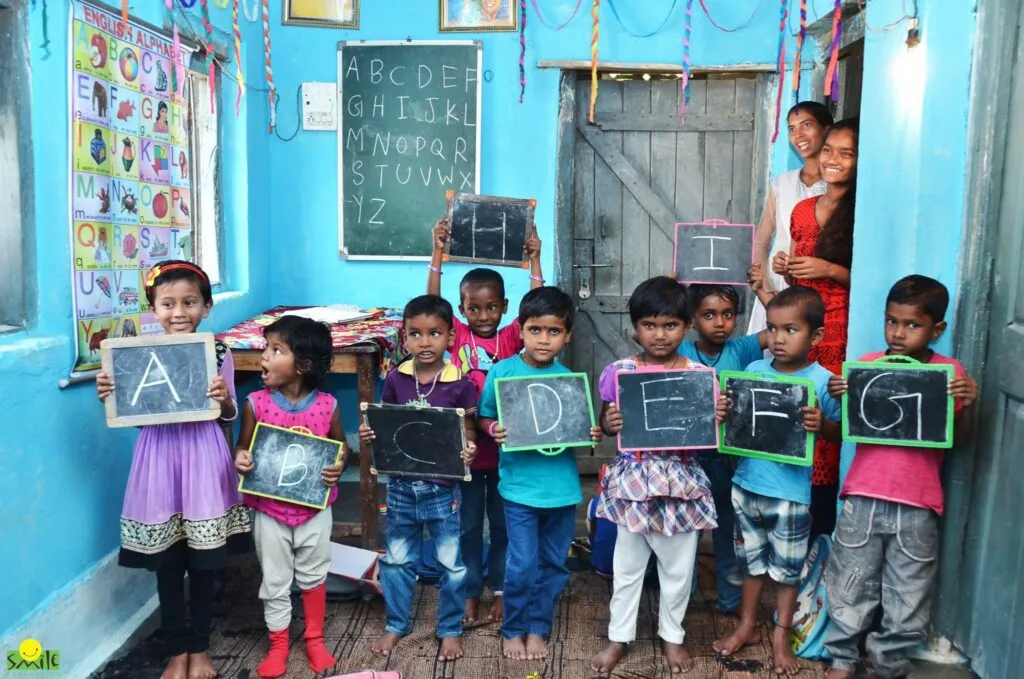
| Want to save tax while changing a child’s life? Donate to Smile Foundation India, a registered 80G and 12A certified NGO working for education, health, and empowerment of underprivileged children across India.
Donate Now at smilefoundationindia.org and receive your 80G receipt instantly. |
How to Claim Section 80G Deduction: Step-by-Step Process
Claiming your tax deduction is straightforward if you follow the right steps and keep the required documents ready.
- Donate to an NGO or trust that is certified under Section 80G of the Income Tax Act.
- Collect the official stamped receipt issued by the organization at the time of donation.
- Verify the 80G registration number on the receipt. You can cross-check it on the Income Tax India e-filing portal.
- If the donation was deducted from your salary, request a certificate from your employer specifying the donation amount and the organization’s details.
- While filing your Income Tax Return (ITR), navigate to the deductions section and enter your donation details under Section 80G.
- Attach the stamped receipt or employer certificate as documentary proof. Keep all physical records for at least 6 years.
What Must the Donation Receipt Contain?
A valid 80G receipt must include all of the following details:
- Name, address, and PAN of the NGO or Trust
- Name of the donor
- Amount donated (mentioned in both words and figures)
- Date of donation
- Mode of payment (cash, cheque, online transfer)
- Valid 80G registration number issued by the Income Tax Department, along with its period of validity
- For donations qualifying for 100% deduction, Form 58 must be attached to the receipt
Section 80G vs. Other Tax-Saving Sections: How It Compares
| Section | Purpose | Max Deduction | Limit |
| 80C | Investments (PPF, ELSS, LIC) | Rs. 1,50,000 | Fixed ceiling |
| 80D | Health insurance premium | Rs. 25,000 to Rs. 1,00,000 | Based on age |
| 80G | Donations to NGOs and funds | 50% or 100% of donation | 10% of AGTI for some categories |
| 80GGC | Donation to political parties | 100% of amount | No limit |
Section 80G for Salaried Employees: Claiming Through Your Employer
If you are a salaried employee and your employer deducts a portion of your salary each month as a donation to an approved fund, you can still claim the tax deduction under Section 80G.
To do this, you must obtain a certificate from your employer that clearly states:
- The name and PAN of the recipient institution
- The total amount donated during the financial year
- Confirmation that the institution holds a valid 80G registration
Submit this certificate alongside your ITR filing. This ensures the deduction is applied correctly and avoids scrutiny from the Income Tax Department.
Recent Changes to Section 80G: What Changed After 2021
The Union Budget 2021 introduced significant amendments to streamline the 80G certification process and improve transparency in charitable donations. Key changes include:
- NGOs must now file a statement of donation (Form 10BD) with the Income Tax Department before May 31 of each year, listing all donations received during the financial year.
- Donors will receive a certificate (Form 10BE) from the NGO, which must be uploaded while filing ITR. Physical receipts alone are no longer sufficient in many cases.
- A unique Donation Reference Number (DRN) is generated for each donation, making verification easier and reducing fraud.
These changes were implemented to align with the government’s push toward digital financial transparency. Donors should ensure that the NGO they contribute to is compliant with these updated filing requirements.
Frequently Asked Questions: Section 80G Tax Deduction
Can I claim 80G deduction under the new tax regime?
No. As of FY 2024-25, the deduction under Section 80G is not available if you opt for the new tax regime under Section 115BAC. You must choose the old tax regime to claim this deduction. This is an important consideration when deciding which tax regime to opt for.
Is there a maximum limit on how much I can donate and claim under 80G?
There is no fixed upper limit on the donation amount itself. However, for donations in Category 3 and Category 4, the deductible amount is capped at 10% of your Adjusted Gross Total Income. Any donation beyond this threshold does not qualify for the deduction in those categories.
Can an NRI claim deduction under Section 80G?
Yes. NRIs can claim deduction under Section 80G for donations made to eligible institutions in India. However, donations to overseas or foreign charitable trusts are not eligible for this deduction, even if the donor is a resident Indian.
How do I verify if an NGO is registered under 80G?
You can verify an NGO’s 80G registration by visiting the Income Tax Department’s e-filing portal at incometaxindia.gov.in. Navigate to the ‘Verify NGO/Tax Exemption’ section and search by name or registration number.
Does donating in kind (clothes, food, medicines) qualify for 80G deduction?
No. Donations in kind, whether food, clothing, medicines, equipment, or any other non-monetary contribution, do not qualify for deduction under Section 80G. Only monetary donations made through cash (up to Rs. 2,000) or banking channels such as cheque, NEFT, UPI, or demand draft are eligible.
What is Form 10BE and why is it important?
Form 10BE is a certificate issued by the NGO or charitable institution to the donor. It was introduced after Budget 2021 to replace simple stamped receipts for the purpose of ITR filing. It contains the Donation Reference Number (DRN) and must be furnished while filing your Income Tax Return to claim the 80G deduction.
Can a company or business claim 80G deduction?
Yes. Corporate entities, companies, partnerships, and firms can all claim deduction under Section 80G for donations made to eligible institutions. For companies under the new corporate tax regime, the applicability should be verified with a tax consultant.
Conclusion: Give with Purpose, Save with Intent
Donating to a cause you believe in is one of the most rewarding financial decisions you can make. Section 80G of the Income Tax Act ensures that your generosity does not go unrewarded in a monetary sense either.
By donating to a certified NGO such as Smile Foundation India, you accomplish three things at once: you support the education and healthcare of underprivileged children, you reduce your taxable income legally, and you contribute to building a more equitable India.
The process is straightforward. Choose a registered 80G organization, donate via a banking channel, collect your Form 10BE receipt, and claim your deduction while filing your ITR. It takes minutes but creates change that lasts a lifetime.
| Make a Difference. Save Tax. Sponsor a Child Today.
Smile Foundation India is a 12A and 80G certified non-profit. Your donation is 50% tax deductible. Visit smilefoundationindia.org to donate and download your 80G receipt instantly. |
This article was reviewed for factual accuracy against the Income Tax Act, 1961, CBDT circulars, and official guidelines published by the Income Tax Department of India. It is intended for general informational purposes. For personalized tax advice, consult a certified Chartered Accountant or tax advisor.