
Summary
- Access is only the beginning: Child education in India must move beyond enrolment to learning, STEM, SEL and opportunity.
- Philanthropy is growing: ₹10,380 crore was given philanthropically, with ₹4,166 crore going towards education.
- STEM needs strong foundations: Technology creates greater impact when supported by foundational learning, teachers and connectivity.
- Impact must be measurable: Across 67 tribal schools, 2,526 students saw the Class X pass rate rise from 56% to 95%.
- Partnerships drive lasting change: CSR NGO partnerships can connect corporate resources with grassroots expertise to build sustained educational outcomes.
The child who reaches school is only the beginning
In a village in Jharkhand, a mother watches her daughter leave for school.
She knows what that uniform represents.
She earns between ₹200 and ₹250 a day as a farmer. Neither she nor her parents went to school. Education, for generations, had remained an aspiration that circumstances had rarely allowed her family to pursue. Yet, when she watches her daughter study, she sees a possibility that extends beyond the classroom.
A different life. A different choice. A different beginning.
Smile Foundation’s story of Sivani and her mother captures this quiet transformation that’s happening slowly across 27 states in India through Smile Foundation’s Mission Education. Many women like Sivani’s mother are simply aspiring to one thing : to see their daughter, achieve what they could not.
Thus, this point becomes a pivotal point when it comes to CSR interventions working towards educational development in India. At this juncture, the focus must begin, not with infrastructure or enrolment numbers, but with the question of what education makes possible.
Even today in some corners of India, a child is entering school and still struggling to learn. A classroom exists without adequate learning resources. Digital programmes have been introduced but without reliable connectivity.
One must understand that access to education is just the beginning of education.
It is not its outcome.
And this distinction matters increasingly to India’s corporate philanthropy landscape.
India’s CSR Is Changing. So Is Education
India’s philanthropic landscape is expanding—not only in scale, but also in the range of people and institutions choosing to invest in social change. The Economic Times’ analysis of the EdelGive Hurun India Philanthropy List 2025 records ₹10,380 crore in philanthropic giving, an 85% increase over three years. Education emerged as the largest philanthropic cause, receiving ₹4,166 crore from 107 donors.
For child education in India, this growing individual philanthropy is significant. It reflects a wider recognition that education is not simply an act of giving, but an investment in intergenerational opportunity. Increasingly, that same thinking is visible in corporate philanthropy, where partnerships are moving towards longer-term, more targeted interventions.
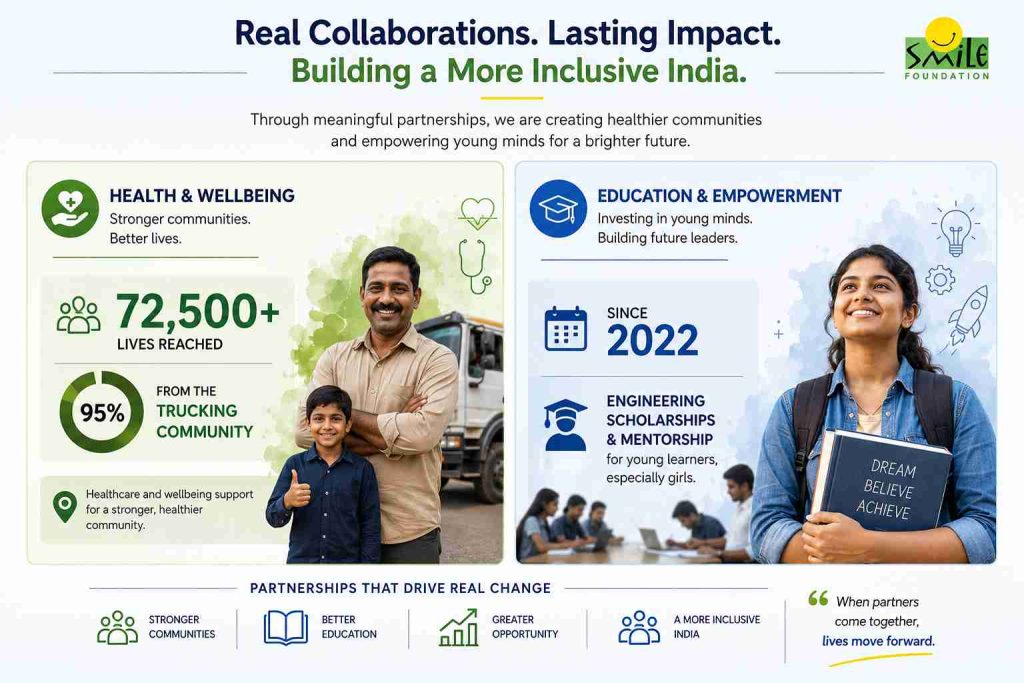
Smile Foundation’s corporate partnerships offer examples of this shift. Its collaboration with Bridgestone has supported the Bridgestone Saarthi Support Centres, with the initiatives reaching 72,500+ beneficiaries, nearly 95% of whom belong to the trucking community. The partnership demonstrates how corporate investment can respond to the interconnected health and wellbeing needs of a specific community.
Similarly, Deutsche Bank’s partnership with Smile Foundation since 2022 supports engineering scholarships for young people, particularly girls, combining access to education with mentorship and continued support. It illustrates how CSR education can move beyond financial assistance towards creating pathways into higher education and future careers.
Together, these examples point towards an important evolution: individual philanthropy is growing in scale, while corporate philanthropy is becoming more strategic in its intent. For CSR programmes, the opportunity lies in building partnerships that understand education not as a single intervention, but as part of a larger ecosystem of capability, wellbeing and opportunity.
Thus, in the context of child education in India, the question is therefore no longer simply how much are we giving? It is increasingly to: what lasting pathway can that investment create?
What Should CSR for Education Achieve?
Education can no longer be understood only as getting children into classrooms. The conversation has moved towards
- Foundational learning,
- Teacher capacity,
- Digital inclusion,
- STEM,
- Social-emotional learning,
- Life skills and
- Pathways to livelihoods.
This is especially relevant in underserved communities, where the barriers to education rarely exist in isolation. They intersect inside the life of one child.
And that is why the next phase of CSR for education in India needs to look beyond individual interventions and towards the ecosystem that allows learning to continue.
The STEM divide is real
Artificial intelligence. Coding. Robotics. Digital classrooms. STEM laboratories. Experiential learning. There is understandable excitement around the future of learning.
In this excitement, it is important to remember that children from underserved communities deserve access to these opportunities just as much as children anywhere else.
But, there is a fundamental mistake we can make when talking about the digital and STEM divide: assuming that the gap begins with technology.
In fact, it begins much earlier.
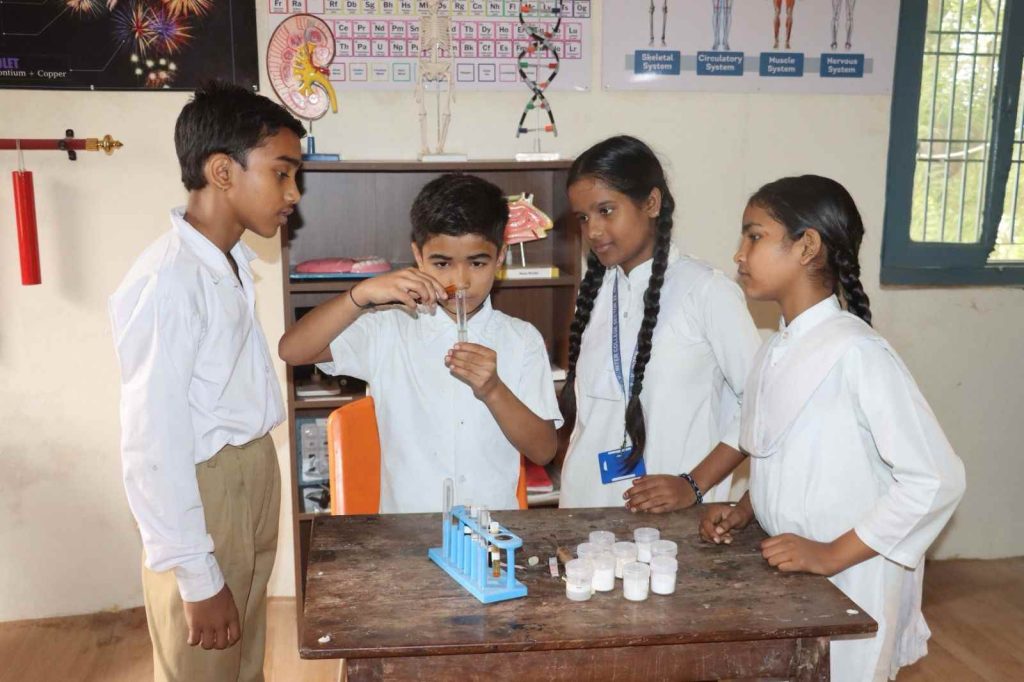
The challenge is not to choose between basic educational needs and future-ready learning. It is to understand how one enables the other.
A child cannot fully benefit from a tablet if she does not have reliable access to learning, electricity, connectivity, teacher support or a stable environment in which to study. Similarly, introducing robotics to a child who is still struggling with foundational literacy and numeracy may create exposure without creating sustained learning.
This does not make digital or STEM interventions less valuable. It makes sequencing and integration important, proving the need of a strong education ecosystem that progressively builds capability.
SEL Makes Learning Meaningful
There is another dimension of education that deserves greater attention in corporate philanthropy: social and emotional learning (SEL).
UNESCO describes SEL as helping learners understand and manage emotions, build relationships, demonstrate empathy, make responsible decisions and participate constructively in their communities. It places cognitive, social, emotional and relational development within a broader understanding of quality education.
That matters because education is not only about what a child knows.
It is also about how a child navigates what they know.
A child who learns mathematics acquires cognitive capability. A child who also learns to communicate, collaborate, manage frustration, recover from failure and make decisions develops capabilities that can determine how effectively that knowledge is eventually applied.
Furthermore, UNICEF’s work on social and emotional learning in early childhood similarly emphasises, the importance of developing children’s ability to understand emotions, build relationships and manage social interactions from an early age. Research is also beginning to add evidence to this understanding. A 2024 intervention study involving preschool children reported significant reductions in both externalising and internalising problem behaviours following an SEL intervention, with effect sizes of 0.744 and 0.653, respectively.
Future-ready education must go beyond creating all-rounders; it must nurture the child wholly by building knowledge, confidence, resilience and skills they need to learn, adapt and thrive.
Keep Children in Classrooms with Smile
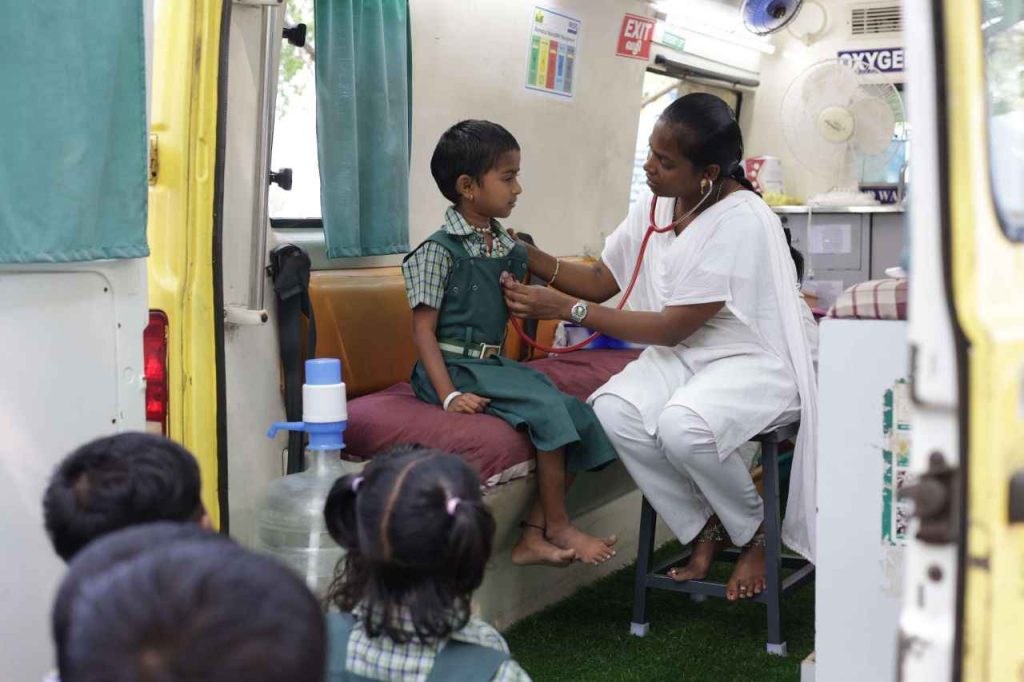
Smile Foundation’s work extends beyond access to include foundational learning, teacher capacity building, STEM and digital learning, life skills, scholarships, health and nutrition and school-level interventions. The Mission Education’s 2024–25 data records 1.85 lakh+ beneficiaries, alongside 1,008 schools and 242 Mission Education Centres supported that year.
These numbers matter. Because keeping education going is not simply about keeping a child physically inside a classroom. It is about creating the conditions in which that child can remain, participate, learn and eventually imagine a future beyond immediate circumstances.
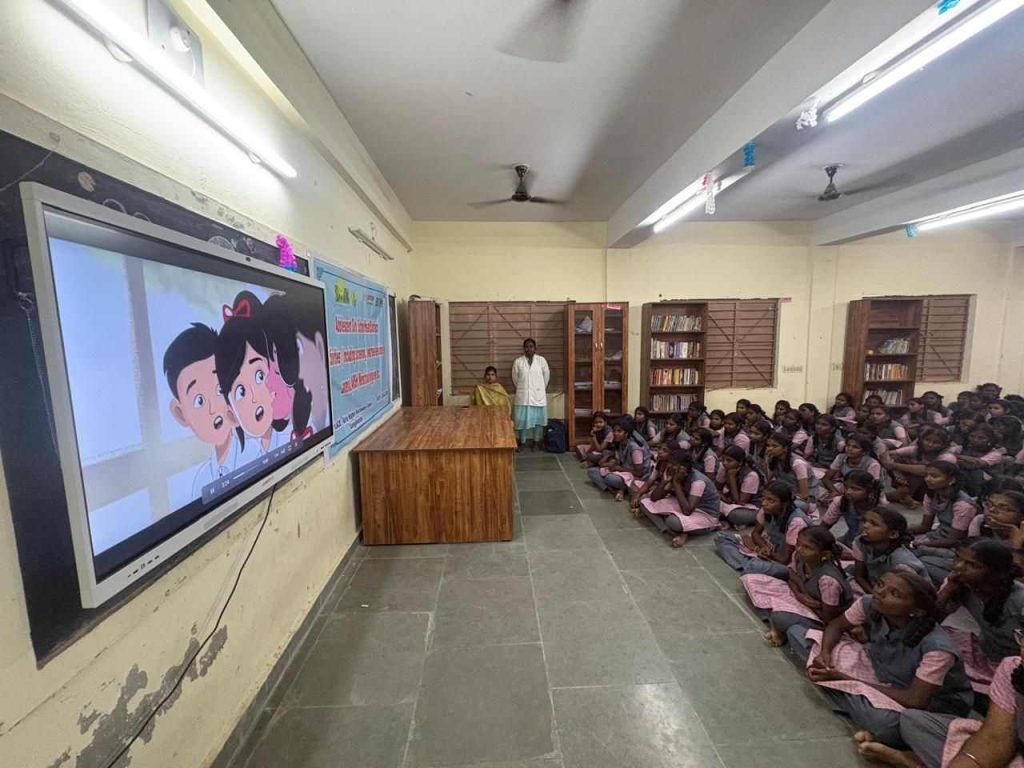
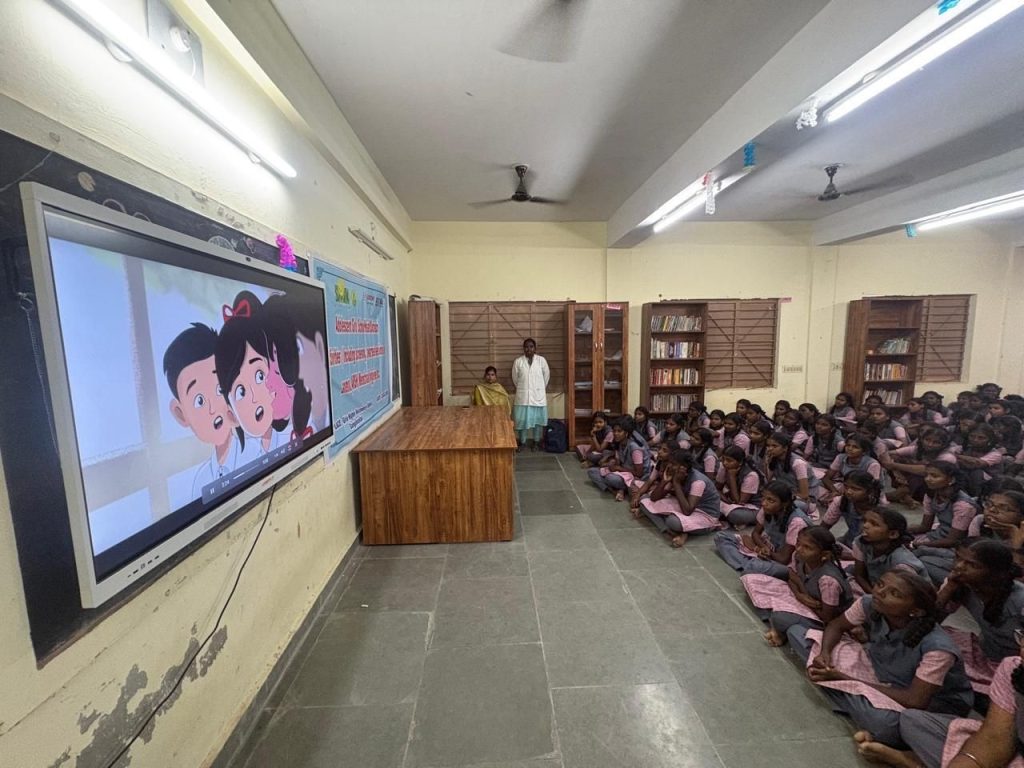
Smile Foundation’s education survey found that 56% of children and parents surveyed did not have access to smartphones, highlighting how quickly a technology-led education model can exclude the very children it intends to reach.
The strategy is simple to move from funding access to creating opportunity.
The question is no longer only how many children entered a programme, received a device or attended a STEM session. These are important interventions, but they are the starting point—not the final measure of impact.
An outcome-led approach asks what changed for the child because of that investment.
- Did foundational learning improve?
- Did teachers become better equipped?
- Did children participate more confidently in the classroom?
- Did they gain meaningful exposure to STEM and digital learning?
- Did they develop the social and emotional capabilities to communicate, collaborate and navigate setbacks?
Smile Foundation’s Mission Education’s work offers useful evidence of what this can look like on the ground.
1. From access to measurable learning
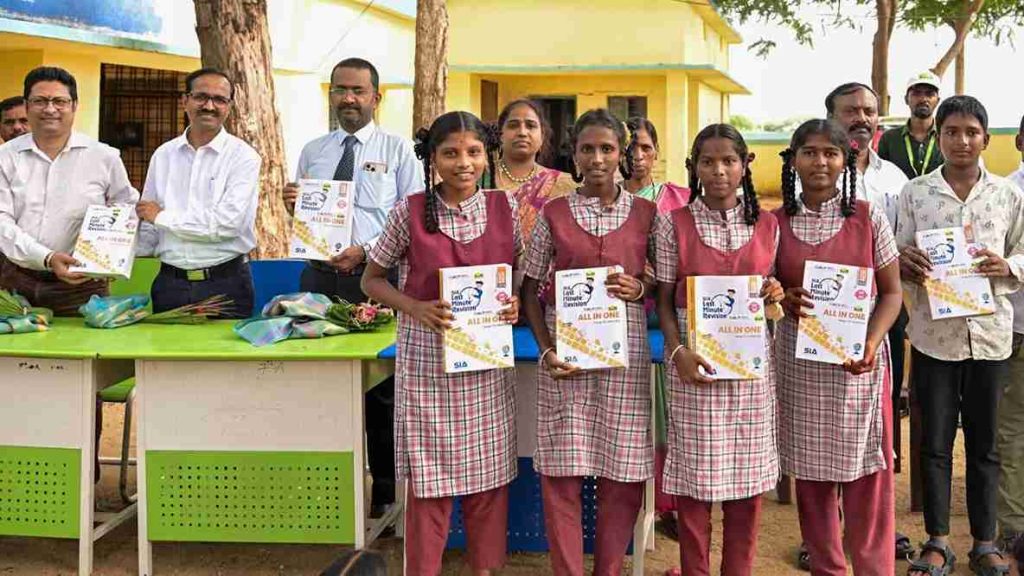
In 67 tribal schools in Adilabad, Telangana, additional academic support reached 2,526 Class X students. Across the intervention clusters, the overall pass percentage increased from 56% to 95%, with 2,349 students successfully passing their examinations.
The intervention demonstrates why educational investment must be designed around learning progression, not merely participation. Reaching a child matters; helping that child move forward academically matters more.
2. From infrastructure to capability
Inputs create lasting value only when teachers are equipped to use them effectively.
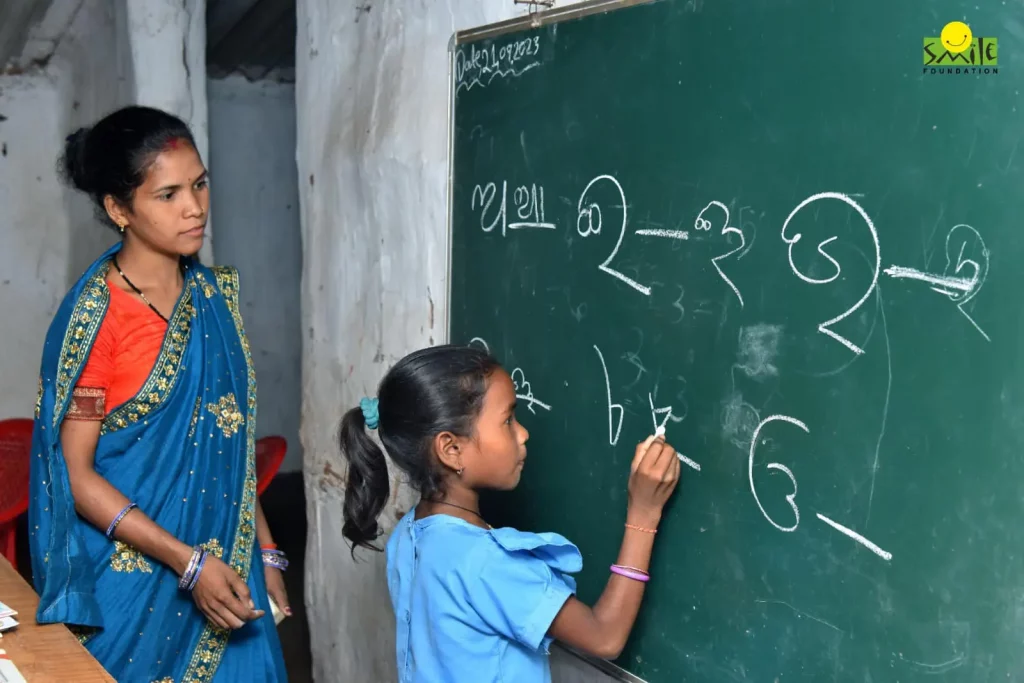
Mission Education conducted 244 teacher-training sessions reaching 1,142 educators, covering experiential learning, inquiry-based pedagogy, classroom management and foundational learning. The programme also reported 10,000+ students showing improvement in FLN skills, with 2,500 students supported towards grade-appropriate learning outcomes.
This is an important lesson for CSR NGO partnerships as it shows how sustainable educational change is rarely created by a single asset. It is built by strengthening the people, practices and systems around the child.
3. From future-ready inputs to future-ready capabilities
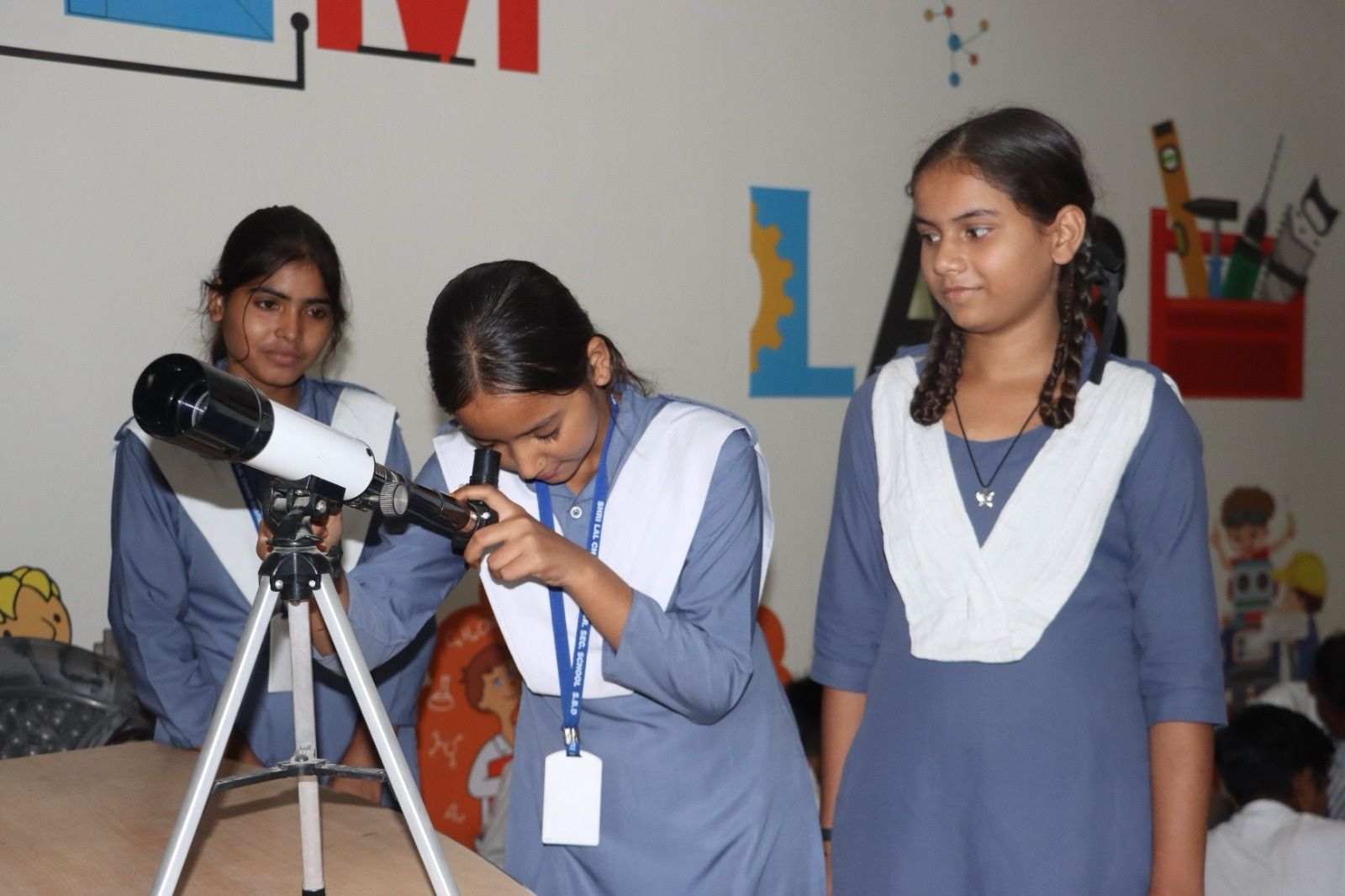
The next step is to connect foundational learning with the capabilities children will need beyond school. Mission Education’s current priorities bring together FLN, STEM education, STEM on Wheels, socio-emotional learning and life skills, while its STEM interventions engage 22,000+ students across 32 STEM Lab locations.
This is where outcome-led education becomes truly meaningful.
The objective is not simply to introduce a child to technology or STEM. It is to help that child question, experiment, collaborate, solve problems, build confidence and eventually translate learning into opportunity.
From Funding Education to Expanding Possibility
The education journey does not end when a child enters a classroom. It begins there. For education to create lasting opportunities, children need strong foundations, capable teachers, exposure to STEM and digital learning, and the social-emotional skills to communicate, adapt and persevere.
Mission Education’s integrated approach reflects this continuum. And which is why exactly here, CSR NGO partnerships can make the difference. Corporate resources can provide scale, expertise and innovation; grassroots NGOs can bring community understanding, implementation capability and the ability to translate investment into context-specific outcomes.
Together, they can build interventions that respond to where a child begins while keeping sight of where she can go. Furthermore, going forward one has to remember that today in 2026,, purpose of education CSR is not to create a collection of successful projects. It is to create a sustained pathway from access to learning, from learning to capability, and from capability to opportunity.
Partner with Smile and make your CSR investment count beyond the project cycle. This is an opportunity to build CSR NGO partnerships that invest in the whole child—not isolated intervention
Sources:
- EdelGive-Hurun India Philanthropy List 2025: Record giving by India’s billionaires, but systemic gaps persist
- India’s most favoured philanthropic causes: These are the sectors receiving the most donations in 2025
- What you need to know about social and emotional learning
- Learning Social and Emotional Skills in Pre-School
FAQs
1. Why is access alone not enough for child education in India?
Access is the starting point. Children also need foundational learning, capable teachers, digital and STEM exposure, SEL and pathways to future opportunities.
2. Why should CSR invest in education beyond infrastructure?
Infrastructure creates the platform for learning, but CSR for education must also strengthen teaching, learning outcomes and the wider ecosystem around the child.
3. Why does STEM education need strong foundations?
Children need foundational literacy, numeracy and teacher support to meaningfully engage with digital and STEM learning.
4. What does outcome-led education CSR mean?
It means measuring what changed for the child, not only how many children were reached or activities delivered.
5. What role does SEL play in future-ready education?
SEL develops communication, collaboration, resilience, decision-making and other capabilities that complement academic learning.
6. How can CSR NGO partnerships strengthen education?
They combine corporate resources and expertise with grassroots knowledge and implementation capacity to create context-driven, measurable impact.
7. How does Smile Foundation support child education in India?
Through Mission Education, Smile Foundation works across foundational learning, teacher capacity, STEM, digital learning, life skills, scholarships, health and nutrition.
8. How can corporates partner with an NGO for education?
Corporates can partner with an NGO for education to support sustained interventions with defined objectives, measurable outcomes and community-level impact.