
Summary
- Last-mile delivery — the final step between a policy or programme and the individual it is designed to serve — remains one of the most persistent and underaddressed challenges in global development
- Infrastructure and geography are only part of the problem; the deeper barriers are institutional, including weak monitoring systems, exclusion errors in beneficiary databases, corruption and poor grievance redressal mechanisms
- Lack of awareness is one of the most overlooked reasons welfare schemes fail — many eligible citizens never claim entitlements because information does not reach them through official channels
- Digital systems like India’s Direct Benefit Transfer have reduced leakages significantly, but technology alone cannot guarantee inclusion — poor connectivity, limited digital literacy and biometric failures create new forms of exclusion
- Frontline workers — ASHA workers, Anganwadi staff, community mobilisers, teachers, and local volunteers — are the indispensable bridge between policy and people, yet they remain underpaid, overstretched and undervalued
- Trust is a form of infrastructure: communities engage with services only when they trust the institutions, providers, and processes behind them — and that trust must be built locally, patiently and person by person
- Effective last-mile systems are built on community ownership, hyperlocal staffing, continuous monitoring, flexibility and long-term persistence — not one-time interventions or uniform top-down models
- Smile Foundation’s programmes — Mission Education, Smile on Wheels, Swabhiman, and the STEM Education Programme — are built around the principle that reaching underserved populations requires trusted local presence, not just service delivery infrastructure
In public policy and social development, designing a programme framework is often seen as the most difficult stage, and once completed, it is frequently celebrated as the greatest achievement. Governments announce ambitious schemes, philanthropies commit millions in funding and organisations invest heavily in designing robust implementation models. But, the true success of any social programme is rarely decided in policy rooms, board meetings or launch events. It is determined at the last mile, the point where a service, entitlement or intervention must finally reach the individual it was intended to serve.
This “last mile” is often the shortest in terms of distance, but the hardest to cross administratively, socially and emotionally. It is where well-designed policies can either transform lives or fail completely.
Across sectors such as health, education, nutrition, sanitation and social protection, last-mile delivery remains one of the most persistent development challenges globally, particularly in countries like India, where diversity, geography and inequality complicate implementation.
What is last-mile delivery?
The World Bank considers last-mile service delivery central to reducing poverty because service quality often declines most sharply at the point where citizens interact with the system.
Originally a logistics term, “last-mile delivery” refers to the final step in getting a product to a consumer’s doorstep. In development, it means the final step in ensuring a citizen actually receives and benefits from a public service.
This is where policy meets reality. It is where a nutrition programme must translate into food on a child’s plate, where a healthcare scheme must become treatment in a patient’s hands and where an education policy must become learning inside a classroom. Between programme design and lived impact lies a complex terrain of logistical barriers, institutional inefficiencies, social inequalities, and trust deficits. It is in navigating this terrain that many well-designed interventions falter.
For example:
- A vaccination programme succeeds only when the child receives the vaccine.
- A scholarship succeeds only when the student can access and use it.
- A welfare scheme succeeds only when money reaches the intended household.
Anything less is incomplete delivery.
Why is the last mile so difficult?
Infrastructure and cost
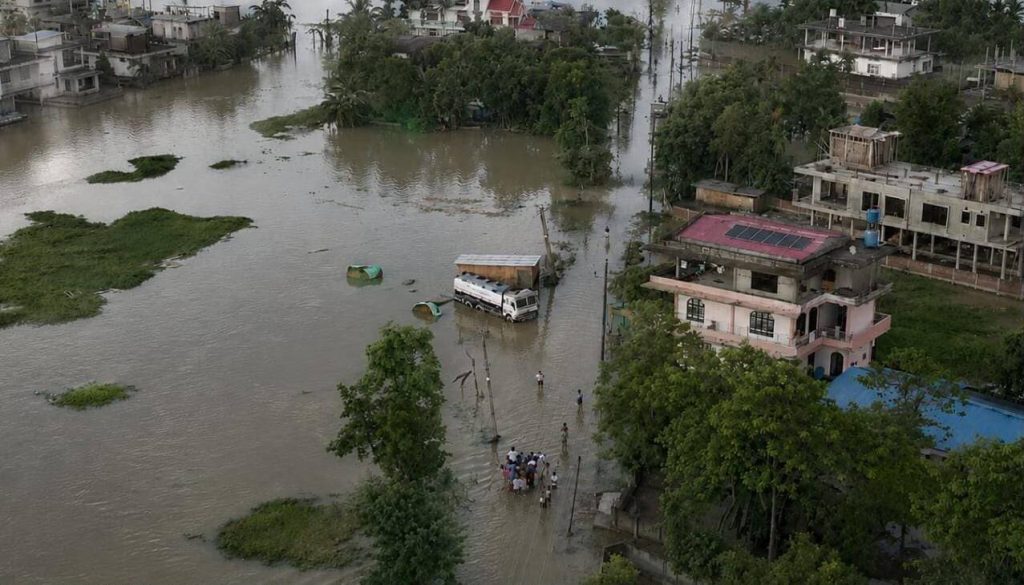
The common assumption is that last-mile challenges are about remote villages and poor roads. Infrastructure matters, but geography is only one part. The real distance is often institutional.
A health clinic may physically exist in a village, but if it lacks medicines, staff or trust, it remains inaccessible.
In India, approximately 65% of the population still lives in rural areas, many in regions where transport and service infrastructure remain uneven. This dramatically raises delivery costs and complexity. The last mile isn’t just about physical distance. It’s about bridging economic divides, overcoming infrastructure gaps and creating pathways
Lack of efficiency in delivery
Many welfare systems lose efficiency through administrative delays, poor beneficiary databases, corruption, weak monitoring and duplication.
India’s welfare architecture has improved significantly through digital reforms, but studies continue to show that exclusion errors, where eligible citizens are left out, remain a major issue. This means the system may “deliver” on paper while failing in reality.
Strengthening the last-mile delivery system is not only about building strong infrastructure but also about building a stronger ecosystem, which includes robust institutional capacity, appropriate consumer-interface architecture, efficient human operations and a well-functioning grievance redressal system.
Information does not reach everyone
One of the most overlooked barriers is simple – people often do not know what they are entitled to.
A report by India Development Review found that lack of awareness remains one of the biggest reasons welfare schemes fail to reach intended beneficiaries. In many communities, information travels through informal networks, local leaders and word of mouth rather than official channels.
Over-centralisation, corruption, systemic leakages and weak transparency and accountability mechanisms remain some of the most persistent bottlenecks in effective service delivery. These challenges are often compounded by limited public awareness about scheme eligibility and availability, inefficient resource allocation, and entrenched local power dynamics. Together, they not only weaken implementation but also suppress demand, preventing many of the very communities these programmes are designed to serve from accessing or claiming their rightful entitlements.
If communication fails, delivery fails.
Technology alone cannot solve human problems
Digital systems have undeniably transformed social programme delivery by improving efficiency, strengthening targeting and enabling scale. In India, for instance, the Direct Benefit Transfer (DBT) ecosystem has enabled billions of rupees to be transferred directly into beneficiaries’ bank accounts, significantly reducing leakages and intermediary inefficiencies. However, digital infrastructure alone does not guarantee inclusion.
Large sections of the population continue to face barriers, including poor internet connectivity, limited digital literacy, biometric authentication failures and a lack of access to smartphones or banking infrastructure. For many vulnerable communities, these challenges can turn a digital solution into a new form of exclusion. A platform is only effective if people can actually access and use it. Technology may streamline systems, but it cannot replace the trust, human support and institutional responsiveness that meaningful service delivery ultimately depends on.
Frontline workers help building trust
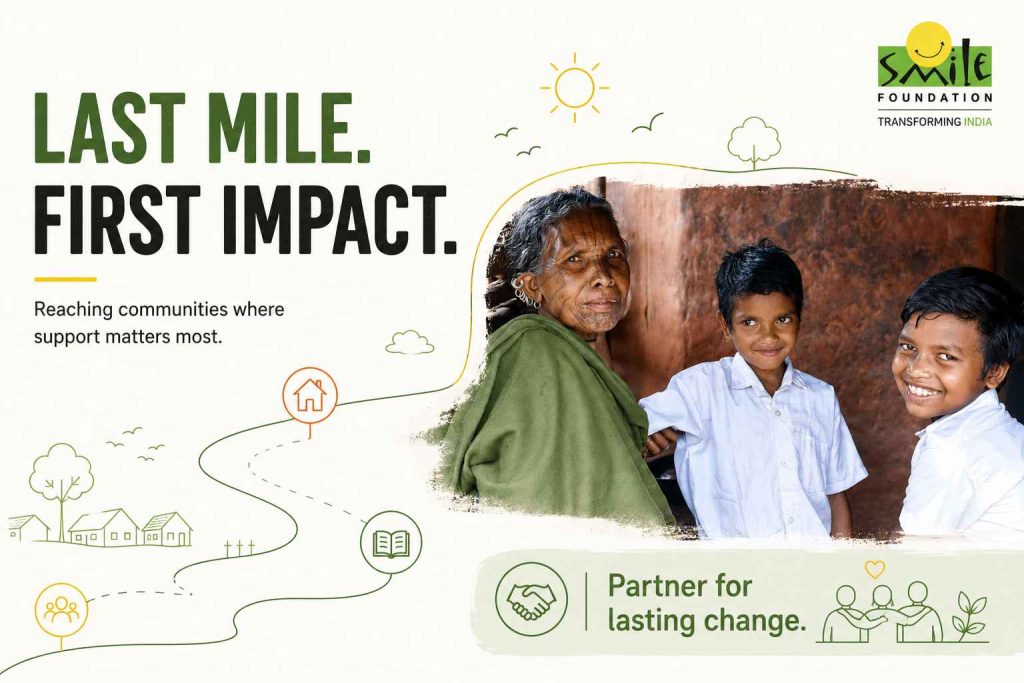
At the heart of every successful social programme are frontline workers, the often invisible but indispensable bridge between policy and people. Whether they are ASHA and Anganwadi workers, school teachers, community mobilisers, local volunteers or social workers, they are the ones who carry programmes into homes, communities and everyday lives.
A policy may be designed in a capital city, but it is ultimately delivered by someone travelling on a motorcycle, a bicycle or often on foot, navigating difficult terrain and complex human realities. Yet across the world, these workers are frequently underpaid, overstretched, insufficiently trained, and undervalued, despite being central to programme success.
Their work also highlights an equally critical but often overlooked truth: trust itself is a form of infrastructure. Development conversations tend to focus on roads, buildings, and digital systems, but communities engage with services only when they trust the institutions, providers and processes behind them. Families agree to vaccinate their children because they trust health workers; parents keep their daughters in school because they trust educational institutions; women access financial services when they trust the system meant to support them.
Unlike physical infrastructure, trust cannot be built centrally or imposed through policy; it must be nurtured locally, patiently and person by person. Without frontline workers, there is no last mile; without trust, there is no meaningful delivery.
At Smile Foundation, we believe that strong social programmes depend not only on sound design, but on empowered people who can deliver them effectively at the community level.
Across our education, healthcare, livelihoods and women’s empowerment programmes, we invest heavily in strengthening frontline workers—whether teachers, health mobilisers, community volunteers or local leaders—through continuous training, capacity-building, and on-the-ground support to ensure that these frontline actors are not treated merely as implementers, but as trusted change-makers who understand local realities, build relationships and sustain engagement over time.
Building strong last-mile delivery systems
Successful last-mile delivery is rarely the result of a single intervention but is built on a combination of principles that place communities at the centre of implementation.
- The most effective models are rooted in community ownership, where people are not passive recipients but active participants in shaping solutions.
- Last-mile delivery systems rely on hyperlocal staff who understand local languages, cultural contexts and trust networks, making delivery more responsive and credible.
- Strong last-mile systems also prioritise continuous monitoring, using real-time feedback to identify gaps early and adapt quickly.
- Equally important is flexibility—the ability to tailor implementation to local realities rather than imposing uniform models—and persistence, recognising that meaningful social change requires repeated engagement, trust-building and long-term commitment rather than one-time interventions.
Vocal for local: Building stronger last-mile systems, therefore, demands a shift in how governments and organisations think about delivery. It requires greater investment in people, particularly frontline workers who need better training, support and compensation to perform effectively. It also calls for more decentralised decision-making, allowing local actors the autonomy to adapt programmes to community needs. At the same time, institutions must use data more intelligently—tracking outcomes and lived impact, not just numerical outputs—and create mechanisms to genuinely listen to communities so that feedback informs programme design and course correction.
Partnerships with NGOs: Finally, strengthening the last mile requires stronger partnerships with civil society organisations, which often possess the trust, local presence and agility that larger systems struggle to build. NGOs and community-based organisations frequently succeed where formal systems cannot, reaching the most marginalised populations and filling critical delivery gaps. Together, these approaches recognise a fundamental truth: successful last-mile delivery is not just about reaching people, it is about building systems that are local, adaptive, accountable and human-centred.
Last-mile is where development becomes real
A social programme is not successful simply because it was announced, funded or formally implemented. It is successful because it creates a meaningful change in someone’s life. That transformation happens at the last mile: when a child not only enrols in school but learns meaningfully; when a patient in a remote village receives timely healthcare; when a young person gains skills that translate into dignified employment; when a woman accesses financial independence; and when a vulnerable family feels seen, supported and included by the systems designed to serve them.
This is why last-mile delivery cannot be treated as a technical afterthought or a final administrative step, but it is the very heart of development, where policy is translated into human dignity and measurable impact.
Over two decades, Smile Foundation has built a community-centred development model that prioritises reaching underserved populations where they are, rather than expecting them to navigate inaccessible systems.
- Through its flagship education programme, Mission Education, the organisation works directly with children from marginalised communities, ensuring that access to education goes beyond enrolment to sustained learning outcomes.
- Its healthcare initiative, Smile on Wheels, delivers primary healthcare through mobile medical units to hard-to-reach communities, literally taking services to the last mile where formal healthcare infrastructure is weak or absent.
- Its commitment to last-mile impact is equally visible through Swabhiman, which focuses on empowering women and adolescent girls through health, education and livelihood support, and
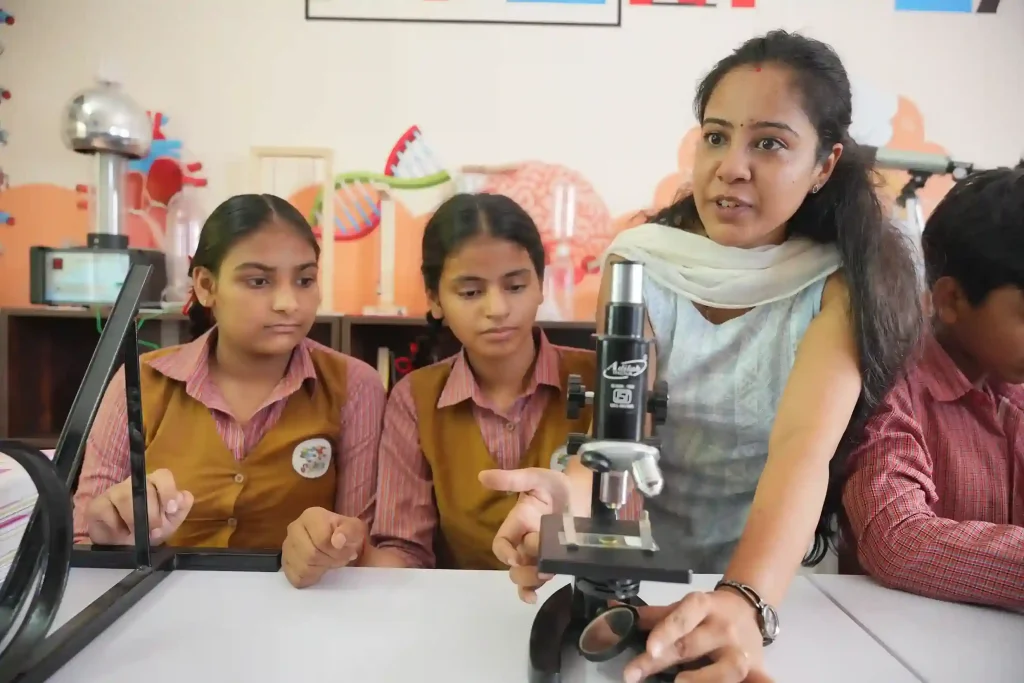
- STEM Education Programme, which works to bridge educational inequities in underserved schools. Importantly, our model relies heavily on local partnerships, community mobilisers, teachers, health workers and volunteers, recognising that sustainable delivery depends on trusted local actors who understand community realities.
Real impact is not created in offices, policy papers or boardrooms—it is created in communities, through trust, persistence and the everyday work of reaching people who are too often left behind, one last mile at a time.
Frequently Asked Questions
What is last-mile delivery in development and social programmes?
Last-mile delivery refers to the final step in ensuring that a citizen actually receives and benefits from a public service or social programme. The term comes from logistics, where it describes getting a product to a consumer’s doorstep. In development, it means translating a policy or programme into real impact — a child learning in school, a patient receiving treatment, a welfare transfer reaching the intended household. It is the point where policy meets reality.
Why is last-mile delivery so difficult in India?
India’s last-mile challenge is shaped by a combination of geographic diversity, infrastructure gaps, institutional inefficiencies and deep social inequalities. Approximately 65% of India’s population lives in rural areas, many in regions where transport and service infrastructure remain uneven. Beyond geography, weak beneficiary databases, exclusion errors, limited public awareness, corruption and entrenched local power dynamics all compound the difficulty of reaching the most marginalised populations.
Why do well-designed social programmes still fail to reach people?
Programme design and programme delivery are two fundamentally different challenges. A scheme can be well-designed, adequately funded, and formally implemented while still failing at the last mile due to administrative delays, poor communication, lack of awareness among intended beneficiaries, weak frontline capacity and trust deficits between communities and institutions. Success is not determined in policy rooms — it is determined at the point of delivery.
What role do frontline workers play in last-mile delivery? Frontline workers including ASHA workers, Anganwadi staff, community health mobilisers, teachers and local volunteers are the essential bridge between policy and people. They carry programmes into homes and communities, build the trust that makes services usable and navigate the human and logistical complexities that formal systems cannot address from a distance. Despite their centrality to programme success, frontline workers are frequently underpaid, undertrained and undervalued.
Why is trust described as a form of infrastructure in development?
Unlike roads or digital platforms, trust cannot be built centrally or mandated through policy. It must be nurtured locally, through consistent presence, honest communication and responsive service delivery over time. Communities engage with health services when they trust health workers, keep children in school when they trust educational institutions and access financial services when they trust the systems designed to support them. Without trust, even the best-designed service delivery system fails at the last mile.
How does technology help and where does it fall short in last-mile delivery?
Digital systems like India’s Direct Benefit Transfer have transformed social programme delivery by reducing leakages, improving targeting and enabling scale. However, technology alone cannot guarantee inclusion. Large sections of vulnerable populations face barriers including poor internet connectivity, limited digital literacy, biometric authentication failures and lack of access to smartphones or banking infrastructure. A digital platform is only as effective as the ability of its intended users to access and navigate it.
What makes a last-mile delivery system effective?
Effective last-mile systems share several characteristics: they are rooted in community ownership rather than top-down implementation; they rely on hyperlocal staff who understand local languages, cultures and trust networks; they use continuous monitoring and real-time feedback to identify and address gaps quickly; they are flexible enough to adapt to local realities; and they are built for persistence, recognising that meaningful social change requires long-term engagement rather than one-off interventions.
How does Smile Foundation approach last-mile delivery?
Smile Foundation’s model is built on the principle that reaching underserved populations requires trusted local presence, not just service delivery infrastructure. Mission Education works directly with children from marginalised communities to ensure sustained learning outcomes beyond enrolment. Smile on Wheels delivers primary healthcare through mobile medical units to communities where formal health infrastructure is weak or absent. Swabhiman supports women and adolescent girls through health, education, and livelihood interventions. Across all programmes, the model relies on community mobilisers, local teachers, health workers and volunteers who understand community realities and sustain engagement over time.