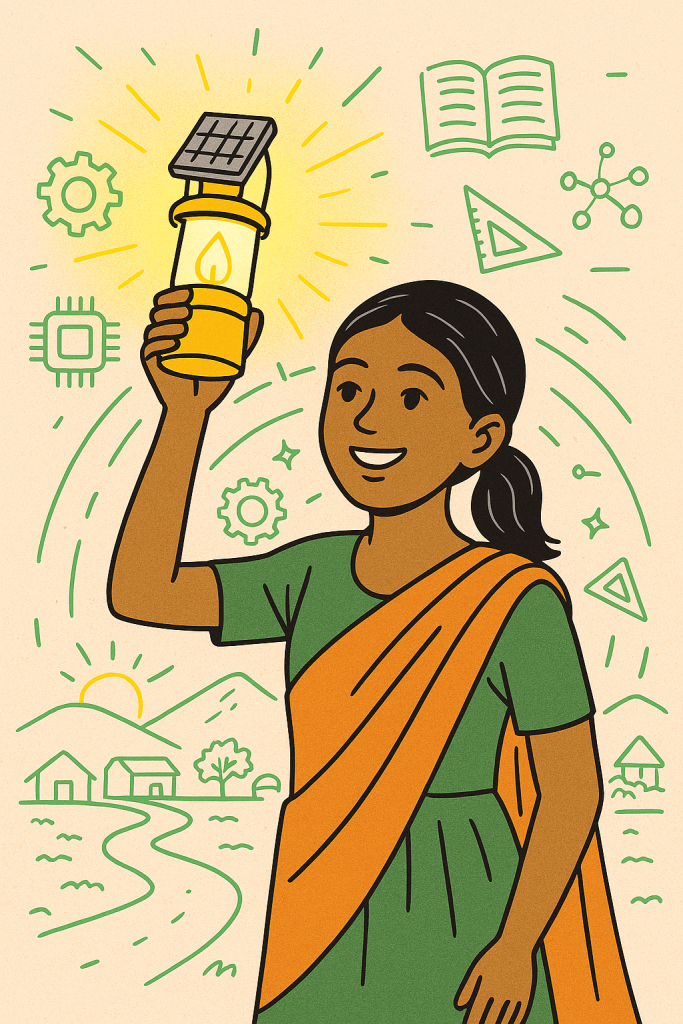
A few months ago, I watched a group of middle-school girls in rural Uttar Pradesh lean over a 3D printer as if it were a magic box. Out came a tiny plastic solar lamp, layer by layer, while they whispered and giggled as though they had just pulled off a science trick that could light up their whole world. In many ways, they had.
That moment captures why I’m obsessed with STEM education. Not because robotics or 3D printers are cool toys (though they are), but because they’re keys — keys to unlocking curiosity, envious careers and lovely confidence in children who may otherwise never imagine themselves as scientists, engineers or creators.
India, like many countries, sits at the cusp of a fascinating experiment — Can technology and STEM learning be democratised so that children in the most underserved schools and communities have the same opportunities as kids in elite institutions? Smile Foundation seems to think so — and they’ve been putting that belief on the road, quite literally.
Why STEM and why now?
STEM — Science, Technology, Engineering and Mathematics — has become one of those acronyms that makes policymakers nod vigorously. But beneath the jargon is a simple truth: the future is STEM-shaped.
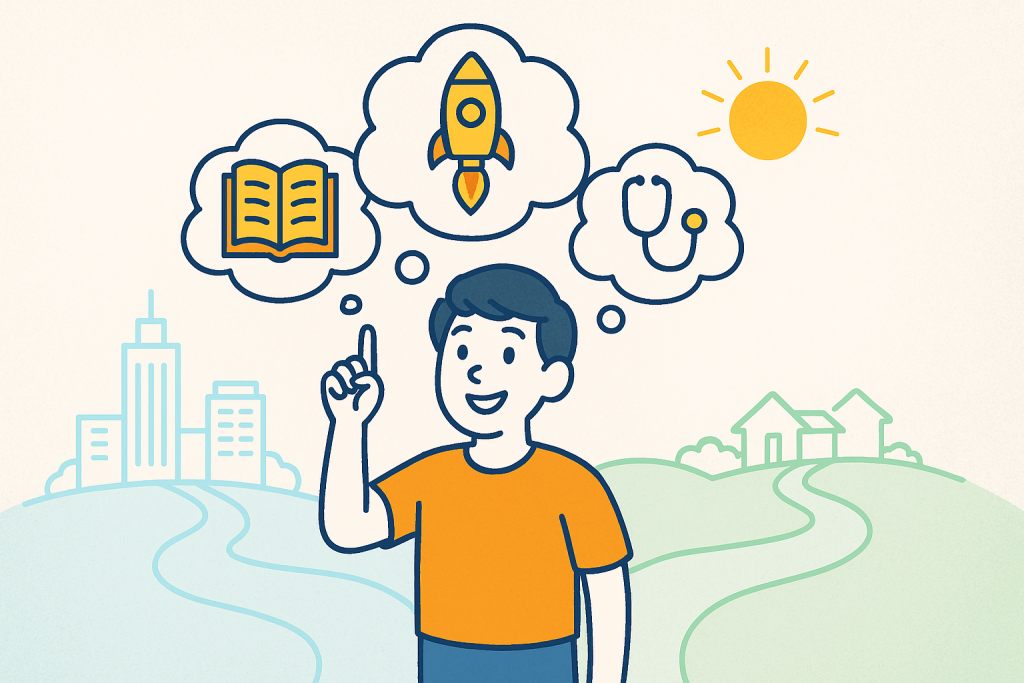
From climate change solutions to healthcare innovations to digital jobs we haven’t yet imagined, the next generation of problem-solvers will need a toolkit rooted in science and technology. The National Education Policy 2020 in India recognised this, pushing for hands-on, inquiry-driven learning. What this means in practice is kids won’t just memorise Newton’s laws but they should build a catapult, measure the angle and argue about whether Newton would’ve liked Angry Birds.
The challenge? Access.
Most rural or low-income schools lack science labs, let alone robotics kits. Teachers are undertrained, under-resourced and often overwhelmed. Girls face cultural barriers and communities may not see immediate “value” in letting children tinker instead of cramming for exams. That’s where initiatives like Smile Foundation’s STEM programmes step in.
The Big Idea: Make STEM impossible to ignore
What I like about Smile’s approach is that it’s not trying to sprinkle STEM on top of existing curricula like confetti. It’s trying to embed curiosity as a way of life.
Here’s how:
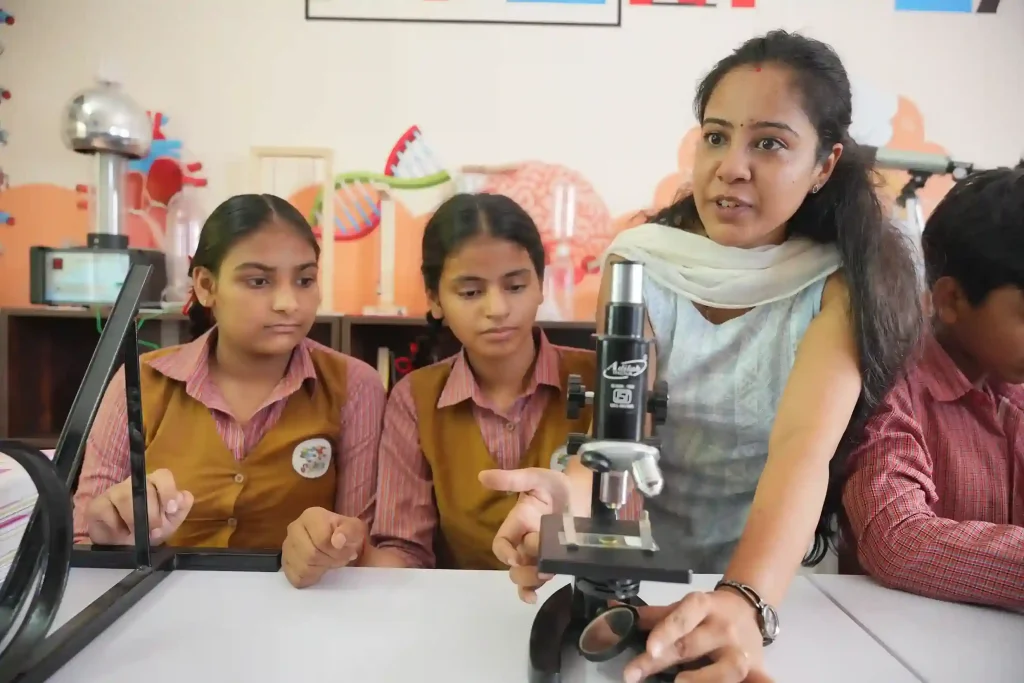
- STEM labs: Schools get physical spaces where science isn’t theoretical. Think robotics kits, DIY science projects, even IoT workshops. Smile rolled out labs with consumables and reusables, so experiments don’t end after one class.
- Teacher training: Because a STEM lab without trained teachers is like a plane without a pilot. Teachers learn not just how to use equipment but how to weave STEM into everyday lessons.
- Science & innovation clubs: Students form groups to build models, brainstorm and even enter challenges. It’s like a mini incubator for ideas.
- Annual Science Fairs & innovation challenges: Kids get to showcase their projects and nothing builds confidence like explaining your robot to a hall full of parents and peers.
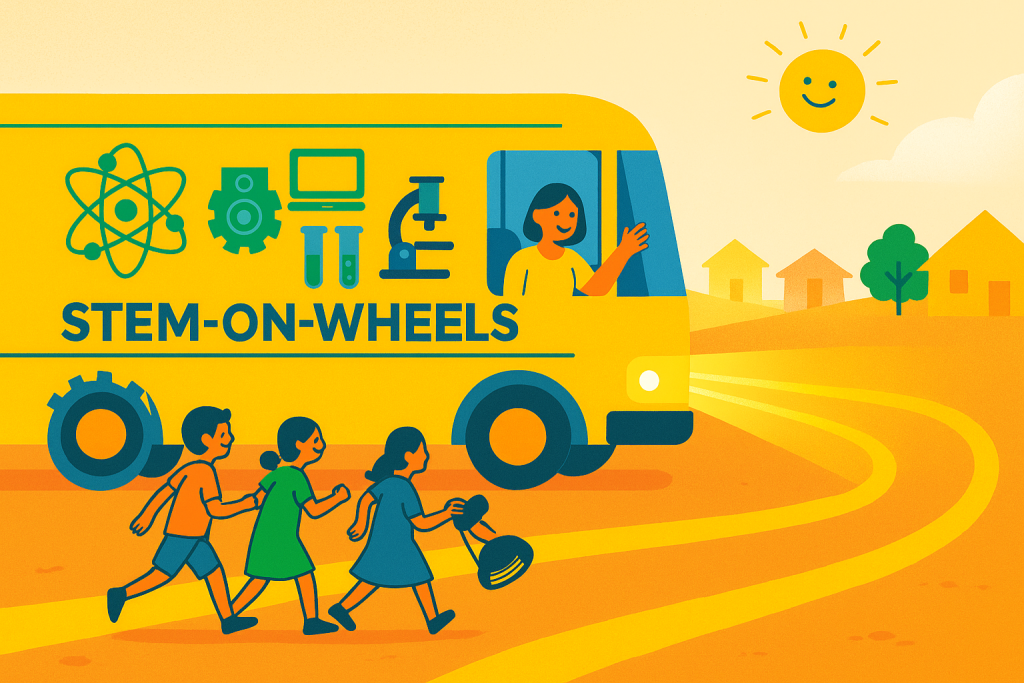
- STEM-on-Wheels: My personal favorite. Mobile vans and buses equipped with labs visit underserved schools and communities. Imagine a traveling carnival, but instead of cotton candy, you get coding lessons and microscopes.
What does this look like on the ground?
Smile runs two kinds of delivery models: High Reach (lots of schools, less time with each) and High Impact (fewer schools, deeper engagement). In practical terms:
- High Reach: A facilitator might serve 5 schools and 10 communities, reaching 2,000 kids a year, giving each child about 30 hours of STEM engagement.
- High Impact: A facilitator might work daily in one school and two communities, reaching 400 children but offering up to 100 hours of STEM work per year.
This dual approach is clever. Some kids get broad exposure; others get deep immersion. Both matter — because you never know whether the spark of curiosity will ignite after 3 experiments or 30.
Special sauce: STEM for girls
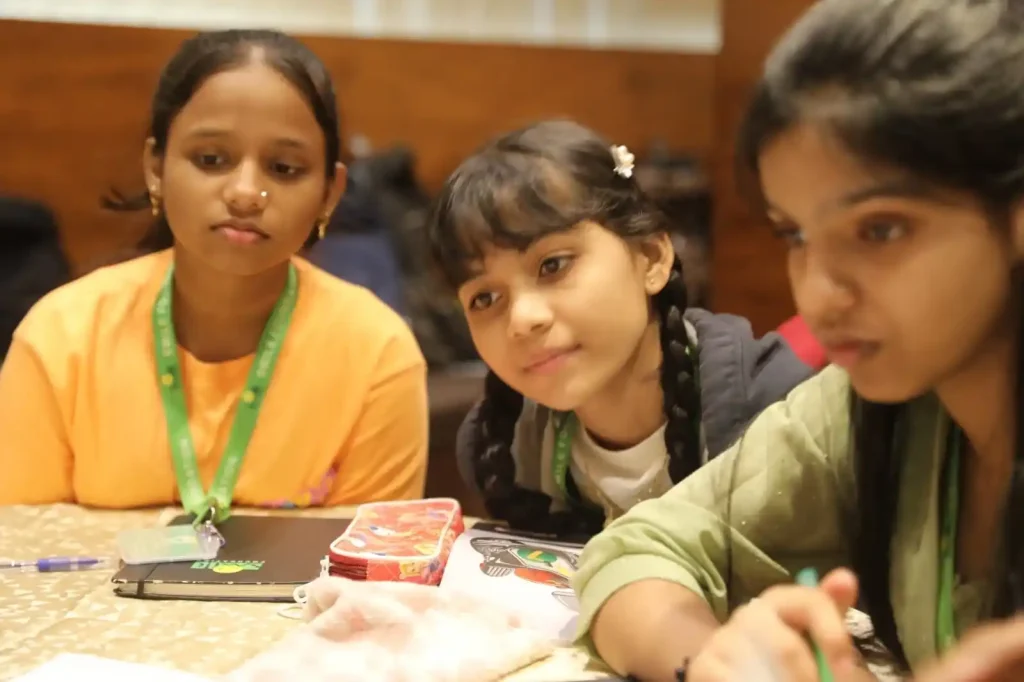
Here’s where the story gets even more interesting. Smile runs STEM-Nayika, a programme designed especially for girls. It’s aligned with NEP and structured in three tiers (Ramanujan, Sarabhai, Kalam) to guide girls from curiosity to confident problem-solving.
Girls in India are still less likely to pursue STEM careers due to stereotypes, lack of role models and limited exposure. A programme that gives them labs, clubs, mentors and a safe environment to experiment is quietly revolutionary.
One girl I met at a workshop told me she had always thought “science was for boys.” After building her own solar-powered fan, she smiled (pun intended) and said, “Now I think science is for me.”
Taking STEM on the road
The concept of STEM-on-Wheels deserves its own section because it’s delightfully inventive. A bus, van or even bike can be outfitted with DIY kits, models and digital tools. They roll into schools or communities that may never otherwise see a lab.
This matters because access isn’t just about money — it’s also about geography. In many rural regions, even if a school has a lab, it may be locked up, underutilised or missing basic supplies. Mobile labs make STEM feel like an event. Kids run to them, parents peek in curiously and suddenly the entire community sees science not as abstract but as fun and tangible.
It’s also symbolic. Science is literally arriving at your doorstep.
But does it work?
The numbers are promising. Depending on the model, a single facilitator or vehicle can reach 1500 to 4000 kids a year. Students get between 15 and 100 hours of hands-on STEM exposure annually — a massive leap from zero.
Teachers, too, benefit. By gaining professional development and tools, they’re more likely to integrate STEM into their regular classrooms, creating a multiplier effect beyond Smile’s direct reach.
And then there’s the intangibles:
- Kids who once dreaded science start forming science clubs.
- Communities that saw education only as exam prep start valuing creativity.
- Girls who thought careers in tech were impossible begin to imagine themselves as engineers.
STEM as social equity
It’s worth stepping back to see the bigger picture. In a country as large and diverse as India, education isn’t just about preparing workers. It’s about shaping citizens.
STEM education teaches problem-solving, collaboration and resilience — skills that help not just in jobs but in life. When a child learns to debug a code or fix a circuit, they’re also learning persistence and critical thinking.
And because STEM is inherently about solving problems, embedding it in underserved communities is particularly powerful. Imagine if the next big water filter innovation comes not from a university lab, but from a village girl who grew up tinkering with Smile’s DIY kits.
The fun part: STEM is Play
One thing I’ve noticed at these programmes is how much kids laugh. STEM education done right looks less like a classroom and more like a playground.
Robotics workshops feel like toy-building. Science fairs feel like festivals. Even teacher training sometimes resembles improv sessions, with educators trying out coding games or balancing structures made of straws.
This playfulness is not accidental. It’s central. Children learn best when curiosity feels like joy, not obligation. And in communities where education has historically been framed as rote memorisation, introducing joy into learning may be the most radical innovation of all.
What India can teach the world
Other countries are experimenting with STEM, too, but India’s scale makes its experiments fascinating. Few places attempt to bring hands-on science to millions of children across both rural and urban areas.
- In Kenya, mobile science labs are being trialed, but at a fraction of India’s scale.
- In the U.S., makerspaces and STEM clubs are common, but often limited to privileged schools.
- In China, there’s massive investment in AI and coding education, but less focus on equity across rural areas.
India’s STEM-on-Wheels and STEM-Nayika models are unusual in their attempt to marry innovation with inclusion. This could well become a blueprint for other developing countries.
Of course, challenges remain. Equipment can break. Teachers can burn out. Programmes need sustainable funding. And scaling without losing quality is always tricky.
But if there’s one thing I’ve learned, it’s that kids don’t wait for perfect conditions. Hand them a tinkering kit and they’ll build something anyway.
The task for policymakers, NGOs and corporates is to keep fueling this momentum. More partnerships with schools. More investments in STEM labs. More champions for girls. And yes, more buses, vans and bikes carrying science across dusty roads.
The world is full of problems. Climate change, public health, energy, inequality. But the solutions will come from minds that have been trained to ask, “What if?” and “Why not?”
Every time I see a girl in a village hold up a solar lamp she built herself, I think: here’s someone who might grow up to invent the next sustainable energy breakthrough. Or maybe she won’t — maybe she’ll just gain the confidence to negotiate better wages or start her own business. Either way, that’s empowerment.
And that’s why STEM matters. Not just for jobs, not just for exams, but for unlocking potential.
So if you ever see a bus painted with science diagrams rolling through a village, don’t be surprised if it’s carrying more than microscopes and robots. It might be carrying the next generation of problem-solvers — and a brighter future for all of us.