
By the time India’s children in metro cities sit down in air-conditioned classrooms with smart boards, interactive modules and specialised subject teachers, millions of their peers in rural, tribal and remote areas have already faced their first educational barrier of the day – a school with only one teacher
Far from being a rare aberration, the single-teacher school has become entrenched in India’s rural education landscape. It is a symptom of systemic neglect — a gap not just in resources, but in political will.
The hidden architecture of educational inequality
The concept of a “school” conjures up an image of multiple classrooms, teachers and a structured timetable. In much of rural India, this is fiction. Here, one teacher is responsible for everything: teaching multiple grades and subjects, managing attendance records, administering midday meals, maintaining the school premises and often doubling as the community’s go-to liaison for government schemes.
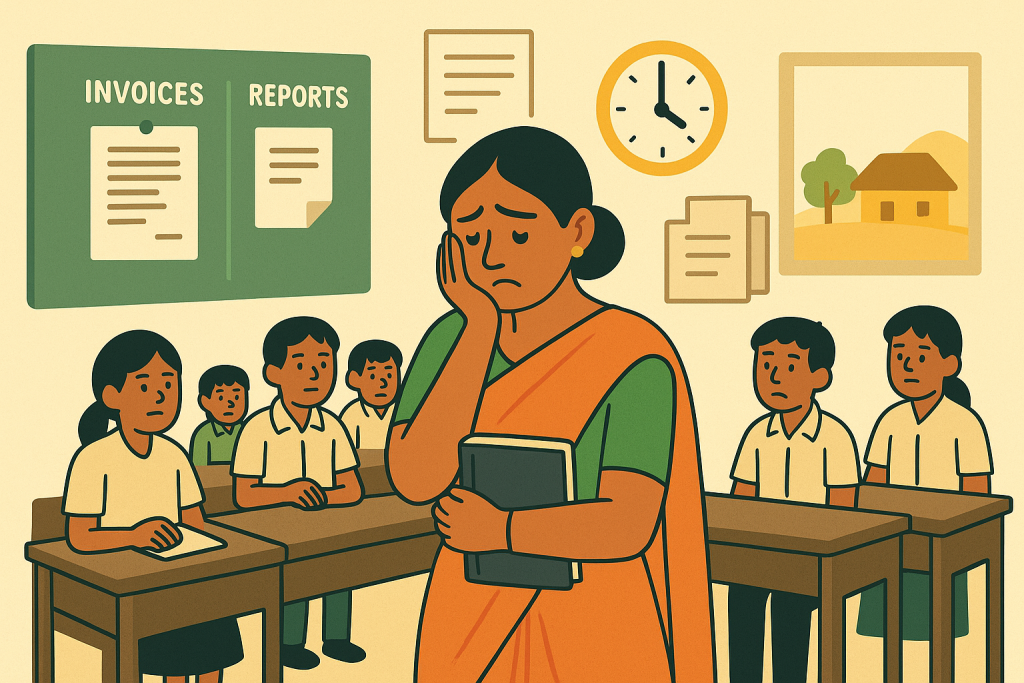
The impact on learning outcomes is immediate and damaging. Multi-grade teaching without adequate support leads to shallow, fragmented instruction. Foundational literacy and numeracy suffer, lessons are interrupted for administrative duties and children are often dismissed early after lunch. This environment erodes parental trust and fuels dropout rates, creating a generational cycle of exclusion.
What the data tells us
The Unified District Information System for Education (UDISE) 2021–22 reveals an uncomfortable truth:
- Jharkhand has the highest proportion of single-teacher schools in central India — 30.9% of government primary schools, with each teacher serving an average of 46 students.
- Andhra Pradesh (33.9%), Telangana (30.3%), Karnataka (29%), Rajasthan (27.2%) and Himachal Pradesh (28.2%) also have alarming ratios.
- Even states with a lower percentage face extreme overcrowding — in Bihar, 9.7% of schools have a single teacher, but each serves an average of 96 students; Uttar Pradesh sees 70 students per teacher in these cases.
- Kerala remains an outlier with only 4% single-teacher schools, averaging just 10 students each.
These figures point to a clear inequity: poorer, rural and tribal communities are consistently underserved, perpetuating an educational geography of neglect.
Mini-schools vs. Single-teacher schools — A policy blind spot
One of the more pernicious issues in policy discourse is the conflation of “mini-schools” with single-teacher schools. Mini-schools were intended as temporary setups in sparsely populated areas, a stop-gap measure before full-fledged facilities could be established.
The Right to Education (RTE) Act, 2009, mandated a minimum of two qualified teachers per school — not as a recommendation, but as a legal requirement. Yet, more than a decade later, the mini-school model has not been phased out. Instead, many such setups have simply been reclassified as single-teacher schools without the necessary upgrades.
Economist and education activist Dr. Jean Drèze underscores the distinction: “Mini-schools are easy to identify. The problem of single-teacher schools is much larger, certainly in Jharkhand.” This conflation allows policymakers to downplay the scale of the crisis and delay systemic reform.
Why this model fails the RTE promise
At its core, the single-teacher model undermines the RTE’s objective of equitable, quality education. Multi-grade classrooms without pedagogical support limit individualised learning. Teacher burnout is inevitable, with educators juggling lesson planning, supervision, administration and even non-academic community tasks.
The absence of co-teachers means there is no peer collaboration to improve methods, no safety net in emergencies and no scope for co-curricular learning. Girls, in particular, face higher risks — from lack of supervision to early withdrawal from school. Over time, the model entrenches educational inequities, reducing the odds of upward mobility for marginalised children.
The case for investing in teacher capacity
Global research from the World Bank and UNESCO repeatedly shows that teacher quality is the single most important school-based factor in student learning. But quality is inseparable from adequate staffing.
Reform must go beyond filling vacancies. It requires:
- Targeted recruitment in underserved regions, with incentives for qualified teachers to work in rural and tribal areas.
- Structured mentorship for first-time teachers to navigate multi-grade classrooms effectively.
- Administrative support staff to free teachers from non-teaching burdens.
- Community engagement to build parental trust and reinforce attendance.
Smile Foundation’s Mission Education Model
While government systems struggle to reform at scale, civil society organisations are stepping in to innovate. Smile Foundation’s Mission Education programme is one such intervention.
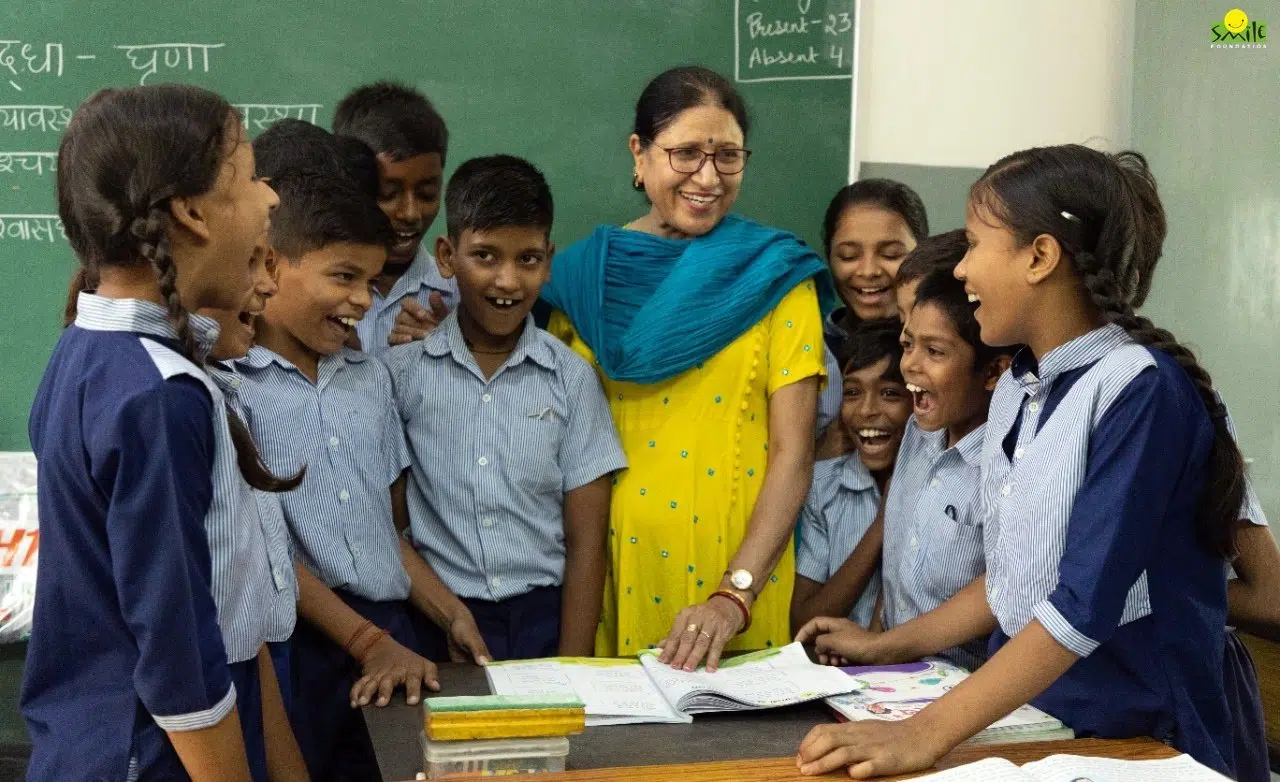
Instead of accepting the isolation of the single-teacher model, it builds collaborative ecosystems. Local educators — often called change-makers — are trained in child-friendly, activity-based methods that work in multi-grade settings. They receive ongoing capacity-building, mentoring and monitoring. Volunteers, digital tools and parent committees form a support network, ensuring no teacher is left to manage alone.
In rural communities, this model has demonstrated higher retention rates, improved foundational learning and greater parental involvement. Most importantly, it restores dignity and motivation to teaching — conditions without which no reform can succeed.
Only one teacher: Breaking the cycle of neglect
Addressing the single-teacher crisis is not just about meeting the RTE’s legal mandate. It is about redefining rural education as a public good worthy of the same investment, planning and innovation that urban schooling receives.
This means political prioritisation — teacher recruitment as a budgetary imperative, not a discretionary expense. It means policy clarity — separating the mini-school model from single-teacher schools to ensure targeted interventions. And it means partnerships — leveraging the expertise of NGOs like Smile Foundation to demonstrate scalable, community-led solutions.
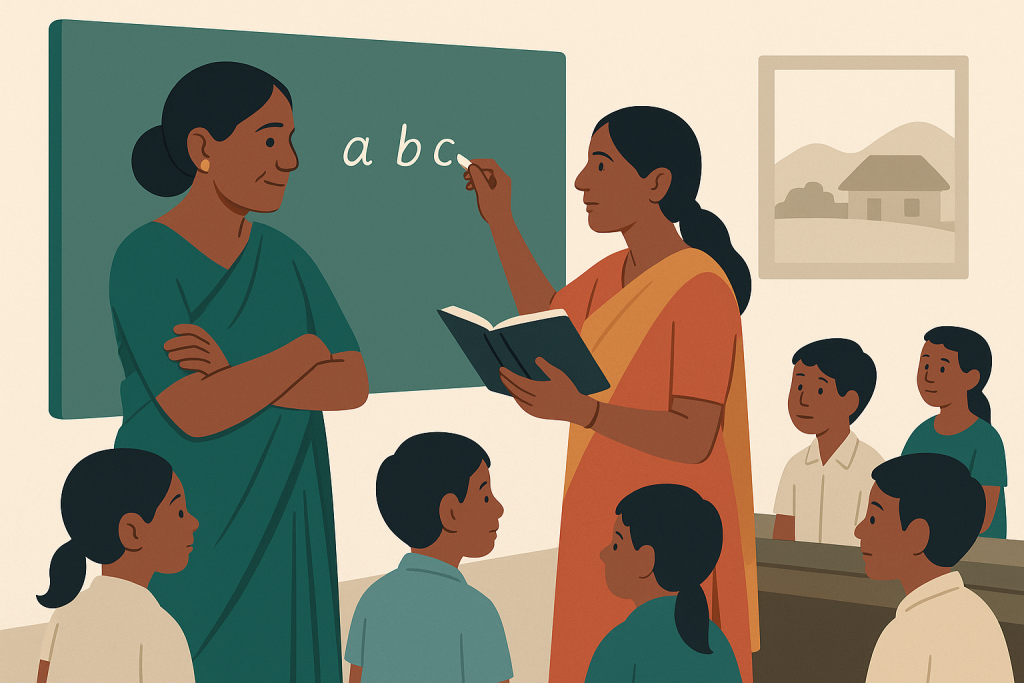
If India is serious about equitable growth, it cannot afford to leave its most marginalised children in classrooms where one overburdened adult is expected to carry the weight of an entire education system. The single-teacher school is not a model; it is a warning. And we ignore it at our peril.