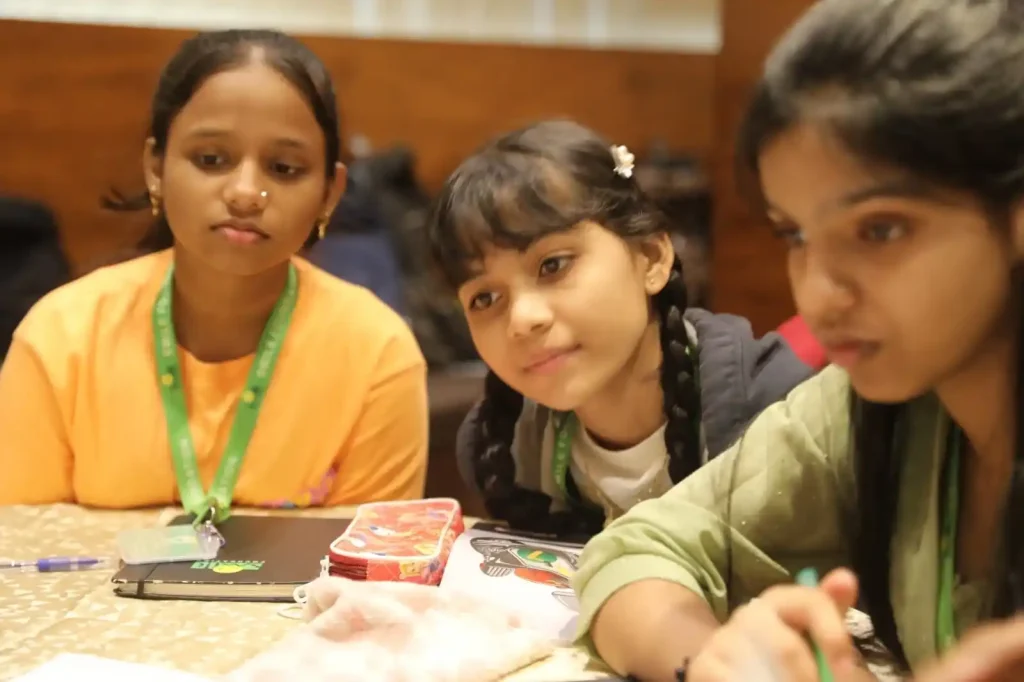

In a government-run classroom on the outskirts of Pune, a sixth-grader sits hunched over a battered tablet, eyes locked on a simulation game. Her task is to run a virtual pizza shop, an example of play teaching. She sets prices, adjusts for discounts, tallies ingredient costs and races to meet fictional customer orders. At first, it seems like just another screen-based distraction. But beneath the pixelated surface, the child is unwittingly practicing fractions, testing algebraic logic and learning to juggle decision-making under pressure. The math isn’t in a textbook — it’s alive, immediate and, most crucially, fun.
Across the room, another group of students is building a bridge out of popsicle sticks and rubber bands. They argue over whether triangles are stronger than squares, put both designs to the test and cheer when one bridge holds a row of tiny toy trucks. They’re not just playing. They’re intuiting basic physics, understanding structural engineering through trial and error and learning to collaborate. All without a single worksheet.
You would think that this is creative pedagogy but it’s a glimpse of what classrooms could be if we took play seriously.
Play teaching beyond the preschool years
In India’s crowded policy discourse on education, “play” often features as a footnote — relevant to Anganwadi centres and pre-school classrooms, but quickly deemed dispensable as children age. Formal schooling takes over. Blackboards replace blocks. Assessments outweigh curiosity.
Yet, as a growing body of global research shows, this sharp division between play and “real learning” might be doing more harm than good.
More than a century ago, Friedrich Froebel, the German educator who created the concept of kindergarten, called play the “highest expression of human development in childhood.” He saw it not as a leisure activity, but as a serious form of exploration — children making sense of their world through action.
Modern neuroscience, developmental psychology and pedagogy echo his intuition. Play teaching stimulates the brain’s executive functions — the same faculties responsible for problem-solving, planning and emotional regulation. Children who engage in regular structured play often display better communication skills, stronger social awareness and deeper academic engagement.
The vanishing act
So why does play vanish from Indian classrooms once children can read, write and count?
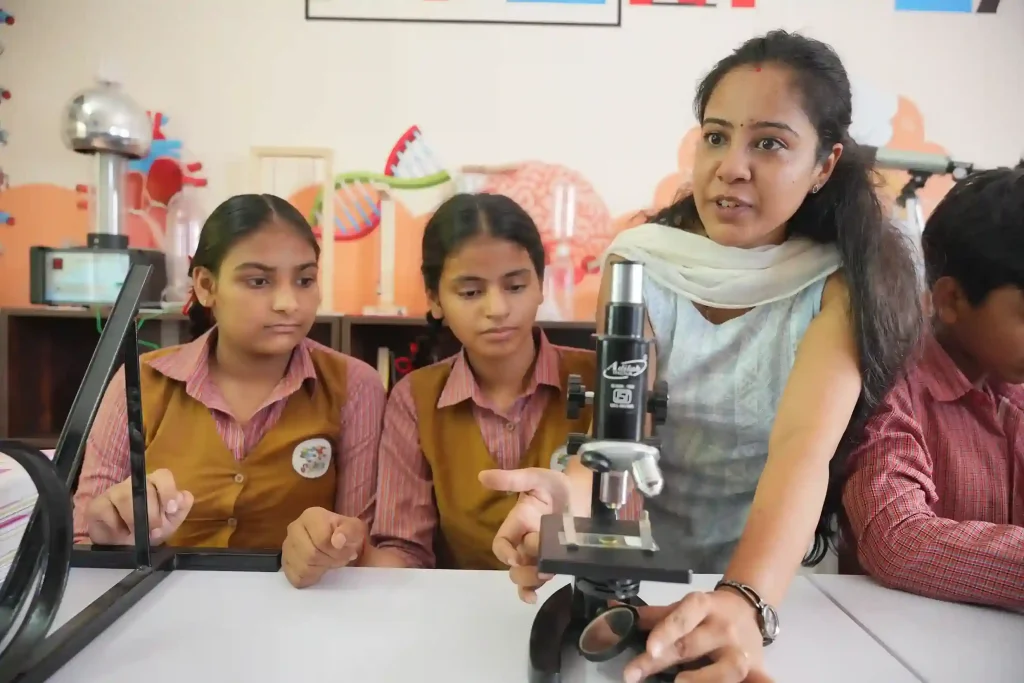
One explanation is structural: teachers are under immense pressure to complete rigid curricula, often within overcrowded classrooms and with scarce resources. A Year Six science teacher might want to introduce hands-on experiments or role-play, but is more likely to spend the lesson drilling students on definitions for an upcoming exam.
Another is perceptual: many parents and educators still see play teaching as frivolous or inefficient. A child building a LEGO robot or navigating a puzzle game might be learning algorithmic thinking but from the corridor, it just looks like playtime.
This divide is reinforced by teacher training itself. Most B.Ed. programmes in India dedicate scant attention to the pedagogical role of play, especially beyond early childhood. Even those who recognise its value often lack practical strategies to embed it meaningfully in subject teaching.
In short, there’s a widespread failure to recognise that play doesn’t have to be the opposite of serious study — it can be the vehicle for it.
Learning to play, playing to learn
In Finland, primary school children spend more than an hour a day in unstructured play. In Singapore, one of the world’s highest-performing education systems, playful inquiry is being integrated into upper primary classrooms. In the UK, schools like School 21 are combining performance, storytelling and game-based modules to teach maths and science.
India, too, has its champions. In several low-income schools supported by social enterprises, play-based math modules are being used to teach geometry and measurement. Storytelling apps are being piloted to boost language comprehension. In Delhi and Maharashtra, coding games are making their way into ICT labs, often with higher girl participation than traditional classes.
Ed-tech platforms like BYJU’s and Cuemath, and grassroots efforts like those of Pratham or Agastya Foundation, are increasingly using games and simulations as core teaching tools. From physics sandboxes to logic-based challenges, these digital resources show that play isn’t just an early childhood strategy — it’s an educational equaliser.
Still, scale remains a challenge. Too often, these innovations are confined to urban private schools or small pockets of NGO intervention.
Rethinking the system: A blueprint for schools
If Indian education is to truly embrace play teaching as pedagogy, it must go beyond individual classrooms and touch the system’s core. This means policy, curriculum, assessments — and culture.
1. Curriculum Flexibility
Schools need room to reimagine how subjects are taught. That means integrating time for structured, purposeful play — not just during breaks, but within subjects. A history lesson can involve simulations. Science can be taught through design challenges. A math module can culminate in a marketplace game. NEP 2020 calls for experiential learning — play offers one path to deliver that.
2. Rethinking Assessment
Exams often kill innovation. Educators need tools to evaluate outcomes from playful learning like collaboration, creativity or concept application. Formative assessments, project-based evaluations and digital portfolios could offer viable alternatives.
3. Professional Development
Training teachers in how to structure and scaffold play is key. This involves hands-on workshops, mentorship and exposure to successful models, especially in under-resourced schools. Most teachers want to innovate — they just need the tools and trust.
4. Parent and Community Awareness
Changing mindsets is crucial. School leaders must engage parents, showing them how play supports 21st-century skills. Governments and CSR initiatives can launch awareness campaigns highlighting success stories and data-backed outcomes.
A missed opportunity or a missed mindset?
The urgency to act is not abstract. According to a McKinsey report, nearly 69 million new jobs will be created globally by 2027, many requiring critical thinking, creativity and collaboration — skills rarely tested in board exams. If India’s children are to thrive in this future, especially those from disadvantaged backgrounds, the education system must equip them with more than rote knowledge.
Play, in this context, isn’t a distraction but a delivery mechanism. It’s how abstract concepts become real, how soft skills are built, and how learners gain the confidence to experiment and fail.
This is particularly vital for girls, children with learning difficulties and those in first-generation learner families. Structured play can be the bridge between exclusion and empowerment, between confusion and confidence.
Beyond buzzwords: Investing in play
In policy papers, “play” is easy to endorse. But meaningful change requires budget lines, teacher support and cultural shifts. Encouragingly, the NEP does acknowledge play-based learning in foundational years. But the vision needs to extend — and translate — to primary and middle school levels.
Governments can offer incentive grants for schools integrating play. Ed-tech companies can develop low-cost offline tools tailored to rural classrooms. CSR arms of corporations can fund playgrounds, labs, and training. NGOs and school networks can document and scale local innovations.
The payoff will be more than just happy children. It will be sharper thinkers, more resilient learners and classrooms that prepare for life, not just exams.
Play it forward
Education reform often gets bogged down in abstractions — competency frameworks, benchmarking rubrics, skill taxonomies. Amid all this, play can seem too simple, too soft, too messy.
But the truth is: play is serious work. It builds the architecture of learning. It cultivates the habits of mind that help children adapt to a changing world.
In India, where millions of children still drop out before Class 10, where classroom engagement remains a perennial struggle, and where exam anxiety eats away at curiosity — play might just be the most radical reform of all.
It’s time to stop asking whether play has a place in serious education and start recognising that it always did.