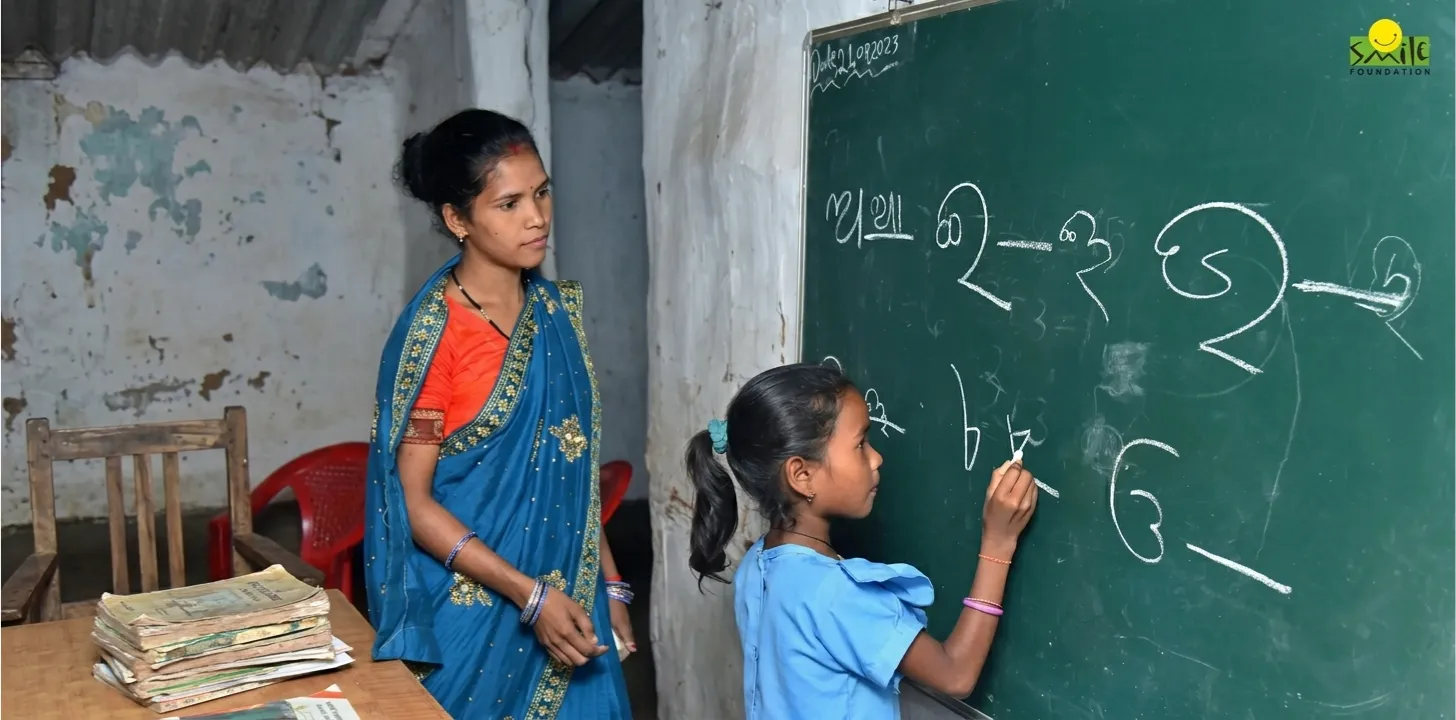

India is home to approximately 480 million children under the age of 18, according to the MoSPI Children in India 2025 report — more than one-third of the country’s entire population. Every one of them holds a set of rights by birth. Not entitlements that governments choose to give or withhold, but legally recognised human rights protected by both international treaties and Indian law.
Yet millions of these children face child labour, denial of education, early marriage, malnutrition and exploitation. The gap between what the law promises and what children actually experience is where child rights work begins.
This article explains what child rights are, why they matter, how they are structured around four core pillars — Health, Education, Protection and Participation — what the legal framework in India looks like, and where the gaps remain in 2026.
Summary
- Child rights are legally binding entitlements for all children under 18 (not optional privileges governments can grant or deny).
- The UNCRC, ratified by 196 countries including India in 1992, is the legal foundation of the global child rights framework.
- The four core pillars — Health, Education, Protection and Participation — form the complete framework every child deserves.
- India has strong laws but implementation gaps remain, especially for children aged 14 to 18 and marginalised communities.
- NGOs, community members, educators and civil society together play an essential role in making child rights a lived reality for every child in India.
What Are Child Rights? A Clear Definition
Child rights are the specific human rights that apply to all individuals below the age of 18. They recognise that children are not simply small adults. Children have distinct needs, vulnerabilities and developmental stages that require dedicated legal protections and active societal support.
The concept is rooted in the principle that children are rights-holders, not passive recipients of adult decisions. UNICEF defines child rights as the minimum standards of treatment, care and support that every child is entitled to, regardless of their background, nationality or the economic status of their family.
Child rights are not charity or goodwill extended by adults or governments. They are legally binding obligations. Denying a child one right, such as education, weakens all other rights including health, safety and the ability to participate meaningfully in society. The rights are a system, and they must be protected as one.
The Legal Age of Childhood
Under the UNCRC, a child is defined as any person under 18 years of age, unless national law sets a lower age of majority. In India, the Juvenile Justice (Care and Protection of Children) Act 2015 aligns with this international definition, establishing 18 years as the threshold for childhood across its provisions.
Why Child Rights Matter in 2026
According to the MoSPI Children in India 2025 report, India has made significant progress across child health and education indicators. Infant Mortality Rate (IMR) dropped to 25 per 1,000 live births in 2023 and school dropout rates have fallen to single digits at the primary and middle levels. Yet 23.3% of girls are still married before 18, 35.5% of children under 5 are stunted and millions of children remain out of the formal education system.
In 2026, child rights matter because the progress is real but uneven. The children being left behind are almost always from the most marginalised communities — children with disabilities, children of migrant workers, children from economically weaker sections and children in remote and underserved areas.
The UN Convention on the Rights of the Child (UNCRC)
The UN Convention on the Rights of the Child (UNCRC), adopted on 20 November 1989, is the most widely ratified human rights treaty in history. It has been ratified by 196 countries. India ratified the UNCRC on 11 December 1992, making it legally obligated to align its laws, policies and practices with the Convention’s standards.
The UNCRC contains 54 articles. The first 41 set out children’s rights. Articles 42 to 54 deal with how governments must implement and report on those rights to the UN Committee on the Rights of the Child.
Four guiding principles run through the entire UNCRC and apply to every right it contains:
- Non-discrimination: Every child has every right, without exception, regardless of race, gender, disability, religion or family background
- Best interests of the child: In every decision affecting a child — by courts, governments, schools or families — the child’s best interests must be the primary consideration
- Right to life, survival and development: Every child has the inherent right to life and the right to develop to their full potential
- Respect for the views of the child: Children have the right to express their views and have those views taken seriously in all matters affecting them
| UNCRC Article | What It Guarantees |
|---|---|
| Article 2 | Non-discrimination — all rights apply to all children equally, without exception |
| Article 3 | Best interests of the child must be the primary consideration in all decisions affecting them |
| Article 6 | Every child has the inherent right to life, survival and development |
| Article 12 | Every child has the right to express their views and have them taken seriously |
| Article 17 | Children have the right to access appropriate information, including through the internet |
| Article 19 | Children must be protected from all forms of violence, abuse and neglect |
| Article 24 | Children have the right to the highest attainable standard of health and healthcare |
| Article 28 | Every child has the right to education on the basis of equal opportunity |
| Article 29 | Education must develop the child’s personality, talents and abilities to their fullest potential |
| Article 31 | Every child has the right to rest, leisure, play and participation in cultural life |
| Article 32 | Children must be protected from economic exploitation and hazardous work |
| Article 36 | Children must be protected from all other forms of exploitation |
The Four Core Pillars of Child Rights
Child rights are most practically understood through four pillars that cover every dimension of a child’s life. Each pillar is backed by specific UNCRC articles, Indian constitutional provisions and national laws. Together, they define what a rights-based childhood looks like.
| Pillar | What It Covers | Key Indian Law |
|---|---|---|
| Health and Survival | Life, nutrition, healthcare, clean water, immunisation, mother and child welfare | National Health Mission, POSHAN Abhiyaan, ICDS |
| Education and Development | Free schooling, quality learning, play, leisure, access to information, vocational training | Right to Education Act 2009, Samagra Shiksha |
| Protection | Safety from child labour, child marriage, abuse, neglect, exploitation and discrimination | Child Labour Act 2016, Child Marriage Act 2006, BNS 2024 |
| Participation | Voice in decisions, freedom of expression, access to information, civic engagement | No specific law yet — a key gap in India’s framework |
Pillar 1: Right to Health and Survival
Every child has the right to survive and to the highest attainable standard of health. This is the most foundational of all child rights, because without life and health, no other right can be exercised.
The right to health covers far more than access to a doctor. It includes nutrition, clean drinking water, sanitation, immunisation, maternal and child healthcare, mental health support and protection from environmental hazards.
Where India Stands on Child Health in 2026
The MoSPI Children in India 2025 report shows significant progress:
- Infant Mortality Rate (IMR): Declined from 44 per 1,000 live births in 2011 to 25 in 2023
- Under-Five Mortality Rate (U5MR): Dropped from 30 in 2022 to 29 in 2023
- Full immunisation coverage: Increased to 76.4% of children aged 12-23 months (NFHS-5)
- Institutional delivery rate: Rose to 88.6%, indicating most births now happen in health facilities
Despite this progress, serious challenges remain:
According to NFHS-5 data, 35.5% of children under 5 in India are stunted (too short for their age), 19.3% are wasted (too thin for their height), and 32.1% are underweight. Anaemia affects 67.1% of children aged 6 to 59 months — a figure that represents a public health emergency.
Malnutrition is not just a health issue but a rights violation. A stunted child cannot learn effectively. An anaemic child cannot concentrate in school. Malnutrition in the first 1,000 days of life causes irreversible damage to brain development — damage that no amount of schooling can later undo.
Government Schemes Supporting the Right to Health
- POSHAN Abhiyaan (National Nutrition Mission): Targets stunting, wasting, anaemia, and low birth weight through Anganwadi centres across India
- Integrated Child Development Services (ICDS): Provides nutrition, health check-ups, immunisation and pre-school education to children under 6
- National Health Mission (NHM): Strengthens primary healthcare access for mothers and children in rural and underserved areas
- Mission Indradhanush: Intensified immunisation drive targeting children in remote and hard-to-reach areas
The Role of Nutrition in Child Rights
The Poshan Tracker, India’s digital nutrition monitoring system, now tracks over 100 million beneficiaries across Anganwadi centres. It monitors child weight, height and nutritional status in real time — allowing state governments to identify and respond to pockets of severe malnutrition faster than ever before.
Nutrition is where the right to health and the right to development intersect most directly. Smile Foundation’s Swabhiman programme addresses this intersection through mobile healthcare units that bring immunisation, nutrition counselling, haematology testing and maternal health services directly to urban slums and remote villages, reaching women and children who cannot easily access government health facilities.
Pillar 2: Right to Education and Development
Education is the right that unlocks all other rights. A child who can read, write and think critically is better able to understand her entitlements, participate in civic life and build a foundation for a healthier and more secure future for her family.
The Right to Education Act 2009 (RTE Act) made free and compulsory elementary education a fundamental right for all children aged 6 to 14 in India — the first time education was constitutionally guaranteed in the country. The Act prohibits fees, capitation charges, and expulsion in government schools. It mandates neighbourhood schools so no child has to travel long distances to learn.
Education Progress in India — 2026 Data
The MoSPI Children in India 2025 report shows remarkable improvement in education outcomes:
- School dropout rate at preparatory level: Declined to 2.3% in 2024-25
- School dropout rate at middle level: Declined to 3.5% in 2024-25
- School dropout rate at secondary level: 8.2% in 2024-25 — still the weakest point
- Gender Parity Index: Achieved across all levels of education in 2024-25 — a landmark milestone
- Gross Enrolment Ratio at secondary level: Improved significantly under Samagra Shiksha Abhiyan
The Education Gap That Remains
Despite this progress, critical gaps persist. The RTE Act covers only ages 6 to 14. Children aged 14 to 18 have no legal guarantee of free education. This means that the critical secondary and higher secondary years, when dropout risk is highest and children face important life transitions, are not protected by the same mandatory educational framework.
Children with disabilities, children from nomadic and de-notified tribes, children of migrant workers and first-generation learners face the highest dropout risk. The Samagra Shiksha Abhiyan, India’s integrated school education scheme, attempts to address these gaps through inclusive education policies, residential schools for tribal children and conditional scholarships. But implementation remains uneven across states.
Quality of Education — Beyond Enrolment
Getting children into school is necessary but not sufficient. The Annual Status of Education Report (ASER) consistently shows that large numbers of enrolled children cannot read simple text or solve basic arithmetic by Class 5. Child rights in education demand not just school access but quality learning — the development of the child’s personality, talents and abilities to their fullest potential, as guaranteed by UNCRC Article 29.
Education is also broader than formal schooling. UNCRC Article 31 guarantees every child the right to play, leisure and participation in cultural life. Ensuring that children have time and space for creative expression, sport and rest is part of a complete rights-based approach to childhood — one that goes beyond enrolment numbers and examination results.
Smile Foundation’s Mission Education
Smile Foundation’s Mission Education programme has reached over 160,000 children from marginalised communities with quality non-formal and formal education support. The programme operates in areas where children face the highest dropout risk — urban slums, remote villages and communities where first-generation learners struggle without family support. By combining schooling support with community engagement, Mission Education directly operationalises the right to development for children who would otherwise remain permanently outside the education system.
Pillar 3: Right to Protection
The right to protection means every child must be safe from all forms of abuse, neglect, exploitation, and violence. It is not enough for harm to be illegal. The state, families, communities and institutions must actively prevent it.
Protection covers a wide range of threats: child labour, child marriage, corporal punishment, discrimination, neglect, online exploitation and the denial of basic needs. Every one of these is a rights violation — not just a social problem.
Child Labour — A Persistent Rights Violation
India’s most recent census-level data on child labour is from 2011, which recorded 10.13 million children aged 5 to 14 in child labour. A 2024 UNICEF Innocenti and ILO report warns that without accelerated intervention, South Asia will continue to have tens of millions of children in labour through 2025 and beyond.
Child labour violates the right to education, the right to health, the right to play and the right to protection simultaneously. Children who work instead of studying lose years of cognitive development they can never recover. The Child Labour (Prohibition and Regulation) Amendment Act 2016 prohibits employment of children under 14 in all occupations and restricts work for 14 to 18 year olds in hazardous industries. Enforcement, particularly in agriculture, domestic work and the informal economy, remains the critical weak point.
Child Marriage — Education Is the Best Protection
According to NFHS-5 data, 23.3% of women aged 20-24 in India were married before the age of 18. The MoSPI 2025 report confirms a gradual decline from 26.8% in NFHS-4, but the pace of change is not fast enough to meet the Sustainable Development Goal of eliminating child marriage by 2030.
Child marriage is not just a cultural practice. It is a rights violation that ends education, creates health risks from early pregnancy, and cycles poverty across generations. Girls with no schooling are married before 18 at a rate of 48%, compared to just 19% for girls with secondary or higher education. This single statistic captures why education and protection are inseparable pillars.
Child marriage rates vary significantly across India’s states and regions, according to a 2023 Harvard Chan School study published in The Lancet Global Health. The Prohibition of Child Marriage Act 2006 makes child marriage voidable and penalises facilitators, but consistent implementation across all states remains an ongoing priority.
Birth Registration — The Foundation of All Protection
One of the most overlooked protection rights is the right to a name and legal identity from birth, guaranteed under UNCRC Article 7. The MoSPI 2025 report shows that birth registration coverage has improved significantly in India, but millions of children — particularly in tribal areas, among nomadic communities and children of migrant workers — remain unregistered.
An unregistered child is invisible to the state. They cannot access government welfare schemes, school enrolment, health programmes or legal protections. Birth registration is therefore not an administrative task. It is the first act of recognising a child as a rights-holder.
Protection from Discrimination
UNCRC Article 2 guarantees that every child has every right, without discrimination. In India, children with disabilities, children from economically weaker sections, children of migrant workers and children in remote communities face compounded barriers — in accessing schools, healthcare facilities and government welfare programmes.
The right to protection from discrimination requires active measures, not just the absence of overt harm. It means ensuring that children with disabilities have accessible classrooms, that children of migrant workers are enrolled in schools at their destination and that children in remote areas have teachers who understand their language and cultural context.
Key Laws Protecting Children in India
| Law | Year | What It Protects |
|---|---|---|
| Right to Education Act (RTE) | 2009 | Free elementary education for ages 6-14; no fees, no expulsion; neighbourhood school mandate |
| Child Labour (Prohibition & Regulation) Amendment Act | 2016 | Prohibition on employing children under 14; restrictions for 14-18 year olds in hazardous work |
| Prohibition of Child Marriage Act | 2006 | Sets marriage age at 18 for girls, 21 for boys; makes child marriage voidable; penalises facilitators |
| Juvenile Justice Act | 2015 | Care and protection for children in need; Child Welfare Committees; rehabilitation approach |
| Bharatiya Nyaya Sanhita (BNS) | 2024 | Replaced Indian Penal Code from July 2024; updated provisions on cruelty to children, kidnapping |
| Commissions for Protection of Child Rights Act | 2005 | Established NCPCR and State Commissions to monitor and enforce child rights |
Pillar 4: Right to Participation
The right to participation is the most overlooked pillar of child rights in India. It is also the most transformative when fully realised. Participation means every child has the right to express their views, be heard and have those views taken seriously in all matters that affect them.
This right is guaranteed under UNCRC Article 12. It applies not just to courts and formal settings, but to family decisions, school governance, healthcare choices, community planning and policy design. A child’s right to be heard is not contingent on reaching a certain age or level of maturity — it applies from the earliest years of life, with appropriate weight given to the child’s age and level of understanding.
What Child Participation Looks Like in Practice
- In families: Children should be consulted on decisions about their schooling, healthcare and daily life — not simply told what will happen to them
- In schools: Student councils, class representatives and feedback mechanisms that give children a genuine voice in school rules and programmes
- In healthcare settings: Children should be explained what is happening to their bodies and given age-appropriate choices
- In communities: Children’s parliaments, child-led community surveys and child representatives in gram sabhas and ward committees
- In policy: National and state governments should formally consult children when designing programmes that affect them — a standard that India has not yet institutionalised
Why Participation Produces Better Outcomes
Participation is not just a rights obligation but a practical necessity. Research consistently shows that when children participate in designing school programmes, they attend more regularly. When children are involved in community health campaigns, the campaigns reach more households. When children identify safety risks in their own communities, the solutions are more grounded and more effective.
Child participation also builds the civic skills and confidence that create active, informed citizens. A child who is heard, respected, and taken seriously is far more likely to grow into an adult who participates in democracy, advocates for their community, and supports the rights of others.
India’s Participation Gap
India does not have specific legislation guaranteeing child participation in policy processes. NCPCR consults children in some of its monitoring activities, but there is no formal, enforceable mechanism requiring government bodies to seek children’s views before making decisions that affect them.
Civil society organisations, including many operating in the child rights space, have created forums where children identify problems in their communities and speak to panchayat members, school principals and local officials. These initiatives demonstrate the practical value of child participation and point toward what a more systematic, inclusive approach to child engagement in governance could achieve.
India’s Constitutional Framework for Child Rights
India’s Constitution contains several provisions that directly protect children — both as fundamental rights and as directive principles that guide state policy.
| Constitutional Provision | What It Protects |
|---|---|
| Article 21A | Free and compulsory education as a fundamental right for children aged 6 to 14 (86th Amendment, 2002) |
| Article 24 | Prohibition on employment of children below 14 in factories, mines and hazardous occupations |
| Article 39(e) | Directive: state must protect children from being forced into occupations unsuited to their age or strength |
| Article 39(f) | Directive: children must be given opportunities to develop in a healthy manner, with freedom and dignity |
| Article 45 | Directive: early childhood care and education for all children below the age of 6 years |
| Article 15(3) | Permits the state to make special protective provisions for women and children |
| Article 47 | Directive: state must raise the standard of living and improve public health, including for children |
UNCRC vs Indian Law: Where the Gaps Remain in 2026
India has made strong legislative progress since ratifying the UNCRC in 1992. But several implementation gaps persist that directly affect the quality of child rights protection on the ground.
| UNCRC Requirement | Indian Law | Gap in 2026 |
|---|---|---|
| Education for all children | RTE Act covers ages 6 to 14 only | Children aged 14 to 18 have no free education guarantee — the most critical gap |
| Protection from all labour | Child Labour Amendment Act 2016 | Exceptions for family enterprises; OSH Code not uniformly adopted across all states |
| Protection from all violence | BNS 2024, Child Labour Act | Corporal punishment not fully banned in domestic and school settings across India |
| Right to participation | No specific legislation | No formal enforceable mechanism for children’s views in government policy processes |
| Birth registration for all | Registration of Births and Deaths Act | Millions of children — tribal, migrant, nomadic — remain unregistered and legally invisible |
| Non-discrimination | Constitution Articles 14 and 15 | Children from economically weaker sections, children with disabilities and children of migrant workers face compounded access barriers |
| Right to play and leisure | No specific law | UNCRC Article 31 has no corresponding enforceable right in Indian law |
NCPCR: India’s Watchdog for Child Rights
The National Commission for Protection of Child Rights (NCPCR) is an independent statutory body established under the Commissions for Protection of Child Rights Act, 2005. It functions under the Ministry of Women and Child Development and is India’s primary institutional mechanism for monitoring, investigating and enforcing child rights.
What NCPCR Can Do
- Examine complaints of child rights violations and conduct suo motu inquiries in cases of public interest
- Summon government officials, demand records and recommend legal action when rights are being violated
- Review existing laws and recommend amendments to Parliament and state legislatures
- Monitor the implementation of the Right to Education Act across all states and union territories
- Coordinate with State Commissions for Protection of Child Rights (SCPCRs) for district-level monitoring and action
NCPCR’s Limitations
NCPCR faces persistent challenges that limit its real-world impact. Its enforcement authority is advisory rather than binding — it can recommend action but cannot compel compliance in the way a court can. Strengthening NCPCR and state-level SCPCRs with greater resources and more responsive implementation capacity is one of the most important steps India could take to improve child rights outcomes.
Government Schemes for Child Rights in India
The Ministry of Women and Child Development and the Ministry of Education together administer India’s primary child welfare schemes. These programmes translate constitutional commitments into ground-level services.
| Scheme | Ministry | Pillar It Addresses |
|---|---|---|
| Integrated Child Development Services (ICDS) | WCD | Health and Education — nutrition, immunisation, pre-school education for under-6 |
| PM POSHAN (Mid-Day Meal Scheme) | Education | Health and Education — hot cooked meal in schools; improves attendance and nutrition together |
| POSHAN Abhiyaan | WCD | Health — targets stunting, wasting, anaemia through Anganwadis and community workers |
| Samagra Shiksha Abhiyan | Education | Education — integrated school education from pre-primary to Class 12; inclusive education |
| National Child Labour Project (NCLP) | Labour | Protection — rescues children from labour; bridge education and vocational training |
| Beti Bachao Beti Padhao | WCD | Protection and Education — combats child marriage and discrimination; promotes girls’ schooling |
| PM CARES for Children | WCD | Health, Education, Protection — support for children orphaned during COVID-19 |
| Childline 1098 | WCD | Protection — National emergency helpline for children in distress; connects children with local child welfare services |
| Mission Vatsalya | WCD | Protection — child protection services, Child Welfare Committees, open shelters |
Child Rights in the Digital Age — 2026
India crossed the 1.02 billion internet users mark by December 2025, according to TRAI, with 983 million accessing the internet through mobile devices. Children are among the fastest-growing demographics online — and among the least protected.
UNCRC Article 17 guarantees every child the right to access appropriate information, including through digital media. UNCRC Article 36 guarantees protection from all forms of exploitation, including online. These two articles together create the framework for digital child rights — a framework that India’s legal system has only partially addressed.
What Digital Child Rights Include
- Right to safe digital access: Every child has the right to use the internet for education and information without being exposed to harm
- Right to digital privacy: India’s Digital Personal Data Protection Act 2023 introduced consent requirements for children’s data and prohibits tracking by default — a significant step forward
- Right to digital literacy: Children must be equipped with the skills to use digital tools safely, critically, and productively
- Right to protection from online harm: Cyberbullying, online grooming, and digital exploitation are rights violations — and India needs a dedicated Child Online Protection Policy to address them
The Digital Divide as a Rights Issue
In India, the digital divide is also a rights divide. Children in urban households with smartphones and reliable internet access can use digital tools for learning, enrichment and participation. Children in rural areas without devices or connectivity are excluded from an increasingly digital education system, job market and civic life.
Bridging the digital divide is a child rights imperative because children without digital access are systematically denied the right to development and the right to participation in 2026.
The Role of NGOs in Making Child Rights Real
In a country of 1.4 billion people across vastly different geographies, languages and social contexts, the government cannot reach every child. Nonprofit organisations bridge the gap between policy design and lived reality, working where formal systems are weakest and the need is greatest.
Five Ways NGOs Strengthen Child Rights
- Direct service delivery: Running non-formal education centres, mobile health units, nutrition programmes and child-friendly spaces for at-risk children who fall outside the reach of government services
- Community sensitisation: Working with parents, local leaders, panchayat members and self-help groups to shift harmful social norms around child labour, child marriage and gender discrimination
- Child protection case management: Identifying children at risk, linking them with government schemes and supporting families in navigating welfare systems
- Policy advocacy: Generating community-level evidence and presenting it to state and national governments to push for stronger laws, better enforcement and increased budget allocations
- Child participation: Creating structured forums where children themselves identify problems in their communities and engage with decision-makers — including gram sabha members, school management committees and district officials
FAQ: Child Rights in India
Q: What are child rights in simple terms?
A: Child rights are the basic human rights that every child under 18 is entitled to from birth, regardless of who they are or where they come from. They cover four areas: the right to survive and be healthy, the right to be educated and develop fully, the right to be protected from harm and exploitation, and the right to be heard in decisions that affect them.
Q: What is the UNCRC and why does it matter for India?
A: The UN Convention on the Rights of the Child (UNCRC) is an international treaty adopted in 1989 and ratified by 196 countries. India ratified it in 1992, making it legally obligated to align all its laws, policies and programmes with the UNCRC’s standards. The Convention contains 54 articles covering every dimension of a child’s rights from birth to age 18.
Q: What are the four pillars of child rights?
A: The four pillars are: (1) Health and Survival — the right to life, nutrition, healthcare and clean water; (2) Education and Development — the right to free schooling, quality learning and the opportunity to develop to one’s full potential; (3) Protection — the right to be safe from abuse, child labour, child marriage, discrimination and exploitation; and (4) Participation — the right to express views and be heard in all decisions that affect the child.
Q: What is the Right to Education Act and what does it guarantee?
A: The Right to Education Act 2009 (RTE Act) makes free and compulsory elementary education a fundamental right for all children aged 6 to 14 in India. It prohibits schools from charging fees or capitation, bans expulsion of children, mandates neighbourhood schools and requires inclusive education for children with disabilities. Its biggest gap is that it does not cover children aged 14 to 18.
Q: What are the biggest child rights violations in India in 2026?
A: The five most significant are: child labour (10.13 million children per Census 2011; enforcement gaps persist in agriculture and informal sectors); child marriage (23.3% of girls per NFHS-5); malnutrition (35.5% stunting, 67.1% anaemia in under-5s per NFHS-5); secondary school dropout (8.2% per MoSPI 2025); and the denial of legal identity through lack of birth registration, affecting millions of tribal, migrant and nomadic children.
Q: What is NCPCR and what powers does it have?
A: The National Commission for Protection of Child Rights (NCPCR) is India’s statutory child rights watchdog, established under the Commissions for Protection of Child Rights Act 2005. It can examine complaints, conduct suo motu inquiries, summon government officials, review laws and monitor RTE implementation. Its main limitation is that its recommendations are advisory — it cannot compel compliance the way a court can.
Q: Why is child participation a right and not just a nice idea?
A: Child participation is guaranteed under UNCRC Article 12 as a legally binding right. Research shows that when children are heard and involved in decisions — about school programmes, health campaigns, community planning — the outcomes are better and more sustainable. India does not yet have specific legislation mandating child participation in government policy processes, which is identified as a key gap in the country’s child rights framework.
Q: How are child rights violations addressed in India?
A: Child rights violations in India are addressed through a combination of government institutions, legal mechanisms and civil society action. NCPCR and state-level SCPCRs investigate complaints and monitor implementation. District Child Protection Units (DCPUs) coordinate local responses. The Childline national helpline connects children in distress with appropriate services. Courts, Child Welfare Committees and Juvenile Justice Boards handle formal cases.
Q: What role do NGOs play in protecting child rights?
A: NGOs bridge the gap between government policy and community-level reality. They deliver direct services in areas where formal systems have limited reach, sensitise communities to shift harmful norms around child labour and child marriage, generate evidence for policy advocacy and create structured forums for child participation. Organisations working at the intersection of education, health and child protection play an especially important role in reaching children who are most at risk of being left behind.
Q: What is India doing to close the digital rights gap for children?
A: India’s Digital Personal Data Protection Act 2023 introduced data privacy protections for children and prohibits tracking by default. However, India does not yet have a dedicated Child Online Protection Policy. Advocacy organisations are pushing for platform accountability, age-appropriate content standards and safe reporting mechanisms for children facing online harm. Bridging the digital divide, ensuring all children have meaningful internet access, is also a key child rights priority for 2026.
For our today and the future
Child rights in India are legally grounded, constitutionally supported and backed by decades of legislation and institution-building. The UNCRC, the RTE Act, the Child Labour Amendment Act, the Child Marriage Act, NCPCR and programmes like ICDS and PM POSHAN together form a real infrastructure for protecting the rights of India’s 480 million children.
But infrastructure and outcomes are different things. In 2026, the four pillars of child rights — Health, Education, Protection and Participation — remain incompletely realised for the most marginalised children. A stunted child in a remote village, a girl married before she finishes school, an out-of-school child of a migrant worker, a tribal child without a birth certificate — these children are not statistical footnotes. Each one represents a specific, preventable failure of the child rights system.
Key takeaways:
- Health: India has cut child mortality sharply — but malnutrition (35.5% stunting, 67.1% anaemia) remains a rights emergency
- Education: Dropout rates have fallen — but the 14-18 age group has no free education guarantee and quality gaps persist
- Protection: Strong laws exist — but child labour, child marriage and lack of birth registration continue at scale
- Participation: The most overlooked pillar — India needs formal mechanisms to hear children in policy, not just in special programmes
- Digital rights: The newest frontier — 1.02 billion internet users, but no Child Online Protection Policy yet
Child rights in India demand awareness, commitment and collective action. When families, communities, educators, policymakers and civil society understand what child rights mean and what obligations they carry, children are safer, healthier and better educated. The distance between law and lived reality closes not through a single act but through sustained, informed engagement at every level of society.
For organisations working to make child rights real at scale, Smile Foundation welcomes partnerships, volunteers and supporters committed to every child’s right to health, education, protection and participation.
Sources & References
All statistics and claims are cited below. Click each source name to visit the original document.
- UNICEF — Child Rights: Why They Matter — Definition, universality, and indivisibility of child rights
- OHCHR — Convention on the Rights of the Child — Full UNCRC text, 54 articles, legal obligations of state parties
- UNICEF — The UN Convention on the Rights of the Child — 196 ratifying countries, India’s ratification December 1992
- Right to Education Act 2009 — Ministry of Education — RTE Act coverage, free elementary education mandate, prohibition on fees and expulsion
- NCPCR — National Commission for Protection of Child Rights — NCPCR mandate, powers, suo motu authority, SCPCR structure
- MoSPI — Children in India 2025 (PIB Press Release) — IMR 25/1000 (2023), U5MR 29/1000 (2023), dropout rates 2024-25, Gender Parity Index
- MoSPI — Children in India 2025 Full Report — Child marriage decline to 23.3%, school retention, birth registration data
- NFHS-5 — Ministry of Health and Family Welfare — Stunting 35.5%, wasting 19.3%, anaemia 67.1%, immunisation 76.4%, institutional delivery 88.6%
- Census of India — Child Labour Data 2011 — 10.13 million children aged 5-14 in child labour
- UNICEF Innocenti and ILO — Child Labour and Schooling in India 2024 — South Asia child labour projections; link between education access and child labour reduction
- UNICEF India — Child Marriage Data — 23.3% girls married before 18 (NFHS-5); state-wise breakdown; SDG 5.3 target
- UNFPA India — Harvard Lancet Global Health 2023 Study — Child marriage stalled progress; state-level disparities; pace of decline insufficient to meet SDG 5.3 target
- TRAI — Indian Telecom Services Performance Indicator Report, December 2025 — India crossing 1.02 billion internet users; 983 million mobile internet users
- Poshan Tracker — Ministry of Women and Child Development — 100 million+ beneficiaries tracked; real-time nutrition monitoring across Anganwadis
- Samagra Shiksha Abhiyan — Integrated school education scheme; inclusive education; tribal residential schools; GER improvement