
Summary
India’s CSR ecosystem has grown substantially in scale and sophistication. But much of it still operates in silos — education here, health there, skilling somewhere else — without the connective tissue that turns individual interventions into lasting change. The evidence from decades of development practice is consistent: isolated programmes, however well-designed, underperform because the challenges they address do not exist in isolation. This where the future of CSR can step in and create a greater change.
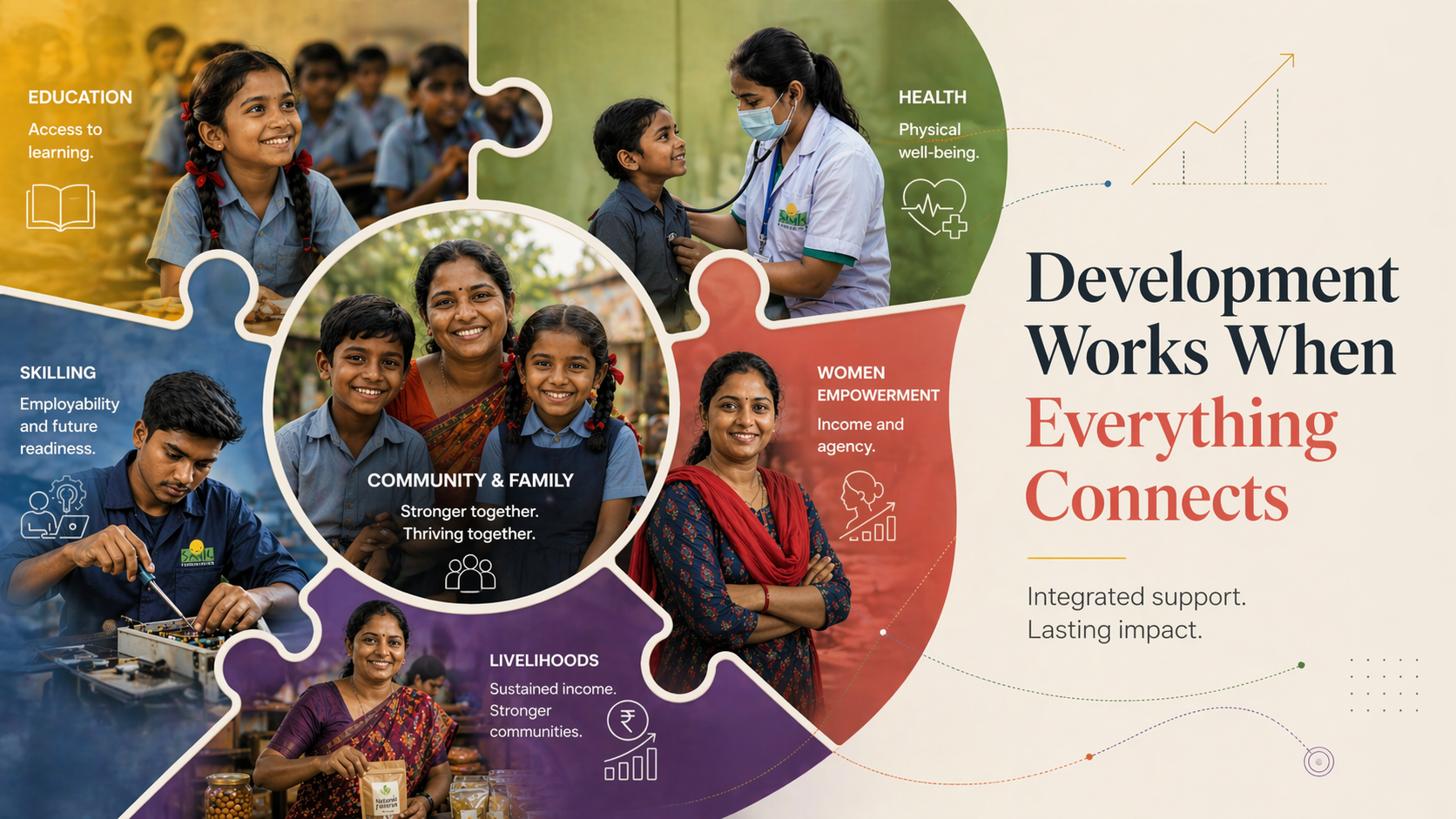
A child’s ability to learn is shaped by her health. A youth’s employability depends on more than a certificate. A woman’s economic independence requires an ecosystem, not just a training. Smile Foundation’s integrated development model called the Lifecycle Approach — spanning education, healthcare, skilling and women’s empowerment — is built on this understanding.
When Good Work Is Not Enough For The Future of CSR
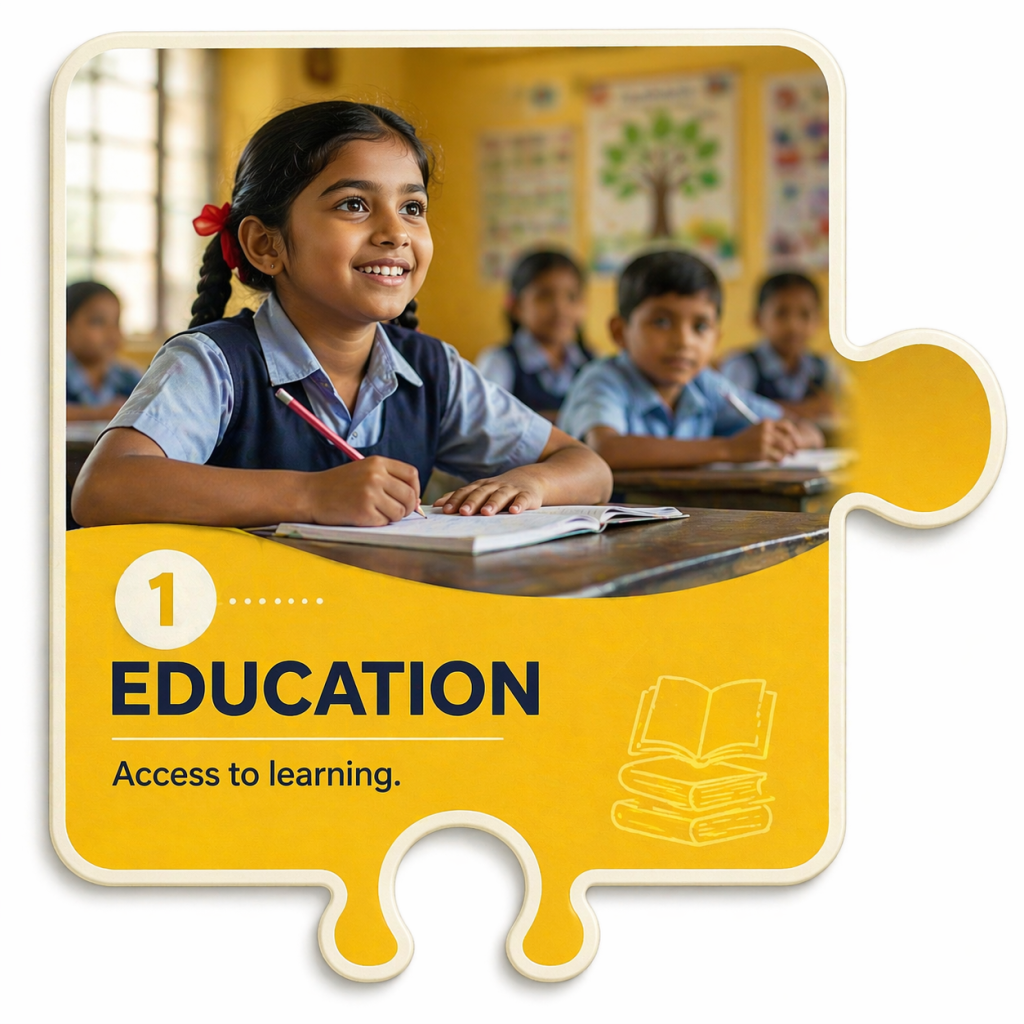
Consider a scenario that plays out with regularity across India’s development landscape. A well-funded CSR programme delivers quality education to children in a low-income urban community. Attendance is tracked. Learning levels are assessed. A corporate partner receives a detailed impact report at the end of the year, showing improvements in literacy and numeracy. On paper, the intervention has worked.
But look more closely at the same community, and a different picture emerges. Several of the children whose learning levels improved were frequently absent — not because they were disengaged, but because they were unwell. The school had no access to healthcare support and families could not afford to miss a day’s wages to take a sick child to a clinic. The learning gains, real as they were, were built on an unstable foundation.
Or consider the young man who completed a government-linked skilling programme and received a certificate in a trade that has genuine demand. By every output metric, the programme succeeded. But six months later, he is not employed in that trade. The programme had no market linkage component, no employer partnership, no support for the transition from training to work. The skill exists. The opportunity does not.
These are not failure stories in the conventional sense. Nobody did anything wrong. The intentions were right, the execution was competent and the resources were real. What was missing was integration — the recognition that development challenges do not respect the boundaries that programmes draw around them, and that interventions designed to address one dimension of a problem will consistently be undermined by the dimensions they leave untouched.
The Limits of Siloed CSR
India’s mandatory CSR framework has channelled enormous resources into social development since 2014. Education and health consistently receive the largest allocations. Skilling, women’s empowerment and rural development follow. The categories are clear and companies have built programme portfolios that map neatly onto them.
The problem is that the categories are a filing system, not a theory of change. They describe what money is being spent on. They do not describe how human lives actually work.
An education programme that does not account for the health of the children it is trying to teach will find its outcomes constrained by factors it never measured. A women’s empowerment programme that delivers training without addressing access to credit, market linkages or the domestic dynamics that determine whether a woman can actually use what she has learned will produce graduates who know more but can do little differently. A skilling programme that is disconnected from industry will train people for jobs that are not available, in formats that employers did not ask for, measured by completion rates that tell funders nothing about whether anyone’s livelihood improved.
None of this is a critique of the people running these programmes. It is a critique of a structure that incentivises neat, bounded, reportable activity over the messy, interconnected, harder-to-measure work of actually shifting outcomes.
The honest assessment of siloed CSR is not that it produces no impact. It is that it produces less impact than it should, given the resources committed, and that the gap between what is invested and what is achieved is, in significant part, a function of the failure to connect interventions that belong together.
How Development Challenges Are Actually Connected
The connections between health, education, livelihoods and women’s empowerment are not incidental. They are structural, and they operate in both directions.
A child’s health determines whether she can attend school consistently. It determines whether, on the days she does attend, she has the physical and cognitive resources to learn. Chronic illness, anaemia, malnutrition — these are not interruptions to the education story. They are part of it. An education programme that does not engage with the health of its students is working with one hand tied.
Education, in turn, shapes employability — but not in the simple, linear way that skills-focused programmes often assume. It shapes it through the confidence it builds or fails to build, through the literacy and numeracy it produces or does not produce, through the aspirations it expands or leaves unchanged. A young person who leaves school without foundational skills is not a good candidate for a skilling programme, however well-designed that programme is. The two interventions are not alternatives. They are sequential dependencies.
Skilling affects income. Income affects household nutrition, housing stability and the ability of parents to keep children in school rather than sending them to work. Women’s income, specifically, has well-documented multiplier effects: research consistently shows that when women control household income, a larger share goes toward children’s health and education than when men control it. Women’s empowerment is not a parallel stream of development work. It is one of the highest-leverage points in the entire system.
The thread that runs through all of this is that development is not a set of separate problems with separate solutions. It is an ecosystem, and ecosystems respond to intervention differently than individual components do.
The Case for Integration For The Future of CSR
An integrated development model for the future of CSR does not simply deliver multiple programmes to the same community. That would be coordination, not integration. Integration means designing interventions so that they are aware of each other, informed by each other and structured to produce effects that no single programme could produce alone.
The logic is straightforward, even if the execution is demanding. When a child receives education support alongside health monitoring, the education outcomes improve because one of the primary constraints on learning has been addressed. When a woman receiving livelihood training also has access to financial products and market linkages, her economic outcomes improve because the training is embedded in an ecosystem that allows her to use it. When youth skilling is designed in partnership with employers and connected to job placement support, employment rates improve because the programme was designed for employment, not for certification.
In each case, the compounding effect is greater than the sum of the parts. This is not a theoretical claim. It is a well-documented pattern in development practice, reflected in evaluations of integrated programmes across India and globally, and increasingly recognised in the frameworks that guide both government development planning and corporate CSR strategy.
The shift from siloed to integrated is also a shift in the timeframe over which impact is measured. Isolated programmes tend to produce short-term, bounded outcomes that are visible within a reporting cycle. Integrated models are designed for systemic change — the kind of change that takes longer to materialise but is more durable, more scalable and more honest about what development actually requires.
The Policy and CSR Context
The direction of travel in CSR governance is clear. Regulators, investors and civil society are all pushing in the same direction: away from activity-counting and toward outcome measurement, away from one-year projects and toward multi-year commitments, away from inputs and toward impact.
The integration of CSR into broader ESG frameworks has accelerated this shift. Companies are no longer assessed only on what they spend, but on what changes as a result. Institutional investors are increasingly factoring social impact quality into their ESG assessments. The pressure to demonstrate genuine, attributable outcomes — rather than impressive-sounding activities — is intensifying from multiple directions simultaneously.
In this environment, integrated development models have a strategic advantage. They are designed from the outset to produce outcomes rather than outputs. They are built for the kind of long-term, multi-dimensional impact that ESG frameworks are trying to capture. And they offer CSR leaders a more credible, more defensible account of what their investment is achieving because the theory of change is coherent, the interventions are connected and the outcomes are real.
What Integrated Development Looks Like: The Smile Foundation Model
Smile Foundation’s work across India is built on a lifecycle approach — the understanding that human development is not a series of separate challenges but a connected journey, and that the most effective way to support that journey is to engage with it at multiple points simultaneously.
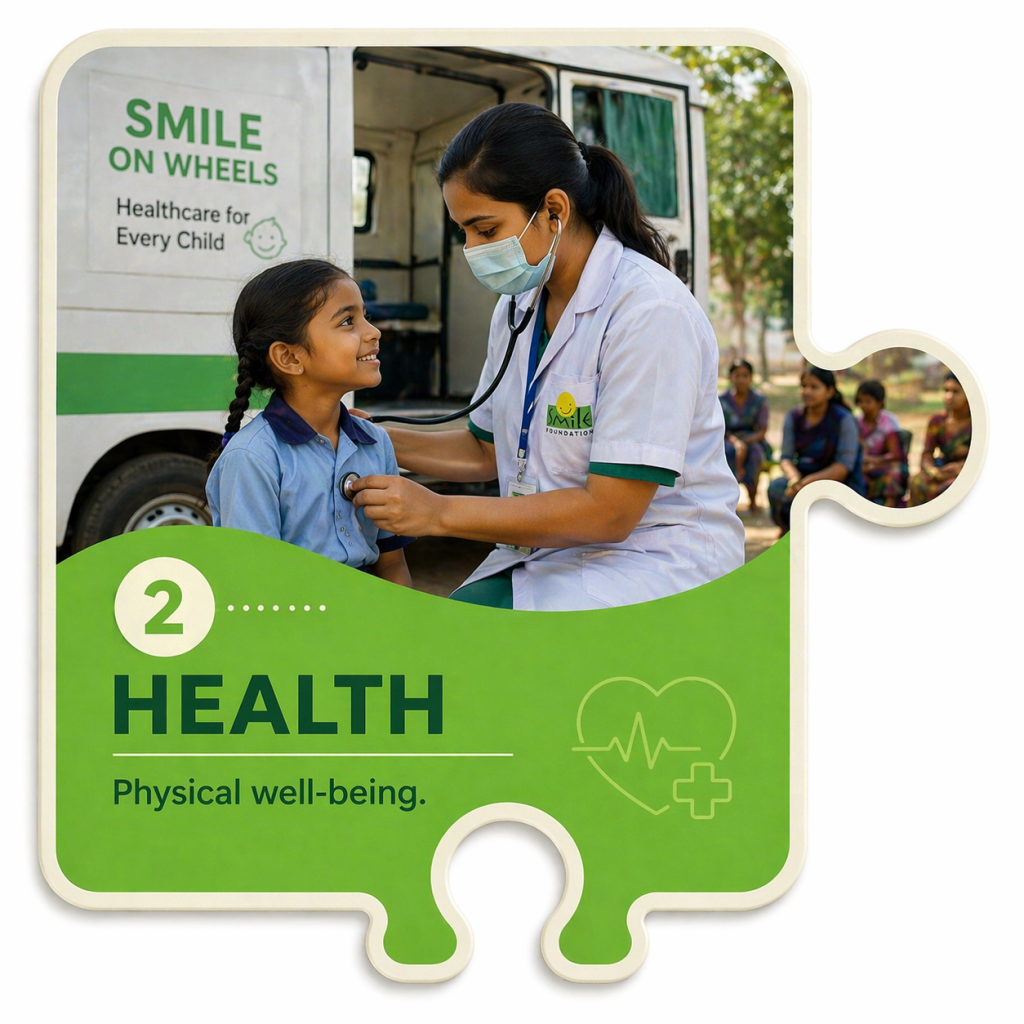
The organisation’s education programmes — delivered through Mission Education and a network of learning centres — are designed with an awareness of the health, nutritional and psychosocial dimensions that shape a child’s ability to learn. The Smile on Wheels mobile health programme extends healthcare to communities and schools that formal health infrastructure does not reach, creating a direct link between health access and educational participation.
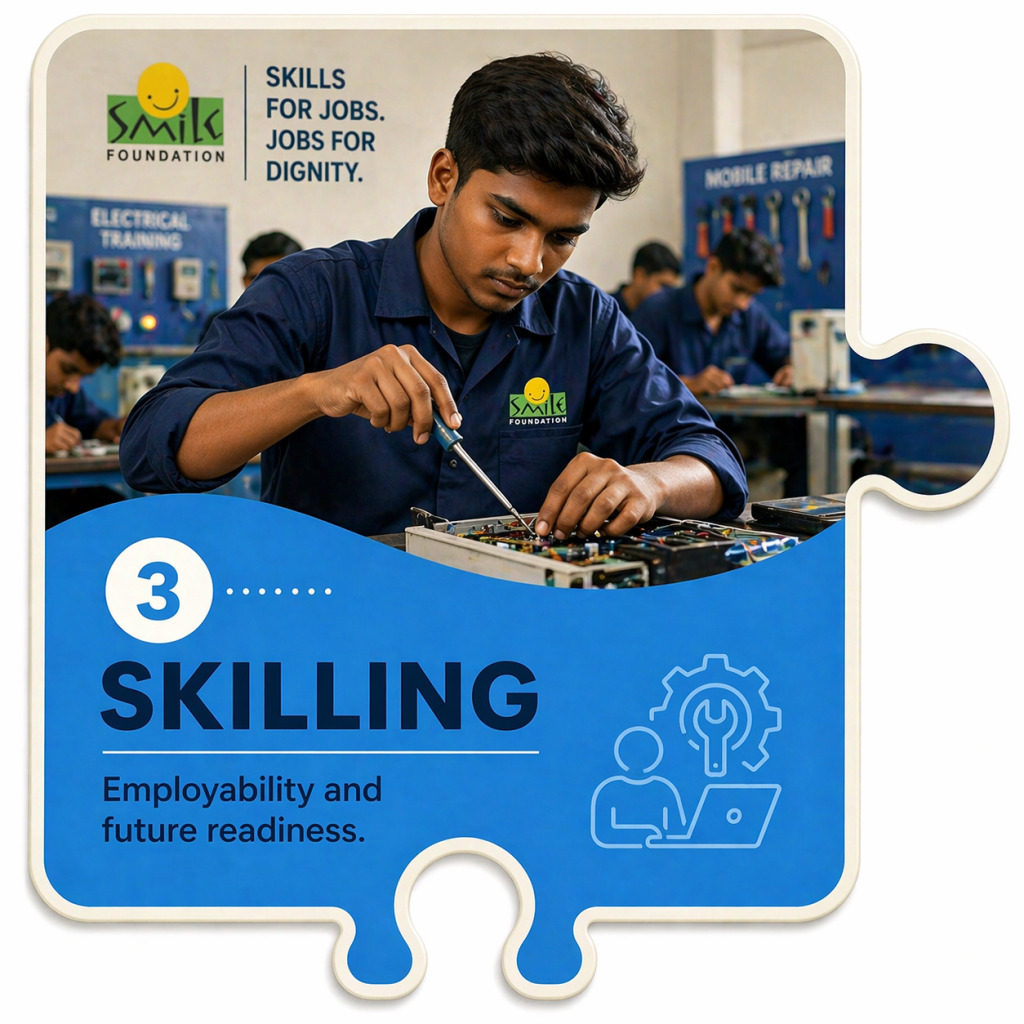
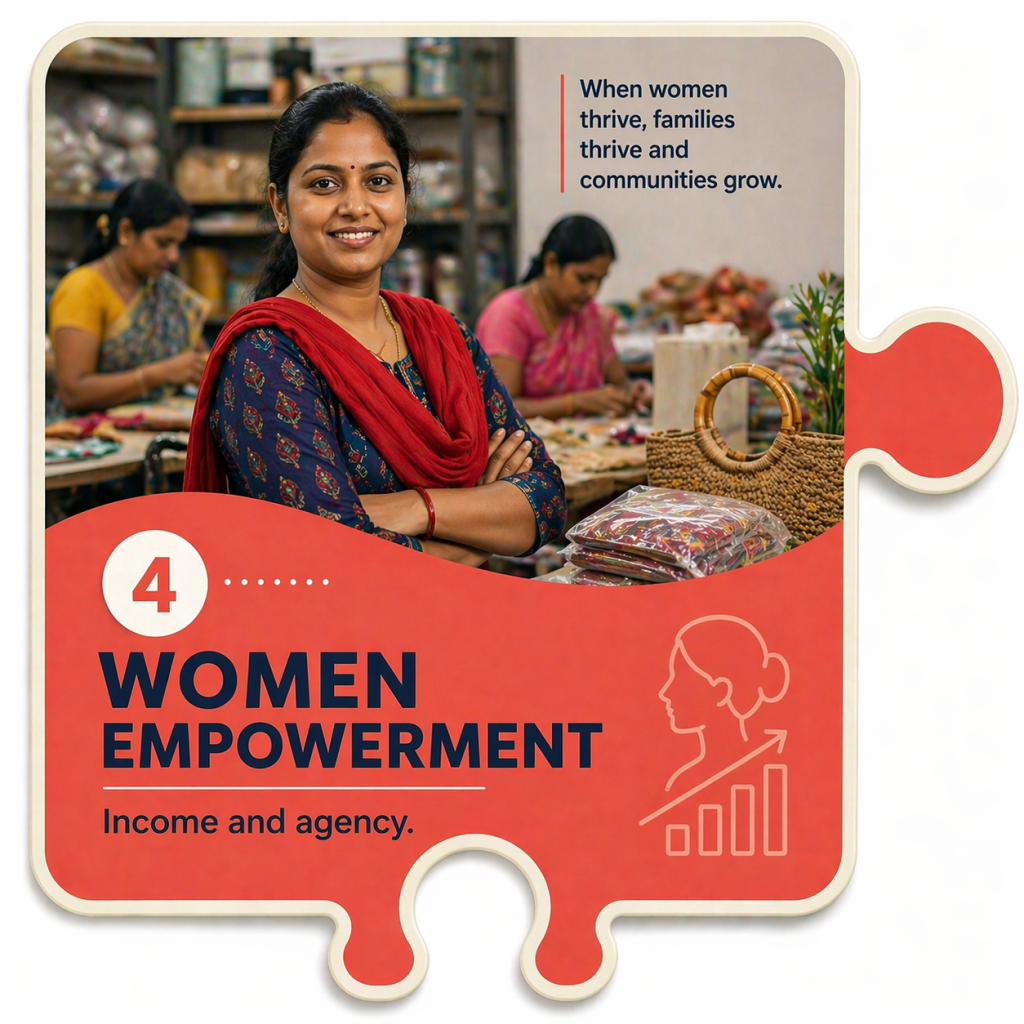
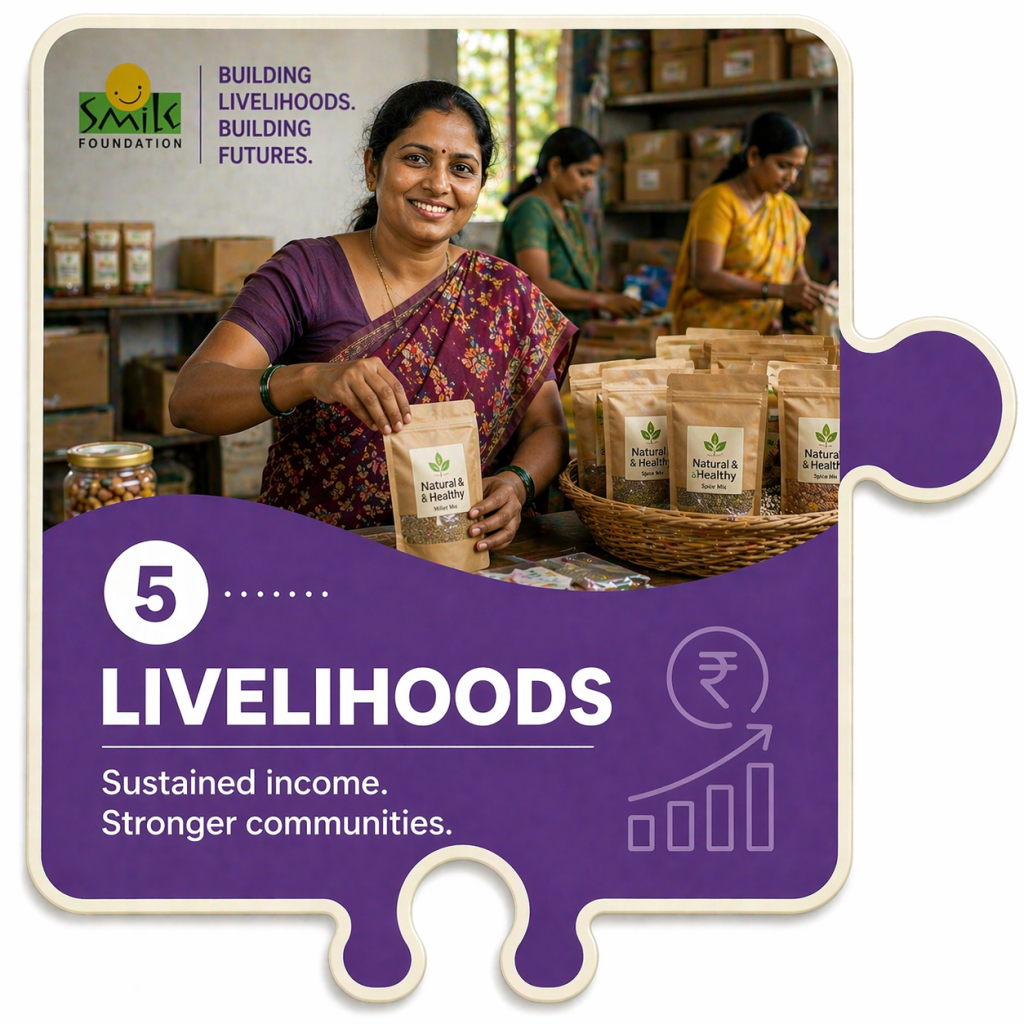
Livelihood and skilling programmes are connected to employer networks and market realities, designed not just to produce certificates but to produce employment. Women’s empowerment initiatives combine skill development with financial literacy, access to credit and market linkages — recognising that economic independence requires an ecosystem, not just a training programme.
These are not parallel programmes that happen to serve the same communities. They are designed to work together, to address the constraints that each would face in isolation and to produce the kind of compounding impact that integration makes possible.
What Integrated Development Looks Like on the Ground
In a community in Rajasthan where Smile Foundation operates across multiple programme areas, the interconnection between interventions is visible in practice. A girl enrolled in a Mission Education learning centre receives regular health screenings through the Smile on Wheels unit. Her attendance, previously disrupted by untreated anaemia, stabilises. Her learning outcomes improve.
Her mother, enrolled in a women’s livelihood programme, completes training in tailoring and receives support to access a micro-credit product. Within a year, she is generating income. A portion of that income goes toward her daughter’s supplementary learning materials and, eventually, toward keeping her in school through secondary level rather than withdrawing her for early marriage.
Her elder brother, who completed school under a previous cohort of the programme, is enrolled in a market-linked skilling initiative. He is placed with an employer partner within three months of completing the programme.
Three interventions. One family. Outcomes that none of the three would have produced alone. This is what integrated development looks like.
Why This Matters for CSR Leaders and The Future of CSR
For companies making CSR decisions, the case for integrated models is ultimately a strategic one. The return on investment — measured not in rupees per beneficiary but in the depth, durability and scale of actual change — is higher from integrated approaches than from isolated ones.
Integrated models also offer something that siloed programmes cannot: a coherent narrative. When a company can point to a community where education, health, livelihoods and women’s empowerment have moved together — where the changes are visible, connected and attributable — the story of impact is more credible and more compelling than a set of disconnected programme statistics.
For CSR leaders who are increasingly being asked to demonstrate not just what was spent but what changed, integrated development provides both the substance and the language to answer that question honestly.
The Shift Required
The transition from siloed to integrated CSR requires a shift in how programmes are designed, how impact is measured and how partnerships are structured. It requires moving from projects to ecosystems — from discrete interventions with clear boundaries to connected approaches with shared theories of change.
It requires funders who are willing to support programme design that takes time, implementation that requires coordination and impact measurement that looks beyond the next reporting cycle. It requires NGO partners who have the organisational capacity to operate across multiple programme areas without losing depth in any of them. And it requires a shared understanding, between corporate partners and implementation organisations, that the goal is not a successful programme. It is a changed community.
Integration Is Effectiveness
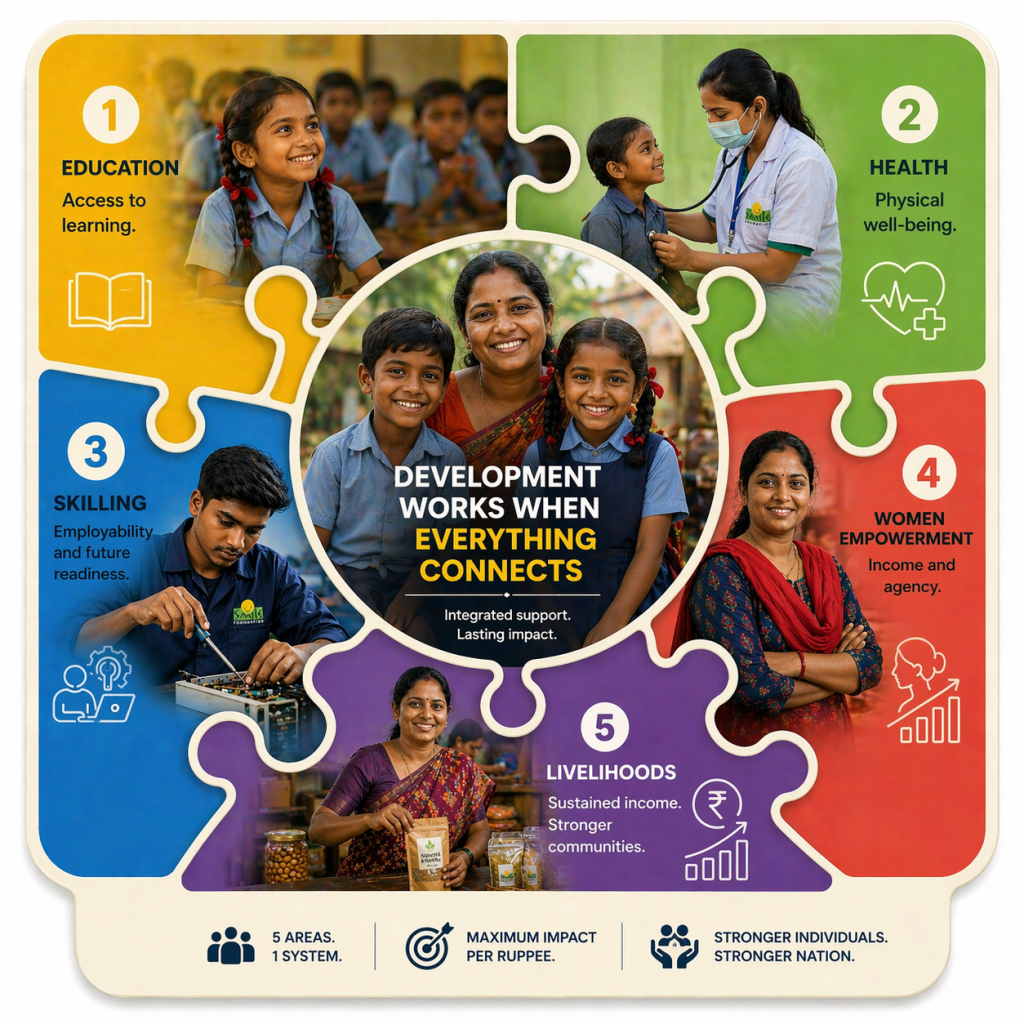
The future of CSR in India will not be determined by how much is spent. It will be determined by how intelligently it is deployed — and by whether the interventions that India’s development challenges require are designed to work together or to work in parallel.
Development succeeds when the pieces are connected. A child who is healthy enough to learn, supported by a family that has economic stability, in a community where women’s agency is growing and youth have pathways to employment — that child’s outcomes are the product of a system, not a programme.
Integration is not a more complicated way of doing CSR. It is a more honest one. It acknowledges that people’s lives are interconnected, that challenges compound each other, and that solutions must do the same.
Smile Foundation’s work is built on that acknowledgement. For CSR leaders looking to move from activity to impact, from compliance to genuine contribution, the conversation starts with the same question: are your interventions designed to work together? If not, it may be time to start building the ecosystem.
Frequently Asked Questions (FAQs)
What is integrated development in the context of CSR?
Integrated development refers to an approach in which multiple interventions — education, health, livelihood, women’s empowerment — are designed to work together rather than independently. Rather than addressing one dimension of a development challenge in isolation, integrated models recognise the interconnections between challenges and structure programmes to address them simultaneously, producing compounding outcomes that siloed approaches cannot achieve.
Why is siloed CSR insufficient for lasting impact?
Isolated programmes address one part of a problem that has many. An education programme that does not account for the health of its students will have its outcomes constrained by health-related absenteeism. A skilling programme without market linkage will produce certified graduates who remain unemployed. When interventions do not connect to each other, they leave in place the constraints that undermine their own effectiveness.
How do development challenges intersect in practice?
The connections are structural. Health affects school attendance and cognitive performance. Education affects employability. Skilling affects income. Women’s income affects household nutrition and children’s schooling. Each of these relationships is well-documented, and each means that an intervention in one area will be more or less effective depending on what is happening in the others.
Why is future of CSR moving toward integrated and outcome-based models?
Regulatory pressure, ESG integration and increasing investor scrutiny are all pushing in the same direction — away from activity-counting and toward genuine impact measurement. Companies are being asked not just what they spent, but what changed as a result. Integrated models, designed from the outset to produce outcomes rather than outputs, are better positioned to answer that question credibly.
What role do NGOs play in integrated development?
NGOs with multi-programme capacity are the essential implementation partners for integrated development. They bring the ground-level knowledge, community trust and operational infrastructure to connect interventions that might otherwise remain separate. The quality of the NGO partner — their ability to operate across education, health, livelihoods and gender without losing depth in any area — is a critical determinant of whether integration works in practice.
How can companies move from siloed to integrated CSR?
The shift begins with choosing implementation partners who operate across programme areas and have a coherent theory of change that connects them. It requires willingness to fund programme design and coordination costs, not just direct delivery. And it requires a commitment to measuring outcomes — changes in people’s lives — rather than only outputs. Multi-year funding commitments are essential; integrated change takes longer to materialise than any single programme cycle.
How does Smile Foundation’s model reflect integrated development?
Smile Foundation operates across education, healthcare, skilling, and women’s empowerment — not as parallel programmes, but as a connected system designed to address the multiple, intersecting dimensions of deprivation. The Smile on Wheels mobile health unit supports the same communities as Mission Education. Livelihood programmes are connected to financial access and market linkages. The design is intentional: each programme is aware of the others, and the outcomes are compounding rather than additive.
Is integrated development more expensive than siloed CSR?
In the short term, integrated models can require higher upfront investment in design, coordination and multi-year commitment. But the relevant comparison is not cost per activity — it is cost per outcome. Integrated approaches consistently produce more durable, more significant change per unit of investment than siloed ones. For CSR leaders focused on genuine impact rather than compliance, the return on integrated development is substantially higher.