
Most of us can recall the moment we first felt overwhelmed by money. It might have been the first time we filed taxes, applied for a loan or tried to understand why our savings never seemed to grow as expected. For many adults, financial decisions remain a source of anxiety, not because money itself is complicated, but because we were never taught how it fits into daily life.
In school, mathematics was often presented as a series of formulas to be memorised and problems to be solved on paper. Rarely was it linked to practical skills like budgeting, saving, planning for emergencies or understanding interest. As a result, many people enter adulthood fluent in equations but unfamiliar with managing real-world finances.
What we often overlook is that financial habits do not begin when a person turns eighteen. They start much earlier. By adolescence, children are already observing how money moves within their households. They notice how decisions are made, which expenses are prioritised and how financial stress is handled. Increasingly, they are also managing money digitally, through mobile wallets, online payments and apps. By the time formal financial education arrives, if it arrives at all, many habits are already ingrained.
This is why early financial literacy matters. It is not about turning children into investors or accountants. It is about equipping them with the understanding, confidence and decision-making skills they need to navigate a world where money plays a central role in daily life.
The Cost of Delaying Financial Education
In India, financial education has long been treated as an optional add-on rather than a core life skill. School curricula have evolved in many ways, introducing vocational subjects, digital learning and employability-focused courses. But the basics of managing money are often missing.
Many parents, especially those from low- and middle-income households, do not feel confident discussing finances with their children. This is not due to lack of concern, but because they themselves were never taught these skills. As a result, children are left to learn about money through observation, experimentation and sometimes costly mistakes.
At the same time, the financial landscape has changed rapidly. Digital payment platforms, instant credit, buy-now-pay-later schemes and online investment products are more accessible than ever. While these tools offer convenience, they also carry risks for those who lack foundational knowledge. Without an understanding of interest, repayment cycles or financial planning, a small misstep can quickly escalate into long-term debt or financial instability.
Delaying financial education means children enter adulthood unprepared for these realities. It places the burden of learning entirely on individuals, often when the consequences of mistakes are far more serious. Early financial education offers a preventive approach, helping young people develop healthy habits before challenges arise.
Why Financial Literacy Is Especially Critical for Girls
While financial literacy is essential for all children, it holds particular importance for girls and young women. In many households, girls are taught the value of saving and thrift from an early age. However, they often have limited exposure to earning, investing, negotiating or managing credit.
This imbalance has long-term consequences. Women who lack financial knowledge may feel hesitant to ask questions, challenge decisions or plan independently. Financial literacy changes this dynamic. It fosters confidence, enabling women to compare options, assess risks and make informed choices.
When girls receive financial education early, the benefits extend beyond the individual. Financially informed women play a stronger role in household budgeting and long-term planning. They influence how families save, spend and prepare for emergencies. Over time, these shifts reshape intergenerational attitudes toward money, creating more resilient households.
Early financial education is therefore not just about numbers. It is about agency, independence and the ability to participate fully in economic life.
Compounding: The Power of Starting Early
One of the most powerful financial concepts is also one of the simplest: compounding. It illustrates how small, consistent efforts grow over time.
Consider two people. One begins saving a modest amount in their early twenties and continues steadily. The other waits until their thirties and tries to compensate by saving more aggressively. Despite contributing a similar total amount, the early saver often ends up with significantly more. Time, not just money, does the heavy lifting.
For young learners, compounding offers an important lesson in patience and persistence. It shows that progress does not always need to be immediate to be meaningful. By understanding this early, children learn the value of consistency over quick gains. They begin to see saving not as a sacrifice, but as an investment in future stability.
Saving: Building Security and Confidence
Saving is often described as a grown-up responsibility, but it is also a powerful tool for building confidence. A child who learns to save understands that they can plan ahead, manage uncertainty and work toward goals without relying entirely on others.
Simple practices make a difference. Dividing an allowance into different categories, tracking spending through a basic app or saving toward a specific goal helps children see how money flows. They learn how quickly small expenses add up and how waiting can lead to more meaningful rewards.
Saving also builds emotional resilience. Knowing there is a safety net, however small, reduces anxiety and encourages thoughtful decision-making. Over time, this sense of control becomes a foundation for financial independence.
Budgeting: Learning to Make Choices
At its core, budgeting is about understanding choices. It teaches children to distinguish between needs and wants, to prioritise and to plan within limits.
When budgeting becomes a shared family activity, it offers valuable insights. Children see how decisions are made, how trade-offs are negotiated and how responsibilities are balanced. They move from being passive observers to active participants in household planning.
These lessons extend beyond money. Budgeting fosters accountability, critical thinking, and an appreciation for long-term goals. It helps young people understand that every choice carries an opportunity cost, a concept that applies to many areas of life.
Making Mathematics Meaningful
For many students, mathematics feels abstract and intimidating. Yet, it is deeply embedded in everyday life. Percentages, ratios and basic arithmetic shape how we save, borrow and spend.
When students learn about interest through real examples, they begin to see why starting early matters. Budgeting relies on addition and subtraction to ensure expenses do not exceed income. Understanding loans involves grasping repayment schedules and interest rates.
By connecting mathematics to real-life financial decisions, learning becomes relevant and empowering. Maths shifts from being a subject to be feared to a tool that supports personal goals and financial well-being.
Building Financial Literacy Through Community Programmes
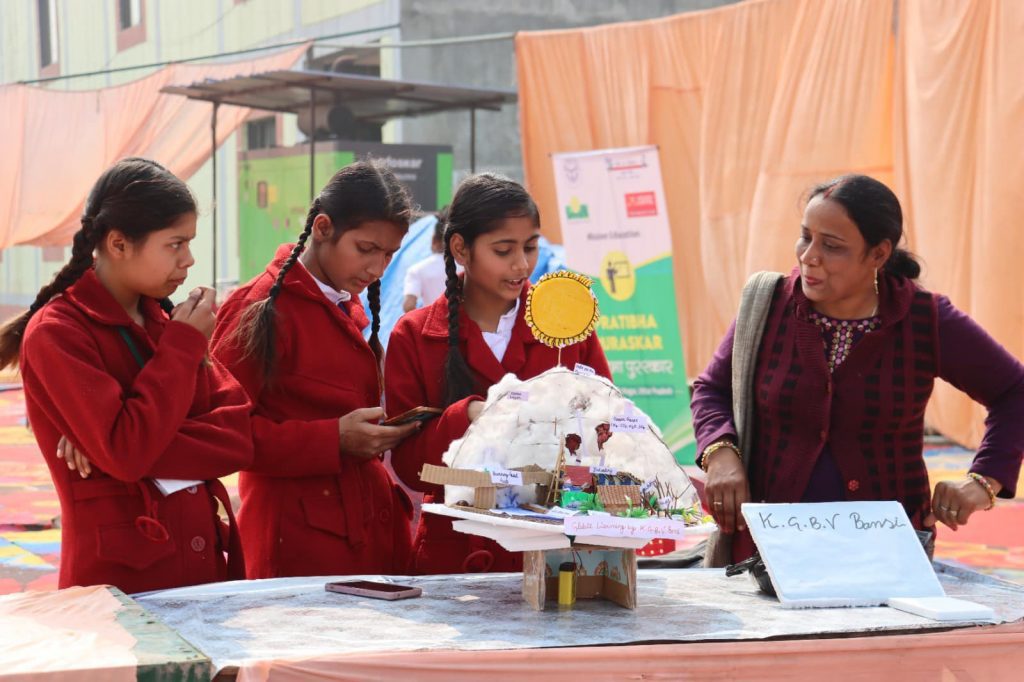
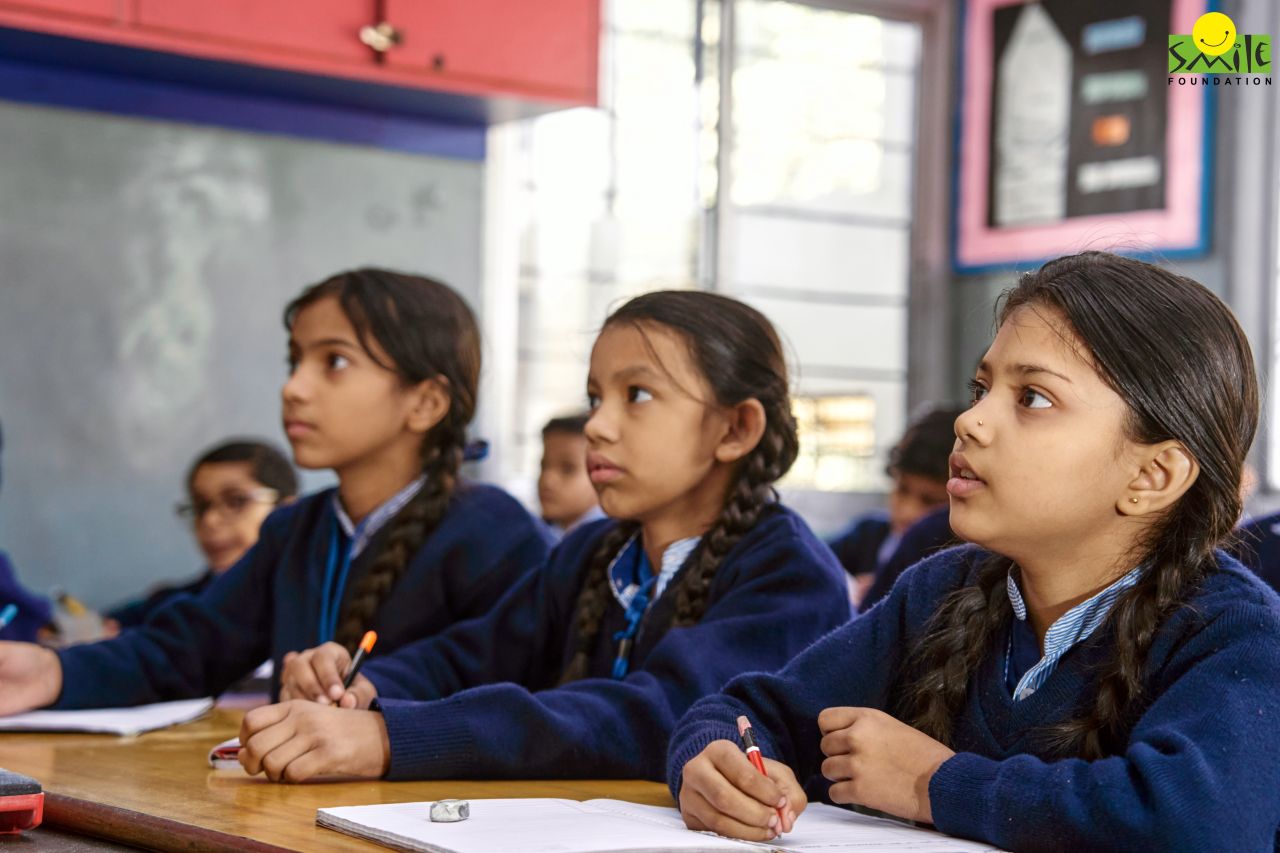
Recognising the importance of early financial education, Smile Foundation has integrated financial literacy into its broader education and empowerment initiatives. One such effort was implemented in Telangana, where rural students often face limited exposure to financial concepts despite growing digital access.
Supported by the Flipkart Foundation, the programme was designed to address real-life challenges faced by students and their families. Sessions focused on practical skills such as saving, budgeting, understanding digital payments and recognising financial risks. Rather than abstract lessons, the programme used familiar scenarios to make learning accessible and relevant.
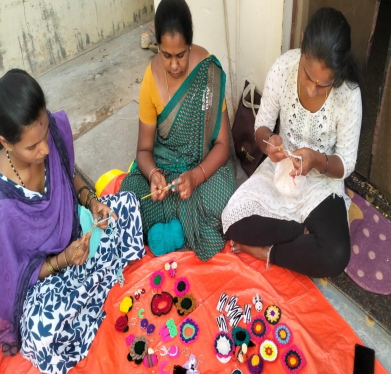
Smile Foundation’s Swabhiman project further extends this work by focusing on women’s empowerment. Through structured sessions on financial literacy, women gain the tools to manage household finances, plan for the future and participate more confidently in economic decisions. These interventions recognise that financial knowledge is a critical component of broader social and economic empowerment.
Building Economic Resilience
Teaching children and adolescents how money works prepares them for a world that increasingly demands informed financial decisions. Habits formed early in life tend to persist, shaping outcomes well into adulthood. When financial education begins early, it reduces long-term risks, strengthens families and builds economic resilience.
Financial literacy is not a luxury. It is a foundational life skill. By embedding it into education systems and community programmes, we create pathways for greater independence, particularly for girls and women. In doing so, we strengthen not just individual futures, but the social and economic fabric of the nation.
Smile Foundation’s work demonstrates that early, context-sensitive financial education is both possible and impactful. By focusing on behaviour, confidence and practical skills, such initiatives help young people navigate complexity with clarity and purpose.