
This year’s Union Budget unveiled a new initiative: over the next five years, internships at 500 leading companies will be offered to 10 million youth, with each receiving ₹5,000 monthly and an additional one-time ₹6,000 assistance. Companies will contribute to training costs and cover 10% of intern allowances using their CSR funds—a strategy highlighted by The Times of India.
Governments have long focused on youth employment and skilling—and now CSR initiatives are playing a pivotal role in preparing young Indians for the workforce.
What Is CSR?
Corporate Social Responsibility (CSR) is a business model where companies embed social, environmental, and ethical priorities into operations and decision-making. It includes eco-friendly practices, fair work policies, community engagement, and philanthropy.
In India, CSR is legally mandated under the Companies Act, 2013 (effective April 2014). Corporates with certain financial thresholds (net worth ₹500 crore+, turnover ₹1,000 crore+, or profit ₹5 crore+) must spend at least 2% of their average net profits on CSR activities.
The Youth Employability Challenge
By 2024, India’s youth population is projected at 420 million (29% of the nation). By 2047, the working-age population (15–64) will reach 1.1 billion. Despite this, UNICEF and the Education Commission report over 50% of youth lacking necessary education and skills. According to the India Skills Report 2021, nearly half of graduates are deemed unemployable. The unemployment rate also tripled between 2012 (2.1%) and 2018 (6.1%).
Why Skill Gaps Persist
Dr. Prahalathan KK of Chennai-based nonprofit Bhumi explains: students from top-tier institutions typically have no difficulty finding work, but those in lesser-known colleges often lack employable skills. Philanthropy and CSR can help these vulnerable students gain skills and experience, closing the opportunity gap.
Government Skilling Programmes
- Pradhan Mantri Kaushal Vikas Yojana (PMKVY) offers industry-relevant vocational training.
- Skill India Mission, launched in 2015, strengthens skilling infrastructure to meet market demands.
CSR’s Role in Enhancing Employability
CSR programmes align corporate resources with skill needs. For example, Bhumi collaborates with government schools to improve learning, provide scholarships, and deliver vocational training in smaller towns. Such initiatives boost employability in Tier‑2 and Tier‑3 areas.
Some notable corporate CSR programmes include:
- Tata STRIVE: Offers domain and soft-skills training to underprivileged youth for employment or entrepreneurship.
- Infosys Springboard: Aims to train over 10 million individuals in digital literacy by 2025, through courses in collaboration with Coursera and Harvard Business Publishing.
CSR Beyond Monetary Support
CSR isn’t limited to funding. Tarun Mahadevan of Advantage Foods highlights non-monetary contributions: his culinary training helps youth—including those with special needs—develop practical vocational skills. Popcause, led by two SPASTN-trained students, shows how skill-focused CSR can transform lives.
NGO-Led Youth Upskilling
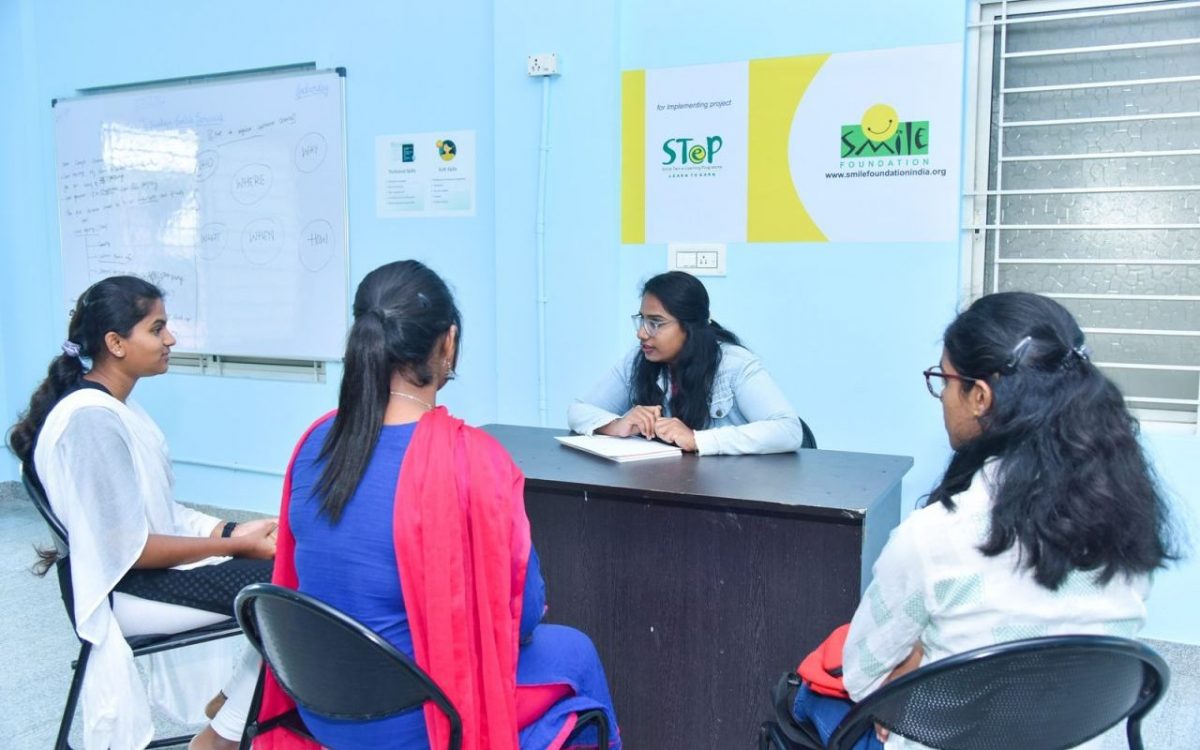
The Smile Foundation promotes STEM and experiential learning to nurture critical thinking, creativity, and problem-solving—skills essential for future-ready youth.
Project Manzil in Rajasthan:
- Focuses on counselling and vocational skills for 90,000+ girls.
- Training provided in areas such as IT, healthcare, beauty, retail, agriculture, tourism, and more.
- Currently reaching 44,000+ girls in grades 9–12 across six districts.