If you are wondering how to sponsor a child for education in India, the process is more accessible than most people realise. You choose a registered NGO, select a sponsorship or one-time donation option, and your contribution funds school fees, books, uniforms or learning support for a specific child or community. It typically takes less than ten minutes to start.
But the decision deserves more than ten minutes of thought. Around 46 million children between the ages of 6 and 17 are currently out of school in India, representing close to 17 percent of that age group. Many more are enrolled but at risk of dropping out due to poverty, household responsibilities or lack of support at home.
This guide walks you through what child sponsorship actually means, how to do it safely, what your money covers and how to choose an NGO you can trust.

Why Child Education Sponsorship Matters in India
Education is one of the strongest predictors of a child’s future income, health and independence. Yet for millions of Indian families, the cost of staying in school, not just tuition, but uniforms, transport, books and the income a child could otherwise earn, remains out of reach.
This is where sponsorship plays a meaningful role. It does not replace government schooling systems. It fills the specific gaps that prevent a child from attending school regularly or staying enrolled long enough to complete their education.
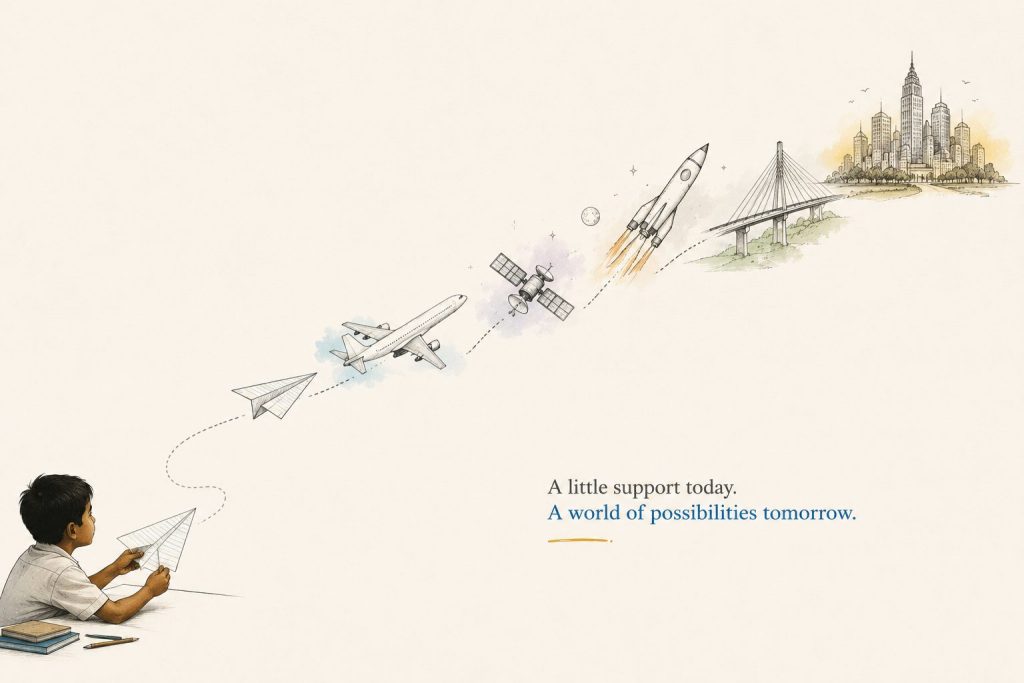
Number of Out-of-School Children in India
The scale of the problem is significant. According to UDISE+ 2024-25 data released by the Ministry of Education, approximately 46 million children aged 6 to 17 remain out of school in India. The national secondary-level dropout rate stood at 11.5 percent in 2024-25, and retention at the secondary stage was just 47.2 percent, meaning fewer than half of children who begin school actually complete it through senior secondary level.
The reasons are rarely about a single barrier. Poverty, migration, child labour, household duties, and for many girls, early marriage or safety concerns, all combine to push children out of classrooms. This is precisely the gap that sponsorship programmes are designed to close.
What Does Sponsoring a Child’s Education Mean
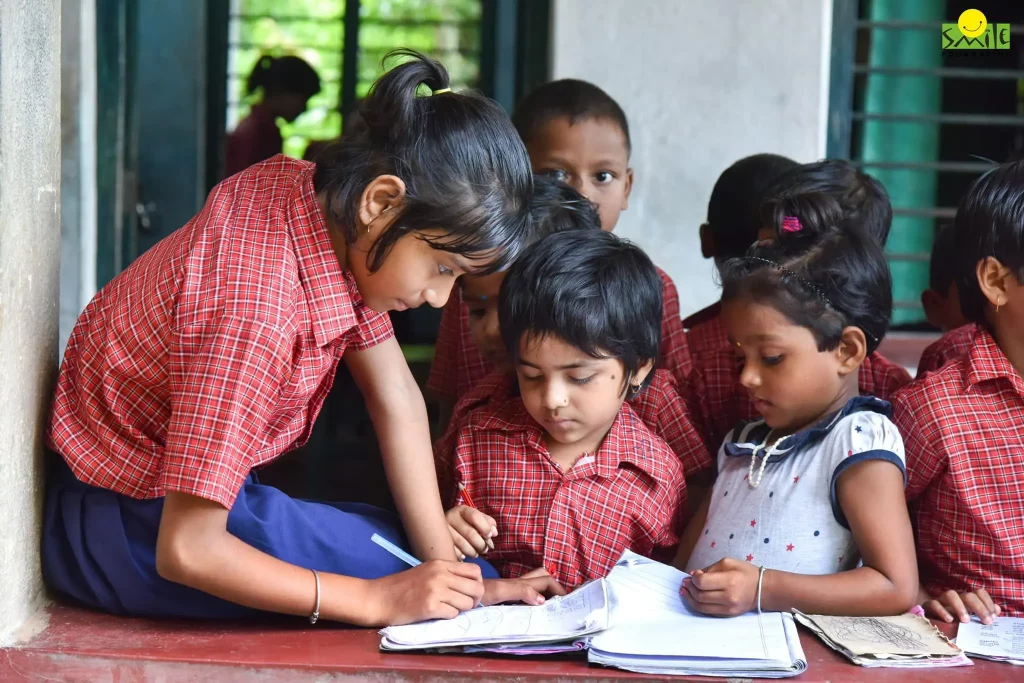
Child sponsorship is a structured way of supporting a child’s ongoing education through an NGO, rather than donating to a cause in the abstract. Most reputable programmes in India do not connect you directly with an individual child for privacy and safeguarding reasons. Instead, your contribution supports a specific child’s educational journey, or a cohort of children in a particular community, through the NGO’s existing programmes.
This distinction matters. Direct, unmediated contact between donors and individual children raises serious child protection concerns, which is why credible NGOs structure sponsorship through institutional channels, with trained staff managing all communication and fund allocation.
What Your Donation Covers — Fees, Books, Uniforms
Depending on the NGO and the programme, your sponsorship typically funds a combination of the following.
- School or learning centre fees, where applicable
- Textbooks, stationery and learning materials
- School uniforms and footwear
- Transport to and from school
- Remedial learning support for children who have fallen behind
- Nutritional support, since hunger directly affects a child’s ability to learn
- Teacher salaries and classroom infrastructure in NGO-run learning centres
Most NGOs publish a breakdown of how a fixed monthly or annual contribution translates into these specific costs. Always ask for this breakdown before you commit. A credible organisation will have one ready.
How to Sponsor a Child for Education in India
Sponsoring a child’s education does not require a large financial commitment or a long-term contract in most cases. Many programmes allow you to start small and scale up over time.
The process is broadly the same across most established NGOs in India, with small variations in platform and reporting style.
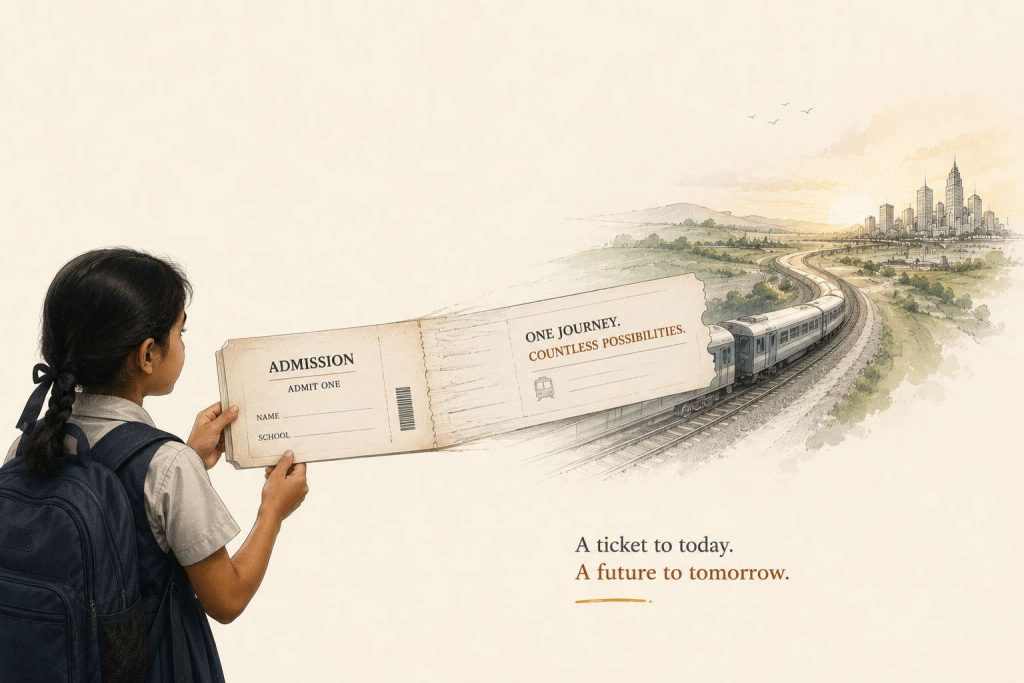
Step-by-Step Process to sponsor a child for education through NGOs
- Choose a verified NGO. Confirm the organisation holds valid Darpan registration, 12A and 80G certification before donating anything.
- Select a sponsorship plan. Most NGOs offer monthly, quarterly or annual sponsorship options, alongside one-time donation choices.
- Decide on individual or programme-based giving. Some NGOs link you to updates on a specific child’s progress, while others provide aggregate impact reports across a learning centre or region.
- Complete the donation online. Use a secure, traceable payment method, net banking, UPI, debit or credit card, rather than informal transfers.
- Collect your receipt and 80G certificate. This is essential for both transparency and your tax filing.
- Track your impact. Reputable NGOs send periodic updates, progress reports or newsletters showing how funds are being used.
A soft but important note here: take a moment to verify an NGO’s registration and financial transparency before donating, the same way you would research any organisation before a financial commitment. This single step protects both your generosity and the children it is meant to reach.
Trusted NGOs for Child Education Sponsorship in India
India has several long-established, well-regulated NGOs working specifically in child education. When evaluating any organisation, look for a clear, multi-year track record, transparent financial reporting and active registration across the relevant legal frameworks.
Smile Foundation runs Mission Education, a flagship programme supporting children from marginalised communities, including those from low-income families, tribal regions and disaster-affected areas, in alignment with the National Education Policy 2020 and Sustainable Development Goal 4. The organisation also runs Shiksha Na Ruke, which helps vulnerable children continue their education despite disruption, and currently supports the education of more than 160,000 children across 27 states.
Other organisations with a recognised presence in this space include CRY (Child Rights and You), which has worked on children’s rights and education access for several decades, and Bal Raksha Bharat (Save the Children India), known for combining education support with child protection work.
FCRA-Registered NGOs You Can Trust
If you plan to donate from outside India, or your NGO of choice receives international funding, FCRA registration matters. As of 2026, only around 16,000 NGOs in India hold active FCRA registration, a meaningfully smaller and more tightly regulated group following stricter compliance rules introduced in 2020. Always confirm an NGO’s current FCRA status directly through the Ministry of Home Affairs portal before making a cross-border donation.
Is Education Free for Girl Children in India?

Under the Right to Education Act, 2009, all children between the ages of 6 and 14, including girls, are entitled to free and compulsory elementary education in government schools. This is a legal right, not a discretionary benefit.
In practice, however, “free” does not mean cost-free for families. Uniforms, transport, books beyond the basic curriculum, and the opportunity cost of a girl’s time at home or in paid work often remain real barriers, even where tuition itself is free. This is one reason girls’ dropout rates rise sharply after the elementary level, particularly around the transition to secondary school.
Government schemes such as Samagra Shiksha, Kasturba Gandhi Balika Vidyalaya and the National Scheme of Incentive to Girls for Secondary Education aim to reduce these additional costs. NGO sponsorship programmes often work alongside these schemes, covering the specific gaps, transport, materials, mentoring support, that government provisions do not fully address.
Tax Benefits When You Sponsor a Child for Education
Donations to NGOs with valid 80G registration are eligible for tax deductions under the Income Tax Act, 1961. Depending on the specific category of the receiving organisation, you can claim either 50 percent or 100 percent of your donated amount as a deduction from your taxable income, subject in some cases to a ceiling of 10 percent of your adjusted gross total income.
A few practical points worth knowing.
- Cash donations above ₹2,000 are not eligible for an 80G deduction. Use UPI, net banking, cheque or card payments instead.
- You will need Form 10BE, issued by the NGO, as formal proof of donation when filing your return.
- The 80G deduction is only available if you file under the old tax regime, not the new one.
- NRIs holding an Indian passport can also claim 80G deductions on donations made in Indian rupees.
Always verify an NGO’s current 80G registration status directly on the Income Tax Department’s portal before donating, since registrations can lapse or require periodic renewal.
If your organisation runs a Corporate Social Responsibility programme, child education sponsorship through a registered NGO is also a recognised and impactful way to fulfil CSR obligations under the Companies Act, 2013, while supporting long-term, measurable outcomes in a community.
Making Your Decision
Choosing how to sponsor a child for education in India ultimately comes down to three things: verifying the organisation, understanding exactly what your contribution funds, and selecting a giving structure, monthly, annual or one-time, that fits your own circumstances comfortably.
This is not a decision to rush, but it also need not be complicated. A few minutes of verification, paired with a clear understanding of where your money goes, is usually all it takes to give with confidence.
If you are exploring a long-term way to support a child’s education in India, you can review Smile Foundation’s Mission Education and Shiksha Na Ruke programmes to understand how sponsorship translates into real classroom outcomes for children who need it most.

FAQs — How to Sponsor a Child for Education in India
How can I sponsor a child for education in India?
You can sponsor a child for education by choosing a registered, 80G-certified NGO and selecting a monthly, quarterly or annual sponsorship plan through their official website. Most NGOs link your contribution to a specific child’s progress or a learning centre’s overall outcomes.
What does child education sponsorship include?
Sponsorship typically covers school fees, books, uniforms, transport, remedial learning support and sometimes nutrition. The exact breakdown varies by NGO, so always ask for a clear cost breakdown before donating.
Which NGOs are trustworthy for sponsoring child education in India?
Look for NGOs with a multi-year track record, valid Darpan, 12A and 80G registration, and transparent annual reports. Smile Foundation, CRY and Bal Raksha Bharat are examples of organisations with established, verifiable education programmes in India.
Is education free for girl children in India?
Under the Right to Education Act, elementary education from ages 6 to 14 is legally free and compulsory for all children, including girls. However, indirect costs like uniforms, transport and materials often remain a barrier, which is why many sponsorship programmes target these specific gaps.
How do I donate for a girl child’s education in India?
Choose a verified NGO running girl-focused education programmes, check their 80G and Darpan registration, and select a sponsorship or donation plan through their official website using a traceable payment method.
What is the difference between child sponsorship and a one-time donation?
Sponsorship typically involves a recurring contribution, monthly or annual, tied to an ongoing programme or child’s continued education. A one-time donation funds immediate needs but does not carry the same long-term, structured support.
Do I get tax benefits when I donate for child education?
Yes, donations to NGOs with valid 80G registration qualify for a tax deduction of either 50 percent or 100 percent of the donated amount, depending on the organisation’s specific 80G category, provided the donation is made through a non-cash mode above ₹2000.
How much does it cost to sponsor one child’s education in India?
Costs vary widely by NGO, region and the level of support provided, ranging from a few hundred rupees a month for basic learning support to higher amounts for comprehensive sponsorship including fees, materials and nutrition. Most NGOs publish exact figures on their sponsorship pages.
How do I verify if an NGO is genuine before donating?
Check the NGO’s Darpan Unique ID on the government’s NGO Darpan portal, confirm its 80G and 12A registration on the Income Tax Department’s website, and review its most recent audited annual report for financial transparency.
Can I sponsor a child for education through CSR funds?
Yes, education sponsorship through a registered NGO is a recognised way for companies to fulfil Corporate Social Responsibility obligations under the Companies Act, 2013, provided the NGO meets the eligibility criteria for CSR partnerships.