
India is home to the world’s largest youth population, a demographic asset that could drive long-term economic growth—if supported effectively. However, the paradox of a young, educated population facing mounting unemployment continues to challenge policymakers, educators, and development practitioners. As the job market becomes increasingly competitive and sector-specific, structured placement support has emerged as a critical link between education and employability, particularly for youth from underserved backgrounds.
Placement-oriented interventions, especially those integrated with skills training and mentorship, offer young people a pathway not just to jobs—but to confidence, agency, and long-term upward mobility.
The transition from classroom to career
Placement support serves as a crucial bridge between academic learning and real-world employment. It introduces students to sector-specific career paths, provides access to reputable employers, and fosters soft skills essential for workplace readiness. Beyond this technical value, placements significantly impact young people’s self-esteem, financial independence, and social mobility.
Importantly, structured placement programs promote equity and access in higher education. When colleges and training centres proactively engage with employers, offer preparatory sessions, and ensure accessibility in interviews, they create pathways for students across all backgrounds—including first-generation learners, women, and persons with disabilities.
Navigating a youth employment crisis
Youth unemployment is not a cyclical concern in India; it is a structural issue. Despite increasing enrollment in higher education, the transition to stable employment remains fraught. According to the 2024 Department of Economic Affairs evaluation, only 51% of final-year students in India were deemed employable.
This is compounded by worrying placement trends. According to media reports, placement rates at many higher education institutions were expected to fall between 30% and 70% in 2024. Global hiring slowdowns, layoffs in tech and services, and a 15–30% drop in campus recruiters, particularly in Tier 2 institutions, have further strained the transition from college to work.
India’s large middle class increasingly views quality placements as the single most important factor in college selection, more so than faculty or academic rankings. In this climate, the role of placement support is not optional—it is foundational to the promise of education.
What effective placement support looks like
To address this challenge, educational institutions and development partners have introduced a variety of interventions to build employability:
- Vocational training and certification aligned with labour market demands
- Industry partnerships to enable real-time skill alignment
- Internships, apprenticeships, and job shadowing to foster experiential learning
- Soft skill development in communication, problem-solving, and workplace ethics
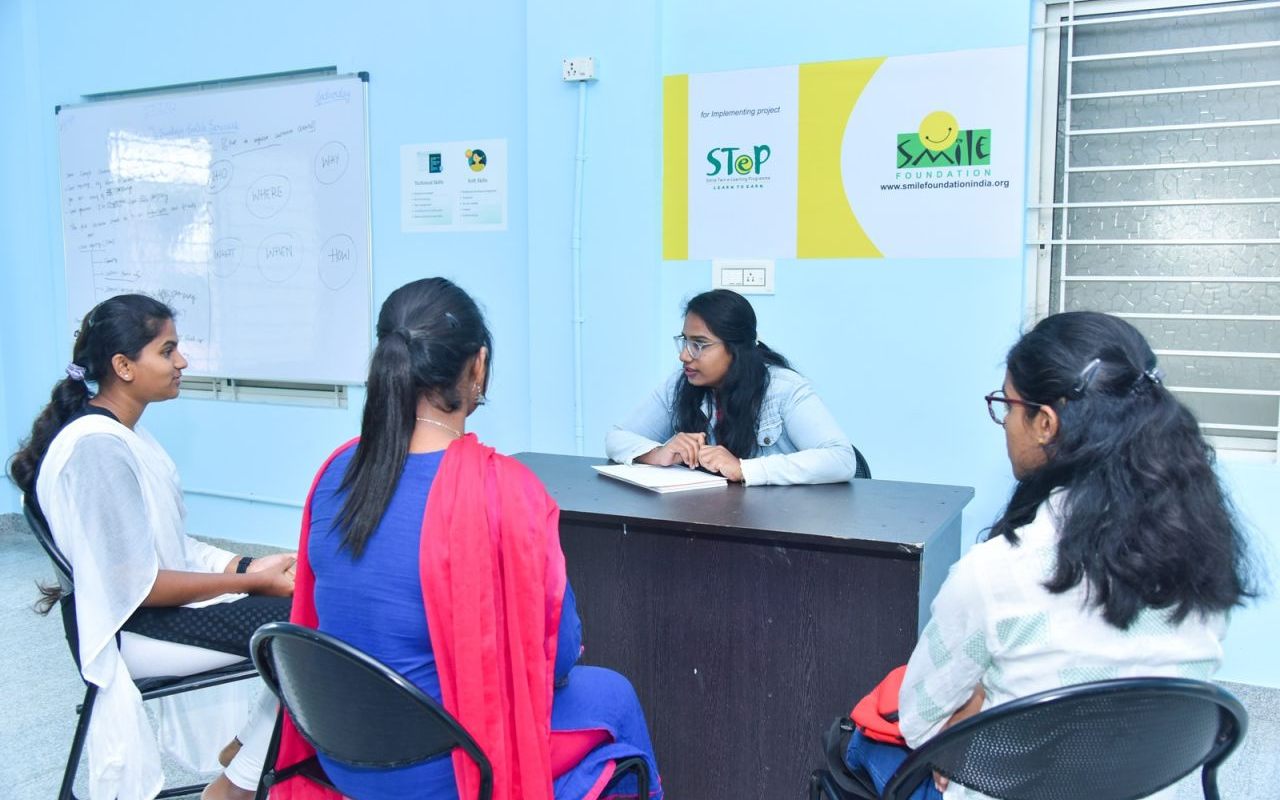
- Mentorship and coaching to build confidence and guide job-seeking behaviour
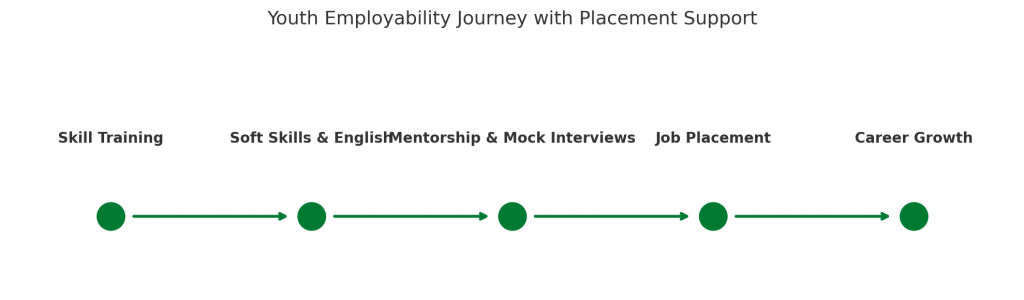
A growing number of initiatives now combine these components into comprehensive employment programs. By closing the skills gap, building professional networks, and providing job placement services, such efforts address both the supply- and demand-side constraints of youth unemployment.
Evidence of impact: Confidence and career trajectories
Several studies have shown the positive correlation between structured placements and long-term employment outcomes. One analysis found that students who completed formal work placements were 50% more likely to secure a job with higher starting salaries than those who did not. A 2023 study of engineering undergraduates reported a 5.7% increase in academic performance among students who participated in placements, indicating improved motivation and better integration of classroom and workplace learning.
Placements also help in developing resilience and adaptability, both critical for navigating the complexities of the modern workforce.
Smile Foundation’s skill and placement ecosystem
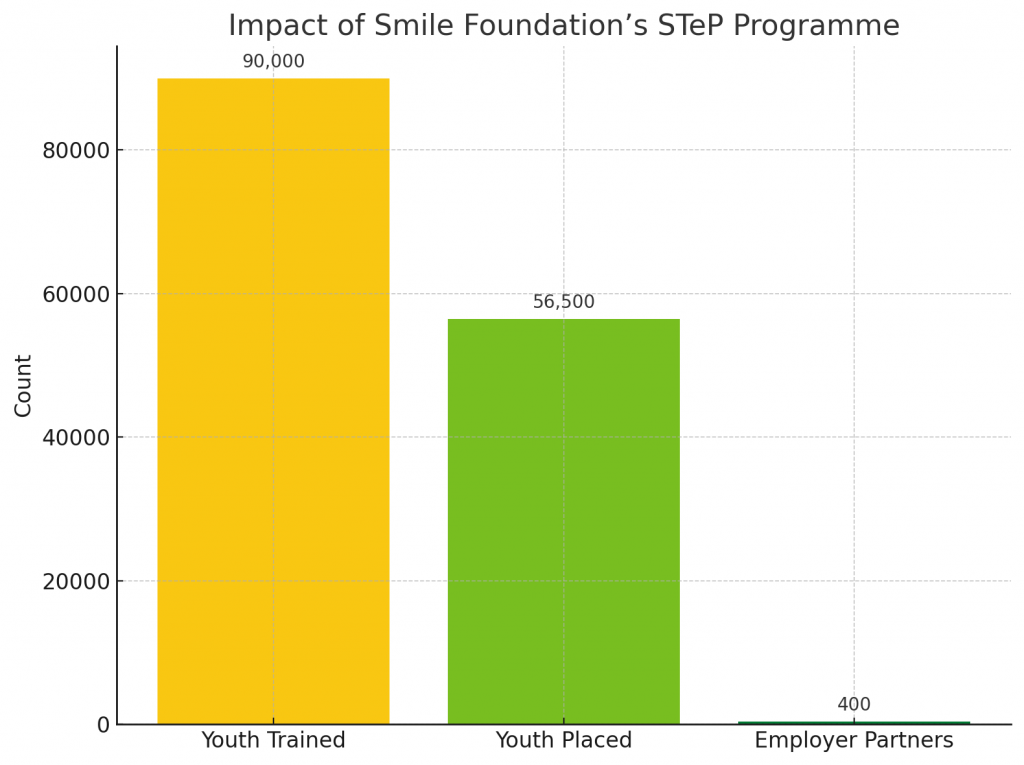
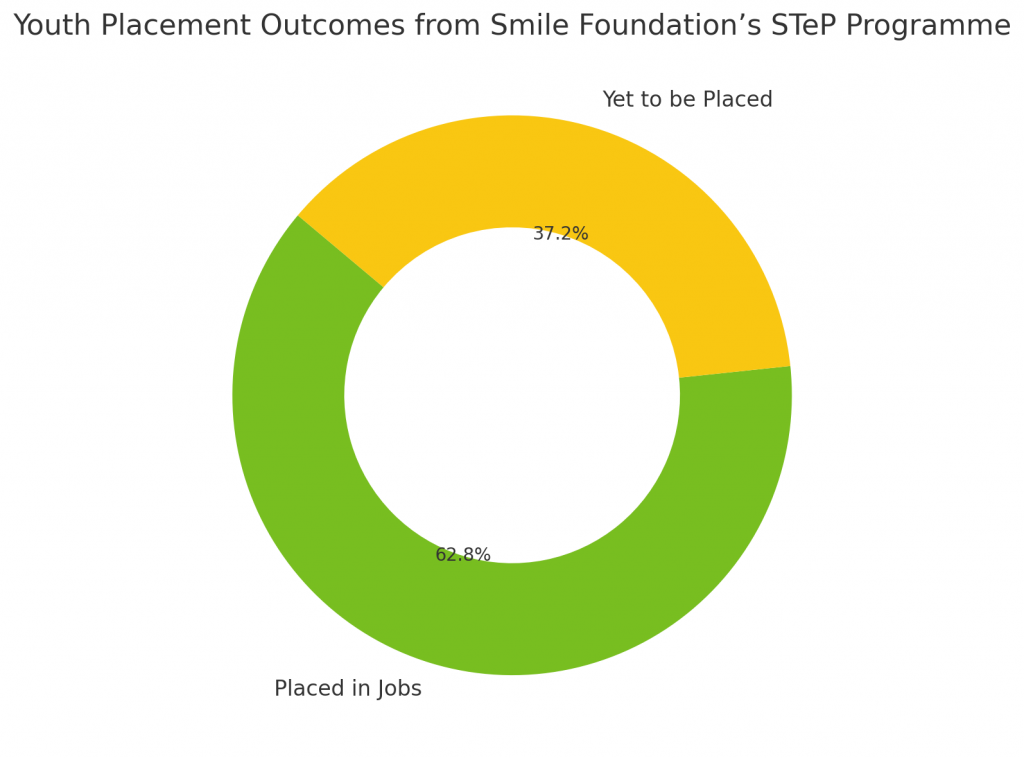
Through its flagship Smile Twin e-Learning Programme (STeP), Smile foundation offers comprehensive training in employability, digital literacy, healthcare, retail, banking, and communication skills across 74 centres in 8 states. With over 90,000 youth trained and more than 56,500 placed in jobs via partnerships with 400+ employers, STeP exemplifies how grassroots implementation can be scaled for systemic impact.
Smile’s iTrain on Wheels, developed with Berger Paints, extends this mission to the informal sector. The mobile training programme has upskilled over 90,000 painters across 24 states, equipping them with both technical and entrepreneurial skills to transition into stable livelihoods.
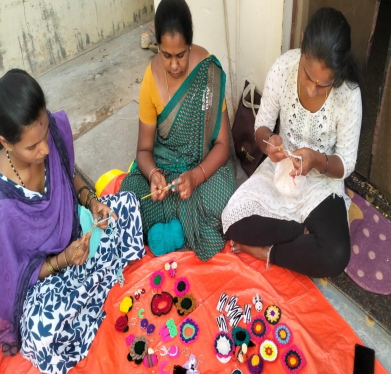
Another example is Smile Foundation’s partnership with Maxvision Social Welfare Society in Gurugram, where youth receive training in basic management, retail skills, spoken English, personality development, and computer literacy. These courses help shift employment trajectories from informal wage labour to formal, white-collar sectors—a transformation that enhances not just economic status, but also dignity and social inclusion.
Gender inclusion through placement
Smile Foundation’s Project Manzil exemplifies the gendered dimensions of placement support. Through this initiative, approximately 14,000 adolescent girls have received employability training, and an additional 5,000 have participated in on-the-job training placements. Manzil’s girl-centred approach—delivered both in and out of school—emphasises life skills, leadership, and stakeholder engagement to counteract socio-economic drivers of early marriage and school dropout.
Data consistently show that adolescent girls with vocational skills and job prospects are less likely to marry early and more likely to contribute to household decision-making. Empowerment through economic agency allows girls to negotiate timelines for marriage, pursue higher education, and envision alternative futures. Thus, placement support becomes a powerful strategy for advancing gender equality.
Policy implications and the way forward
Placement support is not merely a placement cell function—it is a policy imperative with macroeconomic relevance. India’s ability to leverage its demographic dividend will depend on how well it transitions millions of young people from classrooms into sustainable employment.
To maximise impact, the following strategies are recommended:
- Integration with national skilling frameworks: Placement should be a core outcome of government initiatives like Skill India and PMKVY, not a peripheral service.
- Incentivising industry partnerships: Employers should be encouraged—through tax credits or CSR incentives—to hire from vocational and NGO-run training programmes.
- Mainstreaming soft skills training: Curriculum reform should integrate employability skills across disciplines, especially in general degrees.
- Support for non-urban youth: Rural and peri-urban youth face significant barriers to mobility and exposure. Mobile training models and tele-interview platforms can help bridge this divide.
- Sustained mentorship: Beyond placement, mentoring must continue to ensure retention, performance, and growth in first jobs.
- Monitoring and evaluation: Data on placement outcomes, wage levels, retention, and career growth should be used to iterate and improve program design.
In a world where academic qualifications no longer guarantee employment, placement support is not a service—it is a social equaliser. By combining training, confidence-building, and strategic linkages to employers, placement-oriented programmes offer youth the opportunity to participate meaningfully in the economy.
As India faces both an employment crisis and a demographic opportunity, initiatives like those led by Smile Foundation show that with the right ecosystem—grounded in inclusion, industry engagement, and mentorship—youth potential can translate into prosperity.
Empowered with skills and guided into careers, today’s young job-seekers are not just looking for work—they are building futures.