
Summary: Key Takeaways
- Unpaid care work is a major barrier to women’s workforce participation globally
- Women spend 3x more time on unpaid care than men
- Over 708 million women are excluded from the labour force due to care responsibilities
- Unpaid care contributes significantly to economies but remains unrecognised and unpaid
- Lack of public services increases the burden on women
- Organisations like Smile Foundation help reduce and redistribute unpaid care through education, healthcare and livelihood programmes
- Addressing unpaid care is essential for inclusive economic growth and gender equality
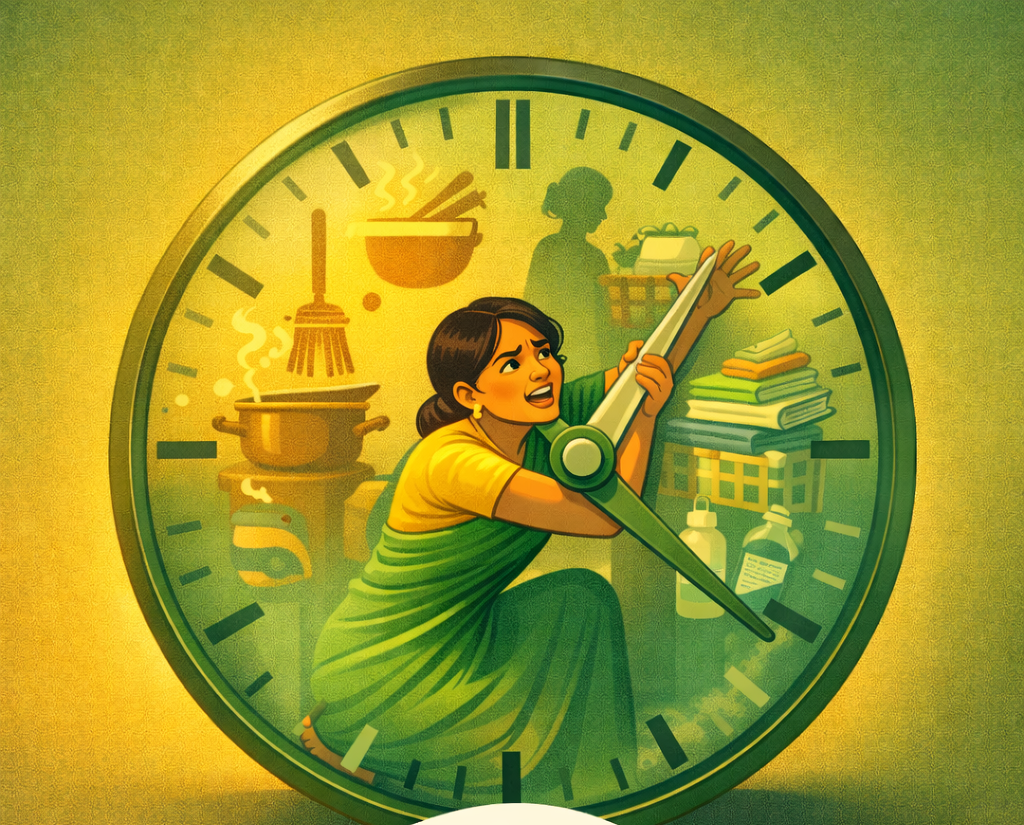
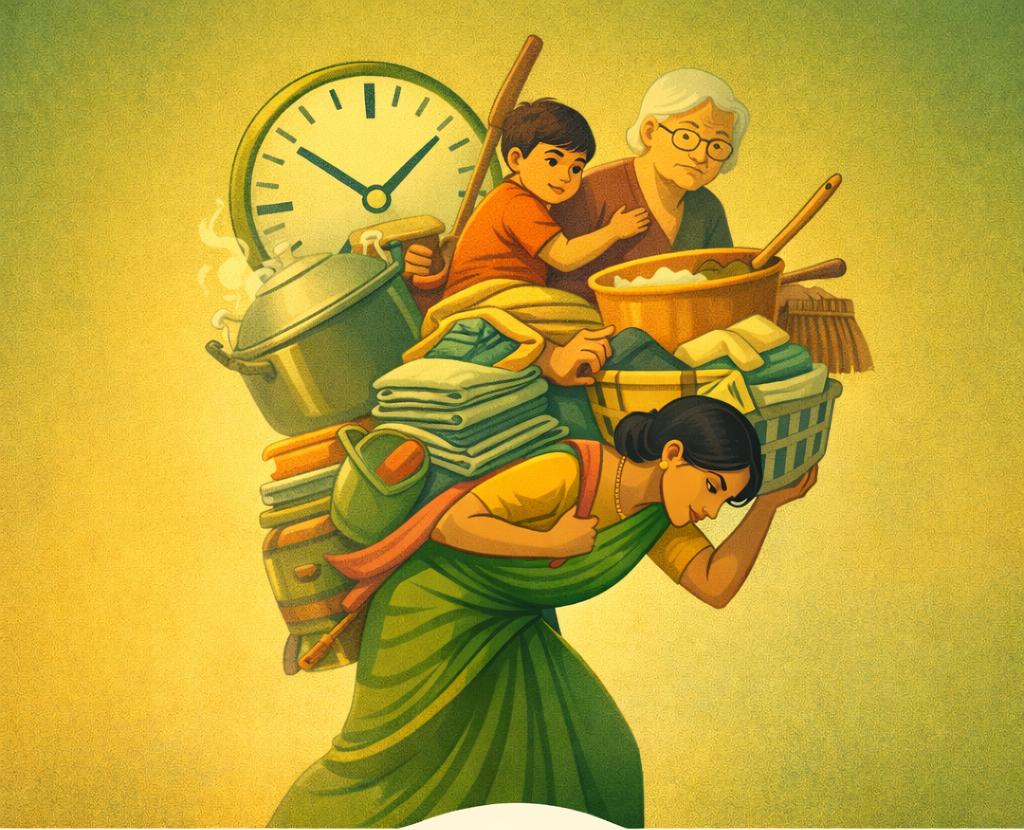
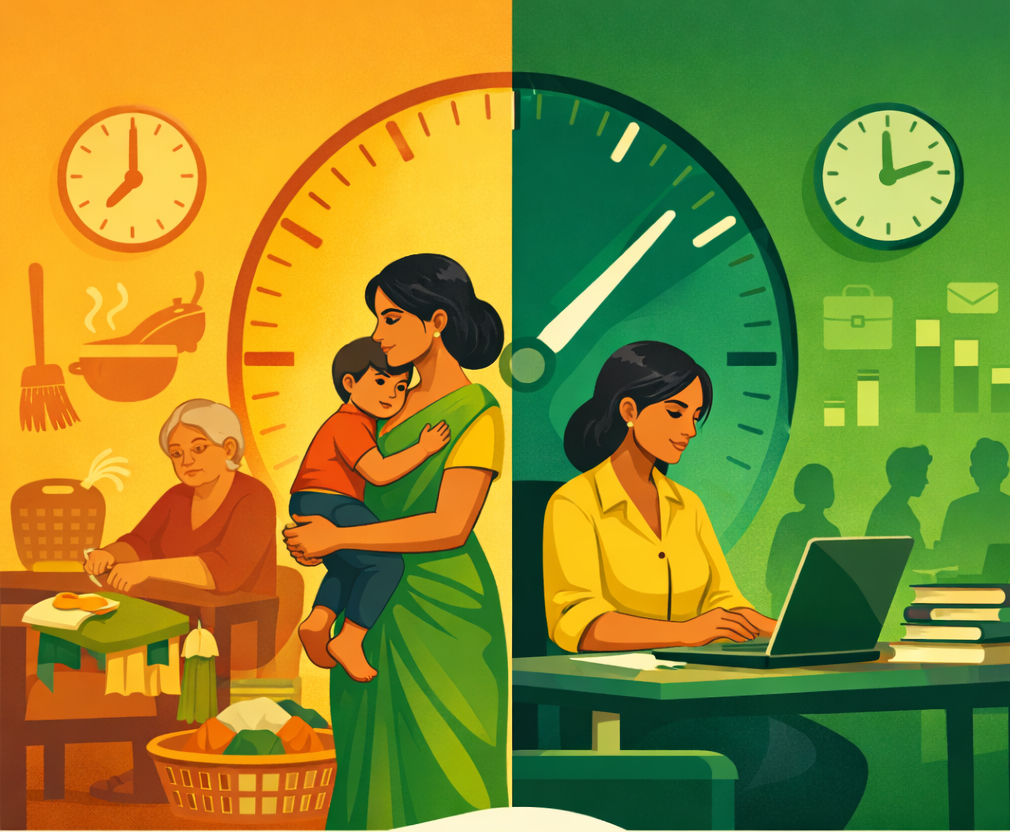
For millions of mothers and women around the globe, the day begins as early as 6:30 am, before the city fully stirs. They prepare breakfast, pack school lunches, get young children ready and tend to aging parents or in-laws. By 9 am, when offices begin to fill, these women have already completed several hours of labour, none of which is paid, recorded or formally recognised. This is the reality for several women worldwide. When they consider taking up full-time employment, the math often does not add up. Who will pick up the children? Who will care for the elderly? The answer, more often than not, is obvious: they will. And so, they stay home.
The scale of this imbalance is stark at the global level. According to the International Labour Organization, unpaid care responsibilities keep over 708 million women out of the labour force. In comparison, the figure for men stands at just 40 million. This disparity underscores the deeply gendered nature of care work, and the fact that it is not merely a private choice, but a socially structured expectation.
This also points to the roots of the inequality, which lie in deeply embedded gender norms that define caregiving as inherently feminine. From early socialisation to media representation, women are positioned as natural caregivers, while men are framed as primary breadwinners. Even as women’s educational attainment has risen globally, these norms persist, creating what scholars describe as the “double burden”: the expectation that women will engage in paid work without relinquishing their primary responsibility for unpaid domestic labour.
The issue at a glance
In India, this imbalance takes on a sharper edge. The country speaks the language of growth, of trillion-dollar targets, digital futures and women-led development, but beneath these ambitions lies an often ignored question: what sustains the everyday lives that make such progress possible? Care work is not incidental or emotional labour; it is foundational. It enables workers to arrive on time, children to attend school and households to function with continuity. However, despite its centrality to economic and social life, it remains largely invisible in policy and planning.
According to UN estimates, men spend an average of about 98 minutes a day on unpaid tasks, while women spend nearly 301 minutes, over three times as much, highlighting the persistent imbalance in how care responsibilities are distributed. This unequal distribution produces what economists term time poverty: a condition in which individuals lack discretionary time due to the demands of unpaid labour. For women, time poverty directly constrains their ability to enter, remain in or advance within the workforce.
The economic implications of this invisible labour are immense. Women perform over three-quarters of unpaid care work globally, contributing billions of hours each day. If this labour
were assigned a monetary value, it would account for a significant share of global GDP, yet it remains excluded from national accounting systems. This statistical invisibility reinforces the perception that unpaid care work is not “real” work, thereby justifying its continued neglect in policy frameworks. This neglect has tangible consequences. When governments underinvest in public services such as childcare, eldercare, healthcare, etc., the burden of care is transferred to households. Within those households, it is overwhelmingly women who absorb the additional responsibilities. This creates a loop of inadequate public infrastructure that increases unpaid care demands, which in turn limits women’s workforce participation, ultimately constraining economic growth.
Beyond workforce entry, unpaid care work also shapes women’s career trajectories. Women who do participate in paid employment often face constraints that limit their growth. They may avoid jobs requiring long hours, travel or relocation even if they come associated with higher-paying and leadership roles. Moreover, the burden of unpaid care work is also not evenly distributed among women. It intersects with class, caste, geography and many other social factors. Middle and upper-class women often outsource domestic labour to paid workers, who come from marginalized communities, thereby redistributing but not eliminating the gendered nature of care work.
Recent global crises have further exposed these inequalities. During the COVID-19 pandemic, the closure of schools and care facilities led to a surge in unpaid care work, disproportionately affecting women. Many women reduced their working hours or exited the labour force entirely, highlighting the fragility of their economic participation in the absence of supportive care systems.
Smile Foundation’s role in addressing unpaid care
Addressing unpaid care is not only about policy, but also about building ecosystems that reduce the burden on women. This is where development organisations like Smile Foundation play a critical role.
1. Education support for children
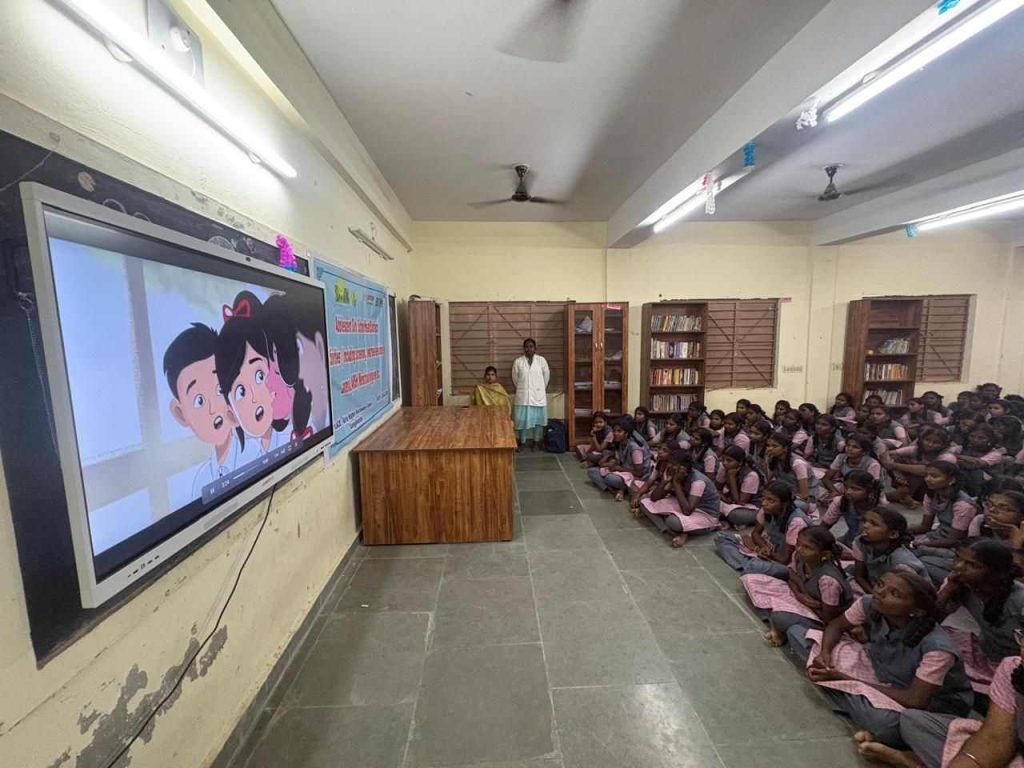
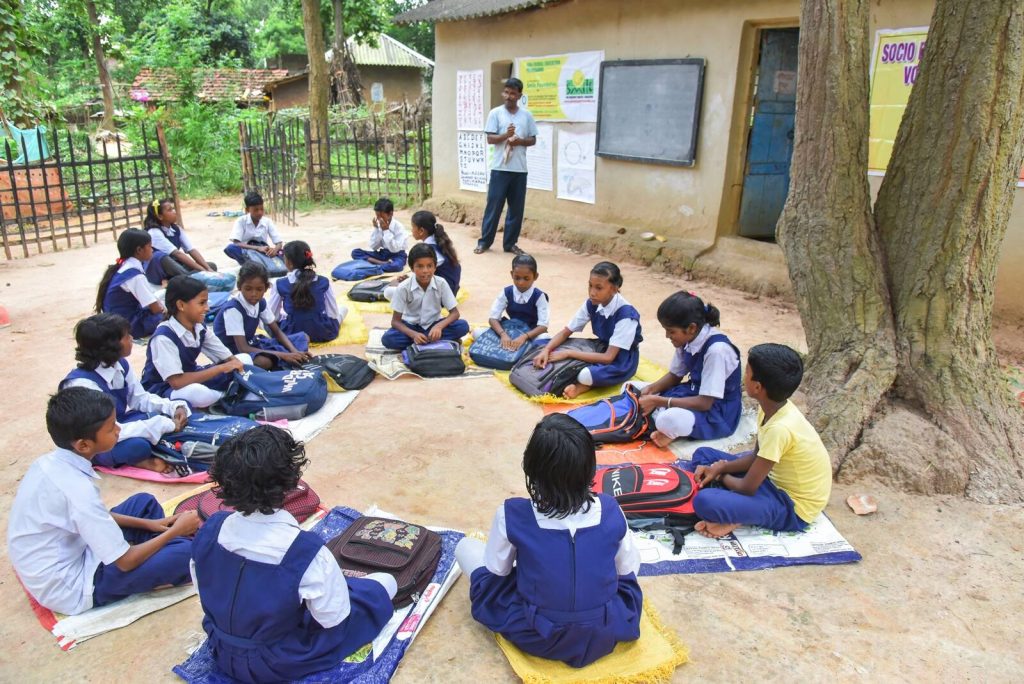
Through our education programmes, Smile Foundation ensures that children, especially from underserved communities, have access to structured learning environments. This reduces the caregiving burden on mothers and enables them to explore livelihood opportunities.
2. Healthcare access through Smile on Wheels
By providing doorstep healthcare services, Smile Foundation reduces the time women spend managing family health needs, a major component of unpaid care.
3. Women empowerment and skilling programmes
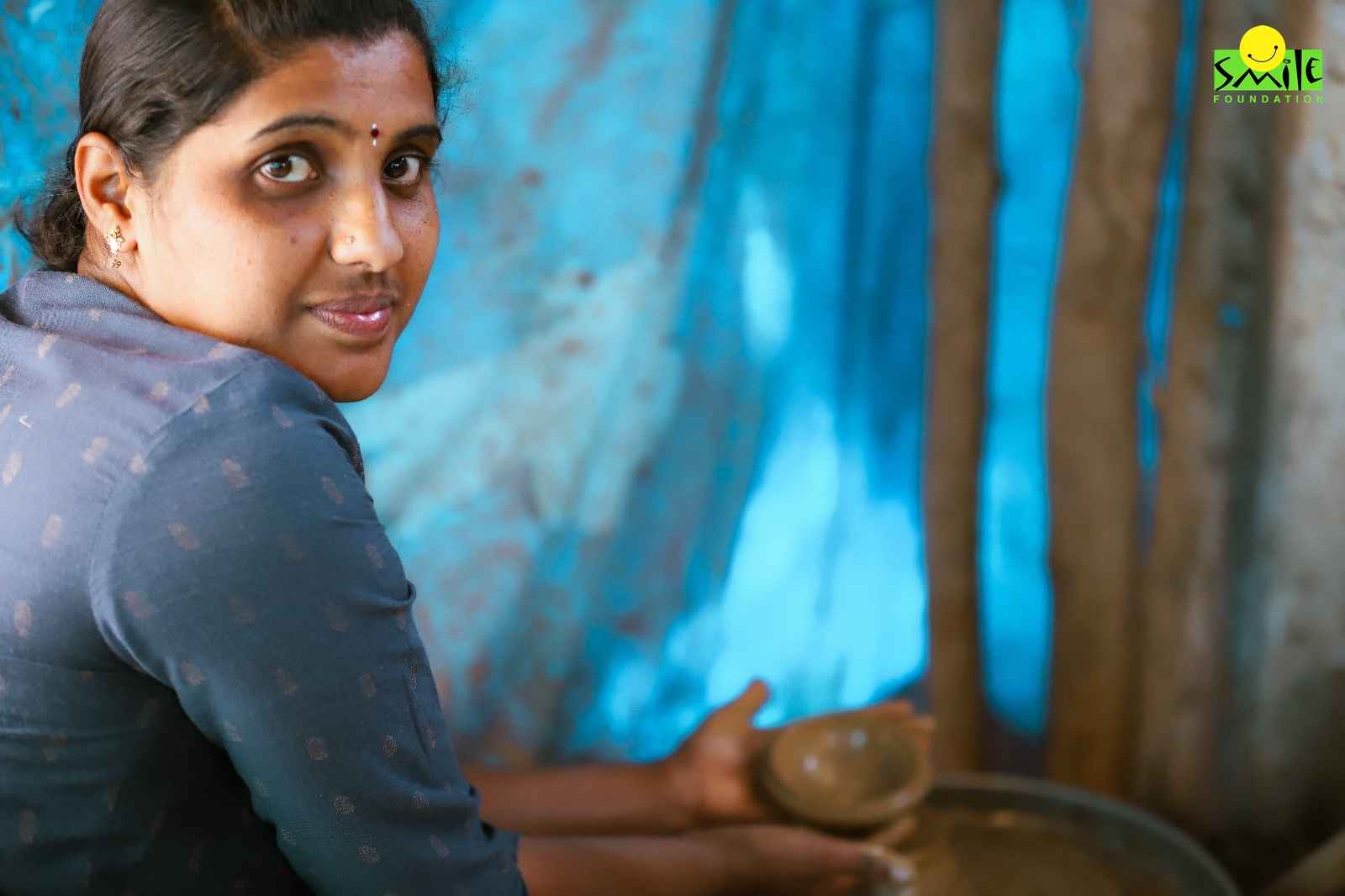
Smile Foundation’s livelihood and skilling initiatives equip women with employable skills, enabling them to transition from unpaid care roles to income-generating work.
4. Community engagement and awareness
Through grassroots interventions, the organisation promotes shared responsibility within households and communities, encouraging a shift in traditional gender norms around care.
These interventions do not eliminate unpaid care, but they reduce, redistribute and recognise it, creating pathways for women’s economic participation.
The way out
Addressing this invisible burden requires a multifaceted approach. Policy interventions must prioritise investment in the care economy, including accessible childcare, eldercare services and healthcare infrastructure. Evidence consistently shows that such investments increase women’s labour force participation by alleviating time constraints. Additionally, policies such as paid parental leave, particularly those that incentivise fathers’ involvement, can help redistribute care responsibilities more equitably.
Equally crucial is the recognition and measurement of unpaid care work. Time-use surveys and gender-sensitive economic indicators can make this labour visible, providing a foundation for more informed policymaking. Some economists have advocated for the inclusion of unpaid care work in satellite national accounts, thereby acknowledging its contribution to economic systems.
Lastly, it is pertinent that structural changes are accompanied by cultural transformation. The redistribution of care work within households is essential to achieving gender equality.
Encouraging men to take on a greater share of domestic responsibilities will challenge entrenched norms and create a space for women to participate more fully in the workforce.
FAQs
1. What is unpaid care work ?
Unpaid care work includes activities such as cooking, cleaning, childcare, eldercare and managing household needs, done without financial compensation.
2. Why is unpaid care work important?
It sustains households and economies by enabling paid workers to function, but it remains invisible in economic systems.
3. How does unpaid care affect women’s employment?
It limits women’s ability to take up jobs, work full-time or advance in their careers due to time constraints.
4. Can unpaid care work be reduced?
Yes, through better public services, shared household responsibilities and supportive policies like childcare and parental leave.
5. What role do organisations like Smile Foundation play?
They reduce the burden of unpaid care by providing education, healthcare and livelihood opportunities, enabling women to participate in the workforce.