
Key Insights at a Glance
- Experiential learning, which includes structured exposure visits for school children, improves knowledge retention by up to 75% compared to passive instruction, according to research on learning models
- David Kolb’s Experiential Learning Theory establishes that learning is most effective when it moves through a cycle of concrete experience, reflection, conceptualisation and active experimentation — a cycle that classroom instruction alone rarely completes
- Children from underserved communities are significantly less likely to have access to museums, science centres, industries, or professional environments outside of school-organised visits, widening the aspiration gap between private and government school students
- Neuroscience research shows that novel, real-world experiences activate the brain’s dopaminergic system, triggering curiosity and deepening memory consolidation — the same mechanism that makes wonder such a powerful driver of learning
- Digital overload and reduced attention spans are making real-world, embodied experiences more important, not less — screen-based learning cannot replicate the cognitive and emotional engagement of physical presence
- Exposure visits for school children build more than knowledge — they build empathy, contextual awareness and expanded aspiration, particularly for children whose worlds have been constrained by geography or circumstance
- Smile Foundation’s exposure visit initiatives, conducted as part of its Mission Education programme, have consistently demonstrated measurable impact on student confidence, career awareness and engagement with learning
- CSR partnerships and public-private collaboration represent the most viable route to scaling exposure-based learning equitably — making it a right rather than a privilege
The First Time the World Became Real
There is a moment that many teachers describe, and that many adults, if they reach far enough back, can remember. It is not the moment a fact was memorised or a sum was solved. It is the moment something outside the classroom cracked the world open.
For one child, it might be the first time she stood inside a working laboratory and understood, viscerally, that science is not a set of answers in a textbook but a process of asking questions. For another, it might be the first time he walked through a newspaper printing press and realised that the words he was learning to read were being produced by people — people whose work he could one day do.
These are the moments that exposure visits for school children are designed to create. Not entertainment. Not a break from learning. A deepening of it.
In India, where millions of children attend schools with limited infrastructure, undertrained teachers and curricula that often feel disconnected from daily life, the question of what learning actually means, and where it happens, is more urgent than it has ever been.
What Are Exposure Visits For School Children and Why Do They Matter?
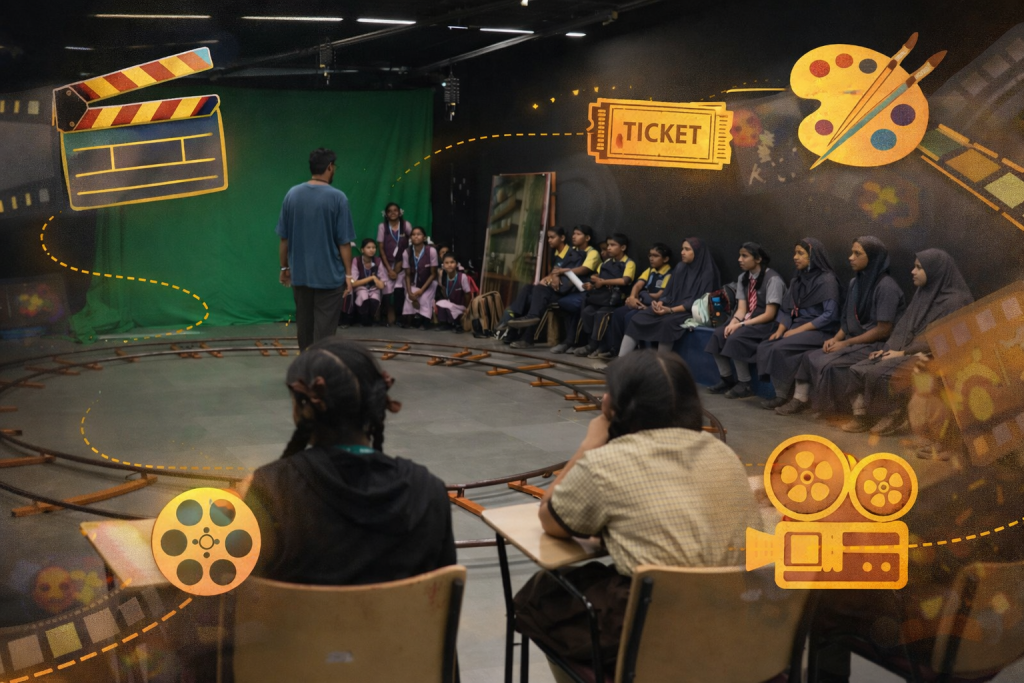
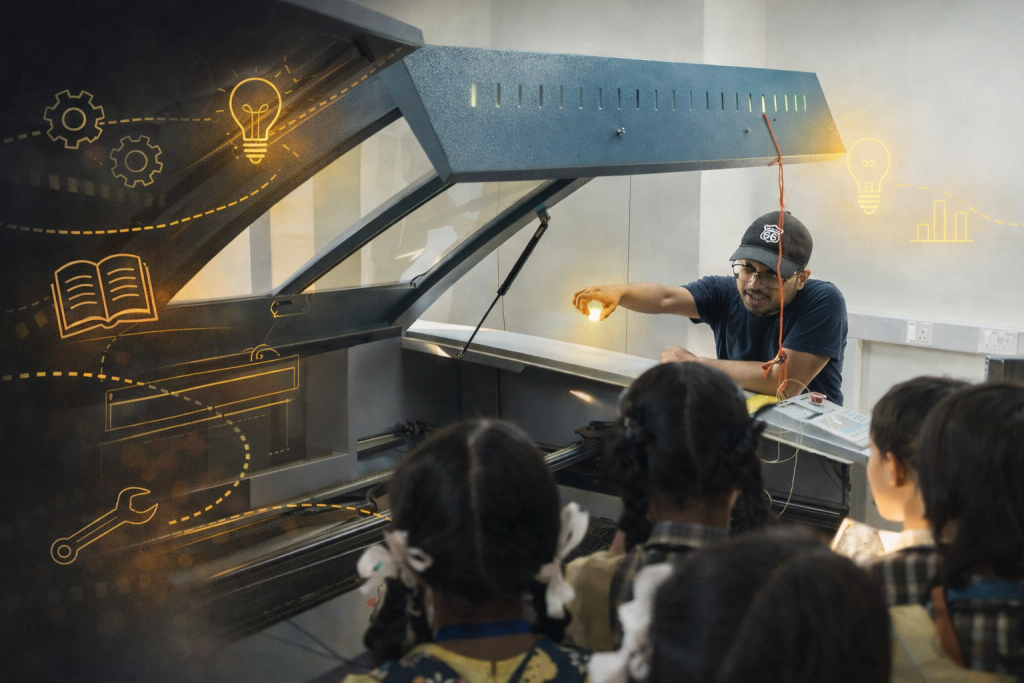
An exposure visit, in its simplest form, is a structured visit that takes students outside the classroom and into an environment where learning can be experienced rather than simply received. Science museums, hospitals, farms, factories, courts, heritage sites, research institutions, fire stations, media houses — the range of destinations is as wide as the range of things worth understanding about the world.
But exposure visits for school children are more than a field trip. The distinction matters. A field trip can be passive — students observe, teachers explain, children return to school largely unchanged. A well-designed exposure visit is intentional. It connects directly to curriculum concepts, is accompanied by facilitated reflection and asks students to engage rather than simply watch.
The difference between a child watching someone operate a piece of agricultural machinery and a child being asked to consider why that machine was designed the way it was — and what problem it was solving — is the difference between observation and inquiry. Exposure visits for school children, at their best, cultivate the second.
They also do something that no classroom can fully replicate: they show children what the world actually contains. For a child from a remote village or an urban slum, the physical experience of standing inside a working institution — a hospital, a science centre, a university — is not merely educational. It is revelatory. It says: this exists, and you are allowed to be here.
Beyond the Classroom — Why Experiential Learning Works
The case for experiential learning is not new, but it is increasingly well-evidenced.
David Kolb’s Experiential Learning Theory, first articulated in 1984 and since validated across decades of educational research, proposes that learning is not a passive transfer of information but an active cycle. Concrete experience leads to reflective observation, which generates abstract conceptualisation, which drives active experimentation — and then the cycle begins again. Each stage deepens understanding in a way that reading or listening alone cannot.
The implications for classroom instruction are significant. A student who reads about the water cycle can pass a test. A student who visits a water treatment facility, observes the process, discusses it with an engineer and then reflects on what they saw — that student understands the water cycle in a way that is embedded, transferable and genuinely useful.
Research consistently supports this. Studies on learning retention show that passive methods — reading, listening to lectures — produce retention rates of around 10 to 20 percent. Active learning methods, including field-based and experiential approaches, can push retention to 75 percent or higher. The brain simply holds on to what it has experienced more reliably than what it has been told.
There is also the question of cognitive engagement. Passive learning asks students to receive. Active, experiential learning asks them to notice, question, connect and apply. These are higher-order cognitive functions — the ones that education systems universally claim to prioritise and that traditional classroom instruction often struggles to activate consistently.
Exposure visits for school children are, in this framework, not supplementary to learning. They are among the most direct ways to produce the kind of learning that lasts.
The Role of Wonder in Learning: Exposure Visits For School Children
There is a quality that the best teachers share and that the best learning environments consistently produce, which is difficult to quantify but impossible to miss. It is wonder — the particular alertness that comes when something surprises the mind into attention.
Wonder is not merely an emotional response. Neuroscience research has increasingly shown that the experience of novelty and awe activates the brain’s dopaminergic reward system, which is directly linked to motivation, curiosity and memory consolidation. When a child encounters something genuinely unexpected, something that does not fit neatly into what they already know, the brain responds by paying closer attention and working harder to integrate the new information. Wonder, in other words, is a learning mechanism.
Classrooms, by their nature, tend to work against wonder. They are predictable environments. The same chairs, the same faces, the same sequence of subjects at the same time each day. Predictability has pedagogical value — routine reduces cognitive load and allows students to focus on content. But it also, over time, dulls the sense of possibility that makes learning feel alive.
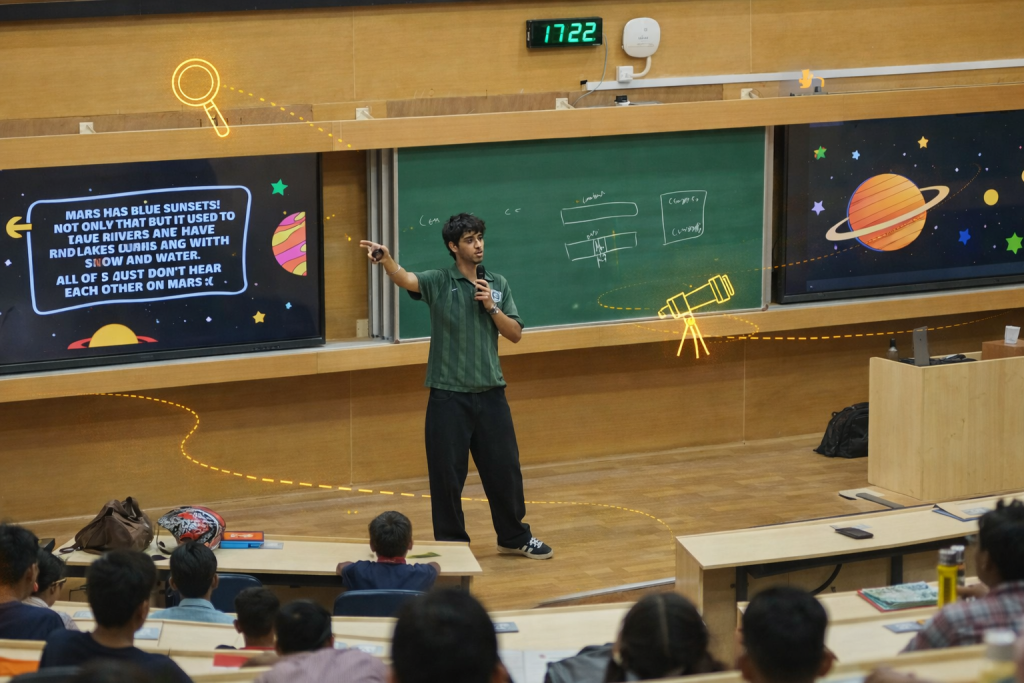
Exposure visits for school children interrupt that predictability. They place children in environments that are novel, sensory and often overwhelming in the best possible way. A child who has never left her district standing in front of a functioning telescope or watching a surgeon explain what they do, or tracing the journey of a newspaper from raw material to printed page — that child is experiencing wonder. And in that moment of wonder, she is learning in ways that no lesson plan can fully engineer.
This is not a romantic notion. It is a neurological one. The philosopher and educational theorist John Dewey argued nearly a century ago that education must begin with experience — that genuine learning is inseparable from the felt quality of engagement with the world. Contemporary research in cognitive science has largely borne him out.
The question, then, is not whether wonder matters in education. It is whether we are designing learning environments that make room for it.
Why Exposure Visits For School Children Are Even More Critical Today
There is a case to be made that exposure visits for school children have always been important. There is a stronger case to be made that they are more important now than they have ever been.
Children today are growing up in an environment of digital saturation. Screens are the dominant medium of information, entertainment and increasingly, instruction. The shift to online and hybrid learning accelerated by the pandemic has deepened this dependence. And while digital tools offer genuine educational value, they come with well-documented costs: reduced attention spans, diminished tolerance for slow or complex thinking and a flattening of experience into the two-dimensional.
A child who spends hours each day consuming information through a screen is a child whose engagement with the physical world — its textures, its sounds, its unpredictability — is being systematically narrowed. The embodied, sensory dimension of learning, which cannot be replicated on a screen, is precisely what exposure visits for school children restore.
There are also deeper developmental stakes. Empathy, for instance, the capacity to understand another person’s experience, is built through encounter, not through information. A child who visits a rehabilitation centre or a community health worker’s clinic, or a farm during harvest season, is developing a relationship with the complexity of other people’s lives that no video can produce.
Similarly, problem-solving. Research on creative thinking consistently shows that broad environmental exposure — diverse experiences, novel contexts, encounters with different kinds of knowledge and work — is among the strongest predictors of creative problem-solving capacity. Children who have seen more of the world think more flexibly about it.
And then there is aspiration. For children from underserved communities, aspiration is not simply a matter of motivation. It is a matter of information. You cannot want to become something you have never seen. Exposure visits expand the field of what children believe is possible, and in doing so, they expand the trajectories of children’s lives.
Equity in Learning — Why Every Child Deserves This
Here is a fact worth sitting with. Children who attend well-resourced private schools in Indian cities are likely to have exposure visits for school children built into their annual calendar. They visit science museums, historical monuments, corporate offices and cultural institutions as a matter of routine. These visits are understood, in those contexts, as a normal part of a rounded education.
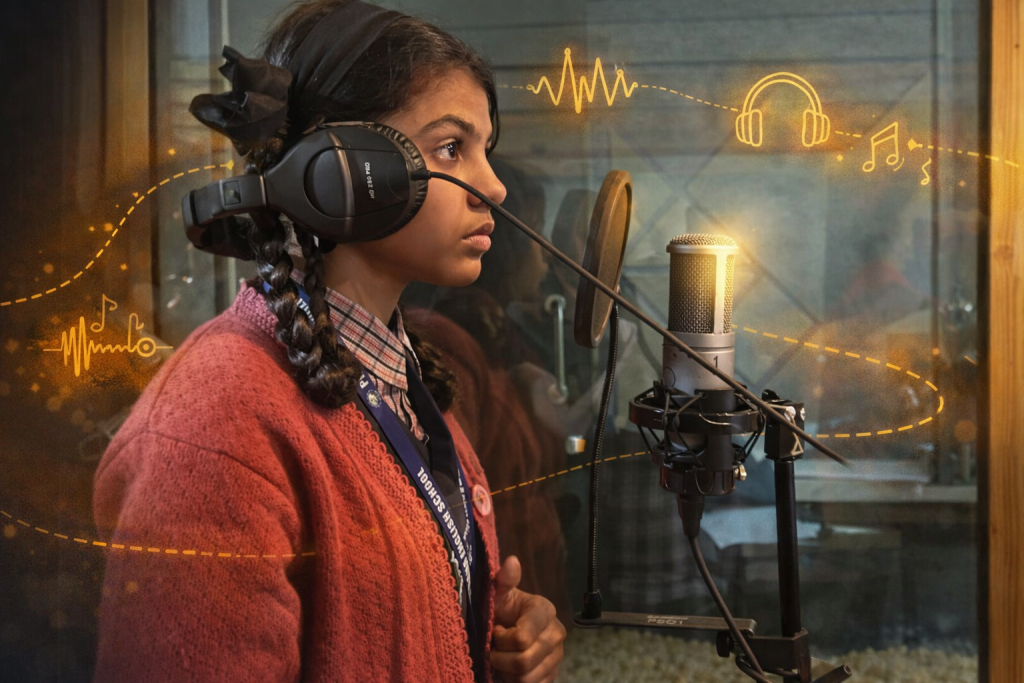
Children who attend government schools in rural districts, or low-cost private schools in urban slums, are far less likely to have the same access. Their learning is more likely to be confined to the classroom, and a classroom that is itself under-resourced.
This is not a minor inequality. It is a compounding one. The children who most need their horizons expanded, who have the least access to diverse experiences outside school, are precisely the children who are least likely to receive structured exposure to the wider world through their education. The aspiration gap, the confidence gap, the career-awareness gap between children from different socioeconomic backgrounds is not only a product of what happens inside the classroom. It is a product of what children have been allowed to see and experience outside it.
Exposure visits for school children should not be a privilege that accrues to those who can already afford it. They should be a guaranteed component of every child’s education, regardless of geography, income or the type of school they attend.
This is ultimately a policy argument. NEP 2020 gestures toward experiential learning as a value, but the structural investment required to make exposure visits a genuine norm in government schools — transportation, facilitation, curriculum integration, partnerships with institutions — has not yet materialised at scale. That gap is where CSR, civil society and public commitment need to converge.
Smile Foundation’s Exposure Visits For School Children — Learning in Action
Smile Foundation’s Mission Education programme has long recognised that learning does not begin and end at the school gate. Across its network of learning centres and partner schools, the organisation integrates structured exposure visits as a deliberate component of its educational approach.
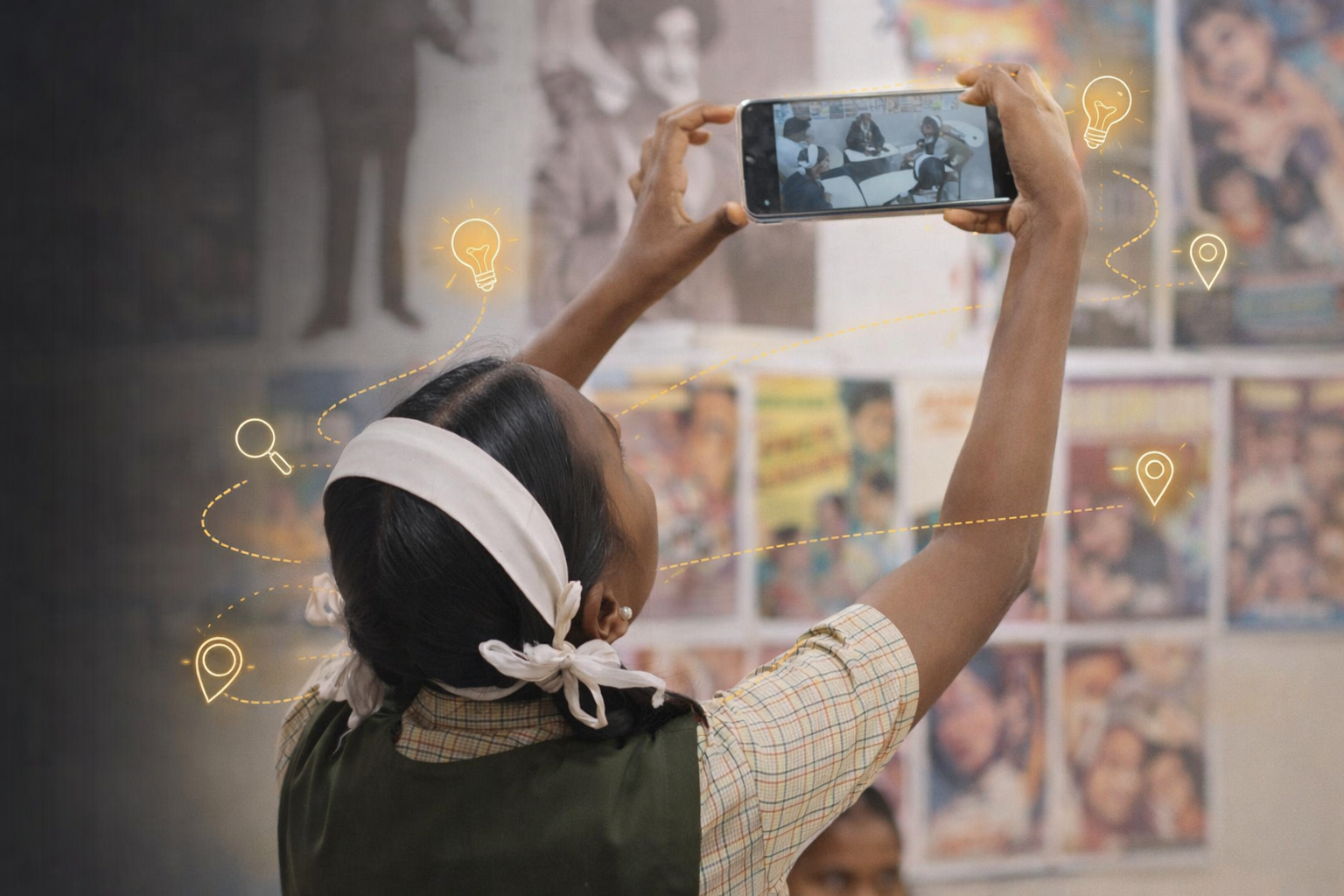
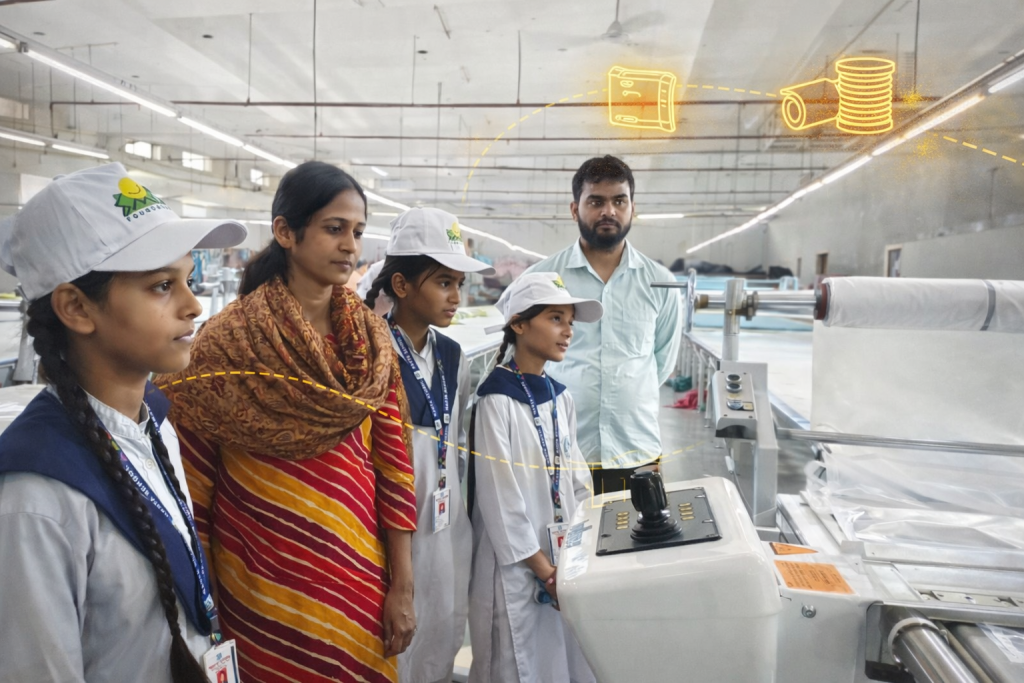
The visits span a wide range of environments — science exhibitions, local government institutions, hospitals and healthcare facilities, farms, small industries and cultural sites. Each visit is connected to broader learning objectives and followed by facilitated reflection sessions that help children process what they have experienced and connect it to their classroom learning.
The impact, observed consistently across programme sites, goes beyond knowledge acquisition. Children who participate in exposure visits show measurable increases in classroom confidence and participation. Many, for the first time, articulate career aspirations that extend beyond the occupations immediately visible in their communities. Girls, in particular, benefit significantly — encountering women working in professional and technical roles has a direct and documented effect on how they perceive their own possibilities.
One of the more striking outcomes that Smile Foundation’s field teams report is the shift in how children engage with their studies in the weeks following a visit. Questions become more specific. Connections are drawn between what was seen and what is being taught. The classroom, for a while at least, feels more relevant because the world it is supposed to be preparing children for has been made briefly, tangibly real.
This is not incidental. It is the point.
Making Experiential Learning Scalable
The argument for exposure visits is well-established. The challenge is scale, and scale requires a different kind of thinking than a single well-run programme can provide.
Making exposure visits for school children a structural feature of education, rather than an occasional supplement, requires action on several fronts.
At the policy level, experiential learning needs to move from aspiration to mandate. NEP 2020 provides the philosophical foundation. What is missing is a operational framework — clear guidelines on frequency, facilitation, curriculum integration and documentation of outcomes — that gives schools the structure and accountability to implement visits consistently.
At the school level, visits need to be embedded in the academic calendar rather than treated as extras. This requires teacher training in facilitation and reflection methodologies, partnerships with local institutions and administrative systems that can handle logistics without placing undue burden on already stretched school staff.
CSR partnerships represent one of the most promising routes to filling the gaps that policy and public funding leave open. Corporate partners can support transportation costs, facilitate access to their own facilities as visit destinations, fund trained facilitators and help build the documentation systems needed to track outcomes. Companies with operations in rural or underserved areas are particularly well-positioned to create exposure opportunities for children in those communities connecting their business environments directly to the educational ecosystem around them.
Public-private collaboration, when structured thoughtfully, can move exposure visits from a privilege to a norm. The model exists. What is needed is the commitment to build it at scale.
Give Children the World
There is a line attributed to the naturalist Rachel Carson — that the most important gift an adult can give a child is the sense that the world is worth exploring. Not just the parts of it that appear in textbooks, but the full, complicated, surprising thing.
Exposure visits for school children are, at their core, an act of that gift-giving. They say: here is something worth seeing. Here is a person whose work matters. Here is a place where knowledge is used, where problems are solved, where your future might one day live.
Learning is not only about knowing. It is about seeing. It is about the felt experience of encountering the world with all its complexity, its possibility and its invitation to participate. Every child deserves that encounter. Not as a reward for academic performance, not as an occasional treat, but as a fundamental right — as essential to education as any textbook, any teacher, any classroom wall.
The world is the best school there is. We just need to take children there.
Frequently Asked Questions (FAQs)
What are exposure visits for school children?
Exposure visits are structured, purposeful visits that take students outside the classroom and into real-world environments — science centres, hospitals, farms, industries, courts, heritage sites — where learning can be experienced directly. Unlike casual field trips, well-designed exposure visits are connected to curriculum objectives and include facilitated reflection to deepen understanding.
How do exposure visits improve learning outcomes?
Exposure visits activate experiential learning — a process that research consistently shows produces significantly higher retention and comprehension than passive instruction. By grounding abstract concepts in physical, real-world experience, visits help students build durable understanding, improve problem-solving ability and develop stronger connections between classroom learning and the world outside it.
Are exposure visits suitable for rural schools?
Not only suitable — they are arguably more important for rural schools than for any other context. Children in rural and underserved communities have fewer opportunities to encounter diverse professional and institutional environments outside of school. Structured exposure visits can directly address the aspiration and awareness gap that geography and socioeconomic circumstance create.
What role can CSR play in enabling exposure visits?
CSR partnerships can address the practical barriers that prevent schools, particularly government and low-cost private schools, from conducting regular exposure visits. This includes funding transportation, facilitating access to corporate facilities as visit destinations, supporting trained facilitators and building the documentation systems needed to measure and communicate impact.
How often should schools conduct exposure visits?
There is no single answer, but the general principle is that exposure visits should be regular enough to be meaningful and infrequent enough to retain their novelty. For most school contexts, two to four well-designed visits per academic year, directly linked to curriculum themes, tends to produce stronger outcomes than either rare one-off visits or frequent but superficial ones.
Are exposure visits part of experiential learning?
Yes — they are one of the most direct applications of experiential learning theory in a school setting. David Kolb’s framework, which underpins much of modern educational thinking about active learning, positions concrete experience as the starting point of the learning cycle. Exposure visits provide exactly that: a concrete, real-world experience that initiates the deeper cognitive work of reflection, conceptualisation and application.
What are low-cost models for exposure visits?
Low-cost models include visits to local government institutions, community health centres, small industries, farms and markets — all of which provide rich learning environments without requiring significant travel or expenditure. Virtual or hybrid formats, where a physical visit is complemented by video documentation and expert Q&A sessions, can extend access further. CSR partnerships and community collaborations can also absorb costs that schools cannot bear independently.
How does Smile Foundation implement exposure visits?
Smile Foundation integrates exposure visits as a structured component of its Mission Education programme. Visits are connected to learning objectives, facilitated by trained staff and followed by reflection sessions that help children process and apply what they have experienced. Destinations range from science exhibitions and healthcare facilities to local industries and cultural institutions. The programme consistently reports improvements in student confidence, classroom engagement and aspiration following these visits.