

For years, corporate social responsibility (CSR) in India has largely been measured in rupees. Companies announce their annual CSR budgets, support flagship projects and publish impact reports that highlight the number of beneficiaries reached. These investments remain essential. Yet, money alone rarely builds the lasting relationships that drive meaningful social change.
This is where employee volunteering programs India are changing the conversation. Across industries, companies are discovering that when employees contribute their time, expertise and ideas alongside financial support, CSR becomes more personal, participatory and sustainable. A marketing professional mentoring first-generation entrepreneurs, an engineer helping schools improve STEM education or a finance team conducting financial literacy workshops can create impact that extends well beyond a cheque.
The shift also reflects changing employee expectations. Today’s workforce, particularly younger professionals, increasingly wants to work for organisations that demonstrate purpose alongside profit. Volunteering offers employees an opportunity to connect with communities, develop new skills and see the tangible outcomes of their company’s social commitments.
For businesses, this presents an opportunity to move from transactional giving to long-term partnerships that strengthen communities while building a more engaged workforce.
Why Employee Volunteering Programs Matter Beyond CSR Funding
Financial contributions remain the backbone of many development programmes. Schools need classrooms, hospitals require equipment and communities benefit from sustained investment. But development is rarely achieved through funding alone.
Communities also need knowledge, mentorship, innovation and relationships. Employee volunteering brings these resources into the equation.
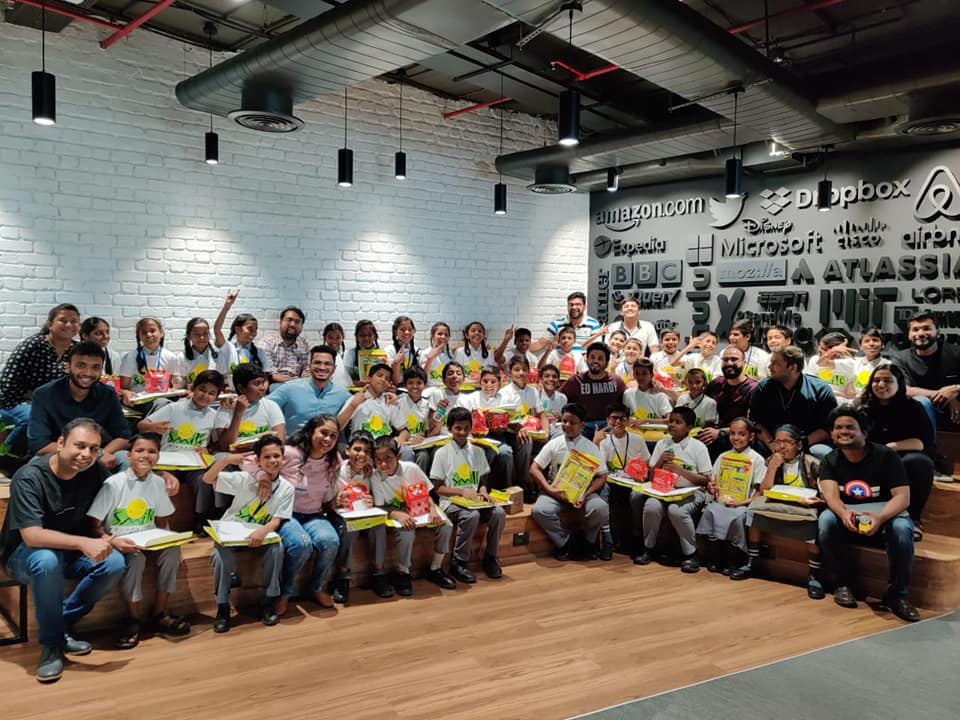
A well-designed volunteering initiative allows professionals to contribute capabilities that NGOs often cannot purchase through grants alone. Human resource specialists can support employability workshops, IT professionals can strengthen digital literacy, legal teams can conduct awareness sessions on rights and entitlements, while communications experts can help nonprofits tell their stories more effectively.
This is why many organisations are now embedding volunteering into their broader corporate social impact strategy, recognising that social value grows when financial investment is complemented by human capital.
The benefits extend in multiple directions.
For communities:
- Access to professional expertise
- Stronger local networks
- Improved programme quality
- Increased confidence among beneficiaries
For employees:
- Greater sense of purpose
- Leadership development
- Better collaboration across teams
- Exposure to diverse perspectives
For companies:
- Higher employee engagement
- Stronger organisational culture
- Improved employer branding
- Deeper relationships with NGO partners
Rather than replacing CSR funding, volunteering strengthens its effectiveness by adding knowledge, empathy and long-term commitment.
Looking to create meaningful volunteering opportunities for your workforce? Partnering with an experienced NGO ensures employee efforts align with genuine community needs while creating measurable impact.
The Business Case for Employee Volunteering Programs
Employee volunteering is often viewed as a philanthropic activity. Increasingly, it is also recognised as a business investment.
Research consistently shows that employees who feel connected to their organisation’s social purpose report higher engagement and stronger commitment. Purpose-driven workplaces are also more attractive to younger talent, particularly Millennials and Generation Z, who increasingly consider an employer’s values when making career decisions.
Volunteering contributes to professional development in ways traditional training programmes sometimes cannot.
Employees frequently develop:
- Leadership skills by managing community projects
- Communication skills through interaction with diverse groups
- Problem-solving abilities in unfamiliar environments
- Emotional intelligence and empathy
- Cross-functional collaboration
Many organisations now integrate volunteering into leadership development programmes because real-world social challenges require adaptability, creativity and collaborative thinking.
There are reputational benefits too.
Consumers, investors and prospective employees increasingly expect companies to demonstrate authentic social commitment. While financial donations are important, stakeholders often respond more positively when they see employees actively participating in social initiatives rather than remaining passive observers.
This growing emphasis on employee engagement CSR reflects a broader shift towards measuring impact not only through money invested but through people empowered.
Types of Employee Volunteering Programs
Not every volunteering program looks the same. The most successful organisations build a portfolio of opportunities that accommodates different skills, interests and time commitments.
Some activities require only a few hours each month, while others involve long-term mentoring relationships or specialised professional expertise.
Common models include:
Skills-based volunteering
Employees contribute their professional expertise to solve organisational challenges.
Examples include:
- Digital marketing support for nonprofits
- Financial planning workshops
- Legal awareness sessions
- Career mentoring
- Technology implementation
- Data analysis and monitoring support
This form of skills-based volunteering India is increasingly valued because it creates high-impact contributions without significant financial investment.
Hands-on community volunteering
Employees participate directly in community activities such as:
- Reading sessions with children
- School beautification drives
- Tree plantation campaigns
- Health awareness programmes
- Sports and cultural events
- Community clean-up initiatives
These experiences often create stronger emotional connections between employees and beneficiaries.
Virtual volunteering
Technology has expanded volunteering beyond geography.
Employees can now:
- Mentor students online
- Conduct virtual career guidance sessions
- Deliver digital literacy workshops
- Review NGO communication materials
- Provide remote technical support
Virtual programmes allow companies with distributed workforces to maintain consistent participation.
Team volunteering
Rather than individual participation, departments volunteer together.
Examples include:
- Building school libraries
- Organising science fairs
- Conducting financial literacy camps
- Supporting disability inclusion events
These initiatives strengthen both community relationships and internal teamwork.
Payroll giving and volunteer matching
Some organisations combine volunteering with payroll giving India, allowing employees to contribute financially while participating in field activities.
Others introduce volunteer grant programmes, where the company donates additional funds based on employee volunteering hours, multiplying community impact.
Skills-Based Volunteering vs Hands-On Volunteering
Both approaches have value, but they serve different purposes.
| Skills-Based Volunteering | Hands-On Volunteering |
|---|---|
| Uses professional expertise | Focuses on direct community interaction |
| Often delivers long-term organisational value | Creates immediate engagement and visibility |
| Suitable for experienced professionals | Accessible for employees across functions |
| Can strengthen NGO capacity | Builds stronger emotional connection |
| Often project-based | Often event-based |
The strongest programmes do not choose one over the other.
Instead, they combine both.
An employee might mentor young entrepreneurs over six months while also participating in a school improvement drive during the company’s annual volunteering week. This balanced approach creates sustained impact while giving employees varied opportunities to contribute.
How to Design Employee Volunteering Programs With an NGO Partner
Many corporate volunteering initiatives begin with enthusiasm but struggle to sustain momentum.
The reason is simple.
Good intentions alone rarely create effective programmes.
Successful volunteering begins with thoughtful design and a strong NGO corporate partnership that understands both community priorities and organisational objectives.
Start with a shared purpose
Before planning activities, companies should ask fundamental questions.
- What social issue do we want to address?
- How do our employees’ skills align with community needs?
- What outcomes do we hope to achieve?
- How will success be measured?
Clear answers prevent volunteering from becoming a series of disconnected one-day events.
Choose the right NGO partner
An experienced NGO provides much more than access to beneficiaries.
It helps companies:
- Identify genuine community needs
- Design meaningful volunteering opportunities
- Prepare employees before field visits
- Ensure safeguarding and child protection
- Measure outcomes
- Maintain long-term community relationships
The most effective partnerships are built on trust rather than transactions.
Match employee skills to community needs
Not every employee needs to teach in a classroom.
A designer may create learning materials.
A software engineer may introduce digital tools.
An accountant may help community groups improve financial management.
A healthcare professional may support awareness campaigns.
Matching expertise with need creates greater value for both volunteers and communities.
Create multiple participation options
Employees have different schedules and interests.
Offering flexible formats encourages wider participation.
These may include:
- Two-hour virtual mentoring sessions
- Weekend volunteering opportunities
- Annual volunteering weeks
- Long-term mentoring programmes
- Project-based consulting
- Family volunteering events
Many organisations also introduce a volunteer time off policy India, allowing employees dedicated paid time to participate in approved community initiatives.
Such policies send a powerful message that volunteering is not an extracurricular activity but an integral part of organisational culture.
Prepare employees before they volunteer
Orientation is often overlooked.
Yet it is one of the strongest predictors of a successful experience.
Training should cover:
- Community context
- Cultural sensitivity
- Child safeguarding
- Expectations and boundaries
- Communication techniques
- Programme objectives
Prepared volunteers contribute more confidently and respectfully, creating a better experience for everyone involved.
Build for continuity
Communities benefit most from relationships, not isolated events.
Rather than organising one annual volunteering day, companies should develop year-round opportunities that allow employees to build trust with beneficiaries and witness long-term progress.
When volunteering becomes part of an organisation’s culture rather than its calendar, it creates impact that lasts long after the event ends.

Measuring the Impact of Employee Volunteering
One of the biggest misconceptions about volunteering is that its impact is difficult to measure.
While the outcomes are often less tangible than a financial grant or an infrastructure project, they are no less important. The key is to measure both community impact and employee outcomes.
A successful volunteering programme should answer two simple questions:
- Did the community benefit?
- Did employees become more engaged, skilled and committed?
Looking at only one side tells an incomplete story.
What should companies measure?
Many organisations still report the basics:
- Number of volunteers
- Total volunteering hours
- Number of beneficiaries reached
These figures are useful, but they reveal very little about the quality of the programme.
A more meaningful evaluation should also include:
Community outcomes
- Improvement in learning or skill development
- Increased access to services or information
- Satisfaction among beneficiaries
- Capacity built within partner organisations
- Long-term programme sustainability
Employee outcomes
- Volunteer participation rates
- Employee satisfaction
- Leadership and teamwork skills developed
- Employee retention
- Internal collaboration across departments
The most mature organisations also collect qualitative feedback through interviews, reflection sessions and beneficiary stories.
Sometimes the most significant impact cannot be captured in numbers alone.
A child who gains confidence after regular mentoring or a young woman who secures her first job after employability training represents a transformation that deserves to be documented alongside statistics.
Technology is making impact easier to track
Digital platforms now allow companies and NGO partners to monitor volunteering in real time.
Many organisations use dashboards to track:
- Volunteer registrations
- Hours contributed
- Programme attendance
- Employee feedback
- Community outcomes
- CSR reporting indicators
These insights help companies refine future initiatives rather than repeating activities simply because they have always been done that way.
Case for Volunteering Alongside CSR Spending
India’s CSR landscape has matured significantly since the Companies Act, 2013 introduced mandatory CSR spending for eligible companies.
According to the National CSR Portal, Indian companies collectively spend tens of thousands of crores annually on CSR initiatives across education, healthcare, rural development, environmental sustainability and livelihood programmes.
This financial commitment has supported remarkable progress.
Yet many organisations are asking an important question.
How can CSR create deeper relationships rather than simply funding projects?
The answer often lies in combining financial investment with employee participation.
A company supporting education programmes, for example, can strengthen its impact when employees mentor students, conduct career guidance sessions or introduce digital learning tools.
Similarly, businesses funding healthcare initiatives can complement these investments by organising awareness campaigns, supporting health camps or contributing professional expertise.
Volunteering helps transform beneficiaries into long-term partners and employees into active participants in social change.
Does volunteering count as CSR expenditure?
This is an important distinction.
Under the Companies Act, employee volunteering hours do not automatically qualify as CSR expenditure simply because employees participate in social activities.
However, volunteering can complement CSR projects undertaken through eligible implementing agencies and registered nonprofit organisations, provided the activities comply with Schedule VII of the Companies Act and applicable CSR Rules.
Companies should therefore view volunteering as a strategic addition to CSR rather than a substitute for financial commitments.
The most effective programmes integrate both.
Funding provides scale.
People provide sustainability.
How to Get Started With Employee Volunteering
Many organisations delay launching volunteering initiatives because they assume they require large budgets or complex structures.
In reality, meaningful programmes often begin with a single partnership and a clear purpose.
A practical roadmap looks like this.
1. Understand employee interests
Before designing activities, ask employees what motivates them.
Some may enjoy mentoring students.
Others may prefer environmental initiatives, healthcare campaigns or livelihood programmes.
Understanding employee interests improves participation from the outset.
2. Align volunteering with business strengths
Every company possesses unique expertise.
Technology firms can strengthen digital education.
Financial institutions can support financial literacy.
Healthcare companies can contribute preventive health awareness.
Manufacturing organisations can support vocational education and employability.
This alignment makes volunteering more meaningful and sustainable.
3. Select an experienced NGO partner
Choosing the right nonprofit is perhaps the most important decision.
An experienced partner helps identify genuine community needs, prepares employees, manages logistics, ensures safeguarding and measures impact.
More importantly, it ensures volunteering supports existing community programmes rather than creating parallel activities with little long-term value.
4. Offer flexibility
Employees participate more consistently when volunteering fits naturally into their schedules.
Successful organisations provide options such as:
- Virtual volunteering
- Weekend activities
- Project-based assignments
- Long-term mentoring
- Family volunteering days
- Team volunteering events
Flexibility increases participation across different age groups, locations and job functions.
5. Recognise and celebrate volunteers
Recognition reinforces culture.
It does not need to be elaborate.
Companies can acknowledge volunteers through:
- Internal newsletters
- Leadership appreciation
- Annual awards
- Certificates
- Volunteer stories
- Peer recognition
Celebrating contributions signals that community engagement is valued across the organisation.
6. Keep learning
The strongest volunteering programmes evolve over time.
Regular employee feedback, NGO consultations and beneficiary perspectives help organisations improve future initiatives and respond to changing community needs.
Continuous learning ensures volunteering remains relevant rather than becoming a routine corporate activity.
Building Communities, Not Just CSR Reports
The future of corporate responsibility will not be measured solely by how much companies spend.
It will also be measured by how deeply they engage.
Across India, businesses are recognising that lasting social impact is built through partnerships, participation and shared responsibility. When employees volunteer alongside CSR investments, they bring something no financial contribution can replace: their knowledge, compassion and lived experience.
Whether it is mentoring a first-generation learner, helping a nonprofit strengthen its digital presence or guiding young people towards meaningful careers, every hour contributed creates value that extends far beyond the workplace.
For companies, volunteering nurtures leadership, collaboration and purpose.
For communities, it provides skills, confidence and sustained support.
For nonprofit organisations, it creates partnerships rooted in trust rather than transactions.
The most successful organisations no longer ask whether they should invest in CSR or employee volunteering.
They understand that the two work best together.
As more businesses embrace employee volunteering programs India, CSR can evolve from an annual obligation into a shared movement where employees become active partners in building stronger, more resilient communities.
FAQs — Employee Volunteering Programs in India
1. What is employee volunteering and how is it different from CSR funding?
Employee volunteering involves employees contributing their time, skills or expertise to community initiatives. CSR funding focuses on financial support for eligible social projects. Together, they create stronger and more sustainable social impact.
2. Why should companies invest in employee volunteering programs?
Volunteering strengthens employee engagement, develops leadership skills, improves workplace culture and deepens relationships with communities. It also complements existing CSR investments by adding human expertise alongside financial support.
3. What types of employee volunteering programs work best?
The most effective programs combine skills-based volunteering, mentoring, virtual volunteering, team volunteering, environmental initiatives and community events. Offering multiple formats helps organisations engage employees with different interests and schedules.
4. What is skills-based volunteering?
Skills-based volunteering enables employees to use their professional expertise to support nonprofit organisations or communities. Examples include financial literacy workshops, digital marketing support, legal awareness sessions, technology implementation and career mentoring.
5. How can a company design employee volunteering programs with an NGO?
Start by identifying organisational goals and employee interests. Then partner with an experienced NGO that understands community needs, prepares volunteers, ensures safeguarding, manages logistics and measures programme outcomes.
6. How is the impact of employee volunteering measured?
Companies should measure both quantitative and qualitative outcomes, including volunteer participation, hours contributed, employee satisfaction, leadership development, beneficiary feedback, community outcomes and long-term programme sustainability.
7. Can employee volunteering hours count towards CSR compliance?
Employee volunteering hours alone do not automatically qualify as CSR expenditure under the Companies Act, 2013. However, volunteering can complement eligible CSR projects implemented through registered organisations in accordance with Schedule VII and the CSR Rules.
8. What are examples of successful corporate volunteering programs in India?
Many Indian companies integrate volunteering into education, healthcare, environmental conservation and livelihood initiatives. Programmes often include mentoring students, digital literacy workshops, employability training, financial literacy sessions and community health awareness campaigns.
9. How does volunteering improve employee engagement and retention?
Employees who volunteer often develop stronger connections with their organisation’s purpose, build leadership and collaboration skills and experience greater job satisfaction, all of which contribute to higher engagement and retention.
10. How can my company start a volunteering partnership for children’s causes?
Begin by identifying the skills your employees can contribute and partner with a credible nonprofit working in child development, education or health. Organisations such as Smile Foundation can help design structured volunteering opportunities that align employee expertise with the needs of children and communities while creating measurable, long-term impact.