
Summary
- Smile Foundation’s Back to School Programme reached 9,290 students across 51 government schools in Siddharth Nagar and Shravasti, Uttar Pradesh, focusing on post-pandemic re-enrolment and learning quality
- Solar panel installation increased consistent school electricity from 27% to 59% of students reporting 6–7 hours of daily power, directly enabling smart classroom usage
- 74% of students preferred e-classroom learning over traditional methods, with 87% reporting improved understanding of concepts and 84% observing a positive change in teaching style
- Pratibha Ki Khoj, the programme’s talent search initiative, achieved 100% satisfaction among participants but reached only 7.79% of students, pointing to a significant awareness and outreach gap
- The programme scored near-zero on sustainability, with non-functional water purifiers and solar panel maintenance failures highlighting the need for embedded maintenance planning beyond initial infrastructure installation
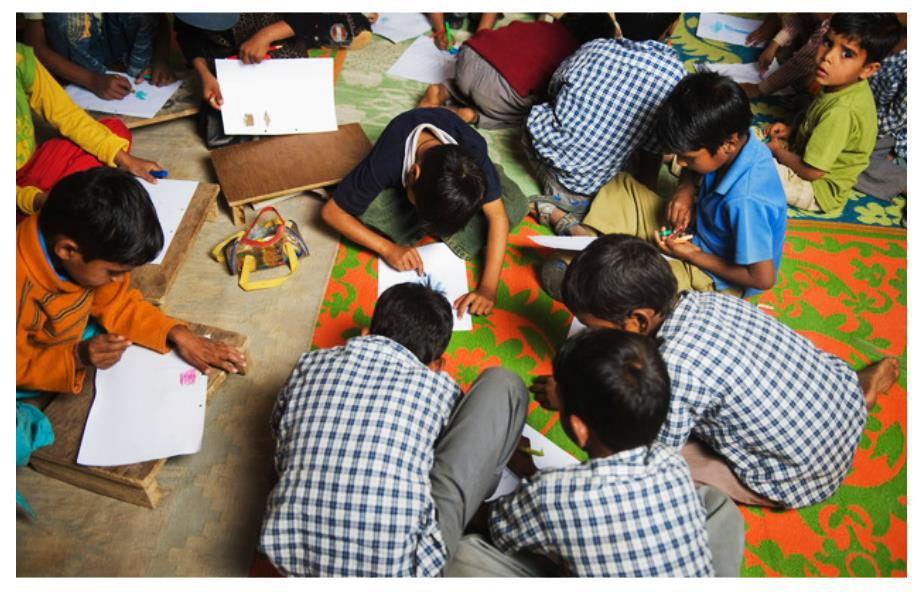
When the COVID-19 pandemic shut down classrooms across India, millions of children in rural Uttar Pradesh did not simply pause their education. For many, they stopped altogether. Poverty tightened its grip. Families pulled children into labour. Girls faced the threat of early marriage. The school — already struggling with crumbling infrastructure, too few teachers and unreliable electricity — became a distant memory.
Smile Foundation’s Back to School Programme was built precisely for this moment. And a CRISIL impact assessment, commissioned by ABSL AMC CSR, now offers a rare, evidence-based look at what actually happened when investment met intention across 51 schools in Siddharth Nagar and Shravasti — two of Uttar Pradesh’s most underserved districts.
The findings are instructive, honest, and in places, uncomfortable. That is what makes them worth reading.
The Problem Was Never Just Enrolment: Back to School Programme
India has made significant progress getting children into school. The harder challenge has always been keeping them there, and ensuring that when they do attend, something meaningful happens.
According to the ASER report cited in the assessment, only 44.8% of fifth-grade children from government schools could read second-grade textbooks. Just 22.7% could perform simple two-digit division. The average government school operates with 3.8 teachers, compared to 7.8 in private schools.
These are not statistics about what happens — or fails to happen — once a child walks through the gate.
The Back to School Programme understood this distinction. Rather than focusing solely on getting children back into classrooms post-pandemic, it addressed the conditions that make a classroom worth returning to:
- reliable electricity
- clean drinking water
- functional toilets
- teaching methods that actually engage the children sitting in front of them
9,290 Children. 51 Schools. Two Districts.
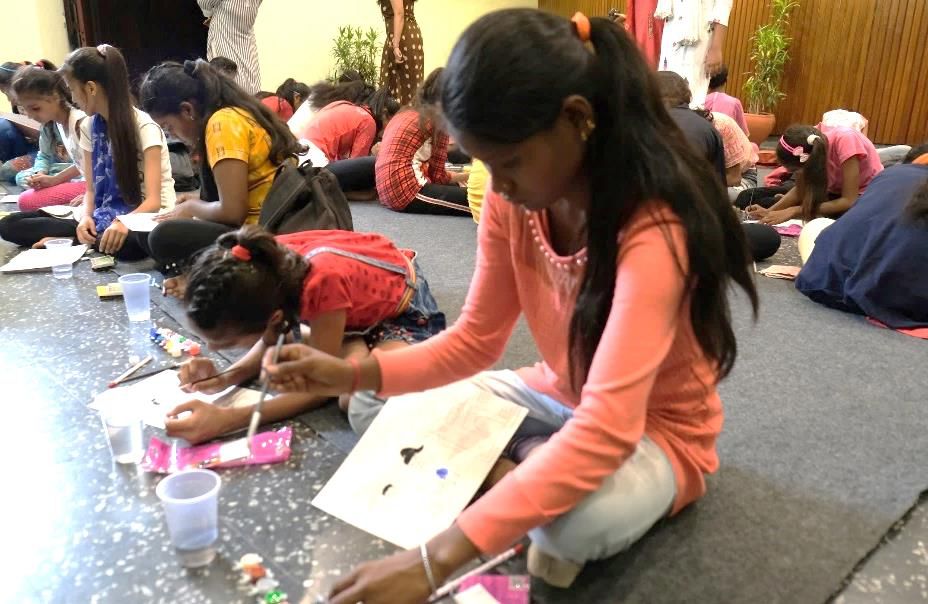
The Back to School programme reached 9,290 students across 51 government schools — 15 in Shravasti and 36 in Siddharth Nagar. The CRISIL assessment surveyed 76 students across 12 sampled schools, supplemented by in-depth interviews with 15 teachers, 15 parents and officials from Smile Foundation and the ABSL CSR team.
The demographic picture that emerged matters as much as the headline numbers.
58.54% of surveyed students were girls — not by accident, but because two of the sampled schools were girls-only institutions. In a region where adolescent girls face disproportionate barriers to education, that concentration reflects a deliberate choice about where intervention is most needed. 83.12% of students had at least one female sibling, underscoring the ripple effect that educating one girl can have across a household.
The majority of students — 53.25% — belonged to Other Backward Classes (OBCs). Nearly 75% of fathers worked in daily wage, farming or informal labour. Most mothers were homemakers. The economic fragility of these families means that any disruption to schooling — a broken smart TV, a non-functional water purifier, three months of electricity cuts — is not a minor inconvenience. It is an argument, however unspoken, for not sending the child to school at all.
Infrastructure as Motivation in Back to School Programme
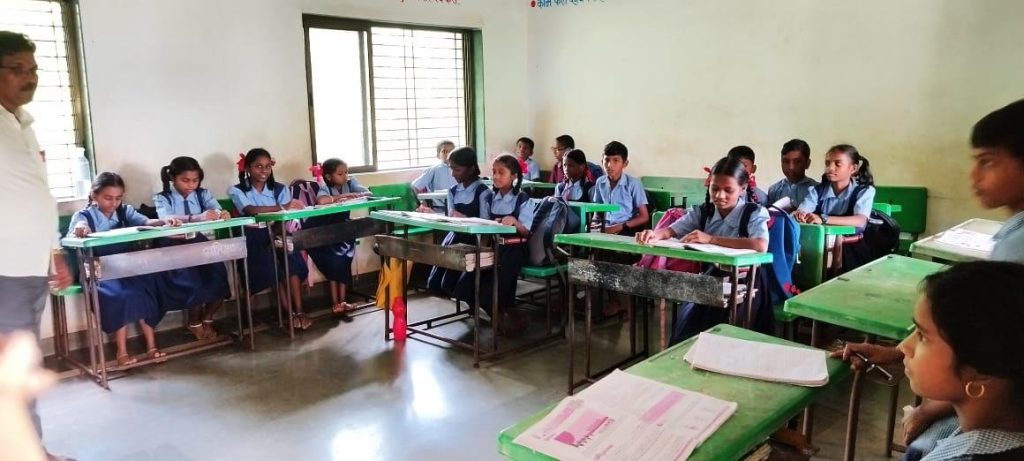
One of the programme’s central arguments is that physical infrastructure is not separate from learning outcomes — it shapes them.
Before the Back to School programme, 100% of surveyed students reported having no solar panels in their school. Post-installation, 59% of students stated that their school now had 6–7 hours of consistent electricity during school hours, compared to only 27% before. That 32-percentage-point increase is significant in schools where smart televisions, water purifiers and ceiling fans were previously rendered useless by power cuts.
Every single student surveyed confirmed the installation of e-classrooms with smart TVs and android boxes. Every student confirmed the presence of solar panels. And 63% cited access to smart classrooms as the most significant benefit of the solar energy installation — not lighting, not fans, but learning.
This is the chain the programme was trying to build: reliable electricity enables smart classrooms; smart classrooms enable better teaching; better teaching changes whether a child wants to come back tomorrow.
74% of students said they preferred e-classroom learning over traditional methods. 87% reported that the sessions improved their understanding of concepts. 84% observed a change in how their teachers taught. 82% said classes had become more interactive.
These are signals of engagement — the precondition for everything else.
The Teacher in the Room
Infrastructure without teacher capacity is hardware without software. Smile Foundation understood this.
Teacher training was built into the programme, conducted by the Smile Foundation team for an entire day and covering interactive pedagogy, concept-based teaching and the effective use of smart classroom tools. At least two teachers from each sampled school participated in the December 2022 session, with a follow-up in February 2023.
The proximity of those two training sessions was noted in the assessment as a limitation. With trainings so close together, the cumulative impact on classroom practice had not yet had time to show in student outcomes. This is a useful design observation for future programme iterations — spacing matters, and teacher behaviour change takes longer than a single session.
Still, the early signals were positive. 58% of students observed an increase in teacher motivation. 85% reported that their teachers were using e-learning tools effectively. And critically, no student reported disagreeing that teaching quality had improved — the strongest signal in the dataset that teacher-facing investment is worthwhile.
Pratibha Ki Khoj — A Promising Idea, Unevenly Realised
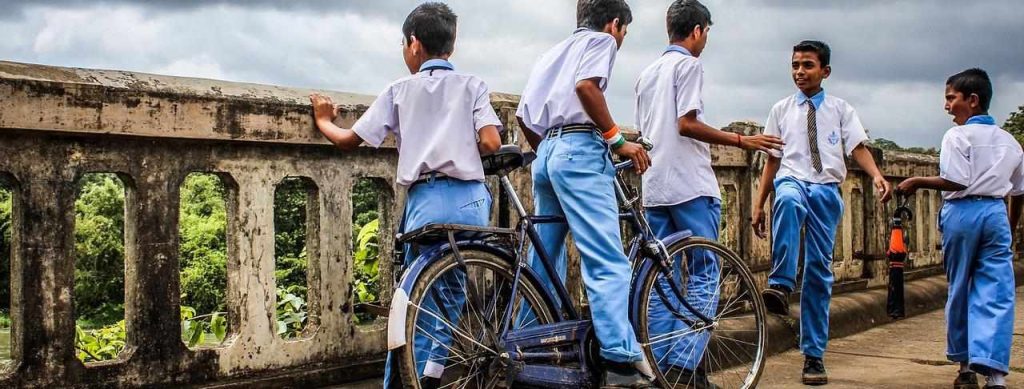
One of the programme’s more distinctive elements was Pratibha Ki Khoj — a talent search initiative designed to identify and nurture skills beyond the academic curriculum, through science activities, sports, arts and crafts.
The concept is well-founded. Research consistently shows that extracurricular participation builds confidence, improves school attachment and reduces dropout risk — particularly among students who do not excel in conventional academic settings.
The implementation picture, however, was mixed. Only 7.79% of surveyed students were aware of the initiative. Among those who were, 66% had participated in science activities, 33% in sports and 33% in arts and crafts. 100% of participating students reported being satisfied with the experience, and the reported benefits — increased motivation to attend school, greater confidence, stronger peer connections and teamwork — were meaningful.
The challenge is reach. An initiative that achieves 100% satisfaction among its participants but awareness of less than 8% is a programme that has not yet found its full audience. This is an area where investment in communication, community ownership and teacher incentivisation could significantly multiply impact.
Where the Programme Falls Short — and Why That Honesty Matters
The CRISIL report is to be credited for not softening its findings in the areas where the programme has not yet delivered.
Water purification was provided to three old schools. At the time of assessment, none of the purifiers were functional. Solar panels in four schools — all from the earlier cohort of interventions — had maintenance failures that rendered them non-functional. In one school, a smart television was destroyed by a roof leak that was already a known structural issue. These are not incidental failures. They are predictable consequences of installing infrastructure without embedding a maintenance plan.
The scoring matrix reflects this honestly. On sustainability — covering beneficiary feedback mechanisms, internal assessments and exit planning — the programme scored 1 out of a possible 9. That is a near-zero score in the parameter that determines whether any of the other investments survive beyond the programme’s active phase.
The CRISIL recommendations are: develop criteria for school selection that accounts for existing NGO presence and structural deficits; conduct thorough needs gap assessments before allocating infrastructure; build maintenance protocols into programme design from the outset; and strengthen School Management Committees so that schools develop internal capacity rather than dependency.
What the Numbers Add Up To
On the scoring matrix overall, the programme received a total score of 16. On impact — the most heavily weighted parameter at 30% — it scored 20 out of 25. Students reported measurable improvement in their understanding of concepts, their inclination to attend school and their overall learning experience. Dropout rates remained low. Community recognition of school quality improved.
These are real gains in some of the most resource-constrained schools in one of India’s most underserved states. They were achieved in a post-pandemic environment where re-engaging children — particularly girls and children from marginalised communities — with formal education was itself a significant task.
The programme’s overall score of 16 reflects a programme that is working where it has been allowed to work fully — and struggling where structural gaps, maintenance failures and awareness deficits have not yet been addressed.
The Bigger Picture
India has approximately 10.32 lakh government schools facing infrastructure deficits. The Right to Education Act mandates a pupil-teacher ratio of 30:1. The average classroom in this survey had 63 students.
No single CSR programme bridges gaps at that scale. But the Back to School Programme demonstrates that targeted, evidence-guided investment in physical infrastructure — solar panels, smart classrooms, drinking water — combined with teacher capacity building and community engagement, can shift the conditions under which children learn. And when children experience school as a place that is functional, engaging and responsive to their needs, they come back.
The challenge, as this assessment makes clear, is ensuring that the changes last. Infrastructure that works for one year and then fails teaches a different lesson entirely.
For Smile Foundation, the ABSL AMC CSR team, and the schools of Siddharth Nagar and Shravasti, the path forward is not to start over. It is to deepen what is already working — with better maintenance systems, stronger community ownership, broader awareness of initiatives like Pratibha Ki Khoj, and a sustainability plan that does not wait for the next funding cycle to ask whether anyone is still looking after the solar panels.
The children are waiting. They just need the lights to stay on.
This blog is based on the CRISIL Impact Assessment of Smile Foundation’s Back to School Programme, commissioned by ABSL AMC CSR.