Categories
In The Spotlight

From Blackboard To Digital Board

Digital media, a word often associated with computers and the changing face of the IT sector. This misconceptualization is based on the premise that computers are just a subset of the vast universal set which offers innovations which were beyond the imagination of many, just a decade ago. The narrow definition of digital learning focuses on its association with technology; however the concept has a much wider scope. It not only includes association, but effective use of digital technology that promotes adaptive learning and exposes an individual to real life situations. This marks the line of transition from textbook based education to augmented reality education. Hence, the phrase, “From Blackboard to Digital Board” becomes more relevant in case of classroom based learning.


 In this background, we would look into the dynamic nature of digital learning and its detrimental role in education. For this, this article would be based on a trisected premise. The first being an innovative perspective towards digital learning, education and other prospective applications, the second being the financial feasibility of digital learning, thirdly and lastly, the social implications, technical jargon and acceptability of digital media.


The innovative transition in the field of digital learning is a landmark in itself. Earlier, school going children were restricted to the limited and basic computer software. The transition marked the inculcation of smart classes, where in the regular classes were also conducted through means of advance application based education software.  More and more schools are also shifting to tablet learning. Competitive exams are transmuting to online platforms. The most significant juncture in the digital learning space was when coaching centers started using digital media, to not only simplify the concepts for children but also make it the unique selling proposition of their own brand. These innovations lead us to conclude that the Indian education and learning space has accepted the transition of digital media from being a secondary option, to being the primary platform for teaching the new generation.


Furthermore, when we touch upon the financial feasibility of digital learning, it is understood, that the cost varies depending upon the kind of technology that an institute is willing to use. However, due to the significance of the large urban and rural population of children, the benefits of economies scale are accrued. Also, it is important to consider the return on investment on human resources in this scenario, rather than considering the immediate absolute cost that is incurred. The benefits of inducing digital learning in the education space, from a financial standpoint, are twofold. Children are exposed to augment and virtual reality based education software that prepares them for the dynamic and demanding job/entrepreneurship structure. Secondly, the benefits of a onetime investment will not only be shared by a large number of students of one batch, but by the various future batches as well, thus widening the impact of the scale benefit. This twofold beneficiary structure is further complemented by the efforts of various tech-giants, such as Samsung, which has recently entered the domain of digital learning. Samsung provided tablets and smart boards to various public sector and private sector schools at effective prices. Thus, the financial feasibility, is plays the role of a pro, when it comes to induction of digital media.


Every innovation presents an opportunity. However, capitalisation the opportunity by all sectors requires socio-economic common ground. The digital learning drive has its fair share of pros, but a plateau of differentiation is created. While most private and major government schools have access to digital platforms in urban areas, the idea of digital learning is still a far cry for a majority of schools in rural areas. Yet, there stands to be hope. Tech companies have started to partner with public sector schools, specifically in rural areas. This not only improves the quality of education but also entices the children to explore.


To bring innovation and change Smile Foundation’s Mission Education centre in Mumbai, Chennai and Delhi have been facilitated with ‘Smart Class installations’ for giving children access towards modern electronic medium of classroom teaching –learning. In Asia’s largest slum, Dharavi, school going children have seen a change in the classrooms with digitisation. For technology integration and for improving the children’s learning interest, skill sets and the overall learning outcomes, smart classes were established to promote digital literacy through digitised curriculum and teaching techniques at the Mumbai centre.


In Delhi some Mission Education Centers got quality intervention support in terms of Competency Based e-Learning solution CoBELS) which is a pedagogical tool that enhances learning through a child’s own experiences and actions. It is an E-Learning Solution, which adapts a learner-centric pedagogy and provides a free and unrestricted access to the children which enhance their logical and analytical thinking skills and application of knowledge which in turn gives better learning outcomes. The key is to provide them with a solution which provides joyful and experiential learning through gaming and activity based content.


All the above stated arguments, figures and cases lead us to a single and ultimate conclusion; Digital learning is the future of education. Induction of innovation in education, lights the society’s path to a better future. Digital learning is just a minor investment, in the pursuit of building an excellent human resource pool. Let’s move forward from blackboard to the digital board.

Categories
Insights

Social Justice: For one and for all

Social Justice’ is the concept of fair and just relations between the society and an individual, measured using parameters like distribution of wealth, opportunities for personal activity and social privileges. In many ancient cultures, the concept of social justice often referred to individuals fulfilling their societal roles and in turn, receiving their dues from society. Currently, the global movement for social justice is focused on the grassroots level, with an emphasis on social mobility, creation of safety nets and economic justice.
All this jargon about social justice makes it sounds like a standard that can only be achieved by the multi-national companies, housed in high-rise buildings. However, that is not the case. It, in simple terms, is ensuring that people are aware of their fundamental rights, duties and responsibilities towards society, and are treated in a just and fair manner.
It is the underlying principle of peace within and among nations. It upholds and promotes gender equality, rights of indigenous people and migrants, and aims to remove barriers based on gender, age, race, ethnicity, religion, culture or disability. The UN observes February 20 as World Social Justice Day. It is at the core of the UN’s global mission of promoting development and human dignity. Their commitment was fairly evident after the International Labour Organisation (ILO) adopted the ‘Declaration on Social Justice for a Fair Globalisation’, which promotes decent work through an approach to achieve four main objectives – employment, social protection, social dialogue, and fundamental principles and rights at work.


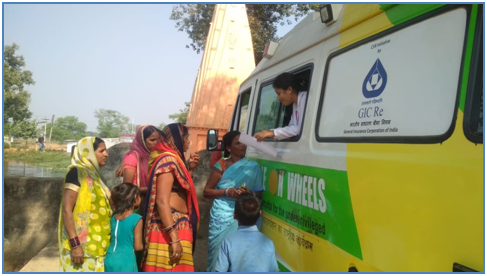
An organisation like Smile Foundation, that works for the empowerment of children, youth and women at the grassroots level, is an inherent supporter of social justice. The vision and mission of the foundation is in line with the fundamental basics that social justice embodies. The campaigns of Smile Foundation and initiatives towards empowering the youth and ensuring they have a steady stream of income is a fairly good example of individuals getting their due from society by performing their duties. The basic rights of education, information and healthcare, empowerment of women and livelihood training for youth are championed for through Smile Foundation’s Mission Education, Smile on Wheels, Swabhiman and STeP programmes. Their work aims at providing for the underprivileged, thereby ensuring peace, prosperity, development and dignity within the nation.


Social justice is the need of the hour with the ongoing safety and economic crisis. It maintains the social fabric of society and ensures that both inter-social treatment and government policies are regulated and in check.

WhatsAppFacebookTwitterLinkedInEmailShare

Categories
Women Empowerment

New India: Empowering Rural Woman

To call the woman the weaker sex is a libel; it is man’s injustice to woman. If by strength is meant moral power, then a woman is immeasurably man’s superior.”
– M. K. Gandhi

A woman is the creative energy of cosmos. From giving birth to nurturing new life, she invests herself physically and emotionally. She is the first one up, and the last one to go to bed, every single day, in all the households all across, yet she faces oppression and discrimination. The deeply entrenched patriarchal mindset of our society is responsible for many of the problems women face. The millennium has witnessed some change in the status of women but this scenario is reserved only for the urban and developed regions. As we go to the rural areas the situation of women remains unchanged.

If we try to solve the deep-rooted social injustice that highlights this persisting problem by targeting women alone, we will not yield any results. An all-inclusive effort is required, where communities can be developed through sustainable and integrated programs that influence one and all.

It has to start with the sensitizing of boys. They have patriarchy ingrained in their DNA and consider violence against women, and various forms of oppressing women to be routine. This needs to be addressed at the grassroots level, and the older have to lead by example. This attitude must change now. Domestic violence is another bane of rural India. One stop help centers must be set up in villages for domestic violence victims where women can get legal, medical and psychological assistance, and police action can also be initiated. Sex ratio imbalance in villages needs to be given serious thought, and implementation of immediate prosecution of offenders of female foeticide is vital.

Macro, and micro level empowerment programmes must be implemented to provide a solid base to nurture the inner strength and self-esteem for the women in rural India. Education is the most powerful tool to progress in life, and attention to this aspect is crucial. Besides balancing inequalities, education also acts as a means to improve the status of women within their families. Training programs that equip women with the required skills to pursue new livelihoods should be started in rural areas. They must be taught to adapt technology so that they can get maximum benefit from the changing scenario of digital India. Leadership and participation of rural women in shaping laws, strategies, policies, and programmes on all issues that affect their lives must be promoted.

It is high time we realize that rural women are an intrinsic part in achieving transformational economic, environmental, and social changes required for sustainable development. There is no easy quick fix to this problem. The real answer lies in a holistic approach that can tackle the complex reticulate issues of economic welfare, social justice, education, health, and traditions. Multitasking and delivering multiple roles every single day, women are undoubtedly the backbone of our society. We just have to stand by her and support her to see her blossom because when we empower a woman we don’t just empower her we empower a family, a community and a whole generation.

Categories
Smile

Swacch Bharat, Swasth Bharat – let’s begin with hand washing.

Sanitation is one of the most important aspects of community well-being. It protects health, extends lifespans and accelerates economic development. Having said that, today in this modern age, it comes across as a shock that globally, diarrhea is the second leading cause of death in children under five years of age. It is not just children, poor sanitation exposes millions of men and women to a plethora of diseases that incapacitate them and mitigate their productivity.


Hygiene and prevention of disease is the need of the hour in a country like ours. It brings about an improvement in the general quality of life. Demand must be generated for sanitation facilities through awareness creation and sensitization. All schools and “anganwadis” in rural areas must have proper sanitation facilities and hygienic behavior should be promoted among students and teachers. All this can be made possible by encouraging cost-effective and appropriate technology development and application in sanitation. There should be an endeavor to reduce sanitation-related diseases.


Bacteria and viruses are everywhere around us and we have them inside our bodies too. We need some of these bacteria for the proper functioning of our system but some of these pathogens can wreck our bodies if they take over our immune system. As simple as it may sound, hand washing with soap is the most effective way of removing germs and harmful bacteria from entering our system. This can largely prevent many common and life-threatening infections including gastrointestinal infections, such as Salmonella, and respiratory infections, such as influenza. If neglected these can result in some serious complications, more so for young children, the elderly and those who have compromised immunity.


Hands should be washed with soap and water as it removes substantially more disease-causing pathogens than washing hands with water alone. Running warm water is best for hand washing as soap lathers better with warm water.


Hand washing is not just a means of personal hygiene, in fact, it is an important measure of infection control. Transmission of infectious diseases can be largely minimized by making sure that hands are cleaned:


1. After using the restroom
2. Before and after eating
3. Whenever hands get dirty and contaminated
4. After contact with animals or other person’s intact skin
5. After contact with body fluids
6. After contact with inanimate objects


These are probably few of the incidents but the list is inexhaustibly large and we can keep adding to it. The basic idea behind this list is that we must, by all means, reduce the potential transmission of disease-causing microorganisms from entering our system. Frequent hand washing should not be optional but it must be applied as a rule. Conclusively, In order to protect our health it is imperative that we wash our hands as often as necessary and as often as possible.

Categories
Smile

New year, new beginnings…

New year, a time of all things new. It marks the end of the previous year and makes you welcome the next one with enthusiasm and hopes. At this point, we just take a look back at how the year went, from the enjoyable moments to some of the sad ones, from our achievements to things we could’ve worked hard upon, from our dreams to how they turned out.


It’s a great time for celebrating, with families and friends. We dance, eat and enjoy as we welcome the coming year. It’s a good time to meet up with friends and with people, we’ve lost touch. Also, a chance to make new friends.


With the new year, comes a set of resolutions, a tradition going on from centuries. We take note of the things we want to improve upon or get started with which we realized we didn’t do the last year. For me, being a teenager its the resolution of improving my grades and working hard to achieve the academic success I desire. It takes time and patience along with dedication, and I aim to give it all this year. Along with this, a resolution which concerns me becoming more health conscious. A healthy body and mind are essential for healthy living.


I also want to be more socially active, not over social media but interact with people in real life and connect with them. It’s a sad point, but somehow this generation tends to be worked up more about their social image than actually participating in social events. I hope to spend more time with my family and friends. It’s never too late to learn new skills and broaden your horizons, as the saying goes, ‘a new year comes with new beginnings.’ I also want to volunteer more in developmental organizations and help those who I can. It always feels good to contribute towards your community in every little way you can.


So here’s to a great beginning to 2019, filled with high hopes and aspirations, may it indeed be a great year…

Categories
Smile

Lights, camera, action!

Cinema is one of the popular means of entertainment in today’s world. It expands our imagination and horizon of thoughts. Though traditionally cinema is often discredited, under the right circumstances, it has a constructive influence on children’s lives. Movies encourage children to hone their imaginations. They provide them with the opportunity to develop language skills and promote socialization and family interaction.


Films provide the children’s mind to fancy a world which being relatable, expands their imagination. A simple Disney movie, ‘The Lion King’ (which till date happens to be my favorite movie) has so much to offer to its fellow viewers. It features everything, from simple quotes like “Oh yes, the past can hurt. But the way I see it, you can either run from it or learn from it.” by Rafiki, to learning how to accept changes beyond our control and taking charge of the situations. It teaches children great values of life. These are things that children wouldn’t quite understand if theoretically brought up or even show interest in them, but a movie captures and encaptivates the mind, into thinking about and comprehending difficult situations.


In a country like India, with a vast diversity of cultures and language, movies are something which brings everyone together. May it be a Bollywood or a Hollywood one, everyone likes watching movies together. It creates a sense of togetherness and decreases self-restrictions. In today’s day and age, where children are often seen avoiding family interactions, time spent in watching cinema is the key to keep them together.


Many say that movies promote violence and negativity, but honestly, it depends on the elders as to what they encourage and allow their children to watch. They should restrict movies which include violence and mature themes for a child to grow up in a positive environment.


Not only this, but movies are a source of learning languages and correcting pronunciation. Sometimes learning from a textbook isn’t enough, movies can teach you more. Beyond the textbook understanding of facts and circumstances is often necessary, and there’s nothing better to promote them than a good feature movie.


Thus, movies offer growth and development for a child’s mind and offer them ways to tackle situations and learn things necessary for life.

Categories
Smile

UNIVERSAL CHILDREN’S DAY #GoBlue

UNIVERSAL CHILDREN’S DAY #GoBlue

The 20th of November Universal Children’s Day was established by the UN in the year 1954. It is celebrated globally in order to promote international togetherness and awareness among children worldwide and also for improving children’s welfare. It is an important date as on this date the UN General Assembly adopted the Declaration of the Rights of the Child in 1959 and adopted the Convention on the Rights of the Child in 1989. However, we (India) and some other countries such as Australia chose various different dates during the year to celebrate Children’s Day.


Universal Children’s Day is a day to patronize and promote the rights of children. Children’s rights aren’t any special rights or different rights, they are the fundamental human rights. A child is first a human being who is entitled to be treated just the same.Nelson Mandela rightly said, “Safety and security don’t just happen, they are the result of collective consensus and public investment. We owe our children, the most vulnerable citizens in our society, a life free of violence and fear.”


We must ensure that children are protected from any form of exploitation. Child trafficking has spread its roots deep into the society today. Proper and severe measures need to be taken in order to curb this heinous crime and steps must be taken to restore the dignity of the innocent lives that have survived this atrocity. Advocacy campaigns must be launched to help protect vulnerable children against exploitation. Public policy and training also need mass support. Awareness training should be conducted in schools so that children can learn about safety and gather the courage to report if they see any suspicious activity. Creative ways are the need of the hour to protect the children and improve law enforcement to prevent other children from exploitation and being trafficked.


The world needs to give its best to the children of today. We must improve the odds for every child and provide them with an opportunity to rise above any form of prejudices and pitfalls. We have to ensure their protection against predators and abuse, to fight off disease, ignorance, malnutrition, and shame. It is our fundamental duty to make efforts driven towards making children safe, educated, well-nourished and empowered. As adults, it lies upon each one of us that we advocate, promote, and celebrate children’s rights in order to build a world where every child is in school, safe from harm, and can attain their potential. We must invest in a bright future, and CHILDREN ARE THE FUTURE.

Categories
Smile

Together we dream of a poverty-free world

In today’s modern times there is no shortage of potential wealth in this world. Regardless, a harsh reality of the 21st century is that countless families remain living in abject poverty. Which is a multifaceted concept, which may include social, economic, and political elements? The lack of education, overpopulation, and epidemic diseases such as AIDS, malaria and environmental problems like lack of rainfall and extreme weather are few of the causes of poverty in many countries in the world today.


According to current statistics, there has been a marked progress in reducing poverty over the past decades. Sadly, despite the progress made in reducing poverty, the number of people living in extreme poverty globally remains unacceptably high and the given global growth forecasts, poverty reduction may not be fast enough to reach the target of ending extreme poverty by 2030.


One of the major hurdles in eradicating poverty is the reach to the people who remain extremely impoverished, as they live in a remote area of fragile countries. In such situations, access to good schools, health care, electricity, safe water,


Together we dream of a poverty-free world


and other critical services remain intangible. Determined by socioeconomic status, ethnicities and geography these carry on being elusive. Nevertheless, we need to break these poverty traps by bringing structural changes such as reducing health care costs by increasing access to health care, and through vaccine coverage preventing disease transmission. Once people are healthy and can safeguard their crops and livestock, they will be able to dig themselves out of poverty.


One very interesting fact is that the poorest people in the world are increasingly benefiting from the innovations rapidly emerging today. For example, the technological advancements in the field of education have helped collect millions of data points from student tests to figure out common mistakes children make on math problems and then design remedial exercises for each student. This platform has helped 80,000 students across India improve math and Hindi skills for a fraction of the cost of attending school.


Besides education, providing clinics and classrooms, medics and medicines, can help in bridging the gap in life chances and give people the tools to challenge the rules that perpetuate economic inequality. Free public healthcare and education are not just human rights; they also tranquilize the adverse impacts of the skewed income and wealth distribution in our society.


It is believed that in future, the better-educated workers will come almost exclusively from developing countries, replacing aging workers from high-income countries in the global pool. This education wave will alter the dynamics of global inequality, both within and between countries.


The real engine for balanced growth lies in education and integration of one and all in the economy. The current trends in the labor market are undergoing a huge transformation. Automation is displacing unskilled workers, and non-routine jobs are having a similar impact with the expansion of the IT industry. Investing in education, vocational and skill training can be hugely benefitting, leading to an integrated economy.


Every one of us has to come together with those furthest behind to build an inclusive world of universal respect for human rights and dignity to be free of poverty for a better world tomorrow.

Categories
Insights

Social media: a privilege or a plague

How was life before we were bombarded with the influx of various formats of social media? Frankly today it is difficult to imagine life without it. It’s almost as if the young generation can divide time into before and after the invasion of social media, where the before part is nothing but a blur.


In today’s day and age social networking has become a phenomenon which has seized us completely to the extent that we can’t imagine life without it. It is not just the young but one and all of us have fallen prey to it’s addictive nature. Even though there is cyber bullying and threat to privacy, still it is unbelievably shocking that on an average today’s teenagers spend about nine hours every day on social media.


Social media has completely taken over our lives. It’s almost like everyone is in a race to outsmart the others with their updates and feeds on, be it Facebook, Instagram, Twitter or Snapchat. This has resulted in loss of genuineness and given rise to superficial relations. There is stress, jealousy and lack of value and appreciation for true relationships.


Wherever you turn there are ill informed and angry opinions. It is so difficult to tell fake journalism from real. This freedom of speech on social media platforms are a big threat to democracy. The speed and extraterritorial reach of disinformation is alarming and people soak into it as if it were real for the sake of social desirability.


Looking back at the purpose for which this technology was developed, the advantages of social media still surpass its disadvantages. Besides being an ice breaker, social media is the biggest tool today to maintain and promote a business. It increases your business visibility and brand recognition. Today social media has become an indispensable tool and to sum it up, it has indeed transformed the world into one community, where anyone and everyone is just a friend request away.

Categories
Insights

Pollution: Mother Earth has rights too

Man is a self-indulgent being. We are always talking about human rights, but do we ever take the time to ponder that these planets where we are temporary residents have rights as well.


In earlier times nature played the biggest role in maintaining the earth’s natural equilibrium. As famously quoted by the father of our nation, Mahatma Gandhi, “Earth provides enough to satisfy every man’s needs, but not every man’s greed”, today human materialism has resulted in the forest and the green cover getting replaced by townships and industries.


We have all heard about our forefathers living in vast open spaces, surrounded with lush green trees, clear blue day skies and starry nights. The atmosphere was then clean and there was sufficient oxygen for humans to breathe freely. The environment has changed drastically since the last five decades. Human beings are themselves degrading the land surfaces, by polluting the water bodies and by emitting poisonous greenhouse gases and adding particulate matter to the air at an unprecedented rate.


Pollution is clearly a by-product of human activity. Our interference with nature is causing the depletion of basic natural resources like air, soil and water. Burning of fossil fuel is the largest contributing factor of carbon contamination in the environment. Deforestation along with dumping of huge quantities of human and industrial waste in oceans and fresh water bodies is another big reason for water pollution and oil spillage is largely effecting water pollutant. We humans are responsible for all of this upheaval and chaos.


We pretend to be ignorant about the level of destruction we are causing individually. In order to set the record straight, we have to realise that one of our biggest obstacles in achieving our goal for better living environment, is our mindset. We need to emotionally connect to nature and understand how it works for us and how dependent we are on it. Let us not live in this false belief that someone else is going to come and fix this for us. It is we, who have to set the ball rolling.


We must understand that even the most powerful nations have not been able to anything substantial to check the alarming rate at which environmental conditions are deteriorating. If we don’t take remedial action at an individual level then this will take the form of an incurable disease. Let us all participate equally and contribute to leaving the earth in its purest form for the future generations to prosper and live joyfully.


WhatsAppFacebookTwitterLinkedInEmailShare

0%