Categories
Education

Importance of Quality in Education

Looking for qualitative parameters in life is a natural inclination for several reasons, as qualitative aspects add depth, meaning, and richness to our experiences. Qualitative parameters help individuals define and understand the meaning and purpose of their actions and experiences. They provide a framework for evaluating whether activities align with personal values and contribute to a sense of fulfillment.

The pursuit of qualitative parameters in life is a reflection of our innate human desire for deeper meaning, connection, and personal growth. These aspects contribute significantly to the richness and fullness of the human experience. Similar to this, quality in education makes it possible for children to grow up into individuals who are well-learned and have possible workable solutions to the problems of their time.

Quality Education in India

Quality education holds the potential to be a transformative force for India, influencing various aspects of societal development and contributing to the nation’s growth. At the forefront, a skilled and adaptable workforce is a direct outcome of quality education. Equipping individuals with the necessary skills and knowledge for the modern job market is crucial for economic growth. Moreover, education nurtures creativity and critical thinking, fostering innovation and entrepreneurship, which are essential drivers of economic prosperity.

Socially, quality education plays a pivotal role in empowerment and inclusivity. It acts as a catalyst for bridging social gaps, especially in marginalized communities, and serves as a tool for gender equality by empowering women and breaking down traditional barriers. An educated populace is more likely to engage in civic activities, contributing to good governance, and fostering an informed citizenry that actively participates in the democratic process.

On a global scale, education instills a global perspective, preparing individuals to engage with the world and enhancing India’s competitiveness internationally. Additionally, education contributes to health literacy, enabling individuals to make informed decisions about their well-being, leading to improved public health. Education correlates with lower birth rates, contributing to better family planning and population control.

The Cultural Aspect of Quality Education

Moreover, education is a key factor in preserving cultural heritage. It plays a crucial role in celebrating and passing down traditions, languages, and historical knowledge to future generations. Education contributes to environmental awareness, promoting sustainable practices and a sense of responsibility towards the environment. An educated population is more likely to engage in research and innovation to address environmental challenges, contributing to sustainable development.

In the area of technology, quality education ensures that individuals are digitally literate, a vital skill in the age of technology and information. A well-educated workforce is more likely to contribute to technological advancements, fostering innovation in various sectors. Furthermore, education serves as a pathway out of poverty by offering opportunities for economic mobility through improved employment prospects and income levels.

The Essence of It All

In essence, quality education is the cornerstone for a thriving, equitable, and sustainable society. By investing in education, India can unlock its full potential, fostering a generation of empowered individuals capable of steering the nation toward a brighter, more inclusive, and prosperous future.

Our flagship programme, Mission Education (ME) focuses on the quality education of underserved children of urban slums and rural remote areas of India. Our foray into STEM education and NEP 2020 ensures that children receive the best possible education in an environment conducive for their overall development.

Categories
Education

Foundational Literacy and Numeracy (FLN): Better Learning Curves

“Once students fall behind on foundational skills, they tend to maintain flat learning curves for years, perpetually they [are] unable to catch up. For many students, this has become a major reason for not attending school or for dropping out altogether. Surveys indicate that we are in a severe learning crisis concerning these most basic skills,”

shared renowned Indian-American mathematician Manjul Bhargava

Mr. Bhargava, who is a member of the Education Ministry’s panel developing the NCF (National Curriculum Framework), also emphasizes dedicated financing, resources, legislation, and international commitments to ensure the goal is achieved.

The Evolution of Foundational Literacy and Numeracy (FLN)

Over the years, various organizations have attempted to define the scope and importance of Foundational Literacy and Numeracy (FLN). Despite different interpretations, the common elements include skills like letter and word recognition, reading, writing, mathematical problem-solving, and skill development. In India, the National Education Policy 2020 and the directive NIPUN Bharat have outlined FLN, focusing on its measurement and achievement.

For India, FLN skills entail proficiency in reading, writing, and mathematics, ensuring the ability to comprehend basic text and perform simple mathematical calculations by the end of Grade 3. To realize this, NIPUN Bharat aligns with NEP guidelines, emphasizing the initial four foundational years, including one year of pre-school and formal schooling up to Grade 3. Global and domestic studies affirm the necessity of FLN investments for India, promoting equitable education initiatives, preventing dropouts, enhancing higher-order learning, fostering social responsibility, improving health outcomes, and addressing social issues. Additionally, FLN efforts contribute to reducing remediation costs in education.

Status of Foundational Literacy and Numeracy in India

Despite a consistent enrollment rate of over 95% for the 6-14 age group over the last 15 years, substantial deficits in learning levels persist, with over 75% of Grade 3 learners lacking foundational skills. In literacy, only 20.5% of Grade 3 learners can read Grade 2 text, and in mathematics, only 25.9% can perform subtraction. While India has made progress with programs like the Integrated Child Development Scheme, the Right to Education Act (2002-2009), the Samagra Shiksha Abhiyan, and NEP 2020 emphasizing foundational skills, there is a need for comprehensive efforts.

India has made strides in creating a system to achieve FLN outcomes for all learners. Initiatives such as the Integrated Child Development Scheme, the Right to Education Act, the Samagra Shiksha Abhiyan, and NEP 2020 have underscored the criticality of foundational skills and strengthened the mechanisms to attain them. FLN is now at the core of India’s education landscape.

Significance of Assessments in FLN

Assessments bring attention to learning levels, offering insights for refining learning trajectories. They create awareness among stakeholders, help identify individual needs, prompt adjustments in pedagogy and classroom management, advocate for better governance, and guide funding decisions crucial for achieving learning outcomes. As India endeavors to attain universal Foundational Literacy and Numeracy by 2026, assessments are poised to play a major role in this transformative journey.

In the last two decades, four types of assessments have been employed to measure learning outcomes in India: International Assessments, National/Sub-National assessments, Community/Household Assessments, and School-based assessments. International assessments quantify India’s standing on learning outcomes globally. National-level tools provide insights into geographical trends and inform policy decisions for learning improvement, implemented in schools or community settings.

Public actors like the Ministry of Education (MoE), the National Council for Education Research and Training (NCERT), and the Central Board of Secondary Education (CBSE), alongside private stakeholders from both profit and non-profit sectors, contribute to creating and implementing these assessment tools. Organizations such as ASER and JPAL play a pivotal role in influencing systemic reforms by generating evidence of the need for robust assessments for FLN.

Despite the presence of various assessment forms, the improvement of learning outcomes remains a challenge. While tools like ASER 2022 indicate learning crises, the actual change in learning levels is disheartening. Only 48.2% of grade 5 learners in rural India can read grade 2 text, and merely 25.6% can perform basic division. Reflecting on this gap, current assessments can be implemented at scale but lack focus on competencies and higher-order skills essential for measuring learning progression and evaluating the impact of FLN on higher grades.

Challenges to Achieving FLN Outcomes

Navigating challenges at both the classroom and system levels is imperative for the Indian education system. Classroom-level challenges encompass the lack of diverse assessment tools, concerns about assessment quality, and the capacity of teachers to link assessment data to classroom planning. Simultaneously, systemic challenges like governance, accountability, barriers to implementing tech solutions in assessment, and inadequate budget allocations for assessments need to be addressed by stakeholders in the education ecosystem. Bridging these gaps is crucial for realizing the connection between assessments and interventions, ensuring effective progress toward FLN outcomes.

As the focus on FLN has intensified, challenges have surfaced in areas such as Policy and Intervention, Classroom factors, Governance, Assessment, and Funding. Addressing these challenges requires synchronized actions between the central and state governments. Best practices from initiatives across Pedagogy, Assessments, and Governance are identified to overcome these challenges, emphasizing competency-based assessments, school readiness assessments, generating accountability, and aligning monitoring processes with learning outcomes. This approach aims to propel India toward achieving its FLN goals.

Smile Foundation and FLN

Smile Foundation through its Shiksha Na Ruke campaign is implementing FLN in all its classrooms to ensure that the literacy and numeracy levels of children are up to the mark for them to learn better in their higher level of education.

Categories
Education

STEM Conferences in India and Women Representation

Over the past three years, a staggering 35% of such conferences featured only male speakers, as revealed in a recent preprint posted on the bioRxiv server. The under-representation of women in STEM is particularly glaring in the conference circuit, indicating a systemic issue that extends beyond the gender gap in academic faculty.

The study, conducted by neuroscientist Shruti Muralidhar and cell biologist Vaishnavi Ananthanarayanan, uncovered that, on average, women constitute a mere 16.7% of STEM faculty across 98 Indian universities and institutes. Notably, biology exhibits the highest representation of women at 22.5%, while engineering languishes at a mere 8.3%. To put this in perspective, top-ranking global universities in the social sciences and public health boast a considerably higher proportion of women faculty, ranging from 33% to 54%.

Are Elite Institutions in India Doing Better?

This gender disparity is even more pronounced in Indian elite institutions, where the eight highest-ranked institutions have fewer female faculty members than the average, with a median of around 10%. The reasons behind this under-representation are multifaceted and complex.

Contrary to assumptions, the low representation of women in faculty positions is not due to a lack of interest or competence among girls in secondary schools, where girls often outnumber and outperform boys in STEM subjects. Even at the undergraduate and postgraduate levels, women are well-represented. However, societal pressures, particularly related to starting families, draw many women away from STEM careers. A lack of support and a sometimes-hostile work culture exacerbate the challenges faced by women in academia.

What about our Progress with SDG5 Goal of Gender Equality?

Ensuring gender equality remains a significant challenge as we approach the 2030 deadline for Sustainable Development Goal 5. Current indicators reveal a concerning status, with only 15.4% of tracked Goal 5 indicators on track, 61.5% at a moderate distance, and 23.1% far from reaching 2030 targets. Progress in critical areas is slow, requiring substantial efforts to meet targets.

In political representation, the global share of women in national parliaments slightly improved to 26.5%, indicating a mere 0.5-point average annual increase. At the local level, women hold 35.5% of seats, showcasing progress from 2020 but still requiring over three decades to close the gender gap. Legislated gender quotas prove effective, yielding an average of 30.9% women’s representation in countries with quotas compared to 21.2% without.

Despite women constituting nearly 40% of total employment globally, their representation in management positions lags at 28.2%. The slow progress indicates a 1.0-percentage-point increase since 2015, projecting over 140 years to achieve gender parity in managerial roles. Regions like Western Asia and Central and Southern Asia exhibit the lowest shares of women in management, approximately 15%.

Decisions regarding sexual and reproductive health rights reveal disparities, with only 56% of married women aged 15 to 49 having decision-making power. Supportive laws exist in 76% of countries, but barriers persist, hindering access to sexual and reproductive health care, information, and education.

Efforts to end child marriage have seen progress, with one in five young women married before 18, down from one in four 25 years ago. Yet, challenges persist in sub-Saharan Africa, requiring at least 300 years to end child marriage globally.

Discriminatory laws and gaps in legal protection pose challenges, with 55% of countries lacking laws against discrimination, 60% lacking consent-based rape definitions, and 45% failing to mandate equal remuneration for equal work. Closing these gaps may take up to 286 years based on the current rate of change.

The COVID-19 pandemic, conflicts, and climate change threaten to hinder progress, with an additional 10 million girls projected to become child brides by 2030 due to pandemic impacts alone.

Ensuring the land rights of women remains a concern, with data from 46 countries indicating insufficient ownership and tenure rights. While positive examples exist, stronger protection and enforcement are needed.

Mobile phone ownership, a potential tool for women’s empowerment, faces gender parity challenges, with women 12% less likely to own mobile phones globally. Gender gaps are particularly pronounced in Central and Southern Asia and sub-Saharan Africa, emphasizing the need for targeted efforts to bridge these divides.

All this data combined with recent findings on women representation in STEM conferences in India suggest that the nation needs to ramp up its activities on the ground with equitable representation of girls and women everywhere.

Real STEM is an Inclusive One

The findings signal an urgent call to address deep-rooted biases and challenges that hinder the full and equal participation of women in STEM fields in India. Advocating for systemic changes, from academic policies to conference organizing practices, is imperative to build a more inclusive and representative STEM community.

Smile Foundation is implementing the innovative NXplorers programme of Shell, extending its advantages to students in government schools in rural and hard-to-reach areas of Telangana. This initiative is not only focused on educating underserved students but also strives to raise awareness among parents, emphasizing the significance of STEM (Science, Technology, Engineering, and Mathematics) education, particularly for girls.

In collaboration with the educational authorities of the state government, the programme ensures active participation not only from students and teachers but also from parents and communities. This inclusive approach is aimed at fostering sustainability over the long term.

Specifically tailored for children aged 10-12 years, the NXplorers Juniors programme is set to train and nurture young minds. Through engaging ‘NXplorers Junior Workshops,’ the programme aims to highlight the importance of water conservation, enhance food production methods, and advocate for energy conservation. The project aspires to impact 25,000 school children in the states of Andhra Pradesh, Kerala, and Telangana during the initial year of the Nxplorers programme.

Categories
Education Smile

How an enabling learning environment improves child outcomes?

Imagine yourself as a child in a crammed classroom, without proper lighting or ventilation, and the teacher holding a book in one hand and a cane in the other. Even if it was your favourite subject being taught, would you be able to focus on the lesson? Certainly not! In fact, you might actually want to flee away at the earliest chance available. Now, that’s how deeply our environment impacts our learning process.

Learning Environment

The learning environment goes much beyond the classroom. It refers to the physical setup, context, and culture in which the teaching-learning process takes place. In other words, the learning environment includes physical, social, and emotional aspects of the educational setting. It plays a crucial role in the learning process by impacting student engagement, motivation to learn, sense of safety and belongingness among students.

An effective learning environment is one that evolves with time and suits the age-specific physical, psychological, and emotional status of students. For example, the learning environment for toddlers and preschoolers will be different from that of adolescent students. However, the most essential features of a good learning environment are that it is encouraging, supportive, interactive, and makes the students feel safe and comfortable to express themselves.

Early Childhood Environments

Early childhood basically comprises stages of infants, toddlers, and preschoolers. A safe, supportive, and nurturing environment is highly essential in this stage to lay a strong foundation across various developmental domains like cognitive, social, communication, and motor skills. Such environments also contribute to preventing challenging behaviours and aid in interventions for kids with identified disabilities.

The major components of learning environments in early childhood can be identified as:

  • Physical environment: This includes the architectural design and layout of a room including furniture, its arrangement, and other display materials
  • Social environment: This includes the interpersonal relations and communication among peers, with teachers and family members inside the classroom
  • Temporal Environment: This entails the aspect of time, duration, and sequence of various activities that take place throughout the day 

According to a research paper published in the International Journal of Education and Practice, good and bad social behaviours in children develop as a result of both physical and social factors associated with the classroom environment. A friendly and supportive classroom environment creates desired social behaviour in children. The paper further suggests that classrooms that are not architecturally appropriate for early childhood learning, cause confusion and at times lead children to develop poor attitudes towards schooling.

Research shows that changes in the physical set up of early childhood learning environments like a rearrangement of furniture, implementation of activity schedules, and change in the mode of instruction have increased the probability of appropriate behaviours and decreased that of challenging behaviours significantly.

Children, irrespective of their cultural or regional backgrounds have certain traits in common. They are happy, and playful and have a need to feel safe and protected. Children should be provided an atmosphere that gives them the freedom to explore and express themselves.  Thus these aspects and requirements must be taken into consideration while designing the learning environment in early childhood.

Online Learning Environment

A good learning environment is one that adapts itself to changing times. This is the era of technology and the online learning environment dominates today’s scene. The most distinct feature of this type of learning environment is that there is no need for a physical location and the teacher/instructor and students are separated by space, sometimes countries or continents apart.

While online learning environments have the potential to use the power of technology to create an engaging and immersive atmosphere for students by providing easy access to various reading materials and learning resources; they do have their own limitations. The kind of interaction that happens in a physical space is often not possible in a virtual space.

The major challenge that an online learning environment faces in this regard is the interaction between learners. While online education facilitates interaction of learners with content and instructor, the absence of interaction of learners with other learners can make the students feel lonely and lead to loss of focus, ultimately leading to disinterest in online courses.

Also, the response of different age groups to online learning environments might vary. While adolescents and adults can find it helpful to continue learning and up-skilling through online courses, young kids might find online courses disengaging or overwhelming. Though there has not been much research on online learning readiness of different age groups, some existing studies suggest that learners’ age is definitely an important factor affecting online learning success or outcomes. 

Flexible Learning Environment

As its name suggests, Flexible Learning Environment refers to a learning method where students participate in designing their learning journey. It is more of a personalised environment where students are given access to determine not just the physical space but the grouping patterns and use of resources and time as well in their learning centres.

A classroom/learning space that can adapt to allow multiple learning activities to be conducted simultaneously is integral to optimise the teaching methods of the 21st century. A flexible classroom is fluid in terms of space management for free movement of children, sight, sounds, and light; versatile as it allows multiple uses and is modifiable to suit different instructional needs.

A flexible learning environment is more engaging and interesting, thus boosting the development of creative, communicative, and collaborative skills in learners. In this process, the students take ownership of their learning and are better motivated towards success. A flexible learning environment also allows instructors to constantly adapt pedagogy and work more collaboratively, thus allowing for interdisciplinary planning and helping students prepare for real-life situations.

Social Learning Environment

Social learning is perhaps the oldest form of learning where people learn from each other through observation, imitation, and modeling themselves on others. The simplest and most common example is, a child learning to speak or pick up actions of parents by observing and imitating them. In fact, social learning is intrinsic to human behaviour.

In the context of classrooms or formal learning setups, the social learning environment includes the interaction that happens within the learning space between teachers and students and among various students. According to a research paper, various dimensions of classroom social environment like teacher support, mutual respect, student task-related interaction, and promoting performance goals significantly relate to students’ motivation levels, self-regulated learning, classroom behaviour, social relationships, and achievements.

Teachers play a crucial role in creating positive social environments in the classroom as they understand their students, their learning styles, their strengths, and their limitations. In this direction, a  teacher/instructor can:

  • Help build essential skills through group-activities
  • Promote interaction among children
  • Foster the habit of sharing
  • Teach them to appreciate and give compliments
  • Induce the habit of responding rather than reacting which develops appropriate social behaviour in children

Wrapping It Up

The surrounding and situation in which children learn largely determines their learning outcomes. Hence, it is imperative on the part of policymakers, school authorities, teachers, and parents to collectively work towards providing a supportive learning environment that can bring out the best in children.  

Smile Foundation for Children’s Education

Smile Foundation with its resolution of putting every child back to school is making relentless efforts in helping children and their families continue the journey of education through its initiative, Shiksha Na Ruke.

Categories
Girl Child Smile

Girl Child Education – Key to Freeing Girls from Social Barriers

‘One child, one teacher, one book, and one pen can change the world.’ 

These are the words of Malala Yousafzai, a brave young girl who stood up against the Taliban in Pakistan, fighting for her right to education, and went on to become the youngest Nobel laureate in the world. Her passion for education and dedication to the cause has made Malala an international symbol in the fight for the education of girl child. Her story is an inspiration to many but more importantly, it is a message about the value of education and the fact that even in today’s world access to education is a privilege, not available to everyone. Girl child education in India is important for an equitable nation.

Social Status of Girl Child in India

Despite constitutional provisions guaranteeing equal rights to men and women, gender disparity is still a sad reality in Indian society. We live in a country where ironically, people pray and seek blessings from female goddesses for the birth of a male child in their family.

Gender discrimination in India is the result of a deeply rooted patriarchy that undervalues the girl child. According to a UNICEF report, though globally, girls have higher survival rates at birth and equal likelihood to participate in preschool, India is the only large country where the mortality rate and school dropout rate of girls are more than boys. 

Discrimination against girl children manifests itself in many ugly forms including limited access to information and services in areas like education and health, early and forced marriage, female foeticide and infanticide and other crimes against women, unequal opportunities in employment and decision-making, etc. Gender equality is crucial for a peaceful and progressive society and thus calls for urgent actions to dissolve these social barriers that limit the rise of girls and women.

Education– The Game Changer

Education is a highly potent instrument of change. Through quality education, an individual not only acquires knowledge and skills but is also able to broaden his/her perspective and improve his/her overall personality. Education helps in character building and transforms attitudes and behaviors. 

Further still, it sets in motion the spiral of effects leading to the development of both the individual and the nation. Education is the key to unlocking the greatness of a nation by removing inequalities and presenting everyone with a chance to achieve their fullest potential. The right to education is thus granted as a fundamental right in our constitution and should be equally accessible to both boys and girls. The facts however state otherwise! 

Girl Child Education in India

An analysis of the historical background indicates that due to the social structure, cultural norms, and traditional practices, girl child education in India has been hugely neglected over time. Post- Independence the scenario has changed for the better with girls’ education being central to policy making. 

Data from a research paper published in the International Journal of Research in Economics & Social Sciences states that the literacy rate of girls has gone up from 8.86 % in 1951 to 54.16% in 2001 and increased to 65.5% as per the 2011 census report. 

While this is an increase in the literacy rate of girls in the past, when compared to the boys’ literacy rate which stood at 82.1% (Census Report 2011) it highlights the huge gap that still exists in girl child education in India. The Global Gender Gap Report (2021) ranked India at 114 out of 156 countries based on educational attainment. 

Barriers to Girl Child Education

It has been well established that education is an important milestone in women’s empowerment and it needs to be imparted from early stages of life because childhood and adolescence are the formative years of an individual. 

However, many problems stand in the way of girl child education in India. Some of the major ones are listed as follows:

Financial constraints: Poverty is one of the biggest hurdles in educating a girl child. Even though education at least at the schooling level has been made free, it might have some expenses involved like buying stationery or bus fare which some families find burdensome. When it comes to spending on education, many parents choose to spend on their sons rather than daughters.

Patriarchal mindset: There is a considerable section of our population who still do not see any good in educating the girl child. This comes from a deep-set psyche that women are meant only for the household chores and taking care of family and education would pollute their minds.

Gender stereotyping: Traditionally women have been confined to the four walls of a house. Gender roles have been so strongly held for generations that even women who are the victims of such stereotyping find it hard to break away from it. Since marriage and looking after a family are considered to be the ultimate goals of a girl’s life, less attention is paid to educating a girl child.

Domestic Responsibilities: Girls enrolled in schools, mainly in rural areas are forced to drop out to engage in household chores or take care of younger siblings. Thus they are not able to complete their education.

Lack of infrastructure: Shortage of teachers, commuting hurdles, and lack of essential infrastructure often lead to girl students dropping out of school at primary and middle school levels. Data from UDISE shows that by March 2021, 42,000 government schools did not have drinking water facilities and 15,000 schools had no toilets.

Safety issues: Girls who have to cover long distances between house and school often have safety concerns. This discourages them and their parents from continuing schooling.

Solutions for Improvement in Girl Child Education

The government of India has implemented several schemes and programmes to improve the situation of girl child education in India. The ‘Beti Bachao Beti Padhao’ campaign launched in 2015 is an attempt to change the attitude towards girl child by creating awareness about the declining sex ratio and the importance of girl-child education in the country. 

Other steps in this direction could be:

  1. Improving existing educational infrastructure and quality of education
  2. Appointment of qualified teachers, preferably more female teachers in government schools
  3. Making schools more accessible by increasing their number or ensuring safer ways of commuting  
  4. Creating awareness about the importance of girl child education 
  5. Encouraging Public-private partnerships in creating and maintaining educational infrastructure
  6. Counseling sessions for parents and better teacher-parent association to improve attitudes toward girl-child
  7. Discouraging early marriage of girls and teenage pregnancy by creating awareness about the health risks 
  8. Better WASH (water, sanitation, and hygiene) facilities in schools to prevent the dropout of girl students

Donate to Girl Child Education 

Girl-child education, women empowerment, and the development of the nation are closely related. Besides the Government, many social and non-profit organizations like Smile Foundation are dedicatedly working to improve the scenario of girl-child education in India through various programmes and initiatives.

Community support and participation can provide great impetus to these efforts and go a long way in empowering the girls of our country. A small contribution from you can make a big difference in the life of a girl-child. Please sponsor or donate for the education of girl-child because in an educated girl lies the promise of an empowered nation.

Categories
Smile Women Empowerment

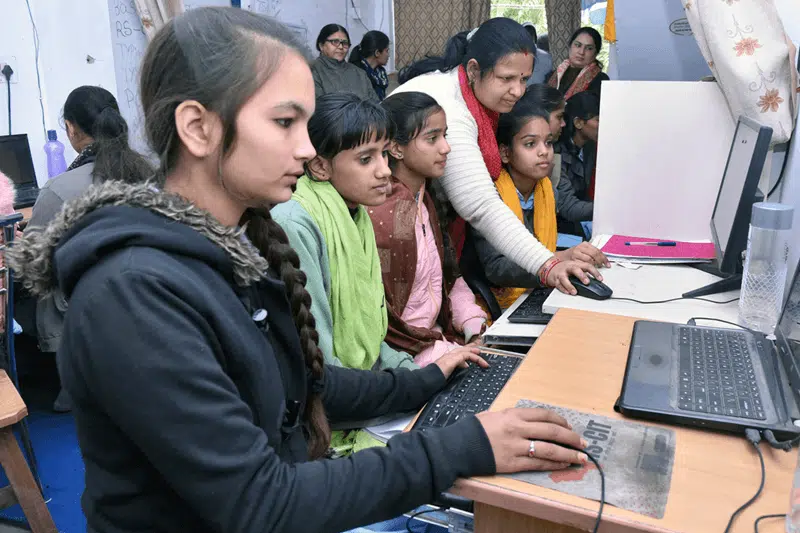
Women Empowerment needs Digital Empowerment

Women constitute nearly half of the world population. From handling household chores to dealing with other important matters in society, women are second to none in capacity. However, historically, they have had a secondary status in society with fewer opportunities for economic participation, limited access to resources and political under-representation.

Gender disparity is a global issue that interferes with the healthy development of society. Thus, arises the need for women empowerment through digital learning to achieve gender equality.

Women Empowerment in India

Women empowerment means to enable women to understand and acknowledge their self-worth, have better access to opportunities, make decisions, and have more control over their lives. A woman takes up many roles in her lifetime. She could be a mother, wife, daughter, or sister in the family and a doctor, teacher, banker, or in any other service in the community. An empowered woman is always better placed to contribute to the development of not just her family but the entire community. 

History is interspersed with many inspiring tales of social reformers like Savitribai Phule, Raja Ram Mohan Roy, Ishwar Chandra Vidyasagar, and Swami Dayananda Saraswati leading the way in uplifting the status and condition of women in pre-independent India. 

Post-independence, our constitution encompassed the principle of gender equality. The Indian Constitution not only grants equality to all women but also empowers the state to adopt measures of positive discrimination towards them. To protect the rights and legal entitlements of women, the National Commission for Women (NCW) was set up by an Act of Parliament in 1990. 

Further, the 73rd and 74th Amendments (1993) to the Constitution of India provide for reservation of seats for women in local governing bodies like Panchayats and Municipalities, thus strengthening their participation and input in decision-making.

Key Factors for Women Empowerment

There are two main factors that largely impact women empowerment. They are the education and financial independence of women. Both of these factors are necessary for a woman to be truly empowered. 

While education gives women confidence and the necessary skill-set to compete, achieve, and thrive, earning gives them the power and independence to make their own decisions. 

Education doesn’t simply mean knowing how to read and write. It covers a broader aspect of knowledge acquisition and building awareness with respect to the changing times. The current era is one of technological advancement and widespread digitalization. Hence the most relevant knowledge to acquire in current times is digital knowledge.

Digitalization in India and its impact on Women Empowerment

Digitalization refers to the use of digital/computer technology for handling varied data for different purposes. It has the potential to transform the way organizations function by improving business processes, enhancing efficiency, and optimizing productivity. 

India is one of the countries which has embraced digitalization with open arms. In 2015, the Govt. of India launched Digital India, a flagship programme aimed at transforming India into a digitally empowered society and knowledge economy. This programme is centered on 3 key vision areas– 

  1. Making digital infrastructure available to every citizen as a core utility, 
  2. Governance and services on demand and 
  3. Digital empowerment of citizens.

According to a research paper on ‘Digitalization in India’, digital connectivity is a great leveler. The paper makes an observation that ‘cutting across demographic and socio-economic segments, Indians are connecting and communicating with each other through mobile phones and computers riding on digital networks’. 

2010 report by GSMA and Cherie Blaire foundation observes that owning a mobile phone can significantly change the life of a woman in developing countries as it provides them improved access to educational, health, business, and employment opportunities. 

Data from this study also notes that 85% of women reported feeling more independent because of their mobile phones. It further states that women business owners perceive the phone as an important productivity tool. 

Digital Empowerment can Boost Women Empowerment in a Multitude of Ways– 

  1. By making technology accessible and comprehensible to rural women, they can be better informed about all aspects of life.
  2. Transforms a common woman into a businesswoman by providing know-how and support to use their skills of cooking, weaving, stitching, pottery, etc. to create and run successful businesses.
  3. Enhances small-scale businesses by giving easy access to resources, guiding with knowledge and information, eliminating middlemen and the need for a physical market.
  4. Women who unwillingly discontinued their jobs post-maternity or for personal situations that restricted mobility can continue working from home through the online medium.
  5. The online market has enabled easy access to raw materials and customers for finished products /services thus facilitating ease of business for women
  6. The availability of many online courses gives an option to women with limitations on mobility to further their education
  7. Many mobile apps give timely information to women about health or other needs
  8. Women can learn and share their views on various issues on a social platform

The shift in the working model of many small and big organizations from a physical office to an online platform during Covid-19 opened up the gates of employment for many women in small towns and cities; thus digitalization created an opportunity in adversity.

Women Entrepreneurs in India

India is in the midst of an entrepreneurial revolution. According to a report on women entrepreneurship, women-owned businesses could add 150-170 million jobs to India’s economy by 2030. 

Indian women entrepreneurs like Kiran Majumdar Shaw (Founder Chairperson and Managing Director, Biocon Limited), Vandana Luthra (Founder VLCC Healthcare Limited), Shahnaz Husain (Founder of The Shahnaz Husain Group) had started out at a time when conditions for women entrepreneurs weren’t conducive. However, with the recent surge in digital technology, the number of businesswomen in India has grown by leaps and bounds.

Falguni Nayar (founder of Nykaa), Aditi Gupta (co-founder of Menstrupedia), Khusboo Jain (co-founder of Impact Guru), and Divya Gokulnath (co-founder of Byju’s) are some of the inspirational women entrepreneurs of India today who have made a distinct mark in India’s startup ecosystem.

Conclusion

As the proverb goes, “You educate a man, you educate an individual. You educate a woman, you educate an entire nation”. 

Proper and relevant education of the girl child is highly essential to secure the future of our country. Both the government and different NGOs are dedicatedly working towards this objective. 

As citizens of the country, we all too can come forward to support this cause by donating towards girl child education, extending help in the betterment of educational infrastructure, creating digital awareness, mentoring a girl, supporting small businesses owned by women because investing in women empowerment is the key to unlock national growth.

One small contribution can make a big difference in the lives of these women. Let’s make India more digital, and more self-reliant, starting with underprivileged women.

Categories
Insights Health

What can be the Role of AI in Healthcare?

Artificial intelligence is on the verge of becoming a game-changing force in healthcare. How will the influence of AI in healthcare create tools to help clinicians and patients? What is the role of AI in healthcare?

The healthcare business is in desperate need of reform. There is practically unlimited potential for improvement. From using technology to deploy more precise and powerful solutions at exactly the right time in a patient’s treatment, to radiography and risk assessment, technology can be a game-changer for healthcare.

Artificial intelligence is primed to be the engine that drives advances across the care continuum as payment mechanisms develop. Therefore, consumers expect more from their caregivers, and the quantity of available data continues to grow at a massive rate.

So, let’s take a closer look at how AI will play a role in the improvement of healthcare.

Role of AI in Healthcare

All techniques have certain pros and cons. However, where AI is concerned, the pros can possibly outweigh the cons. So, let’s take a look at a few points that demonstrate some of the advantages of AI in healthcare.

Reduce Human Error

Doctors must always be cautious and attentive to the patients’ every detail. However, they can become weary as a result of their duties. This could lead to lesser productivity of the doctor, negligence of patients, and, in some cases, even death for the patients. As a result, AI assists them by handling some of the tasks, such as data organisation, inspection, and so on. Doctors will be less exhausted as a result of this, and they will be able to work more efficiently.

Cost Saving

You won’t have to rush to the hospital to show doctors your medical report. Isn’t it all about saving money? Personal assistants using artificial intelligence can make medical recommendations to patients. They can also connect patients with doctors directly for guidance, lowering the cost of going to a clinic or hospital.

Disease Prevention

In addition to automating diagnosis, AI in healthcare can assist in disease prevention by anticipating disease transmission at a macro level and assessing the likelihood that a condition would be transmitted by an individual. This can help physicians manage activities like planning and logistics, as well as improve health outcomes.

Wearable Healthcare Technology

Wearable healthcare technology is also incorporating AI to better serve patients. AI is used in software like FitBits and smartwatches to analyse data and inform consumers about potential health concerns and problems. The capacity to assess one’s own health through technology reduces the workload placed on experts, reducing the number of unnecessary hospital visits and remissions.

AI-Powered Next Generation Radiology

MRI machines, CT scanners, and X-rays produce radiological images that provide non-invasive insight into the workings of the human body. Many diagnostic procedures, however, still rely on actual tissue samples taken through biopsies. These come with hazards such as infection.

Experts believe that artificial intelligence will empower the next generation of radiological instruments. They could be precise and detailed enough to eliminate the requirement for tissue samples in some circumstances.

Broadening Medical Services in Underserved and Developing Countries

In underdeveloped countries around the world, there is a shortage of qualified healthcare providers. These include ultrasound technologists, radiologists, etc. This can severely limit access to life-saving care.

Artificial intelligence may be able to assist in minimising the effects of the significant shortage of skilled clinical personnel by taking over some of the diagnostic tasks that are normally performed by humans.

AI imaging techniques, for example, can screen chest X-rays for symptoms of tuberculosis with a degree of accuracy that is often comparable to actual radiologist. This capability might be made available to physicians in low-resource locations via an app, eliminating the requirement for a diagnostic radiologist on site.

However, algorithm designers must consider that different ethnicities will have varying physiologies and environmental factors that influence disease manifestation.

Conclusion

As a result, we may conclude that artificial intelligence is working hard to develop the healthcare industry. AI in healthcare is supporting doctors, nurses, and even patients in improving their health and speeding up their recuperation. With its evolved and more reliable diagnosis, AI will assist patients in lowering their costs. Doctors may spend less time on paperwork and more time understanding and caring for their patients, thanks to AI.

In layman’s terms, AI’s mission is to make computers more capable of comprehending complex healthcare problems. As a result, we may expect further improvement in the healthcare sector in the next few years as a result of artificial intelligence.

Categories
Smile

A Short History of Nonprofits in India

India boasts a rich history of civil society rooted in the principles of ‘daana’ (giving) and ‘seva’ (service). Dating back to the medieval era, voluntary organizations driven by a spirit of altruism and devoid of profit motives actively engaged in cultural promotion, education, healthcare, and disaster relief efforts. This momentum amplified during British rule, as these organizations tirelessly worked towards enhancing social welfare, literacy, and relief initiatives.

The 19th century witnessed a surge in nationalist consciousness, leading to the establishment of various organizations such as the Friend-in-Need Society (1858), Prathana Samaj (1864), Satya Shodhan Samaj (1873), Arya Samaj (1875), the National Council for Women in India (1875), and the Indian National Conference (1887). To formalize the legal status of these burgeoning non-governmental organizations (NGOs), the Societies Registration Act (SRA) was enacted in 1860.

Christian missionaries, actively engaged in India, focused on poverty reduction and the construction of essential infrastructure like hospitals, schools, and roads. Simultaneously, NGOs directed their efforts towards education, healthcare, relief, and social welfare. The foundation for secular voluntary action in India gained strength with the establishment of the Servants of India, a secular NGO, in 1905.

The return of Mahatma Gandhi in 1916 marked a pivotal shift, emphasizing economic self-sufficiency through his Swadeshi movement. Advocating for local production and self-reliance, Gandhi identified rural poverty as the core issue of India. He championed decentralized voluntary action, primarily through gram panchayats (village councils), as the key to the development of India.

Post-independence, while the Government of India expanded its role in social welfare, it recognized the potential for civil society to complement its efforts. The Central Social Welfare Board, established in 1953, facilitated people’s participation programs through NGOs. This support led to the emergence of a professionalized NGO sector.

The 1970s witnessed the entrance of international NGOs in response to agricultural crises. Governmental development agencies proliferated, and foreign funds began flowing into domestic NGOs, transforming the landscape of civil society.

Through the 1970s and 1980s, the NGO sector in India experienced a surge in numbers and diversification, responding to national concerns about poverty and marginalization. Both welfare and empowerment-oriented organizations emerged, with a focus on development, civil liberties, education, environment, health, and livelihood. NGOs became formally recognized as development partners, characterized by grassroots interventions, advocacy, and mobilization of marginalized communities.

Today, the NGO sector in India comprises approximately 3.3 million organizations working on local, national, or international levels. Despite their varied missions and sizes, most NGOs in India remain reliant on volunteers, collectively contributing to the vibrant landscape of civil society in the country. Smile Foundation is one of the top NGOs in India that has been functional for over 20 years working for the underserved and improving their quality of life through education, healthcare, and livelihood projects.

Categories
Health

Health Problems in Urban Slums

Empathy alone may not be enough to fully understand the experiences of someone living inside urban slums like Mumbai’s Dharavi. Living in slums or in extreme poverty can bring about a unique set of challenges and hardships that are difficult for those who have not experienced it firsthand to comprehend fully. It’s important to acknowledge that no amount of empathy can replace the actual lived experiences of individuals facing such circumstances.

Empathy Can Never Be Enough

While empathy can foster understanding and compassion, it is not a substitute for direct experience. People who have always had the security of a stated colony over their heads may struggle to imagine the daily challenges and dangers faced by those who are homeless. However, empathy can be a starting point for individuals to support and advocate for policies and programs that address the problems of those living in slums, and to work toward creating a more equitable society.

In such cases, it’s important to combine empathy with action, which may involve volunteering, supporting interventions for their education, healthcare, and livelihood, advocating for social and economic policies that address their multi-faceted issues, and actively working to make a positive difference in the lives of those living in perpetual wanting. While empathy may not provide a complete understanding, it can inspire people to take meaningful steps to help those in need and work towards a more just and compassionate society.

Need for Quality Healthcare in Urban Slums

Urban slums are characterized by overcrowding, poor sanitation, limited access to clean water, and substandard housing, making them hotbeds for a variety of health issues. The residents of these areas often struggle to access basic healthcare services, leading to a host of health problems.

Health Problems in Urban Slums

Infectious Diseases

Overcrowded living conditions and inadequate sanitation facilities create an environment conducive to the spread of infectious diseases. Common ailments include diarrhea, respiratory infections, and skin diseases. The lack of proper sewage systems and clean drinking water exacerbates these issues.

Malnutrition

Malnutrition is prevalent in urban slums, affecting both children and adults. Limited access to nutritious food, coupled with poverty, can lead to stunted growth and other health complications.

Maternal and Child Health

Pregnant women in slums often lack prenatal care, increasing the risk of complications during childbirth. Children born in slums face a higher risk of low birth weight and developmental delays due to poor maternal nutrition and limited access to healthcare.

Non-communicable Diseases

With rapid urbanization and changing lifestyles, non-communicable diseases like diabetes, hypertension, and heart disease are on the rise in slum areas. Lack of awareness, early diagnosis, and treatment options further exacerbate these conditions.

Mental Health

Living in conditions of poverty and deprivation can lead to a range of mental health issues, including stress, anxiety, and depression. Unfortunately, access to mental health services is often limited.

Smile Foundation and Mobile Medical Units in Urban Slums

Smile Foundation, committed to improving the lives of underserved communities in India, launched Mobile Medical Units (MMUs) called Smile on Wheels (SoW) to address the healthcare challenges faced by slum residents under its healthcare programme. These units are equipped with medical professionals, diagnostic tools, and essential medications, making quality healthcare accessible to those who need it the most.

MMUs are strategically stationed in slum areas, ensuring that residents have access to regular medical check-ups and treatments. The units are equipped to diagnose and treat a wide range of health issues. The MMUs conduct health awareness campaigns to educate the community about sanitation, nutrition, and the importance of regular check-ups. By promoting preventive healthcare, they help reduce the prevalence of diseases in these areas.

MMUs provide antenatal care and immunization services, addressing maternal and child health issues. This includes promoting safe deliveries and ensuring that children receive the necessary vaccinations. The medico personnel offer counseling and treatment for non-communicable diseases, focusing on early diagnosis and management to prevent complications.

Recognizing the importance of mental health, some MMUs also provide counseling services to help slum residents cope with stress and anxiety.

Impact and Conclusion

The Mobile Medical Units of Smile Foundation are making a significant impact on the health and well-being of urban slum-dwellers. By delivering essential healthcare services to the doorstep of those in need, we are not only treating diseases but also preventing them and promoting healthier lifestyles. These efforts are instrumental in breaking the cycle of poverty and improving the overall quality of life in urban slums.

However, the work is far from over, and there is a continuous need for support, both in terms of resources and awareness, to further expand the reach of such initiatives and uplift the health standards of urban slum communities. By collaborating with Smile Foundation for a healthcare CSR partnership, corporates can help bridge the healthcare gap and enable urban slum residents to lead healthier, more fulfilling lives.

Categories
Smile Education

Make Children’s Day Memorable: Celebrate with Smile

Children’s Day is a special occasion celebrated in various parts of the world to honor and commemorate the rights, well-being, and aspirations of children. In India, Children’s Day is observed on November 14th, coinciding with the birthday of the country’s first Prime Minister, Jawaharlal Nehru, who was known for his love and affection for children. On this day, schools, communities, and organizations come together to make children feel cherished and valued

Unfortunately in many regions of the world, children are exposed to the horrors of war and conflict, which can have a profound and lasting impact on their lives.

Choosing Peace for Our Children

Children exposed to the horrors of war often endure physical and psychological trauma. The constant threat of violence, loss of loved ones, and the destruction of their homes can leave scars that last a lifetime. By saving children from wars, we protect them from these traumatic experiences, allowing them to grow up in a safer and healthier environment.

Education and Development

Conflict disrupts the education of countless children. Schools are damaged or closed, teachers are displaced, and the entire education system is destabilized. Saving children from wars ensures they access to quality education- essential for their cognitive and emotional development. The Smile Foundation’s commitment to education is instrumental in this regard.

Nutritional and Healthcare Needs

War often leads to severe disruptions in food supply, clean water, and healthcare services. Children suffer from malnutrition and lack access to proper medical care. Saving children from wars means providing them with the necessities of life, ensuring their physical well-being, and preventing the spread of diseases.

Making Children’s Day Memorable

Educational Initiatives

One of the primary focuses of Smile Foundation is to provide quality education to children who might otherwise be denied this fundamental right. You can contribute to making Children’s Day memorable by participating in educational initiatives organized by the Smile Foundation. This can include volunteering to teach children, donating educational materials, or sponsoring the education of a child. By doing so, you help in building a brighter future for these young minds.

Health Camps

Access to healthcare is another critical aspect of the well-being of a child. Smile Foundation organizes health camps in underserved areas, providing medical check-ups, vaccinations, and healthcare awareness to children and their families. On Children’s Day, you can volunteer your time or resources to support these health camps, ensuring that children receive the medical attention they need.

Skill Development

We are committed to providing children with the skills and knowledge they need to become self-sufficient in the future. This includes vocational training programs and workshops for older children. By engaging with these programs on Children’s Day, you can inspire children to develop skills that will help them secure better opportunities and break the cycle of poverty.

Celebratory Events

Smile Foundation organizes various celebratory events on Children’s Day to make it a memorable occasion for the children. These events can include cultural performances, games, arts and crafts activities, and other fun and engaging activities. By participating in or supporting these events, you can bring joy and laughter to the lives of underserved children.

Fundraising and Donations

Financial support is crucial for Smile Foundation to continue its work and expand its reach. On Children’s Day, consider making a donation or organizing a fundraising drive to support our efforts. Even a small contribution can go a long way in making a difference in the lives of countless children.

Every Child Matters

Children’s Day is a time to celebrate the innocence, dreams, and potential of children. By celebrating this day with the Smile Foundation, you can contribute to creating a brighter and more promising future for underserved children.

Whether it’s through education, healthcare, skill development, or simply spreading joy and happiness, your involvement can make a significant difference in their lives. Make this Children’s Day truly memorable by joining hands with the Smile Foundation and helping to build a world where the smile of every child matters.

This Children’s Day, as you celebrate with Smile Foundation, let us also remember the importance of saving children from the devastating effects of wars and promoting peace for their well-being.

0%