Categories
Gender Girl Child Women Empowerment

Women at Work in India: The Long Road to Power

When women in India began entering the workforce in visible numbers in the decades after Independence, their participation was framed less as a right and more as a deviation. Work outside the home was tolerated when it was necessary, respectable when it mirrored domestic roles and resisted when it threatened male dominance over wages, authority or public space. That ambivalence continues to shape women’s representation across Indian sectors today — not just in who enters the workforce, but in who stays, rises and leads.

India’s story of women at work is often told through headline contradictions. The country produces millions of educated women each year, yet has one of the lowest female labour force participation rates among middle-income economies. Women dominate frontline health and care roles, but rarely shape health policy. They are increasingly present in technology and finance, yet almost absent from ownership and boardroom power. These patterns are not accidental but the outcome of how work itself has been historically organized, and for whom.

The early resistance: Respectability, safety and control

Women’s entry into paid work in India accelerated during the late twentieth century, driven by urbanization, rising education levels and household economic pressure. Yet this entry was mediated by powerful social constraints. Research in labour sociology consistently shows that women were channelled into roles considered extensions of femininity — teaching, nursing, clerical work, caregiving — while being discouraged from physically demanding, night-shift or authority-bearing jobs.

Legal frameworks reinforced this. Protective labour laws restricted women’s night work in factories and transport for decades, ostensibly for safety, but with the effect of excluding them from entire sectors. Even as these restrictions have eased, workplace design — from lack of toilets to unsafe transport — continues to regulate women’s participation, particularly in manufacturing and construction.

Normalization without equality

Over time, women’s presence in certain sectors became normalized. Education is the clearest example. Teaching, especially at primary and secondary levels, became feminized early, offering socially acceptable employment with predictable hours. Today, women form a majority of school teachers and a significant share of higher-education faculty. Leadership, however, tells a different story. Studies in Indian academia show that women’s representation drops sharply at the level of vice-chancellors, research chairs and institutional heads, reflecting what gender scholars call “vertical segregation.”

Healthcare follows a similar pattern. Women constitute nearly 70% of the global health and care workforce, according to the World Health Organization and India mirrors this trend. Nurses, midwives, ASHAs and ANMs — almost entirely women — form the backbone of the health system. Yet decision-making power remains concentrated elsewhere. A 2023 analysis in The Lancet Global Health found that women remain underrepresented in senior hospital leadership, medical regulatory bodies and national health committees, despite their numerical dominance in service delivery.

The feminization of a sector, in other words, does not guarantee feminization of power.

The pipeline problem is not a myth, but it is incomplete

Much discussion around women’s leadership focuses on the “pipeline”: the idea that women drop out at various life stages, thinning the pool of potential leaders. This is partly true. India’s female labour force participation rate, while rising in recent surveys, remains volatile and uneven. The Periodic Labour Force Survey shows that many women enter paid work in their twenties, exit during childbearing years and re-enter later in more precarious forms of employment.

But focusing only on the pipeline obscures deeper structural issues. Evidence from corporate India shows that even where women remain in the workforce, progression slows. A 2024 study cited by The Economic Times found that over half of NSE-listed firms employ fewer than 10% women at senior management levels. This pattern persists even in sectors with strong female entry, suggesting that attrition alone cannot explain leadership gaps.

What thins the pipeline is not simply motherhood, but how organizations respond to it: rigid career timelines, penalization of breaks, informal promotion criteria and leadership cultures that reward constant availability over competence.

Technology: Access without ownership

India is often cited as a relative success story for women in technology. According to industry estimates, women make up around 35% of the IT workforce — higher than in many Western economies. Engineering colleges produce large numbers of women graduates and entry-level hiring has improved.

Yet here, too, the ladder narrows sharply. Data from startup trackers and venture capital reports show that fewer than one in twenty Indian tech startups is founded by a woman and women occupy only a small fraction of CTO or product head roles. Podcasts and interviews with women technologists repeatedly highlight similar barriers: exclusion from informal networks, bias in high-risk assignments and disproportionate caregiving responsibilities during mid-career years.

The problem is not skills. It is control over capital, product vision and organizational direction.

Male-dominated industries: Exclusion by design

If technology illustrates stalled progress, manufacturing, construction, energy and transport illustrate outright exclusion. Women constitute less than 20% of India’s manufacturing workforce and under 10% in construction and energy, according to PLFS data and International Labour Organization reviews. Where women are present, they are often informal, contractual and concentrated in low-paid assembly or support roles.

These industries were designed around male bodies and male life patterns — long shifts, hazardous conditions, mobility across sites — without corresponding investments in safety, childcare or flexible pathways. Even when laws permit women’s participation, the absence of enabling infrastructure ensures that representation remains minimal.

As the International Labour Organization has repeatedly noted, women’s exclusion from industrial leadership is less about choice and more about systemic design failure.

Leadership: Where representation finally collapses

Across sectors, the most striking drop occurs at the top. Political representation remains limited, with women holding roughly 15% of Lok Sabha seats. Corporate boards and C-suites show similar patterns, with women more likely to lead HR, communications or CSR functions than finance, operations or strategy.

This clustering matters. Leadership roles tied to budgets and asset control carry disproportionate influence. Research from the World Economic Forum consistently shows that while India has made gains in education and professional participation, it lags sharply in political empowerment and economic leadership.

Gender scholars argue that this reflects a deeper discomfort with women exercising authority rather than support. Women are welcomed as contributors, not as decision-makers.

Intersectionality: Whose representation counts?

Any discussion of women’s representation in India must confront the issue of who these women are. Caste, class, religion, geography and migration status shape access to education, work and safety. Upper-caste, urban, English-educated women have benefited far more from professional expansion than Dalit, Adivasi, Muslim or migrant women, who remain concentrated in informal labour with little visibility or protection.

When representation improves at elite levels, it often masks stagnation below. This is why aggregate gains can coexist with persistent inequality.

The care economy: The unspoken constraint

Perhaps the most under-acknowledged factor shaping women’s representation is unpaid care work. Indian women perform the vast majority of childcare, eldercare and domestic labour, a reality documented across time-use surveys and economic studies. This invisible labour constrains women’s mobility, availability and risk-taking, directly affecting career progression.

Until care is treated as economic infrastructure through public childcare, elder services and workplace flexibility, representation will remain fragile, regardless of education or aspiration.

Where this leaves India

Women’s representation in India today is neither a story of failure nor of triumph. It is a story of uneven integration into systems that were not designed with women in mind. Gains at entry coexist with resistance at the top. Feminized sectors rely on women’s labour while denying them authority. Male-dominated industries remain structurally hostile. Leadership pipelines leak not because women lack ambition, but because institutions lack imagination.

The evidence is clear across academic research, labour data and lived experience: representation alone is not enough. Power, safety, continuity and dignity matter just as much.

India’s next phase of growth — demographic, economic and social — will depend on whether it can move beyond counting women to redesigning work itself. Until then, women will remain present, productive and essential — yet still struggling to claim the authority their labour has long deserved.

Support our women empowerment programme!

Categories
Health

The Broken Promise of a Healthy Childhood

For a country that prides itself on being the world’s youngest nation, India remains startlingly casual about the health of its children. We celebrate exam toppers and teenage athletes, applaud our demographic dividend and talk endlessly about reaping the benefits of a young workforce. But, the foundational promise of childhood — to grow, to learn, to breathe, to simply be well — is eroding. And in far too many regions, that promise has already broken.

The symptoms are everywhere, yet treated as background noise. A five-year-old in Delhi begins his morning coughing, not because she/he/they is ill, but because the air has turned toxic again. In rural Uttar Pradesh, a mother watches her child struggle with recurring infections that never fully resolve. In Mumbai’s informal settlements, doctors say the same thing every winter: small bodies cannot carry the burden of pollution, malnutrition and overcrowding all at once.

India’s children are not just falling sick more frequently — they are being shaped by an environment that treats illness as inevitable. And parents, doctors, teachers, even governments have begun to behave as if this is the natural order of things. It is not.

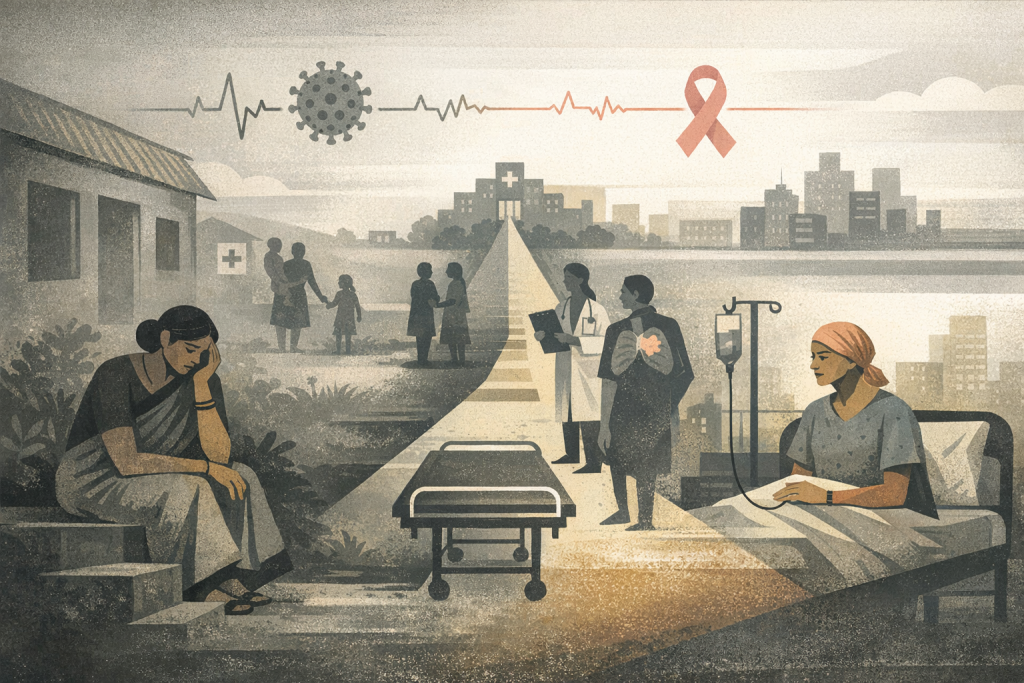
ChatGPT Image Nov 23 2025 12 25 27 PM

A childhood built on fragile lungs

Let’s start with the air children breathe, because it tells a story that is hard to ignore. Across India’s big cities — Delhi, Mumbai, Kolkata, Lucknow — winter is no longer a season but a warning. Paediatric wards fill up weeks before Diwali. Nebulisers hum in living rooms. Parents compare inhalers the way they once compared tiffin ideas.

Doctors say children today are facing respiratory issues their predecessors rarely saw. Worse, these are not isolated spikes but chronic patterns: lingering coughs, repeated chest infections, compromised lung function, and in some cases, long-term developmental repercussions.

Yet, the political and societal response is maddening. Each year, we cycle through the same rituals: air quality dips, outrage rises, schools shut down, masks reappear and then — conveniently, predictably — we forget. India has normalised an emergency.

Behind every AQI statistic is a child whose lungs are still forming. Exposure at this stage doesn’t simply cause discomfort; it can permanently alter lung capacity and cognitive development. A toxic childhood is not something you outgrow, it shadows you into adulthood. When we talk about India’s economic future, this is the silent threat we are unwilling to confront.

The quiet hunger that weakens futures

Air pollution is only one dimension of the problem. The more insidious crisis lies inside classrooms, kitchens and anganwadis — a crisis of nutrition.

India still grapples with malnutrition levels that would be scandalous in any country aspiring to global leadership. Even before the pandemic, nearly a third of our children were stunted. In many districts, wasting rates remain among the highest in the world.

For all the debates on growth rates and GDP projections, India rarely pauses to consider what it means for millions of children to go through life with bodies and brains deprived of the nutrients required to learn, concentrate or build resilience against disease. Malnutrition is not just about hunger; it is about potential. It dims children’s capacity to think, reduces their earning prospects and reinforces cycles of poverty.

But these children do not march or protest. They do not write op-eds or trend on social media. They simply shrink into the background — quieter, weaker, less visible.

The deeper tragedy is that malnutrition is entirely preventable. And solutions, ranging from diversified diets to fortified foods to stronger public provisioning, are well known. What’s missing is political will, matched with consistent budgets and accountability.

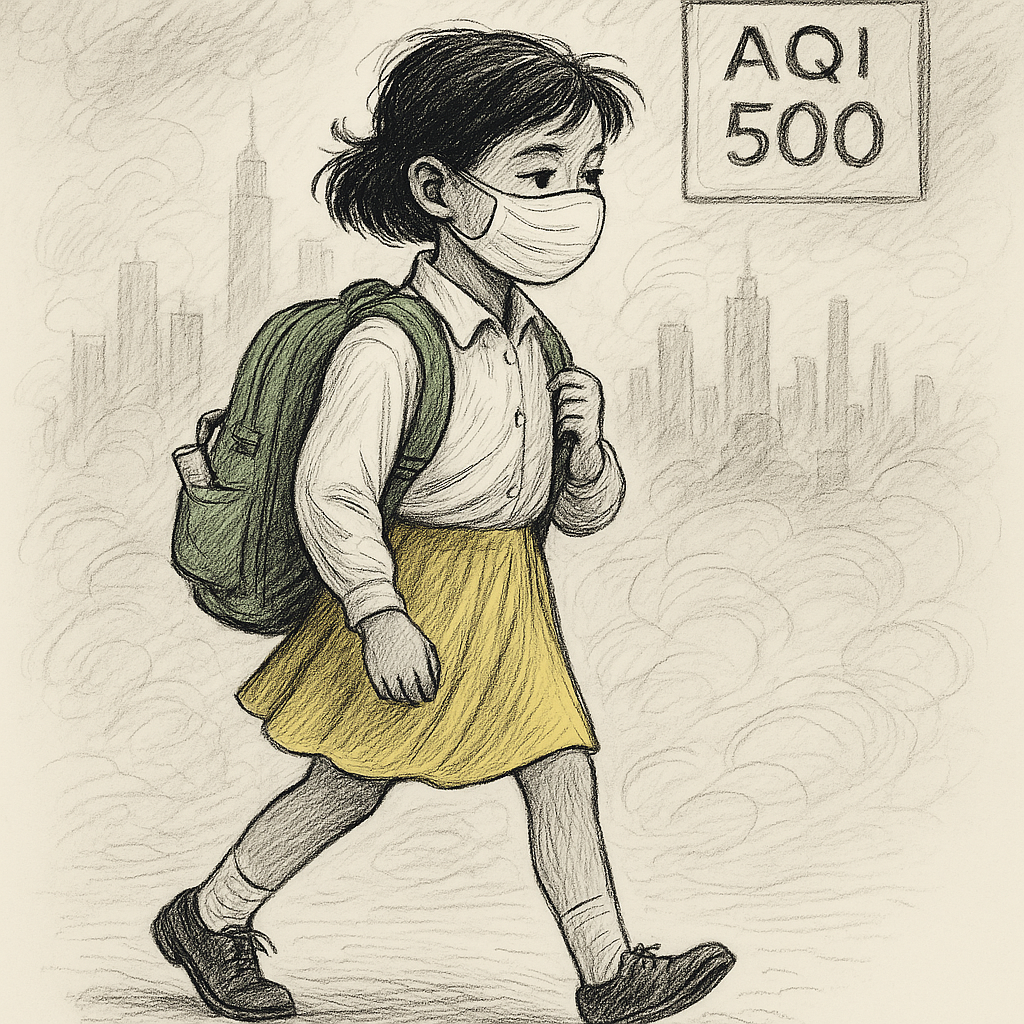
ChatGPT Image Nov 23 2025 12 23 39 PM

Where mothers struggle, children suffer

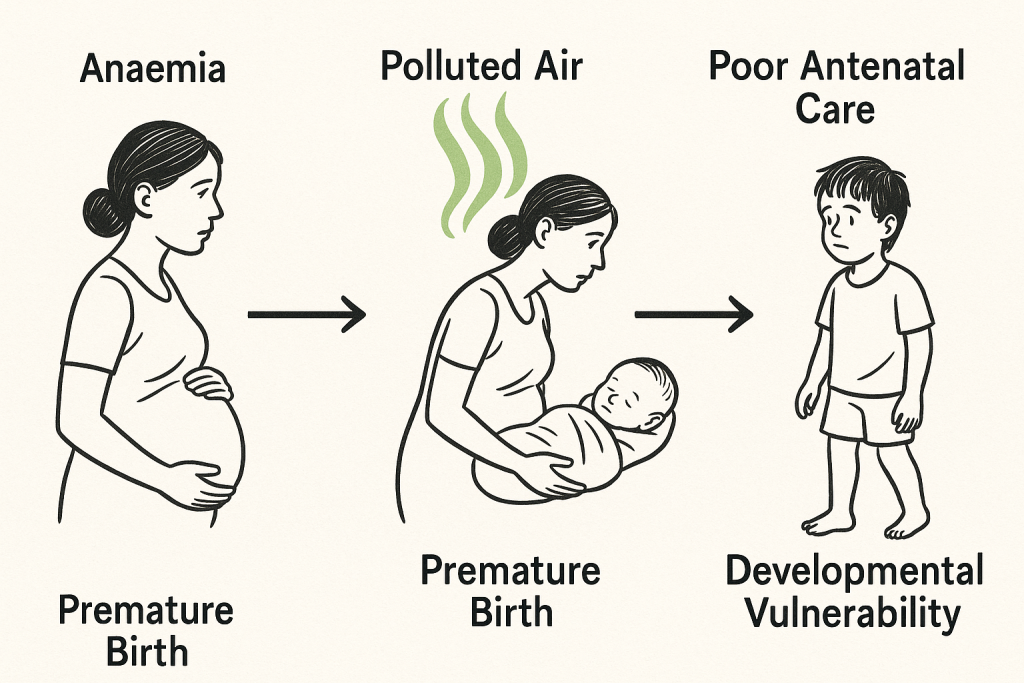
India’s child health crisis is intertwined with another uncomfortable truth of mothers remaining some of the least supported members of the population. A woman who enters pregnancy anaemic, overworked or exposed to polluted air is already carrying a disadvantage that her child will inherit.

Across urban slums and rural blocks, women continue to work through pregnancy out of necessity carrying bricks, stitching garments, cooking over smoky chulhas, inhaling dust and fumes. The idea of rest, nutritious food or regular antenatal care feels like a luxury. Many deliver babies too small, too weak, too vulnerable.

A healthy childhood begins long before birth, yet India’s maternal health ecosystem still feels fragmented. We offer advice without infrastructure, schemes without follow-through and entitlements without ensuring access. For many women, pregnancy is something to be endured, not supported. And children pay the price.

When illness becomes normal

One of the most worrying shifts over the last decade is the acceptance of poor health as an unavoidable part of childhood. Parents speak of recurring infections as “common these days,” as if the environment has rewritten the rules of biology. Teachers shrug off poor concentration among students. Doctors treat the same children for the same conditions every month.

Illness has become routine, and routine breeds complacency.

The consequences, however, are anything but routine. Poor health affects school performance, attendance, emotional well-being and long-term development. A child who misses weeks of school due to illness is not just missing lessons; they are falling off a trajectory that becomes harder to re-join with every absence.

Children deserve more than a revolving door of sickness and recovery. They deserve conditions that allow them to thrive in clean air, good nutrition, safe water, preventive healthcare and the simple ability to play outdoors without harm.

The myth that growth will solve everything

A common refrain in policy circles is that as India becomes richer, health will naturally improve. But this optimism obscures a hard reality. Economic growth does not automatically clean the air. It does not guarantee nutritious meals, functioning anganwadis or equitable healthcare. If anything, unregulated industrialisation and urbanisation often worsen conditions for children.

India risks repeating the mistakes of countries that achieved high GDP growth while inflicting irreversible environmental and health damage on their youngest citizens. The cost of inaction today will be paid in medical bills, lost productivity and diminished human capital tomorrow.

What a renewed promise could look like

This is not a hopeless story. India has the capacity — and increasingly, the institutional memory — to turn this crisis around. The question is whether child health will finally be treated as a national priority, not a welfare footnote.

A renewed promise of a healthy childhood would require:

1. A radical clean-air agenda
Not seasonal firefighting, but year-round policy coherence: stricter emissions controls, cleaner construction practices, support for electric mobility, agricultural alternatives to stubble burning and real accountability for violators.

2. A nutrition mission grounded in dignity
Not just calories, but quality. Access to protein, micronutrients, fortified staples and diversified diets must become non-negotiable. Anganwadis and schools should be equipped to be nutrition hubs, not mere distribution points.

3. Maternal health that feels like support, not struggle
Better antenatal care, safer workplaces, cleaner cooking fuel and community-level support systems — the basics that too many women still lack.

4. Preventive healthcare as a universal right
Regular screenings, early detection of chronic conditions and paediatric care that reaches rural and urban poor alike.

5. Safe spaces for children to grow
Parks, sports facilities, clean neighbourhoods — not just for recreation, but for physical and mental development.

India’s choice

Children cannot demand better policies. They cannot vote, litigate, lobby or negotiate. Which means the burden of protecting them falls entirely on adults — parents, policymakers, institutions, civil society and the rest of us who claim to care.

India is at an inflection point. It can choose a future where childhood is a fragile phase survived with luck. Or it can choose a future where childhood is the sturdy foundation it is meant to be — full of health, joy, curiosity and potential.

A nation that fails its children fails itself. And a nation that protects them secures its future.

Right now, India stands somewhere in the middle — aware of the crisis but not yet willing to confront it fully. The broken promise of a healthy childhood can still be mended. The question is whether we will act while there is still time or wait until an entire generation has already borne the consequences.

Categories
Smile

Importance of Mental Health Workshops in India

Childhood and adolescence are critical windows for mental health and development. World Health Organisation (WHO) notes that early experiences – at home, in school or online – shape a child’s lifelong well-being. Yet today “8% of children and 15% of adolescents experience a mental disorder” globally. Half of all adult mental illnesses begin by age 14–18. In other words, half of life-long mental health conditions start by late adolescence. Left unaddressed, these issues undermine emotional growth and academic learning. A supportive school climate with caring teachers and peers can cut depression and anxiety and boost academic performance. But when thousands of children enter classrooms already struggling with stress, anxiety or trauma, schools must become sites of early intervention.

A silent crisis in India’s schools

In India’s vast school system, the challenge is enormous. Recent studies estimate tens of millions of young Indians have diagnosable mental health issues. In fact, epidemiologists calculate “nearly 50 million Indian children suffer from mental disorders” at any given time. Community surveys in Lucknow, Bangalore and elsewhere find prevalence rates around 10–12% for child and adolescent disorders. The National Mental Health Survey (2016) reported a 7.3% prevalence among 13–17 year-olds (over 9.8 million adolescents).

In schools, some local studies find even higher rates – one meta-analysis found ~23% of Indian students met criteria for a psychiatric disorder. These numbers are comparable to other developing countries: for example, a Lancet study found 12.1% of Kenyan and 5.5% of Indonesian adolescents had a mental disorder in the past year. Brazil’s youth face similar burdens; a recent systematic review found point prevalence of 11–20% for any mental disorder among Brazilian children. In short, schoolchildren across the Global South are far from immune to mental illness.

Importantly, these mental health challenges directly harm education. Multiple reviews show that children in nurturing, mentally healthy school environments earn better grades and stay in school longer. In India, a systematic review reported that classrooms with positive teacher-student relationships and peer support saw lower student depression and improved academic performance.

By contrast, stress, stigma or bullying in schools contribute to absenteeism, dropout and even self-harm. One UNICEF analysis warns: India has one of the world’s worst teen suicide rates, with a student dying by suicide every hour. Mental health is thus not a side issue – it is integral to learning, equity and our demographic “dividend.”

School-based solutions: Mental health workshops and training

Early, school-based intervention works. Structured workshops and programmes in schools teach coping, emotional literacy and resilience. In India, the Smile Foundation’s Child-for-Child programme is one promising model. Smile notes that about 1 in 5 children face mental health challenges, and it empowers teachers to be “first responders.” In three-hour experiential trainings (with refreshers every few months), teachers learn to recognize stress and depression, weave mental-health awareness into class time, and guide students toward help. Smile’s initiative includes pre- and post-training assessments and resource guides, aiming to “shift teacher mindsets” and build caring classrooms.

Smile Foundation has recognised that a school cannot be a place of learning if it is not also a place of care. Our initiative-in-making “Schools Show the Way” offers a compelling model. As an extension of Smile’s larger Child for Child and Mission Education frameworks, this programme aims to create mental health-responsive education institutions by capacitating teachers and engaging students through interactive tools—workshops, films, dialogues.

The approach will be two-fold:

  1. Teacher Empowerment: Through intensive mental health workshops, teachers will be trained as first responders—able to identify signs of stress, anxiety, or trauma, and either provide first-line emotional support or connect students to formal care pathways, including helplines or local counsellors. Teachers will learn to distinguish between behavioural and psychological issues, manage classroom triggers, and foster emotionally safe learning environments.
  2. Student Engagement: Smile’s workshops with students will use good cinema—curated films on adolescent issues—as a pedagogical tool to open up difficult conversations around bullying, anxiety, peer pressure, and identity. These sessions will help students understand mental health as a spectrum, develop self-awareness, and build resilience. Crucially, these are designed to demystify mental health and reduce stigma through lived experiences.

The interventions will be backed by monitoring frameworks, assessments, and referral linkages, ensuring not just awareness—but continuity of care.

What about other countries? Are they conducting mental health workshops too?

Internationally, there are comparable success stories. In Indonesia, the NGO Sehat Jiwa Bahagia developed a school curriculum on mental well-being in 2018. By 2022 it had reached ~7,000 students in ten schools, teaching stress management, emotional regulation and healthy relationships. Rigorous follow-up showed 90% of student participants gained skills to manage their mental health, and all teachers said the programme helped them understand their students’ emotional needs.

In Brazil, UNICEF partnered with the government to train educators on psychosocial support. When schools reopened after COVID-19, a cross-sector strategy was launched: technical guidance and teacher training were delivered so schools could address students’ “learning, mental health and protection needs”. This kind of whole-school approach – building safe, supportive environments – is key.

Embedding mental health workshops into schools can take many forms: from dedicated “life skills” modules in the curriculum, to after-school support groups, to simple classroom activities on stress and empathy. A compilation of Brazilian evidence notes that educating teachers and school staff in mental health can cascade to benefits for students.

In India, too, even pilot programmes show promise. For example, the NIMHANS “NIMHANS Seva Sahayog” model trains non-specialist mentors in schools to identify at-risk children and refer them to care. Early lessons from such pilots suggest that even brief, focused workshops can reduce stigma and increase referrals. Importantly, these programmes not only aid students in crisis but also teach skills like concentration and emotional regulation that boost learning for all.

Barriers: Stigma, resources and policy gaps

Despite clear need, barriers are formidable. First is stigma. In India only 41% of young people believe it is “good” to seek help for mental health issues. Many children suffer in silence – afraid of being labeled or disciplined. Parents and teachers often dismiss anxiety or depression as mere bad behaviour.

Another obstacle is workforce shortages. Although CBSE guidelines mandate a counsellor in every secondary school, in practice less than 3% of Delhi-NCR private schools actually employ one. Nationwide, the ratio of child psychologists per student is alarmingly low. A school counselor, where present, is often misused for non-therapy tasks. Simply put, Indian schools lack trained personnel to run workshops or provide individual help.

Policy gaps compound the problem. India has yet to adopt a comprehensive child-mental-health policy. Experts note there is “no evidence-based, integrated whole-school mental health approach” in the country. Initiatives exist – the Ministry of Education’s Manodarpan programme (launched in 2020) provides COVID-era counselling support – but they remain fragmented and underfunded.

In many places mental health education is not even on the timetable. As a result, families bear the burden of arranging private counseling, which few can afford. The system simply hasn’t scaled proven interventions to reach most children.

  • Stigma and culture: Over 60% of Indian youth wrongly believe seeking help is bad. Social taboos and lack of awareness prevent early intervention.
  • Shortage of professionals: Even though CBSE requires school counselors, most schools lack them. Child psychiatrists and psychologists are concentrated in cities, leaving rural schools completely underserved.
  • Lack of policy framework: Experts emphasise that India currently has no unified school mental health policy. Programmes (if any) are piecemeal and often short-term.

Integrate and invest

The solution is urgent and clear: systemic reform. First, mental health must be integrated into school curricula and culture. Policymakers should adopt a national school mental health programme as part of education policy (much as there is a school nutrition programme). This would include mandatory life-skills and social-emotional learning modules, regular screening for depression and anxiety, and sensitivity training for all teachers. As India’s Health Minister highlighted at the 2021 launch of UNICEF’s “On My Mind” report, teacher training must explicitly cover mental health, since teachers are “pillars of support for children”.

Second, staffing and funding need a major boost. Governments must ensure every secondary school has at least one full-time counsellor or psychologist on staff. This can be phased by tying funding to teacher-student ratios (as CBSE suggests). State medical and teacher training colleges should offer specialisations in child counselling, and provide attractive incentives to work in schools or rural areas.

Meanwhile, the private sector and development organisations can help fill the gap: corporate CSR programmes and partnerships (like those between Smile Foundation and local schools) can train hundreds of teachers each year. Public-private collaborations can also finance helplines and tele-counselling for remote students.

Third, we need robust monitoring and research. WHO and UNICEF repeatedly emphasise the lack of data as a stumbling block. Governments should commission regular school-based mental health surveys, like the National Adolescent Mental Health Survey (NAMHS) that revealed the 12% rate in Kenya. With solid evidence of where problems cluster (by region, age, gender), interventions can be targeted smarter. Evaluation of pilot programmes (e.g. Smile’s workshops or Sehat Jiwa’s curriculum) should be published to build the local evidence base. Civil society can advocate for these reforms by framing mental health as crucial not only to individual well-being but also to educational outcomes and economic productivity.

Conclusion: Educating the whole child

Mental health is as fundamental as literacy or nutrition in a child’s development. Early interventions – like structured school workshops – pay lifelong dividends in human potential. An Indian child who learns coping skills and feels supported in school is likelier to stay in class, focus better, and grow into a healthy adult contributor. Our country’s human capital is at stake: ignoring 10–20% of our youth who suffer in silence is a risk we cannot afford.

By investing in mental health workshops and systemic reforms, India can not only improve academic success and reduce dropout, but also break cycles of poverty and illness. Policymakers and educators must act in concert now: incorporate emotional learning into education policy, fund counsellors as standard school staff, and partner with NGOs and families to nurture resilience. As WHO reminds us, half of mental illness starts in childhood – the time to act is now.

Sources: Global and Indian data from WHO and UNICEF reports; India-specific surveys; peer-reviewed studies and UNICEF updates on school programmes.

Categories
Health

India achieving Universal Health Coverage (UHC)

The newspapers are always full of reports of people who have lost their lives as they didn’t have access to and/or couldn’t afford timely healthcare. That’s why governments across the world have been stressing on the need for universal health coverage (UHC). India, with its vast and diverse population, faces a lot of challenges in providing good healthcare for all and making it easily accessible but has launched several initiatives to achieve this.

According to a report, India aims to achieve UHC by 2030 as part of its Sustainable Development Goals (SDG) agenda. This is a very crucial step in realising its vision of becoming a developed nation by 2047.

What is Universal Health Coverage (UHC)?

According to the WHO, Universal Health Coverage (UHC) means that all people have access to the full range of quality health services they need, when and where they need them, without financial hardship. It covers the full continuum of essential health services, from health promotion to prevention, treatment, rehabilitation and palliative care.

To deliver on this promise, WHO says that countries need to have strong, efficient and equitable health systems that are rooted in the communities they serve. Primary health care (PHC) is the most effective and cost-efficient way to get there. 

Every country has a different path to achieving UHC and to decide what to cover based on the needs of their populations and the resources at hand. Investing in PHC ensures that all those needs are identified, prioritized and addressed in an integrated way; that there is a robust and equipped health and care workforce; and that all sectors of society contribute to confronting the environmental and socio-economic factors that affect health and well-being, including preparing for, responding to and recovering from emergencies.

According to Visual Capitalist, in 2024, 73 of the 195 countries worldwide had UHC, resulting in around 69% of the world’s population having some form of universal healthcare. These include the UK (through the NHS), Canada, and many European nations.

“We need to make drugs affordable, and also ensure that many of these medicines are manufactured in India. We also need basic science research and diagnostic set ups,” says Dr A V Srinivasan, Emeritus Professor, Tamil Nadu Dr. M.G.R. Medical University and former head and professor of neurology, Madras Medical College.

Dr Srinivasan says that India also needs a good insurance scheme. “In many Western countries such as the US, the individual pays through the insurance scheme, but, in India, the individual has to pay out of their own pocket, or get private insurance, which is expensive,” he says.

Challenges involved in Universal Health Coverage

First, there is the high cost involved. Providing healthcare for a population of over 1.4 billion people would require a massive financial investment. India already faces budgetary constraints, and allocating enough funds to sustain universal healthcare without compromising other important sectors is a significant challenge.

According to The Times of India, around 65% of India’s population, or more than 90 crore people in India, lack social financial health protection schemes owing to coverage gaps and are pushed to procure private insurance for health coverage, said the National President of Indian Medical Association (IMA) Dr RV Asokan.

A significant portion of India’s population lives in rural areas where healthcare infrastructure is underdeveloped. There is a stark contrast between the healthcare quality available in urban and rural areas, with some rural regions lacking adequate numbers of hospitals, clinics, and trained medical staff.

Many parts of India lack essential healthcare infrastructure, such as hospitals, clinics, and medical equipment. Even in cities, government hospitals often face overcrowding, outdated equipment, and insufficient resources. There is also a shortage of doctors, nurses, and other healthcare workers, especially in rural areas, which makes it difficult to provide adequate care to everyone, and the existing medical staff is often overworked.

While more people are opting for health insurance, many people, in low-income groups in particular, lack financial protection against health emergencies, and so they can’t afford treatment, which is heavy on their wallets.

According to a study by Vidhi Centre for Legal Policy, poorly maintained registers of doctors, an opaque style of functioning of regulatory bodies – the present system ends up posing hassles for doctors and patients alike. 

The study found that there was a mismatch between the number of registered medical practitioners as per the Indian Medical Register as of September 14, 2023, and information received through RTI applications until December 2022. 

What steps are being undertaken by the Indian government?

According to the Press Information Bureau (PIB), under the National Health Mission (NHM), the Government has taken many steps towards universal health coverage, by supporting the state government in providing accessible and affordable healthcare to people. 

It encompasses the National Rural Health Mission (NRHM) and the National Urban Health Mission (NUHM) as its two Sub-Missions. Under the NHM, financial and technical support is provided to states/UTs to provide accessible, affordable and quality healthcare, especially to the poor and vulnerable sections of the population, in both urban and rural areas. The NHM provides support for improvement in health infrastructure, availability of adequate human resources to man health facilities, to improve availability and accessibility to quality health care especially for the underserved and marginalized groups in rural areas.

The government has launched four mission mode projects — PM-Ayushman Bharat Health Infrastructure Mission (PM-ABHIM), Ayushman Bharat Health and Wellness Centres (ABHWCs), Pradhan Mantri Jan ArogyaYojana (PMJAY) and National Digital Health Mission (NDHM).

PM-ABHIM was launched as a mission to develop the capacities of primary, secondary, and tertiary care health systems, to strengthen existing national institutions, and create new institutions, to cater to detection and cure of new and emerging diseases.

Under Ayushman Bharat, health and wellness Centres (HWCs), comprehensive primary healthcare by strengthening Sub Health Centres (SHCs) and Primary Health Centres (PHCs) are to be facilitated. A Ayushman Bharat Digital Mission (ABDM) was announced on September 27, 2021, to develop the backbone necessary to support the integrated digital health infrastructure of the country.

Possible solutions

Dr Madhu Shankar, senior consultant cardio thoracic surgeon, Venkateswara Hospital, says that all PHCs need to be upgraded. “More specialists also need to be posted in PHCs, and medical camps need to be conducted annually in every school, urban or rural, so that diseases are detected early,” he says. “Now, we detect a hole in the heart when the person is aged 25 or 30 but it can easily be diagnosed at the age of five or ten. If an ultrasound of the abdomen and echocardiogram are done, then 80% of diseases can be detected and treated.”

Mandatory master health check-ups can also be picked up at an early stage, when many diseases can be treated and reversed, says Dr Shankar. “To ensure everyone can afford it, the government should make it mandatory for even small companies to have ESI (employee state insurance), so that it reaches everybody,” he says.

How NGOs are helping

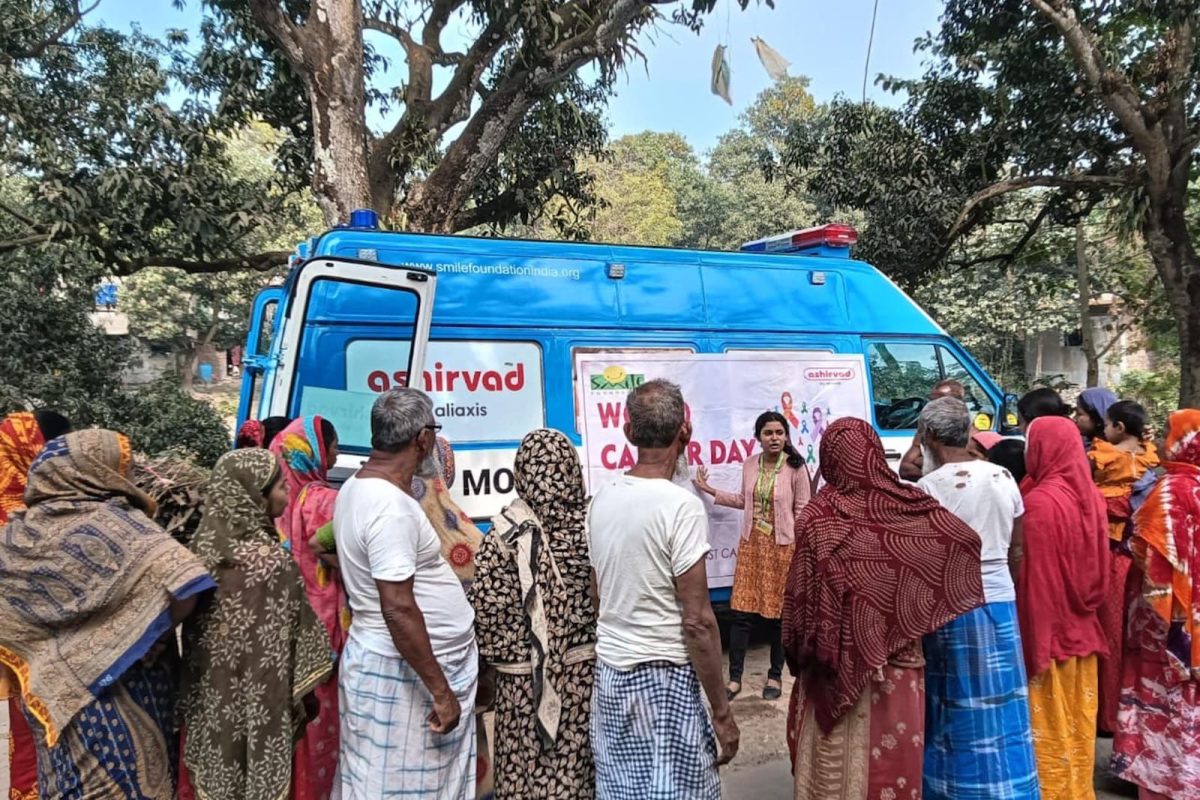
Smile Foundation has been working to supplement the efforts of the government. The Foundation’s healthcare intervention provides primary healthcare facilities at the doorsteps of the underserved communities in the identified rural areas and urban slums. The aim is to reach the vulnerable population who cannot afford basic healthcare facilities. 

Smile Foundation joined hands with GlaxoSmithKline Asia Private Limited (now Haleon) to make dental treatment affordable and accessible and to address the gaps existing in dental healthcare at the community level. 

The dental health units have been providing diagnostic as well as curative services through roster based OPDs. Another very important component of the Smile on Wheels Dental HealthCare is the School Oral Health Programme that includes awareness sessions on oral health and hygiene followed by regular dental check-ups.

Two new technology platforms have been integrated in the healthcare programme. ReMeDi is an integrated telemedicine solution that enables teleconsultation where doctors are remotely connected to see the patient, talk to the patient, and can access past medical records. The device enables doctors to conduct over 30 point-of-care diagnostic tests in real-time. Results from these tests are transmitted automatically to the EMR. Doctors can prescribe medicines and also refer for follow-up visits and continuous care.

Health Cube, a state-of-art portable diagnostic system, provides results in 3 to 30 minutes for over 30 tests across various parameters. The system allows smart diagnostics and artificial intelligence to facilitate rapid screening of patients.

Categories
Partnerships

How are public-private partnerships important for social change?

Every day, thousands of Indians head to airports across the country for work and leisure travel. But how many know that, at present, 14 airports in the country (as per the Press Information Bureau website) are operated under Public Private Partnership (PPP)? For instance, the Delhi International Airport Limited (DIAL) was developed under a PPP model between the Government of India, the Delhi State Government, and a consortium of private players, including companies like GMR Group, Fraport AG (Germany), and Government of Singapore Investment Corporation (GIC).

What are public-private partnerships?

Every human being on earth has the right to water, sanitation, economic growth, education and health. And these are some of the goals that the United Nations has envisaged in the form of the 17 Sustainable Development Goals, which it wants nations and governments to achieve by 2030.

According to World Economic Forum (WEF), 2.2 billion of the population still don’t have access to safe drinking water services, says the UN Children Joint Monitoring Programme and World Health Organization (WHO). Meanwhile, 4.2 billion people – more than half the world’s population – still have no access to safely managed sanitation services. UNICEF’s Water Sanitation and Hygiene (WASH) assessment shows that 946 million people still defecate in the open. According to a Brookings Institution report, it may take anywhere between $5-$7 trillion annually for developing countries to achieve the SDGs by 2030. For India, the financing gap is $565 billion. And that’s where PPPs can play a vital role. Since government resources alone are usually not sufficient to close the financing gap, the more effective way to achieve it is through public-private partnerships.

A PPP is a “contract between a government body and a private one to deliver a public service or provide an asset for the public”. The contract is a long-term one, and the risk is borne by the private party. Returns are usually linked to how well the private firm performs.

How are PPPs different from CSR?

PPPs are formal partnerships between the government and the private sector to jointly deliver public services or infrastructure projects. The public sector (government) and private sector (businesses) share resources, risks, responsibilities, and benefits. These partnerships are typically focused on long-term projects, such as infrastructure development, healthcare, education, transportation, etc.

Corporate social responsibility (CSR) is a commitment by businesses to engage in social and environmental activities that benefit the community. CSR is a company’s initiative to contribute positively to society beyond their primary business goals, often done through donations, community programmes, employee volunteerism, and environmental conservation. CSR efforts are usually separate from the company’s core business activities, and while they can have a long-term impact, they are more focused on corporate goodwill rather than contractual obligations.

“CSR is mandated by law and companies can implement CSR activities in many ways – by giving funds to support a programme etc. A PPP could be a larger plan of any organisation where the company ties up with a government department. They can set terms and are involved in the project, they can’t just give money and forget about it,” says development professional Meera Sundararajan.

Public-private partnerships focus on leveraging private sector expertise, resources, and capital to efficiently deliver public infrastructure and services. Their primary goal is to improve the efficiency, quality, and timeliness of public services and infrastructure projects. CSR focuses on the social and environmental impact of businesses, going beyond profit maximisation. The primary goal is to promote ethical and sustainable business practices, build a positive reputation, and contribute to the well-being of society and the environment.

Why are PPPs important?

With governments facing resource constraints, establishing PPPs is the way forward. PPPs help in mobilizing private sector capital and expertise for infrastructure projects, which is crucial in a developing economy like India. Private companies also usually have a greater incentive to complete projects on time, as their profits are tied to meeting deadlines and performance standards. This leads to better project management and quicker implementation of infrastructure projects.

Private companies also bring specialized skills and experience in managing and operating complex infrastructure projects, leading to increased operational efficiency. The private sector often introduces new technologies and innovative solutions to improve the quality of infrastructure, reduce costs, and enhance services.

The risks involved — financial, operational, and construction-related — are shared between the public and private sectors, based on their ability to manage them. This ensures that the government does not bear the full burden of risks and can leverage the private sector’s expertise in handling challenges.

PPP projects create job opportunities, both directly through the construction and operation phases, and indirectly by boosting local economies. This is particularly important in India with its vast population, where unemployment rates are high. Improved infrastructure, such as better roads, airports, and ports, stimulates economic growth by enhancing connectivity, promoting trade, and attracting foreign investment.

Many PPP projects come with a focus on the long-term maintenance of infrastructure. Since private players are often responsible for the upkeep of the infrastructure for an extended period, it ensures that projects are not just built but also properly maintained and upgraded.

PPPs can bring about social change

Forging PPPs can bring about change in every sector and have a social impact.  “PPPs can play a great role in the field of education. For instance, in rural areas, industries can help set up and/ or improve the infrastructure of schools,” says Meera. The private sector can support the development of schools, vocational training centres, and educational technology platforms. “They can even adopt an anganwadi centre and run it, while the government agencies play a monitoring role.”

The private sector can partner with the government to set up skill development centres and vocational training programmes, especially in underserved regions. These centres can equip youth with the skills needed to secure employment or start their own businesses, which is crucial in a country with a large youth population.

In healthcare, PPPs can lead to better healthcare infrastructure, such as hospitals, clinics, and diagnostic centres, through private sector investments. “PPPs can ensure that government hospitals match the standard of corporate hospitals in terms of infrastructure, facilities, and treatment available,” says Dr A V Srinivasan, Emeritus Professor, Tamil Nadu Dr. M.G.R. Medical University.

A good example of PPP in healthcare is the Pradhan Mantri Bhartiya Janaushadhi Pariyojana (PMBJP), a campaign launched by the Department of Pharmaceuticals. It makes unbranded quality generic medicines available at affordable prices through public-private partnership. PMBJP stores have been set up to provide generic drugs, which are available at lesser prices but are equivalent in quality and efficacy as expensive branded drugs.

PPPs partnerships can also play a key role in expanding water supply systems and sanitation facilities, which in turn improves public health in rural and urban areas.

Such partnerships can enable the development of low-cost housing projects where private companies provide construction expertise and funding, while the government ensures policies for affordability. 

Urban development is one area where PPPs can bring about change. Or instance, the Smart Cities Mission, a flagship initiative by the Indian government, involves PPPs to develop smart infrastructure like traffic management systems, waste management, and affordable housing. According to PIB website, more than 50 cities have successfully developed or are developing 199 projects through PPPs worth ₹9,200 crore.

It can also help with transport and connectivity. Better public transport systems such as metros, buses, and roads help improve accessibility and mobility for the general public. Well-developed transport infrastructure connects people to jobs, markets, and healthcare facilities, enhancing their economic opportunities and quality of life. “The private sector could partner with the state transport corporation, and can help in providing inputs for setting up good, high quality bus shelters,” says Meera. Some corporates also maintain public parks, which everyone has access to, she adds. 

Role NGOs play through these partnerships

Smile Foundation has been tying up with various organisations to bring about change in the field of education, healthcare and women empowerment.

The foundation operates six active scholarship projects in collaboration with donors including Deutsche Bank, Quantiphi, Quest Global, and Siemens. These projects collectively benefit over 2,000 students. Our commitment to increasing this figure ensures that more and more young men and women are granted the opportunity to excel in sectors with high growth potential and make a significant contribution to our development.

To make dental treatment affordable and accessible and to address the gaps existing in dental healthcare at the community level, Smile Foundation joined hands with GlaxoSmithKline Asia Private Limited (now Haleon). The dental health units have been providing diagnostic as well as curative services through roster based OPDs. We organize regular Information, Education and Communication (IEC) activities to enhance health seeking behaviour.

These are just a few examples of how public-private partnerships are enabling long-term, systemic change. By combining the reach and grassroots experience of civil society with the resources and innovation of the private sector, such collaborations offer sustainable, scalable models of development. At Smile Foundation, we see these partnerships as pathways to equity building resilience, self-reliance, and dignity within the communities we serve.

Categories
Education

Is STEM losing its steam for Girls?

Over the last few decades, the push for gender equality in education has significantly increased the number of women in higher education worldwide. In India, female enrolment in undergraduate and postgraduate courses has grown considerably. However, despite these advances, a troubling trend has emerged: fewer women are opting for STEM (Science, Technology, Engineering, and Mathematics) fields, particularly in engineering and IT. 

While participation in natural sciences and medicine has increased, enrollment in engineering degrees has declined by 1.35% at the undergraduate level and a staggering 43% at the postgraduate level between 2013-14 and 2021-22. This raises important questions—why are women stepping away from STEM, and what can be done to reverse this trend? This article delves into the reasons behind the declining interest of women in STEM careers, the role of skill-building, workplace challenges, and future projections, using validated facts and data to highlight the issue.

The decline of women in STEM

Despite overall progress in higher education, STEM fields remain male-dominated. According to the All India Survey on Higher Education (AISHE), while female enrollment in undergraduate commerce courses grew by 42% and arts, humanities, and social sciences by 15%, the numbers tell a different story for engineering and IT. Although IT and computer science saw a 23.4% rise in undergraduate enrollment, postgraduate enrollment dropped by 27.4%. Experts attribute this shift to multiple factors, including societal perceptions, financial constraints, and limited women-friendly policies in STEM-related careers.

The situation in India reflects a global trend. The World Bank’s 2020 report on women in STEM highlighted that even though more women graduate from universities than men, they are significantly underrepresented in STEM disciplines, particularly engineering and physics. This gap translates into lower workforce participation, with women making up only 29% of the global STEM workforce, despite representing nearly half of overall employment in non-STEM fields, as per the Global Gender Gap Report 2023.

What is stopping women from excelling in STEM?

STEM education often becomes out of reach for women due to the significant financial investment it demands. When resources are limited, priority is typically given to educating male children, driven by the widespread belief that investing in their education will bring greater future returns. This pattern was highlighted in a 2023 report by Sattva Knowledge Institute.

Workplaces with rigid hours, limited flexibility, and inadequate childcare support create significant hurdles for women, further reinforced by gender-blind policies that overlook their specific needs, as highlighted in the IWWAGE Policy Brief 2024.  

The Key Global Workforce Insights report by Kelly Services reveals the deep-seated biases women in STEM face—76% felt their colleagues believed men had genetic advantage in science and math, 77% observed double standards in training opportunities, and 81% perceived bias in performance evaluations.  

Beyond workplace challenges, the dual burden of professional and household responsibilities continues to hold women back. Even middle-class women who can afford domestic help find themselves solely responsible for managing it, reinforcing traditional gender roles. These systemic barriers not only hinder career progression but also contribute to the persistent underrepresentation of women in STEM fields.

Essential workplace benefits such as maternity leave, childcare facilities, and flexible work hours are often not provided, despite their proven role in increasing women’s workforce participation. Additionally, wage disparities persist, with men frequently earning more for the same work, further reducing incentives for women to stay in these fields.  In addition, with leadership positions in STEM predominantly occupied by men and fewer women in decision-making roles, it becomes harder for aspiring professionals to envision a clear career trajectory. 

Government initiatives to bridge the gap

Recognizing the disparities, the Indian government has implemented several programs to encourage women in STEM. The Atal Innovation Mission, which has established over 10,000 Atal Tinkering Labs (57% in rural areas), encourages early interest in science among schoolgirls. The Rashtriya Avishkar Abhiyan promotes hands-on STEM learning through mentorship, and states like Tamil Nadu and Andhra Pradesh have introduced policies supporting STEM education through financial aid and school infrastructure.

Additionally, initiatives like Haryana’s ‘Main Bhi Curie’ program, Assam’s teacher training at IIT Guwahati, and Uttar Pradesh’s partnership with Khan Academy are enhancing STEM learning environments for girls. While these efforts are promising, more work is needed to address financial, societal, and workplace barriers that persist in STEM education and careers.

The role of skill-building for encouraging women in STEM

To counteract declining enrolment, skill-building initiatives must be prioritized. Research highlights that women in STEM often face skill gaps in digital literacy, coding, and data analytics—fields that are increasingly crucial. Skill development programmes focusing on practical training, coding boot camps, and leadership mentoring can equip women with the necessary competencies to thrive in STEM careers.

Programs like Google’s Women Techmakers and Microsoft’s DigiGirlz have been life-changing for many young women, giving them the confidence, mentorship, and financial support they need to thrive in technology. By offering scholarships, guidance, and hands-on exposure, these initiatives are helping bridge the gender gap in the tech world. Expanding such initiatives in India, particularly for rural and economically weaker sections, could significantly impact participation levels.

Conclusions and future projections

With the Asia-Pacific region facing an estimated labor shortage of 47 million skilled workers by 2030, the underrepresentation of women in STEM is not just a gender issue but also an economic one. According to the UNDP Report 2024, this gap could cost the global economy $4.238 trillion in lost opportunities. If women’s participation in STEM does not improve, India risks lagging in technological advancements, innovation, and economic competitiveness. 

Despite progress in higher education, systemic barriers—including societal norms, financial constraints, and workplace discrimination—continue to hinder women’s full participation in STEM. Addressing this requires a multi-pronged approach, including gender-sensitive policies, financial incentives, and targeted skill-building programs. By investing in women’s participation in STEM today like Smile Foundation does, we pave the way for a more inclusive, innovative, and economically robust future.

Categories
Smile Education

How school infrastructure impacts education?

Way back in 2003, a group of US-based professionals joined hands to turn around rural schools in India, often in places where they had grown up. One School At A Time (OSAAT), an initiative to rebuild and revitalise schools, focuses on three essential elements at every school they rebuild – classrooms, washrooms and kitchens. They restore school infrastructure to create a safe, healthy learning environment and provide a digital platform to enhance student engagement and academic performance.

Most schools in India were built by the government in the 1930’s and 1940’s. Over the years, many rural schools have fallen into disrepair, with leaking roofs and unsafe structures. Poor water, sanitation, and hygiene facilities put students at risk of illness and hinder their ability to focus on learning. Even when school conditions are adequate, economic hardship and long distances often force rural families to prioritize work over education for their children.. 

The OSAAT initiative is just an example of one of the numerous ones being undertaken by individuals, organisations and government agencies to improve the infrastructure of schools in rural India. For it can have a huge impact on reducing dropout rates, increasing the quality of education, and also improve the rural economy.

Rural schools often lack proper infrastructure

How big is this problem? Many schools, especially in rural areas, lack adequate infrastructure – not just proper classrooms, libraries, and computer laboratories but basic amenities such as electricity, water supply, and sanitation facilities. This naturally discourages students from enrolling or attending these institutions.

According to the Annual Status of Education (Rural) Report (ASER), there have been small improvements as far as school infrastructure is concerned. For instance, the fraction of schools with usable girls’ toilets increased from 66.4% in 2018 to 68.4% in 2022 to 72% in 2024. The proportion of schools with drinking water available increased from 74.8% to 76.1% to 77.7%, and the proportion of schools with books other than textbooks being used by students increased from 36.9% to 43.9% to 51.3% over the same period.

However, these improvements can be seen across most states, but schools in Meghalaya, Arunachal Pradesh, Mizoram, and Nagaland continue to lag behind in these facilities.  The ASER 2024 reveals that states like some North-eastern states are unable to provide usable toilets and drinking water. “Only 72% schools have usable girls’ toilets, up from 66.4% in 2018”, while 77.7% have drinking water. Sports facilities show little progress, with just 66.2% of schools having playgrounds in 2024”, a slight dip from 66.5% in 2018. These deficits highlight inadequate investment in school infrastructure.

Why is school infrastructure important?

From providing a conducive learning environment to reducing dropout rates, it is important to invest in school infrastructure. Children are more likely to continue their education if better facilities are provided. For example, a lack of amenities like clean water or sanitation facilities may make girls more likely to drop out when they reach puberty. Improved facilities encourage girls to enrol and stay in schools, which reduces chances of early marriage and leads to empowerment of girls and women. Having access to clean water and sanitation also cuts down on the disease burden in rural areas, improving quality of life.

A comfortable learning environment also ensures that children focus more on studies, which naturally improves their academic performance. That, in turn, means that the students will be able to secure admission in good colleges and get better jobs, breaking generational poverty cycles. 

“Schools should have proper airy classrooms with furniture, and a compound wall to ensure safety. It’s also important to have toilet facilities with water and provision for girls to dispose of their sanitary pads,” says Virgil D Sami, executive director of Arunodhaya, which works for realising child rights through child participation. “If bathrooms are not available, girls won’t come to school especially when they are menstruating.”

There are studies that prove it. The National Achievement Survey (NAS), an initiative by the Ministry of Education to assess students’ learning outcomes across India. It also collects data on the physical infrastructure of schools and how it correlates with student performance. According to it, studies have shown a strong correlation between good school infrastructure and better student performance. Schools with functioning toilets, proper classrooms, and access to learning resources such as libraries tend to show better academic outcomes. Schools with adequate infrastructure also tend to have better teacher attendance and availability, which directly impacts learning outcomes.

Suraj Katra, a consultant with various nonprofits, says that there is an infrastructure deficiency in most Anganwadi centres. “The facilities are bad, they don’t have appropriate teaching material, especially those dealing with early childhood care and education,” he says. “Recently, while documenting a project I got a video report from a field worker about a school located a few hours from Noida. The condition of the Anganwadi centre there was bad, it was not painted, the ceiling was falling apart and water as well as snakes came into the classrooms when it rained, so parents are scared to send their children to school.”

Not attending school during the formative years can have a huge impact on children, says Katra. “If children aged three to five don’t go to school, they will fall behind when they are enrolled in primary schools,” he says.

Investing in school infrastructure in rural areas helps bridge the gap between urban and rural education. Which means children from less privileged backgrounds have equal opportunities to education and hence better jobs. Having a more educated workforce also paves the way for economic development and poverty reduction in rural areas.

Schools in rural areas, especially if children have to travel long distances to reach them, can pose a threat to safety, especially where girls are concerned.  

Community participation and support of educational initiatives also improve when communities see investment in their local schools.

Poor school infrastructure can have a psycho-social impact

Students in schools with poor facilities may feel demotivated or inferior compared to those in better facilities. This can affect their mental well-being and academic performance. A lack of exposure to modern teaching methods can also make rural children feel disconnected from broader educational advancements.

The atmosphere in school and the infrastructure has a strong impact on children and their academic performance. If the classrooms are congested and dirty, children won’t feel like coming to school. If the classrooms are bright and airy, and they have access to all facilities, they will be happy to come to school and study, so naturally the academic performance goes up.

Need of the hour

Government as well as private initiatives have been launched to improve infrastructure in schools. But there is a lot that still needs to be done. For one, there has to be an investment in basic amenities – all schools should have functional classrooms, proper seating, safe drinking water, and clean restrooms. 

Efforts need to be made to bridge the gap between rural and urban schools by providing equitable access to learning materials, qualified teachers, and even a range of extracurricular activities. Schools also need to be equipped with technology — computers, internet access, and e-learning platforms. This will improve digital literacy, but also functional literacy.

Regular audits of school facilities, including the physical infrastructure, should be held to identify gaps. If these are addressed immediately, a conducive learning environment can be sustained. While the central and state governments are working to address the situation, there is a need for all stakeholders to get involved. Local communities, corporates, nonprofits and the local government bodies should together to maintain school infrastructure.

Steps in the right direction

Smile Foundation has been working to provide an enabling learning environment for children. The Right to Education (RTE) Act, which came into force in 2010 made education free and compulsory for all children in the age group of six to 14 years. However, more than a decade later, the learning curve has not been steady for all children. The socio-economic conditions of parents and gaps in the learning infrastructure and environment in schools are hindrances which prevent many children from getting a proper education. 

We feel that creating an exciting and fun learning environment contributes towards a positive and energetic interaction, which in turn enables children to understand easily and retain the concepts well. Our learning initiatives provide teaching learning material comprising notebooks, textbooks, practice sheets, classroom teaching materials, stationery and writing sheets.

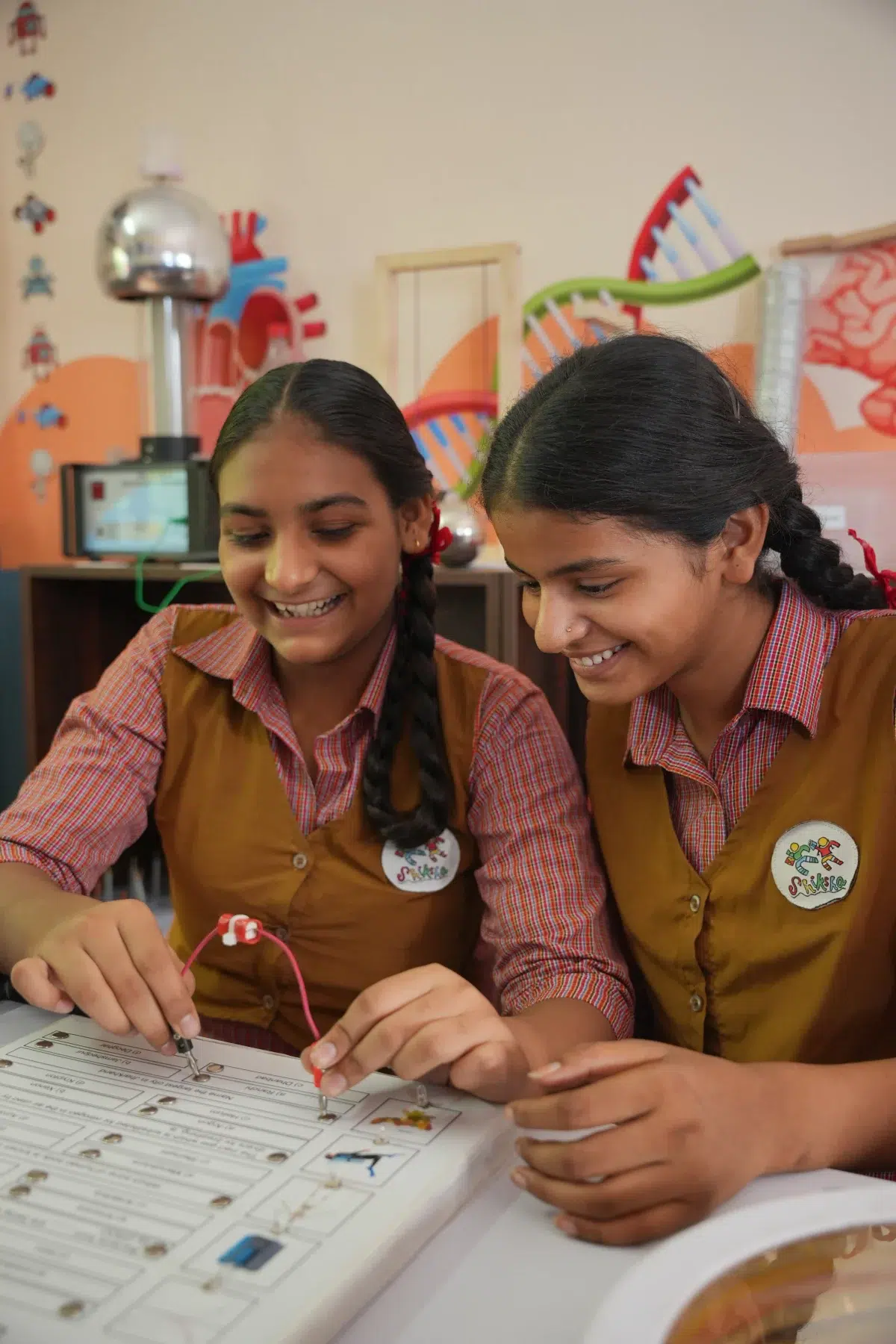
We have established STEM labs at 12 locations, including DIY activity kits for activity-based learning and STEM DIY kits. The foundation has also established labs for English, science and provided maths learning tool kits. We have also worked to improve their centre’s infrastructure through green infrastructure and digital classrooms, including solar panels, smart class installation, learning software and educational tablets.

At seven locations we have done renovation work through waterproofing, painting, toilet repair, plumbing, electrical works. And also provided sports materials, musical instruments, and speaker systems at 18 locations.

Categories
Smile

India Low on the Human Development Index Over the Years

The United Nations Development Programme (UNDP) conducts the Human Development Index (HDI) that measures the country’s progress in human development. According to WHO, the HDI is a summary measure of human development. It is a summary composite measure of a country’s average achievements in three basic aspects of human development: health, knowledge and standard of living. 

India has faced consistent challenges in achieving a high rank on the HDI. India is one of the fastest-growing economies in the world, but it grapples with stark inequalities that hinder its progress. In 2024, India ranked 134th in the global human development index (UNDP report). The nation has improved its ranking compared to 2021; however, Bangladesh, Bhutan, Sri Lanka, and China continue surpassing it. 

Understanding the root causes for the human development index ranking being low is crucial for India to improve its ranking and reveal the systemic barriers that hinder growth. 

Economic disparities

The Indian economy is expected to show one of the most rapid growth rates in the years ahead; however, the issue remains as to whether this will have any impact on the current economic disparity. A World Inequality Lab study revealed that the highest 1% of the income distribution received 2.1% of the national income between 2022 and 2023. The study indicates that this is the maximum percentage of the national income to be held by the wealthiest individuals in the country since 1922 (13%). This, in turn, results in disparities in the access to education, healthcare and the basic amenities. 

Educational challenges

The report by Deloitte and the Confederation of Indian Industry (CII) titled Annual Status of Higher Education (ASHE) 2024 reveals a crucial picture of regional disparity in India’s higher education system. It illustrates a stark contrast between the northern and southern states. Access to education has improved for all social categories; however, Scheduled Tribes continue to be left behind due to existing hierarchies between social groups. The challenges northern states must address include gender disparity stemming from traditional attitudes, inadequate quality of education despite the establishment of institutions throughout the state, teacher shortages, substandard and outdated academic curricula, and a lack of innovative teaching approaches.

Health and nutrition issues

According to a study, about 77 per cent of children in India aged 6-23 months lack diversity in diet as suggested by the World Health Organization, with the central part of the country showing the highest levels of inadequate diversity in diets among children.

India, despite experiencing swift economic development, still grapples with limited access to quality healthcare, malnutrition and inadequate diets that affect a substantial segment of the population. These nutritional struggles not only harm individual health and well-being but also impact productivity and development. Poverty, lack of awareness, cultural and social norms, and inadequate or lack of quality healthcare services aggravate these issues. Despite the presence of prestigious medical institutes and India’s popularity as a medical tourism destination, which provides high-quality care at lower costs than other nations, many Indians, particularly the impoverished, receive extremely substandard primary and hospital care.

Gender inequality

India has made progress on this front. The SDG 5 deals with ensuring gender equality, and India’s overall score is 49. Economic participation is one approach to achieving gender equality. This involves ensuring that females refrain from dropping out of higher education, providing them with job skills, ensuring safety in the workplace, and assisting them in maintaining a job after marriage through sharing the burden of household chores.

Governance and policy implementation gaps

India faces a significant challenge in the form of the disparity between the formulation and implementation of policies. Bureaucratic red tape, corruption within government agencies, and budgetary constraints impede the implementation process, resulting in increased costs and delays. Frequently, there is a lack of a distinct mechanism for monitoring the implementation of policies or holding policy makers accountable for their actions. Several challenges are presented to policymakers by the diversity of the population, as policies that are effective in one region or community may not be effective in another. 

The higher the HDI, the better the standard of living. A high HDI indicates that a country provides quality healthcare, education, and economic opportunities for its citizens. Identifying these barriers enables policymakers, organizations, and citizens to create targeted solutions that address specific issues. Tackling these problems holistically can lead to sustainable improvements in HDI rankings. In an increasingly complex and interconnected world, our definitions of development must adapt. We should include a wider array of indicators that reflect the diverse aspects of human development. Recognizing factors such as environmental sustainability, gender equality, linguistic diversity, and political freedom is essential for a more comprehensive understanding of development. 

Smile Foundation’s mission has been to serve as a catalyst for sustainable change in the lives of underserved children and families by utilizing a life-cycle approach to development. We prioritize the education, health, safety, and empowerment of girls and women, as well as nutrition, through our targeted programs. Explore our website and get to know our various projects. 

Categories
Smile Women Empowerment

Is climate change more cruel towards women?

Climate change is not an abstract environmental crisis but a deeply human one, disproportionately impacting those already marginalized. Among its many victims, women stand out as bearing the brunt of its devastating consequences. The United Nations estimates that 80% of people displaced by climate change are women. This stark statistic underscores the gendered nature of the crisis, intertwining environmental degradation with existing societal inequalities. Climate change exacerbates vulnerabilities, perpetuates gender-based violence, and disrupts lives, pushing women further into the shadows of poverty and insecurity.

From drought-stricken fields to cyclone-ravaged villages, women are often left grappling with the dual burden of survival and caregiving, while their access to resources, rights, and decision-making remains limited. To address climate change comprehensively, we must acknowledge and act upon its gendered impacts.

The gendered impact of climate disasters

Natural disasters and extreme weather events do not affect everyone equally. Women and girls are 14 times more likely to die in such events compared to men. Limited mobility, access to resources, and decision-making power render them especially vulnerable. Beyond immediate survival, the aftermath of disasters brings further challenges. Relief efforts often fail to account for women’s specific needs, such as access to maternal healthcare, hygiene products, and safety in shelters, leaving them exposed to risks like sexual violence and human trafficking.

The displacement caused by climate change intensifies these vulnerabilities. Over four out of five individuals displaced by climate impacts are women. Displacement often leads to the breakdown of social structures, leaving women and girls susceptible to exploitation, child marriage, and trafficking. For example, in regions experiencing prolonged droughts or floods, families may resort to marrying off young daughters to secure food or reduce the number of dependents.

The burden of resource scarcity

In many parts of the world, women are the primary managers of household resources such as water, food, and fuel. Climate change-induced resource scarcity places an overwhelming burden on them. Erratic rainfall patterns and prolonged droughts force women and girls to walk longer distances to fetch water, often at the cost of education and personal safety. This was evident in arid regions of Africa, where women reported traveling over 10 miles daily for water, risking exposure to physical and sexual violence.

Agriculture, a sector heavily reliant on women’s labor, is particularly vulnerable to climate change. Women constitute up to 43% of the agricultural workforce in developing countries, yet they face systemic barriers such as lack of land ownership, limited access to credit, and insufficient training in climate-resilient practices. During periods of crop failure or dwindling yields, the burden of securing income and sustenance for their families falls disproportionately on women, perpetuating cycles of poverty and inequality.

Health and education: Collateral damage

Climate change also has far-reaching implications for women’s health and education. Extreme weather events disrupt healthcare services, jeopardizing maternal and child health. Pregnant women are particularly vulnerable to heat stress, which has been linked to higher incidences of adverse birth outcomes. Moreover, the spread of vector-borne diseases like malaria and dengue, exacerbated by changing climates, disproportionately affects women due to their caregiving responsibilities.

Education, a crucial tool for empowerment, is often an early casualty of climate crises. Girls are more likely than boys to drop out of school to assist with household chores or resource collection in times of scarcity. The destruction of schools during natural disasters further disrupts their education. According to UNICEF, over 37.5 million students—a significant proportion of them girls—have their education interrupted annually due to extreme weather events.

Gender-based violence in climate crises

The intersection of climate change and gender-based violence is another grim reality. Cases of domestic violence and sexual exploitation often increase in regions facing prolonged droughts or food shortages. Displacement camps, often overcrowded and under-resourced, become hotspots for trafficking and abuse.

Child marriage is yet another concerning consequence of climate-induced desperation. Families facing hunger and severe financial struggles often see early marriage as a way to cope or survive. In regions of South Asia and Sub-Saharan Africa, climate-induced poverty has been directly linked to a rise in child marriages.

Women as agents of change

Despite these challenges, women are not merely victims of climate change. They are pivotal agents of resilience and adaptation. In many communities, women lead efforts in sustainable agriculture, water conservation, and disaster preparedness. Indigenous women, in particular, hold invaluable knowledge about biodiversity and ecosystem management, contributing to climate resilience.

Women’s leadership is increasingly recognized at various levels of climate action. Research highlights that countries with higher proportions of women in parliament are more likely to ratify environmental treaties and adopt stringent climate policies. Furthermore, women-led organizations and movements, such as the Chipko movement in India, have historically played a crucial role in environmental conservation.

The path forward: Gender-responsive climate action

Addressing the gendered impacts of climate change requires a multidimensional approach. Policymakers must prioritize gender-responsive climate strategies that empower women while addressing their unique vulnerabilities. These strategies include:

  1. Enhancing Access to Resources: Providing women with equal access to land, credit, and technology can significantly improve agricultural productivity and resilience.
  1. Investing in Education and Training: Empowering women with climate-resilient skills and knowledge can boost their capacity to adapt and lead.
  1. Ensuring Representation: Women’s voices must be included in climate decision-making processes at local, national, and global levels.
  1. Strengthening Legal Protections: Safeguarding women from climate-induced violence and exploitation through robust legal frameworks is essential.
  1. Promoting Health Services: Expanding access to healthcare, including maternal and reproductive health services, is vital in climate-vulnerable regions.

Conclusion

Climate change is not “gender neutral.” Its impacts deepen pre-existing inequalities, making women disproportionately vulnerable. Yet, women also embody resilience and leadership, offering solutions rooted in their lived experiences and knowledge. To combat climate change effectively, the world must adopt a gender-responsive approach that empowers women and integrates their perspectives into climate policies. By doing so, we not only address the injustices of climate change but also unlock the potential for a more equitable and sustainable future.

Categories
Smile

The Biggest Elephant in the Room: India’s Gender Pay Gap

In June 2024, the World Economic Forum released the Global Gender Gap Index data by analysing the pay scale of men and women in 146 countries. Did you know that India was at 129th position in the rank and is termed as one of the economies with the lowest level of economic parity? The report also explains that the country would need an additional 6.2 percentage points to match its 2012 score of 46%. It means that the gender pay gap has widened in the last decade.

At present, according to statistics, Indian women earn only Rs 40 for every Rs 100 earned by men. According to the World Economic Forum (WEF), an average salaried Indian man-made Rs 20,666 per month between July 2022 and June 2023. On the other hand, a woman made Rs 15,722.25. Isn’t it bothersome? Let’s understand what the gender pay gap is, its causes and its consequences in detail.

Understanding the Gender Pay Gap

The gender pay gap is the average difference in remuneration between women and men employees. Multiple organisations and governments have been taking efforts to close the pay gap for several decades. Yet, the gender pay gap continues to exist even though it has inched a bit closer. While some countries have shown visible results in reducing the gap, others have made little to no change. But even today, women are paid less than men in almost all the sectors.

The International Labour Organization (ILO) finds out that women on average are paid about 20% less than men across the globe. The pay gap is as high as more than 45% in certain countries. The World Economic Forum suggests that it will take about 202 years to close the global gender pay gap. The prediction was made based on the past 12 years’ trends.

According to the Economic Policy Institute (EPI), the gender pay gap is calculated simply by dividing women’s wages by men’s wages and this ratio is expressed as a percent. It is measured for year-round, full-time workers and compares the annual wages of a man with those of a woman.

It is seen as a sign of gender-based discrimination at workplaces. ILO sees it as an indicator to measure the existing inequality between men and women workforces.

Causes of the Gender Pay Gap

There are numerous factors that widen or close the gender pay gap in the Indian marketplace. Let’s discuss some of the important factors below.

  1. Under-representation in leadership: Despite the huge improvements in female representation in the workforce, women are still underrepresented in leadership roles, especially at higher levels like board members, senior management and CEOs. This is mainly because leadership is often associated with masculine traits like decisiveness and assertiveness, while women are traditionally seen as nurturing and emotional. This stereotype defines perceptions of women’s leadership abilities. In addition, barriers like gender discrimination and lack of proper mentorship hinder the movement of a woman while climbing up their career ladder. This in turn stalls their career development and they are stuck at entry-level or mid-level positions. This vertical segregation leads to a lack of women in high-paying leadership positions and contributes to the pay disparity. But when women take up senior positions, they will concentrate management support functions like financial administration and human resources in better strategic ways. This in turn will bring down the difference in the pay gap between women and men.
  2. Occupational segregation: It is one of the main reasons for the widening pay gap between genders. For it leads to an unequal distribution of men and women employees across sectors. It creates a situation where men are likely to hold higher-paying roles, leaving lower-paying jobs for women. It is mainly due to the gender stereotypes and societal norms. Several cultures have been dictating which careers are appropriate for men and women. For instance, women are expected to work in caregiving roles like teaching and nursing, where empathy and nurturing qualities are valued. On the other hand, men are expected to take up technical, managerial and leadership positions that are often associated with a higher pay scale. Many women prefer to do home-based employment to manage their household chores. These ingrained stereotypes that have been shaping career choices influence the type of education women pursue and limit their access to high-paying sectors.
  3. Gender norms and stereotypes: Roles and responsibilities that are considered appropriate for men and women are deeply ingrained in society. These norms in turn determine the opportunities and remuneration men and women have. In addition to occupational segregation, these stereotypes lead to the undervaluation of work done by women. Because the women-oriented roles are believed to be easy jobs, even though they are extremely important and require high levels of training, expertise and responsibility. This in turn leads to lower wages in these sectors and contributes directly to the gender pay gap. In India, people strongly believe men to be the primary breadwinners and women’s earnings are always considered supplementary. This belief reduces the perceived value of women’s labor in the workplace. As a result, women are subjected to discriminatory hiring practices and unequal and unjustifiable pay.

Consequences of the Gender Pay Gap

The widening gender pay gap has far-reaching and significant consequences for both individuals and society at large. It means nothing but unjustifiable gender inequality in the society, and it has serious economic, political and social consequences. Some of them are discussed below.

  1. A wider gender pay gap means women are earning significantly less than their male counterparts. This in turn will drastically decrease women’s economic power, financial independence, and ability to purchase assets and save for the future. This will also impact their ability to provide for their families, leading to continued cycles of poverty, particularly in low-income households.
  2. When women are underpaid, it sends a clear note to everyone that women employees are undervalued. This in turn will discourage them from participating in the workforce and it means that the country cannot maximise its potential workforce. This will eventually affect the economic growth and GDP of the country.
  3. Also, when women move out of the workforce due to underpayment, there will be a huge underrepresentation of women in senior positions and leadership in businesses and government sectors. When a country has no women in leadership, their economic decision-making and policy development will be impacted. Also, young women employees will lack motivation and role models to look up to.
  4. Underpaid women often feel frustration and mental stress. This economic insecurity coupled with demotivation will lead to anxiety, burnout and depression because they keep juggling between work and household chores. They also struggle to afford adequate healthcare, nutrition and preventive services for themselves and their families.
  5. Financial independence of women is closely linked with their empowerment. The gender pay gap limits women’s ability to gain the autonomy and decision-making power that are required to improve their social, political and economic status. Without equal pay, women have fewer resources to challenge patriarchal structures and achieve broader equality.

Ways to Close the Gender Pay Gap

Joint secretary of the Ministry of Women and Child Development, Preetam B Yashwant, in the recent UN ministerial conference, said that the country is now working on bridging gender pay gaps at all levels. One of the important steps that a country needs to take while trying to bridge the gender pay gap is to take stock of gender inequalities and recognise the benefits of improved gender diversity in all aspects. Some of the ILO’s recommendations for closing the pay gap for businesses and policymakers are listed below.

  1. Promoting a gender-inclusive work culture
  2. Following a holistic strategy to provide equal remuneration for men and women for doing work of equal quality and value.
  3. Offering pay based on the position rather than considering previous pay of employees.
  4. Providing equitable salary offers to all genders.
  5. Conducting a gender pay review to assess and close the existing gaps.
  6. Creating jobs that are more flexible so that more women can access higher-level jobs.
  7. Applying a job evaluation methodology to assess the skills and responsibilities of the various jobs with a view to adjusting job titles, contents and corresponding pay over time.

Addressing the gender pay gap is one of the foremost and most significant steps that need to be taken to address gender discrimination and inequality in the country. Closing the gender pay gap is the path to women’s empowerment and sustainable economic development. So, it is high time the Indian government prioritises the issues, makes policy changes and takes effective steps to close the widening gender pay gap in the country.

0%