
Summary
|
Why Ambedkar Jayanti Matters More Than Ever in 2026
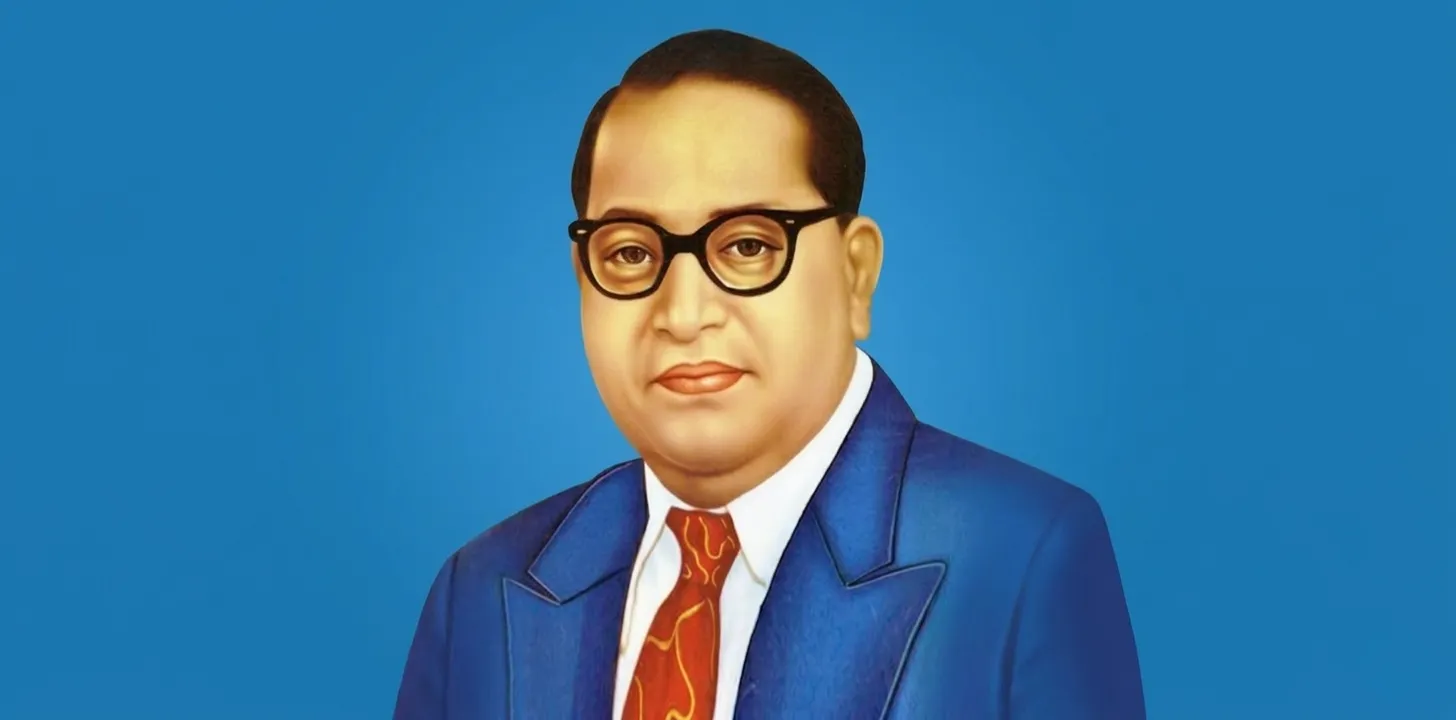
Every nation has leaders who shaped its laws, but very few have leaders who shaped the very idea of who deserves those laws. Dr. Bhimrao Ramji Ambedkar was one such leader. Against extraordinary personal hardship, he earned multiple doctorates from Columbia University and the London School of Economics, became the principal drafter of the Indian Constitution, and spent his entire life building a legal and moral architecture of equality. Every year on April 14, the country pauses to honour that extraordinary journey.
But Ambedkar Jayanti is not merely a holiday of remembrance. It is an annual checkpoint for the nation. How far have we come in making education truly universal? Are women gaining economic independence? Are livelihoods reaching the last mile? These are the questions Dr. Ambedkar spent his life answering and they remain still urgent in 2026.
For working professionals and businesses, this day presents a genuine opportunity: to align corporate purpose with the ideals of education, skill development and women empowerment that Ambedkar championed. This blog explores everything you need to know about Ambedkar Jayanti, from its history and significance to practical ways individuals and organizations can observe it meaningfully.
What Is Ambedkar Jayanti and When Is It Celebrated?
Ambedkar Jayanti is a national public holiday observed annually on April 14 to commemorate the birth anniversary of Dr. B.R. Ambedkar. In 2026, the occasion marks his 135th birth anniversary, making it one of the most widely observed commemorative days in the country.
The day is officially recognized as a gazetted holiday by the Government of India. State governments, central institutions, schools, corporate offices and community organizations all participate in marking the day through programmes, rallies, seminars and cultural events.
Also known as Bhim Jayanti in many parts of the country, the occasion draws millions of people to public squares and auditoriums where Dr. Ambedkar’s statue is garlanded and his ideals are discussed, debated and reaffirmed.
The Life Behind the Day
Born on April 14, 1891, in Mhow, Madhya Pradesh, Dr. Ambedkar overcame extraordinary adversity to become one of the most educated men of his era. He earned degrees from Mumbai University, Columbia University, the London School of Economics and the University of London. His academic credentials were matched only by his determination to reshape Indian society through law, policy and social reform.
As the first Law Minister of independent India, he led the drafting of the Constitution of India, which enshrined fundamental rights, equality before law and provisions for social upliftment. He resigned from the cabinet in 1951 over policy disagreements, continuing his advocacy work until his passing on December 6, 1956.
Dr. Ambedkar’s Vision for Education: The Foundation of Everything
Perhaps no cause defined Dr. Ambedkar more than his belief in education. His most famous statement, “Educate, Agitate, Organise”, was a strategy for liberation. He believed that access to quality education was the single most powerful tool available to any individual seeking to change their circumstances.
This belief remains strikingly relevant. According to the UDISE+ Annual Report 2024-25, India still records a significant drop in student enrollment between secondary and higher secondary levels, particularly among girls from economically weaker sections. The gap Ambedkar identified a century ago has not fully closed.
Education as an Instrument of Social Change
Dr. Ambedkar used education as personal proof of concept. He demonstrated that intellectual achievement, when supported by access and opportunity, could transform an individual’s trajectory entirely. He then went further, advocating for free and compulsory education, reservation in educational institutions and government scholarship programs.
His advocacy directly influenced several constitutional provisions, including Article 21A (Right to Education), the establishment of the Right to Education Act 2009, and scholarship schemes that continue to this day under the Ministry of Social Justice.
How Ambedkar Jayanti Inspires Education Drives Today
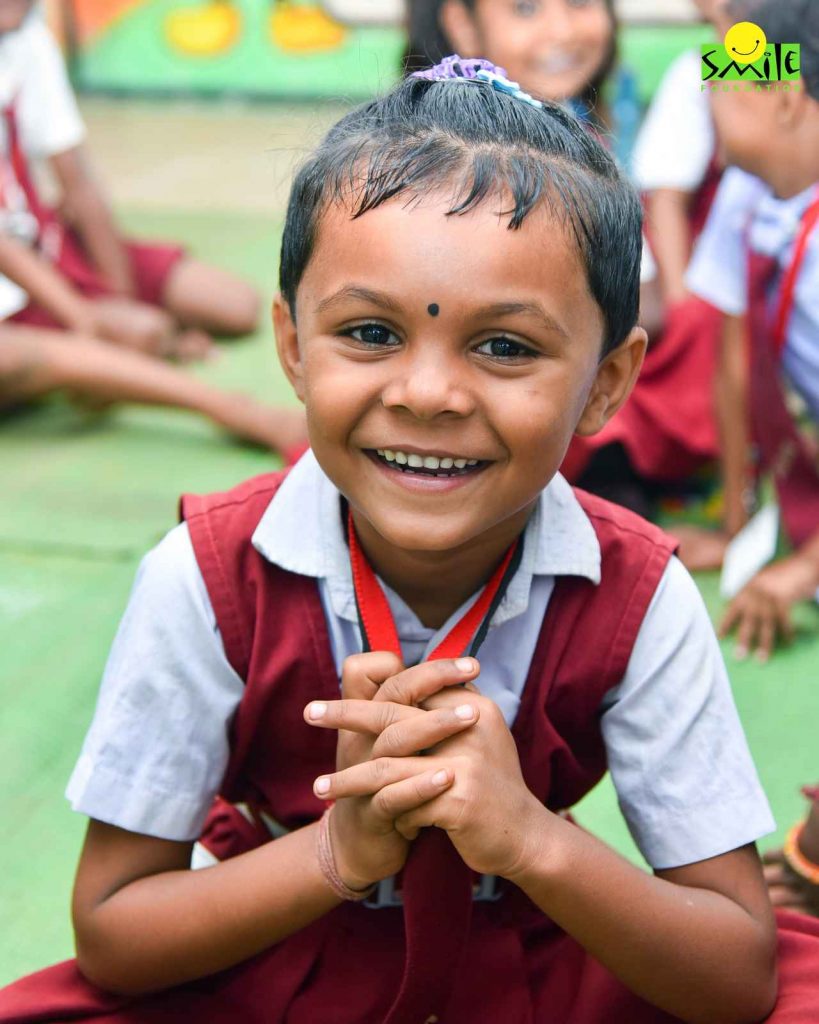
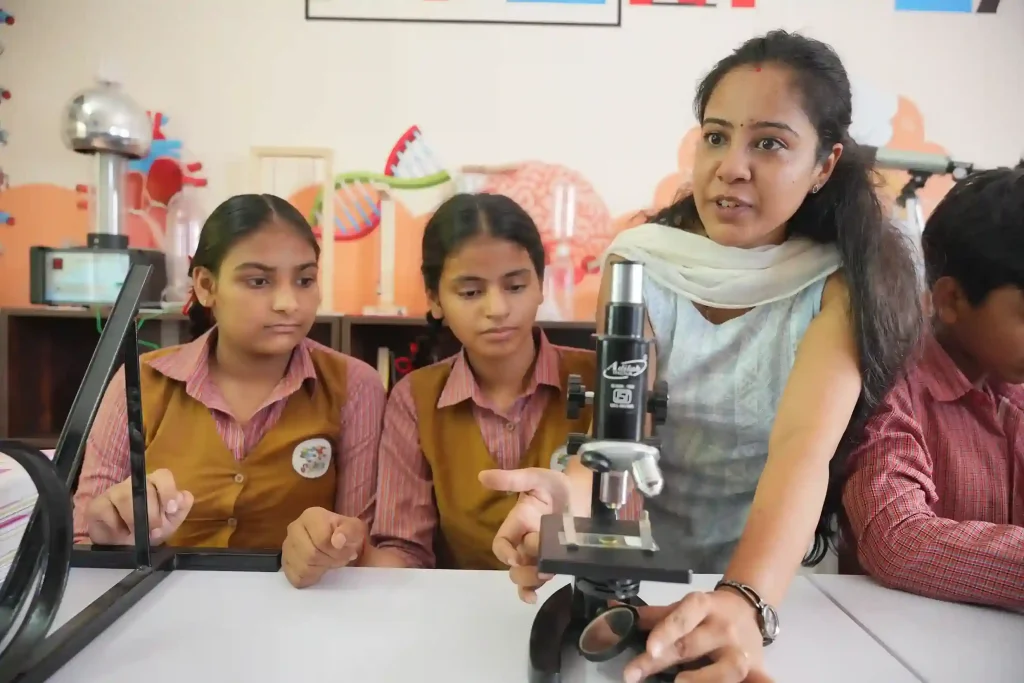
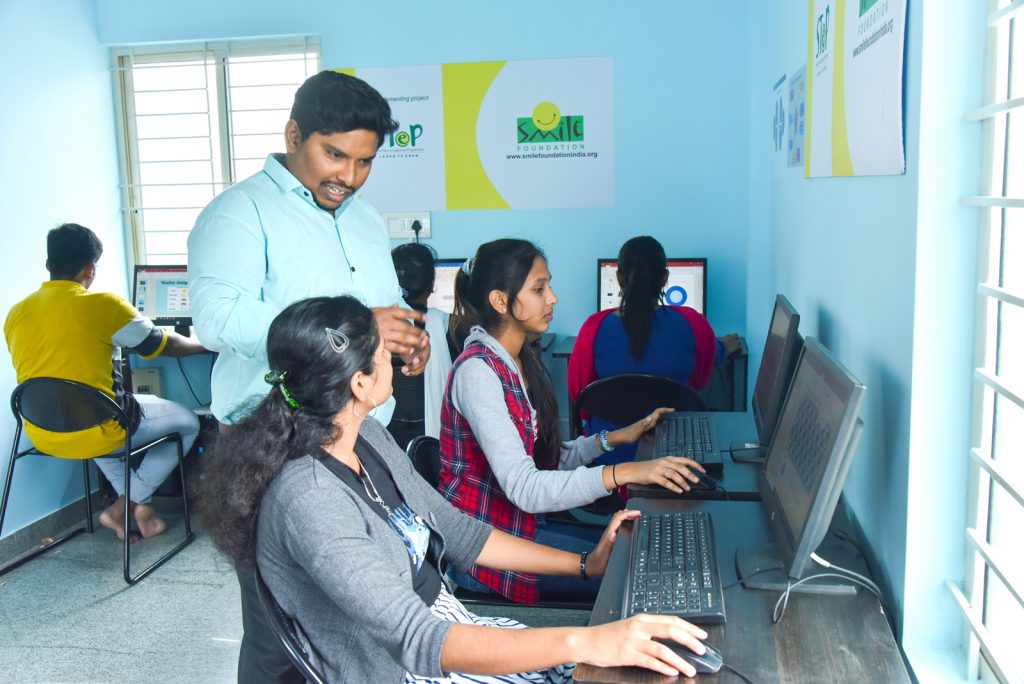
Organizations across India use Ambedkar Jayanti as a catalyst for education-related initiatives. Smile Foundation runs year-round programmes in education, healthcare, and livelihood. Our Mission Education initiative provides holistic support including mid-day meals, digital learning tools and community engagement to ensure children, especially girls, stay in school through critical years. Ambedkar Jayanti often serves as a day for development organizations to renew commitments and announce new program targets.
For businesses observing the day, supporting education-focused NGOs, sponsoring scholarships or hosting ‘learning at work’ events for employees and their families aligns directly with Ambedkar’s legacy.
| Key Takeaway: Education was the cornerstone of Ambedkar’s vision and Ambedkar Jayanti is the ideal moment for organizations to renew commitments to learning access and digital literacy programs. |
Ambedkar and Women Empowerment: A Legacy That Is Still Being Built
Dr. Ambedkar was one of the earliest and most forceful advocates for women’s rights in India. He strongly supported the Hindu Code Bill in 1951, which sought to codify and reform personal laws relating to marriage, inheritance and divorce. When the bill was diluted beyond recognition in Parliament, he resigned from the cabinet, citing his inability to accept a compromise on women’s rights.
His constitutional work embedded gender equality directly into India’s foundational document. Articles 14, 15 and 16 of the Indian Constitution explicitly prohibit discrimination on the basis of sex and provide for equal opportunity.
The Persistent Gender Gap in India’s Workforce
Despite constitutional guarantees, gender equity in India’s labour market remains a work in progress. According to the International Labour Organization India Report 2024, India’s female labour force participation rate is among the lowest in Asia, at around 24 percent for urban women. The gap between aspiration and reality is precisely the gap that Ambedkar’s framework was designed to close.
This is where Ambedkar Jayanti becomes more than a celebration. It is a call to action for businesses to examine their own practices: equal pay structures, maternity benefits, anti-harassment policies and advancement pathways for women employees.
NGO-led Women Empowerment on Ambedkar Jayanti
Organizations like Smile Foundation channel the spirit of Ambedkar Jayanti through programmes such as Swabhiman, which focuses on women’s economic empowerment, digital literacy for women and sustainable livelihood creation. By supporting women entrepreneurs in semi-urban and rural communities, these programmes translate Ambedkar’s constitutional framework into tangible income growth and financial independence.
Corporations can participate on this day by pledging to hire or mentor women from underserved backgrounds, supporting women-led businesses in their supply chain or funding training programmes that build women’s leadership capabilities.
Skill Development and Livelihood: The Economic Pillars of Ambedkar’s Vision
Beyond education and gender equity, Dr. Ambedkar understood that real freedom required economic independence. He fought against systems that confined people to specific occupations and advocated for the freedom to pursue any profession. His economic writings, particularly the work on Annihilation of Caste, argued for occupational mobility as a fundamental right.
This philosophy directly informs India’s current policy landscape. According to NSDC Annual Report 2024-25, the National Skill Development Corporation has trained over 12 million individuals under various government schemes since its inception. The mandate is clear: build skills, create livelihoods and break cycles of poverty.
Government Schemes Aligned with Ambedkar’s Vision
Several flagship government programmes carry forward Ambedkar’s economic ideals:
- PM Vishwakarma Yojana: Supports traditional artisans and craftspeople with skill upgrades, digital tools and market access.
- Pradhan Mantri Kaushal Vikas Yojana (PMKVY): Provides industry-relevant skill training to youth across sectors.
- Stand-Up India Scheme: Facilitates loans to women and Scheduled Caste/Scheduled Tribe entrepreneurs for setting up greenfield enterprises.
- Deen Dayal Upadhyaya Grameen Kaushalya Yojana (DDU-GKY): Focuses on rural youth, providing market-linked skill training and placement support.
These schemes are most effectively observed and amplified on Ambedkar Jayanti, when public attention is highest and community mobilization is most natural.
How Businesses Can Align with Skill Development on Ambedkar Jayanti
Corporate India has both the resources and the responsibility to accelerate skill development. Under India’s CSR mandate (Schedule VII of the Companies Act 2013), companies are eligible to fund skill development, vocational training and livelihood programmes as part of their social responsibility commitments. Ambedkar Jayanti is an ideal activation moment.
Smile Foundation’s Tayyari Kal Ki is one such example, offering placement-linked vocational training in sectors like IT, retail, hospitality and healthcare. Programmes like these demonstrate how private sector partnership can operationalize Ambedkar’s vision of economic freedom for all.
How to Observe Ambedkar Jayanti: A Practical Guide for Working Professionals and Businesses
Observing Ambedkar Jayanti does not require grand gestures. The most meaningful observations often begin with small, consistent actions that reflect Ambedkar’s own method: educate yourself and those around you, then act.
Step 1: Learn and Share
Begin the day with a team briefing or email sharing Dr. Ambedkar’s life story and the significance of the day. Many organizations send curated reading lists or short videos to employees. The goal is awareness, not just acknowledgment.
Step 2: Pledge a Workplace Inclusion Audit
Use Ambedkar Jayanti as the date to formally review your organization’s diversity and inclusion metrics. Are all employees paid equitably? Are advancement opportunities open to all? Publish your findings internally and commit to targets for the year ahead.
Step 3: Support an Education or Skill Initiative
Partner with an NGO or government program to fund scholarships, sponsor training batches, or donate equipment to a vocational training center. Even a one-day volunteering activity, such as mentoring sessions for students, carries enormous impact.
Step 4: Amplify Women-Led Businesses
If your organization has a procurement function, commit to sourcing a percentage of goods or services from women-led enterprises. Announce this commitment on Ambedkar Jayanti and make it measurable.
Step 5: Engage Your Community
Participate in or sponsor local Ambedkar Jayanti events such as public talks, youth competitions, or cultural programs. For companies with a branch network, encourage local teams to connect with community organizations on this day.
| Key Takeaway: The most impactful Ambedkar Jayanti observations are those that translate inspiration into institutional commitments in education, inclusion, and livelihood support. |
Enduring Ambedkar Quotes on Education and Self-Reliance
Dr. Ambedkar’s words remain among the most cited in India’s public discourse. They carry a clarity and urgency that few others match. Here are some of his most powerful statements, each as relevant in 2026 as they were when first spoken:
- “Cultivate the habit of being grateful for every good thing that comes to you, and to give back in return.”
- “Men are mortal. So are ideas. An idea needs propagation as much as a plant needs watering. Otherwise, both will wither and die.”
- “I like the religion that teaches liberty, equality and fraternity.”
- “Political tyranny is nothing compared to social tyranny, and a reformer who defies society is a more courageous man than a politician who defies a government.”
- “Lost rights are never regained by appeals to the conscience of the usurpers, but by relentless struggle.”
These quotes are widely used in Ambedkar Jayanti speeches, corporate awareness programs, and school assembly themes. They serve as a grounding anchor for any organization reflecting on its social purpose.
Ambedkar’s Pillars in Numbers: Education, Women Empowerment and Skill Development Across India (2025-26)
One of the most powerful ways to honour Ambedkar Jayanti is to measure, honestly and rigorously, how far India has come on the three pillars Ambedkar dedicated his life to: education access, gender equity and economic opportunity. The data below, drawn from government and multilateral sources, shows both the progress made and the distance still to travel.
Understanding this data is not just an academic exercise. For businesses, NGOs and policymakers, these numbers reveal where investment and intervention are most urgently needed, making them the foundation of any credible CSR or social impact strategy.
National Snapshot: Where India Stands in 2026
| Indicator | National Figure (2025-26) | Target / Benchmark | Source |
| Gross Enrollment Ratio, Higher Education | 28.4% | 50% by 2035 (NEP 2020) | AISHE 2024-25, Ministry of Education |
| Female Labor Force Participation (Urban) | ~25% | OECD average: 55% | ILO India Report 2024 |
| Youth Skilled Under PMKVY (cumulative) | 15.3 million+ | 40 crore by 2030 (NSDC) | NSDC Annual Report 2024-25 |
| Women-owned MSMEs | ~20% of total MSMEs | 30% by 2027 (MSME Ministry) | MSME Annual Report 2024 |
| Drop-out Rate (Secondary Level, Girls) | 13.7% | Below 5% (NEP target) | UDISE+ 2024-25 |
| CSR Funds Spent on Education (FY2024-25) | Rs 6,200+ crore | Largest CSR category | MCA CSR Report 2025 |
| Rural Women with Bank Accounts (PM Jan Dhan) | Over 310 million | Financial inclusion baseline | PMJDY Dashboard 2025 |
| Literacy Rate (National Average) | 77.7% | Universal literacy by 2030 | Census Projections 2024 |
State-Level Lens: Education and Women Workforce Participation
| State | Literacy Rate (%) | Female LFPR (%) | Notable Skill / Education Scheme |
| Kerala | 96.2 | 38.5 | Kerala Knowledge Economy Mission |
| Maharashtra | 84.9 | 24.8 | Mahatma Phule Jan Arogya Yojana + PMKVY centers |
| Uttar Pradesh | 73.3 | 16.1 | UP Skill Development Mission (1.2 cr trained) |
| Rajasthan | 69.7 | 25.4 | Indira Gandhi Smartphone Yojana for women |
| Bihar | 63.8 | 6.9 | JEEViKA SHG Network (over 1 crore women) |
| Tamil Nadu | 82.9 | 36.2 | TNSDC vocational training (500+ centers) |
| Madhya Pradesh | 73.7 | 32.6 | Mukhyamantri Seekho Kamao Yojana |
| West Bengal | 77.1 | 23.9 | Karmasathi + Utkarsh Bangla schemes |
Sources: UDISE+ 2024-25, ILO India Women and Work 2024, NSDC Annual Report 2024-25, MSME Annual Report 2024, MCA CSR Report 2025.
What This Data Means for Businesses on Ambedkar Jayanti
The numbers above are not just statistics for a report. They are a map of opportunity. States with low female labour force participation rates represent the highest-impact zones for women empowerment programs. Districts with high school dropout rates are where scholarship and mid-day meal programmes deliver the strongest return on investment. Regions with low MSME women ownership are where procurement pledges and mentoring programmes can shift economic outcomes fastest.
Organizations like Smile Foundation use exactly this kind of granular, state-level data to direct our programmes, ensuring that resources reach communities where Ambedkar’s vision of equitable access remains furthest from reality. For any business building a CSR strategy around Ambedkar Jayanti, this data is the starting point, not an afterthought.
Frequently Asked Questions About Ambedkar Jayanti
Q: When is Ambedkar Jayanti 2026?
A: Ambedkar Jayanti 2026 falls on Wednesday, April 14, 2026. It marks the 135th birth anniversary of Dr. Bhimrao Ramji Ambedkar. It is a gazetted national public holiday across India.
Q: Why is Ambedkar Jayanti celebrated on April 14?
A: April 14 is the birth date of Dr. B.R. Ambedkar, born in 1891. The date was officially recognised as a national holiday to honour his extraordinary contributions as the principal drafter of the Indian Constitution and a lifelong champion of equal rights, education and economic freedom.
Q: What is the significance of Ambedkar Jayanti for education?
A: Dr. Ambedkar believed education was the foundation of all social progress. He used his own educational journey to prove that access to learning could overcome any barrier. His constitutional provisions, including the Right to Education, make Ambedkar Jayanti the most relevant national day for education advocacy and policy discussion.
Q: How can companies and businesses observe Ambedkar Jayanti?
A: Companies can observe Ambedkar Jayanti by conducting workplace inclusion audits, sponsoring scholarship programmes, partnering with NGOs like Smile Foundation for skill development, pledging to support women-led businesses and releasing their annual DEI reports on this date to signal accountability.
Q: What is the connection between Ambedkar Jayanti and women empowerment?
A: Dr. Ambedkar was one of the strongest legislative advocates for women’s rights in India. He resigned as Law Minister partly over the dilution of the Hindu Code Bill, which sought to give women equal rights in marriage, divorce and inheritance. Ambedkar Jayanti is therefore a natural occasion to renew commitments to gender equity in the workplace and society.
Q: What government schemes are linked to Ambedkar’s vision of livelihood and skill development?
A: Several central government schemes reflect Ambedkar’s economic vision, including PM Vishwakarma Yojana for artisans, Pradhan Mantri Kaushal Vikas Yojana for vocational training, Stand-Up India for women entrepreneurs, and DDU-GKY for rural youth skill development.
Q: What are some Ambedkar Jayanti activities for schools and colleges?
A: Schools and colleges commonly organize essay competitions, debates on Ambedkar’s constitutional contributions, documentary screenings, art exhibitions and invited talks from social workers and policy experts. Many institutions also launch book donation drives and scholarship announcements on this day.
Q: What is Bhim Jayanti and is it the same as Ambedkar Jayanti?
A: Yes. Bhim Jayanti is another name for Ambedkar Jayanti. Dr. Ambedkar’s first name was Bhimrao and he is affectionately referred to as Bhimrao or simply Bhim by his admirers. Both names refer to the same celebration on April 14.
Q: How can individuals personally contribute to Ambedkar’s legacy on this day?
A: Individuals can donate to education charities, mentor a student from an underserved community, volunteer with Smile Foundation, share curated reading material about Ambedkar on social media, complete a skill development course or simply have a conversation with their team about workplace inclusion. Every act of learning and sharing counts.
Ambedkar Jayanti is a Mandate and Memory both
In 2026, Ambedkar Jayanti is more than a remembrance. It is a mandate for action. Dr. B.R. Ambedkar built a legal framework for equality, but he understood that constitutional rights alone do not deliver equity. What delivers equity is consistent, intentional effort, year after year, organization by organization, person by person.
The themes he championed, universal education, women empowerment, skill development and livelihood access, are precisely the themes that define a thriving, competitive and just economy in 2026. Organizations that align their purpose with these ideals do not just honour Ambedkar. They build stronger, more resilient businesses.
Key takeaways from this guide:
- Ambedkar Jayanti on April 14, 2026 marks the 135th birth anniversary of Dr. B.R. Ambedkar, India’s Constitution architect.
- Education, women empowerment, skill development, and livelihood were the pillars of Ambedkar’s vision and remain urgent national priorities.
- Businesses and working professionals can observe the day with inclusion audits, CSR partnerships, and public commitments.
- Organizations like Smile Foundation translate Ambedkar’s ideals into on-ground programs in education, women empowerment, and livelihood.
- The best tribute to Ambedkar is not a social media post. It is a measurable, accountable commitment to building a more equitable workplace and community.
Sources and References
- Government of India Official Portal
- UDISE+ Annual Report 2024-25, Ministry of Education
- Right to Education Act 2009, Government of India
- ILO India: Women and Work Report 2024
- NSDC Annual Report 2024-25
- Columbia University – Ambedkar
- London School of Economics
- Constitution of India, constitutionofindia.net
- Ministry of Corporate Affairs – CSR Schedule VII
- Smile Foundation India