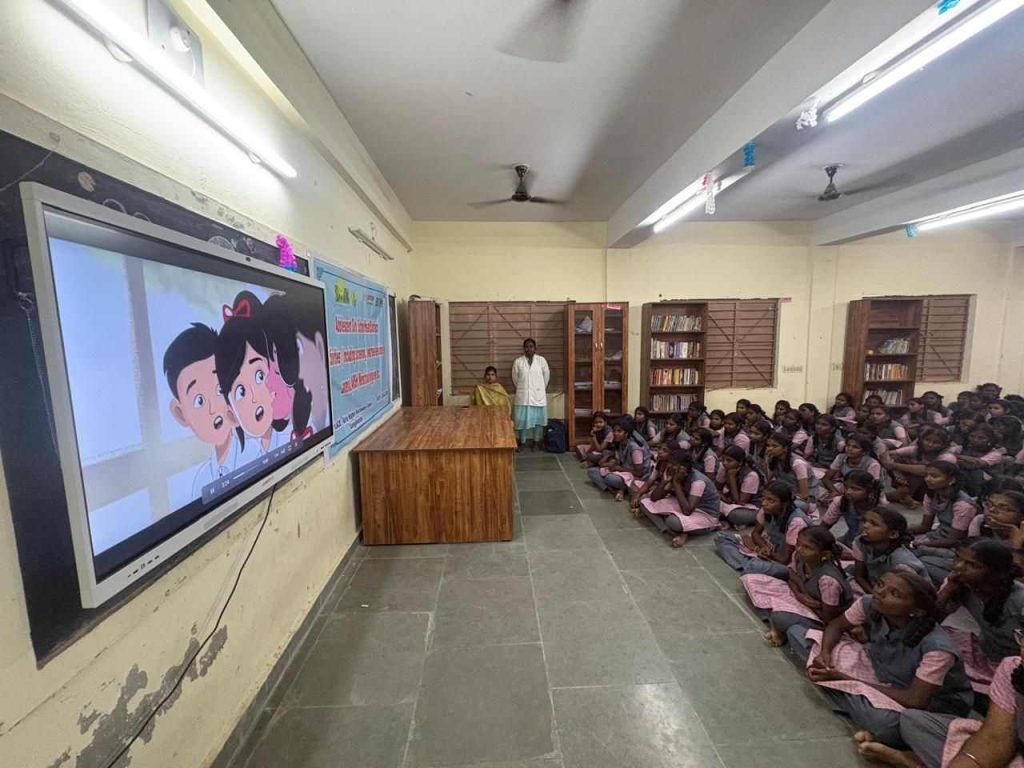
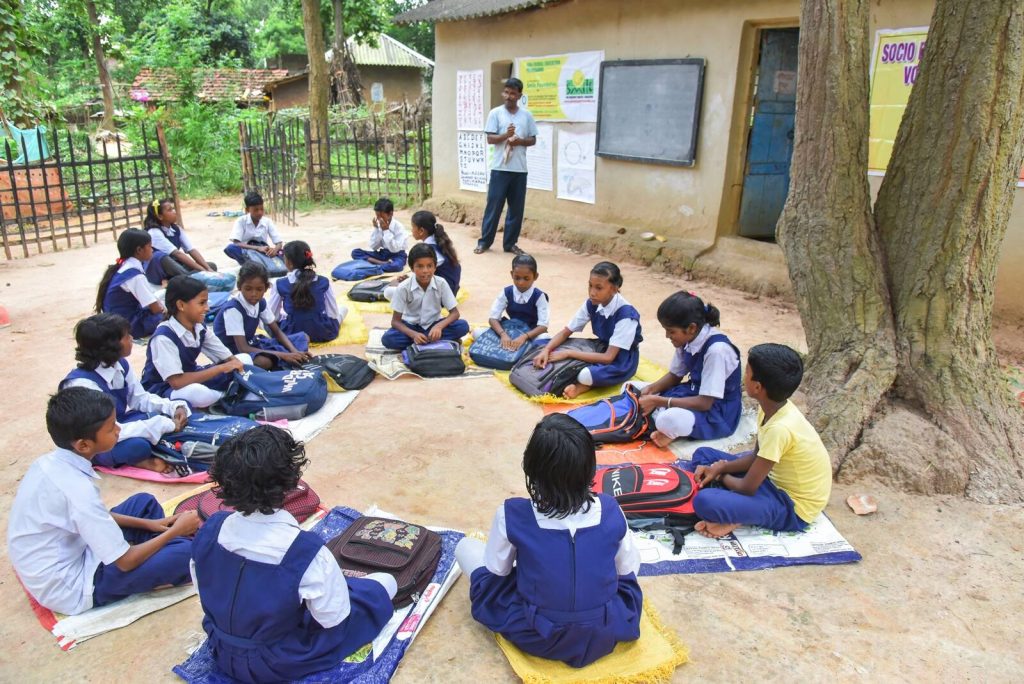
A child can arrive at the school gate in a crisp uniform, a new pair of shoes and a school bag packed with sharpened pencils, and still not be ready to learn. They may know their alphabet but be hungry by mid-morning; know how to count but struggle to concentrate because they have not slept well; be able to recite a poem but remain too anxious to speak in front of a classroom. Even the seemingly simple act of sitting through a lesson depends on a series of conditions that exist well beyond the classroom.
This is what makes the question of being “ready to learn” more complicated than asking whether a child is prepared for Class 1. For decades, school readiness has often been framed as a set of abilities that children are expected to acquire before entering formal education: recognising letters and numbers, following instructions, sitting still, communicating clearly and adjusting to classroom routines. But this framing can quietly turn readiness into a test that the child must pass. It places the burden on children and families while making the conditions in which children grow and learn almost invisible.
Early childhood research offers a broader understanding. UNICEF India describes early childhood development not simply in terms of academic preparedness, but as a state in which a child is adequately nourished, physically healthy, mentally alert, emotionally secure, socially competent and ready to learn. Nutrition, healthcare, safety, responsive caregiving and opportunities for stimulation are therefore not peripheral to education; they are part of its foundation. In other words, readiness does not begin at the school gate. It begins much earlier: in the food a child eats, the sleep they get, the safety they experience, the conversations they have and the adults who respond when they reach out.

Readiness begins before the classroom
The distinction between being ready for school and being ready to learn is important. School readiness usually refers to the knowledge, skills and behaviours that help a child participate successfully in a formal learning environment. Readiness to learn, however, is broader. The India Early Childhood Education Impact Study notes that while school readiness concerns preparation for a structured educational setting, readiness to learn is a characteristic that develops from birth.It shifts the focus from what a child is expected to know before school to the conditions that make learning possible in the first place.
A toddler who is regularly spoken to, encouraged to explore, read to, played with and responded to is already developing the foundations of language and cognition. A child sorting household objects by size, asking why the sky changes colour, counting biscuits or negotiating the rules of a game is already engaging in forms of mathematical and social learning. These activities may not resemble a worksheet, but they develop capacities that formal education later builds upon. The early years therefore matter not simply because children need to be taught before they enter school, but because development itself is cumulative.
UNICEF identifies ages zero to eight as a particularly important period in which the foundations of later learning are established. This is why quality early childhood education is associated with improved learning in the early primary grades and lower likelihood of repetition and dropout.
Readiness cannot be simply reduced to knowing the alphabet or writing one’s name. Instead of treating readiness as a narrow academic category, we need to assess whether children aged four to eight covered four broad domains: early language, early numeracy, cognitive development, and social and emotional development. It includes activities such as recognising emotions, understanding relationships, solving problems, sequencing, identifying shapes, counting objects, responding to oral word problems and demonstrating persistence, motivation etc. This is pertinent because learning in the early years is deeply interconnected to multiple factors. To illustrate, say, a child who cannot sit through a story may not simply have a language problem, they may have had limited exposure to books or sustained adult interaction.
Similarly, a child struggling with numbers may understand quantities perfectly well through everyday activities but find the symbols unfamiliar and a child who does not participate in class may be anxious or just unfamiliar with the school environment. Readiness, therefore, is not a checklist of deficits but more like a combination of cognitive, physical, linguistic, social and emotional capacities that develop through sustained relationships and environments both inside and outside the classroom.
Readiness as a two-way journey
We also need to stop imagining readiness as a one-way process. A child has to be prepared for school, but schools also have to be prepared for children. This is particularly important in India, where children enter classrooms with enormous differences in language, preschool exposure, family circumstances, nutrition, parental education and prior learning experiences.
UNICEF says children in the same grade can have vastly different levels of foundational ability. Grade-level teaching alone cannot address these differences: children need to be taught from their current learning level rather than simply from the textbook prescribed for their grade because the implications are significant. If a six-year-old enters Class 1 without preschool exposure, asking whether the child is “ready” can obscure the more important question: what support does the child need to participate and learn? This is explored in approaches such as Teaching at the Right Level (TaRL), the emphasis is placed on what children can actually do rather than the grade they are enrolled in.
Evidence from TaRL programmes shows that when children who are struggling with foundational literacy and numeracy are taught according to their current learning levels, rather than simply being moved through the curriculum with their age cohort, learning gaps can be addressed more effectively.
This is one reason India’s National Education Policy 2020 reorganised the first stage of education around a foundational stage that includes three years of early childhood education followed by
Classes 1 and 2. The policy’s stated ambition is that children entering Grade 1 should be school-ready, while the NIPUN Bharat mission focuses on ensuring foundational literacy and numeracy by the end of Grade 3. The policy shift thus recognises that children do not arrive at school as blank slates, and they do not arrive with equal starting points.
What readiness looks like beyond the classroom
The idea that children need more than academic preparation to learn is also reflected in the way community-based education programmes are designed. At Smile Foundation, the Mission Education programme takes an integrated approach, combining education with nutrition, healthcare and other forms of support that help create a more enabling environment for learning. The programme works with children from underserved communities, including those living in difficult circumstances and hard-to-reach areas.
This matters because a child struggling to learn may not necessarily need more worksheets or longer hours in the classroom. They may need a nutritious meal, a health check-up, additional academic support or simply a learning environment in which they feel safe enough to participate. Smile Foundation’s work has, for example, integrated health check-ups, nutrition support and remedial education within some Mission Education projects, recognising that these factors can influence children’s ability to engage with education.
The same principle applies to how children learn. Mission Education’s current approach includes experiential and STEM learning, digital learning solutions, sports and extracurricular activities alongside curriculum-based learning. It also includes teacher capacity building around child pedagogy, wellbeing and classroom practices.
In this sense, readiness is not something a child has to arrive with. It is something that families, communities, schools and education programmes can help build.
That distinction is important. If a child enters Class 1 hungry, anxious or without previous exposure to structured learning, asking whether the child is “ready” risks placing responsibility for the gap entirely on the child. A more useful question is what can be done to create the conditions in which that child can learn.
Towards a well-rounded approach

There are other facets too. Say, how a hungry child cannot be expected to experience the classroom in the same way as a child whose nutritional and health needs are being met. Early childhood development is inseparable from health, nutrition, sanitation and emotional security.
UNICEF identifies these as interconnected components of nurturing care rather than separate interventions. This is especially important in contexts where families experience poverty, food insecurity or limited access to healthcare. Thus, this question of whether a child is ready to learn cannot be separated from whether that child has had the conditions necessary for healthy development. This is also why institutions such as anganwadis matter. Their role extends beyond preparing children academically for primary school. They can provide nutrition, care, early stimulation and opportunities for play and social interaction.
Ultimately, being ready to learn should not mean being trained to behave like a miniature schoolchild. A child should not have to arrive knowing how to sit silently for long periods, reproduce letters perfectly or perform according to an adult-defined idea of discipline before being considered capable of learning. Curiosity, communication, play, experimentation, movement and even the ability to ask questions are themselves foundations of learning. This is particularly relevant when considering the persistent gap between enrolment and learning in India.
Being physically present in school does not automatically translate into foundational learning. The challenge, then, is to create an education system capable of responding to children at different stages of development. That means quality preschool education, trained early-childhood educators, play-based learning, adequate nutrition and healthcare, supportive families, inclusive classrooms and teachers equipped to assess children’s actual learning levels. It also means recognising that readiness is not a fixed state achieved once and for all before Class 1. Children continue to become ready to learn throughout their educational journeys.
FAQs
1. What does it mean for a child to be ready to learn?
Being ready to learn goes beyond knowing letters and numbers or being prepared for Class 1. It includes a child’s physical health, nutrition, emotional security, language and cognitive development, social skills, curiosity and ability to engage with others and their environment.
2. Is being ready to learn the same as being school-ready?
Not exactly. School readiness often focuses on the knowledge, skills and behaviours that help a child participate in formal education. Readiness to learn is broader and develops from birth, shaped by the environments, relationships and experiences a child encounters before and after entering school.
3. When does readiness to learn begin?
Readiness to learn begins well before formal schooling. Everyday experiences such as talking, reading, playing, exploring, counting objects and responding to a child’s questions can contribute to language, cognitive, social and emotional development.
4. What factors affect a child’s readiness to learn?
Nutrition, healthcare, sleep, safety, emotional security, responsive caregiving, language exposure, opportunities for play and stimulation, preschool experiences and the quality of learning environments can all influence a child’s ability to learn.
5. Why is nutrition important for learning?
A hungry or poorly nourished child may find it harder to concentrate and participate in classroom activities. This is why early childhood development cannot be separated from nutrition and health.
6. What skills should children develop before starting school?
Rather than focusing only on academic skills, children benefit from development across several areas, including early language, early numeracy, cognitive development and social and emotional development. Persistence, communication, problem-solving and motivation are also important foundations for learning.
7. Does every child enter school with the same level of readiness?
No. Children enter school with different experiences of preschool, language, nutrition, family circumstances, parental education and prior learning. Recognising these differences is important for creating classrooms that can respond to children at different starting points.
8. What can schools do when children are at different learning levels?
Schools can assess what children can actually do and adapt teaching accordingly rather than assuming that all children in the same grade have the same foundational skills. Approaches such as Teaching at the Right Level focus on children’s actual learning levels.
9. Why is early childhood important for future learning?
Early childhood is a period when important foundations for language, cognition, social development and emotional development are established. Experiences during these years can influence how children engage with learning in the early primary grades and beyond.
10. How can parents help children become ready to learn?
Parents and caregivers can support learning through everyday interactions: talking and listening to children, reading together, encouraging questions, playing, counting objects, allowing children to explore and responding sensitively to their needs.
11. What role do anganwadis play in children’s readiness to learn?
Anganwadis can support several aspects of early childhood development, including nutrition, care, early stimulation, play and social interaction. Their role therefore extends beyond academic preparation for primary school.
12. Why does health and nutrition matter for school readiness?
A child’s ability to participate in learning is closely connected to their physical and emotional wellbeing. Healthcare, adequate nutrition, safety and emotional security create conditions that make sustained learning more possible.
13. What is the difference between being enrolled in school and being ready to learn?
Enrolment means that a child is attending an educational institution. Being ready to learn is broader: it concerns whether the child has the developmental, physical, emotional and social foundations needed to engage meaningfully with learning.
14. Why should schools also be “ready” for children?
Children do not enter classrooms with identical abilities or experiences. Schools therefore need to provide inclusive classrooms, trained educators, appropriate teaching approaches, play-based learning and support that responds to children’s actual developmental and learning needs.
15. Is readiness to learn something a child achieves once before Class 1?
No. Readiness is not a fixed state achieved once and for all. Children continue to develop the cognitive, social, emotional and other capabilities that support learning throughout their educational journeys.