
Summary
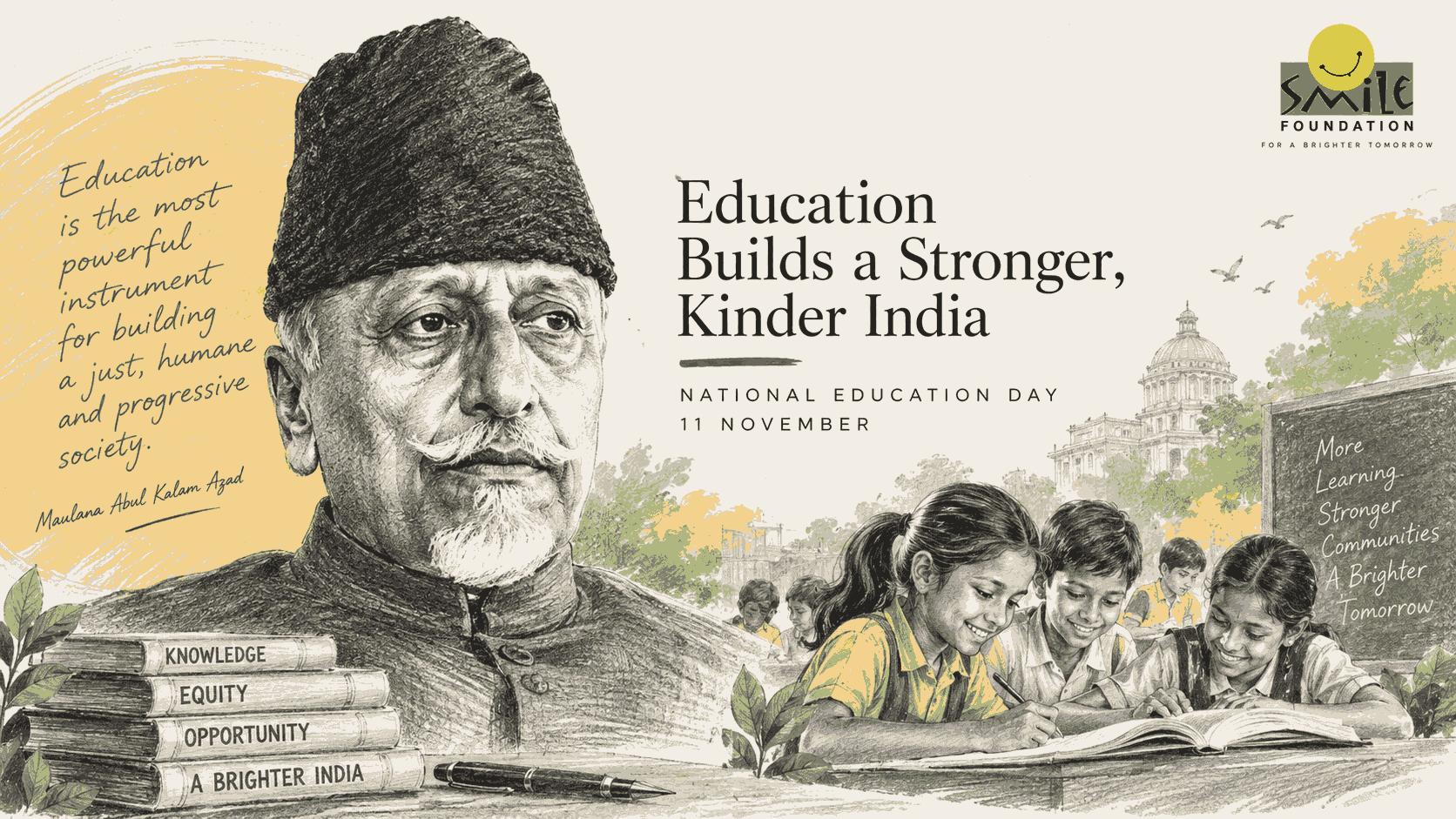
- National Education Day, observed on November 11 to mark Maulana Abul Kalam Azad’s birth anniversary, is usually associated with his role in building India’s post-Independence education system. But his educational vision was broader than the institutions he helped establish.
- Azad saw education as a means of creating informed, capable citizens, and his early post-Independence programme included an ambitious idea called “social education”, which connected adult literacy with citizenship, health, culture, economic participation and an understanding of rights and responsibilities.
- His vision also encompassed universal elementary education, women’s education, vocational and technical training, higher education, scientific research, Indian languages and cultural institutions.
The article examines the unfinished nature of that vision and connects it with contemporary challenges around foundational learning, adult literacy, digital skills and equitable access to education. India’s current education landscape shows that the central challenge has evolved from expanding access to ensuring meaningful learning and lifelong educational opportunity. ASER 2024 and the government’s ULLAS programme provide evidence of that continuing transition.
Azad’s real vision
Every November 11, India remembers Maulana Abul Kalam Azad as its first Education Minister, a freedom fighter, scholar and institution-builder. The familiar list follows: the University Grants Commission, the Indian Institutes of Technology, the Indian Council for Cultural Relations, the national academies of literature, music and art, and the expansion of technical and scientific education.
All of it is true. But it leaves out the fact that Azad’s formidable idea of education was considerably larger than the system of schools, colleges and universities that his name is usually associated with. He was thinking about education as a way of producing not simply literate people, or even employable people, but citizens capable of participating in a democracy. In the first years after Independence, that meant thinking simultaneously about the child entering a primary school, the adult who had never learnt to read, the young person being trained for an industrial economy and the citizen trying to understand what freedom meant in everyday life.
That broader idea has a surprisingly contemporary resonance.
Today, India’s education debate has moved from the question of whether children are enrolled to whether they are actually learning. Foundational literacy and numeracy have become national priorities; adult education has returned to the policy agenda through ULLAS; digital access has become part of educational opportunity; and policymakers increasingly talk about learning outcomes, skills, inclusion and lifelong learning.
More than seven decades ago, Azad was wrestling with a remarkably similar problem, although the vocabulary was different.
His question was: What kind of people should education produce, and what kind of country would those people build?
That is the question worth returning to on National Education Day.
The Education Minister who inherited an impossible problem
When Azad became independent India’s first Education Minister in August 1947, he inherited an education system designed under colonial conditions and serving a population in which access to education was deeply unequal.
The scale of the challenge was enormous. India had won political independence, but independence had not suddenly created teachers, classrooms, universities, laboratories or literate adults.
The government’s own historical accounts of the period describe education as a field in which scarce resources had to be carefully prioritised. Azad’s approach was therefore neither to choose between mass education and elite institutions nor to imagine that India could afford only one of them. His programme attempted to build several layers of the system at once: universal elementary education, adult education, secondary education, technical education and university education.
That is one of the least appreciated features of his educational thinking.
The IIT and the village school were not competing visions for Azad. They were parts of the same national project.
The establishment of IIT Kharagpur illustrates the point. The institute began in the former Hijli Detention Camp, a site associated with the freedom struggle, and was formally inaugurated as an IIT by Azad in August 1951. Its founding vision was not limited to producing engineers. The institution was expected to conduct research, produce research workers and train technical teachers, with standards comparable to leading institutions abroad.
At the other end of the system was the child who might never make it to secondary school.
Azad argued for free and compulsory basic education for children up to the age of 14, girls’ education, vocational education, agricultural education and technical education. He also supported education in the mother tongue at the primary level while recognising the continuing importance of English for higher education and international access.
The ambition was extraordinary.
The harder question was how a newly independent country would pay for it.
The forgotten experiment: education beyond the classroom
One of the most revealing parts of Azad’s educational legacy is not the IIT or the UGC. It is an initiative that has largely disappeared from popular accounts of National Education Day: social education.
In 1948, the Central Advisory Board of Education appointed a committee under Mohan Lal Saxena to develop a scheme for adult education and literacy. The committee argued that adult education should have a broader social purpose and coined the term “social education”. Its objectives went far beyond teaching adults to read and write.
The idea was strikingly expansive.
Social education was intended to cultivate an understanding of citizens’ rights and duties, encourage democratic participation, communicate knowledge about the country’s problems, deepen an understanding of India’s history and culture, promote health and hygiene, develop a cooperative spirit, provide craft training and create opportunities for cultural and recreational expression.
Literacy was the entry point.
Citizenship was the destination.
The programme was based on an understanding that an adult who could read a sentence but could not understand public institutions, health information, economic choices or civic responsibilities had not necessarily acquired the full benefits of education.
It was education as social participation.
Azad took particular interest in translating the idea into a national programme, even while the government faced severe financial constraints. A plan was made to earmark ₹1 crore for social education from an education budget of about ₹20 crore, with most of the money intended to reach states in proportion to their numbers of illiterate people.
The plan ultimately encountered the same problem that has followed Indian education policy for generations: ambition collided with resources.
Financial pressures, crop failures and the enormous demands of refugee rehabilitation after Partition constrained the government’s ability to deliver on its commitments.
But the episode reveals something essential about Azad’s thinking.
He did not regard literacy as a narrow technical skill. He regarded it as part of the process through which people became capable of participating in a new nation.
For Azad, a school was supposed to produce a citizen
One of Azad’s most revealing formulations concerned what education was ultimately supposed to accomplish.
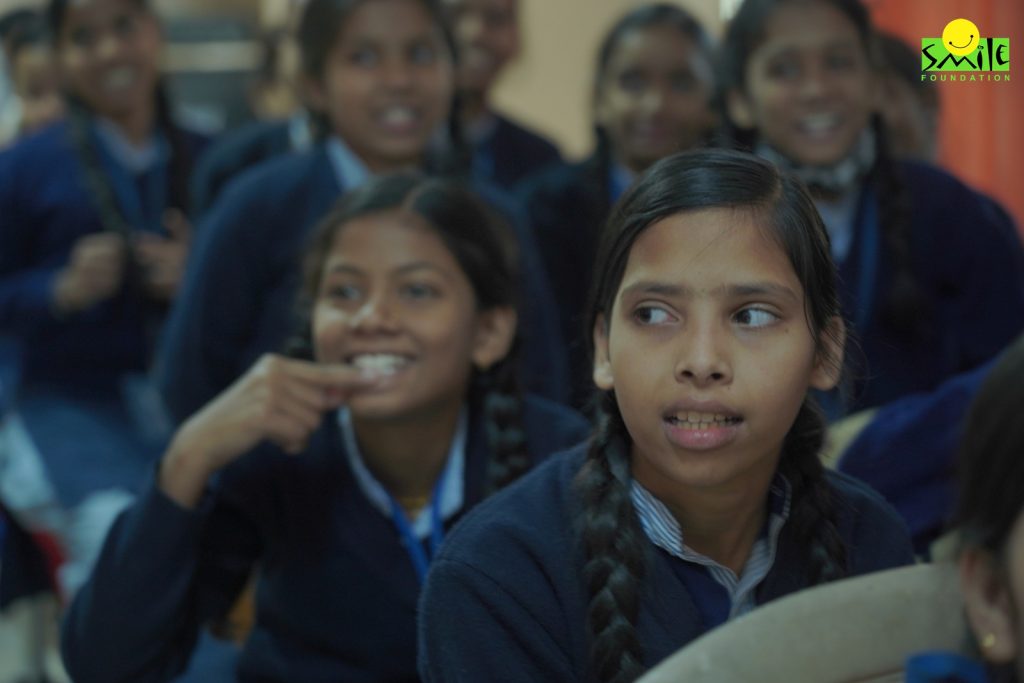
At the first meeting of the Central Advisory Board of Education, he argued that the primary purpose of an education system was to create “balanced minds” that could not easily be misled.
That sentence is worth pausing over.
It shifts education away from examinations and towards judgement.
A person who can memorise information is educated in one sense. A person who can question, evaluate, reason and participate responsibly in public life is educated in another.
Azad’s emphasis on this distinction becomes more understandable when viewed against the circumstances in which he was working. India had emerged from colonial rule and Partition. It was trying to construct democratic institutions while managing extraordinary social and economic pressures. Education was therefore not simply a development programme. It was part of the infrastructure of democracy.
This is also why Azad’s concern with culture mattered.
He believed the cultural content of Indian education had been weakened under colonial rule and supported strengthening India’s literary, artistic and cultural institutions. His tenure saw the establishment of the Sangeet Natak Akademi, Sahitya Akademi and Lalit Kala Akademi, while the Indian Council for Cultural Relations was established in 1950.
In Azad’s conception, education was therefore not neatly divided into “academic” and “cultural” knowledge.
A nation needed scientists and engineers.
It also needed writers, artists, historians, musicians and citizens who understood the cultural complexity of the country they inhabited.
The language question was more complicated than it looks
Azad’s own intellectual life made the question of language particularly complicated.
He was an accomplished scholar of Urdu, Persian and Arabic, yet he did not advocate simply replacing English with an Indian language overnight. The government’s account of his educational thinking records his support for English because of its educational, national and international advantages, while insisting that primary education should be delivered through the mother tongue and that Indian languages needed to develop as educational languages.
This was not a contradiction so much as an attempt to negotiate two different realities.
Children learn most effectively when education speaks to the language they already understand.
At the same time, access to higher education, scientific literature and international knowledge requires access to wider linguistic resources.
The question remains familiar today.
India is still negotiating the relationship between mother tongues, regional languages, Hindi, English and increasingly digital forms of learning. The National Education Policy 2020 itself places considerable emphasis on local languages and on strengthening foundational literacy and numeracy in the early years.
Azad’s position was therefore neither anti-English nor indifferent to Indian languages.
It was more pragmatic: language should expand a learner’s access to knowledge, not become a barrier to it.
He wanted educational policy to learn from the classroom
Another part of Azad’s legacy that receives relatively little attention is his investment in educational research.
In 1947, he and Jawaharlal Nehru supported the establishment of the Central Institute of Education in Delhi, now the Department of Education at the University of Delhi. Azad did not envision it merely as a teacher-training institution. He wanted it to become a research centre capable of addressing the new educational problems facing the country.
That is a revealing choice.
A country trying to educate hundreds of millions of people cannot simply import a finished education system. It has to learn what works in its own classrooms, languages, communities and social circumstances.
In that sense, Azad’s educational architecture contained an idea that modern education policy would later rediscover: education systems need the capacity to learn about themselves.
The UGC similarly reflected the desire to create a national framework for university education. The University Grants Commission was formally inaugurated in 1953 by Azad and became a statutory body in 1956, with responsibility for coordination, standards and grants in higher education.
The institutional architecture mattered because Azad was trying to solve a problem larger than access.
He was trying to create a system.
The unfinished promise of universal education
There is, however, another side to Azad’s legacy that deserves attention precisely because it makes the story more honest.
The promise of universal education was not fulfilled quickly.
A recent NIEPA publication examining Azad’s relationship with the idea of a National System of Education points to an uncomfortable historical gap between the rhetoric of universal basic education and the ability of the post-Independence state to implement it. The volume notes that the right to education had a long constitutional history but that universal elementary education remained an unfinished project for decades.
That does not make Azad’s vision less important.
If anything, it makes the vision more instructive.
India’s education history is full of ambitious commitments followed by the slower, harder work of implementation. The distance between policy and classroom reality is not a new problem. It was already visible in the first years of the Republic.
And it remains visible today.
From access to learning: The problem has changed, but not disappeared
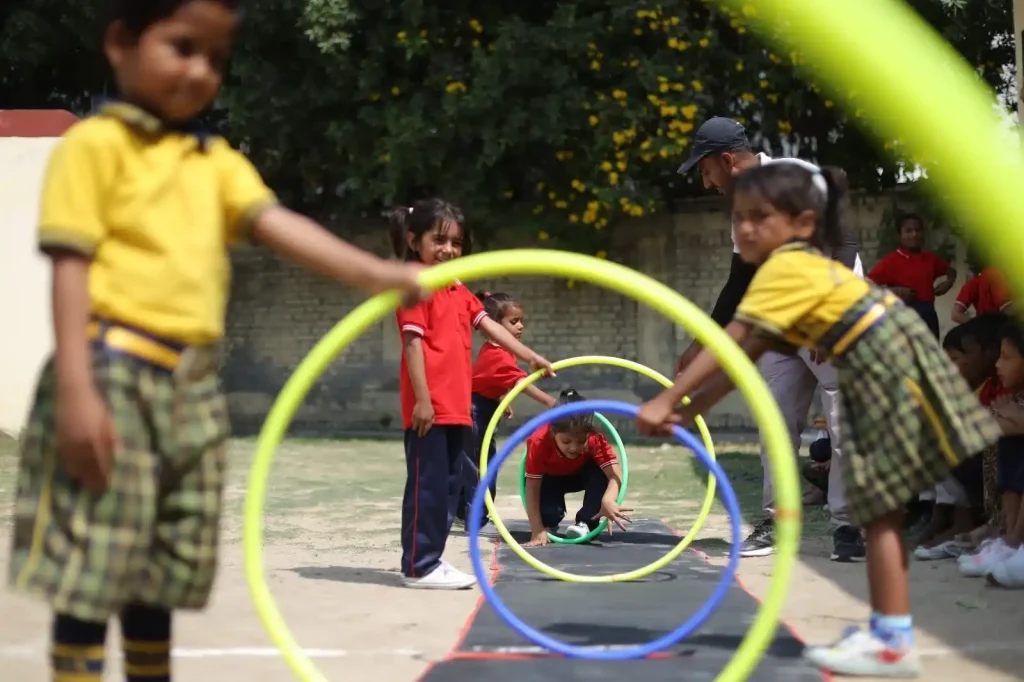
India has made enormous progress in expanding school access. The contemporary challenge is increasingly about what happens after a child enters school.
The ASER 2024 survey, which covered more than 650,000 children across more than 600 districts, found substantial recovery in basic learning levels after the pandemic. Yet the numbers also show why access cannot be treated as the end of the story. At the all-India level, 27.1% of children in Standard III could read a Standard II-level text in 2024, while 48.8% of Standard V children could do the same.
These are improvements, particularly in government schools, but they also reveal the scale of the remaining challenge.
Being enrolled is not the same as learning.
Having a school is not the same as having a good education.
And having access to a smartphone is not the same as having the ability to use technology productively for learning.
ASER’s 2024 survey began examining digital access and skills among 14–16-year-olds, an acknowledgement of how the meaning of educational opportunity has changed.
The vocabulary has changed since Azad’s time.
The underlying question has not.
What does a person need to know and be able to do to participate fully in society?
The return of the adult learner
Perhaps the most striking contemporary parallel is adult education.
India’s ULLAS — Nav Bharat Saaksharta Karyakram, running from 2022–23 to 2026–27, is designed for adults aged 15 and above who missed formal schooling. Its five components include foundational literacy and numeracy, critical life skills, basic education, vocational skills and continuing education.
That sounds remarkably close to the expansive philosophy behind Azad’s social education programme.
The modern language is different. The technologies are different. The economy is different.
But the premise remains: education does not end at the school gate.
ULLAS also places community participation at the centre of its approach, seeking to use volunteers, schools and technology to expand literacy and lifelong learning.
That is precisely where the history becomes relevant to organisations working at the grassroots.
Because the hardest educational problems are rarely solved by a textbook alone.
What National Education Day can mean for a child outside the system
For an organisation working with underserved communities, Maulana Azad’s legacy offers a useful way of thinking about education that is broader than enrolment.
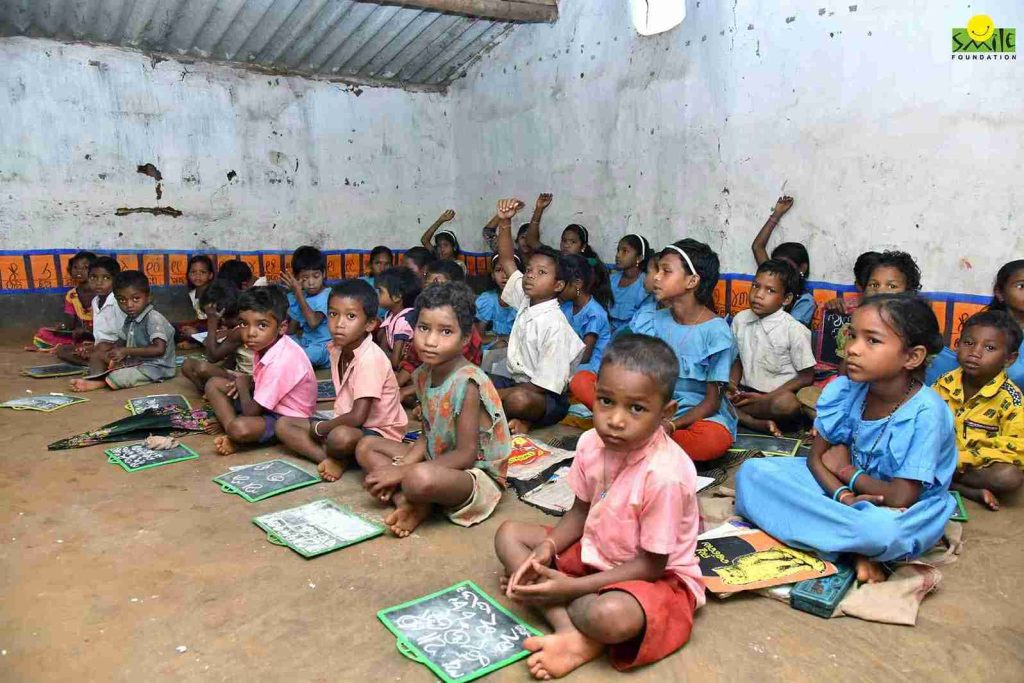
A child may be technically enrolled in school and still be struggling to read at grade level.
She may have a classroom but no quiet place to study at home.
A child may have a teacher but lack access to books, technology or additional academic support.
A teenager may remain in school but have no exposure to STEM, career guidance or vocational pathways.
And an adult in the same household may be unable to read the form that determines whether the family receives a government benefit.
These are not separate educational problems but are connected.
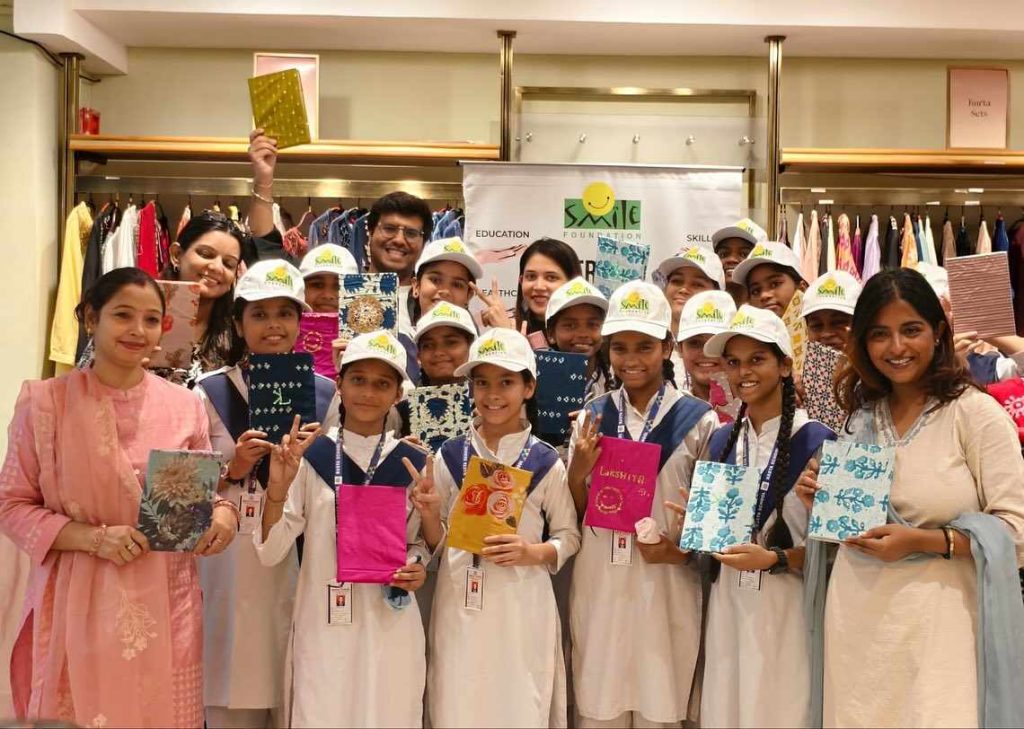
Smile Foundation’s current Mission Education work reflects this more holistic understanding. Its education programme reports reaching more than 1.85 lakh children, working through learning centres and government schools while combining foundational literacy and numeracy with teacher development, digital learning, STEM education, school health and community engagement.
Its approach is also explicitly rooted in the idea that education cannot always be separated from the conditions in which a child lives. The organisation describes education as both a means of improving livelihoods and an end in itself because it increases awareness of rights, health and social responsibilities.
That philosophy comes surprisingly close to the older idea of social education.
The unfinished lesson of November 11
National Education Day is often treated as a day to remember a historical figure.
It may be more useful to treat it as a day to interrogate a historical question.
Azad inherited a country in which education had to do several things at once. It had to repair the exclusions of the past, create a workforce for a modern economy, develop universities and scientific institutions, strengthen Indian culture, educate women and children, and teach citizens how to inhabit a democracy.
He never solved all of those problems.
No education minister could.
But he understood something that remains easy to lose in contemporary debates: education is not merely a service delivered to an individual. It is one of the ways a society decides what kind of future it wants to have.
That is why his legacy stretches from the primary school to the IIT, from the adult literacy centre to the university, from the mother tongue to international scholarship, and from scientific research to literature and the arts.
The most interesting part of his legacy may therefore be the part that has received the least attention.
Azad did not believe that teaching someone to read was enough.
He wanted education to give people the ability to understand their society, exercise their rights, fulfil their responsibilities, participate in democracy, earn a livelihood and live with dignity.
More than seventy years later, India has made extraordinary progress towards some of those goals while still struggling with others.
Perhaps that is what National Education Day should ask us to remember.
Not simply that Maulana Abul Kalam Azad built institutions.
But that he believed the ultimate institution education was meant to build was the citizen.
And that institution, unlike a university or a school, is never finished.
FAQs
Why is November 11 celebrated as National Education Day?
November 11 is observed as National Education Day in India to commemorate the birth anniversary of Maulana Abul Kalam Azad, independent India’s first Education Minister, who played a foundational role in shaping the country’s post-Independence education system. The Government of India began observing the day as National Education Day in 2008.
Who was Maulana Abul Kalam Azad?
Maulana Abul Kalam Azad was a freedom fighter, scholar, journalist and India’s first Education Minister after Independence. He served as Education Minister from 1947 until his death in 1958 and played an important role in developing India’s systems of school, university, technical and cultural education.
What was Maulana Azad’s contribution to Indian education?
Azad helped establish or strengthen major educational and cultural institutions, including the University Grants Commission, IIT Kharagpur, the Indian Council for Cultural Relations and the national academies for literature, visual arts and performing arts. He also advocated universal basic education, adult education, women’s education, vocational training and technical education.
What did Maulana Azad believe about education?
Azad viewed education as a tool of individual development, social transformation and nation-building. His educational thinking included universal basic education, adult literacy, technical education, higher education, cultural development and the creation of informed citizens capable of participating in democratic life.
What was Maulana Azad’s idea of social education?
Social education was an early post-Independence approach to adult education that went beyond basic literacy. It aimed to develop knowledge of citizenship, rights and duties, health, culture, economic life and social cooperation alongside reading and writing skills.
Why is foundational literacy important today?
Foundational literacy and numeracy are essential because school enrolment alone does not guarantee that children acquire the basic reading, writing and mathematical skills needed for later learni