
DIKSHA platform gives teachers and students free, curriculum linked content in their own language, through QR linked textbooks, teacher training courses and offline access, for over 2.25 crore registered users. It works as a digital learning platform across India, reaching classrooms in nearly every state and union territory. This guide covers how it actually works.
Summary
- DIKSHA, the Digital Infrastructure for Knowledge Sharing, is NCERT’s national platform for school education, with over 2.25 crore registered users across every state and union territory.
- It offers QR linked textbooks, offline access and content in 135 languages, with core school material available in 36 of them.
- Teacher training runs mainly through NISHTHA, feeding directly into NEP 2020’s requirement of 50 hours of professional development a year for every teacher.
- Beyond content delivery, the app lets teachers build digital assessments, receive state education announcements and share teaching practices with peers.
- Independent research shows real gaps alongside real gains: a meaningful share of teachers use DIKSHA rarely or never, and rural connectivity remains the biggest hurdle.
- Digital infrastructure only becomes real learning once a teacher is trained to use it well, which is the same gap Smile Foundation works to close in classrooms.
Knowledge means little if it never leaves the room it was learned in. DIKSHA, the Digital Infrastructure for Knowledge Sharing, is NCERT’s answer to that problem for schools across India.
What Is the DIKSHA Platform and Who Runs It?
NCERT runs DIKSHA platform under India’s Ministry of Education, working closely with the Central Institute of Educational Technology. The platform launched on 5th September 2017.
It began as a tool built only for teacher training, called the National Digital Infrastructure for Teachers, before growing into a full learning platform covering classes 1 to 12. That growth culminated in 2020, when the government named it India’s One Nation, One Digital Platform for school education under the PM eVidya initiative and Atma Nirbhar Bharat. Today, almost every state, union territory and school board runs on it, including CBSE and NIOS.
Key Features of DIKSHA platform for Teachers and Students
DIKSHA platform works for two groups at once. It trains teachers, and it delivers content to children no matter where they study. To use it, you pick your state and district, then your class and the app shows material built for that group.
What Students and Parents Get
Every NCERT textbook now carries a QR code, and scanning one opens a video, a worksheet or a full explanation of that chapter. NCERT has printed these codes since 2018 and DIKSHA now hosts more than 7,600 of these Energised Textbooks, backed by close to 3.7 lakh pieces of digital content of its own:
- 2D and 3D animations
- Augmented reality tools
- Over 600 virtual labs for subjects like science and maths
- Simpler formats such as video, PDF, HTML, ePub and quizzes
Students can also test themselves through practice exercises and get instant feedback on whether their answer is right. The same range includes children with special needs, through the DAISY format, text to speech and Indian Sign Language videos. Parents can use the app too, to follow what happens in class and ask teachers questions outside school hours.
What Teachers Get, Through NISHTHA
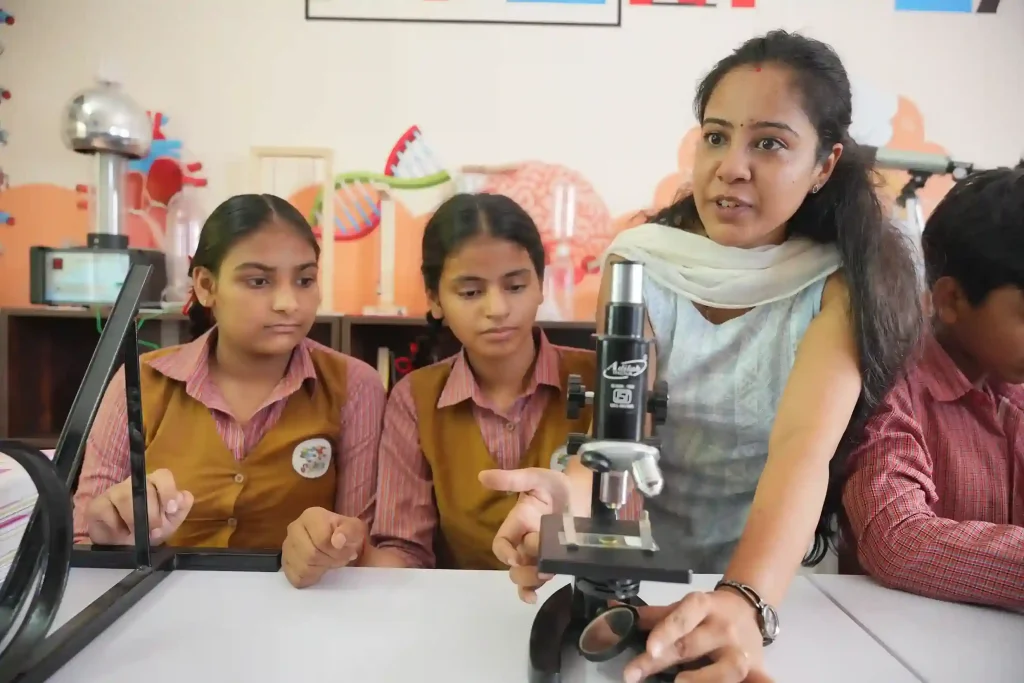
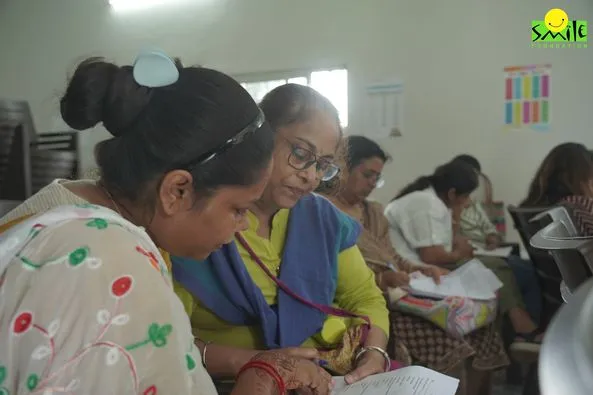
NISHTHA, the teacher training programme delivered through DIKSHA, is where most of the platform’s daily use happens. It launched during the pandemic for elementary school teachers and later versions expanded into secondary education and foundational literacy and numeracy.
NEP 2020 requires every teacher and school head to complete 50 hours of professional development each year and DIKSHA is one of the main ways schools meet that target. Courses run at your own pace through an integrated learning system, ending in a certificate and a badge on your profile.
The platform also tracks a teacher’s full career, from the day you join a Teacher Education Institute to the day you retire, with:
- Ready made lesson plans and worksheets
- Leadership courses if you lead a school
- Tools to build your own digital assessments
- Official updates from your state education department
- A look at how other teachers explain the same topics
A 2022 study across Kendriya Vidyalayas found that more than 80% of English teachers used DIKSHA in class and close to 98% of them had completed NISHTHA through the app.
How DIKSHA platform Supports Regional Language Learning
Indian teachers teach in dozens of languages and DIKSHA platform was built to work across all of them. The platform supports 135 languages in total, 128 of them Indian, with core school content available in 36. Bhasha Sangam, one of its focus areas, teaches everyday sentences across 22 Indian languages and e-Jaadui Pitara does something similar for the foundational stage, using toys, puzzles and flashcards instead of screens.
Getting content into the right language solves only part of the problem, since a family still needs an internet connection to open it. DIKSHA also lets you download material in advance and use it without an internet connection and several states preload lessons directly onto smart classroom boards, useful in parts of rural India where connectivity is patchy.
How Widely Is DIKSHA platform Used Across India?
By mid 2026, DIKSHA platform had grown into India’s largest government digital education platform by a wide margin, nearly nine times the reach of SWAYAM, its closest comparison. Registered users crossed 2.25 crore and the scale builds from there:
- Around 3 lakh people use DIKSHA every single day
- Learning sessions have crossed 575 crore since launch
- Course enrolments stand at 18.77 crore, with 14.82 crore completions
- 12.79 crore certificates have been issued across 347 courses
- Uttar Pradesh leads state registrations at 26.8 lakh users, followed by Gujarat and Maharashtra
A Kendriya Vidyalaya study showed similar patterns at the classroom level. More than 70% of English teachers used DIKSHA across listening, speaking, reading, writing, grammar and vocabulary, with video notes the most popular format among students. On the app stores, DIKSHA has crossed 5 crore downloads with a 4.1 rating.
Where DIKSHA Still Falls Short
Scale does not mean everyone is using DIKSHA, or using it well. A 2025 study of 180 teachers in Delhi NCR found that 15.1% had never opened the platform at all, and another 24.6% used it only rarely. Connectivity is the biggest reason why. Around 60% of rural educators still face internet issues limiting e-learning in rural India and roughly 60% of the country’s 6.5 lakh rural schools still lack basic digital infrastructure.
A working connection is not the only hurdle. A device and a data plan can quietly exclude economically disadvantaged students, even when the content itself is free, a concern raised in UNESCO’s own case study on DIKSHA. It also notes that some regional languages and dialects remain underrepresented in the content.
The Kendriya Vidyalaya teachers who use DIKSHA daily for English classes still ran into problems. The app sometimes hangs, updates take too long, and downloading material can throw technical errors.
How DIKSHA Fits Into India’s Digital Education Push Under NEP 2020
NEP 2020 names DIKSHA directly as a tool for giving teachers structured, user friendly resources to track student progress. Two of DIKSHA’s newest features build on this same role: AskDIKSHA, which lets students ask questions directly against NCERT textbook content and get an answer back, and Read Aloud, which supports younger or less confident readers. In 2023, the Ministry of Education also moved DIKSHA onto Oracle Cloud Infrastructure to handle its growing scale.
Teachers in the Kendriya Vidyalaya study want DIKSHA to go further still, with hands on training in AI tools and competency based education.
How Smile Foundation Bridges the Digital Learning Gap for Underserved Children
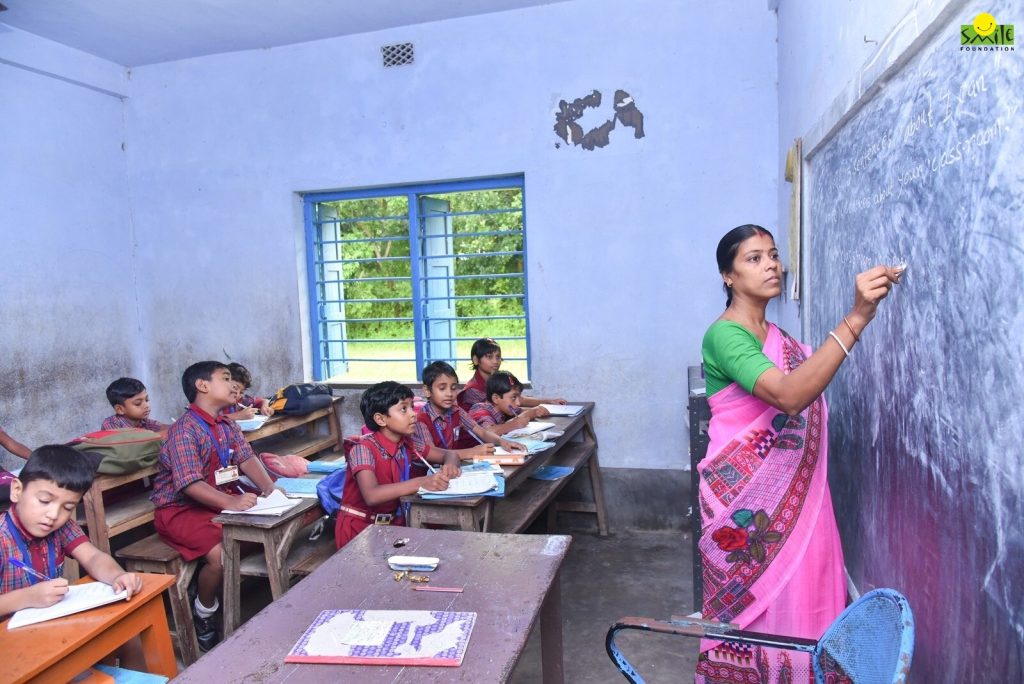
DIKSHA reaches most of the country, but it still depends on teachers being trained well enough to use it. The places where that training is weakest are usually the same places with poor connectivity and few devices to begin with.
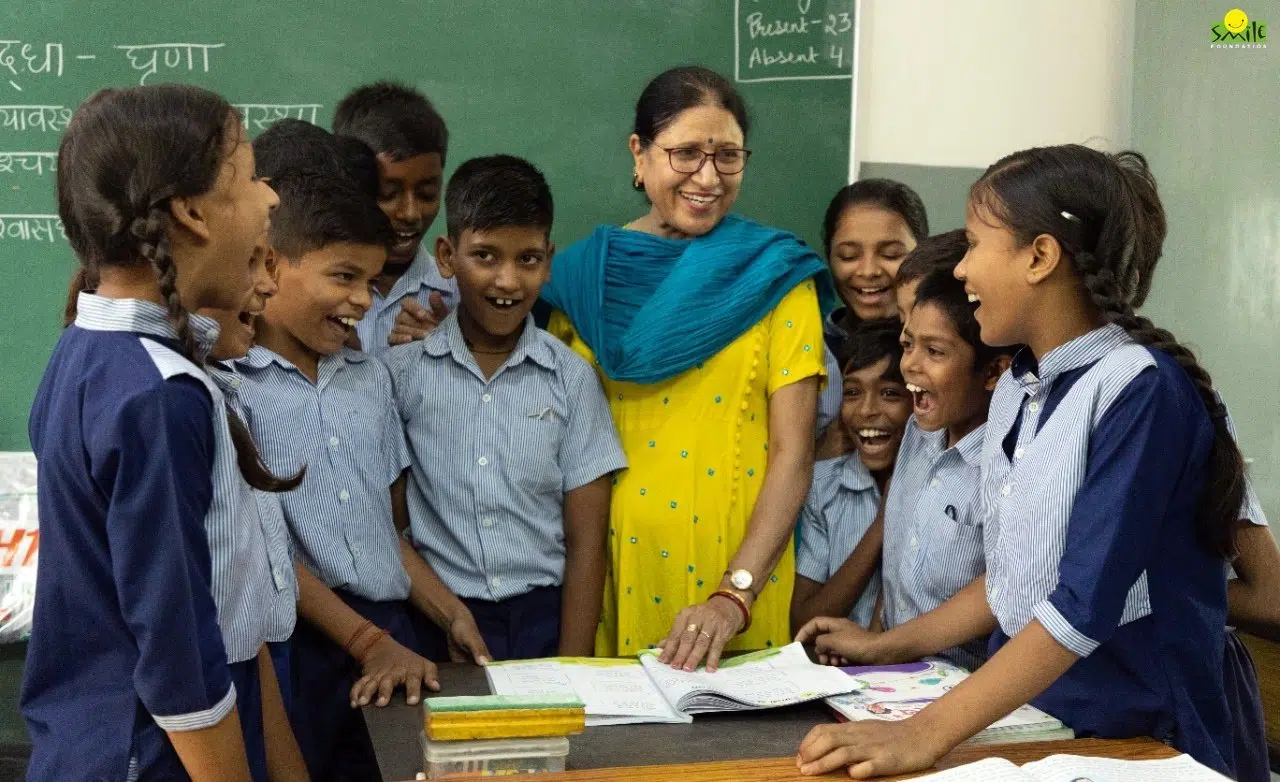
Smile Foundation’s Mission Education programme works in those places, running teacher training support, science clubs and classroom level literacy programmes in government schools, so children and their teachers get this support directly, instead of waiting for connectivity or devices to catch up first. That work happens one teacher and one classroom at a time.
You can support a child’s education directly or explore volunteering opportunities with Smile Foundation.
FAQs
- What is the DIKSHA platform and who developed it?
The DIKSHA platform is India’s national digital education system, built by NCERT under the Ministry of Education. It launched on 5th September 2017 to give teachers and students free, curriculum linked content. Today it covers school education from the foundational stage through to class 12.
- How do teachers use DIKSHA for training and professional development?
Teachers use DIKSHA mainly through NISHTHA, the government’s large scale teacher training programme. Courses are self paced and count toward the 50 hours of professional development NEP 2020 requires each year. Teachers also access lesson plans, worksheets and leadership courses through the same platform.
- What is the QR code feature in NCERT textbooks linked to DIKSHA?
NCERT prints QR codes inside its textbooks that link straight to DIKSHA. Scanning one opens a video, an interactive exercise or extra explanation for that chapter. The platform now hosts over 7,600 of these QR coded textbooks, called Energised Textbooks.
- Is DIKSHA available in regional languages?
Yes. DIKSHA supports 135 languages in total, 128 of them Indian, with core school content available in 36. Focus areas like Bhasha Sangam and e-Jaadui Pitara build regional language and foundational learning directly into the platform.
- How many teachers and students actively use DIKSHA in India?
DIKSHA has crossed 2.25 crore registered users, with around 3 lakh people active on the platform daily. Course enrolments stand at 18.77 crore, and the app has been downloaded more than 5 crore times.
- What is NISHTHA and how is it connected to DIKSHA?
NISHTHA is the National Initiative for School Heads’ and Teachers’ Holistic Advancement, delivered mainly through DIKSHA. It began with elementary grade teachers during the pandemic and later expanded into secondary education and foundational literacy and numeracy training.
- What are the biggest challenges in DIKSHA’s reach in rural India?
Connectivity is the main obstacle. Around 60 percent of India’s 6.5 lakh rural schools still lack basic digital infrastructure and many rural teachers face regular internet issues. Research also shows a meaningful share of teachers use DIKSHA rarely or not at all, despite the platform’s scale.
- Is DIKSHA free to use for all students and teachers?
Yes, DIKSHA is completely free for students, teachers and parents across India, available as both a mobile app and a website. Much of the content can be downloaded for offline use. The only real requirement is a device and, ideally, an internet connection to download material.
- How does DIKSHA support NEP 2020’s digital education goals?
NEP 2020 names DIKSHA directly as a tool for delivering structured, technology led teacher support at scale, central to meeting the policy’s requirement of 50 hours of professional development a year for every teacher. Features like AskDIKSHA and Read Aloud reflect the same push toward personalised, accessible learning.
- How does Smile Foundation help bridge the digital learning divide for children?
Smile Foundation’s Mission Education programme trains teachers and runs science and literacy programmes in government schools, working on the same gap that platforms like DIKSHA cannot close alone. It focuses on classroom level readiness, which is what actually turns digital infrastructure into real learning.