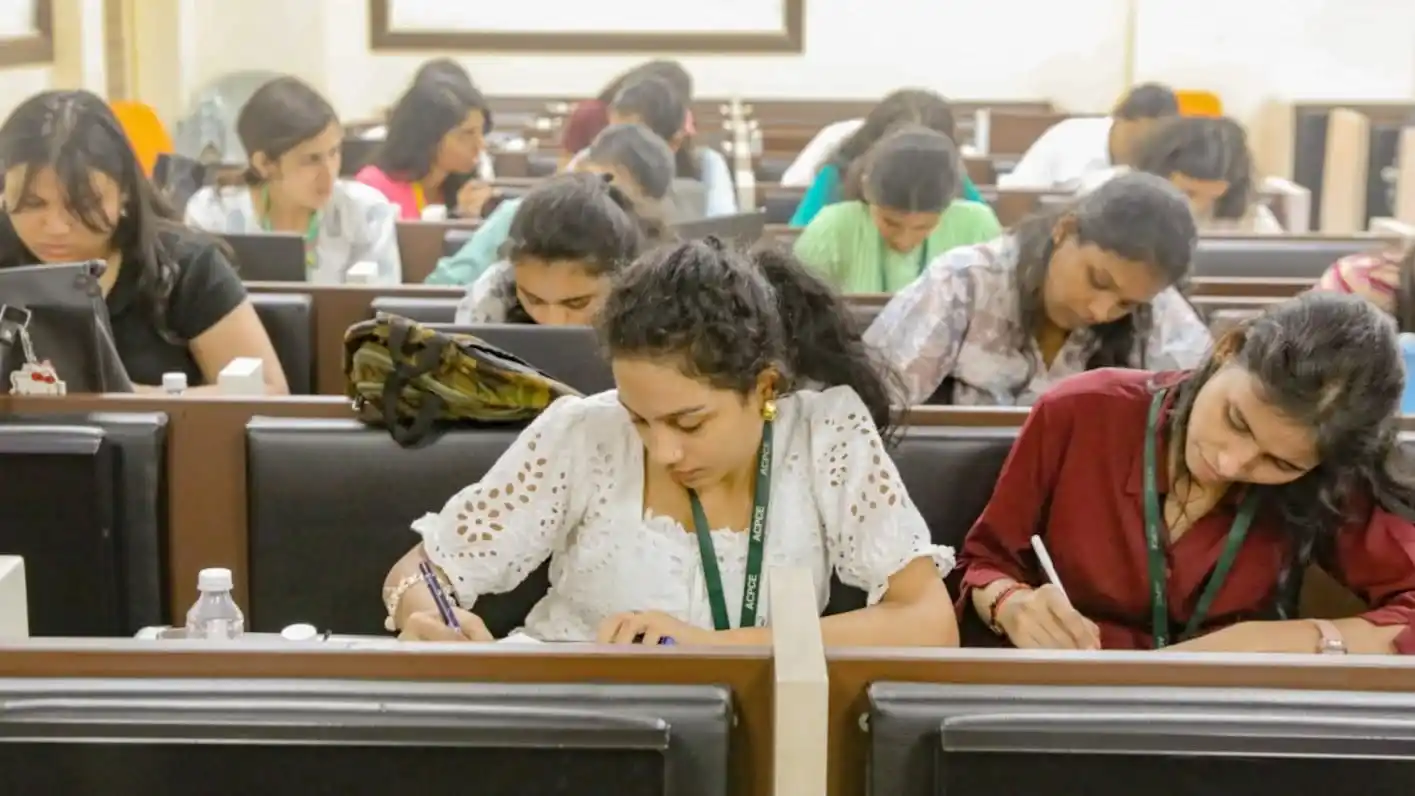

Women in AI India remain a minority, crowded into the very roles automation is disrupting fastest, even as they earn nearly half the country’s STEM degrees. From invisible role models and classroom pressure to hiring bias and career breaks, several barriers hold women back from AI careers.

Summary
- Women in AI India remain a minority, concentrated in the administrative and operations roles that AI automation is disrupting fastest, even as they earn nearly half the country’s STEM degrees.
- The gender gap builds in stages, starting from school and thinning steadily through engineering admissions, hiring and leadership.
- Women already lead real technical work in Indian AI, from speech recognition to fintech to climate modelling, but stay largely unnamed and unseen.
- The barriers are rooted in access and confidence rather than ability, from unequal coaching and device access to unconscious bias and unsupported career breaks.
- Government and industry programmes, from AI by HER to IIT’s reserved seats for women, are already narrowing the gap where they’ve reached.
- More women in AI means fewer blind spots in the technology itself, technology that already shapes hiring, healthcare and how India is heard.
Picture the last AI Summit panel, hackathon lineup, or founder photo you scrolled past. How many women were in it? Women in AI India are still crowded into administrative, customer support and operations roles, exactly the functions AI is automating fastest.
They earn nearly half the country’s STEM degrees, but far fewer of them end up in tech jobs, closer to a third. That’s the real distance, and when we give women the right support, it starts to close.
Take Anshu Sharma, 23. She runs marketing single-handedly at a Bengaluru startup, “doing it all,” in her words, from social media and PR to community events. Three years in, that effort has paid off. Her firm now finances her courses in AI applied to marketing reflecting a shift already underway, more women begin adding AI skills to their existing careers.
The numbers here are genuinely cheering. Indian women lead the world in AI skill penetration, scoring 1.9, ahead of the US, Canada and the UK. India also tops global generative AI course enrolments, women’s share climbing to 33.5% in 2025.
What hasn’t caught up yet is everything after the certificate: the hiring, the promotions, the leadership seats. This piece looks at what’s already working to close that gap, and what still needs fixing.
Why Is there a Gender Gap in India’s AI Workforce?
The gap builds in stages. Girls and boys enrol in near equal numbers through school, trailing by only about 9 percentage points nationally. That changes once STEM enters the picture, where girls face a gap of roughly 20 percentage points in choosing science over other streams, and by the time they reach an engineering degree, women’s share has fallen to about 29%.
When daughters choose colleges, families weigh safety, hostel distance and marriage timelines. Unpaid care work eats into study and practice time, hour by hour, until there is little of either left. And because senior women in artificial intelligence are rarely visible, many girls never picture themselves in the field at all. As one professor put it, when people picture an AI engineer, “most of us still imagine a man.”
Ask most people to name who is driving India’s AI moment, and the list comes back almost entirely male. Coverage of India’s AI sector keeps repeating that women are barely present in the field, a claim that quietly erases the ones already building it, even inside the industry’s own conversations about itself.
There are a lot of women already working in AI, namely, Preethi Jyothi, at IIT Bombay, is building speech recognition systems that work for India’s regional languages and accents, work most AI labs skip because English still dominates the training data. Hardika Shah built myKinara, an AI lending platform that has moved over Rs 4,500 crore in collateral-free loans to small businesses. Anima Anandkumar’s models now forecast weather worldwide. Yet hardly anyone knows them.

What Does the Latest Data Tell Us About Women in AI?
The latest available figures, spanning 2024-2026, show a mixed picture. Here is where women in AI stand:
- Women hold 36% of jobs in India’s tech industry.
- About 44% of employed Indian women use AI tools daily, slightly ahead of men at 40%.
- Globally, 29.4% of professionals listing AI engineering skills in 2025 were women, up from 23.5% in 2018, with the gap narrowing in 74 of 75 economies.
- Women earn 44% of India’s STEM degrees, yet make up under 30% of engineering and dedicated AI course enrolments.
- Women are just over 28% of the global STEM workforce against 47% of non-STEM workers. In India, women hold near 30% of entry level tech roles but only 14% to 19% of executive ones.
- Women are roughly 43% of India’s ChatGPT users, against a slight majority globally, a gap that reflects access rather than behaviour.
- Women’s share of India’s GenAI course enrolments rose from 31.2% in 2024 to 33.5% in 2025, with higher completion than men.
What Barriers Do Women in AI Face Entering AI and Data Science Careers?
Research increasingly points to differences in access, exposure and confidence not ability as important contributors to the gap.
Education Pipeline Gaps
India’s STEM to AI pipeline narrows early. Women reach near parity in the sciences. Fewer make it into the engineering and computing courses that actually feed AI jobs. Entrance coaching often means travel, hostels or late hours, which many parents permit more readily for sons.
When IITs added supernumerary seats for women in 2018, enrolment rose from under 10% to nearly 20% within four years. Many girls still don’t have a laptop or reliable internet, in a field that’s learned by doing.
Women in AI are six times more likely to choose the beginner course over the intermediate one, even with the skills for the harder one thereby showing how underconfident they are.
Workplace and Bias Challenges
Bias in tech hiring shows up in small ways that add up, from a panel without a single woman to a referral network that mostly reaches men. The bigger leak comes later, when maternity breaks get treated as a career penalty, and women coming back find no structured path to the skills they missed.
What Is Being Done to Close the Gap?
Government and industry are both doing something here, and parts of it are actually working.
Scholarships and Skilling Programmes
MeitY runs AI by HER with NITI Aayog’s Women Entrepreneurship Platform, backing women-led AI teams with Rs 25 lakh awards. AI Careers for Women, a Skill Development Ministry partnership with Microsoft, adds a 240 hour curriculum through women’s colleges in smaller towns, aiming to reach 20,000 learners.
Courses taught by women draw more women in, about 7% more and beginner-friendly courses tied to real work fill fastest. Women moving into AI-enabled roles see an average pay jump of 145%.
However, none of this reaches a girl who left school too early to use it. That’s where Smile Foundation’s education work begins, years before any of these programmes come into play.
Mentorship and Returnee Initiatives
Role models move enrolment numbers on their own and mentorship, with clear milestones, lifts completion further. Case studies across South Asia point the same way: early exposure plus a visible woman mentor keeps girls in technical fields.
For women returning after a break, some of India’s tech firms now run returnship pathways, live projects paired with a mentor. But few of these programmes are universal yet and asking about them in an interview is still fair game.
Why More Women in AI Benefits Everyone
AI learns from what it’s shown, the same as anyone does. So, when voice systems mishear women, or health tools get trained mostly on male data, that’s not really an accident. To fix these one-sided biases, we need more women in AI.
Stanford’s Fei-Fei Li, often called the godmother of AI, said it plainly years ago: technology this pervasive should “carry the values of the entire humanity.” Leave out whole populations from the building of it, and you get a biased one. That’s just how it works.
Companies that ignore gender parity in AI are cutting themselves off from half the available talent, and the economics back this up too. Women are expected to drive close to 45% of India’s climb toward a 30 trillion dollar economy by 2047.
How Smile Foundation Supports Girls in STEM
That talent pipeline starts long before any job application. It often comes down to whether a girl keeps up with maths and science, or quietly drops both. Smile Foundation’s Mission Education works at that stage, running science clubs, STEM kits and teacher training in government schools across the country.
None of this closes the gap on its own. Every girl who stays in a science classroom a little longer, and every mentor who says yes to one more student, are part of what reduces the gap. You can also support a girl’s education or reach out to volunteer your time with Smile Foundation’s programmes.
FAQs
- What percentage of AI professionals in India are women?
There is no single official count, because AI roles sit inside broader technology categories. Women hold 36% of jobs in India’s tech industry, and globally 29.4% of professionals listing AI engineering skills are women.
- Why is there a gender gap in India’s AI and technology workforce?
The gap builds in stages rather than at one point. Girls choose AI subjects at school in near equal numbers, but their share drops through engineering admissions, hiring and promotions. Safety concerns, care work, device access and few visible role models each remove some women along the way.
- What are the biggest barriers women face entering AI careers?
The main barriers are access and confidence rather than ability. Coaching, hostels and devices are granted less readily to daughters, hiring carries unconscious bias, and career breaks are penalised. Women are also six times more likely to pick beginner courses over intermediate ones, even with matching skills.
- What skilling programmes exist to help women enter AI careers in India?
AI by HER, run by MeitY’s IndiaAI with NITI Aayog’s Women Entrepreneurship Platform, funds and mentors women-led AI teams. The IITs reserve supernumerary seats that lifted women’s enrolment to nearly 20%. Employer-backed AI upskilling programmes and low-cost online courses add flexible entry points for working women.
- How do mentorship and returnee programmes help women grow in tech careers?
Mentorship raises enrolment and completion, and courses with women instructors attract about 7% more female learners. Returnships, now spreading across Indian tech firms, give women structured projects and mentors after a break.
- Why does diversity in AI teams matter for better technology?
AI systems learn from the data and judgement of the people who build them. Teams without women have shipped voice tools that mishear female speakers and health models trained largely on male data. Diverse AI teams catch these blind spots earlier and build products that work for everyone.
- How can parents encourage girls to pursue STEM and AI early?
Keep maths and science open as long as possible, and treat a laptop or shared computer as her tool too. School data shows girls already choose AI electives at near parity when offered. Science clubs, coding camps and stories of women engineers turn that interest into a real option.
- How does Smile Foundation support girls in STEM education?
Smile Foundation’s Mission Education supports over 160,000 children across 27 states, with STEM labs, science kits, clubs and teacher training in government schools. Its She Can Fly initiative helps girls stay enrolled through disruptions, and the STeP programme builds digital and employability skills among underserved youth.
Sources:
- https://blog.coursera.org/coursera-gender-gap-in-genai-report-2026/
- https://blog.coursera.org/coursera-closing-thegender-gap-in-genai-playbook/
- https://www.thehindu.com/education/indian-women-step-up-in-genai-learning-but-leadership-gap-persists/article70757731.ece
- https://www.weforum.org/publications/gender-parity-in-the-intelligent-age-2025/
- https://reports.weforum.org/docs/WEF_Gender_Parity_in_the_Intelligent_Age_2025.pdf
- https://www.unesco.org/en/articles/outlook-study-artificial-intelligence-and-gender-south-asia
- https://www.harpersbazaar.in/culture/story/these-women-are-quietly-leading-indias-ai-revolution-and-its-about-time-we-noticed-1276015-2025-09-14
- https://nasscom.in/sites/default/files/media_pdf/Women%20In%20India%20Tech.pdf
- https://www.ai-edge.z47.com/The-India-AI-Edge.pdf
- https://impact.indiaai.gov.in/events/ai-by-her
- https://www.databricks.com/blog/2017/11/27/women-in-big-data-apache-spark-and-ai-bay-area-spark-meetup-at-databricks-summary.html